
Note: This article contains affiliate links. If you click on these links and make a purchase, we may earn a small commission at no extra cost to you. This helps support our research and content. Read our full affiliate disclosure here.
If you depend on a heat pump for year-round heating and cooling, the right Wi-Fi thermostat makes a big difference in comfort and energy use. You want reliable compatibility with heat-pump control stages, easy remote scheduling, and clear feedback so you can avoid short-cycling or inefficient modes. This guide gathers seven top Wi-Fi heat pump thermostats that cover those needs and other practical concerns homeowners face. Below you will find our shortlisted picks, each evaluated for how well it integrates with heat pump systems, how easy it is to program and use, and how it supports efficient operation. Read on to compare features and pick the option that fits your home and habits.
Top Picks at a Glance
| Best Overall The best all-around choice for most situations | Honeywell Home X8S Smart Thermostat |  |
| Best Quality Built to a higher standard if you want something more solid | ecobee Smart Thermostat Premium |  |
| Best Value The sweet spot between price and what you get | Amazon Smart Thermostat |  |
| Best Budget The cheapest option that still gets the job done reliably | meross Matter Smart Thermostat MTS300 |  |
| Top Rated A top-rated pick with lots of positive feedback | ecobee Smart Thermostat Enhanced |  |
| Most Popular A crowd favorite that many people choose with confidence | Sensi Smart Thermostat ST55 |  |
| Best Seller A high-volume bestseller chosen again and again | Google Nest Thermostat |  |
Honeywell Home X8S Smart Thermostat

| Controller Type | Touchscreen |
|---|---|
| Screen Size | 5 inches |
| Connectivity Technology | Wi-Fi |
| Control Method | App, Touch, Voice |
| Specific Uses For Product | Air Conditioner, Furnace, Heat Pump |
The Honeywell Home X8S is a full-featured smart thermostat designed to give precise temperature and indoor air quality control for typical homes with heat pump or conventional HVAC systems. It installs as a wall-mounted controller and pairs with the included wireless room sensor to prioritize comfort in occupied rooms or bedrooms, while its auto-scheduling and occupancy detection adjust settings to save energy when you are away. The bright 5-inch touchscreen is easy to read and customizable, and the unit supports remote control via the First Alert app plus Matter, Alexa, Google Assistant, and Apple Home for voice and away-from-home control. A notable practical feature is compatibility with select video doorbells so you can view and speak to visitors from the thermostat display. Limitations to note are the requirement for a C-wire (a free C-wire adapter voucher is included if needed) and that some IAQ or ventilation features may need additional equipment to work fully. For buyers seeking a smart, energy-star certified thermostat with flexible sensor placement and wide ecosystem support, the X8S covers the bases well.
Best for: Homeowners who want a balanced smart thermostat that blends touchscreen ease, remote app and voice control, and room-sensor comfort without focusing solely on niche features.
Less Ideal for: Homes that lack a C-wire and do not want to add one, or installations that need built-in advanced IAQ control without purchasing extra equipment.
- Includes wireless room sensor for targeted comfort control and up to 200 ft sensor range
- 5-inch touchscreen with customizable idle screen for easy local control
- Matter certified and works with Alexa, Google Assistant, and Apple Home for broad smart home integration
- Energy Star certified with auto-scheduling and occupancy detection to reduce energy use
- Direct compatibility with select video doorbells to view and speak with visitors from the thermostat
- Requires a C-wire for power; setup may need the included voucher adapter if a C-wire is absent
- Advanced IAQ and ventilation features may require additional HVAC equipment or accessories
Verdict: The X8S is a versatile, Energy Star certified smart thermostat that pairs a clear touchscreen and room sensor with wide smart home compatibility for comfortable, energy-aware control.
ecobee Smart Thermostat Premium

| Connectivity Protocol | Wi-Fi |
|---|---|
| Compatibility | Most 24VAC HVAC systems, including heat pumps |
| Controller Type | Amazon Alexa, Apple HomeKit, Google Assistant, SmartThings |
| Included Components | SmartSensor, Power Extender Kit, backplate, wire labels |
| Power Source | Battery Powered (24 volts supported) |
The ecobee Smart Thermostat Premium is a performance-focused Wi-Fi thermostat that pairs a large, bright display and metal finish with advanced sensors and integrations to optimize heating and cooling for heat-pump and conventional HVAC systems. It uses the included SmartSensor and radar occupancy detection to prioritize rooms that matter, reducing hot and cold spots while its eco+ features and scheduling aim to lower energy use. Built-in Alexa or Siri support lets the thermostat act as a voice speaker and control hub, and the unit integrates with HomeKit, Google Assistant, SmartThings, and ecobee doorbell live view for added convenience. Installation includes a Power Extender Kit for homes without a C-wire and supports most 24 VAC systems, including heat pumps, making it suitable for heat-pump setups targeted by this article. The premium design and speaker are practical extras, but advanced features like smoke alarm alerts and live doorbell view require additional ecosystem setup and some users may find the full feature set more than they need if they prefer a minimal thermostat. Overall, the Premium targets buyers who want tight temperature control, smart integrations, and built-in voice without adding separate speakers or sensors.
Best for: Buyers who prioritize precise comfort and energy performance on heat-pump systems and want a single device that combines room sensors, occupancy detection, air-quality monitoring, and voice control.
Less Ideal for: People who want a minimal, no-frills thermostat or who prefer to avoid smart-home integrations and extra setup.
- SmartSensor and radar occupancy reduce hot and cold spots by prioritizing occupied rooms
- Built-in Alexa or Siri voice assistants and speaker remove the need for a separate smart speaker
- Built-in air quality monitor provides alerts and filter reminders
- Includes Power Extender Kit for C-wire-less installations and supports most 24 VAC systems
- Works with HomeKit, Google Assistant, SmartThings, and ecobee ecosystem features like doorbell Live View
- Advanced features rely on additional ecobee devices or smart-home setup to reach full potential
- Premium metal design and speaker increase complexity compared with simple thermostats
Verdict: For heat-pump owners who want top-tier control, built-in voice, and room-level sensing in one smart thermostat, the ecobee Smart Thermostat Premium is a performance-first choice.
Amazon Smart Thermostat
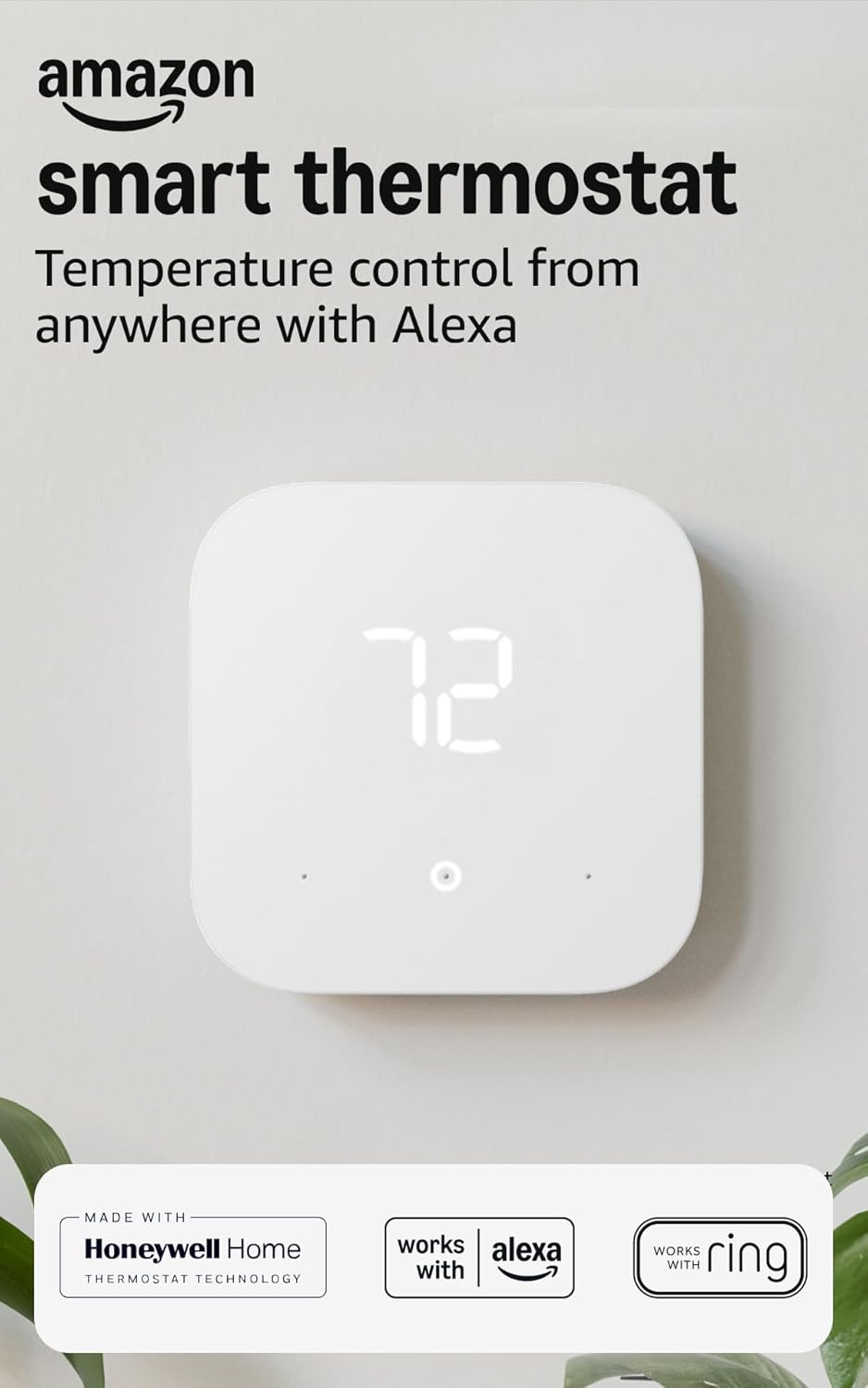
| Works with | Alexa and Ring |
|---|---|
| C‑wire | Required |
| Manufacturer tech | Honeywell Home technology |
| Remote control | Alexa app |
The Amazon Smart Thermostat is a simple Wi‑Fi thermostat that replaces a conventional wall thermostat to give app and voice control of home heating and cooling. It pairs with Alexa for voice commands, remote control via the Alexa app, and can participate in presence-based adjustments when linked to compatible Alexa devices to create basic comfort zones. The unit supports schedules (home, away, sleep) and offers guided DIY installation through the app, with underlying Honeywell Home thermostat technology for basic reliability. Practical benefits include easy remote temperature adjustments, voice control convenience, and potential energy savings through programmable schedules and ENERGY STAR related rebate information provided after purchase. Limitations are functional: it requires a C‑wire, does not expose advanced zoning or learning algorithms like some premium models, and relies on the Alexa ecosystem for many automation features rather than offering deep on‑device intelligence. For buyers wanting a straightforward, Alexa‑centric Wi‑Fi thermostat that is easy to install and focuses on lowering energy use, it is a solid, no‑frills choice.
Best for: Buyers who want a practical, energy-focused Wi‑Fi thermostat that prioritizes easy Alexa voice control and straightforward scheduling over advanced automation.
Less Ideal for: Homeowners seeking a thermostat with advanced on-device learning, multi‑zone management, or a system-independent smart hub should look elsewhere.
- Wi‑Fi and Alexa integration for voice and remote control
- App-guided DIY installation with Honeywell Home technology inside
- Supports programmable schedules and basic presence-based adjustments
- Provides information about potential energy rebate eligibility
- Requires a C‑wire which may need professional wiring in older homes
- Limited built-in learning or advanced zoning features compared with higher-end smart thermostats
Verdict: Choose this thermostat if you want an easy‑to‑install, Alexa‑centric Wi‑Fi thermostat that makes scheduling and remote control simple while helping reduce energy use.
meross Matter Smart Thermostat MTS300

| Connectivity Protocol | Matter, Wi-Fi |
|---|---|
| Power Source | 24 volts (corded electric) |
| Control Type | App Control |
| Display Type | LED |
| Specific Uses For Product | Air Conditioner, Boiler, Dehumidifier, Furnace, Heat Pump |
The meross MTS300 is a compact smart thermostat that connects over 2.4 GHz Wi‑Fi and Matter to give app and voice control of heating and cooling systems that use 24V wiring. It installs on a wall plate and supports 7×24 scheduling, adjustable screen brightness, and notifications for filter life and system faults so you can monitor HVAC health from the meross app. Matter and native integrations with Apple Home, Alexa, Google Assistant, and SmartThings reduce the need for multiple vendor apps and make voice control straightforward. Installation requires either a C‑wire or the optional C‑wire adapter for some legacy wiring configurations, so older two‑wire systems may need additional parts or pro help. The LED display and simple square design keep the thermostat unobtrusive, but the unit only supports 2.4 GHz networks and does not include a C‑wire adapter in the box, which adds potential extra cost for some homes. For a budget‑minded buyer looking to add smart scheduling and Matter compatibility to a standard 24V HVAC system, this model covers the essentials without extra complexity.
Best for: Buyers who want an affordable smart thermostat that adds Matter connectivity and reliable app or voice scheduling to a standard 24V HVAC system without premium extras.
Less Ideal for: Homes without a C‑wire or users who need 5 GHz Wi‑Fi support or advanced energy analytics and learning algorithms.
- Matter support for local, cross‑platform smart home integration
- Works with Apple HomeKit, Alexa, Google Assistant, and SmartThings
- 7×24 scheduling and app control for remote temperature management
- Compact modern design with adjustable screen brightness
- Smart alerts for filter life and system issues
- Requires a C‑wire or separate C‑wire adapter for many common wiring setups
- Limited to 2.4 GHz Wi‑Fi networks only
Verdict: A budget-friendly smart thermostat that brings Matter-based cross-platform control and basic scheduling to most 24V HVAC systems.
ecobee Smart Thermostat Enhanced

| Connectivity Technology | Wi-Fi |
|---|---|
| Power Source | Corded Electric |
| Voltage | 24 volts |
| Display Type | LCD |
| Controller Type | Amazon Alexa, Android, Apple HomeKit, Google Assistant, iOS |
The ecobee Smart Thermostat Enhanced is a hardwired Wi‑Fi thermostat designed to replace a conventional wall thermostat and manage a home heating and cooling system. It connects to your smart home platform and smartphone app for remote control, supports Apple HomeKit, Alexa, and Google Assistant, and includes a Power Extender Kit and trim plate for easier DIY installs. Built-in radar occupancy sensing and included SmartSensor support let the thermostat detect which rooms are in use and preheat or precool accordingly, while eco+ software learns schedules and suggests energy-saving adjustments. The 4-inch LCD and app both provide clear controls, and the unit is Energy Star certified. Limitations to consider are compatibility requirements with certain HVAC wiring and system types, so you should run the compatibility checker before buying, and the unit is intended for hardwired 24VAC systems rather than line-voltage setups. For homeowners prioritizing reliable, long-lived control, ecobee backs this model with a three-year manufacturer warranty.
Best for: Buyers who want a dependable, hardwired smart thermostat that learns schedules, integrates with major smart assistants, and keeps heating and cooling automated without frequent maintenance.
Less Ideal for: Homes with line-voltage systems, millivolt setups, or atypical HVAC controls should avoid this unit and look for a thermostat designed for those system types.
- Hardwired 24VAC design reduces worry about losing control or replacing batteries
- Built-in radar occupancy sensing and SmartSensor compatibility for room-specific comfort
- Dual-band Wi‑Fi and broad smart home integration for reliable remote control
- Includes Power Extender Kit and trim plate for easier DIY installation
- Not compatible with line-voltage, millivolt, or certain low-voltage control systems without checking compatibility
- Requires a 24VAC HVAC setup and proper wiring to access full feature set
Verdict: Choose the ecobee Smart Thermostat Enhanced if you want a factory-quality, hardwired Wi‑Fi thermostat that reliably automates comfort and saves energy through occupancy sensing and smart scheduling.
Sensi Smart Thermostat ST55

| Connectivity Technology | Wi-Fi |
|---|---|
| Controller Type | Amazon Alexa, Apple HomeKit, Google Assistant, SmartThings, Vera |
| Specific Uses For Product | Air Conditioner, Boiler, Furnace, Heat Pump |
| Power Source | Corded Electric |
| Number of Batteries | 2 AA batteries required (included) |
The Sensi ST55 is a DIY Wi‑Fi smart thermostat designed to replace a traditional wall thermostat and give remote control and scheduling for furnaces, heat pumps, boilers, and air conditioners. Installation is aimed at homeowners comfortable with basic wiring; the app provides step‑by‑step guidance, built‑in level, and wire labels so most installs can be completed without a technician and a C‑wire is not required in many setups. Once configured, the thermostat connects to 2.4 GHz Wi‑Fi and supports Alexa, Google Assistant, Apple HomeKit, SmartThings, and Vera for voice and home‑automation control. The unit is ENERGY STAR certified and delivers usage reports, smart alerts, and filter reminders to help monitor system performance and reduce energy use. The physical interface is a compact LED display with button controls and backup AA batteries, which keeps operation simple but lacks a larger color touchscreen for advanced in‑room control. For buyers focused on privacy, the product emphasizes data protection and is manufactured by a reputable HVAC parts maker, which adds confidence in long‑term reliability.
Best for: Buyers who want a reliable, privacy‑focused smart thermostat that integrates with major home platforms and delivers clear energy reporting without needing professional installation.
Less Ideal for: People who want an in‑room touchscreen interface or a more visually rich control surface should consider models with larger color displays.
- Works with major smart platforms including Alexa, Google Assistant, Apple HomeKit, SmartThings, and Vera
- ENERGY STAR certified with usage reports and scheduling to help reduce HVAC energy use
- Designed for DIY installation with in‑app step‑by‑step instructions, built‑in level, and wire stickers
- Includes battery backup and supports homes without a common wire in many installations
- Small LED display and button controls lack the convenience of a full color touchscreen
Verdict: A practical, privacy-minded Wi‑Fi thermostat that delivers easy DIY installation, broad smart‑home compatibility, and energy reporting suited to heat pump owners seeking trustworthy remote control.
Google Nest Thermostat
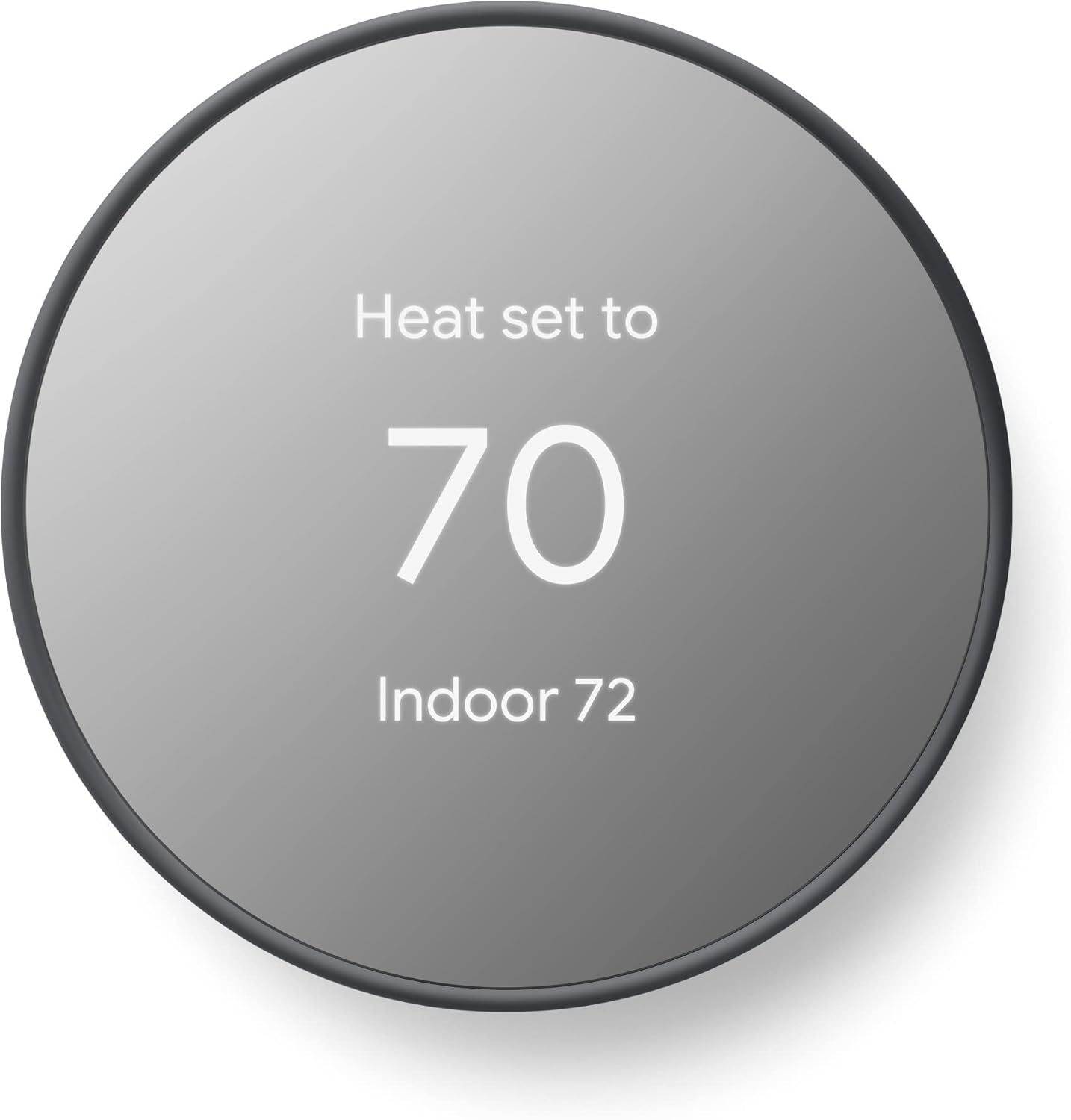
| Connectivity Technology | Bluetooth, Wi-Fi |
|---|---|
| Power Source | Battery Powered |
| Display Type | LCD |
| Control Type | Remote Control, Voice Control |
| Number of Batteries | 2 A batteries required. (included) |
The Google Nest Thermostat is a compact smart thermostat that connects to your home Wi‑Fi and is controlled through the Google Home app, voice assistants, or the touch bar on the device. It is intended for everyday heating and cooling control and includes features like Savings Finder suggestions, Eco Temperatures when you leave, HVAC monitoring alerts, and Quick Schedule creation in the app. Install is aimed at DIY users and typically takes about 30 minutes; it works without a C‑wire in most homes though some systems may require a C‑wire or power accessory. Practical benefits include remote temperature control from a phone, basic automated energy-saving behavior, and alerts that can flag potential HVAC problems early. Limitations are that advanced energy programs like Nest Renew and some voice features require account setup, compatible services, working internet, and eligible utility participation, and a small portion of older or nonstandard HVAC systems may need additional wiring or professional help.
Best for: Buyers who want a straightforward, energy-conscious smart thermostat that is easy to install and manage through a phone or voice assistant and who prefer proven, mainstream smart home integration.
Less Ideal for: Homes with uncommon or high‑voltage HVAC systems or buyers who need advanced, pro‑level diagnostic features or enterprise integrations.
- Simple app and touch controls for remote and local temperature adjustments
- Energy-saving features like Eco Temperatures and Savings Finder that suggest schedule tweaks
- Designed for DIY installation with included mounting hardware and screws
- Works with major voice assistants and supports Wi‑Fi and Bluetooth connectivity
- May require a C‑wire or power accessory for some HVAC setups
- Some smart features depend on account setup, compatible services, and working internet
Verdict: A user-friendly Wi‑Fi thermostat that delivers easy DIY installation, app and voice control, and practical energy-saving features for mainstream homeowners.
Choosing the Right Wi-Fi Heat Pump Thermostat: Key Factors to Consider
Heat Pump Control Support
Thermostats must handle the control signals a heat pump needs, including reversing valve output, multi-stage heating and cooling, and auxiliary or emergency heat circuits. If a thermostat cannot properly signal the outdoor unit or manage backup heat, you risk short-cycling, system confusion, or higher utility bills.
Confirm whether the thermostat supports 1 heat/1 cool heat pumps, multi-stage compressors, and separate auxiliary heat stages. Proper mode mapping ensures the thermostat only calls for backup heat when outdoor temperatures or compressor performance warrant it, which preserves efficiency and protects equipment.
Wiring Compatibility and Installation
Different homes use different wiring setups, and heat pump systems often require more terminals than a simple gas furnace setup. Check for support of common terminals used with heat pumps, such as O/B (reversing valve), AUX/E, and multiple Y stages. Some modern thermostats also require a common C wire for reliable Wi-Fi operation, so verify whether your setup provides one or if an adapter is needed.
Ease of installation matters because complicated wiring can add time or require professional help. Look for thermostats that include clear wiring diagrams for heat pump systems and offer jumpers or configuration options for common HVAC control schemes.
Scheduling and Remote Control
Good scheduling features let you match temperature setpoints to daily patterns, reducing runtime without sacrificing comfort. For heat pump systems, schedules should avoid rapid setbacks that force frequent auxiliary heat engagement. A thermostat that supports gradual setpoint changes and event-based schedules will help prevent unnecessary use of backup heat.
Remote control through a stable app or web portal is essential for on-the-go adjustments and runtime monitoring. Consider whether the app provides clear status of active stages, outdoor unit commands, and whether it offers integration with voice assistants or home automation platforms if you plan to tie the thermostat into a larger smart home setup.
Adaptive Algorithms and Energy Features
Some thermostats include algorithms that learn how long your system takes to reach setpoints and automatically adjust start times. For heat pumps, adaptive control can reduce energy use by avoiding late starts that trigger auxiliary heat. Demand response compatibility and built-in energy reports help you spot wasteful patterns and confirm savings from schedule changes.
Assess whether energy features are informative and actionable. Basic runtime logs are useful, but the most helpful tools translate runtime into estimated energy impact or suggest schedule changes specifically aimed at minimizing auxiliary heat.
Reliability of Wi-Fi and Updates
A thermostat that frequently loses connection undermines remote control and automated schedules. Evaluate the thermostat's approach to connectivity, such as support for 2.4 GHz networks, automatic reconnection behavior, and ability to operate reliably when offline for short periods. Firmware-update practices matter too because heat pump control logic may be refined over time; devices with regular firmware updates and clear update mechanisms are preferable.
Also consider how the thermostat behaves during network outages. It should maintain local schedule execution and proper heat pump control even when cloud services are unreachable, then synchronize changes once connectivity returns.
User Feedback and Diagnostics
Clear status indicators and diagnostic tools help you confirm that the thermostat is controlling the heat pump correctly. Look for models that display which stage is active, when auxiliary heat is engaged, and provide simple logs of recent commands. These features speed troubleshooting and reduce unnecessary service calls.
Diagnostic information should be understandable to homeowners and detailed enough for a technician to act on. Alerts for wiring issues, sensor faults, or communication errors add practical value by catching problems early and protecting system health.
How Heat Pump Thermostats Differ From Conventional Models
Heat pump thermostats are designed to manage reversing valve signals, auxiliary or emergency heat, and the unique staging behavior of compressor-driven systems. Unlike conventional thermostats, they must avoid control patterns that trigger unnecessary backup heat and should provide modes that reflect heat pump operating logic.
Understanding these differences helps you pick a thermostat that keeps the heat pump running efficiently and avoids control conflicts that can shorten equipment life or raise operating costs.
- Reversing valve (O/B) polarity and timing considerations
- Auxiliary heat thresholds and prevention of short cycling
- Support for balance points and adaptive start to minimize backup heat use
Wiring Checklist Before You Buy
Before selecting a thermostat, check the terminal block at your indoor control board and label each wire. Confirm presence of O/B, Y, AUX/E, and C terminals if relevant. If a C wire is missing and the thermostat needs one for Wi-Fi, identify whether your system has an unused transformer terminal or if a power extender or adapter will be required.
Having these details ahead of time prevents installation surprises and helps you pick a thermostat model with the right wiring flexibility.
- Identify O/B, Y, G, C, R, and AUX/E wires
- Photograph the control board for reference
- Note whether your system uses single-stage or multi-stage compressor control
App Features That Actually Help Save Energy
Not all app features produce meaningful savings. Useful capabilities include adaptive scheduling, clearly reported runtime by stage, and alerts when auxiliary heat is running. Look for apps that translate runtime into actionable guidance rather than just charts.
Integration with local utility demand response or time-of-use scheduling can amplify savings for homes on variable-rate plans. Ensure the app supports scheduling tied to price or demand signals if that is important to your energy management strategy.
- Adaptive start and end timing
- Stage-specific runtime reports
- Time-of-use and demand response scheduling options
Installation Tips to Avoid Common Problems
During installation, power down the HVAC system at the breaker to avoid control board damage. Use the original terminal labels and confirm that the reversing valve wiring is set to the correct polarity for your system. If you are not comfortable with wiring, stop and seek professional help rather than risk miswiring heat pump controls.
After installation, run through the thermostat's setup steps to configure system type, stage counts, and any aux heat parameters. Perform a manual test cycle to confirm the outdoor unit and reversing valve respond correctly and that auxiliary heat engages only when expected.
- Turn off power at the breaker before wiring
- Double-check O/B polarity and auxiliary heat configuration
- Run manual heat and cool tests post-install
When to Call a Professional
If your system uses unconventional wiring, multiple control boards, or there is any uncertainty about the function of existing terminals, a technician can map the system and install the thermostat safely. Professionals can also verify charging, airflow, and sequence-of-operations issues that a thermostat alone cannot fix.
Hire a pro when you need the thermostat to integrate with legacy controls, variable-speed compressors, or communicating HVAC systems that require specialist configuration. Professional installation reduces risk of accidental damage and ensures control logic is set correctly for system longevity.
- Complex wiring or unclear terminal functions
- Integration with advanced HVAC controls
- Persistent auxiliary heat engagement after thermostat install
How We Chose the Best Wi-Fi Heat Pump Thermostat
We narrowed candidates by focusing on features that directly affect heat pump performance and user experience. Compatibility with multi-stage heat pump controls and auxiliary/backup heat wiring was a primary filter. We prioritized thermostats that explicitly support heat pump-specific modes such as emergency heat, reversing valve control, and defrost-friendly behavior. Usability was another major criterion. We looked for clear, mobile-friendly apps and straightforward schedule programming because easy control increases the odds that homeowners will actually reduce runtime and save energy. Connectivity reliability and update frequency were considered to ensure remote control remains dependable over time. Energy and adaptive learning features were examined for their real-world value, favoring thermostats that optimize setpoints or provide meaningful runtime insights rather than cosmetic graphs. Installation flexibility and compatibility with common wiring configurations were assessed to reduce the likelihood of professional-only installs. Finally, we excluded products that lack explicit heat pump support, omit auxiliary-heat handling, or have consistently poor connectivity documentation. The resulting shortlist balances technical fit for heat pump systems with day-to-day usability.
Our full evaluation process is outlined in our review methodology.
FAQ
Will a Wi-Fi thermostat work with my heat pump?
Often it will, but you must confirm that the thermostat supports heat pump-specific terminals like O/B and AUX/E and that it can handle your system's number of stages. Check wiring and configuration options before purchase.
Do Wi-Fi thermostats cause auxiliary heat to run more often?
Not inherently. Poorly configured setback schedules or rapid temperature changes can trigger auxiliary heat. Choose a thermostat that supports gradual setbacks and adaptive start to minimize unnecessary auxiliary use.
Is a C wire required for Wi-Fi heat pump thermostats?
Many Wi-Fi thermostats prefer a C wire for reliable power, though some include power extenders or battery options. Without a C wire, you may experience intermittent connectivity or need an adapter.
Can the thermostat protect my heat pump from short cycling?
A thermostat with built-in minimum run timers and cycle-protection settings can reduce short cycling risk. Also ensure correct stage configuration and inter-stage delays during setup.
Will the thermostat work during internet outages?
Most thermostats continue to run local schedules and control the system when the internet is down. Remote control and cloud features will be unavailable until connectivity returns.
Final Verdict
Choose a Wi-Fi heat pump thermostat that explicitly supports your system's control signals, provides clear installation guidance, and includes scheduling features that prevent unnecessary auxiliary heat. Prioritize compatibility and app clarity over bells and whistles, and confirm wiring needs before buying. If you value lower runtime and simpler remote control, focus on thermostats with adaptive scheduling, reliable connectivity, and robust diagnostic feedback. Those tradeoffs will help you get the most efficient, trouble-free operation from your heat pump.