
Note: This article contains affiliate links. If you click on these links and make a purchase, we may earn a small commission at no extra cost to you. This helps support our research and content. Read our full affiliate disclosure here.
If you want dependable homemade bread without fuss, a basic bread maker streamlines mixing, rising, and baking into a single appliance you can set and forget. You do not need advanced settings or dozens of loaf programs to get consistent sandwich loaves, whole wheat breads, or quick white loaves suitable for daily use. This guide covers seven shortlisted basic bread makers chosen for everyday reliability, straightforward controls, and easy maintenance. We walk through the most important features that affect loaf consistency, ease of setup, and cleanup so you can pick the right simple machine for your kitchen.
Top Picks at a Glance
| Best Overall The best all-around choice for most situations | Zojirushi Home Bakery Virtuoso Plus BB-PDC20BA |  |
| Best Quality Built to a higher standard if you want something more solid | Breville Custom Loaf BBM800XL | 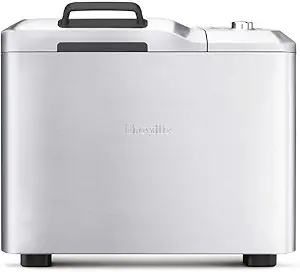 |
| Best Value The sweet spot between price and what you get | VEVOR Bread Maker MBF-020 |  |
| Best Budget The cheapest option that still gets the job done reliably | Elite Gourmet Bread Maker EBM8103B |  |
| Top Rated A top-rated pick with lots of positive feedback | KITCHENARM 29‑in‑1 Bread Machine |  |
| Most Popular A crowd favorite that many people choose with confidence | Cuisinart Bread Maker CBK-110P1ES |  |
| Best Seller A high-volume bestseller chosen again and again | OSIPOTO 2LB Bread Maker BM8205 | 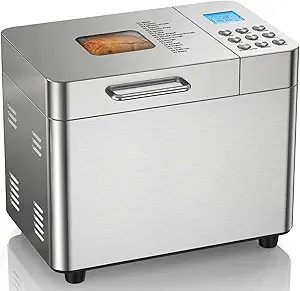 |
Zojirushi Home Bakery Virtuoso Plus BB-PDC20BA

| Capacity | 2 pounds |
|---|---|
| Wattage | 700 watts |
| Voltage | 120 volts |
| Number of Programs | 7 |
The Zojirushi Home Bakery Virtuoso Plus is a full-featured countertop breadmaker aimed at reliably producing 2-pound loaves with consistent crust color and texture. You select one of seven programs on the LCD control panel — options include whole wheat, multigrain, rapid whole wheat, and a dedicated gluten-free cycle — add measured ingredients, then the machine handles kneading, rising, and baking. Dual heaters (bottom and lid) and double kneading blades promote even browning and a higher rise, while three crust shades let you dial in color. The 13-hour delay timer is handy for waking to fresh bread, and rapid courses can finish a loaf in about 2 hours 25 minutes. The removable nonstick pan and included measuring tools simplify cleanup and recipe setup, though the unit is fairly heavy and hand-wash care is recommended. If you want a dependable, versatile home breadmaker that emphasizes even baking and healthy-course presets, this model delivers consistent results without a steep learning curve.
Best for: Buyers who want a reliable all-purpose breadmaker that simplifies baking a variety of healthy breads and fits into a regular kitchen routine.
Less Ideal for: Those who need an ultra-compact or very lightweight machine for frequent transport or who prefer fully dishwasher-safe parts should look elsewhere.
- Produces consistent 2 lb loaves with even browning thanks to dual heaters
- Multiple healthy-course presets including gluten-free and rapid whole wheat
- Double kneading blades for thorough dough development and better rise
- 13-hour delay timer lets you schedule fresh bread for morning or evening
- Removable nonstick pan and included measuring tools simplify cleanup and setup
- Unit is relatively heavy, which makes moving or storing it less convenient
- Requires hand washing of some components rather than dishwasher-safe parts
Verdict: A dependable, easy-to-use breadmaker that reliably produces well-browned 2 lb loaves with versatile healthy-course settings.
Breville Custom Loaf BBM800XL

| Capacity | 2.5 pounds |
|---|---|
| Wattage | 830 watts |
| Number of Programs | 13 |
| Voltage | 120 volts |
The Breville Custom Loaf BBM800XL is a feature-rich bread machine aimed at people who want control over loaf size, crust and mix-ins without hand-kneading. It bakes up to a 2.5-pound loaf using one of 13 automatic programs or one of nine custom recipe slots you can program and store, and the smart LCD shows progress from knead through bake. The collapsible kneading paddle mixes on a platform then folds away before baking so the loaf has fewer holes, and the automatic fruit and nut dispenser adds mix-ins at the right time for consistent results. Practical touches include 60 minutes of power-interruption backup and both a collapsible paddle plus a fixed paddle for jam. Downsides are that it is relatively heavy and sized for countertop placement, and cleaning requires hand washing parts. For someone focused on making consistently high-quality, customizable loaves at home, the Breville delivers professional-style control without manual dough work.
Best for: Buyers who prioritize control and performance in home bread baking and want the ability to customize and save recipes for consistently high-quality loaves.
Less Ideal for: If you need an ultra-compact or lightweight machine for occasional single loaves or want dishwasher-safe convenience, other simpler models may be a better fit.
- Collapsible kneading paddle that folds away to reduce paddle hole in the finished loaf
- Automatic fruit and nut dispenser times mix-ins for consistent results
- 13 automatic programs plus 9 custom settings for recipe flexibility
- Smart LCD display with program progress and 60 minutes of power-interruption protection
- Requires hand washing for care
- Relatively heavy and takes noticeable countertop space
Verdict: Choose the Breville Custom Loaf BBM800XL when you want a countertop bread machine that delivers customizable, bakery-style loaves with smart features and repeatable results.
VEVOR Bread Maker MBF-020

| Voltage | 120 volts |
|---|---|
| Capacity | 0.9 kg |
| Wattage | 650 watts |
| Number of Programs | 19 |
This VEVOR bread maker is a straightforward countertop machine that handles everything from kneading to baking using one-touch programs. Buyers can choose among 19 preset menus for French, whole wheat, quick breads, gluten-free loaves, dough, jams and cakes, and pick three loaf sizes and three crust darkness settings to match household needs. The food-grade ceramic inner pan and two mixing blades aim to deliver even heating and an easier release than bare metal pans, and the 650 W heater plus a vented lid help control moisture and loaf expansion for consistent texture. Practical features include a 0–15 hour delay timer, a 1-hour keep-warm mode, a power-out memory that resumes after short interruptions, and an ingredient-add reminder beep for mix-ins. At about 2 lb maximum capacity it is sized for small to medium families, and the unit is intended for simple, automated baking rather than high-volume artisan loaves; ceramic pans may require gentle handling and hand wiping for care. For a buyer who wants a budget-friendly, programmable way to make everyday breads and basic specialty items, this model covers the essentials without complexity.
Best for: Home cooks who want a simple, programmable machine to bake everyday loaves and occasional specialty items while maximizing convenience and schedule flexibility.
Less Ideal for: People who need large 3 lb loaves, commercial-level output, or who prefer heavy-duty metal pans for frequent high-volume baking.
- Wide variety of 19 preset programs for bread, dough, jam and cake
- Three loaf size and three crust color options for portion and texture control
- Food-grade ceramic nonstick inner pan for easier release and even heating
- Delay timer, keep-warm and power-interruption memory for flexible scheduling
- Ingredient-add reminder makes adding nuts/seeds or other mix-ins simple
- Maximum 2 lb capacity limits baking to small or medium households
- Ceramic inner pot needs gentle cleaning and may be less durable than metal alternatives
Verdict: A practical, no-frills bread maker that delivers flexible, scheduled home baking with a ceramic nonstick pan ideal for everyday loaves.
Elite Gourmet Bread Maker EBM8103B

| Capacity | 2 pounds |
|---|---|
| Wattage | 550 watts |
| Number of Programs | 19 |
| Voltage | 120 volts |
The Elite Gourmet EBM8103B is an entry-level programmable bread maker that automates kneading, rising, and baking so you can make fresh loaves with minimal effort. You add ingredients, pick one of 19 programs — from gluten-free and rye to pizza dough and jam — choose loaf size (1, 1.5, or 2 lb) and crust darkness, and the machine handles the rest. The 15-hour delay timer and 60-minute keep-warm let you time baking for mornings or meals, and the compact design saves counter space and uses less energy than an oven. Included accessories such as a nonstick bread pan, kneading blade, and measuring tools make it ready to use out of the box. Limitations are the basic control set and single-bread-pan design, which mean less flexibility than high-end models with dual pans or advanced programmability, and the aluminum construction is utilitarian rather than premium. For buyers seeking a straightforward, budget-friendly way to bake a variety of breads at home, this model covers the essentials without unnecessary complexity.
Best for: Buyers on a tight budget who want a simple, reliable machine to bake a variety of breads at home without learning complex settings.
Less Ideal for: Bakers who need dual-pan capacity, pro-level durability, or advanced customization should look at higher-end models instead.
- Wide 19-program selection including gluten-free and specialty settings
- Three loaf size options (1, 1.5, 2 lb) and adjustable crust color
- 15-hour delay timer and 60-minute keep-warm for scheduled baking
- Compact, energy-saving design suitable for small kitchens
- Comes with necessary accessories like nonstick pan and measuring tools
- Single bread pan and basic controls limit advanced customization
- Aluminum build and utilitarian finish may feel less durable than higher-end models
Verdict: A budget-friendly, no-frills bread maker that delivers a wide range of preset breads and timed baking for anyone wanting easy homemade loaves.
KITCHENARM 29‑in‑1 Bread Machine

| Voltage | 120 volts |
|---|---|
| Capacity | 2 pounds |
| Wattage | 550 watts |
| Number of Programs | 29 |
This KITCHENARM bread machine is designed to handle everything from basic loaves to specialty breads and non-bread recipes thanks to 29 automatic programs and a fully customizable HOME MADE menu. You load ingredients, pick a program or create one with specific knead/rest/rise/bake times, then use the large LCD and controls to select loaf size and crust color; repeat recipes become one-press operations once saved. Practical features include three loaf sizes (2 lb, 1.5 lb, 1 lb), a 15-hour delay timer, a keep-warm function, add-nuts alarm, and a nonstick Teflon bread pan. The unit is ETL certified for North American use and has a 550 W motor that handles typical doughs; built-in presets cover gluten-free, whole wheat, sourdough, jam, cake, and yogurt, plus four user-program slots for tweaking advanced recipes. Trade-offs are typical for compact bread makers: the pan is hand-wash only and the machine's controls are menu-driven rather than touchscreen, so manual adjustments require familiarity; ambitious bakers will still need to test timings when converting recipes. For steady, reliable home baking it delivers a solid, feature-rich baseline.
Best for: Home cooks who want a dependable, versatile bread maker that can produce consistent loaves with minimal fuss and who value saved presets and programmable cycles.
Less Ideal for: Bakers who need a fully manual oven-style environment or want dishwasher-safe pans and a touchscreen interface should consider other models.
- Large selection of 29 automatic programs covering breads and non-bread items
- Customizable HOME MADE menu with up to four personalized recipes
- Three loaf sizes and three crust color settings for flexible results
- ETL certified for North American electrical safety and a clear LCD for controls
- Bread pan requires hand washing rather than dishwasher cleaning
- Menu-driven interface can take time to learn for precise manual tweaking
Verdict: A reliable, programmable bread machine that gives home bakers lots of preset options and saved recipes for repeatable, hands-off loaves.
Cuisinart Bread Maker CBK-110P1ES

| Capacity | 2 pounds |
|---|---|
| Wattage | 550 watts |
| Number of Programs | 12 |
| Voltage | 120 volts |
The Cuisinart CBK-110P1ES is a compact, fully automatic bread machine designed for everyday home baking. You choose a program, set loaf size and crust color, and the machine handles mixing, kneading, rising, and baking with a clear LCD countdown and audible beeps. Notable features include 12 preprogrammed menu options for standard and specialty breads plus cakes and jams, a 13-hour delay-start timer for waking up to fresh bread, and a 60-minute keep-warm function. The vertical nonstick pan produces 1, 1.5, or 2 lb. loaves, making it easy to fit different household sizes, and the stainless steel exterior keeps the unit looking tidy on the counter. Limitations to expect are a single paddle that can leave a small tunnel under some loaves and the compact cavity may not match artisan-style wide loaves. The unit is straightforward to operate and cleanable components are removable, but hand washing is required for care. For buyers seeking a reliable, no-frills machine that produces consistent sandwich and everyday loaves, this is a practical choice.
Best for: Buyers who want a dependable, simple-to-use bread machine that reliably produces everyday loaves with programmed presets and scheduling features, and who value social proof and proven performance.
Less Ideal for: People seeking bakery-style artisan loaves with wide crusts or those who want fully dishwasher-safe parts should consider other options.
- 12 preprogrammed settings for a range of breads and other recipes
- Selectable loaf sizes and crust colors for flexible results
- 13-hour delay-start timer for fresh bread on a schedule
- Compact footprint with stainless steel exterior fits most countertops
- Single kneading paddle can create a small hole or tunnel in the loaf
- Requires hand washing for removable parts rather than dishwasher-safe
Verdict: A straightforward, reliable bread maker that makes consistent everyday loaves with convenient presets and a delay timer.
OSIPOTO 2LB Bread Maker BM8205

| Capacity | 2 pounds |
|---|---|
| Wattage | 600 watts |
| Number of Programs | 17 |
| Voltage | 120 |
The OSIPOTO 2LB Bread Maker (BM8205) is a straightforward countertop machine for people who want freshly baked loaves without fuss. You add ingredients, pick one of 17 preset programs and the unit handles kneading, proofing and baking; it also supports three loaf sizes and three crust settings for basic customization. The stainless steel housing and nonstick baking pan make cleanup simpler, and a 15-hour delay timer plus a one-hour keep-warm function let you schedule bread for morning or evening. At 600 watts the motor delivers even heat and the brand claims low noise and overheat protection for safer operation. Practical limits are its 2 pound maximum capacity—good for families but not for large gatherings—and the controls are geared toward preset use rather than advanced manual adjustments. For buyers who want a low-risk, beginner-friendly way to replace store bread with homemade loaves, this machine provides consistent, easy results with minimal learning curve.
Best for: Buyers who want a dependable, beginner-friendly bread maker that reliably produces fresh loaves with minimal setup and low risk.
Less Ideal for: Users who bake experimentally or need commercial-size batches should look for machines with larger capacity and more manual control.
- 17 preset programs cover basic breads, cake, jam and gluten-free options
- Large 2 lb capacity with three loaf size choices for family-sized loaves
- Nonstick pan simplifies loaf removal and cleaning
- 15-hour delay timer and 1-hour keep-warm let you schedule fresh bread
- Stainless steel exterior with built-in overheat protection for safer operation
- Limited to preset program controls with few options for manual tweaking
- Not suited for very large batches beyond the 2 lb maximum
Verdict: A safe, easy-to-use bread maker that delivers consistent family-size loaves with minimal effort, ideal for risk-averse beginners.
Choosing the Right Basic Bread Maker: Key Factors to Consider
Loaf Size and Crust Options
Bread makers advertise different loaf capacities and crust darkness settings, and these choices directly affect how you plan baking. If you need standard sandwich loaves for daily use, prioritize machines with a 1- to 2-pound loaf capacity and simple crust selectors. Larger or smaller pans change baking times and crumb texture, so matching capacity to household consumption reduces waste.
Crust controls matter when you prefer a softer crust for sandwiches or a darker crust for toast. Basic machines often limit you to a few presets rather than granular control, so verify the available options match the bread styles you bake most often.
Program Simplicity and User Interface
A basic bread maker should make starting a bake easy without a steep learning curve. Clear, tactile buttons and a minimal array of presets reduce setup errors and speed up routine use. Look for obvious primary functions such as loaf size, crust shade, and start/delay timers that are labeled plainly.
A simple interface also reduces the chance of accidentally altering a program mid-cycle. For buyers who plan to use delayed start features, check that the timer and ingredient order instructions are straightforward to avoid issues with yeast activation or ingredient separation.
Mixing and Kneading Performance
Effective mixing and kneading determine gluten development and therefore crumb structure. Assess whether the paddle design and motor speed provide steady, even kneading without overheating or stalling. In basic machines the kneading cycle is fixed, so the mechanical setup must be reliable for a range of dough hydration levels.
Poor kneading leads to dense or uneven loaves, so durability of the paddle attachment and the motor's ability to handle heavier whole-grain doughs are important considerations even for entry-level models.
Pan Design and Nonstick Finish
The bread pan's shape and coating influence loaf shape and release. A true rectangular pan yields sandwich-ready loaves, while some pans taper or have odd corners that complicate slicing. A high-quality nonstick finish and a removable pan make turning out a loaf and cleaning simpler.
Nonstick coatings wear over time, so removable pans that are easy to hand-wash extend usable life. Also consider how the paddle anchors inside the pan and whether it leaves a large hole in the loaf or can be removed easily after baking.
Cleaning, Maintenance, and Parts Replacement
Routine upkeep affects how often you actually use the bread maker. Removable components, accessible interiors, and smooth surfaces cut down cleaning time. Look for pans and kneading paddles that detach without tools and for interior spaces that do not trap flour or dough.
Maintenance also includes availability of replacement paddles and pans and how easy it is to service seals or lids. Simple mechanical designs typically mean fewer failure points and easier DIY fixes if a small part wears out.
Power and Noise Levels
Motor power impacts kneading performance and how reliably the machine handles heavier doughs. For basic models, a balance is needed: enough torque to knead whole-grain doughs without producing excessive noise or vibration. Check specifications for motor wattage as an indicator of capability.
Noise matters if you plan to run delayed cycles overnight or in small living spaces. A quieter motor is less disruptive, but overly quiet units that strain under load can sacrifice kneading effectiveness. Look for machines that report stable operation with moderate noise output.
Simple Recipes That Work With Basic Machines
Basic bread makers excel at straightforward doughs: standard white, basic whole wheat, and quick breads that rely on common ingredients and predictable hydration. Stick to recipes that specify machine cycles rather than trying complex multi-step artisan methods.
When adapting a conventional recipe for a bread maker, reduce liquid slightly for recipes that call for high hydration and follow the manufacturer order for adding ingredients. Delayed-start or rapid cycles will require small recipe tweaks, so experiment with one loaf to dial in textures before batches for guests.
- Use bread flour or all-purpose with a soft wheat percentage for reliable gluten
- Measure yeast and salt precisely to avoid overproof or flavor issues
- Avoid add-ins that disrupt kneading unless your machine has a designated add-in signal
Using the Delay Timer Safely
The delay timer is a convenient feature for having fresh bread ready at a set time, but it introduces food-safety and ingredient-activity concerns. For delays longer than a few hours, use dry ingredients and consider refrigerating perishable add-ins until the cycle prompts their addition.
A common approach is to add yeast and other ingredients in the order recommended by the machine and to place chilled liquids on top to slow fermentation. Avoid dairy-heavy or fruit-filled doughs on long delays because they can encourage bacterial growth or ferment unpredictably.
- Limit delay times for recipes that include eggs, dairy, or fresh fruit
- Use instant yeast for more reliable delayed-start behavior
- Place liquids last if the machine manual advises to keep yeast dry until start
Maintenance Tips to Keep a Basic Bread Maker Working
Regular cleaning after each bake prevents buildup and preserves nonstick coatings. Remove the pan and paddle and wash by hand with warm, soapy water. Wipe interior surfaces and heating elements gently to remove crumbs.
Inspect the paddle and pan for wear and replace parts when nonstick coatings flake. Lubricate hinge points if the lid becomes stiff, and avoid submerging the base or motor housing. Storing the machine with the lid slightly ajar prevents trapped moisture and stale odors.
- Clean immediately after the unit cools to avoid hardened residue
- Keep a spare paddle or pan if you bake frequently
- Follow manufacturer guidance for safe cleaning of electrical components
Troubleshooting Common Problems
Dense loaves, sunken centers, or uneven crumb are typical issues with simple machines and usually relate to ingredient ratios, yeast freshness, or kneading effectiveness. Check yeast age, re-measure flour and liquid, and ensure the pan is seated correctly.
If the machine struggles to knead, remove stiff dough early and finish by hand to test whether the recipe hydration or ingredient mix is the cause. Uneven crust color can result from placement in the kitchen or repeated use; rotate loaf styles and clean heating surfaces to maintain even baking.
- Verify yeast is active by proofing a small sample when in doubt
- Adjust liquid by tablespoons if dough appears too wet or dry during kneading
- Ensure the paddle is fully engaged and not slipping on its shaft
When a Basic Bread Maker Is the Right Choice
Choose a basic machine if you want low-effort, reliable loaves for sandwiches, toast, or everyday meals. These units minimize complexity and focus on steady results rather than offering numerous specialty cycles.
They are a good fit for households that bake frequently but prefer a plug-and-play machine instead of manual mixing, proofing, and oven baking. If you value ease of use and predictable outcomes over advanced customization, a basic bread maker will meet most home needs.
- Best for routine bakers who want consistent, no-fuss loaves
- Not ideal for artisan crusts, sourdough, or multi-step fermentation techniques
- Pairs well with a small set of reliable recipes you use repeatedly
How We Chose the Best Basic Bread Maker
We focused on machines that prioritize straightforward operation and consistent loaf results. Editorial filters included program simplicity, repeatable crumb and crust outcomes, and durable build for regular household use. We measured how control layouts and preset programs affect first-time user success, and we checked motor and paddle designs for gentle but thorough mixing that reduces dense spots in the loaf. Ease-of-cleaning features such as removable pans and nonstick finishes were required, as were reliable rise and bake temperature control across cycles. We excluded models with extensive advanced menus, touchscreen-heavy interfaces, or specialty functions that go beyond basic loaf baking. We also ruled out compact novelty units that cannot produce a standard 1- to 2-pound loaf. The final list emphasizes machines that deliver consistent loaves, simple setup, manageable upkeep, and reliable mechanical components.
Our full evaluation process is outlined in our review methodology.
FAQ
Can I make whole-grain loaves in a basic bread maker?
Yes. Basic machines can handle whole-grain recipes, but these doughs often need slightly more liquid and longer kneading. Expect denser results than white loaves and check that the motor can manage heavier doughs.
How long does a typical loaf cycle take?
A standard loaf cycle usually takes three to four hours, depending on loaf size and crust settings. Rapid cycles shorten time at the cost of some crumb refinement.
Is the paddle hole in the bottom of the loaf unavoidable?
Most bread makers leave a small hole from the kneading paddle. Some paddle designs and removable inserts reduce its size, but a small indentation is common and can be trimmed or used to hold butter.
Can I use frozen ingredients in a delayed start?
Using frozen liquids can slow fermentation, but it may also trigger uneven yeast activation. For long delays, chilled ingredients are preferable to frozen ones; avoid perishable add-ins on extended timers.
How often should I replace the kneading paddle or pan?
Replace parts when nonstick coatings show wear or the paddle shows deforming. For regular use, inspect components every few months and replace as needed to maintain loaf release and hygiene.
Final Verdict
For everyday home baking, prioritize machines that deliver consistent loaf structure, straightforward controls, and easy cleanup. Expect tradeoffs: basic models keep operation simple but limit customization, so focus on loaf capacity, kneading reliability, and pan design when choosing. If dependable sandwich loaves and low-maintenance operation are your goals, select a basic bread maker with proven kneading performance and removable, durable parts to ensure satisfying results over many bakes.