
Note: This article contains affiliate links. If you click on these links and make a purchase, we may earn a small commission at no extra cost to you. This helps support our research and content. Read our full affiliate disclosure here.
If you want fresh bread without a lot of fuss, an Easy Bread Maker can turn basic ingredients into warm loaves with minimal intervention. You care about dependable results, straightforward controls, and hassle-free cleanup. This guide focuses on the best easy bread makers designed for home kitchens and highlights models that simplify mixing, rising, and baking while still producing consistent texture and crust. Below are our top shortlisted options, each selected for practical performance and user-friendly operation. Read on to see the evaluation criteria we used and factors that matter when choosing an easy bread maker for everyday use.
Top Picks at a Glance
| Best Overall The best all-around choice for most situations | Zojirushi Home Bakery Virtuoso Plus |  |
| Best Quality Built to a higher standard if you want something more solid | Breville Custom Loaf BBM800XL | 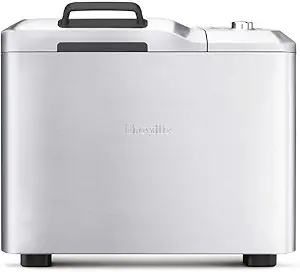 |
| Best Value The sweet spot between price and what you get | Elite Gourmet Bread Maker EBM8103B |  |
| Best Budget The cheapest option that still gets the job done reliably | Generic 2LB Bread Maker |  |
| Top Rated A top-rated pick with lots of positive feedback | Saluna Bread Maker BM901 |  |
| Most Popular A crowd favorite that many people choose with confidence | Cuisinart Bread Maker CBK-110P1ES |  |
| Best Seller A high-volume bestseller chosen again and again | OSIPOTO 2LB Bread Maker BM8205 | 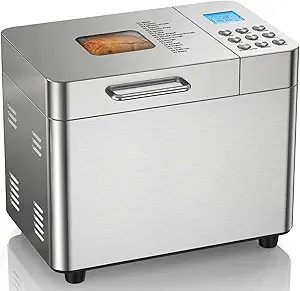 |
Zojirushi Home Bakery Virtuoso Plus

| Capacity | 2 pounds |
|---|---|
| Wattage | 700 watts |
| Voltage | 120 volts |
| Number of Programs | 7 |
The Zojirushi Home Bakery Virtuoso Plus is a full-featured countertop breadmaker built for consistent, hands-off loaves. You add measured ingredients, pick one of seven programs on the clear LCD panel and the machine handles mixing, kneading with dual blades, proofing and baking a rectangular 2 lb loaf; dual heaters on the lid and base help produce even browning and a reliable crust. Notable settings include rapid cycles that can finish a white or whole wheat loaf in roughly 2 hours 25 minutes and specialty courses like gluten-free, multigrain, vegan and salt- or sugar-free options. A 13-hour delay timer is convenient for waking to fresh bread, and the removable nonstick pan plus included measuring tools make routine use straightforward. The unit is robust and feels built to last, though it is relatively heavy and takes counter space typical of larger home breadmakers. If you want an easy way to make consistently good loaves with flexible program choices, this model delivers predictable results with minimal tinkering.
Best for: Home cooks who want a reliable, low-effort breadmaker that produces consistent 2 lb loaves and offers a wide range of preset programs for everyday baking.
Less Ideal for: Those who need a very compact or lightweight machine for small kitchens or who prefer a model optimized solely for very fast single-recipe baking.
- Dual heaters plus two kneading blades for even baking and improved rise
- Seven preset programs including gluten-free, whole wheat, rapid and vegan
- 13-hour delay timer lets you schedule fresh bread for morning or evening
- Removable nonstick pan and included measuring tools simplify cleanup and use
- Heavy and relatively large, so it occupies significant counter space
- Requires hand washing for some parts rather than dishwasher-safe cleaning
Verdict: Pick this model if you want an easy, dependable breadmaker that produces consistently well-browned 2 lb loaves with versatile preset programs.
Breville Custom Loaf BBM800XL

| Capacity | 2.5 pounds |
|---|---|
| Wattage | 830 watts |
| Number of Programs | 13 |
| Voltage | 120 volts |
The Breville Custom Loaf BBM800XL is a feature-rich bread machine aimed at cooks who want precise control over homemade loaves. It offers 13 automatic programs plus nine custom recipe slots, letting you save personal settings for crust color and loaf type, and it includes specialized cycles such as gluten-free and jam. The collapsible kneading paddle mixes on a platform and folds away before baking to reduce holes in the crumb, while the automatic fruit and nut dispenser times additions so mix-ins are evenly distributed. A clear LCD makes it easy to monitor progress and a 60-minute power-interruption backup protects long cycles. At 830 watts it handles typical doughs reliably, and the included collapsible and fixed paddles cover both bread and jam functions. The machine is relatively heavy and requires hand washing for parts, so it is best suited to regular home bakers rather than occasional users who want minimal cleanup. If you want consistent, customizable loaves and value control over program details, this model delivers thoughtful, performance-minded features.
Best for: Bakers who prioritize consistent results and program flexibility and who plan to customize and frequently bake a variety of loaf types at home.
Less Ideal for: Users who only bake occasionally or who need a compact, low-maintenance machine with dishwasher-safe components.
- 13 automatic programs plus nine custom recipe slots for tailored baking
- Collapsible kneading paddle reduces holes by folding away before bake
- Automatic fruit and nut dispenser times mix-ins for even distribution
- Clear LCD and 60-minute power-interruption backup for reliable cycles
- Requires hand washing for care of parts
- Heavier unit that takes up counter space and is less portable
Verdict: Choose this model if you want a performance-focused bread maker that gives precise program control and factory-quality features for consistent, customizable loaves.
Elite Gourmet Bread Maker EBM8103B

| Capacity | 2 pounds |
|---|---|
| Wattage | 550 watts |
| Number of Programs | 19 |
| Voltage | 120 volts |
The Elite Gourmet EBM8103B is a straightforward automatic bread maker that handles kneading, rising, and baking for 1 lb, 1.5 lb, or 2 lb loaves with minimal user intervention. You pick ingredients, choose one of 19 programs—including gluten-free, whole wheat, quick bread, dough, and jam—set crust color and start, or use the 15-hour delay timer to finish baking on your schedule. The included nonstick pan, kneading blade, basic measuring tools, and recipe booklet make it easy for beginners to get consistent results, and the 60-minute keep-warm holds bread until serving. At 550 watts the unit is compact and uses less energy than a full oven, which is useful in small kitchens and apartments. It is not a commercial machine, so very large batches or intensive daily use may show limits in longevity and speed, and the aluminum construction means care with wear over time. For home cooks who want reliable, no-fuss loaves without advanced customization, this model is a practical choice.
Best for: Buyers who want a practical, low-effort way to bake a variety of homemade breads on a schedule and value convenience over advanced professional features.
Less Ideal for: Those who need a heavy-duty machine for daily large-batch baking or advanced users who want fine-grain control and commercial-grade durability.
- 19 preset programs cover common breads plus dough, jam, and cake for versatile use
- Three loaf size options (1, 1.5, 2 lb) fit small households or larger families
- 15-hour delay timer and 60-minute keep-warm let you schedule fresh bread
- Compact, energy-efficient design suitable for small kitchens
- Includes nonstick pan, kneading blade, and basic accessories to start baking right away
- Not designed for commercial or very high-frequency baking
- Aluminum construction may show wear over long-term heavy use
Verdict: A budget-friendly, easy-to-use bread maker that delivers scheduled, versatile home-baked loaves with minimal fuss.
Generic 2LB Bread Maker

| Capacity | 2 pounds |
|---|---|
| Wattage | 650 watts |
| Number of Programs | 19 |
| Material | Ceramic |
This bread maker handles the full bread cycle from mixing and kneading to proofing and baking with one-button operation, making it useful for beginners and busy cooks. It offers three loaf size options up to 2 pounds and three crust settings so you can tailor results from soft to crisp. The food-grade ceramic inner pot is nonstick and advertised as durable, and a single mixing blade automates dough preparation so you do not need separate tools. A 0–15 hour delay timer and a 1-hour keep-warm function let you schedule fresh bread for mealtimes, and a power-interruption memory helps avoid wasted batches after short outages. The machine also beeps to remind you when to add extra ingredients such as nuts or fruit. With 19 preset programs the unit can make a variety of recipes including gluten-free and cake modes, though learning which program suits a specific recipe may take a few trials. The unit is practical for everyday home loaves but lacks advanced customization and professional baking controls.
Best for: Buyers who want an easy, budget-friendly machine to produce fresh home loaves with minimal hands-on time and useful preset programs.
Less Ideal for: Serious home bakers who need full manual control, advanced shaping, or bakery-level consistency should consider more advanced or dedicated equipment.
- 19 preset programs cover basic breads plus dough, jam, and cake modes
- Three loaf size options up to 2 pounds and three crust color settings
- Food-grade ceramic nonstick inner pan for easier release and cleaning
- Delay timer, keep-warm, and power-interruption memory for scheduled baking and resilience
- Limited manual/custom control for advanced bakers
- Single mixing blade may not match results from hand shaping or stand mixers
Verdict: A straightforward, affordable bread maker that delivers ready-to-schedule home loaves with convenient presets and a durable ceramic pan.
Saluna Bread Maker BM901

| Capacity | 2 pounds |
|---|---|
| Wattage | 600 watts |
| Number of Programs | 25 |
| Voltage | 120 volts |
The Saluna BM901 is a compact, user-friendly bread machine designed for everyday home baking. It offers 25 programs covering 14 bread types, cakes, special menus, baking modes and a custom setting so you can select a program and walk away. The touchscreen and visible lid make it easy to monitor progress and change settings mid-cycle, while the 13-hour delay timer lets you load ingredients the night before for fresh morning bread. The built-in automatic nut and fruit dispenser times inclusions during kneading for even distribution, and the unit supports three loaf weights and three browning levels for predictable results. At 600 watts with a nonstick aluminum baking pan and detachable blades, cleanup is straightforward and the machine feels solid in daily use. The main compromises are a modest power rating compared with high-end machines and a relatively small 2 pound maximum loaf size, so it is best for singles, couples, or small families rather than large-batch bakers.
Best for: Buyers who want a reliable, easy-to-use countertop bread maker that consistently produces small to medium loaves with presets and timed dispensing for worry-free baking.
Less Ideal for: Those who regularly bake large loaves or need a higher-power machine for very dense doughs should consider larger-capacity or higher-wattage alternatives.
- Wide program selection (25 programs) covers many bread types and custom settings
- Touchscreen and visible lid let you monitor and adjust baking easily
- Automatic nut/fruit dispenser times additions for consistent texture
- 13-hour delay timer for fresh bread on a schedule
- Detachable nonstick pan and blades simplify cleaning
- 2 lb capacity may be small for larger households
- 600 watt motor is adequate but not as powerful as some premium models
Verdict: A dependable, easy-to-operate bread maker that delivers consistent small-to-medium loaves with useful presets and an automatic dispenser for hands-off baking.
Cuisinart Bread Maker CBK-110P1ES

| Capacity | 2 pounds |
|---|---|
| Wattage | 550 watts |
| Number of Programs | 12 |
| Voltage | 120 volts |
The Cuisinart CBK-110P1ES is a countertop bread machine intended to simplify homemade baking by handling mixing, kneading, rising, and baking in one compact unit. You pick one of 12 preprogrammed menus, choose a crust color and loaf size, and the machine runs the full cycle while the LCD shows time remaining and cycle stage. Notable features include a 13-hour delay-start for fresh bread when you want it, a 60-minute keep-warm mode, and audible reminders. The vertical nonstick bread pan comes out for easy removal and cleaning, and the machine's footprint fits comfortably on most counters. Practical benefits are consistent, hands-off loaves and flexibility to make cakes, pizza dough, and gluten-free recipes using the preset programs. Limits include a relatively small maximum loaf size—best for singles or small families—and plastic components in the housing that feel less premium than all-metal alternatives. The machine is straightforward to operate, reliable for everyday use, and well suited to anyone who values convenience over commercial-style crust or very large loaves.
Best for: Buyers who want a dependable, easy-to-use machine to make everyday small loaves and a variety of recipes with minimal fuss, guided by established user feedback.
Less Ideal for: Those who need bakery-size loaves, industrial-level crust control, or a premium all-metal appliance should look elsewhere.
- 12 preprogrammed settings for a variety of breads and baked goods
- Selectable crust color and three loaf size options for customization
- 13-hour delay-start and 60-minute keep-warm for timing convenience
- Compact counter footprint with removable nonstick vertical bread pan
- Maximum 2 lb. capacity is small for larger households
- Plastic exterior feels less durable than higher-end metal-bodied models
Verdict: A compact, user-friendly bread maker that delivers reliable small loaves and hands-off convenience for everyday home baking.
OSIPOTO 2LB Bread Maker BM8205

| Capacity | 2 pounds |
|---|---|
| Wattage | 600 watts |
| Number of Programs | 17 |
| Voltage | 120 |
The OSIPOTO BM8205 is a straightforward countertop bread maker aimed at people who want fresh bread without fuss. You add ingredients, pick one of 17 programs (including basic, whole wheat, gluten-free, cake, jam, and yogurt), and the machine handles kneading, rising, and baking. A 2 lb capacity supports larger loaves and three loaf-size and crust-color options let you tailor results. The included nonstick pan and removable paddle simplify cleanup, and the 15-hour delay timer plus keep-warm function let you schedule baking for mornings or evenings. Its 600W motor promises even baking with claimed 360 degree heat distribution while operating at relatively low noise levels. Practical limitations: the control scheme is basic rather than app-connected, and the recipe-dependent baking times mean novice users may need a couple of tries to dial in texture for specialty flours. The unit is compact for a 2 lb machine but still occupies counter space and requires hand-cleaning of some parts. For buyers prioritizing reliability and ease over smart features, this is a capable, no-nonsense choice.
Best for: People who want a reliable, easy-to-use bread maker that produces family-size loaves on a predictable schedule without needing smart features or advanced setup.
Less Ideal for: Bakers who want app control, extensive customization or those seeking a fully hands-on artisan bread machine with steam or manual kneading controls.
- Large 2 lb capacity with 3 loaf-size options for family-sized loaves
- 17 preset programs covering basics plus cake, jam, yogurt and gluten-free
- 15-hour delay timer and keep-warm function for scheduled baking
- Nonstick pan and removable paddle make cleanup easier
- Stainless steel exterior is durable and easy to wipe down
- No Wi-Fi or app control so scheduling and presets are manual
- Some learning curve to get ideal crumb with alternative flours or recipes
Verdict: A dependable, beginner-friendly 2 lb bread maker that delivers scheduled, family-size loaves with minimal fuss.
Choosing the Right Easy Bread Maker: Key Factors to Consider
Loaf Consistency & Crumb
How evenly a machine mixes, proofs, and bakes determines whether you get a uniform crumb and color across the loaf. Variations in kneading action, heating element placement, and pan shape all affect internal structure and crust formation. A model that consistently produces the same result reduces waste and saves time.
For someone buying an easy bread maker, prioritize machines with reliable kneading paddles and even heat distribution. Pay attention to user reports about dense centers, uneven browning, or collapsed loaves because these are signs the machine struggles with particular dough hydration levels or rise times.
Control Simplicity
Simple, well-labeled controls let you select a program and start baking without consulting a manual each time. For the easy-bread buyer, menu clarity, intuitive buttons, and informative displays matter more than deep customization. Presets for common loaf types and a one-touch start function reduce the chance of user error.
Controls should also allow basic adjustments such as crust darkness and loaf size without exposing complex timing parameters. This keeps the experience approachable for home cooks who want fresh bread with minimal setup.
Cleaning And Maintenance
Frequent use makes cleaning a practical concern. Removable nonstick pans and paddles that detach easily cut the time needed after baking. Surfaces around control panels and lids should resist flour buildup and be simple to wipe down. Dishwasher-safe components are a plus but not required if parts rinse clean under running water.
Consider how easy it is to remove stuck dough from paddles and corners. Models that require special tools or long soak times add friction to regular use and will be used less often as a result.
Program Variety And Flexibility
While an easy bread maker should focus on simplicity, having a relevant set of presets increases usefulness. Useful presets include basic white, whole wheat, quick loaf, and dough-only modes for shaping by hand. A gluten-free or rapid-bake preset can be handy, but too many obscure options can complicate the interface.
Look for adjustable loaf size and crust settings so you can adapt recipes to your household needs without navigating deep menus.
Cycle Time And Energy Use
Cycle length matters if you want a fresh loaf within a constrained timeframe. Rapid or quick-bake cycles shorten wait time but sometimes sacrifice depth of flavor and crust quality. Standard cycles that allow longer fermentation generally yield better taste and texture.
Also consider how long the unit stays warm or uses electricity after baking. Models with efficient insulation and automatic keep-warm functions can maintain loaf temperature without excessive power draw.
Construction Quality And Longevity
Durable materials and solid assembly reduce the chance of premature failure. Look for sturdy lids, tight-fitting pans, and control knobs or buttons that resist sticking. Metal housings and reinforced hinges usually outlast flimsy plastic parts.
Serviceability is also a factor. Machines with replaceable paddles and standard fasteners are easier to maintain over years of use.
Why Bread Makers Still Make Sense
Bread makers simplify the process of mixing, proofing, and baking into a single appliance you can start and leave. They save time compared with mixing by hand, and automatic cycles remove much of the guesswork around rise times and temperatures.
For people with limited kitchen space or those who prefer a set-and-forget approach, the consistent environment inside a bread maker produces repeatable results that are hard to achieve in a conventional oven without experience.
- Automates kneading and proofing
- Consistent heating reduces failed bakes
- Compact footprint compared with full ovens
Common Mistakes To Avoid
Overloading the pan or using wet dough recipes designed for hand shaping can cause under-kneading and dense interiors. Stick to recipes intended for machines or follow weight-based ingredient measures.
Not measuring ingredients by weight leads to inconsistent hydration. Flour compaction and humidity swings change volume measurements, so weighing ingredients produces more reliable results.
- Do not add liquid before dry ingredients unless a recipe instructs it
- Check paddle attachment before starting
- Avoid interrupting cycles unless necessary
Getting Better Flavor Without Extra Work
You can improve depth of flavor while keeping things simple by using slightly longer standard cycles instead of quick-bake modes when time allows. Longer fermentation produces better texture and more complex taste.
Using mix-ins like seeds or dried fruit is easy if the machine has a timed dispenser or a manual add beep. Otherwise, add them during a kneading pause so they distribute without getting crushed.
- Prefer standard cycles for flavor when possible
- Add mix-ins during kneading pause
- Use bread-specific flours for best texture
Maintenance Tips To Keep Your Machine Running
Clean the removable pan and paddle after every few uses to prevent buildup. If dough becomes lodged, soak the pan in warm water to loosen residue before scrubbing with a nonabrasive tool.
Periodically check the paddle drive and seals for wear. Replace paddles if they show significant damage to avoid poor kneading performance over time.
- Wipe the exterior after each use
- Soak and hand-wash paddles and pans as needed
- Inspect moving parts every few months
How We Chose the Best Easy Bread Maker
We shortlisted machines that reduce setup complexity and deliver predictable loaves with minimal operator input. Our evaluation emphasized features and performance buyers actually use for routine home baking rather than niche extras. Key criteria included baking consistency and crumb texture, which measure how reliably a machine produces evenly baked loaves with good internal structure. We evaluated ease of use by looking at control simplicity, preset program relevance, and how clearly the unit guides first-time bakers. Cleaning and maintenance were judged on removable parts, nonstick finish durability, and how easily pans and paddles are washed. Cycle speed and loaf size flexibility were considered to ensure a range of household needs can be met. Finally, durability and construction quality were assessed through material choices and user-serviceable components. We excluded specialty or professional-grade bread machines that require advanced technique or lengthy manual programming. Units that lacked basic safety features or offered inconsistent mixing were also removed. The result is a list that favors straightforward operation, consistent baking, and easy upkeep.
Our full evaluation process is outlined in our review methodology.
FAQ
Can I use my favorite family bread recipe in an Easy Bread Maker?
Often you can, but recipes designed for hand mixing may need hydration or ingredient adjustments. Machine recipes usually call for slightly different liquid ratios and may require cutting back on add-ins that interfere with kneading.
How often should I clean the kneading paddle and pan?
Clean them after several uses or whenever residue accumulates. A quick rinse after each bake and a more thorough wash weekly prevents buildup and preserves nonstick surfaces.
Is it better to use quick-bake or standard cycles?
It depends. Quick-bake cycles save time but can produce less depth of flavor and a denser crumb. Use standard cycles when flavor and texture are a priority, and reserve quick cycles for time-sensitive situations.
Will an Easy Bread Maker handle whole wheat or dense doughs?
Many machines include a whole-wheat preset and stronger kneading programs to handle denser doughs. However, heavier flours sometimes benefit from slight water adjustments and longer rise times to avoid heavy loaves.
What maintenance extends the life of a bread maker?
Regular cleaning of removable parts, inspecting paddles and seals, and avoiding abrasive cleaners will extend service life. Also, avoid running empty cycles and follow recommended loaf size limits to reduce motor strain.
Final Verdict
An easy bread maker is a practical appliance for home bakers who value convenience and consistent loaves with minimal effort. Prioritize models that deliver steady loaf consistency, straightforward controls, and parts that are easy to clean. Expect tradeoffs between cycle speed and flavor; faster programs save time while standard cycles generally produce better texture. Focus on the few features that matter day to day: reliable kneading, clear presets, and durable removable parts. That approach will help you pick a machine that stays useful and enjoyable over many bakes.