
Note: This article contains affiliate links. If you click on these links and make a purchase, we may earn a small commission at no extra cost to you. This helps support our research and content. Read our full affiliate disclosure here.
A battery-powered carbon monoxide detector is a simple, essential safety device that protects your household from the invisible danger of carbon monoxide. Because CO is odorless and colorless, choosing a detector with dependable alarms and long battery life is crucial for real-world safety. In this guide we shortlisted the top options in the battery-powered category, focusing on alarm accuracy, ease of installation, and maintenance demands. You will get clear evaluation points to compare models, plus practical tips for placement and upkeep. Read on for concise guidance to help you pick the right battery-powered carbon monoxide detector for your home.
Top Picks at a Glance
| Best Overall The best all-around choice for most situations | X-Sense SC01 Combination Detector |  |
| Best Quality Built to a higher standard if you want something more solid | X-Sense SC07 Combination Detector |  |
| Best Value The sweet spot between price and what you get | HEIMAN C1-S CO Detector |  |
| Best Budget The cheapest option that still gets the job done reliably | Kidde Carbon Monoxide Detector KN-COB-LP2 | 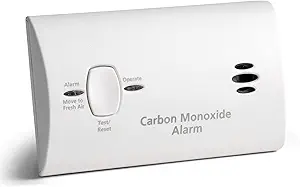 |
| Top Rated A top-rated pick with lots of positive feedback | Kidde Carbon Monoxide Detector KN-COB-LP2 | |
| Most Popular A crowd favorite that many people choose with confidence | First Alert CO400 Carbon Monoxide Alarm 2-Pack |  |
X-Sense SC01 Combination Detector

| Power Source | 10-Year Sealed Battery |
|---|---|
| Sensor Type | electrochemical, photoelectric |
| Alarm | Audible (85 dB) |
| Battery Type | Lithium metal |
The X-Sense SC01 is a battery-powered combination smoke and carbon monoxide detector designed for simple, long-term home protection. It pairs a photoelectric smoke sensor with an electrochemical CO sensor and runs on a built-in 10-year lithium battery so you do not need to replace batteries annually or hardwire the unit. Installation is straightforward using the included mounting bracket, screws, and anchors, and the unit provides a loud 85 dB alarm for clear notification. The front LCD shows real-time CO levels and battery status, which helps you monitor conditions without additional devices. Because this model is a standalone unit, it does not support wireless interconnection or Wi-Fi, so it is best used in single rooms or as part of homes where interconnected alarms are not required. The housing uses heat-resistant PC material and the sensors aim to reduce false alarms while maintaining sensitivity. If you want a low-maintenance, all-in-one detector with a decade-long battery life and clear local readout, this unit delivers reliable basic protection.
Best for: Homeowners or renters seeking low-maintenance, local protection from both smoke and carbon monoxide who prioritize long battery life and an easy install without a smart-home connection.
Less Ideal for: Users who need alarms that interconnect across multiple rooms or who want remote monitoring and smartphone alerts should look for networked or Wi‑Fi capable models.
- 10-year sealed lithium battery eliminates yearly battery changes
- Combination of photoelectric smoke and electrochemical CO sensors for two-hazard protection
- Front LCD displays real-time CO level and battery status
- Simple, no-wiring installation with included mounting hardware
- Loud 85 dB alarm for clear audible warnings
- Standalone unit does not support wireless interconnection with other alarms
- No Wi-Fi or app integration for remote alerts or networked monitoring
Verdict: Buy this if you want a reliable, low-maintenance battery-powered combination detector with a 10-year sealed battery and a readable CO/battery display for single-room protection.
X-Sense SC07 Combination Detector

| Power Source | 10-Year Sealed Battery |
|---|---|
| Alarm | 85 dB |
| Sensor Type | Photoelectric, Electrochemical |
| Battery Type | Lithium metal |
The X-Sense SC07 is a basic, performance-focused combo alarm that pairs a photoelectric smoke sensor with an electrochemical CO sensor and a 10-year sealed lithium battery for maintenance-free protection. Install it on a ceiling or wall with the included bracket and screws and the unit provides continuous monitoring without battery swaps or low-battery chirps for its rated life. The photoelectric sensor reduces nuisance alarms from cooking and responds well to smoldering fires while the electrochemical CO sensor detects dangerous carbon monoxide levels; an 85 dB alarm and an LCD make alerts clear and easy to interpret. It is UL 217 and UL 2034 certified, so it meets common safety standards for both smoke and CO detection. The SC07 is a standalone model only, so it lacks Wi-Fi, app control, and wireless interconnection found on networked units, which limits coordinated alerts across multiple rooms. For buyers who prioritize reliable sensing and long-lasting, no-fuss power, this offers straightforward, code-ready protection.
Best for: Buyers who want a high-performing, maintenance-free standalone alarm that reliably detects both smoldering fires and carbon monoxide without the hassle of battery replacements or smart-home setup.
Less Ideal for: Homes that require interconnected alarms or users who want remote monitoring and app notifications should consider networked or Wi‑Fi models instead.
- 10-year sealed lithium battery eliminates battery changes and chirps
- Combination of photoelectric smoke and electrochemical CO sensors for reliable dual detection
- UL 217 and UL 2034 certified for code-compliant smoke and CO protection
- 85 dB alarm and LCD display provide clear, easy-to-read alerts
- No wireless interconnection, Wi‑Fi, or app control for multi-room alerting
Verdict: Choose the X-Sense SC07 if you want a reliable, maintenance-free battery-powered combo alarm that focuses on long-term, accurate smoke and CO detection without smart features.
HEIMAN C1-S CO Detector

| Power Source | Battery Powered |
|---|---|
| Sensor Type | Electrochemical |
| Alarm | 85 dB Audible/Visual |
| Battery Average Life | 10 years |
| Certification | UL 2034 5th Edition / CSFM Approved |
The HEIMAN C1-S is a compact, long-life CO detector designed for straightforward, low-maintenance protection. It uses a FIGARO electrochemical sensor to detect carbon monoxide and signals hazards with an 85 dB alarm plus a visual LED, and the one-touch Test/Silence button makes routine checks and nuisance-silencing simple. Installation is DIY friendly — it mounts on ceilings or walls and can sit on a tabletop with the included hardware. The sealed long-life lithium battery is rated for around 10 years, so you avoid annual battery swaps and the late-night chirps that come with replaceable cells. The unit meets UL 2034 5th Edition and is CSFM approved, which is useful for landlords or anyone needing compliant protection. Limitations: it is a standalone battery unit with no app, smart features, or hardwiring/interconnect capability, and its small form factor means basic status indicators rather than detailed diagnostics. If you want a hands-off, code-compliant CO alarm that stays out of sight and out of service for years, this one delivers.
Best for: Buyers who prioritize reliable, low-maintenance CO protection and want a code-compliant, long-life battery alarm that requires minimal upkeep.
Less Ideal for: People seeking smart, connected alarms, multi-unit interconnect systems, or installers who need hardwired detectors with advanced diagnostics should look elsewhere.
- Long sealed lithium battery life rated around 10 years eliminates frequent battery changes
- Electrochemical FIGARO sensor for accurate CO detection and fewer false alarms
- UL 2034 5th Edition certified and CSFM approved for code-compliant installations
- Loud 85 dB audible alarm plus LED visual indicator and a one-touch Test/Silence button for easy checks
- No smart features, app connectivity, hardwire, or interconnect capability
- Provides basic status indicators only, without advanced diagnostics
Verdict: Choose the HEIMAN C1-S if you want a compact, code-compliant CO alarm with a sealed 10-year battery for dependable, low-maintenance protection.
Kidde Carbon Monoxide Detector KN-COB-LP2
| Power Source | Battery Powered |
|---|---|
| Alarm | Audible (85 dB) |
| Operating Humidity | 10 to 95% relative humidity (RH), non-condensing |
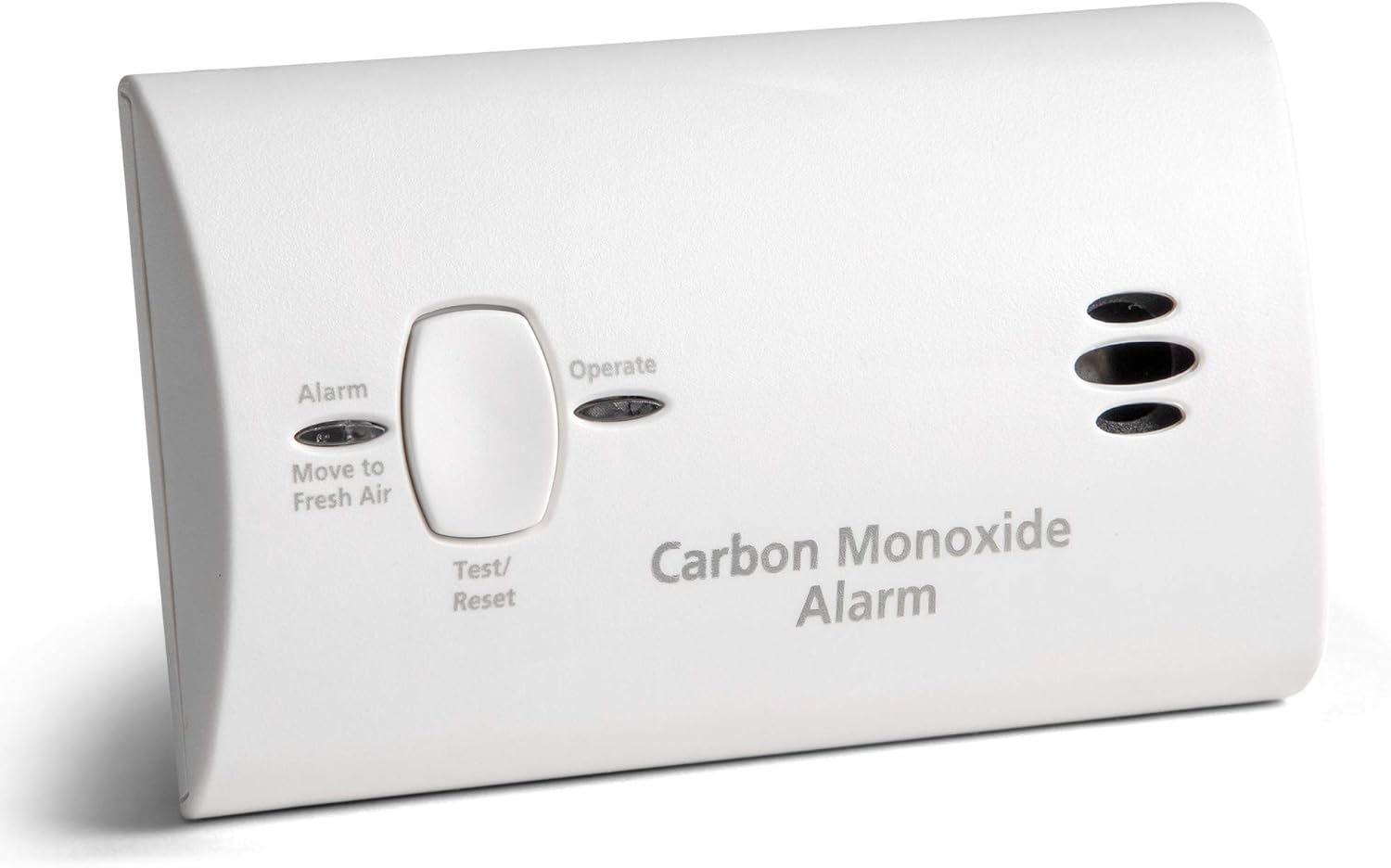
The Kidde KN-COB-LP2 is a simple, battery-powered carbon monoxide alarm designed for basic home or travel protection. It uses an electrochemical sensor to detect CO and signals danger with an 85 dB audible alarm and a flashing red LED while a green LED shows power status. The unit runs on two AA batteries, making installation cordless and keeping it active during power outages; it can be mounted on a wall or placed on a tabletop for flexibility. A test/reset button lets you verify operation and temporarily silence nuisance chirps, and event memory records the last detection or test. Practical benefits include portability, easy no-wiring setup, and straightforward indicators that are easy for nontechnical users to understand. Important limitations are the lack of a digital CO concentration display and no interconnect capability with other alarms, so it is best used as a stand-alone detector rather than part of a hardwired system.
Best for: Buyers who want an affordable, easy-to-install CO alarm for individual rooms or travel and prioritize straightforward operation and battery backup.
Less Ideal for: Homes that need networked or hardwired alarm systems or users who want a digital readout of CO levels should consider other models.
- Electrochemical sensor technology for reliable CO detection
- Battery powered with 2 AA batteries so no wiring is required and it works during outages
- Portable design supports wall mounting or tabletop placement
- 85 dB alarm and LED indicators give clear audible and visual alerts
- Test/reset and event memory simplify periodic checks and incident review
- No numeric CO level display to show concentration
- Cannot interconnect with other alarms for whole-home alerts
Verdict: A budget-friendly, portable CO detector that delivers reliable basic protection with simple battery-powered installation.
Kidde Carbon Monoxide Detector KN-COB-LP2
| Power Source | Battery Powered |
|---|---|
| Sensor Type | Electrochemical |
| Operating Humidity | 10%-95% relative humidity non-condensing |
| Upper Temperature Rating | 100 °F |
The Kidde KN-COB-LP2 is a straightforward battery-operated carbon monoxide detector that uses an electrochemical sensor to continuously monitor CO levels and sounds an 85 dB alarm if dangerous gas is detected. It runs on two AA batteries (included) so it works during power outages and installs quickly on a wall or sits on a tabletop for portable use. The unit has a green LED to show normal operation and a red LED that flashes during an alarm, plus a test/reset button and a low-battery signal that can be temporarily silenced with the hush feature. Event memory records the last detection or test, which is helpful when diagnosing intermittent issues. The design is compact and the slide-out battery door makes battery replacement simple while discouraging accidental removal. Expect basic, reliable CO detection without advanced features like digital readouts, wireless links, or built-in long-life batteries, but the Kidde delivers dependable protection in a small, easy-to-install package backed by a long manufacturer history.
Best for: Buyers who prioritize a proven, no-frills CO alarm that reliably detects carbon monoxide and keeps working during power failures with easy installation and maintenance.
Less Ideal for: Users who want networked monitoring, digital CO concentration readouts, or a long-life sealed battery should consider other models with those specific features.
- Electrochemical sensor for accurate CO detection
- Battery operation works during power outages and includes batteries
- Simple installation for wall mounting or tabletop placement
- Clear LED indicators and loud 85 dB alarm for prompt notification
- Slide-out battery door and test/reset button simplify maintenance
- No digital CO level display or peak memory readout
- Lacks wireless interconnect or smart notifications
Verdict: Choose this Kidde if you want a simple, battery-powered CO detector with a reliable electrochemical sensor and easy install for consistent, no-nonsense protection.
First Alert CO400 Carbon Monoxide Alarm 2-Pack

| Power Source | Battery Powered |
|---|---|
| Alarm | Audible, Visual |
| Sensor Type | Electrochemical |
| Operating Humidity | 10-95% RH |
| Unit Count | 2 Count |
The First Alert CO400 two-pack provides simple, reliable carbon monoxide monitoring for homes that need easy installation and dependable sensing. Each unit uses an electrochemical sensor—widely regarded as the most accurate CO sensing technology—to continuously monitor air for dangerous CO levels and trigger an 85-decibel alarm when concentrations rise. The battery-powered design uses a single 9V battery each so the alarms keep working during power outages and require no wiring or electrician to install; a test/silence button makes monthly checks straightforward. Practical additions include a visual low-battery indicator, an end-of-life chirp to prompt replacement, and an optional wall mount for fixed placement. Limitations are the basic feature set: there is no digital display of CO levels, no interconnect capability with other alarms, and the sensor lifespan is finite so units must be replaced after the sensor reaches end of life. For buyers wanting straightforward, UL-listed protection across bedrooms and levels, these are an easy, familiar option.
Best for: Buyers who prioritize proven, easy-to-install CO protection and want commonly recommended detector technology with straightforward operation and visible safety signals.
Less Ideal for: Users who want smart features such as digital readouts, app alerts, or interconnected alarms across a household should consider more feature-rich or networked models.
- Electrochemical sensor technology for accurate CO detection
- Battery-powered operation that works during power outages and needs no wiring
- Loud 85-decibel alarm that is easy to hear throughout nearby rooms
- Simple one-button test/silence operation and optional wall mount for flexible placement
- No numeric CO level display to show concentration readings
- Not networked or interconnectable with other alarms for whole-home coordination
Verdict: Choose this CO400 two-pack when you want trustworthy, battery-powered CO detection that is simple to install and easy to maintain.
Choosing the Right Battery-Powered Carbon Monoxide Detector: Key Factors to Consider
Alarm Reliability
A detector's ability to reliably sense carbon monoxide at hazardous concentrations is the primary safety factor. Look for sensors with consistent response times across a range of CO levels and clear, loud alarm patterns that meet local safety recommendations.
False negatives are the most dangerous failure mode, so prefer devices with documented response behavior and a clear test function. Also consider alarm audibility for the size and layout of your home; a unit that is too quiet or has a muffled tone may not wake sleeping occupants.
Battery Life and Low-Battery Alerts
Battery longevity determines how often you need to maintain the detector and affects the risk of the device going offline unnoticed. Many battery-powered detectors advertise multi-year battery life, but actual life depends on alarm history, temperature, and battery type.
Reliable low-battery indicators and early warnings allow you to replace batteries before the unit becomes unreliable. Consider how easy it is to access the battery compartment and whether the detector uses standard cell types versus sealed, factory-installed batteries.
Installation Flexibility
Battery-powered detectors are valued for flexible placement without wiring constraints. Still, correct placement matters: near sleeping areas, at recommended heights, and away from direct drafts or combustion appliances that could cause nuisance triggers.
Check that the unit includes simple mounting hardware and clear instructions. Lightweight detectors with easy wall- or ceiling-mount options make it faster to position units where they are most effective for your floor plan.
User Interface and Testing Features
A clear user interface reduces installation errors and ensures you can verify the detector's function. Look for easily accessible test and silence buttons, visible status LEDs, and straightforward indicator patterns so you can interpret alerts quickly.
Regular testing is a recommended safety practice, so detectors that make testing intuitive encourage compliance. Consider whether the unit provides distinct signals for alarm, end-of-life, and low battery to avoid confusion.
Durability and Sensor Lifespan
CO sensors degrade over time, so understanding expected sensor lifespan helps you plan replacements. Durability against humidity, temperature swings, and dust exposure affects long-term reliability, especially in unconditioned spaces like garages.
End-of-life indicators or clear manufacturer guidance on service life reduce the risk of operating an expired sensor. Choose detectors with materials and build quality suited to where you will install them.
Maintenance and Replacement Costs
Maintenance requirements influence the total cost of ownership and how likely you are to keep devices operational. Consider how often batteries must be changed, whether the unit requires any sensor recalibration, and how clearly the device communicates when service or replacement is needed.
Lower ongoing maintenance can increase the chance detectors remain functional, but sealed units with nonreplaceable batteries may force full-unit replacement at end of life. Balance convenience against long-term expense when choosing a device.
Where to Place Battery-Powered CO Detectors
Proper placement maximizes the chance that a detector will alert occupants before CO concentrations reach dangerous levels. Install at least one detector on every level of the home and within or near sleeping areas. Avoid placing detectors directly above or beside fuel-burning appliances where brief normal exhaust could cause nuisance alarms.
Mount detectors at breathing height when possible or follow the manufacturer's height guidance. Do not install inside humid or dusty enclosures, and keep detectors out of direct airflow from fans or vents that could delay detection.
- Install detectors outside sleeping areas and on each floor.
- Keep units away from stoves, fireplaces, and furnaces to reduce false alarms.
- Avoid very humid locations like bathrooms or near kitchen sinks.
Testing, Silencing, and Routine Checks
Regular testing ensures a detector remains operational. Use the test button weekly or monthly depending on your routine, and follow manufacturer instructions for a full functional check. Record test dates so you can track performance and battery replacement intervals.
Learn the difference between alarm tones and low-battery or end-of-life chirps so you can respond appropriately. A clear silence feature is useful for short nuisance alarms, but never disable a unit without addressing the cause of the alert.
- Perform a manual test at least once a month.
- Replace batteries promptly when low-battery warnings begin.
- Log maintenance actions and sensor replacement dates.
Battery Types and Practical Tradeoffs
Detectors may use replaceable alkaline batteries, lithium cells, or sealed long-life batteries. Replaceable batteries allow partial maintenance without discarding the entire unit, while sealed designs offer convenience but require full replacement at end of life. Consider what fits your maintenance habits and home access.
Also note that extreme temperatures reduce battery life. Choose battery types and mounting locations that minimize exposure to cold or heat to preserve nominal service life.
- Replaceable batteries are easier to service but need periodic attention.
- Sealed long-life units reduce battery changes but may require full replacement later.
- Store spare batteries in a cool, dry place to prolong their shelf life.
Understanding Alarm Patterns and Indicator Lights
Familiarize yourself with the detector's audible patterns and LED indications. Different sequences should distinguish an active CO alarm from low-battery warnings and end-of-life notifications. Clear labeling and a simple user guide reduce confusion during an event.
If you share a home with guests, post brief instructions near common detectors so others know what the tones mean and what actions to take in an alarm.
- Learn the meaning of each audible and visual signal.
- Keep quick instructions near detectors for household members and guests.
- Practice a family response plan for any alarm activation.
When to Replace a Battery-Powered Detector
CO sensors have a limited service life, typically several years. Replace a detector when the manufacturer's end-of-life indicator activates or when test results are inconsistent. Do not rely solely on low-battery chirps to gauge sensor health.
Plan to replace detectors proactively based on the listed sensor lifespan rather than waiting for failure. Timely replacement maintains continuous protection.
- Follow the sensor life guidance provided in the manual.
- Replace immediately if the unit fails test checks or gives inconsistent readings.
- Keep replacement alarms on the same maintenance schedule to avoid gaps.
How We Chose the Best Battery-Powered Carbon Monoxide Detector
We prioritized detectors that deliver dependable detection and straightforward maintenance because those factors most directly affect everyday safety. Our selection criteria emphasized alarm reliability under typical household CO concentrations, battery longevity and low-battery signaling, and ease of installation and mounting. We also looked for clear user interfaces and simple test/reset functions so homeowners can verify operation without confusion. Durability and sensor life were considered to ensure a sensible replacement cadence, and we assessed audible alarm volume and multi-room compatibility where relevant to audible coverage. We excluded units that rely solely on rare or unproven sensor technologies, products without accessible test functions, and devices lacking clear battery or end-of-life indicators. We did not include plug-in or wired-only detectors since this roundup focuses strictly on battery-powered models. The filters applied reflect real buyer priorities: alarm performance, power management, usability, longevity, and installation flexibility. These dimensions align with the scoring metrics we use to rate each detector.
Our full evaluation process is outlined in our review methodology.
FAQ
How often should I test a battery-powered carbon monoxide detector?
Test the detector at least once a month using the built-in test button. Frequent testing verifies the alarm circuit and battery condition and helps you catch faults before they become dangerous.
Can I use any type of battery in a battery-powered detector?
Use the battery type recommended by the manufacturer. Alkaline and lithium cells behave differently in extreme temperatures, and using the wrong battery can shorten run time or void device guidance.
Where is the best place to mount a battery-powered CO detector?
Mount detectors outside sleeping areas and on every level of your home, avoiding direct placement above fuel-burning appliances, vents, or very humid locations. Follow the device instructions for height recommendations.
What does a chirping sound from my detector mean?
Intermittent chirps often indicate low battery or an end-of-life warning. Continuous alarm tones indicate detected carbon monoxide. Consult the manual to distinguish patterns and take appropriate action immediately for active alarms.
Can I silence a false alarm on a battery-powered detector?
Many detectors include a temporary silence function for nuisance alarms, but you should identify and resolve the cause before resuming normal use. Do not silence an alarm without ensuring the area is safe.
Final Verdict
Prioritize detectors that combine reliable alarm response, clear indicators, and manageable battery requirements. Placement and routine testing are as important as the unit's technical specs for maintaining continuous protection. Balance convenience features such as sealed long-life batteries against the flexibility of replaceable cells and plan replacements based on sensor lifespan rather than battery chirps. Focus on alarm reliability, accessible maintenance, and clear signals to choose a battery-powered carbon monoxide detector that keeps your home safer over time.