
Note: This article contains affiliate links. If you click on these links and make a purchase, we may earn a small commission at no extra cost to you. This helps support our research and content. Read our full affiliate disclosure here.
A carbon monoxide detector on a budget does not have to mean skimping on safety. You still need accurate sensing, clear alerts, and dependable power so you and your household stay protected from this odorless, invisible gas. This guide shortlists seven of the best budget-friendly carbon monoxide detectors that focus on essentials: detection accuracy, alarm clarity, installation ease, and long-term reliability. Below we cover why those criteria matter and how each shortlisted option meets practical home needs. Read on to find a straightforward detector that fits tight budgets while giving you confidence that your living space is monitored effectively.
Top Picks at a Glance
| Best Overall The best all-around choice for most situations | HEIMAN C1-S CO Detector |  |
| Best Quality Built to a higher standard if you want something more solid | First Alert CO606 Plug-In CO Alarm |  |
| Best Value The sweet spot between price and what you get | X-Sense SC01 Combination Detector |  |
| Best Budget The cheapest option that still gets the job done reliably | First Alert Plug-in CO Alarm |  |
| Top Rated A top-rated pick with lots of positive feedback | Kidde Carbon Monoxide Detector KN-COB-LP2 | 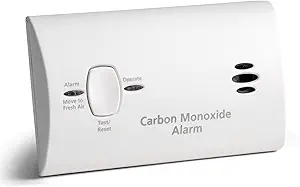 |
| Most Popular A crowd favorite that many people choose with confidence | Kidde Carbon Monoxide Detector KN-COB-LP2 | |
| Best Seller A high-volume bestseller chosen again and again | X-Sense SC07 Combination Detector |  |
HEIMAN C1-S CO Detector

| Power Source | Battery Powered |
|---|---|
| Sensor Type | Electrochemical |
| Battery Average Life | 10 years |
| Alarm | Audible/Visual (85 dB) |
| Enclosure Material | ABS+PC |
The HEIMAN C1-S is a compact, battery-operated carbon monoxide detector designed for straightforward home and rental use. It uses a Japan-made FIGARO electrochemical sensor that targets accurate CO detection while reducing false alarms, and the sealed long-life lithium battery is rated for about 10 years so you can install and forget routine replacements. Installation is simple: wall or ceiling mounting with included hardware or freestanding placement, and a single Test/Silence button lets you check operation or quiet nuisance alerts. When levels rise it emits an 85 dB alarm plus LED visual indication, meeting UL 2034 5th Ed certification and CSFM approval for code-conscious buyers. The ABS+PC flame-retardant housing and broad operating humidity range add durability. Limitations are its single-function design and lack of smart connectivity or hardwire interconnect, so it is best as a standalone CO monitor rather than part of an interconnected safety system.
Best for: Buyers who want a dependable, low-maintenance CO detector that meets safety standards and works as a simple standalone monitor for apartments, bedrooms, kitchens, or rental units.
Less Ideal for: Users who need smart monitoring, remote notifications, or a hardwired/interconnected alarm network should consider models with app support or interconnect features instead.
- FIGARO electrochemical sensor for accurate CO detection and fewer false alarms
- Long-life sealed lithium battery rated around 10 years reduces maintenance
- UL 2034 5th Edition certified and CSFM approved for code compliance
- Loud 85 dB alarm plus LED visual indicator for clear alerts
- Compact flame-retardant ABS+PC enclosure suitable for wall or ceiling mounting
- No Wi-Fi or app connectivity for remote alerts or logging
- Not hardwired or interoperable with other alarms for whole-home interconnect
Verdict: A simple, code-certified CO detector with a long sealed battery and accurate electrochemical sensing that lets you protect living spaces without frequent upkeep.
First Alert CO606 Plug-In CO Alarm

| Power Source | Corded Electric |
|---|---|
| Sensor Type | Electrochemical |
| Product Style | Plug in Alarm with Battery Backup |
| Upper Temperature Rating | 105 °F |
The First Alert CO606 is a simple plug-in carbon monoxide alarm that uses an electrochemical sensor for accurate CO detection and includes a 9V battery backup so it continues working during power outages. It plugs directly into a standard wall outlet for hands-free operation and offers a single test/silence button to check function and quiet nuisance alerts. The unit emits an 85 dB alarm when dangerous CO levels are detected and includes an end-of-life chirp and low-battery signal with a mute option. Because it is plug-in only, it is best placed near living areas or bedrooms where an outlet is available rather than mounted high on a wall or ceiling. The straightforward design has no complex settings, making it quick to install and maintain, but it does not provide digital readouts, wireless connectivity, or multi-unit interlinking that some higher-end models offer. For budget-focused buyers who prioritize reliable sensing and continuous protection during outages, this detector delivers essential performance without extras.
Best for: Budget-minded buyers who want a reliable, no-frills CO alarm focused on accurate sensing and continuous operation during power outages.
Less Ideal for: Homeowners who want networked alarms, digital readouts, or integrated smart-home features should consider a more advanced model.
- Electrochemical sensor for accurate CO detection
- Battery backup ensures operation during power outages
- Easy plug-in installation with no mounting required
- Single test/mute button simplifies testing and silencing nuisance alerts
- No digital CO level display or concentration readout
- Lacks wireless connectivity or interlinking with other alarms
Verdict: A straightforward, budget-friendly plug-in CO alarm that prioritizes accurate electrochemical sensing and backup power for dependable, everyday protection.
X-Sense SC01 Combination Detector

| Power Source | 10-Year Sealed Battery |
|---|---|
| Sensor Type | electrochemical, photoelectric |
| Alarm | Audible (85 dB) |
| Battery Type | Lithium metal |
The X-Sense SC01 is a basic 2-in-1 safety alarm that combines a photoelectric smoke sensor with an electrochemical CO sensor and a built-in 10-year lithium battery so you do not need to swap cells during its service life. It mounts to a ceiling or wall with the supplied bracket and provides a loud 85 dB audible alarm plus a real-time LCD that shows CO level and battery status for quick checks. Because it is a standalone unit without Wi-Fi or wireless interconnect, it is straightforward to install and maintain in single rooms or small homes where network features are unnecessary. The detector emphasizes low-maintenance reliability and minimized nuisance alarms thanks to the photoelectric sensor, but it will not communicate with other alarms or smart-home systems and cannot be hardwired into an existing alarm circuit. For buyers wanting a simple, long-life combination detector that requires very little upkeep, this is a practical option; those needing interconnectivity or app alerts should look elsewhere.
Best for: Budget-minded buyers who prioritize a low-maintenance, long-life alarm for single rooms or smaller homes and want clear on-device CO readouts without smart features.
Less Ideal for: Households that require interconnected alarms, smart notifications, or hardwired installation should choose a model with network or AC integration instead.
- 10-year sealed lithium battery provides maintenance-free operation for the detector's life
- Combination of photoelectric smoke and electrochemical CO sensors protects against both hazards
- Real-time LCD displays carbon monoxide level and battery status for easy monitoring
- Simple standalone installation with included mounting bracket, screws, and anchors
- No Wi-Fi or wireless interconnect capability, so it cannot link with other alarms or send app alerts
- Not hardwired, so cannot be integrated into existing AC-powered alarm systems
Verdict: A low-cost, maintenance-free combination smoke and CO detector that gives long-life protection and an on-device CO readout without smart features.
First Alert Plug-in CO Alarm

| Power Source | Battery Powered |
|---|---|
| Sensor Type | Electrochemical |
| Manufacturer Warranty Description | 7 years |
The First Alert plug-in CO alarm is a straightforward carbon monoxide detector that plugs into any standard outlet and uses an electrochemical sensor to detect dangerous CO levels. It is intended for everyday home or office use where continuous monitoring is desired without hardwiring; the built-in battery backup keeps the unit active during power outages. The alarm provides a loud 85 dB alert and has a single test/silence button for simple operation, making it easy to check and temporarily silence nuisance alerts. Because it is a plug-in design the unit is quick to install and move between rooms, but that also means placement is limited to where you have an outlet and may be less discreet than a hardwired or battery-only unit. For buyers focused on value, this model offers reliable electrochemical sensing and a trusted brand name at a modest cost, while sacrificing advanced features like Wi-Fi connectivity, digital readouts, or multi-sensor integration.
Best for: Buyers wanting an affordable, no-frills CO detector that is easy to install and keeps working during power outages.
Less Ideal for: People who need remote alerts, digital CO level readouts, or a detector that integrates with a smart home system.
- Electrochemical sensor for accurate CO detection
- Battery backup maintains monitoring during power outages
- Simple plug-in installation with a single test/silence button
- Loud 85 dB alarm that is easy to hear in typical home spaces
- Requires an available wall outlet so placement options are limited
- No smart features or digital concentration readout
Verdict: A budget-friendly, reliable plug-in CO alarm with battery backup that delivers accurate detection and simple operation for basic home safety.
Kidde Carbon Monoxide Detector KN-COB-LP2
| Power Source | Battery Powered (2 AA) |
|---|---|
| Alarm | 85 dB Audible |
| Operating Humidity | 10 to 95% relative humidity (RH), non-condensing |
| Product Style | 3rd Edition |
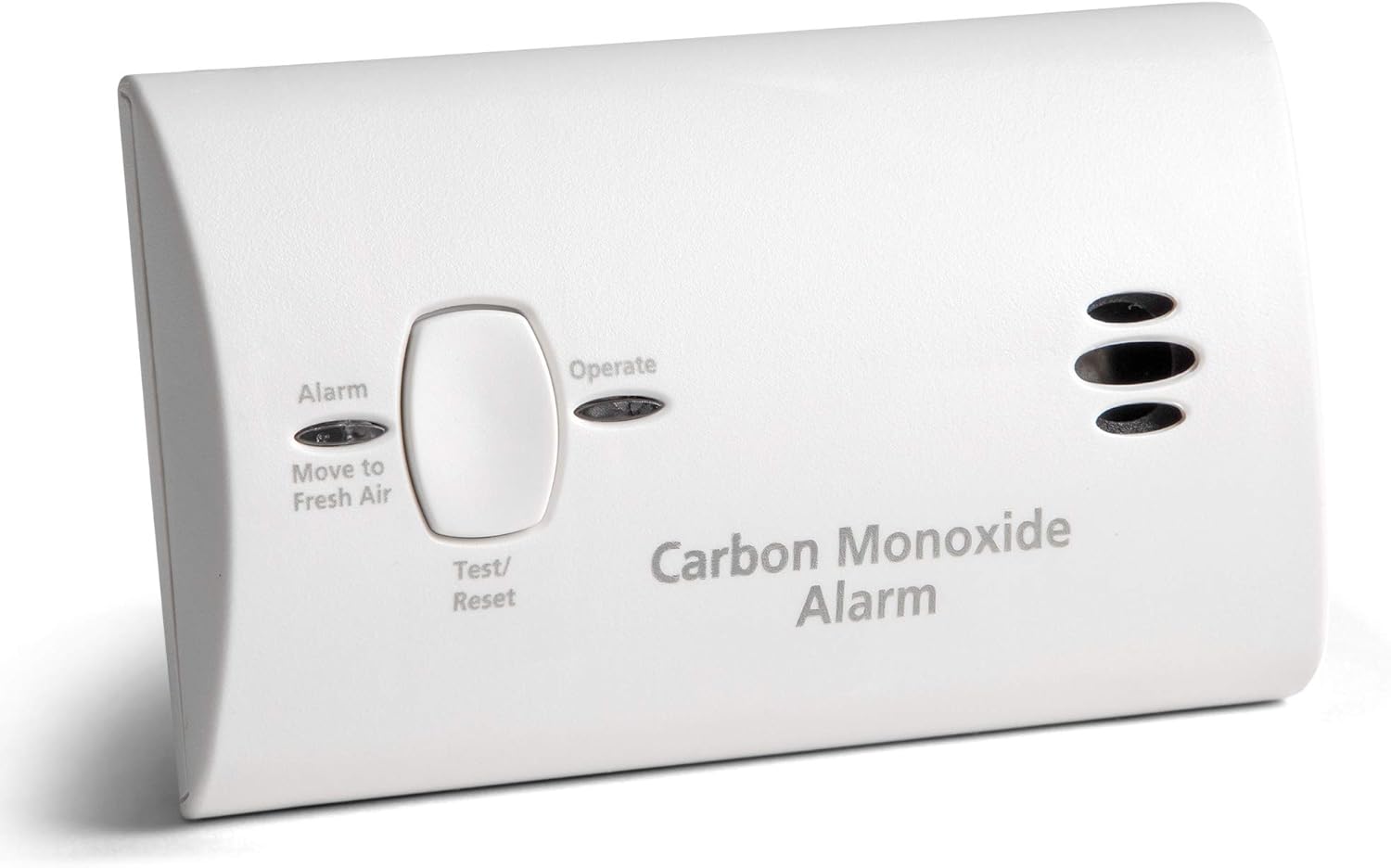
The Kidde KN-COB-LP2 is a basic, portable carbon monoxide (CO) alarm that runs on two AA batteries and uses an electrochemical sensor to detect CO. It can be mounted on a wall or set on a tabletop, making it useful for both permanent household placement and temporary travel use. The unit provides simple visual status feedback via a green power LED and a red alarm LED, and it sounds an 85 dB audible alarm when CO is detected. A test-reset/hush button checks battery and alarm function and silences nuisance alerts temporarily, while event memory records the last detection or test. Because it is battery powered and requires no wiring, installation is quick and it continues to work during power outages. The trade-offs are minimal features—there is no digital concentration readout, no built-in long-life battery, and no smart or interconnected functionality—so it is best as a straightforward, dependable CO alarm rather than a feature-rich system.
Best for: Buyers who prioritize a straightforward, dependable CO alarm that is easy to install and will keep working during power outages, especially those seeking a budget-friendly safety backup for bedrooms, renters, or travel.
Less Ideal for: Users who want a digital concentration readout, long-life sealed battery, or smart/interconnected alarms should look at more advanced models with those capabilities.
- Electrochemical sensor technology for reliable CO detection
- Battery powered so it works during power outages and needs no wiring
- Portable design supports wall mount or tabletop placement and travel use
- 85 dB alarm and LED indicators provide clear audible and visual alerts
- Test-reset/hush button and event memory simplify checks and troubleshooting
- No digital CO level display to show concentration or peak readings
- Uses replaceable AA batteries rather than a long-life sealed battery
- Lacks smart features and interconnect capability with other alarms
Verdict: A no-frills, reliable battery CO detector that gives clear audible and visual alerts and keeps protecting your home during power outages.
Kidde Carbon Monoxide Detector KN-COB-LP2
| Power Source | Battery Powered |
|---|---|
| Sensor Type | Electrochemical |
| Alarm | 85-decibel CO alarm |
| Operating Humidity | 10%-95% relative humidity non-condensing |
| Upper Temperature Rating | 100 °F |
The Kidde KN-COB-LP2 is a straightforward, battery-operated carbon monoxide detector designed for basic home protection and travel use. It uses an electrochemical sensor to monitor CO and emits an 85-decibel alarm plus a flashing red LED when dangerous levels are detected, while a green LED indicates normal power. Installation is simple: wall-mount or set it on a tabletop and power it with two AA batteries, which keeps monitoring active during power outages. The unit includes a test/reset button, a low-battery alert, and an event memory that records the last CO detection or test. Practical benefits include easy set up without wiring and clear visual and audible alerts that make it suitable for bedrooms and living areas. Limitations are its simple feature set—there is no digital readout of CO levels, no interconnect capability, and the unit is intended as a single-location alarm rather than part of an integrated home system.
Best for: Buyers seeking an affordable, no-frills CO alarm backed by strong customer feedback who prioritize reliable detection and easy installation over advanced features.
Less Ideal for: Homes that need networked or smart detectors, multi-unit installations, or users who want a numeric CO readout for monitoring exposure trends.
- Electrochemical sensor for reliable CO detection
- Battery power with included batteries allows operation during power outages
- Simple wall-mount or tabletop placement for flexible installation
- Loud 85-decibel alarm and LED indicators for clear alerts
- Test/reset button and event memory for basic diagnostics
- No digital CO concentration display to show current levels
- Not interconnect-capable so it cannot link with other alarms
Verdict: A budget-friendly, battery-powered CO alarm that delivers reliable detection and simple installation for shoppers who want straightforward protection.
X-Sense SC07 Combination Detector

| Power Source | 10-Year Sealed Battery |
|---|---|
| Alarm | 85 dB |
| Sensor Type | Photoelectric, Electrochemical |
| Battery Type | Lithium metal |
The X-Sense SC07 combines a photoelectric smoke sensor and electrochemical CO sensor in a single, standalone unit designed for simple home protection. It is powered by a built-in 10-year sealed lithium battery so you do not need to change batteries during its expected life, and the unit includes an LCD that makes status and CO readings easy to read. Installation is straightforward — mount the included bracket and secure the detector to a ceiling or wall — and it meets UL 217 and UL 2034 safety standards for smoke and CO detection. The photoelectric sensor helps reduce cooking false alarms while still responding to smoldering fires, and the 85 dB alarm is loud enough for most residential spaces. Limitations to note are that the SC07 is a basic standalone model: it has no wireless interconnect, no Wi-Fi or app features, and cannot be linked to other alarms, so you will need multiple units for whole-home coverage and manual testing. For buyers who prioritize low maintenance and reliable, code-compliant detection on a budget, this is a practical pick.
Best for: Buyers who want reliable, low-maintenance smoke and CO protection with minimal setup and long battery life, and who prefer a straightforward, code-compliant device over smart features.
Less Ideal for: Users who need networked alarms, app alerts, or automatic multi-room interconnection should consider a different model with wireless linking or smart integration.
- 10-year sealed lithium battery eliminates battery changes and low-battery chirps
- Combination photoelectric smoke and electrochemical CO sensors provide both smoke and CO protection
- Meets UL 217 and UL 2034 standards for independent safety certification
- Simple bracket-based installation with included screws and anchors
- LCD display for clear status and CO level readout
- No wireless interconnection or smart features to link multiple units
- Standalone design means whole-home coverage requires buying additional detectors
Verdict: The SC07 delivers reliable, maintenance-free smoke and CO protection for budget-conscious buyers who prioritize long battery life and simple, code-compliant safety.
Choosing the Right Carbon Monoxide Detector on a Budget: Key Factors to Consider
Sensor Type and Sensitivity
The sensor technology inside a carbon monoxide detector determines how quickly and accurately it recognizes dangerous levels. Electrochemical sensors are the common standard for residential units because they respond reliably to CO and have predictable lifespans. Photoelectric or semiconductor-based sensors may behave differently, so knowing the sensor type helps you set expectations for response and longevity.
Sensitivity matters because detectors are calibrated to alarm at specified concentrations over time. Look for devices that list their response characteristics or meet recognized residential standards. On a budget, favor sensors with documented performance rather than vague marketing terms.
Alarm Volume and Notification Methods
A loud, clear alarm is the point of the detector. In bedrooms or multiroom homes, the alarm must wake sleeping occupants and be distinguishable from other household noises. Check stated decibel output and whether the alarm pattern is standard for CO events. Visual indicators such as bright LED status lights and a clear test button offer confirmation that the device is functioning.
Some budget units include silence or hush features for nuisance alarms. While convenient, these should not disable essential alerts. Consider whether a unit also provides local visual cues or wireless indicators if you need notifications in different parts of the home.
Power Source and Maintenance Needs
Budget detectors commonly use replaceable batteries, sealed long-life batteries, or plug-in power with battery backup. Each approach affects ongoing costs and the chance of missed alarms. Replaceable batteries require routine checks and timely replacement, while sealed long-life options minimize maintenance but require replacement of the entire unit at end of life. Plug-in units avoid battery replacement but may be vulnerable to power outages if they lack backup batteries.
Also consider whether the detector has low-battery alerts, a quick-change battery compartment, and a clear schedule for end-of-life replacement. Ease of maintenance reduces the risk of a nonfunctional detector when you need it most.
Placement and Installation
Correct placement is critical for effective detection. Carbon monoxide mixes with indoor air, so detectors are usually installed at breathing height in sleeping areas and centrally in living spaces. Simpler mounting systems and clear instructions save installation time and reduce the chance of improper placement that could compromise performance.
Budget models should still include standard mounting hardware and straightforward orientation guidance. If you plan to install multiple units, consider how easily they mount to drywall or other surfaces and whether the unit is designed for wall or ceiling placement.
Durability and End-of-Life Features
Even affordable detectors need a predictable service life. Many residential detectors have a defined operational lifespan after which the sensor may not respond reliably. End-of-life indicators and visible date markings help you track when a unit should be replaced. Build quality and resistance to household dust and humidity also factor into long-term reliability.
Choose units with clear labeling about expected service life and that offer an audible or visual end-of-life warning. This information reduces uncertainty about when to replace the detector and helps maintain consistent protection.
Certifications and Standards
Certifications from recognized safety organizations indicate that a detector meets established performance tests. Look for listings or references to residential safety standards and third-party testing. Even on a budget, choosing certified equipment reduces the risk of buying a device that fails to alarm at appropriate concentrations.
Certification details also reveal whether the detector was evaluated for false alarm resistance and environmental durability. This information can guide buyers who need dependable protection in common household conditions.
Where to Install a Budget CO Detector
Proper placement improves the chance that a detector will sense a rising carbon monoxide level before occupants are exposed. Install detectors on every level of the home and inside or near sleeping areas so alarms can be heard where people are most vulnerable. Avoid placing units directly above fuel-burning appliances where transient exhaust could trigger nuisance alerts.
Keep detectors at least a few feet from windows, vents, or doors to reduce false triggers from drafts. Follow the manufacturer guidance on wall versus ceiling mounting and maintain recommended clearances from ceilings, corners, and large furniture.
- Install one outside each sleeping area and at least one on every floor
- Avoid direct airflow from vents or windows
- Mount at breathing height in rooms where possible or follow the product's placement instructions
Maintaining Your Detector on a Budget
Routine checks keep a low-cost detector functioning when it matters. Test the unit monthly using its test button and replace batteries per the manufacturer schedule or immediately if a low-battery alert sounds. Wipe away dust and debris with a dry cloth to prevent sensor obstruction.
Record installation and expected end-of-life dates so you replace the device before its sensor degrades. For sealed battery units, plan to replace the entire detector at end of life rather than waiting for intermittent faults to appear.
- Test monthly with the built-in test function
- Change batteries proactively on a predictable schedule
- Keep an installation log with expected replacement dates
Handling Nuisance Alarms Safely
Budget detectors can occasionally alarm due to transient sources such as nearby vehicle exhaust or temporary combustion byproducts. Rather than disabling the unit, first move to fresh air and assess possible sources. Silence features on some detectors can temporarily quiet nuisance alerts, but should not prevent you from investigating a potential CO source.
If a detector repeatedly alarms without an obvious cause, check placement and ventilation, test the device, and consider replacing it if it continues to trigger unexpectedly. Recurring unexplained alarms can indicate either environmental issues or a detector nearing end of life.
- Ventilate the area and move to fresh air to verify safety
- Use silence only as a temporary measure while investigating
- Replace detectors that alarm frequently without clear cause
Combining CO Detectors with Smoke Alarms
Many homes use a mix of dedicated carbon monoxide detectors and combination smoke/CO units. On a tight budget, a combination device can cover two hazards with one installation, but be mindful of the tradeoffs in sensor performance and maintenance cycles. Dedicated CO detectors often have clearer specifications for CO sensing and may be easier to replace on a fixed schedule.
If you choose a combination unit, ensure its maintenance and placement meet both smoke and CO guidance. Test both detection functions regularly and replace the device at the earliest end-of-life date among its sensors.
- Combination units save installation points but check maintenance schedules
- Place devices to satisfy both smoke and CO placement recommendations
- Test both functions monthly
When to Replace a Budget Detector
Detectors have a finite operational life, often listed by the manufacturer. Replace units at the end-of-life date rather than waiting for performance problems. End-of-life indicators, if present, make this easier to manage and are especially useful for lower-cost devices where the sensor cannot be serviced.
Also replace a detector that frequently gives false alarms, fails self-tests, or shows intermittent power issues. Regular maintenance and monitoring reduce the chance of unexpected failures, but timely replacement is the ultimate safeguard.
- Follow the manufacturer's stated lifespan
- Replace units that fail self-tests or have repeated false alarms
- Record replacement dates to maintain a consistent schedule
How We Chose the Best Carbon Monoxide Detector on a Budget
We prioritized practical safety performance and real-world usability when selecting budget carbon monoxide detectors. Key evaluation criteria included detection sensor type and published sensitivity, alarm volume and clarity for occupied rooms, power options and battery longevity, installation simplicity and mounting hardware, build quality and expected service life, and available self-test or end-of-life indicators. We focused on models that reliably detect the CO concentration ranges relevant to residential exposures and that provide unambiguous audible alerts and visible indicators. We excluded units that rely solely on unverified marketing claims, devices without clear sensor specifications, or products lacking standard safety features like a test button or end-of-life warning. We also filtered out detectors intended only for commercial use or that require specialized wiring beyond typical home capabilities. The final shortlist emphasizes balanced choices that deliver essential protection, straightforward installation, and ongoing reliability for budget-conscious buyers.
Our full evaluation process is outlined in our review methodology.
FAQ
How often should I test my carbon monoxide detector?
Test the detector at least once a month using its built-in test button. Regular testing confirms the alarm and indicator functions are working and helps you catch battery or sensor issues early.
Are battery-only detectors reliable enough for a small home?
Battery-powered detectors can be reliable if you follow a disciplined maintenance routine. Choose units with clear low-battery alerts and test monthly. Consider sealed long-life batteries for reduced maintenance if you prefer fewer battery changes.
Can a cheap detector give false alarms from cooking or showers?
Transient household activities can sometimes cause nuisance alarms, especially if a detector is placed too close to kitchens or combustion appliances. Proper placement away from direct cooking exhaust and showers reduces false triggers.
What does the end-of-life indicator mean?
An end-of-life indicator signals that the sensor or electronics have reached the manufacturer-rated lifespan and the detector should be replaced. Heed this warning because sensor performance can degrade over time.
Where should I place detectors in a multi-level home?
Place a detector on every level and inside or outside each sleeping area. For best coverage, put one near bedrooms and at least one on the main living level to ensure alarms are heard throughout the home.
Final Verdict
On a budget, prioritize detectors that provide clear sensing performance, reliable alarms, and straightforward maintenance. Focus on sensor type and stated sensitivity, alarm loudness, and practical power choices that match your household habits. Regular testing and timely replacement at end of life keep even low-cost units effective. Balance upfront cost with predictable upkeep. A modest investment in a well-specified detector and a simple maintenance routine will provide the best protection for most homes without unnecessary complexity.