
Note: This article contains affiliate links. If you click on these links and make a purchase, we may earn a small commission at no extra cost to you. This helps support our research and content. Read our full affiliate disclosure here.
A battery thermostat is a simple way to add programmable temperature control where hardwired options are impractical. You want consistent temperature accuracy, dependable runtime between battery changes, and an interface that is easy to use day to day. This guide shortlists the top Battery Thermostats across typical home heating and cooling setups and explains the practical tradeoffs you should expect. Below you will find our selected top picks along with clear evaluation criteria so you can match a thermostat to how you live and maintain your system.
Top Picks at a Glance
| Best Overall The best all-around choice for most situations | Honeywell Home X2P Programmable Thermostat |  |
| Best Quality Built to a higher standard if you want something more solid | Google Nest Thermostat |  |
| Best Value The sweet spot between price and what you get | Sensi Lite ST25 | 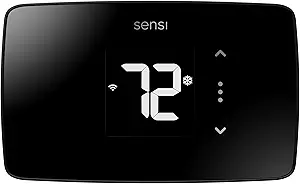 |
| Best Budget The cheapest option that still gets the job done reliably | Heagstat H701 Non-Programmable Thermostat |  |
| Top Rated A top-rated pick with lots of positive feedback | Honeywell Home RTH111B Thermostat |  |
| Most Popular A crowd favorite that many people choose with confidence | White-Rodgers 1E78-140 Thermostat |  |
Honeywell Home X2P Programmable Thermostat

| Temperature Control Type | Programmable |
|---|---|
| Specific Uses For Product | automate and manage temperature |
| Number of Batteries | 2 AA batteries required. |
| Display Type | LCD |
The Honeywell Home X2P is a simple, battery-powered programmable thermostat aimed at homes with a single-stage heating and cooling system. It offers 5-2 day scheduling (with other schedule options or a non-programmable mode) so you can set weekday and weekend temperatures separately, and the large backlit LCD and clear font make daily adjustments easy. Installation uses two AA batteries and a standard wall-mount, and the unit includes useful features like change-filter reminders and selectable display settings. It is not a smart WiFi model so remote control and smartphone scheduling are not available, but for a straightforward, energy-conscious setup it provides factory-quality controls and an extended low-heat setpoint for colder climates. The thermostat supports common conventional systems but does not work with electric baseboard heating that runs on 120-240V, so double-check compatibility before buying.
Best for: Buyers wanting a reliable, easy-to-use programmable battery thermostat for a single-stage heating and cooling setup who prioritize readable controls and straightforward scheduling over smart-home features.
Less Ideal for: People who need remote access, app control, or compatibility with electric baseboard heating should choose a WiFi-enabled or line-voltage specific thermostat instead.
- 5-2 day scheduling with additional schedule options for tailored weekday/weekend programming
- Large backlit LCD and clear font make temperature and settings easy to read
- Battery-powered operation with simple wall-mount installation
- Includes change-filter reminders and selectable display settings
- No WiFi or remote smartphone control
- Not compatible with electric baseboard heating (120-240V)
Verdict: A dependable, easy-to-read battery programmable thermostat for single-stage systems when simple scheduling and reliable local control are the priority.
Google Nest Thermostat
| Connectivity Technology | Bluetooth, Wi-Fi |
|---|---|
| Power Source | Battery Powered |
| Display Type | LCD |
| Control Type | Remote Control, Voice Control |
| Number of Batteries | 2 A batteries required (included) |
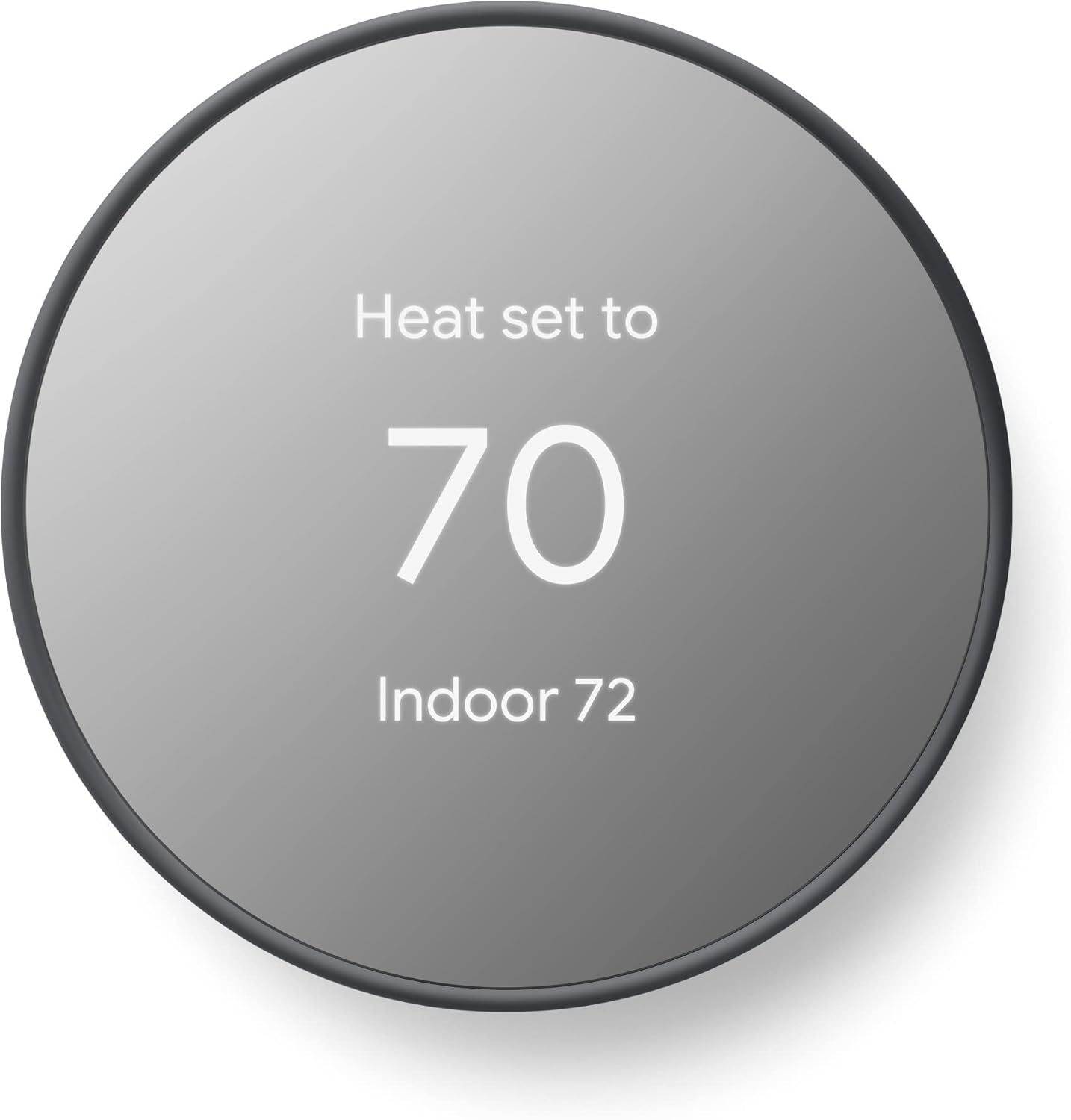
The Google Nest Thermostat is a compact, battery-powered smart thermostat designed for easy DIY installation and remote control through the Google Home app. It connects via 2.4 GHz and 5 GHz Wi‑Fi and Bluetooth Low Energy so you can change settings from a phone or use voice control with compatible assistants. Practical features include Savings Finder suggestions, Eco Temperatures that cut use when the house is empty, HVAC monitoring with alerts, and Quick Schedule setup in the app. The simple side touch bar and a 2-inch LCD make local adjustments straightforward. For people seeking efficient, app-driven temperature control the Nest helps reduce wasted heating and cooling and surfaces maintenance warnings early. Limitations to note are that some HVAC systems need a C wire or power accessory to work reliably and advanced grid features like Nest Renew require additional Google services and availability by region. The thermostat is best for users who want modern smart-home control and energy-saving automation without a complex installation.
Best for: Buyers who prioritize smart, app-driven temperature control and want automation features that help reduce energy use while keeping setup simple.
Less Ideal for: People with complex or high-voltage HVAC systems that are incompatible with typical smart thermostats or users who need features that work without internet or cloud services.
- Wi‑Fi and Bluetooth connectivity for remote app control and voice assistants
- Savings Finder and Eco Temperature features that automatically reduce energy use
- Quick Schedule and an easy side touch bar for fast setup and local control
- HVAC monitoring that sends alerts for potential system issues
- May require a C wire or power accessory on some HVAC systems
- Advanced features like Nest Renew depend on regional availability and external services
Verdict: A compact, battery-powered smart thermostat that delivers app and voice control plus energy-saving automation for buyers focused on performance and efficiency.
Sensi Lite ST25
| Connectivity Technology | Wi‑Fi |
|---|---|
| Control Method | App, Touch, Voice |
| Power Source | Battery or C‑wire |
| Number of Batteries | 2 AAA (included) |
| Specification Met | Energy Star |
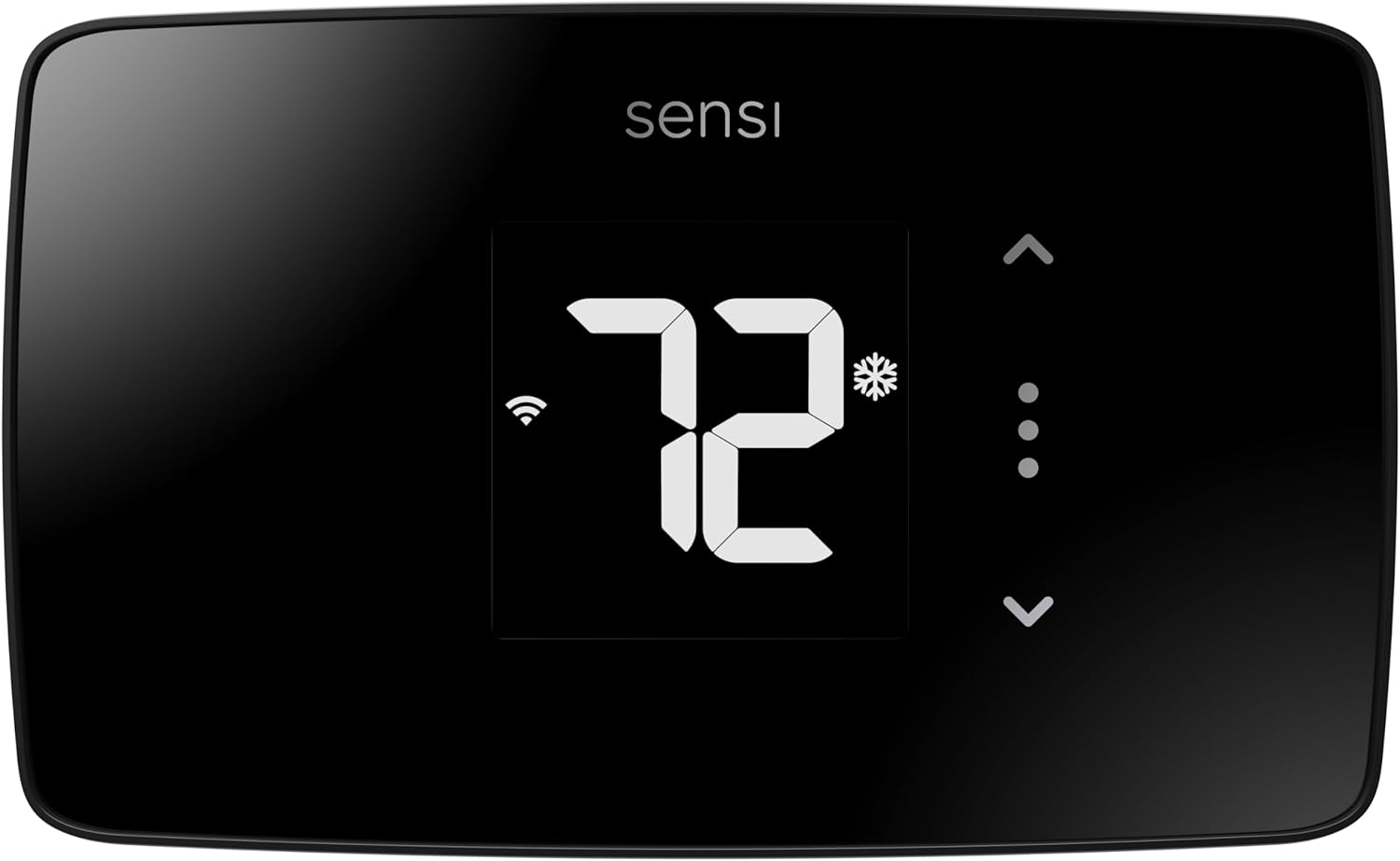
The Sensi Lite ST25 is a straightforward smart thermostat designed for easy DIY upgrades to a home's HVAC control. It connects over 2.4 GHz Wi‑Fi and works with Alexa, Google Assistant and SmartThings, letting you change temperature from the app, by touch or with voice. Installation is targeted at typical household systems and often does not require a common wire, though heat pump and heat/cool only setups need a C‑wire or battery power. The LCD display and included mounting hardware make wall installation tidy, and the Sensi app provides scheduling, geofencing and usage reports that can help reduce energy use. Data privacy is emphasized, and two AAA batteries are included so it will run without running new wiring. Limitations to expect are the simple feature set and basic LCD — it lacks a color touchscreen and advanced learning algorithms found on higher‑end models — so it is best for buyers who want reliable remote control and energy savings rather than advanced automation.
Best for: Buyers who want a practical, no‑frills smart thermostat for reliable remote control and straightforward DIY installation to cut HVAC energy use.
Less Ideal for: Users seeking advanced learning features, a full color touchscreen, or the deepest customization options should consider a more feature‑rich model.
- Easy DIY installation with built‑in level and included mounting hardware
- Works on battery power or C‑wire systems with two AAA batteries included
- Wi‑Fi connectivity plus app, touch and voice control for remote access
- Energy‑saving features like scheduling, geofencing and usage reports
- Data privacy policy that does not sell personal thermostat activity
- Basic LCD and limited feature set compared with premium smart thermostats
- Requires a C‑wire for some system types, adding potential installation complexity
Verdict: A straightforward, energy‑minded battery‑powered smart thermostat that delivers remote control and simple DIY installation without extra complexity.
Heagstat H701 Non-Programmable Thermostat

| System type | 1 Heat/1 Cool single-stage |
|---|---|
| Power source | 2×AAA batteries or 24VAC |
| Display type | Backlit LCD |
| Control type | Non-programmable push button |
| Temperature control range | 44°F–90°F |
The Heagstat H701 is a straightforward, non-programmable wall thermostat designed for single-stage heating and cooling systems. It uses either two AAA batteries or 24VAC power and offers Heat/Off/Cool mode selection, a fan On/Auto switch, and a large backlit LCD for easy reading. Practical features include adjustable temperature swing and manual calibration, a selectable 5-minute compressor delay to protect equipment, and clear labeled terminals intended to simplify DIY installation. Because it lacks programmable schedules or Wi-Fi, you set temperature manually, which keeps the interface uncluttered and reduces complexity for users who just want reliable basic control. Important limitations are its single-stage support only and the absence of advanced terminals, so it will not work with multi-stage systems, heat pumps, or many specialized HVAC setups. For homes with a compatible conventional 24V system, the H701 delivers precise, no-frills temperature control at a low cost, but it is not suitable when you need smart features or multi-stage compatibility.
Best for: Buyers who want an inexpensive, easy-to-use replacement thermostat for a conventional single-stage 24V HVAC system and prefer simple manual controls over smart features.
Less Ideal for: Do not choose this if you need programmable schedules, remote/Wi-Fi control, or compatibility with multi-stage or heat pump systems.
- Dual power options: runs on 2 AAA batteries or 24VAC hardwire for flexibility
- Large backlit LCD and simple buttons make it easy to read and operate
- Selectable 5-minute compressor delay and temperature calibration for equipment protection and accuracy
- Clear, labeled terminal block and universal sub-base simplify DIY installation
- Non-programmable with no network or scheduling features
- Supports only single-stage heating/cooling and omits many advanced terminals
Verdict: A no-frills, budget-friendly battery thermostat that gives reliable manual temperature control for standard single-stage 24V systems.
Honeywell Home RTH111B Thermostat

| Connectivity Technology | Wi-Fi |
|---|---|
| Power Source | Battery Powered |
| Voltage | 24 volts |
| Display Type | Digital |
The Honeywell Home RTH111B is a straightforward non-programmable digital thermostat that gives reliable manual temperature control for single-stage heating and cooling systems. It uses soft-touch buttons and an easy-to-read digital display to set and view the temperature, and it retains the set point through power outages while warning you when batteries are low. Installation is wall-mounted and runs on batteries with a 24-volt system compatibility for most furnaces and central AC units; the unit is not designed for electric baseboard heat or heat pumps with backup or multi-stage systems. Because it has no scheduling or advanced automation, use is typically limited to homes where occupants prefer to set temperatures directly rather than using timers or smartphone control. Notable benefits are its precise ±0.5°C temperature control claim, simple operation, and battery-access convenience, while limitations include lack of programmability and incompatibility with several heating types that need auxiliary or multi-stage control.
Best for: Buyers who prioritize a dependable, no-frills thermostat that is easy to operate and maintain for basic residential heating and cooling systems.
Less Ideal for: Users who want programmable schedules, smart-home integration, or need compatibility with electric baseboard, multi-stage, or heat-pump systems.
- Simple, intuitive digital display and soft-touch buttons for quick adjustments
- Retains set point in memory during power outages
- Low battery indicator and easy-access battery compartment for maintenance
- Precise temperature control of approximately +/- 0.5°C
- Non-programmable so no scheduling or automated temperature setbacks
- Not compatible with electric baseboard heat, heat pumps with backup, or multi-stage systems
Verdict: Choose the RTH111B when you want a simple, battery-powered thermostat that reliably delivers precise manual temperature control without programming complexity.
White-Rodgers 1E78-140 Thermostat

| Power Source | Battery Powered |
|---|---|
| Number of Batteries | 3 AAA batteries required (included) |
| Voltage | 24 volts |
| Temperature Control Type | manual |
| Display Type | Digital |
The White-Rodgers 1E78-140 is a straightforward, non-programmable wall thermostat intended for single-stage heat-only systems. It runs on three AAA batteries and offers a large, easy-to-read backlit digital display with single-degree accuracy, making set-and-forget temperature control quick and unambiguous. Installation is typical for line-voltage 24-volt systems and the unit is compatible with most single-stage and millivolt heating setups, though it is not suitable for electric baseboard heat or some specialty systems. The button and touch controls are simple to operate, and the curved matte-white profile blends into most interiors. Because it lacks programming, it is best for users who want manual control rather than scheduled setbacks, and its wired connectivity and BACnet MS/TP listing indicate it can fit into basic wired HVAC setups. Overall, it delivers reliable, no-frills temperature control with clear readout and battery power for homes that do not need advanced scheduling or multi-stage features.
Best for: Buyers who prioritize a proven, easy-to-read manual thermostat and want a simple battery-powered unit that works reliably with standard single-stage heating systems.
Less Ideal for: People who need multi-stage control, programmable schedules, smart/Wi-Fi features, or compatibility with electric baseboard heating should look elsewhere.
- Large backlit digital display for easy temperature reading
- Battery powered with three AAA batteries included for simple installation
- Precise 1°F control suitable for maintaining steady indoor temps
- Compatible with most single-stage heat-only and millivolt systems
- Non-programmable design offers no scheduling or automatic setbacks
- Not compatible with electric baseboard heat and some specialized systems
Verdict: A dependable, easy-to-read battery thermostat that delivers precise manual control for single-stage heating systems.
Choosing the Right Battery Thermostat: Key Factors to Consider
Temperature Accuracy And Stability
How tightly a thermostat maintains the setpoint affects comfort and system runtime. A unit with good sensing and sensible hysteresis will avoid short cycling your furnace or compressor while keeping room temperatures consistent. Differences of one or two degrees in sensing and control logic can noticeably affect comfort and energy use.
When assessing accuracy, consider both the sensor precision and where the thermostat will be mounted. Drafts, direct sunlight, or placement near heat sources can bias readings regardless of the device's internal quality. Choose a model with documented sensing performance and, if available, offset calibration to correct for placement-induced error.
Battery Life And Power Efficiency
Battery longevity is a core benefit of battery thermostats, so look for efficient electronics, low-power display options, and sleep modes for wireless radios. Units that use standard AA or AAA batteries are easier to service than those with proprietary cells. Expect multi-month to multi-year runtimes depending on features like backlit displays, frequent Wi-Fi use, or constant display updates.
Also factor in how the thermostat reports low-battery conditions and whether it carries settings through a battery swap. A model that warns well before critical failure and preserves schedules during power interruption reduces the risk of unexpected comfort loss.
HVAC Compatibility And Control Signals
Not all battery thermostats work with every heating or cooling system. Confirm the device supports the control type you have, such as single-stage heat, heat pump, or line-voltage systems, and that its relay outputs match your system's requirements. Some battery models are optimized for simpler on/off control rather than advanced multi-stage systems.
If your setup uses common control voltages or dry contacts, choose a thermostat that explicitly lists those options. Compatibility also covers fan control behavior and whether the thermostat can trigger auxiliary or emergency heat in heat pump installations.
Installation And Physical Fit
One advantage of battery thermostats is a simpler installation path, but physical fit still matters. The mounting footprint should align with existing wall boxes or allow easy drywall installation without awkward wiring bends. Clear wiring diagrams and labeled terminals reduce installation time and error.
Consider whether the device requires a common wire or other wiring adaptations. Even if battery powered, some thermostats still expect certain wiring conventions for full feature operation. If you are doing the install yourself, favor devices with straightforward screw terminals, visible terminal labels, and accessible battery compartments.
User Interface And Scheduling Features
How you interact with the thermostat affects daily convenience. Simple dial or button interfaces can be ideal for basic needs, while touchscreen or app-controlled units add programming flexibility and remote adjustments. Evaluate whether a model provides weekday/weekend scheduling, temporary holds, or adaptive scheduling based on occupancy.
Also consider how easy it is to change setpoints and check temperatures at a glance. Bigger displays and clear icons reduce friction for household members who are not tech-savvy. If remote control is important, weigh the impact on battery life from wireless radios and whether the interface offers a low-power alternative.
Where Battery Thermostats Make Sense
Battery thermostats are a practical choice for locations that lack a reliable 24V common wire or where running new thermostat wiring would be cost-prohibitive. They are commonly used in small condos, older homes, guest rooms, additions, and cabins where minimal wiring keeps installation simple.
They are also useful for secondary zones or systems that only need basic on/off control rather than complex multi-stage management.
- Ideal for single-stage furnaces and basic heat/cool systems
- Good option for temporary installs or rentals
- Useful where minimal maintenance and easy battery swaps are preferred
Placement And Mounting Tips
Mount the thermostat on an interior wall about 54 to 60 inches from the floor away from direct sunlight, drafts, doorways, and heat sources. Proper placement ensures the internal sensor reads representative ambient temperature rather than localized hotspots.
If wall space is limited, test potential locations with a handheld thermometer to identify the most stable spot. When replacing an old stat, match the mounting footprint to avoid unnecessary drywall repair.
- Avoid placement above appliances or near windows
- Keep it away from hallways with heavy airflow
- Place on an inner wall shared by main living spaces
Managing Battery Life In Practice
To maximize runtime, use models with adjustable backlight settings and limit remote radio usage when not needed. If the thermostat supports local-only operation without wireless radios, disabling network features will typically extend battery life significantly.
Keep a simple maintenance calendar for battery replacement and respond to low-battery warnings promptly. Use recommended battery types and rotate spares periodically to avoid nonfunctional thermostats during cold snaps.
- Prefer AA/AAA batteries for availability
- Turn off unnecessary wireless features to save power
- Replace batteries at the start of heating or cooling seasons
Integration With Smart Home Systems
Some battery thermostats offer limited smart features such as basic remote control or schedule sync, but wireless connectivity increases power draw. If you plan to integrate the thermostat with a home automation platform, evaluate whether the integration requires constant connectivity or permits intermittent updates to conserve battery life.
For automation scenarios, consider whether the thermostat exposes local-control endpoints or relies on cloud mediation. Local control typically reduces latency and can be more resilient to network outages, while cloud-based features may offer advanced routines but will cost battery runtime.
- Confirm whether integrations allow local control
- Expect higher battery use for continuous cloud connectivity
- Use automation sparingly to preserve batteries
How We Chose the Best Battery Thermostat
Our editorial process focused on real-world reliability and ease of ownership for battery-powered thermostats. We evaluated candidates against measurable, homeowner-relevant criteria: temperature accuracy under normal load, battery life and power-efficiency, compatibility with common HVAC control types, user interface and programming flexibility, and installation simplicity for a non-specialist. We prioritized devices that deliver stable temperature control within a narrow margin and that operate for long stretches on common battery sizes. We excluded units that require uncommon battery types, proprietary power modules, or extensive professional setup. We also filtered out models with inconsistent control signals or limited compatibility with standard heating and cooling control wiring. Final selections favor products with clear documentation, predictable maintenance cadence, and straightforward programming so homeowners can install and maintain them without frequent service calls.
Our full evaluation process is outlined in our review methodology.
FAQ
Can a battery thermostat control a heat pump?
Some battery thermostats can control simple heat pump systems, but support varies. Check that the thermostat explicitly supports heat pump control and can manage auxiliary or emergency heat if your system needs it.
How often will I need to change the batteries?
Battery life depends on display, wireless usage, and device efficiency. With conservative settings many units run months to years on AA or AAA cells. Models with constant wireless connectivity or backlit screens will need more frequent replacement.
Will a battery thermostat keep my schedule during a battery swap?
Better models preserve schedules in nonvolatile memory or briefly store settings while swapping cells. Simpler units may reset to defaults, so verify whether the thermostat retains programming through power loss before relying on it.
Do battery thermostats require a common wire?
Most true battery-powered thermostats do not require a common wire for basic on/off operation. However, some feature-rich models may need a common wire or expect certain wiring for full functionality, so check the installation requirements before buying.
Are battery thermostats compatible with older mechanical systems?
Many battery thermostats work with older on/off mechanical systems, but you must confirm terminal compatibility and control signal expectations. If your system uses uncommon voltages or relay arrangements, consult the thermostat documentation or a technician.
Final Verdict
For most homeowners needing a simple, low-infrastructure solution, prioritize temperature accuracy, efficient power use, and clear installation guidance. Expect tradeoffs between feature richness and battery runtime: touchscreen displays and wireless integrations increase convenience but reduce battery life. Choose a thermostat that matches your control needs and wiring situation, and favor models with standard battery sizes and robust low-battery warnings to minimize maintenance hassles. With the right priorities you can get reliable, low-maintenance temperature control without rewiring.