
Note: This article contains affiliate links. If you click on these links and make a purchase, we may earn a small commission at no extra cost to you. This helps support our research and content. Read our full affiliate disclosure here.
Picking the right bottom-loading hot-and-cold water dispenser matters because it determines how quickly you can get hot drinks, cold water, or filtered drinking water throughout the day. The right unit saves counter space, reduces lifting and spills, and makes temperature control predictable for family use or small offices. This guide covers seven shortlisted dispensers that stood out for real-world reliability, temperature performance, and user-friendly maintenance. Below you will find clear evaluation criteria and concise product writeups for the top picks, followed by buying factors to help you match features to your routine.
Top Picks at a Glance
| Best Overall The best all-around choice for most situations | Brio 130 Series Bottom Load Dispenser |  |
| Best Quality Built to a higher standard if you want something more solid | Avalon Electronic Bottom-Loading Water Cooler |  |
| Best Value The sweet spot between price and what you get | Manastin Bottom Loading Water Cooler |  |
| Best Budget The cheapest option that still gets the job done reliably | COSVALVE Bottom Load Water Dispenser |  |
| Top Rated A top-rated pick with lots of positive feedback | Avalon A4 Bottom Loading Water Cooler |  |
| Most Popular A crowd favorite that many people choose with confidence | Brio Bottom Load Water Cooler CLBL420V2 | 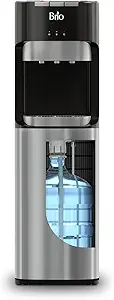 |
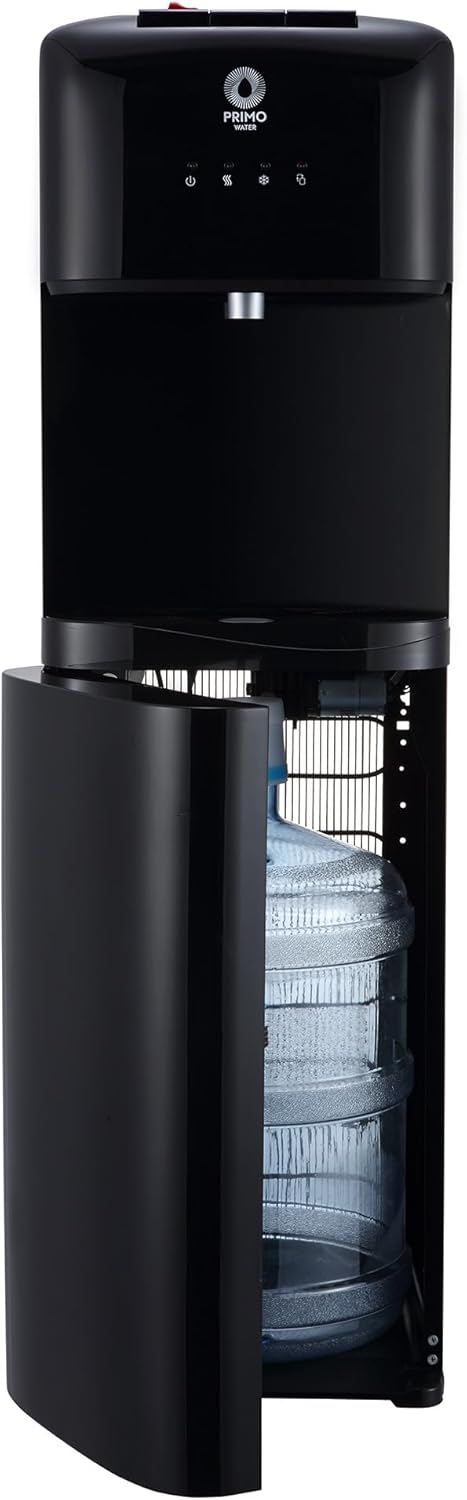
| Best Seller A high-volume bestseller chosen again and again | Primo Bottom Loading Water Dispenser |  |
Brio 130 Series Bottom Load Dispenser

| Wattage | 300 watts |
|---|---|
| Installation Type | Freestanding |
| Capacity | 5 gallons |
The Brio 130 Series bottom-load dispenser gives easy access to hot, cold, and room-temperature water without a water line, using a 5-gallon bottle that slides into a discreet lower cabinet. Setup is tool-free and straightforward, and the bottom-loading design removes the need to lift and flip heavy bottles. It uses polymer construction with stainless reservoirs and offers practical safety and convenience features such as a child safety two-step hot-water lock, LED indicators for hot and cold readiness, and an empty-bottle alert. The unit is freestanding and delivers water at a claimed 1.5 L/min flow rate, making it suitable for filling bottles, cups, and basic kitchen tasks; hot water relocks automatically after dispensing. Expect a basic control layout rather than a touchscreen and no built-in line hookup, so it is best where simple, portable hot-and-cold water is needed rather than where plumbed-in or premium self-cleaning features are required.
Best for: Buyers who want a simple, no-plumbing hot-and-cold dispenser for home or small office use and appreciate easy bottle changes and basic safety features.
Less Ideal for: People seeking a plumbed-in, high-end water system with advanced self-cleaning or touchless dispensing should consider other options.
- Bottom-load design eliminates heavy lifting and makes bottle changes easier
- Tri-temperature dispensing (hot, cold, room) for versatile everyday use
- Child safety two-step hot-water lock for accidental-pour protection
- Empty bottle LED alert helps avoid unexpectedly running out of water
- No built-in plumbing hookup so it relies on 5-gallon bottles
- Polymer exterior and basic controls are less premium than higher-end models
Verdict: A practical bottom-loading hot-and-cold dispenser that prioritizes no-lift bottle changes, basic safety, and everyday versatility for home or small office use.
Avalon Electronic Bottom-Loading Water Cooler

| Wattage | 520 watts |
|---|---|
| Installation Type | Countertop |
| Access Location | Bottom |
| Number of settings | 3 |
| Upper Temperature Rating | 185 °F |
The Avalon Electronic bottom-loading water cooler delivers three selectable temperatures — cold, cool, and hot — with a digital display and adjustable temperature controls that make dialing in beverage temperatures straightforward. It uses a bottom-load bottle cabinet for 3- to 5-gallon jugs to reduce lifting and spills, and the compressor cools water to around 47°F while the hot tap reaches up to 185°F for instant tea or coffee. Practical touches include a digital clock, nightlight at the spout, and a child safety lock for the hot water. The unit also offers a self-clean ozone cycle to sanitize the internal tank, which is useful for maintenance in shared or high-use settings. Expect a countertop installation footprint and a familiar plug-in power setup; the cooler is focused on reliable temperature performance rather than ultra-compact sizing or lightweight portability. If you prioritize steady hot and cold output, simple electronic controls, and easier bottle changes, this model is a capable choice, though it occupies typical cooler space and requires occasional filter and ozone maintenance.
Best for: Buyers who want reliable, performance-focused hot and cold water delivery with precise digital controls and easier bottle changes for office or home breakroom use.
Less Ideal for: People seeking a compact, lightweight dispenser for very small counters or those who want a completely maintenance-free, filterless unit.
- Three adjustable temperature settings with digital temperature control for precise hot and cold output
- Bottom-loading design reduces lifting and makes replacing 3–5 gallon bottles easier
- Self-cleaning ozone function helps sanitize internal tanks without manual disassembly
- Built-in nightlight, digital clock, and child safety lock add convenience and safety
- Countertop footprint is relatively large compared with portable or compact dispensers
- Requires periodic maintenance such as filter replacement and running the ozone cycle
Verdict: A performance-oriented bottom-loading cooler that gives steady, adjustable hot and cold water with user-friendly digital controls and a built-in self-cleaning option.
Manastin Bottom Loading Water Cooler

| Access Location | Bottom |
|---|---|
| Power Source | Corded Electric |
| Upper Temperature Rating | 203 °F |
| Lower Temperature Rating | 43.7 °F |
| Capacity | 5 gallons |
The Manastin bottom-loading water cooler is a freestanding dispenser designed to make 3- and 5-gallon bottle changes easier by hiding the bottle in a lower compartment and using a built-in hose. It delivers three temperature settings—hot, cold and room—with reported fast heating (up to roughly 6.5 L/hour) and cooling (about 1.5 L/hour), and dual 304 stainless inner tanks for durability and hygiene. Practical safety features include a child safety lock on the hot water controls, a low-water indicator that beeps and lights, and a dry-burn prevention cutoff. The matte black slim cabinet fits small offices or kitchens and the unit is corded electric for continuous use. Expect straightforward daily use: load the bottle at waist level, use the front taps for drink selection, and follow the drain plug and hose cleaning guidance for maintenance. Trade-offs are typical for this class: plastic exterior materials and modest cooling throughput mean it is best for households or small offices rather than high-traffic commercial settings.
Best for: Buyers who want a practical, no-nonsense dispenser that simplifies bottle replacement and provides hot, cold, and room water for a home or small office.
Less Ideal for: Large households, busy breakrooms, or commercial locations that need higher cooling throughput and heavier-duty materials should consider a commercial-grade dispenser instead.
- Bottom-loading design removes heavy lifting and hides the bottle for a cleaner look
- Three temperature modes (hot, cold, room) with fast heating and cooling rates
- Child safety lock and dry-burn prevention for safer operation
- Dual 304 stainless steel tanks resist corrosion and reduce flavor transfer
- Plastic exterior and non-commercial cooling capacity limit suitability for very heavy use
Verdict: Choose this unit if you want an easy-to-use bottom-loading dispenser with hot and cold outputs and built-in safety features for home or small-office use.
COSVALVE Bottom Load Water Dispenser

| Capacity | 5 gallons |
|---|---|
| Wattage | 550 watts |
| Cooling power | 80w |
| Temperatures | Hot, Cold, Room |
| Access Location | Bottom |
The COSVALVE bottom-loading dispenser makes bottle changes easier by hiding the jug in a lower cabinet while offering hot, cold, and room-temperature taps for everyday use. It uses a compressor cooling system and a 550 W heater to deliver cold water around 42.8–50°F and hot water up to about 190–203°F, which is handy for coffee, tea, and instant meals without waiting for a kettle. Practical touches include an empty-bottle indicator and a child safety lock on the hot spout, and the stainless water tank and drip tray simplify basic cleaning. The unit is freestanding and sized for 3 or 5 gallon bottles so it fits kitchens, small offices, or dorms, but it is heavier and taller than top-load countertop options and needs a dedicated floor space and power outlet. For buyers watching costs, it gives core hot-and-cold convenience without advanced features like digital controls or filtration.
Best for: Buyers who want a simple, wallet-friendly bottom-loading dispenser that delivers immediate hot and cold water for a home, small office, or dorm without extra smart features.
Less Ideal for: Anyone who needs integrated water filtration, compact countertop placement, or advanced digital controls should consider other options.
- Bottom-load design makes bottle replacement easier and hides the jug
- Provides three temperatures: hot, cold, and room for versatile use
- Empty bottle indicator prevents unexpected runouts
- Child safety lock on the hot spout reduces accidental scalding
- No built-in filtration system included
- Requires floor space and is relatively heavy compared with countertop models
Verdict: A cost-conscious bottom-loading dispenser that reliably delivers hot, cold, and room-temperature water while making bottle changes easy.
Avalon A4 Bottom Loading Water Cooler

| Capacity | 5 gallons |
|---|---|
| Number of settings | 3 |
| Upper Temperature Rating | 85 °C |
| Lower Temperature Rating | 8.3 °C |
| Power Source | Corded Electric |
The Avalon A4 is a bottom-loading bottled water cooler designed for kitchens, offices, or break rooms where ease of use and low maintenance matter. It accepts 3–5 gallon jugs without lifting them to the top, and offers three temperature outputs—hot, cold, and room—so you can pour piping hot drinks or crisp chilled water from the same dispenser. The stainless steel cabinet gives it a durable look and the built-in nightlight and empty-bottle indicator add convenience for shared spaces. Heating and cooling powers are listed separately, and the unit includes BioGuard treatment on high-contact areas to reduce bacterial growth. Expect the unit to be straightforward to install and operate with manual buttons, though it does rely on bottled water rather than a plumbed supply and has typical freestanding footprint requirements. For buyers prioritizing dependable, no-frills bottled dispensing and simple controls, the Avalon A4 delivers practical performance; those wanting integrated filtration or a non-bottled plumbed setup will need a different solution.
Best for: Buyers who want a reliable, low-maintenance bottled dispenser for offices or homes where ease of bottle replacement and straightforward hot-and-cold dispensing are the top priorities.
Less Ideal for: Anyone seeking a plumbed-in dispenser, integrated filter system, or advanced digital controls should consider other models geared to those needs.
- Bottom-loading design reduces lifting and spills when replacing 3–5 gallon bottles
- Three temperature settings (hot, cold, room) cover common beverage needs
- Stainless steel cabinet and BioGuard-treated contact points for durability and reduced microbial exposure
- Nightlight and empty-bottle indicator improve usability in shared or low-light areas
- Uses bottled supply only, so ongoing bottle replacements are required
- Manual controls and basic feature set lack advanced conveniences like built-in filtration or digital temperature presets
Verdict: Choose the Avalon A4 if you want a sturdy, easy-to-use bottom-loading dispenser that reliably delivers hot, cold, and room water with minimal fuss.
Brio Bottom Load Water Cooler CLBL420V2

| Wattage | 500 watts |
|---|---|
| Installation Type | Freestanding |
| Access Location | Bottom |
| Number of settings | 3 |
| Upper Temperature Rating | 198 °F |
The Brio bottom-load cooler gives on-demand hot, cold, and room-temperature water without the hassle of lifting bottles into the top. It uses a bottom-access cabinet that accommodates 3- or 5-gallon jugs and includes a child-safety lock on the hot spout plus an LED display that alerts when the bottle is empty. Practical touches such as stainless steel reservoirs and a digital indicator support cleaner-tasting water and easy maintenance, while the freestanding design fits kitchens, offices, or break rooms. Use is straightforward: slide a replacement bottle into the cabinet, plug it in, and select the temperature you need. Limitations include its footprint and weight which make it less portable, and the unit relies on replacement jugs rather than being a plumbed bottleless system. Buyers should also expect standard upkeep around filters and occasional cleaning to maintain reservoir hygiene.
Best for: Buyers who value easy bottle changes, family safety features, and a proven dispenser design backed by many user reviews for home or small-office hydration.
Less Ideal for: Those who need a lightweight, highly portable unit or want a plumbed bottleless cooler with built-in filtration should consider other options.
- Bottom-loading cabinet eliminates heavy lifting and fits 3- or 5-gallon bottles
- Three temperature settings for hot, cold, and room-temperature dispensing
- Stainless steel reservoirs support water purity and taste
- Child-safety lock on the hot spout reduces risk of accidental scalding
- LED display provides an empty-bottle alert for convenient maintenance
- Relatively heavy and occupies a fixed footprint, so not ideal for frequent moves
- Does not offer direct plumbing hookup or bottleless filtration
Verdict: A reliable bottom-load dispenser that makes replacing heavy jugs easy while delivering hot, cold, and room-temperature water with family-friendly safety features.
Primo Bottom Loading Water Dispenser
| Installation Type | Freestanding |
|---|---|
| Upper Temperature Rating | 95 °F |
| Power Source | Corded Electric |
| Capacity | 5 gallons |
| Material Type | Stainless Steel |
The Primo Bottom Loading Water Dispenser is a straightforward hot-and-cold freestanding cooler built for easy, no-lift bottle changes and everyday use. You load a 5-gallon bottle into the lower compartment behind a magnetic door, then use simple push-button controls to dispense cold or hot water. Stainless steel reservoirs and quiet heating and cooling help preserve taste and avoid loud operation, and the unit includes a 2-step child safety lock for the hot spout plus an LED night light to reduce spills. Setup requires no plumbing or tools and the removable drip tray is dishwasher safe for simple cleaning. Practical limitations are its basic push-button control set rather than advanced digital features and the top hot temperature is listed at 95 F which suits warm beverages but not very high-temperature needs. For risk-averse buyers this unit emphasizes reliable, easy operation and familiar safety features over novelty bells and whistles.
Best for: Buyers who want a dependable, easy-to-use bottom-loading hot-and-cold dispenser with familiar safety features and simple setup rather than advanced electronics.
Less Ideal for: Those who need near-boiling hot water from the dispenser or who prioritize digital controls and smart features should look elsewhere.
- Bottom-loading design eliminates heavy lifting and reduces spills
- Stainless steel reservoirs resist corrosion and help maintain water taste
- Simple push-button controls and quiet heating/cooling for low fuss operation
- Two-step child safety lock on the hot spout for added safety
- Removable dishwasher-safe drip tray and LED night light for easier use
- Upper hot temperature rated to around 95 °F, lower than some high-heat dispensers
- Basic control set without advanced digital features or smart connectivity
Verdict: A reliable, no-fuss bottom-loading cooler that prioritizes safe, easy operation and durable stainless-steel reservoirs for everyday hot-and-cold water needs.
Choosing the Right Bottom-Loading Hot-and-Cold Water Dispenser: Key Factors to Consider
Temperature Range And Stability
How hot and how cold the dispenser can get, and how consistently it holds those temperatures, matters because it determines what you can prepare. If you often make tea, instant soups, or baby formula, reliable hot temperature hold is essential. For cold beverages and accurate chilled water, look for systems with distinct cooling capacity rather than relying on ambient chill.
Stability also affects user safety. Excessively high or wildly fluctuating hot temperatures risk scalding, while inconsistent cold performance can leave you with lukewarm water during warm months. Consider whether the unit offers adjustable setpoints or fixed presets and whether it reports actual temperatures or only general indicators.
Bottle Loading And Accessibility
Bottom-loading designs are intended to reduce lifting, but loading ergonomics still vary. Check how the dispenser secures and aligns the bottle, whether it uses a pump or gravity-fed connector, and how easy it is to insert and remove bottles without spills.
Also assess door clearance and how the bottle is accessed from the front. For tight spaces, a model with a low-clearance loading door or a slide-out tray can make bottle swaps simpler. Consider how often you plan to change bottles; frequent swaps favor designs that minimize bending and physical effort.
Cleaning, Sanitization, And Filter Access
Water dispensers can harbor biofilm and mineral buildup if not cleaned regularly. Look for units with removable reservoirs, accessible drip trays, and clear instructions for sanitizing internal lines. Models that make it straightforward to flush or replace internal tubing lessen the time and cost of upkeep.
If the unit accepts inline filters, evaluate how easy the filter is to access and change. A filter bay that requires disassembly or tight spaces will discourage timely maintenance. Prioritize dispensers that include simple cleaning paths and visible indicators for maintenance tasks.
Dispense Speed And Flow Control
How quickly water comes out and whether you can control flow affects convenience and safety. Fast flow reduces wait time when filling bottles or mugs, but overly strong jets can splash into the drip tray. Look for adjustable flow or separate taps for hot and cold to avoid accidental mixing.
For homes with children, a modest flow combined with a child-lock on the hot tap can prevent misuse. Consider whether one-handed dispensing is possible and if cup rests or integrated shelves stabilize containers during filling.
Noise And Energy Use
Refrigeration and heating systems produce noise and draw power. If the dispenser will live in an open kitchen or small office, quieter compressors and insulated tanks reduce disruption. Review typical noise-producing components like active cooling compressors or pump motors.
Energy efficiency matters for ongoing operating cost and heat output. Insulated hot tanks and energy-saving modes reduce continuous power draw. For units used frequently, prioritize better insulation and standby modes that lower consumption without sacrificing readiness.
Safety Features And Controls
Safety matters when dispensing near children or in busy spaces. Look for hot-water locks or two-step activation, clearly labeled controls, and indicator lights that communicate when water is at target temperatures. Overheat protection and auto-shutoff routines for the heater add layers of safety.
Controls should be intuitive so guests or children can use the unit without risk. Models with tactile buttons and visible safety icons reduce accidental activation and simplify everyday operation.
Installation And Space Planning
Bottom-loading dispensers free up counter surface because the water bottle sits hidden behind a lower door. However, you still need clearance for the door and to access the bottle for swaps. Measure the unit depth and the clearance required for the loading door to avoid tight fits in narrow utility rooms.
Place the dispenser on a stable, level surface near a grounded outlet. If the model uses a pump, route the cable to avoid trip hazards. Keep the dispenser away from direct sunlight and heat sources to prevent the cooling system from working harder than necessary.
- Allow space in front for the loading door to open fully.
- Keep the unit near a standard outlet; do not use extension cords long-term.
- Avoid placing the dispenser directly on carpet or uneven floors.
Maintaining Clean Water Lines
Regular sanitization keeps taste neutral and reduces bacterial growth. Follow a schedule for flushing the lines and replacing filters when present. Use manufacturer-recommended cleaning solutions or a light bleach cycle followed by thorough rinsing to remove residues.
Empty and clean the drip tray weekly and inspect interior surfaces every month. If the dispenser has a removable reservoir or tubing access panel, detach and inspect those parts during scheduled cleaning for mineral scale or discoloration.
- Sanitize internal lines every 1 to 3 months depending on use.
- Replace inline filters according to flow and taste changes.
- Keep a small brush kit to reach tight corners and fittings.
Energy And Running Cost Considerations
Heating and cooling tanks continuously draws energy. Units with better insulation and standby heater modes reduce daily consumption. If the dispenser will be used intermittently, a model that supports sleep or eco modes can lower operating costs without sacrificing convenience.
Check power ratings to estimate monthly energy draw, and consider placing dispensers on separate circuits in busy kitchens to avoid tripping breakers during peak use.
- Insulated tanks reduce heat loss and energy use.
- Look for models with eco or standby settings for lower consumption.
- Consider usage patterns when estimating monthly power costs.
Child Safety And Usability
If children will be present, prioritize hot-water locks and clear labeling. Controls that require a two-step action for hot dispensing reduce accidental burns. Also consider height and reach: lower units are easier for children to access, so ensure hot safety features are prominent.
Ergonomic taps and cup shelves make one-handed filling simpler and prevent spills. Brightly lit indicators and tactile buttons improve usability for older adults or users with limited dexterity.
- Choose models with dedicated child locks for hot taps.
- Ensure controls are labeled and require deliberate action to dispense hot water.
- A stable cup shelf helps prevent spills during filling.
Filter Options And Water Quality
Many dispensers accept inline filters to reduce sediment, chlorine taste, and odors. Decide whether you prefer replaceable cartridge filters or external filtration before purchase. Cartridge filters inside the dispenser are tidy but should be easy to access and change.
If local water has high mineral content, expect more frequent descaling. Consider whether the dispenser supports compatible filter sizes and whether replacement cartridges are readily available in your area.
- Pick a dispenser with easy filter access if you plan to use cartridges.
- Plan for descaling if you have hard water.
- Verify filter compatibility with common cartridge types.
How We Chose the Best Bottom-Loading Hot-and-Cold Water Dispenser
We focused on features and performance that directly affect daily use of bottom-loading hot-and-cold water dispensers. Our selection filters prioritized consistent temperature accuracy for both hot and cold taps, ease of loading and handling heavy water bottles, and hygienic design elements that reduce contamination risk. We also weighed long-term upkeep by assessing access for cleaning and filter replacement, plus energy efficiency for units with continuous heating or cooling. User convenience factors included dispense speed, drip tray design, and intuitive control panels. Excluded from consideration were countertop or top-loading designs and any units that required specialized installation or external plumbing. We eliminated products lacking clear temperature controls or those with maintenance requirements that would be impractical for routine home or small office use. The final picks represent units that balance temperature control, user ergonomics, and serviceability for common household environments.
Our full evaluation process is outlined in our review methodology.
FAQ
How often should I sanitize a bottom-loading dispenser?
Sanitize internal lines and reservoirs every 1 to 3 months depending on use and local water quality. Heavy use or detectable taste changes warrant more frequent cleaning.
Can I use bottled water of any size with a bottom-loading unit?
Most bottom-loading dispensers accept common bottle sizes, but you should confirm the maximum bottle height and weight capacity. Ensure the bottle fits the internal compartment and aligns with the pump or connector.
Are bottom-loading dispensers energy efficient?
Energy efficiency varies. Units with insulated tanks and eco or standby modes use less power. Models with continuous heating or cooling will draw more energy over time.
Is it safe to dispense hot water around children?
Yes, if the dispenser has a child lock or two-step hot-tap activation. Always supervise young children and teach safe use to prevent accidental scalds.
How do I know when to replace the filter or descale?
Replace filters based on the manufacturer interval or when you notice taste changes or reduced flow. Descale when you see mineral buildup or if flow decreases despite a clean filter.
Final Verdict
Focus on the practical tradeoffs between temperature performance, ease of loading, and maintenance when choosing a bottom-loading hot-and-cold water dispenser. If you prioritize frequent hot-water use, look for stable hot temperature control and strong safety features. If low upkeep matters more, favor designs with easy-access filters, removable reservoirs, and simple sanitization paths. Balance dispense speed and energy use against how and where you plan to use the unit. With clear priorities and the selection criteria above, you can pick a dispenser that delivers reliable hot and cold water with manageable upkeep.