
Note: This article contains affiliate links. If you click on these links and make a purchase, we may earn a small commission at no extra cost to you. This helps support our research and content. Read our full affiliate disclosure here.
A bottom-loading hot water dispenser saves you from lifting heavy bottles while giving fast access to near-boiling water for tea, coffee, and cooking tasks. If you spend time making hot drinks, preparing quick meals, or need reliable hot water at a home workstation, the right dispenser makes daily routines easier and safer. This guide covers the top shortlisted options in the bottom-loading hot water dispenser category and explains the features that matter most for home use. Below you will find concise evaluations focused on heating speed, safety features, maintenance, and everyday convenience to help you pick the best fit for your kitchen or office nook.
Top Picks at a Glance
| Best Overall The best all-around choice for most situations | Avalon A6 Bottom-Loading Water Cooler |  |
| Best Quality Built to a higher standard if you want something more solid | Brio Bottom Load Water Cooler CLBL520SC |  |
| Best Value The sweet spot between price and what you get | Primo Bottom Loading Water Dispenser |  |
| Best Budget The cheapest option that still gets the job done reliably | COSVALVE Bottom Load Water Dispenser |  |
| Top Rated A top-rated pick with lots of positive feedback | EUHOMY Bottom-Loading Water Dispenser |  |
| Most Popular A crowd favorite that many people choose with confidence | Avalon A4 Bottom Loading Water Cooler |  |
| Best Seller A high-volume bestseller chosen again and again | Brio Bottom Load Water Cooler CLBL420V2 | 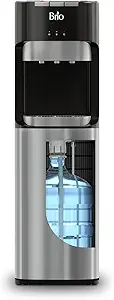 |
Avalon A6 Bottom-Loading Water Cooler

| Wattage | 1200 watts |
|---|---|
| Access Location | Bottom |
| Number of settings | 2 |
| Upper Temperature Rating | 185 °F |
| Capacity | 5 gallons |
The Avalon A6 bottom-loading dispenser provides hot and cold dispensing in a slim, freestanding cabinet that hides the bottle for easier loading. You get paddle-style spouts for quick single-handed pouring, a cold compressor that chills water to roughly 47°F, and a hot tap rated up to about 185°F with a child safety lock for protection. It includes a nightlight and a replace-bottle indicator, which help in low light and make maintenance obvious. Installation is simple since it is freestanding and uses standard 3- or 5-gallon bottles that sit inside the cabinet and feed water via a pump. Practical downsides are a basic two-setting control rather than adjustable temperature presets and a modest set of features compared with higher-end models, but the unit covers core needs reliably for home or small office use. Build is stainless steel-accented and UL listed, which supports everyday durability and safety expectations.
Best for: Buyers who want a straightforward, space-conscious bottom-loading dispenser for home or small office use that keeps bottles out of sight and provides reliable hot and cold water on demand.
Less Ideal for: People who need precise temperature control, integrated water filtration, or advanced commercial features should consider higher-end or specialized units instead.
- Bottom-loading design eliminates heavy lifting and reduces spills
- Provides both hot (up to ~185°F) and cold (about 47°F) water outputs
- Child safety lock on the hot spout for household safety
- Nightlight and replace-bottle indicator for easy use and maintenance
- UL listed with stainless steel construction for safety and durability
- Only two setting controls without fine temperature adjustment
- No built-in filtration or advanced dispensing features
Verdict: A practical, slim bottom-loading cooler that delivers reliable hot and cold water with easy bottle changes and family-friendly safety features.
Brio Bottom Load Water Cooler CLBL520SC

| Wattage | 500 watts |
|---|---|
| Installation Type | Freestanding |
| Access Location | Bottom |
| Number of settings | 3 |
| Power Source | Corded Electric |
The Brio CLBL520SC bottom-loading water cooler delivers on convenience and everyday performance by combining a three-temperature dispenser with stainless steel reservoirs and a UV self-cleaning cycle. It is typically used in kitchens, small offices, or break rooms where users want hot water for beverages, chilled water for drinking, and ambient water for cooking without lifting heavy bottles. Notable features include a bottom-load cabinet that hides the bottle and removes awkward lifting, a child-safety two-step hot spout, an LED nightlight for low-light dispensing, and a UV sanitizing mode to reduce biofilm buildup. In practice the unit produces instant hot water up to the rated upper temperature and reliably chilled water, and the stainless-steel reservoir helps preserve taste compared with plastic tanks. The trade-offs are the unit footprint and weight that come with built-in compressors and heaters and the need to run occasional cleaning cycles and filter maintenance to keep performance at peak levels. For buyers prioritizing hands-off operation and consistent hot/cold output, this model is a practical, well-equipped choice.
Best for: Buyers who want a durable, low-effort dispenser that reliably delivers hot, cold, and room-temperature water and value features that reduce manual cleaning and bottle handling.
Less Ideal for: People who need an ultra-compact or lightweight countertop solution or who prefer a model with minimal maintenance responsibilities.
- Bottom-load design eliminates heavy bottle lifting and keeps the bottle hidden
- Three temperature settings: hot, room, and cold water for versatile use
- UV self-cleaning helps reduce contaminants and biofilm with a push-button cycle
- Stainless steel reservoirs maintain water taste and resist corrosion
- Child-safety two-step hot dispensing and nightlight improve safe, convenient use
- Relatively heavy and takes up counter or floor space compared with compact dispensers
- Requires periodic maintenance like filter changes and cleaning cycles to sustain performance
Verdict: Choose this Brio bottom-load cooler if you want a hands-off, performance-focused dispenser that provides instant hot, cold, and ambient water with built-in UV sanitizing.
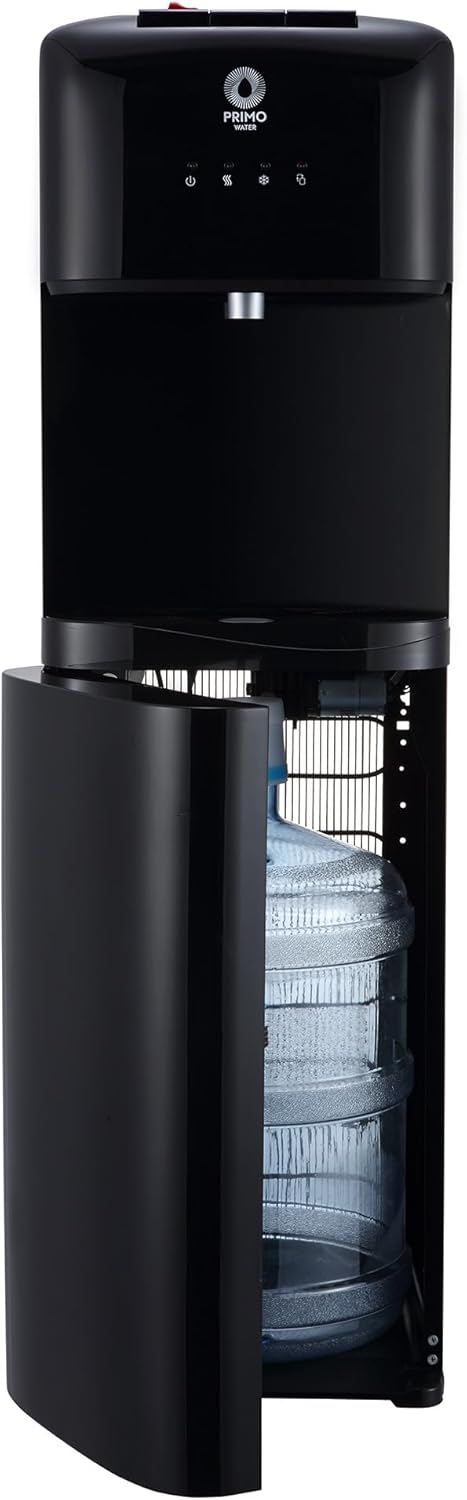
Primo Bottom Loading Water Dispenser
| Installation Type | Freestanding |
|---|---|
| Upper Temperature Rating | 95 °F |
| Power Source | Corded Electric |
| Capacity | 5 gallons |
The Primo Bottom Loading Water Dispenser provides hot and cold drinking water without the heavy lifting of top-load bottles. It accepts standard 5-gallon bottles in a bottom compartment behind a magnetic door, and water is dispensed via simple push-button controls with a 2-step child safety lock for hot water. Stainless steel internal reservoirs aim to keep water tasting fresh and resist corrosion, while quiet heating and cooling and an LED night light make it easy to use day or night. Setup is tool-free with no plumbing required, and the removable drip tray is dishwasher-safe for easy cleaning. Practical buyers should note the unit is freestanding and requires floor space, and the 95°F listed upper temperature rating means it delivers hot water suitable for beverages but not for heavy-duty kitchen tasks that need boiling temperatures. The design favors convenience and basic safety over advanced touchscreen controls or ultra-high temp output.
Best for: Buyers who prioritize hassle-free daily hydration and safety will appreciate a bottom-loading dispenser that minimizes lifting and offers straightforward controls for household use.
Less Ideal for: If you need near-boiling water for cooking or have very limited counter/floor space, look for a unit with higher hot temperatures or a more compact form factor.
- Bottom-loading design eliminates heavy lifting and bottle flipping
- Push-button operation with LED night light for easy, low-effort dispensing
- Stainless steel reservoirs resist corrosion and help maintain water taste
- Two-temperature dispensing with a 2-step child safety lock for hot water
- Removable dishwasher-safe drip tray simplifies cleaning
- Upper temperature rating of 95°F may be too low for tasks requiring near-boiling water
- Freestanding footprint requires dedicated floor space and may not suit small counters
Verdict: Choose this Primo if you want a convenient, bottom-loading hot-and-cold dispenser that removes bottle lifting and keeps everyday hydration simple.
COSVALVE Bottom Load Water Dispenser

| Capacity | 5 gallons |
|---|---|
| Wattage (heating) | 550 watts |
| Cooling power | 80w |
| Hot water temperature | 190.4°F-203°F |
| Cold water temperature | 42.8°F-50°F |
This COSVALVE bottom-loading dispenser hides the bottle in a lower cabinet so you avoid lifting heavy jugs onto the top of the unit, and it delivers hot, cold, and room-temperature water on demand. Typical use is in a small office, apartment kitchen, or break room where users want quick access to cold drinks, hot water for beverages or instant meals, and a tidy footprint. The unit uses a compressor cooling system and a 550 W heater to reach roughly 190–203°F for hot water and about 42–50°F for cold, and it includes a child-safety lock on the hot spout plus an empty-bottle indicator to notify you when a swap is needed. Practical benefits include easy bottle changes, straightforward push-button dispensing, and a removable drip tray for cleaning. Limitations to consider are its moderate physical weight, a basic feature set without advanced filtration or digital controls, and that cooling is compressor-based so it will cycle on and off like a typical cooler rather than delivering ultra-rapid chill.
Best for: Buyers seeking an affordable, no-frills bottom-loading dispenser for homes or small offices who prioritize easy bottle changes and straightforward hot and cold water access.
Less Ideal for: People who need integrated advanced filtration, precise digital temperature control, or the lightest possible portable dispenser should consider other options.
- Bottom-load design makes replacing 3–5 gallon bottles easier and keeps the bottle out of sight
- Provides three temperatures (hot, cold, room) for versatile everyday use
- Includes child safety lock on hot spout for added protection
- Empty bottle indicator notifies when it is time to replace the jug
- No built-in advanced filtration or UV sterilization
- Relatively heavy compared with top-load counter models
- Basic controls without digital display or programmable settings
Verdict: A practical, budget-friendly bottom-load dispenser that makes bottle changes easy while delivering hot, cold, and room-temperature water for everyday home or small office use.
EUHOMY Bottom-Loading Water Dispenser

| Capacity | 5 gallons |
|---|---|
| Upper Temperature Rating | 194 °F |
| Lower Temperature Rating | 39.2 °F |
| Installation Type | Freestanding |
This EUHOMY bottom-loading dispenser is built for practical, everyday hydration with three temperature outlets and a bottom-load design that avoids lifting heavy 5-gallon bottles. It delivers piping-hot water suitable for coffee or tea, chilled water for cold drinks, and room-temperature water for quick refills, with LED indicators that make status clear. The unit includes a UV-based automatic self-cleaning cycle that runs periodically to reduce microbial buildup and a child lock on the hot spout to help prevent accidental scalding. The 8.3-inch spout clearance and removable drip tray simplify filling mugs and tall bottles, and the night light aids use in dim kitchens or offices. Trade-offs are its floor-standing footprint and 30-pound display weight, which require a stable spot and occasional cleaning of exterior surfaces, and the self-cleaning system does not replace occasional manual maintenance. For someone prioritizing reliable, low-effort refills and built-in sanitation, this dispenser covers the essentials well.
Best for: Buyers who want a dependable, low-lift dispenser with built-in sanitation and simple temperature control for daily home or small office use.
Less Ideal for: People needing a compact countertop unit or those who prefer completely hands-off maintenance without any periodic manual cleaning.
- Bottom-loading design eliminates heavy bottle lifting and eases refills
- Three temperature settings (hot, cold, room) suit multiple uses
- Automatic UV self-cleaning cycle reduces microbial buildup
- Child safety lock on hot spout and LED indicators for clear status
- Freestanding footprint requires dedicated floor space
- Self-cleaning reduces maintenance but does not eliminate manual cleaning
Verdict: Choose this dispenser if you want a bottom-loading, self-cleaning unit that prioritizes easy refills and reliable hot, cold, and room-temperature water.
Avalon A4 Bottom Loading Water Cooler

| Wattage | 400 watts |
|---|---|
| Access Location | Bottom |
| Number of settings | 3 |
| Capacity | 5 gallons |
| Power Source | Corded Electric |
The Avalon A4 is a bottom-loading water cooler designed for home or office use that handles 3–5 gallon bottled water without lifting the jug into the top. It delivers three temperature settings—hot, cold, and room—using a 420W heater and 100W cooling system, and the stainless steel cabinet gives a more durable, businesslike look. Practical touches include manual push-button controls, a nightlight for easy nighttime dispensing, and an empty-bottle indicator so you know when to replace the jug. High-contact surfaces are treated with an antimicrobial BioGuard coating to reduce bacterial growth. On the downside the cooling power is modest, so rapid heavy cold dispensing in hot environments may warm slightly, and setup requires a freestanding space and occasional bottle changes. For routine office hydration or a kitchen where you want hot water on demand without lifting heavy bottles, the A4 is straightforward and dependable.
Best for: Buyers who prioritize easy bottle changes, straightforward operation, and a durable finish for shared spaces like small offices, break rooms, or kitchens where social proof and reliability matter.
Less Ideal for: Large workplaces or groups that need very high cold throughput or precise digital temperature control should consider higher-capacity commercial units instead.
- Bottom-loading design removes need to lift heavy water jugs and reduces spills
- Three temperature outputs (hot, cold, room) for versatile use
- Stainless steel cabinet offers durable, easy-to-clean exterior
- Nightlight and empty-bottle indicator improve convenience for low-light use
- BioGuard antimicrobial treatment on high-contact areas
- Cooling output is relatively low compared with larger commercial coolers
- Manual buttons lack advanced controls like digital temperature setting
Verdict: Choose the Avalon A4 if you want a reliable, easy-to-use bottom-loading dispenser that delivers hot, cold, and room water without lifting heavy bottles.
Brio Bottom Load Water Cooler CLBL420V2

| Wattage | 500 watts |
|---|---|
| Installation Type | Freestanding |
| Access Location | Bottom |
| Number of settings | 3 |
| Capacity | 5 gallons |
The Brio CLBL420V2 is a bottom-load freestanding water cooler designed for homes and small offices that need hot, cold, and room-temperature water on demand. Its bottom-load cabinet removes heavy lifting and accepts 3- or 5-gallon bottles, while a stainless steel reservoir helps preserve water taste. The unit offers three temperature settings, a child-safety lock on the hot spout, and an LED display that alerts you when the bottle is empty. In practice it serves as a convenient beverage station for making hot drinks or filling water bottles without bending or flipping heavy jugs. Setup is straightforward for a corded electric appliance, and the smart empty-bottle indicator cuts down on guesswork. Keep in mind it is a freestanding cooler with a moderate footprint and requires periodic bottle changes and basic cleaning; it does not include bottle or filtration beyond the stainless reservoir. If you prioritize easy loading, safety for hot water, and a simple, reliable dispenser, this model covers those needs well.
Best for: Buyers wanting a safe, no-lift dispenser that reliably provides hot, cold, and room-temperature water for daily household or small office use and who value straightforward maintenance and predictable performance.
Less Ideal for: People seeking a fully bottleless or under-sink filtered system or those with very limited floor space where a counter-top or tankless solution would be preferable.
- Bottom-load cabinet eliminates heavy lifting and fits 3- or 5-gallon jugs.
- Three temperature settings for hot, cold, and room-temperature water.
- Child-safety lock on the hot spout reduces risk of accidental hot dispensing.
- Stainless steel reservoirs help maintain water taste and hygiene.
- LED empty-bottle alert simplifies maintenance and refill timing.
- Requires manual bottle replacement and routine cleaning; no built-in filtration beyond stainless reservoirs.
- Freestanding footprint may take significant floor space in small rooms.
Verdict: Choose the Brio CLBL420V2 if you want a reliable, easy-to-load bottom‑loading dispenser that delivers hot, cold, and room-temperature water with child-safe hot dispensing.
Choosing the Right Bottom-Loading Hot Water Dispenser: Key Factors to Consider
Heating Capacity And Recovery
Heating capacity determines how much hot water the dispenser can keep at target temperature and how quickly it recovers after multiple pours. If your household makes frequent hot beverages or fills multiple mugs in short succession, faster recovery reduces wait time and keeps temperature more consistent.
Consider both the rated hourly dispense volume and the size of the internal heating tank. Larger tanks provide more ready hot water but can take longer to heat initially. Recovery rate is often a more practical measure for daily use because it reflects real-world performance when the unit is used repeatedly.
Temperature Range And Control
Precise temperature control matters when you need water for different tasks, such as near-boiling liquid for tea or slightly cooler water for instant coffee. Look for dispensers that list target temperature and offer selectable settings or accurate thermostats.
Stability is also important. A unit that drops substantially in temperature after several pours may not be suitable for groups or continuous use. Consistent thermostatic control yields predictable results for cooking, beverages, and any task that depends on a narrow temperature window.
Safety Features
Hot water dispensers present burn risks, so safety features should be a priority in any household. Child locks, two-step dispensing controls, insulated spouts, and automatic shutoff reduce accidental dispensing and exposure to scalding water.
Consider how controls are positioned and whether the unit locks by default. Physical design elements like recessed nozzles and drip trays that contain splashes also contribute to safer operation around children and pets.
Maintenance And Descaling
Mineral buildup from hard water degrades performance and can cause premature failure. Ease of descaling, availability of removable internal components, and clear maintenance access all affect how long the dispenser stays reliable.
Check for serviceable filters, removable drip trays, and straightforward instructions for flushing or descaling. Units that make routine upkeep simple reduce the chance of neglected maintenance and the resulting decline in heating efficiency.
Installation And Refill Convenience
Bottom-loading designs are intended to simplify bottle changes, but some models vary in how intuitive the insertion and connection process is. Consider how easy it is to slide the bottle into place, whether any adapters or tubing are required, and how the unit seals to prevent leaks.
Also think about footprint and placement options. A unit that fits on a kitchen counter without blocking cabinets or requiring relocation of other appliances will integrate more easily into daily life.
Energy Use And Standby Power
Because many hot water dispensers remain powered continuously, standby energy draw affects long-term operating cost and environmental impact. Look for units with efficient insulation, programmable schedules, or standby modes that reduce heating when not needed.
Lower standby consumption matters if the dispenser is used intermittently. Energy-efficient designs can also help maintain temperature with less electrical input, which benefits both bills and system longevity.
How Bottom-Loading Dispensers Differ From Other Styles
Bottom-loading dispensers hide the heavy bottle inside the cabinet area so you do not lift and flip bottles onto a top spout. This reduces strain and makes bottle swaps less awkward, particularly for users with limited mobility or strength.
The internal pump and tubing arrangement is slightly different from top-loading models, which can affect noise and priming behavior. Understanding these differences helps set expectations for setup, occasional priming, and where the unit fits in your kitchen layout.
- Lower physical strain when changing water containers
- Slightly more complex internal routing that may affect maintenance
- Cleaner visual profile since the bottle is out of sight
Placement And Counter Space Considerations
Measure the dispenser footprint and allow clearance for bottle insertion and drip-tray access. Bottom-loading units often extend deeper than they appear because the bottle sits partly inside the unit cabinet.
If you plan to place the dispenser against a backsplash or under cabinets, check for sufficient vertical and rear clearance for tubing and ventilation. Ensuring space for regular cleaning and access to the refill area will reduce hassle over time.
- Allow room in front for cup placement and drip-tray removal
- Verify door or cabinet clearances if the unit sits beside cabinetry
- Keep the dispenser near a grounded outlet to avoid extension cords
Routine Care: Descaling And Filter Upkeep
Regular descaling keeps heating elements efficient and prevents mineral accumulation that affects water taste. Depending on water hardness and usage, descaling frequency may range from monthly to every few months.
If the dispenser includes a replaceable carbon or sediment filter, follow the manufacturer-recommended schedule. Even if a filter is optional, using one can improve water clarity and reduce scale formation inside the tank.
- Use manufacturer-appropriate descaling solutions or mild vinegar following instructions
- Rinse thoroughly after any chemical descaling process
- Keep a log of maintenance intervals to maintain performance
Troubleshooting Common Issues
If the unit fails to dispense, check the pump priming and confirm the bottle is seated correctly. Airlocks and loose tubing are common causes of interrupted flow in bottom-load systems.
Temperature inconsistency often stems from thermostat faults, heavy simultaneous usage, or scale on the heating element. Start with a descaling routine and verify power continuity before exploring more complex repairs.
- No dispense: reseat bottle, check tubing, and run a priming cycle
- Low temperature: descale and verify thermostat setting
- Leaking: inspect seals and the bottle connection for proper seating
Best Practices For Safe Operation
Always enable child-locks and place the unit where a hot spill would not fall on electrical outlets or walkways. Train household members on two-step dispense controls if present so accidental activation is less likely.
Use compatible water bottles and avoid improvising seals or connectors. Regularly empty and clean drip trays to prevent overflow and microbial growth.
- Keep hot-water output away from play areas
- Engage safety locks when away from home for extended periods
- Follow disposal guidance for used descaling solutions
How We Chose the Best Bottom-Loading Hot Water Dispenser
We selected products that meet the practical demands of regular home hot-water use while prioritizing user safety and long-term reliability. Our filters started with bottom-loading models designed for continuous household use rather than occasional camp or travel units. We excluded countertop kettles and top-loading dispensers to keep the scope strictly on bottom-load configurations. Key evaluation dimensions included heating speed and temperature stability, which determine how quickly you get near-boiling water and how consistent the temperature remains during repeated draws. We assessed safety features such as child-locks, insulated spouts, and automatic shutoff to reduce burn risks. Maintenance and serviceability were considered next, including how easy it is to clean reservoirs, descale, and access replaceable parts. Usability factors like fill convenience, dispensing controls, and drip-cup design were also weighted. Finally, energy efficiency and standby power draw were reviewed because many units remain powered at all times. These concrete criteria guided inclusion and ranking across the shortlist.
Our full evaluation process is outlined in our review methodology.
FAQ
How often should I descale a bottom-loading hot water dispenser?
Descale frequency depends on local water hardness and usage. Many households find descaling every one to three months keeps performance consistent. If you notice slower heat-up times or a change in taste, perform a descaling cycle sooner.
Can I use any bottled water with a bottom-loading dispenser?
Most bottom-loading dispensers accept standard-sized bottles, but check capacity and neck fit. Using recommended bottle sizes and avoiding improvised adapters helps ensure a secure seal and correct pump operation.
Are bottom-loading dispensers noisy when heating or pumping?
They produce some pump noise during priming and occasional operational sounds while heating. Noise levels vary by model, but most are quiet enough for kitchen use. If noise is a concern, look for units that specify quiet pump operation.
Is it safe to leave a bottom-loading hot water dispenser powered overnight?
Many units are designed for continuous operation and include safety cutoffs, but energy use and local electrical codes should guide your practice. If you will be away for extended periods, using an energy-saving standby mode or powering down reduces energy use and potential risk.
What should I do if the dispenser drips after each use?
A persistent drip often comes from a worn seal or misaligned spout. First, clean the nozzle and drip tray. If dripping continues, inspect seals and replace parts following the maintenance instructions to restore a tight closure.
Final Verdict
Focus your choice on the balance between recovery rate and safety features for typical daily use. If you need frequent consecutive pours, prioritize faster heat-up and larger ready capacity. For households with children or high traffic, emphasize reliable child locks and spill containment. Weigh maintenance requirements and energy use against convenience features like adjustable temperature and easy bottle swaps. Prioritize the few features that match how you will use the dispenser so you get dependable hot water with minimal hassle.