
Note: This article contains affiliate links. If you click on these links and make a purchase, we may earn a small commission at no extra cost to you. This helps support our research and content. Read our full affiliate disclosure here.
Choosing the right safe water dispenser matters because it affects daily access to clean, drinkable water for your household or workplace. A dependable dispenser reduces reliance on single-use bottles, makes safe water convenient, and helps maintain consistent taste and water quality. This guide focuses on carefully shortlisted options that balance filtration performance, dispensing speed, and ease of upkeep. Below you'll find our top picks and the evaluation approach we used, plus practical guidance on installation, maintenance, and matching a dispenser to your space and usage needs.
Top Picks at a Glance
| Best Overall The best all-around choice for most situations | Avalon B8WHT Countertop Water Cooler |  |
| Best Quality Built to a higher standard if you want something more solid | Brio Bottom Load Water Cooler CLBL520SC |  |
| Best Value The sweet spot between price and what you get | Brita UltraMax 27-Cup Dispenser |  |
| Best Budget The cheapest option that still gets the job done reliably | Beyio 5-Gallon Water Dispenser |  |
| Top Rated A top-rated pick with lots of positive feedback | ZeroWater 22-Cup Ready-Read Dispenser |  |
| Most Popular A crowd favorite that many people choose with confidence | Avalon A4 Bottom Loading Water Cooler |  |
| Best Seller A high-volume bestseller chosen again and again | Brio Bottom Loading Water Cooler | 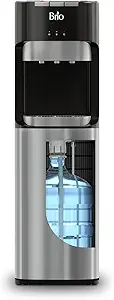 |
Avalon B8WHT Countertop Water Cooler

| Wattage | 520 watts |
|---|---|
| Installation Type | Under Sink |
| Number of settings | 2 |
| Upper Temperature Rating | 185 °F |
| Capacity | 1500 gallons |
The Avalon B8WHT is a bottleless countertop water cooler designed to deliver both hot and cold tap water without the need for replaceable jugs. It connects to your sink line using the included installation kit and runs water through a two-stage system (sediment plus carbon block) that the company rates for about 1,500 gallons or six months per set. The unit offers separate hot and cold spouts, a child safety lock on the hot tap, a nightlight for visibility, and a filter-change indicator to simplify maintenance. In everyday use it behaves like a compact under-sink-fed dispenser that is handy for kitchens, small offices, or break rooms where space is limited and jug handling is undesirable. Practical strengths are the complete install kit and NSF-listed filters that reduce the ongoing cost and waste of bottled water. Trade-offs are typical for countertop bottleless systems: you need a nearby water hookup and occasional filter replacements, and the cooling/heating capacity is suitable for light-to-moderate use rather than heavy commercial demand.
Best for: Buyers who want a compact, bottle-free countertop dispenser that reduces bottled-water costs and prefers a ready-to-install unit for kitchens or small offices.
Less Ideal for: Large households or high-traffic commercial settings that need fast recovery and very high dispensing volumes should consider higher-capacity or plumbed-in commercial units instead.
- Includes full installation kit for a straightforward under-sink hookup
- Dual-stage sediment and carbon block filtration rated for ~1,500 gallons/6 months
- Provides both hot and cold outputs with a child safety lock on the hot spout
- Filter change indicator and nightlight add convenience for home and office use
- Requires a dedicated cold-water supply line and basic installation work
- Capacity and heating/cooling throughput are intended for light to moderate use, not heavy commercial demand
Verdict: A compact, ready-to-install bottleless cooler that delivers hot and cold filtered water while cutting the cost and waste of bottled water.
Brio Bottom Load Water Cooler CLBL520SC

| Wattage | 500 watts |
|---|---|
| Installation Type | Freestanding |
| Access Location | Bottom |
| Number of settings | 3 |
| Power Source | Corded Electric |
The Brio CLBL520SC is a bottom-loading freestanding water cooler built for regular, high-use settings where hot, cold, and ambient water are needed on demand. It uses a 5-gallon bottle tucked into a cabinet so you avoid lifting, and the unit's food-grade 304 stainless steel reservoirs keep water tasting neutral while the LED display reports heating and cooling status. The standout safety and maintenance feature is the UV self-cleaning cycle, which helps reduce biofilm without manual scrubbing. Practical touches include a child-safety lock for the hot tap, a nightlight to see dispensing in low light, and a removable drip tray for easy cleaning. On the performance side the 500-watt heater reaches high temperatures and the cooler reliably maintains chilled water for office or home use, though the unit's physical footprint and nearly 40-pound weight mean it is not easily moved once placed. Expect occasional filter or bottle changes depending on source water quality, but for users who prioritize consistent hot and cold delivery plus an automatic sanitizing option, this cooler performs well.
Best for: Buyers who need reliable on-demand hot and cold water for a busy household or small office and who value automatic sanitizing and low-effort bottle changes.
Less Ideal for: People who need a compact, lightweight, or highly portable dispenser or those who prefer a plumbed-in bottleless/undercounter filtration solution.
- Bottom-load design eliminates heavy lifting and makes bottle replacement simple
- UV self-cleaning cycle reduces manual maintenance and helps control biofilm
- Stainless steel reservoirs preserve water taste and hygiene
- Three temperature settings (hot, cold, room) cover a wide range of beverage needs
- Child-safety lock and nightlight add safety and usability in real conditions
- Relatively heavy and large, limiting portability and tight-space placement
- Requires routine bottle or filter maintenance tied to local water quality
Verdict: Choose the Brio CLBL520SC when you want dependable hot, cold, and room-temperature water with easy bottom-load bottle changes and automatic UV sanitizing for safer, low-maintenance operation.
Brita UltraMax 27-Cup Dispenser
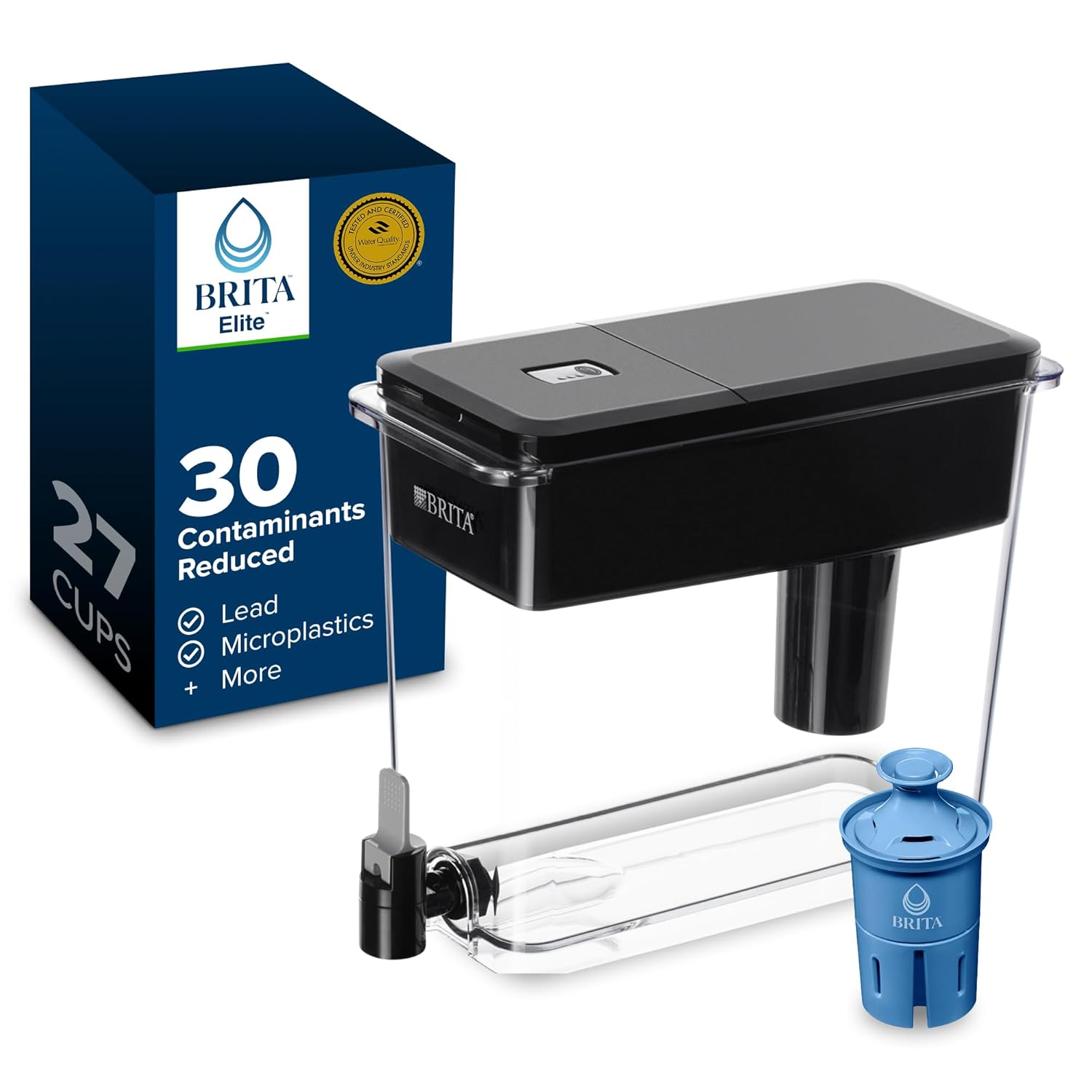
| Capacity | 27 cups |
|---|---|
| Filter life cycle | 120 gallons / ~6 months |
| Purification method | Activated Carbon with ion-exchange |
| Supported Water TDS Level Maximum (PPM) | 600 |
The Brita UltraMax 27-cup dispenser is a large pour-through countertop unit built for families or shared kitchens that need steady access to filtered water. You fill the top reservoir, water passes through the Brita Elite filter (activated carbon with ion-exchange) and collects in the lower chamber for dispensing through the spigot. The Elite filter is WQA/NSF-certified to reduce 99% of lead plus more than 30 contaminants including chlorine, microplastics, and select pharmaceuticals, and a single filter is rated to last about 120 gallons or roughly six months under average use. The BPA-free polystyrene body fits on counters or in many fridges and the change-filter indicator helps you track replacements. Practical benefits include high capacity that reduces refill frequency and a longer filter life versus many competitors, which lowers ongoing cost and waste. Limitations are typical of pour-through dispensers: filtration speed depends on gravity so topping up is slower than pressurized systems, and you need to replace the proprietary filter periodically to maintain certified contaminant reduction.
Best for: Buyers who prioritize reliable certified contaminant reduction and lower running costs will appreciate a high-capacity dispenser that cuts refill and filter-change chores for busy households.
Less Ideal for: If you need near-instant flow, pressurized filtration, or under-sink hookup with higher flow rates, choose a different system that offers active plumbing integration.
- Large 27-cup capacity reduces refill frequency for families and offices
- WQA/NSF-certified Brita Elite filter reduces 99% of lead and 30+ contaminants
- Long filter life (about 120 gallons or ~6 months) lowers replacement frequency and cost
- BPA-free design with convenient spigot and change-filter indicator for easy use
- Pour-through, gravity filtration is slower than pressurized or tap-mounted systems
- Requires proprietary Brita Elite filters for certified performance
Verdict: Choose the UltraMax if you want a high-capacity, certified dispenser that minimizes refill and replacement frequency while delivering broad contaminant reduction.
Beyio 5-Gallon Water Dispenser

| Wattage | 4 watts |
|---|---|
| Installation Type | Freestanding |
| Power Source | Battery Powered |
| Capacity | 5 gallons |
This compact Beyio water dispenser is a freestanding, battery-powered pump designed to sit on a 5-gallon jug and deliver water with a single top button. It is typically used to turn heavy bottled water into a lightweight countertop or portable dispenser for home, office, travel, or camping; press once for a timed pour or hold the button to keep water flowing. Notable features include a 1200mAh rechargeable battery rated for roughly 30 days of typical use, an automatic shutoff after 60 seconds to avoid waste, and compatibility with several bottle neck types. The unit is made from polypropylene with a silicone hose and a stainless outlet, which keeps contact surfaces simple to clean and less prone to corrosion. Practical benefits are easy one-handed operation, USB charging, and small size for storage or transport. Important limitations are modest flow rate compared with electric countertop coolers and reliance on periodic recharging and a USB charger that must supply 5V/2A for proper charging.
Best for: Buyers who want an inexpensive, portable way to dispense bottled water without lifting heavy jugs and who prioritize simple, battery-powered convenience over high flow rates.
Less Ideal for: People who need fast filling or a continuous high-volume water source for large households or events should choose a full-size dispenser instead.
- Rechargeable 1200mAh battery offers about a month of typical use between charges
- Simple one-button control with a hold-to-continuous option and 60-second auto shutoff
- Compact, lightweight design is easy to move and store for travel or camping
- Compatible with common large-bottle neck sizes and several bottle capacities
- Lower flow rate than full-size electric coolers, so filling large containers takes time
- Requires a 5V 2A USB charger to charge properly and needs periodic recharging
Verdict: A budget-friendly, rechargeable pump that makes 5-gallon bottles easy to dispense on the go.
ZeroWater 22-Cup Ready-Read Dispenser

| Capacity | 5.2 liters |
|---|---|
| Purification Method | Ion Exchange |
| Supported Water TDS Level Maximum (PPM) | 1 |
| Included Components | 22-Cup Dispenser, 5-Stage Filter, TDS Meter |
The ZeroWater 22-Cup Ready-Read dispenser is a countertop pitcher-style unit that combines a 5-stage ion-exchange filter with a built-in TDS meter so you can see when the filter needs replacement. You fill the top reservoir and the filter removes total dissolved solids, heavy metals, and certain contaminants certified by IAPMO, producing near-zero TDS water for drinking and cooking. The integrated TDS meter gives a numeric reading and the product includes a replacement 5-stage cartridge so you can start using it right away. Its plastic dispenser design and ergonomic handle make pouring and storing straightforward, and the 22-cup capacity suits family kitchens or small offices. Expect regular filter changes if you have high-TDS source water, and because it is a manual pour-through system it does not provide hot water or continuous pressurized flow like plumbed systems. For buyers prioritizing measurable, low-TDS water using a simple countertop unit, this delivers clear, verifiable results.
Best for: Buyers who want a reliable, easy-to-check countertop filtration system that demonstrably lowers dissolved solids and removes certain heavy metals for everyday drinking water.
Less Ideal for: People who need a plumbed, instant hot-water solution or continuous pressurized dispensing should consider other systems designed for whole-home or under-sink installation.
- Five-stage ion-exchange filtration certified to reduce lead, PFOA/PFOS, chromium and mercury.
- Integrated TDS meter lets you verify water quality and know when to replace the filter.
- Large 22-cup capacity suitable for households and small office use.
- Includes one replacement 5-stage filter and TDS meter so it is ready to use out of the box.
- Requires periodic filter replacements that depend on source water TDS levels.
- Manual pour-through design provides no hot water or direct plumbing connection.
Verdict: If you want verifiable, near-zero-TDS drinking water from a simple countertop dispenser, this ZeroWater unit reliably delivers measurable purification.
Avalon A4 Bottom Loading Water Cooler

| Wattage | 400 watts |
|---|---|
| Installation Type | Freestanding |
| Access Location | Bottom |
| Number of settings | 3 |
| Capacity | 5 gallons |
The Avalon A4 is a bottom-loading water dispenser designed for small offices, kitchens, or public spaces that need easy bottle changes and three temperature settings. It holds standard 3–5 gallon bottles in a lower compartment to avoid lifting, and delivers hot, cold, or room-temperature water via manual push buttons. The stainless steel cabinet looks sturdy and the unit includes a nightlight and an empty-bottle indicator to make refills simple. Practical safety features include BioGuard antimicrobial treatment on high-contact areas and UL/Energy Star approval, which should reassure buyers focused on hygiene and certified performance. Cooling and heating are handled by separate power ratings, so cold and hot outputs are available simultaneously, though the cooler is not a whole-home filter system and requires bottled water. The cooler is moderately heavy and tall, so plan placement accordingly, and it lacks advanced controls like digital temperature adjustment or a built-in filtration option for tap water.
Best for: Buyers who prioritize easy, low-touch bottle changes and visible safety features for shared spaces like small offices, waiting rooms, or kitchens where hygiene and proven performance matter.
Less Ideal for: People who want a connected dispenser, precise digital temperature control, or an integrated filtration system for tap water should consider other options.
- Bottom-loading design reduces lifting and makes bottle replacement easier
- Three temperature settings (hot, cold, room) cover common needs
- Stainless steel cabinet offers durable, easy-to-clean surface
- BioGuard antimicrobial coating on high-contact areas improves hygiene
- Nightlight and empty-bottle indicator aid use in low light and for maintenance
- No built-in water filtration—requires prefilled bottled water
- No digital temperature controls or precise setpoint adjustment
Verdict: Choose the Avalon A4 if you want a sturdy, bottom-loading cooler with three temperatures and antimicrobial protection for hygienic shared use.
Brio Bottom Loading Water Cooler

| Wattage | 500 watts |
|---|---|
| Installation Type | Freestanding |
| Access Location | Bottom |
| Number of settings | 3 |
| Upper Temperature Rating | 198 °F |
The Brio Bottom Loading Water Cooler places a 3‑ or 5‑gallon bottle inside the cabinet so you avoid lifting heavy jugs, and provides three temperature settings—hot, cold, and room temperature—for everyday hydration and hot beverages. It uses stainless steel reservoirs to help keep water tasting clean and includes a child-safety lock on the hot spout and an LED reminder when the bottle needs replacing, which simplifies maintenance for busy households or offices. Setup is straightforward for a freestanding unit and the cabinet design keeps the bottle out of sight while dispensing on demand. Expect typical power draw for hot‑and‑cold dispensers and a moderate footprint on the floor; it is not a built-in or undersink system. While it offers useful safety and convenience features, buyers who want touchless dispensing, tankless filtration, or advanced self-cleaning functions should check higher-end Brio models or bottleless systems. For risk-averse buyers this model is a practical, familiar choice that covers the basics reliably.
Best for: Practical buyers who prioritize safety and low‑risk operation and want a simple, reliable freestanding dispenser for home or small office hydration without lifting heavy bottles.
Less Ideal for: People seeking a bottleless or undersink filtered system, advanced self-cleaning features, or touchless dispensing should consider other options.
- Bottom-load design removes heavy lifting and makes bottle changes easier.
- Three temperature settings (hot, cold, room) cover common household and office needs.
- Stainless steel reservoirs designed to maintain water taste and purity.
- Child-safety lock on the hot spout reduces accidental hot-water dispensing.
- LED empty-bottle alert simplifies maintenance and prevents unexpected runouts.
- No built-in filtration or bottleless connection is included.
- Lacks advanced self-cleaning or touchless dispensing found on higher-end models.
Verdict: A dependable bottom-load dispenser that minimizes bottle lifting and offers straightforward hot, cold, and room-temperature water with child-safety features.
Choosing the Right Safe Water Dispenser: Key Factors to Consider
Filtration Technology And Certifications
The type of filtration determines which contaminants a dispenser reduces. Carbon block, reverse osmosis, and ultraviolet treatments each target different issues such as chlorine taste, dissolved solids, or microbiological contaminants. Look for independent certifications or test reports to verify claims.
Filter efficiency and stated micron ratings affect taste and safety. A higher-rated system may remove more particulates but could also require more frequent maintenance. Consider the balance between the contaminants you need removed and the maintenance you are willing to perform.
Dispensing Capacity And Flow Rate
Dispensing capacity and how quickly water is delivered matter for households with multiple users or an office setting. Measured flow rate influences how long it takes to fill bottles, kettles, or pitchers during busy periods.
Some systems prioritize high throughput while others favor slower, more thorough filtration cycles. If you host frequent gatherings or have multiple daily users, prioritize higher flow specifications or systems with larger reserve tanks to avoid slowdowns.
Installation Requirements And Footprint
Installation ranges from simple plug-and-play countertop units to freestanding dispensers that need a water line connection. Check the physical footprint to ensure the unit fits on your counter or in the allocated floor space.
Plumb-in models deliver continuous water without frequent refills but may require basic plumbing hookups. Countertop and bottle-fed options are easier to move and install but need ongoing bottle replacement or manual refilling.
Maintenance Frequency And Filter Costs
All safe water dispensers require periodic upkeep. Filter life varies widely by technology and local water quality; some filters last months while others need replacement more frequently. Understand typical service intervals and factor ongoing filter costs into long-term ownership.
Easy access to filters and clear replacement indicators reduce the chance of running an overdue filter. Consider whether you prefer user-replaceable cartridges or systems that benefit from professional servicing.
Temperature Control And Extras
Many dispensers offer both chilled and hot water options. Temperature control is useful for beverages and cooking but can add complexity and require more energy. Extras like child locks, night lights, or touchless dispensing improve convenience and safety.
Decide which features are essential versus nice-to-have. Each additional feature can influence energy use, maintenance requirements, and the overall price of ownership.
Materials, Durability, And Warranty Support
The materials used in housing, internal plumbing, and dispensing components affect longevity. Stainless steel, BPA-free plastics, and corrosion-resistant fittings typically outlast lower-grade materials.
Warranty terms and the availability of replacement parts are practical considerations if you expect long-term use. A solid warranty paired with accessible customer support reduces risk and simplifies repairs if components fail.
Countertop Versus Plumbed Options
Countertop dispensers are convenient for renters or kitchens where a full plumbing hookup is not practical. They are portable, usually require only a power outlet, and are easier to relocate for cleaning or seasonal moves. These units may be bottle-fed or include integrated filtration with refillable reservoirs.
- Pros: Portable, easy setup, lower upfront installation needs
- Cons: May require manual refilling or bottle replacement, smaller reservoir capacity
Managing Filter Life And Replacement
Track filter life by combining calendar reminders with usage indicators whenever available. Heavy use or poor source water quality will shorten filter life, so plan replacements sooner than the manufacturer baseline in high-demand scenarios. Keep a spare set of replacement cartridges on hand if your dispenser is critical to daily routines.
- Note filter type and service interval when installing
- Flush new filters per instructions to avoid initial taste issues
- Store spare filters in a cool, dry place
Placement And Ventilation Needs
Place freestanding or plumbed dispensers in locations with good ventilation and easy access for routine cleaning and filter swaps. Avoid tight cabinets that trap heat or prevent access to service panels. If the unit dispenses hot water, maintain safe clearances and use childproofing measures where needed.
- Leave clearance at the rear for hoses and plumbing
- Avoid direct sunlight to reduce heat stress on plastics
- Keep drip trays and surrounding surfaces accessible for cleaning
Water Quality Testing Tips
Before committing to a filtration technology, consider testing your tap water for common local concerns like hardness, chlorine, or bacterial contamination. Test results help you prioritize technologies such as softening/pre-treatment, carbon filtration for taste and odor, or RO/UV for dissolved solids and microbes. Repeat testing after installation can confirm the system is performing as expected. Keep documentation of both initial and post-installation results to track long-term changes in source water quality.
- Use certified water test kits or local lab services for detailed analysis
- Compare results to certified filter performance claims
- Retest after any major plumbing work or system servicing
How We Chose the Best Safe Water Dispenser
We evaluated contenders based on performance metrics and real-world usability that matter when selecting a safe water dispenser. Primary filters were assessed for contaminant reduction capability and certification alignment. Flow and dispensing capacity were measured against typical household and small-office demand to ensure options can keep up during peak use. Build and component quality were judged by materials, durability features, and ease of service or filter replacement. Usability considerations included installation complexity, footprint, and control layout. Energy use and standby losses were reviewed for countertop and freestanding styles where applicable. We excluded units lacking clear filtration specifications or safety certifications and devices that require specialized installation beyond typical DIY plumbing skills. We also filtered out products with poor or inconsistent documentation for filter life and replacement procedures. The final list emphasizes effective contaminant removal, predictable flow rates, straightforward maintenance, and reliable long-term operation.
Our full evaluation process is outlined in our review methodology.
FAQ
How often should I change filters in a safe water dispenser?
Filter life depends on the technology and usage. Many carbon or sediment filters need replacement every 3 to 6 months in moderate use, while more robust systems may last 6 to 12 months. Heavy usage or poor source water shortens service intervals.
Can a safe water dispenser remove lead and other heavy metals?
Some filtration methods reduce lead and heavy metals, but not all do. Reverse osmosis and specific certified filter cartridges are more reliable for reducing dissolved metals. Verify test data or certifications for the contaminants you care about.
Do plumbed dispensers require professional installation?
Plumbed dispensers can often be installed by a homeowner with basic plumbing skills, but some setups benefit from a professional to ensure leak-proof connections and correct drain routing. Complex hookups or in-wall installations should use a licensed plumber.
Is it safe to leave water in the dispenser reservoir overnight?
Leaving water in a clean, sealed reservoir overnight is generally fine, but stagnant water can develop off tastes over time. Regular cleaning and routine filter changes reduce risks. If the dispenser includes a UV or antimicrobial feature, those can help limit bacterial growth.
How can I tell if my dispenser is not filtering properly?
Signs include unusual taste or odor, visible particulates, slower-than-expected flow, or indicator lights signaling filter end-of-life. If you suspect performance issues, test the water and replace the filter, then retest to confirm improvement.
Final Verdict
A safe water dispenser should meet your daily volume needs while delivering the contaminant removal you require and fitting into the space you have available. Prioritize filtration effectiveness, predictable flow rate, and straightforward maintenance when making a choice. Balance features like temperature control and extras against ongoing filter costs and energy use. Focus on certified filtration performance, easy access for routine service, and installation type that matches your plumbing abilities. With those tradeoffs in mind, you can confidently select a dispenser that provides reliable, cleaner drinking water for years to come.