
Note: This article contains affiliate links. If you click on these links and make a purchase, we may earn a small commission at no extra cost to you. This helps support our research and content. Read our full affiliate disclosure here.
Choosing the right bottom-loading water dispenser matters when you want easy bottle swaps, stable temperature control, and minimal maintenance in daily use. A good dispenser keeps chilled and hot water available, reduces lifting strain, and fits into kitchen or office routines without constant fiddling. This guide covers seven shortlisted bottom-loading water dispensers selected for practical performance and user convenience. Each pick was assessed for ease of bottle replacement, temperature consistency, filtration compatibility, and long-term reliability to help you pick the right unit for your space. Read on for the evaluation criteria and factors to weigh before you decide.
Top Picks at a Glance
| Best Overall The best all-around choice for most situations | Avalon A3 Bottom-Loading Water Cooler |  |
| Best Quality Built to a higher standard if you want something more solid | Brio Moderna Bottom Load Cooler |  |
| Best Value The sweet spot between price and what you get | EUHOMY Bottom Load Water Cooler |  |
| Best Budget The cheapest option that still gets the job done reliably | COSVALVE Bottom-Load Water Dispenser |  |
| Top Rated A top-rated pick with lots of positive feedback | Avalon A4 Bottom Loading Water Cooler |  |
| Most Popular A crowd favorite that many people choose with confidence | Brio Bottom Loading Water Cooler | 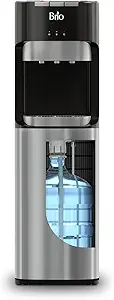 |
| Best Seller A high-volume bestseller chosen again and again | Manastin Bottom Loading Water Cooler |  |
Avalon A3 Bottom-Loading Water Cooler

| Wattage | 150 watts |
|---|---|
| Installation Type | Freestanding |
| Access Location | Bottom |
| Number of settings | 3 |
| Power Source | Corded Electric |
The Avalon A3 is a freestanding bottom-loading water cooler built for office or home use where convenience and durability matter. It holds 3- to 5-gallon bottles in a lower cabinet so you avoid heavy lifting, and push-button spouts deliver cold, room, or very hot water on demand. The compressor cools water to around 47°F while the hot tap reaches approximately 185°F and includes a child safety lock to reduce accidental dispensing. A built-in nightlight and an empty-bottle indicator add everyday convenience, and the unit's self-cleaning ozone cycle helps keep internal surfaces sanitized. The stainless-steel cabinet looks sturdy and resists wear, but the unit is fairly heavy and requires a grounded outlet and regular bottle changes; its drip tray and dispensing clearance fit most cups but very tall containers may be tight. For shared spaces that need reliable, easy-to-use hot and cold water without lifting bottles onto the top, this model covers the essentials with practical features.
Best for: Buyers who want a durable, low-lift water dispenser for shared kitchens or offices that need reliable hot and cold water with basic sanitation features.
Less Ideal for: People who need a very compact or lightweight countertop unit or those who require filtered or plumbed-in filtration systems rather than bottled supply.
- Bottom-loading design reduces lifting and spills by housing 3–5 gallon bottles in a lower cabinet
- Three temperature settings (cold, room, hot) cover common beverage needs including near-boiling hot water
- Self-cleaning ozone cycle helps sanitize internal plumbing and reduce bacterial buildup
- Child safety lock on the hot spout and a nightlight for easier nighttime use
- Unit is relatively heavy and requires a dedicated grounded outlet for installation
- Dispensing clearance may be tight for very tall bottles or containers
Verdict: Choose the Avalon A3 if you want a sturdy, bottom-loading cooler that delivers hot and cold water with easy bottle changes and built-in sanitation.
Brio Moderna Bottom Load Cooler

| Installation Type | Freestanding |
|---|---|
| Access Location | Bottom |
| Upper Temperature Rating | 174 °F |
| Lower Temperature Rating | 39 °F |
| Capacity | 5 gallons |
The Brio Moderna bottom-load cooler is built for regular, high-use hydration in kitchens and small offices, offering adjustable hot and cold outputs controlled from a bright touch-sensitive display. Users install a 3- or 5-gallon jug in the cabinet to avoid lifting and the internal pump delivers water to stainless steel reservoirs that preserve taste and resist corrosion. The unit includes safety features such as a two-step hot-water dispense and a child lock, plus an LED nightlight and low-bottle alert on the display. A standout is the self-cleaning ozone cycle that sanitizes the tank and lines to reduce maintenance and biofilm buildup. Practical limitations are its sizable footprint and the need to run the ozone cycle for at least 90 minutes when sanitizing, and some buyers report mixed reliability based on reviews. For buyers prioritizing temperature control, sanitation features, and a no-lift bottle solution, this model performs as a solid midrange choice.
Best for: Buyers who want a performance-focused bottom-load dispenser that prioritizes precise temperature control, easier bottle replacement, and built-in sanitation for frequent daily use.
Less Ideal for: Those needing a compact countertop unit or who prefer instant sanitization without multi-hour cycles should consider different form factors or models.
- Adjustable hot and cold temperature range for personalized dispensing.
- Bottom-load design eliminates heavy lifting and fits 3- or 5-gallon bottles.
- Stainless steel reservoirs to help maintain water purity and flavor.
- Ozone self-cleaning cycle reduces manual sanitizing and biofilm risk.
- Touch-sensitive digital display with low-bottle indicator and nightlight.
- Sanitizing requires running the ozone cycle for at least 90 minutes, which is time-consuming.
- Large freestanding footprint may not suit very small countertops or tight spaces.
- Some customer reviews indicate variable long-term reliability.
Verdict: Choose the Brio Moderna if you want a bottom-load dispenser with strong temperature control and a built-in ozone sanitation cycle for dependable, low-maintenance daily use.
EUHOMY Bottom Load Water Cooler
| Wattage | 550 watts |
|---|---|
| Access Location | Bottom |
| Upper Temperature Rating | 203 °F |
| Lower Temperature Rating | 41 °F |
| Capacity | 5 gallons |
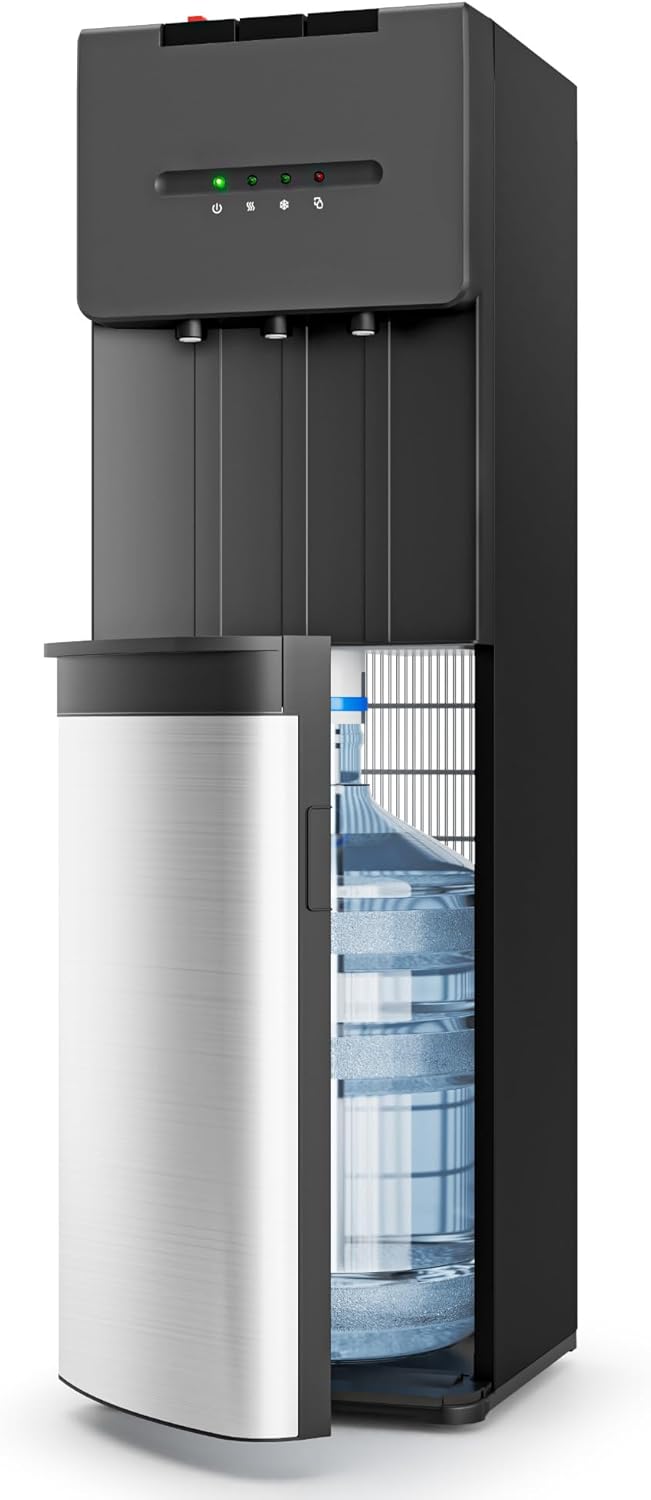
This EUHOMY bottom-loading water cooler delivers hot, cold, and room-temperature water from a concealed bottle compartment so you do not have to lift heavy jugs. It heats to roughly 187–203°F and chills to about 41–50°F using separate stainless steel tanks, and push-button controls with LED indicators make it easy to see heating and cooling status. The bottom-load design includes a built-in ramp for easier bottle insertion and a removable drip tray and top cover that simplify cleaning. At about 550 watts total it balances reasonably quick heating with moderate energy use, and the unit is designed to run quietly for use in a home or office. The two-step child safety lock reduces the risk of accidental hot-water dispensing, though users should still verify temperatures for baby formula. Overall this dispenser is practical for daily hydration, coffee and tea prep, and light office use, while buyers should note it is a freestanding unit sized for standard 3- and 5-gallon bottles and requires routine flushing and cleaning to maintain taste and performance.
Best for: Buyers who want a no-lift, practical dispenser for daily home or small-office use and prioritize safe, easy access to hot and cold water without dealing with top-loading bottles.
Less Ideal for: People who need a compact countertop dispenser or those who require the absolute lowest energy draw during continuous use.
- Bottom-loading design with built-in ramp reduces lifting and keeps bottles out of sight
- Separate stainless steel hot and cold tanks for corrosion resistance and fresher taste
- Three temperature settings (hot, cold, room) cover most household and office needs
- Two-step child safety lock and LED indicators improve safety and usability
- Removable drip tray and easy-access top cover simplify routine cleaning
- Freestanding footprint requires dedicated floor space and is not suitable for countertop use
- Heating and cooling use noticeable power (550 W total), so it is not the lowest-energy option
Verdict: If you want a practical, low-effort water dispenser that hides heavy jugs and reliably delivers hot and cold water for home or small-office use, this EUHOMY bottom-loader is a solid choice.
COSVALVE Bottom-Load Water Dispenser

| Capacity | 5 gallons |
|---|---|
| Wattage | 550 watts |
| Cooling power | 80w |
| Hot water temperature | 190.4-203°F |
| Cold water temperature | 42.8-50°F |
The COSVALVE bottom-loading water dispenser provides an easy-to-use solution for homes and small offices that need hot, cold, and room-temperature water on demand. It hides the bottle in a lower cabinet so you avoid lifting heavy jugs onto the top, and a compressor cooling system plus a 550 W heater reach cold and hot temperatures quickly. The unit includes a child safety lock on the hot spout, a drip tray for quick cleanup, and an empty-bottle indicator so you know when to swap jugs. Setup is simple for a freestanding appliance and the stainless steel tank material helps with durability and taste. Trade-offs to expect are basic controls and a relatively compact feature set compared with higher-end dispensers, and the listed weight means it is not the lightest to move once positioned. For buyers prioritizing straightforward performance and convenience at a budget-friendly level, this dispenser covers the essentials without unnecessary extras.
Best for: Buyers seeking an affordable, no-frills bottom-load dispenser for a kitchen, office, or dorm who value easy bottle changes and reliable hot/cold water without premium extras.
Less Ideal for: People who want advanced features like digital controls, built-in filtration, or a lightweight portable unit should consider other models.
- Bottom-loading cabinet eliminates heavy lifting when replacing bottles
- Delivers three temperatures (hot, cold, room) for versatile everyday use
- Child safety lock on hot spout adds protection for homes with kids
- Empty-bottle indicator notifies when the jug needs replacing
- Stainless steel water tank supports durability and neutral taste
- Basic control set and feature list compared with premium dispensers
- Heavier freestanding unit makes relocation or frequent moves harder
Verdict: A budget-friendly bottom-load dispenser that makes bottle changes easy while delivering hot, cold, and room-temperature water with basic, reliable performance.
Avalon A4 Bottom Loading Water Cooler

| Wattage | 400 watts |
|---|---|
| Access Location | Bottom |
| Number of settings | 3 |
| Lower Temperature Rating | 8.3 °C |
| Capacity | 5 gallons |
The Avalon A4 is a bottom-loading water cooler designed for home or small-office use that handles 3–5 gallon bottles without lifting them into the top. It delivers three temperatures—hot, cold, and room—using separate heating and cooling elements so you can fill a mug or a glass quickly, and the built-in nightlight and empty-bottle indicator make late-night use and bottle changes straightforward. The stainless steel cabinet and BioGuard-treated high-contact areas aim to reduce visible wear and bacterial growth, and manual push-button controls keep operation simple. Expect steady daily performance rather than smart features or advanced automation; setup is freestanding and the unit is powered by a corded electric connection. Limitations include basic manual controls and a lack of built-in filtration, so buyers who want touchscreen controls, Wi-Fi, or integrated purification will need add-ons or a different model. For those prioritizing dependable, no-frills dispensing and easier bottle changes, the A4 performs well.
Best for: Buyers who want a reliable, low-maintenance dispenser for everyday drinking and hot-water needs and who prioritize easy bottle changes and durable construction over smart features.
Less Ideal for: People who need integrated water filtration, app connectivity, or advanced digital controls should look at models with built-in purification or smart features instead.
- Bottom-loading design reduces lifting and spills when replacing 3–5 gallon bottles
- Three temperature settings (hot, cold, room) for versatile use
- Stainless steel cabinet with BioGuard-treated contact areas for durability and reduced microbial contact
- Nightlight and empty-bottle indicator improve usability in low light
- No built-in water filtration or purification system
- Controls are manual push-buttons rather than digital or connected controls
Verdict: Choose the Avalon A4 if you want a straightforward, durable bottom-loading dispenser that makes bottle changes easier and reliably delivers hot, cold, and room-temperature water.
Brio Bottom Loading Water Cooler

| Wattage | 500 watts |
|---|---|
| Installation Type | Freestanding |
| Access Location | Bottom |
| Number of settings | 3 |
| Upper Temperature Rating | 198 °F |
The Brio bottom-loading water cooler is designed to make 3- or 5-gallon bottle use easier by eliminating heavy lifting and hiding the bottle inside a stainless-steel-accented cabinet. It supplies hot, cold, and room-temperature water through separate spouts, with a child-safety lock on the hot dispenser and an LED display that alerts you when the bottle needs replacing. The stainless steel reservoirs support taste and hygiene, while the unit's freestanding design fits kitchens, offices, and small break rooms. Setup is straightforward: slide the bottle into the bottom compartment, plug in the corded unit, and select temperatures with the control panel. Expect practical benefits like consistent hot water for beverages and on-demand cold water without switching bottles, and the bottom-load design reduces awkward handling. Trade-offs include a relatively heavy chassis and the need to replace bottles rather than a plumbed or bottleless system, and its footprint requires some floor space in tight rooms.
Best for: Buyers who want a simple, low-effort bottle cooler for homes or small offices that prioritizes safety and clear maintenance cues over plumbed-in systems.
Less Ideal for: People looking for a permanently plumbed or bottleless filtration dispenser or those who need an ultra-compact counter-top unit.
- Bottom-load cabinet removes heavy lifting and eases bottle changes
- Three temperature options including hot with a two-step child safety lock
- 304 food-grade stainless steel reservoirs to preserve water taste
- LED display with empty-bottle alert simplifies maintenance
- Requires using replaceable 3- or 5-gallon bottles rather than direct plumbing
- Unit is relatively heavy and needs dedicated floor space
Verdict: Choose this bottom-load Brio cooler if you want a reliable, child-safe bottle dispenser that simplifies bottle changes and delivers hot, cold, and room-temperature water on demand.
Manastin Bottom Loading Water Cooler

| Installation Type | Freestanding |
|---|---|
| Access Location | Bottom |
| Upper Temperature Rating | 203 °F |
| Lower Temperature Rating | 43.7 °F |
| Capacity | 5 gallons |
This Manastin bottom-loading water cooler is built for easy, everyday use in homes or small offices by eliminating heavy bottle lifting and offering three temperature settings: hot, cold and room. The bottom-load design hides the bottle for a cleaner look and uses a detachable rubber hose to connect standard 3- and 5-gallon bottles, while an empty-bottle indicator and dry-burn cutoff add protection against accidental damage. Two stainless steel inner tanks handle heating and cooling with claimed fast heat and chill rates and separate small-capacity hot and cold tanks for quicker recovery. Practical safety touches include a child lock on the hot water and a visible low-water indicator. Expect the unit to be straightforward to operate and space-efficient, though you will need to confirm the drain plug is secure during setup to prevent leaks and allow for occasional cleaning. For buyers wanting a low-lift, feature-focused dispenser with basic safety and performance, this model covers the essentials without extra smart features.
Best for: Buyers who want a low-lift, straightforward water dispenser for home or small-office use and prioritize safety features and reliable temperature performance over smart bells and whistles.
Less Ideal for: People who need Wi-Fi, app control, or advanced programmability or those seeking a countertop or integrated model for very tight spaces.
- Bottom-loading design removes need to lift heavy bottles and keeps the bottle hidden
- Three temperature modes (hot, cold, room) for versatile daily use
- Empty-bottle indicator and dry-burn automatic cutoff improve safety and reliability
- Child safety lock on hot water reduces risk of accidental scalding
- Two 304 stainless steel inner tanks resist corrosion and speed temperature recovery
- No smart or programmable controls for scheduling or remote monitoring
- Requires careful sealing of the drain plug and occasional manual cleaning to avoid leaks
Verdict: Choose this bottom-loading dispenser if you want an easy-to-use, safety-minded freestanding unit that delivers hot, cold, and room water without lifting heavy bottles.
Choosing the Right Bottom-Loading Water Dispenser: Key Factors to Consider
Bottle Loading Mechanism
How the dispenser handles bottle insertion directly affects everyday convenience. Bottom-loading designs eliminate lifting heavy jugs but differ in how the bottle connects to the internal pump or spike. A secure, tool-free connection reduces spills and makes swaps quick.
Pay attention to whether the unit uses a self-sealing connector, requires manual priming, or uses a removable pump assembly. Those differences change how messy or time-consuming a bottle change can be, especially for users who swap bottles frequently.
Temperature Performance
Temperature specs tell part of the story, but real-world consistency matters more. Look for dispensers with separate, insulated reservoirs or dedicated cooling systems for cold water and reliable heating elements for hot water.
Consistency determines whether you get genuinely cold water for beverages and reliably hot water for tea or instant meals. Units with larger reservoirs or stronger compression cooling tend to recover temperature faster after repeated draws.
Maintenance And Sanitation
Ease of cleaning and sanitizing affects both safety and ongoing performance. Bottom-loading dispensers should allow access to internal reservoirs, drip trays, and the dispensing taps without specialized tools.
Also check whether the design accommodates standard inline filters or requires proprietary parts. Frequent or complex cleaning routines increase the chances owners will skip maintenance, so simpler, tool-free access is preferable.
Footprint And Fit
Physical dimensions and dispenser height determine where the unit will fit in your kitchen, office, or pantry. Consider clearance for bottle changes and whether the dispenser's height works with your countertop or storage space.
Also think about door swing and proximity to power outlets. A compact footprint is helpful for tight spaces, but very small units may sacrifice reservoir size or cooling capacity.
Noise And Pump Design
Bottom-loading designs rely on internal pumps to draw water from the bottle. Pump noise and vibration vary by design and influence where the dispenser can comfortably sit.
If the dispenser will live in a quiet office or bedroom-adjacent area, choose a model with a low-noise pump and vibration-dampening feet. Louder pumps are typically associated with faster draw rates or lower cost components.
Energy Use And Standby Consumption
Continuous heating or cooling can add to household energy bills. Look for models with efficient compressors, good insulation, and standby modes or thermostats that limit run time.
Lower standby consumption matters if the unit runs 24/7. Some dispensers offer energy-saving settings or timers that reduce power draw during predictable low-use periods.
Installing And Setting Up A Bottom-Loading Dispenser
Place the unit on a level surface near an outlet and leave clearance behind the back panel for ventilation and bottle access. If the dispenser has adjustable feet, level it so the drip tray and faucets sit upright to avoid leaks when dispensing.
- Unpack and remove any transit plugs or shipping supports before first use.
- If a pump assembly is removable, inspect seals and fittings for proper seating before installation.
- Run the recommended initial sanitation cycle or flush per the manufacturer instructions to remove manufacturing residues.
Common Maintenance Tasks And Schedules
Regular maintenance keeps the dispenser sanitary and functioning well. Wipe the exterior and faucets weekly, empty and clean the drip tray every few days, and inspect seals and fittings monthly for wear. Deep cleaning cycles for internal reservoirs and tubing should follow the interval recommended by the manufacturer or every 3 to 6 months for heavier use.
- Sanitize reservoirs and spouts with a diluted bleach or food-safe cleaner per instructions.
- Replace inline filters at manufacturer intervals or sooner if water flow slows or taste changes.
- Check pump fittings and the bottle connector for mineral buildup and clean as needed.
How Filtration Works With Bottom-Loading Units
Many bottom-loading dispensers accept an inline filter between the bottle and the pump or inside the unit before the cold reservoir. Filters typically remove chlorine, sediment, and some tastes or odors, improving water flavor and protecting internal components from scale. Confirm filter size and connection type before purchasing one for compatibility.
- Inline filters may reduce flow and require occasional priming after replacement.
- Some dispensers include filter status indicators; others rely on a calendar-based replacement schedule.
- If you use well water or hard water, consider filters with scale-reduction media to limit buildup.
Placement Considerations For Home And Office Use
Think about user access and traffic patterns when locating the dispenser. In busy kitchens, place it where people can quickly fill glasses without blocking walkways. In offices, choose a location that is accessible to many users but not in the way of foot traffic or workstations.
Noise, drip management, and bottle change access should all guide placement. Keep the dispenser on a stable base and avoid locations with extreme temperatures or direct sunlight, which can affect cooling performance.
- Provide a small mat under the dispenser to protect floors from spills.
- Keep a short extension cord or power strip nearby only if permitted by local electrical codes.
- If the bottle will be stored adjacent to the dispenser, allow room for bottle replacement without moving other furniture.
How We Chose the Best Bottom-Loading Water Dispenser
We focused on practical, user-centered criteria that matter for people who want low-effort, reliable drinking water at home or in small offices. First, ease of use was a priority: how simple it is to load and secure a bottom bottle, how intuitive the controls are, and whether routine tasks like dispensing and changing settings are straightforward. Second, temperature performance and consistency were measured by product specifications and user reports, looking for units that deliver reliably cold and hot water within typical household expectations. Third, build quality and durability were considered by reviewing construction materials, pump design, and common failure points reported by users. We also evaluated maintenance and cleaning needs, including how accessible internal components are for sanitizing and whether filters can be installed without complex disassembly. Energy efficiency and standby power draw were included to reflect long-term operating cost and environmental impact. Units with nonstandard bottles, proprietary components, or exceptionally difficult maintenance were excluded. Final selections balance daily convenience, reliable temperature control, straightforward upkeep, and solid construction.
Our full evaluation process is outlined in our review methodology.
FAQ
How often should I sanitize my bottom-loading water dispenser?
Sanitize spouts, reservoirs, and tubing every 3 to 6 months for typical home use. Heavy use or visible buildup may require more frequent cleaning. Follow the manufacturer instructions for safe cleaning agents and procedures.
Can I add a filter to any bottom-loading dispenser?
Many units accept standard inline filters, but not all designs are compatible. Check connection types and physical space inside the unit before buying a filter. Some dispensers include proprietary filter placements that require specific cartridges.
Why does my dispenser make noise after I change the bottle?
Pump priming and air evacuation are common after a bottle change. Noise typically decreases once the pump fully engages and air is purged. Persistent loud vibration can indicate a loose fitting or worn pump mount that should be inspected.
Is a bottom-loading dispenser harder to maintain than a top-loading one?
Not necessarily. Bottom-loading units remove the need to lift heavy bottles, and many are designed with removable pump assemblies for easier cleaning. Maintenance complexity depends on the specific internal layout and how accessible reservoirs and components are.
What should I do if the water tastes strange after installation?
Run multiple reservoir fills and flush cycles to clear manufacturing residues and trapped air. If taste issues persist, check for a filter requirement, sanitize the system, and ensure the bottle itself is fresh and properly sealed.
Final Verdict
Bottom-loading water dispensers are an excellent choice when you want to eliminate heavy lifting while keeping hot and cold water readily available. Prioritize ease of bottle loading, temperature consistency, and straightforward maintenance when comparing options. Consider footprint, noise level, and energy use based on where the dispenser will sit and how often it will be used. Weigh the tradeoffs between faster temperature recovery and potential pump noise, and choose a unit with accessible components for easier sanitation. Focusing on those core criteria will help you pick a dependable dispenser that fits your daily routine with minimal fuss.