
Note: This article contains affiliate links. If you click on these links and make a purchase, we may earn a small commission at no extra cost to you. This helps support our research and content. Read our full affiliate disclosure here.
If you bake gluten-free bread at home, the right bread maker can make the difference between a dense, crumbly loaf and a light, sliceable result. Gluten-free dough behaves differently from wheat dough: it needs different mixing, longer resting, and careful temperature control to get a consistent crumb and good rise. This guide spotlights seven shortlisted bread makers built to handle gluten-free programs and settings. We evaluated machines based on how well they handle gluten-free mixes, ease of use, and how simple they are to clean and maintain. Read on to find the features that matter most and the types of machines that fit different needs and routines.
Top Picks at a Glance
| Best Overall The best all-around choice for most situations | Breville Custom Loaf BBM800XL | 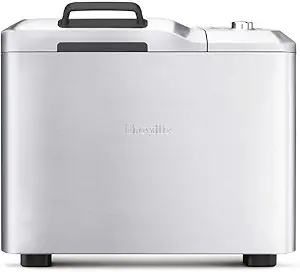 |
| Best Quality Built to a higher standard if you want something more solid | Zojirushi Home Bakery Virtuoso Plus BB-PDC20BA |  |
| Best Value The sweet spot between price and what you get | Amazon Basics 2-Pound Bread Maker |  |
| Best Budget The cheapest option that still gets the job done reliably | VEVOR Bread Maker MBF-016 |  |
| Top Rated A top-rated pick with lots of positive feedback | Cuisinart Bread Maker CBK-110P1ES |  |
| Most Popular A crowd favorite that many people choose with confidence | KITCHENARM 29‑in‑1 Bread Machine |  |
| Best Seller A high-volume bestseller chosen again and again | OSIPOTO Bread Maker BM8205 | 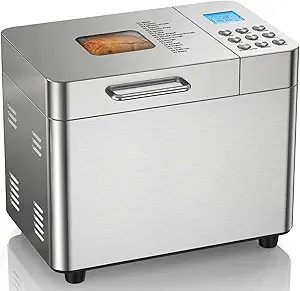 |
Breville Custom Loaf BBM800XL

| Capacity | 2.5 pounds |
|---|---|
| Wattage | 830 watts |
| Number of Programs | 13 |
| Voltage | 120 volts |
The Breville Custom Loaf BBM800XL is a feature-rich bread machine aimed at home bakers who want hands-on control and consistent results. It offers 13 programs including a dedicated gluten-free cycle and nine custom settings so you can create and save recipes tailored to dietary needs. The collapsible kneading paddle mixes on a platform and folds away before baking to reduce the large hole at the bottom of loaves, and an automatic fruit and nut dispenser times add-ins for even distribution. A clear LCD makes it easy to monitor progress and the unit includes a 60-minute power interruption backup to protect long cycles. At 830 watts it handles 1 to 2.5 pound loaves and comes with both a collapsible paddle and a fixed paddle for jam. Trade-offs are its relatively large footprint and the need to hand-wash parts, plus the higher upfront cost compared with basic machines, but for anyone serious about making varied breads at home the Custom Loaf delivers reliable, customizable results.
Best for: Home bakers who want a programmable, customizable bread maker that can handle specialty recipes like gluten-free loaves and who value control over convenience.
Less Ideal for: Buyers wanting a compact, grab-and-go appliance or those who prefer fully dishwasher-safe, lower-cost basic machines.
- Dedicated gluten-free program and 13 total programs for versatile baking
- Collapsible kneading paddle minimizes large holes in finished loaves
- Automatic fruit and nut dispenser ensures even timed add-ins
- Customizable settings with memory to store personal recipes
- 60-minute power interruption protection preserves long cycles
- Larger footprint and heavier than simpler bread machines
- Requires hand washing of parts rather than dishwasher safe
Verdict: Choose the Breville Custom Loaf if you want a high-control bread maker that reliably handles gluten-free and custom recipes with professional-style features.
Zojirushi Home Bakery Virtuoso Plus BB-PDC20BA

| Capacity | 2 pounds |
|---|---|
| Wattage | 700 watts |
| Voltage | 120 volts |
| Number of Programs | 7 |
The Zojirushi Virtuoso Plus is a high-performance breadmaker aimed at home bakers who want consistent, bakery-style results without manual shaping. It bakes up to a 2-pound rectangular loaf and offers seven program choices that include whole wheat, rapid whole wheat, gluten free, and vegan, plus three crust shades and a 13-hour delay timer so you can plan fresh bread for morning or evening. Dual heating elements in the lid and base promote even browning and a more uniform crumb, while the double kneading blades improve dough development for higher rise and better texture. The removable nonstick pan and included measuring tools make setup and cleanup straightforward, though the unit is relatively heavy and takes counter space. Rapid courses can produce a loaf in as little as about 2 hours and 25 minutes, useful when time is limited, but the rapid cycles may slightly alter crumb compared with longer bakes. For anyone prioritizing dependable, factory-quality gluten-free programming and even baking, this machine delivers reliable, repeatable loaves with minimal fuss.
Best for: Buyers who want a consistent, high-performing breadmaker for baking reliable gluten-free and whole-grain loaves with minimal hands-on effort and precise scheduling.
Less Ideal for: If you need a lightweight, highly compact machine for occasional use or prioritize the absolute fastest single-ingredient loaf without regard for texture, this is not the best fit.
- Dedicated gluten-free and multiple healthy-course settings for specialized diets
- Dual heaters (lid and bottom) for more even baking and consistent crust color
- Double kneading blades help develop dough for better rise and texture
- 13-hour delay timer lets you schedule fresh bread when you want it
- Removable nonstick pan and included measuring tools simplify cleanup and setup
- Unit is relatively heavy and requires significant counter space
- Rapid baking cycles can compromise crumb structure compared with standard cycles
Verdict: Choose this model if you want a sturdy, performance-focused breadmaker with factory-quality gluten-free and whole-grain programs that deliver consistent loaves.
Amazon Basics 2-Pound Bread Maker

| Capacity | 2 pounds |
|---|---|
| Wattage | 550 watts |
| Number of Programs | 14 |
| Voltage | 120 volts |
This Amazon Basics bread maker is a straightforward countertop machine that mixes, kneads, rises, and bakes up to a 2-pound loaf using one of 14 preset programs. Typical use is simple: add ingredients to the pan, choose a program (including gluten-free), set crust color, and start; the ExpressBake mode can produce a loaf in under 90 minutes when you need bread fast. Notable features include a nonstick pan, an LCD display, and a range of settings for doughs, jams, and gluten-free recipes, which makes it useful for households that want flexibility without a steep learning curve. Practical benefits are consistent results with minimal hands-on time, a compact footprint for small kitchens, and the ability to experiment with specialty loaves. Important limitations are that it is a single-pan, single-loaf machine so you cannot make multiple loaves at once, and power and program limitations mean artisan-style crusts and very large batches are outside its scope.
Best for: Home bakers who want a practical, no-fuss machine to reliably produce everyday and gluten-free loaves without complex setup and who prioritize convenience over artisan techniques.
Less Ideal for: Bakers who need large batch output, multi-loaf capacity, or advanced crust and steam control for professional-style breads should look elsewhere.
- 14 preset programs including a gluten-free setting for hands-off baking
- ExpressBake option that can finish a loaf in under 90 minutes
- Nonstick 2-pound loaf pan simplifies cleanup
- LCD display and three crust color choices for easy control
- Single loaf capacity limits batch size and variety during a single bake
- Not designed for artisan crust control or very large loaves
Verdict: A practical, compact bread maker that reliably handles everyday and gluten-free loaves with an easy preset-driven workflow.
VEVOR Bread Maker MBF-016

| Voltage | 110 volts |
|---|---|
| Capacity | 2 pounds |
| Wattage | 650 watts |
| Number of Programs | 19 |
This VEVOR bread maker is a compact, budget-friendly machine that handles everything from kneading to baking with 19 preset programs including a gluten-free setting. It supports three loaf sizes up to 2 pounds and three crust darkness options, and its ceramic nonstick inner pan and Teflon mixing blade aim to make cleanup and ingredient safety easier. Practical features include a 15-hour delay timer, 1-hour keep-warm, power-off memory for short outages, and an ingredient-add reminder for mix-ins. The unit runs at 650 watts and is quiet in operation, making it suitable for daily home use where space and cost matter. Limitations are predictable for the price: the 2 lb maximum limits larger households and the inner pot requires hand washing rather than dishwasher convenience, so upkeep takes a bit more effort than higher-end models. For buyers prioritizing an affordable machine that can reliably bake gluten-free loaves, this VEVOR covers the basics with sensible automation and safety-focused materials.
Best for: Home bakers on a tight budget who want an automated machine that reliably produces gluten-free and other specialty breads without a steep price tag.
Less Ideal for: Those who need very large loaves, frequent dishwasher-safe parts, or advanced customization and professional-level baking controls.
- 19 preset programs including a dedicated gluten-free cycle
- Food-grade ceramic nonstick inner pan for safer baking
- 15-hour delay timer and ingredient-add reminder for scheduled baking
- Power-off memory and 1-hour keep-warm to protect dough progress
- Maximum 2 lb capacity may be small for larger families
- Inner pot requires hand washing rather than dishwasher-safe cleaning
Verdict: A cost-conscious bread maker that offers a dedicated gluten-free program and practical scheduling features for baking fresh specialty loaves at home.
Cuisinart Bread Maker CBK-110P1ES

| Capacity | 2 pounds |
|---|---|
| Wattage | 550 watts |
| Number of Programs | 12 |
| Voltage | 120 volts |
The Cuisinart CBK-110P1ES is a countertop bread machine that handles mixing, kneading, rising, and baking for a variety of recipes including gluten-free doughs and cakes. It offers 12 preset programs, three crust color settings, and three loaf-size choices, plus an LCD display, audible reminders, and a 13-hour delay-start timer so you can schedule fresh bread when needed. The vertical nonstick bread pan and 60-minute keep-warm cycle simplify loaf removal and short-term holding. At 550 watts it runs briskly and the compact footprint fits most kitchen counters. For gluten-free baking the preset programs and steady temperature control make it easy to follow dedicated recipes, though like all single-basin machines you may need to tweak hydration and mix-ins for stickier gluten-free batters. The plastic and stainless steel construction is practical and cleaning requires hand washing removable parts. For buyers who prioritize a reliable, straightforward machine that consistently produces loaves without fuss, this Cuisinart is a sensible choice.
Best for: Buyers who want a dependable, no-fuss bread maker that can be scheduled to deliver fresh loaves and can be adjusted to bake gluten-free recipes reliably.
Less Ideal for: Bakers who need a dedicated multi-pan oven or professional-level steam and crust control should look at more advanced countertop ovens or bakery equipment instead.
- 12 preprogrammed cycles cover standard and specialized breads for flexible use
- Three loaf-size and three crust-color options let you tailor loaf volume and crust darkness
- 13-hour delay-start and 60-minute keep-warm add convenience for timed baking
- Compact footprint provides full-size vertical baking cavity without taking much counter space
- Hand-wash recommended for removable parts rather than dishwasher safe
- Single-basin design may require recipe adjustments for wetter gluten-free mixes
Verdict: A compact, reliable bread machine that consistently handles gluten-free and standard loaves with simple presets and convenient scheduling.
KITCHENARM 29‑in‑1 Bread Machine

| Voltage | 120 volts |
|---|---|
| Capacity | 2 pounds |
| Wattage | 550 watts |
| Number of Programs | 29 |
The KITCHENARM 29-in-1 Bread Machine is a full-featured home bread maker aimed at both beginners and experienced bakers who want lots of presets plus deep customization. You pick a menu, add ingredients, and the unit handles kneading, rising, and baking across 29 automatic programs including dedicated gluten-free and whole wheat options. The machine supports three loaf sizes (2 lb, 1.5 lb, 1 lb), three crust colors, a 15-hour delay timer, a 1-hour keep-warm, and an "HOME MADE" mode that lets you program cycle times for knead, rest, rise, and bake — useful when adapting gluten-free formulas that need different timings or temperatures. The control surface is a large 2.5-inch LCD and the pan has a food-grade nonstick coating for easier release. Practical limits are typical for countertop bread machines: you still need to tweak hydration and ingredient order for some gluten-free recipes, and the nonstick pan and paddles require hand washing. For home cooks who value recipe flexibility and lots of built-in menus, this machine makes experimenting with gluten-free loaves straightforward and repeatable.
Best for: Home bakers who want a versatile, program-rich machine to reliably produce a range of gluten-free and specialty loaves while keeping the process mostly automated.
Less Ideal for: Bakers who prefer completely hands-on artisan loaves made in an oven or those who need fully dishwasher-safe components should consider other options.
- Large selection of 29 programs including dedicated gluten-free and whole wheat menus
- Customizable HOME MADE mode to program individual cycle times for precise control
- Three loaf sizes and three crust settings for portion and crust control
- 15-hour delay timer and 1-hour keep-warm add scheduling flexibility
- ETL certified with a clear LCD and nonstick bread pan for easier baking and cleanup
- Pan and paddle require hand washing rather than dishwasher-safe convenience
- Achieving ideal gluten-free texture still requires recipe tuning despite the dedicated program
Verdict: Choose this model if you want a flexible, programmable bread maker that includes dedicated gluten-free menus and deep cycle control for adapting recipes.
OSIPOTO Bread Maker BM8205

| Capacity | 2 pounds |
|---|---|
| Wattage | 600 watts |
| Number of Programs | 17 |
| Voltage | 120 |
The OSIPOTO BM8205 is a compact, beginner-friendly bread maker that handles the full process from mixing and kneading to baking and keep-warm for up to an hour. It offers 17 programs that include basic, whole wheat, gluten-free, cake, jam, and yogurt modes, plus three loaf sizes and three crust settings for flexible results. The stainless steel housing and nonstick pan make cleanup straightforward, and the 600W motor with 360-degree heat distribution aims to produce an even crust and soft interior. Useful features for everyday convenience include a 15-hour delay timer so bread can be ready when you want it and an overheat protection pause for safety. On the downside, the unit is designed for up to 2 lb loaves only, so it is not suitable for very large batches, and some experienced bakers may find preset programs less flexible than manual controls. Noise is low in typical use but long cycle times mean it is not for instant results.
Best for: Buyers who want a low-risk, easy-to-use bread machine that reliably produces gluten-free and everyday loaves with minimal fuss and predictable results.
Less Ideal for: Those who need larger batch capacity, highly granular manual controls, or commercial-level output should look elsewhere.
- Gluten-free program included among 17 presets for dedicated GF baking.
- Large 2 lb capacity with three loaf-size options for family-sized loaves.
- Nonstick pan and included measuring tools simplify cleanup and measuring.
- 15-hour delay timer and keep-warm function for scheduled baking.
- Stainless steel body with 600W motor for even heat distribution and quiet operation.
- Limited to maximum 2 lb loaves so not ideal for very large batches.
- Presets may restrict customization compared with manual programs.
Verdict: A straightforward, beginner-friendly bread maker with a dedicated gluten-free program and predictable results for home bakers seeking low-risk, hands-off gluten-free loaves.
Choosing the Right Bread Maker for Gluten-Free Bread: Key Factors to Consider
Dedicated Gluten-Free Cycle
A true gluten-free cycle alters mixing intensity, rest times, and baking duration to suit gluten-free batters. Unlike wheat dough, gluten-free mixtures often start wetter and need different handling to avoid overmixing or collapsing during proof.
Choosing a machine with a dedicated program reduces the need for manual timing adjustments and improves consistency across different recipes. It is especially helpful if you bake gluten-free bread frequently or try a range of flour blends and starch ratios.
Mixing Method and Paddle Design
Gluten-free dough benefits from a mixing approach that fully incorporates ingredients without overworking. Look for paddle designs and motor controls that offer gentle but thorough mixing, and consider models that allow paddle removal after baking to minimize air pockets and reduce dough clinging.
Some machines use dual paddles or folding actions that mimic hand-mixing patterns; others rely on single paddles but with programmable pauses to mimic dough rest. The mixing method affects crumb structure and how evenly ingredients like xanthan gum or psyllium distribute.
Temperature Control and Proofing Accuracy
Accurate heat control and consistent baking temperature are critical for gluten-free loaves, which can be sensitive to hot spots or underbaking. Machines with reliable thermostats and multiple bake darkness settings help you dial in the right finish without burning the crust.
Proofing features matter too. Some machines provide warm, controlled proof stages; others offer programmable delays. Proper proofing prevents dense, gummy centers and encourages better rise in batter-like gluten-free mixes.
Ease Of Cleaning And Maintenance
Gluten-free batters can be stickier and leave more residue on paddles and baking pans. Removable, dishwasher-safe pans and detachable paddles make cleanup much quicker and reduce wear from scrubbing. A machine with accessible seams and a removable crumb tray will simplify maintenance over time.
Also consider how easy it is to reach gaskets, hinges, and the underside of the lid. Frequent gluten-free baking often means more cleaning cycles, so durability of finishes and the ability to deep-clean without special tools matters.
Loaf Size, Shape, And Crust Options
Different households prefer different loaf sizes and shapes for slicing and storage. Machines that offer multiple loaf size settings let you adapt recipes to yield smaller or larger loaves without reworking proportions. Crust color and texture settings are useful when testing gluten-free formulas that brown differently than wheat breads.
A flexible machine helps you experiment with sandwich-style loaves, smaller personal loaves, or taller artisan-style shapes, while maintaining consistent internal structure.
Programmability And Recipe Flexibility
Being able to program custom cycles lets you tailor mix, rest, and bake stages to newer or complex gluten-free recipes. Machines with memory functions or multiple custom program slots are more future-proof as you refine ingredient ratios.
This flexibility is particularly valuable if you use a range of flours and binders, or if you like to tweak hydration and proof times to suit seasonal humidity changes.
How Gluten-Free Dough Differs From Wheat Dough
Gluten-free doughs lack the elastic protein network that traps gases in wheat-based doughs, so they behave more like batter than traditional dough. That changes how the machine should mix and how long it must rest to develop structure using binders and starches.
Understanding these differences explains why certain machine features, such as gentler mixing action and precise temperature control, matter more for gluten-free baking than for standard bread making.
- Tends to be wetter and stickier
- Relies on binders rather than gluten for structure
- Needs careful temperature and timing control to avoid collapse
Tips For Better Gluten-Free Loaves
Start with recipes formulated for bread machines and follow liquid-to-flour ratios closely. Measure ingredients by weight when possible to reduce variability. Also, add binders like xanthan gum or psyllium according to the recipe rather than guessing.
Experiment with hydration and proof times incrementally. If loaves are too dense, try a slightly longer rest or a gentler mixing speed. If the top browns too quickly before the center sets, reduce bake darkness or cover the pan near the end of the cycle.
- Weigh ingredients for consistency
- Adjust hydration in small increments
- Use appropriate binders and gums
- Modify crust setting if top browns too fast
Maintenance Routines That Extend Machine Life
Wipe the interior after each use and remove the pan and paddle for periodic deep cleaning. Inspect seals and the lid hinge for flour build-up that can interfere with heat retention and sealing. Keep the motor housing dry and free of dust.
Rotate between recipes that produce less residue and those that are stickier, and use recommended detergents to avoid degrading nonstick coatings. Regular maintenance prevents odor transfer between different flours and helps machines run efficiently over time.
- Remove and clean paddles after each bake
- Hand-wash or dishwasher-safe pans as recommended
- Check seals and hinges monthly
- Avoid abrasive cleaners on nonstick surfaces
When To Use Manual Programs Versus Presets
Preset gluten-free cycles are convenient and usually tuned for general recipes, making them a good first choice. Use them when you follow trusted recipes or want consistent results without programming.
Switch to manual or custom programs when you experiment with new flours or adjust hydration and proof times. Custom cycles let you change mixing duration, rest stages, and bake time, which can be critical for optimizing a particular gluten-free formula.
- Presets: reliable for standard gluten-free mixes
- Custom cycles: best for experimental recipes
- Document successful custom settings for future use
Storing And Slicing Gluten-Free Bread
Gluten-free loaves usually have higher moisture and can stale or develop an off texture faster than wheat bread. Cool loaves completely before slicing to avoid compressing the crumb, then store in airtight containers or freeze slices for longer-term use.
If you bake multiple loaves, slice and freeze portions for quick meals. Reheat gently to restore a softer crumb rather than using high heat, which can dry the bread out.
- Cool completely before slicing
- Use airtight storage or freeze slices
- Reheat gently to revive texture
How We Chose the Best Bread Maker for Gluten-Free Bread
We focused on features and performance traits that directly affect gluten-free baking outcomes. First, we prioritized machines with a dedicated gluten-free program or programmable cycle options. These ensure mixing, rise time, and baking temperature are adjusted to accommodate batters and doughs that lack gluten structure. Next, we assessed mixing action and paddle design because gluten-free doughs need thorough, gentle mixing rather than aggressive kneading. We also looked at temperature accuracy and consistency since even small variations can change crumb texture and rise. Ease of cleaning and removable parts were chosen as practical filters because gluten-free batters can stick and require frequent maintenance. Additional selection criteria included loaf size flexibility, a reliable delay timer or proofing modes for recipe timing, and sturdy construction for repeat baking. We excluded machines that lack specific gluten-free cycles or have sealed, nonremovable tubs that complicate cleaning. Overall, we favored units that balance control, consistency, and daily convenience for people who bake gluten-free regularly.
Our full evaluation process is outlined in our review methodology.
FAQ
Can any bread maker bake gluten-free bread?
Many bread makers can bake gluten-free bread, but machines with a dedicated gluten-free cycle or programmable settings usually give more consistent results. Plain presets for wheat loaves often mismix or overwork gluten-free batters.
Do I need special ingredients for machine-made gluten-free bread?
You generally need gluten-free flour blends and a binder such as xanthan gum or psyllium to mimic gluten structure. Some recipes also call for extra eggs or oil to improve moisture and crumb, depending on the flour mix.
How do I avoid a gummy or dense center?
Pay attention to hydration and proofing time, and ensure the machine reaches and maintains the correct bake temperature. Slightly extending the bake time or lowering hydration can help set the crumb without overbrowning the crust.
Is cleaning more difficult with gluten-free dough?
It can be because some gluten-free batters are stickier and leave more residue. Machines with removable, dishwasher-safe pans and detachable paddles are easier to maintain and reduce buildup that affects future bakes.
Can I use my regular recipes in a bread maker?
Standard wheat-based recipes usually need modification for gluten-free baking, especially for hydration and the addition of binders. Look for recipes specifically formulated for bread makers and gluten-free flours for best outcomes.
Final Verdict
Focus on machines that offer a dedicated gluten-free cycle, dependable mixing action, and precise temperature control when choosing a bread maker for gluten-free bread. Prioritize ease of cleaning and loaf-size flexibility to match your household needs. Balance programmability with simplicity: presets help for everyday baking while customizable cycles support recipe experimentation. Choosing a machine that aligns with these tradeoffs will give you more consistent loaves and less hassle. Aim for controlled mixing, accurate proofing, and easy maintenance to bake better gluten-free bread at home.