
Note: This article contains affiliate links. If you click on these links and make a purchase, we may earn a small commission at no extra cost to you. This helps support our research and content. Read our full affiliate disclosure here.
If you bake at home regularly, the right bread maker can turn a fiddly process into a reliable, nearly automatic routine. A machine that mixes, kneads, proofs, and bakes can save time and yield more consistent loaves than hand methods, which matters if you want fresh bread on a schedule or to control ingredients and texture. This guide covers seven shortlisted Bread Makers that represent the most practical options for home bakers. We evaluated each entry for bake consistency, ease of use, program variety, and maintainability so you can choose the model that fits how you bake. Read on for the key considerations and practical tips before the product list.
Top Picks at a Glance
| Best Overall The best all-around choice for most situations | Zojirushi Home Bakery Virtuoso Plus |  |
| Best Quality Built to a higher standard if you want something more solid | Breville Custom Loaf BBM800XL | 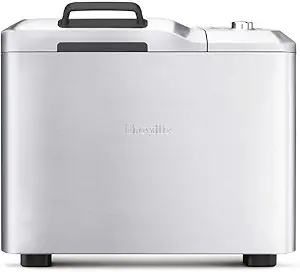 |
| Best Value The sweet spot between price and what you get | Neretva Bread Maker PE8866GR |  |
| Best Budget The cheapest option that still gets the job done reliably | Elite Gourmet Bread Maker EBM8103B |  |
| Top Rated A top-rated pick with lots of positive feedback | KITCHENARM 29‑in‑1 Bread Machine |  |
| Most Popular A crowd favorite that many people choose with confidence | Cuisinart Bread Maker CBK-110P1ES |  |
| Best Seller A high-volume bestseller chosen again and again | OSIPOTO Bread Maker BM8708 |  |
Zojirushi Home Bakery Virtuoso Plus

| Capacity | 2 pounds |
|---|---|
| Wattage | 700 watts |
| Voltage | 120 volts |
| Number of Programs | 7 |
The Zojirushi Home Bakery Virtuoso Plus is a full-featured breadmaker designed to produce consistent, bakery-style loaves at home. It handles everything from basic white bread to whole wheat, multigrain, gluten-free, and vegan recipes using seven program settings and selectable crust shades. Dual heaters in the lid and base plus double kneading blades give even browning and good rise, and rapid courses can finish a loaf in about 2 hours 25 minutes. The control panel and 13-hour delay timer make it easy to schedule fresh bread for mornings or evenings, and the removable nonstick pan and included measuring tools simplify cleanup and measuring. Trade-offs are its fairly heavy weight and hand-wash care for some parts, and the rectangular loaf shape may not suit every baking preference, but for everyday use it reliably produces well browned, evenly baked loaves with minimal intervention.
Best for: Buyers who want a reliable, versatile home breadmaker that consistently produces well browned, bakery-style 2-pound loaves with programmable timing and multiple healthy-course options.
Less Ideal for: Those who need an ultra-light or very compact machine for small kitchens or who prefer dishwasher-safe parts for low-maintenance cleanup.
- Dual heaters and double kneading blades promote even baking, browning, and good loaf rise
- Seven program settings including gluten-free, whole wheat, multigrain, and vegan for dietary flexibility
- 13-hour delay timer lets you schedule fresh bread for specific times
- Rapid baking programs produce a loaf in about 2 hours 25 minutes when you need bread fast
- Heavy unit that is less portable than compact breadmakers
- Some components require hand washing rather than dishwasher cleaning
Verdict: Choose this model if you want a dependable, versatile breadmaker that delivers evenly baked 2-pound loaves and flexible program options for everyday home baking.
Breville Custom Loaf BBM800XL

| Capacity | 2.5 pounds |
|---|---|
| Wattage | 830 watts |
| Number of Programs | 13 |
| Voltage | 120 volts |
The Breville Custom Loaf BBM800XL is a feature-rich bread machine aimed at users who want fine control over home baking. It offers 13 automatic programs plus nine custom settings so you can create and save personal recipes, and the smart LCD guides you through cycles from mixing and kneading to baking and keeping warm. The collapsible kneading platform mixes ingredients then folds away before baking to reduce the hole left by a fixed paddle, and the automatic fruit and nut dispenser times add-ins for even distribution. Practical touches include three crust color options, a dedicated jam program with a fixed paddle, and 60 minutes of power-interruption backup. At 830 watts and a 2.5 pound capacity it produces bakery-style loaves without requiring oven space, but it is a relatively heavy, single-appliance solution that needs countertop room and hand-wash care. For someone focused on performance and recipe flexibility, it delivers consistent results and plenty of control; casual users who want a simpler, lighter unit might find it more than they need.
Best for: Bakers who prioritize control and consistent, bakery-style results and want the ability to customize and save recipes for repeatable loaves.
Less Ideal for: Buyers seeking a lightweight, minimalist bread maker for occasional use or those wanting fully dishwasher-safe components should consider simpler models.
- Extensive programmability with 13 automatic programs and nine custom recipe slots
- Collapsible kneading blade reduces the leftover hole in finished loaves
- Automatic fruit and nut dispenser times mix-ins for even distribution
- LCD display and dual manual/automatic controls for precise process monitoring
- 60-minute power interruption protection preserves progress during outages
- Relatively heavy and requires significant countertop space
- Requires hand washing for care rather than dishwasher-safe parts
Verdict: Choose the Breville Custom Loaf BBM800XL if you want a performance-focused bread maker that offers deep programmability and bakery-style results.
Neretva Bread Maker PE8866GR
| Capacity | 0.9 kg / up to 2 lb loaf |
|---|---|
| Wattage | 550 watts |
| Number of Programs | 20 |
| Voltage | 120 volts |
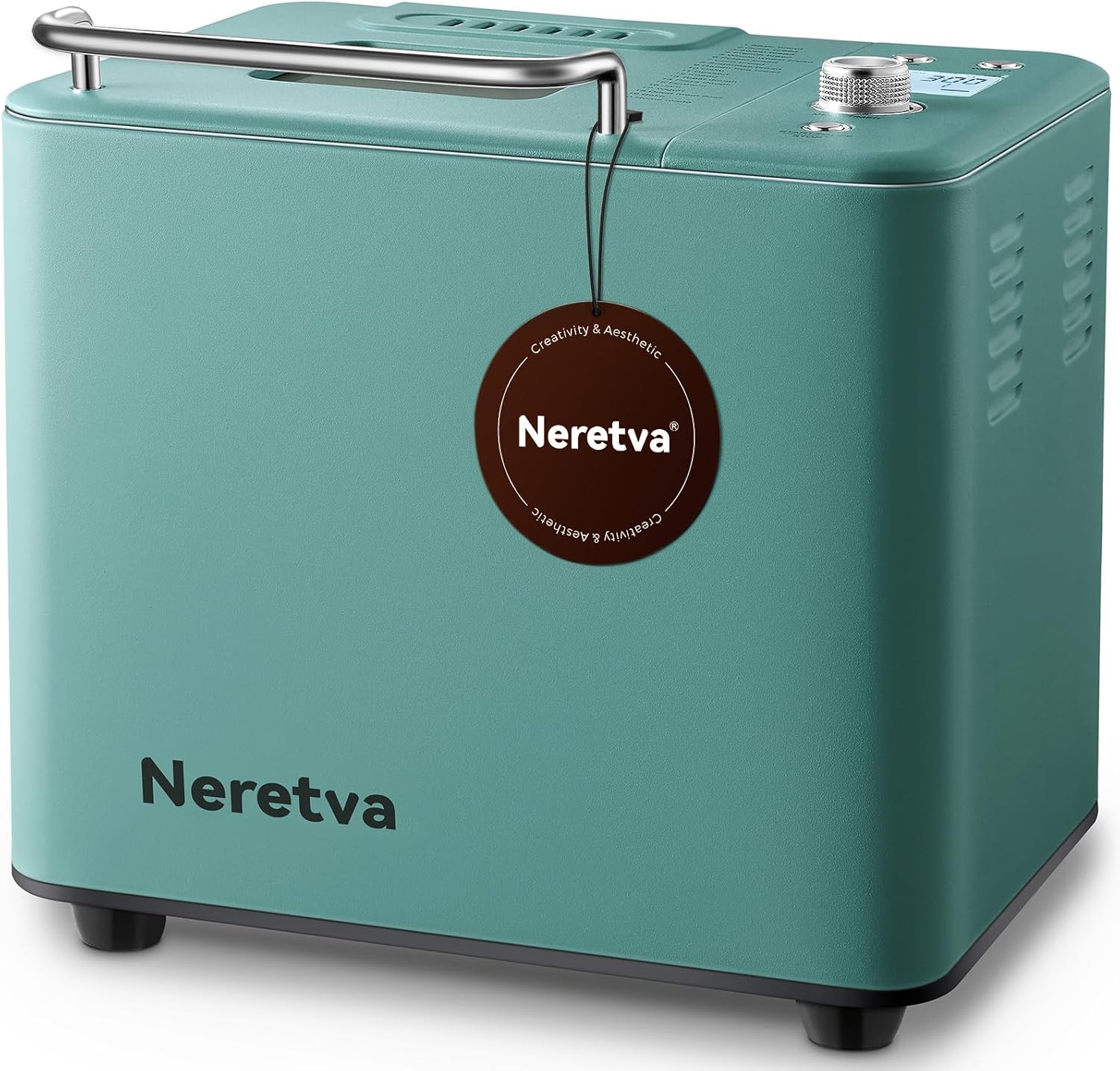
The Neretva bread maker is a countertop machine designed to mix, knead, rise and bake loaves automatically using one of 20 preset programs. Typical uses include basic and whole-wheat loaves, quick breads, gluten-free recipes, doughs for pizza or rolls, and other presets like jam and yogurt. Notable features are dual top-and-bottom heaters for more even browning, a 550W motor for relatively fast cycles, a nonstick ceramic loaf pan, and a 15-hour delay timer with a 1-hour keep-warm function. Practical benefits include a large 2 lb loaf option for feeding a family, a metal body that feels sturdy, and accessories such as spare paddles and measuring tools that simplify getting started. Limitations to expect are the locked control behavior while running which requires a three-second press to unlock, and the machine uses a single active kneading paddle (the second paddle is a spare), which can make removing stuck dough fiddly. Noise is low in normal operation but the unit is fairly compact, so very large batches beyond the stated capacity are not possible.
Best for: Buyers who want a robust, no-fuss machine to reliably bake a variety of breads at home and who prioritize program variety, even baking, and easy cleanup.
Less Ideal for: People who bake in very large batches, need commercial capacity, or who want fully manual control over every stage of the process.
- 20 preset programs cover breads, doughs and specialty options for flexible use
- Dual top-and-bottom heaters promote more even baking and browning
- Nonstick ceramic pan and machine-washable accessories simplify cleaning
- 15-hour delay timer and 1-hour keep-warm let you schedule fresh bread
- Only one kneading paddle operates at a time despite two paddles being included
- Control panel locks during operation and requires a long press to unlock
- Maximum loaf size limits very large households or bulk baking needs
Verdict: A feature-rich home bread maker that delivers even, family-sized loaves and broad preset flexibility for everyday baking.
Elite Gourmet Bread Maker EBM8103B

| Capacity | 2 pounds |
|---|---|
| Wattage | 550 watts |
| Number of Programs | 19 |
| Voltage | 120 volts |
The Elite Gourmet EBM8103B is an entry-level programmable bread maker that automates kneading, rising, and baking so you can make fresh loaves with minimal effort. You load ingredients, pick one of 19 presets (including gluten-free, whole wheat, quick bread, dough, and jam), choose loaf size and crust darkness, and let the machine handle the rest. Useful features include a 15-hour delay timer to wake up to warm bread and a 60-minute keep-warm function for flexible serving. The unit is compact and energy efficient compared with using a full oven, and the nonstick bread pan and removable kneading blade make loaf removal and cleanup straightforward. Limits to expect at this price are basic controls rather than advanced customization and a single baking chamber that fits home-sized loaves only. For routine home baking, families or beginners will appreciate the simplicity and variety of preset programs, though serious bakers who want full recipe tweaking or larger capacity loaves may find it too basic.
Best for: Buyers looking for an affordable, easy-to-use machine to make fresh bread and basic doughs at home without learning complex baking techniques.
Less Ideal for: Users who want full control over fermentation and bake profiles or need commercial-scale or very large loaves should look at more advanced models.
- 19 preset programs cover gluten-free, wheat, dough, jam, cake and quick breads
- Bakes up to 2 lb with selectable loaf sizes and crust darkness
- 15-hour delay timer and 60-minute keep-warm for scheduled baking
- Compact, lower-energy alternative to using a conventional oven
- Nonstick bread pan and removable kneading blade simplify cleanup
- Basic controls limit advanced recipe tweaking
- Single chamber sized for home loaves only, not large-batch baking
Verdict: A budget-friendly, beginner-oriented bread maker that delivers reliable homemade loaves with minimal effort thanks to broad presets and a programmable delay timer.
KITCHENARM 29‑in‑1 Bread Machine

| Voltage | 120 volts |
|---|---|
| Capacity | 2 pounds |
| Wattage | 550 watts |
| Number of Programs | 29 |
The KITCHENARM 29-in-1 Bread Machine is a feature-rich countertop bread maker aimed at both beginners and experienced home bakers. It handles everything from basic and whole wheat loaves to gluten-free and sourdough with 21 bread menus plus non-bread programs for cake, jam, and yogurt. Practical features include three loaf-size options (2 lb, 1.5 lb, 1 lb), three crust settings, a 15-hour delay timer, 1-hour keep-warm, and an add-nuts/paddle alarm that help in real-world use. Advanced users can program up to four custom cycles with fine control over knead, rest, rise, and bake times. The machine is ETL certified for North America, runs on 120V/550W, and uses a nonstick Teflon-coated pan for easier cleanup. Trade-offs are typical for full-featured bread makers: it is relatively heavy and hand-wash care is recommended, and the many programming options have a learning curve if you want to exploit custom menus. For buyers who value consistent, programmable results and safety certifications, this model delivers a reliable, versatile baking experience.
Best for: Home bakers who prioritize a dependable, programmable machine that can handle a wide range of recipes and deliver consistent results with safety certifications.
Less Ideal for: People who need an ultra-light or fully dishwasher-safe unit or those who want a very simple one-button machine with no programming options.
- Wide program selection with 29 automatic menus covering breads and non-bread items
- Customizable HOME MADE menu allowing cycle-level timing for personalized recipes
- Three loaf sizes and three crust colors plus delay timer and keep-warm for scheduling
- ETL certified for US/Canada and includes a grounded plug for electric safety
- Nonstick pan requires hand washing rather than dishwasher convenience
- Relatively heavy for a countertop appliance, which limits portability
Verdict: Choose this bread maker if you want a safety-certified, highly programmable machine that reliably produces many types of homemade bread.
Cuisinart Bread Maker CBK-110P1ES

| Voltage | 120 volts |
|---|---|
| Capacity | 2 pounds |
| Wattage | 550 watts |
| Number of Programs | 12 |
The Cuisinart CBK-110P1ES is a countertop bread machine that handles mixing, kneading, rising, and baking with minimal hands-on effort. It ships with 12 preprogrammed menus for standard and specialty breads plus cakes and jams, and offers three crust color settings and three loaf-size options (1, 1.5, and 2 lb) so you can tailor results for different recipes. The vertical nonstick pan and LCD display with countdown and audible beeps make operation straightforward, and a 13-hour delay-start lets you wake to freshly baked bread. Practical benefits include a 60-minute keep-warm cycle and a compact footprint that fits smaller counters while still producing full-size loaves. Limitations to note are the single paddle and vertical loaf shape, which can affect crumb and crust compared with hand-shaped loaves, and the need to hand-wash removable parts rather than using a dishwasher. For shoppers comparing popular models, this machine balances useful presets and reliable basic baking without advanced programmability or artisan-style results.
Best for: Buyers who want a dependable, user-friendly machine to make fresh loaves and occasional specialty bakes with minimal fuss and the reassurance of a well-reviewed, widely used model.
Less Ideal for: Those seeking advanced customization or bakery-style, hand-shaped loaves should look at more specialized or manual methods instead.
- 12 preprogrammed menu options for breads, cakes, and jams
- Three crust color settings and three loaf-size options up to 2 lb
- 13-hour delay-start timer for scheduled baking
- Compact footprint that fits typical kitchen counters
- Vertical loaf and single paddle limit artisan-style crumb and shaping
- Removable parts require hand washing rather than dishwasher-safe cleaning
Verdict: A reliable, compact bread maker with many presets and delay-start that makes fresh bread with minimal effort.
OSIPOTO Bread Maker BM8708

| Capacity | 2 pounds |
|---|---|
| Wattage | 550 watts |
| Voltage | 120 volts |
| Number of Programs | 17 |
The OSIPOTO Bread Maker BM8708 is a full-featured household machine that automates mixing, kneading, rising, and baking for up to a 2-pound loaf. It offers 17 programs covering everything from basic and whole wheat to pizza dough and jam, plus three crust shade settings so you can dial in light, medium, or dark crusts. The removable nonstick loaf pan and included kneading paddle, measuring tools, and recipe book make it approachable for beginners, while the 15-hour delay timer and 1-hour keep-warm function let you schedule fresh bread for breakfast. At 550 watts the heater performs reliably for consistent results, and the stainless steel exterior wipes clean easily. Expect typical limitations of home bread machines: you cannot exactly replicate artisan oven crusts or very large loaves, and some specialty doughs may need manual handling. Noise is described as low but the machine still runs through long cycles, so plan placement accordingly.
Best for: Buyers who want a dependable, easy-to-use machine that produces consistent home-baked loaves with minimal learning curve and predictable results.
Less Ideal for: Bakers seeking true artisan-style crusts, very large loaves, or those who prefer hands-on dough shaping and oven baking techniques.
- Wide selection of 17 preset programs for varied breads and doughs
- 15-hour delay timer and 1-hour keep-warm for scheduled baking
- Removable nonstick pan and included accessories simplify cleanup and setup
- Stainless steel housing offers a durable, easy-to-wipe finish
- Cannot produce the same crust profile as a conventional oven or artisan loaf
- Limited to loaves up to 2 pounds, which may be small for larger households
Verdict: A reliable, beginner-friendly bread machine that delivers scheduled, consistent 2-pound loaves with a broad set of preset programs.
Choosing the Right Bread Maker: Key Factors to Consider
Loaf Consistency and Crust Control
How uniformly a machine kneads, proofs, and bakes determines the quality of the finished loaf. Uneven mixing can leave pockets of flour or underdeveloped gluten, while hotspots in the baking chamber produce uneven browning.
Look for machines with reliable paddle designs and heating elements that distribute heat evenly. Adjustable crust settings and multiple bake cycles let you dial in the texture and color you prefer, which is important because a technique that works for one recipe might not work for another. Consistency matters most when you plan to bake frequently or rely on the machine to produce predictable results for sandwiches, toast, or specialty loaves.
Program Variety and Customization
Preset programs are convenient, but customization is key when you bake different bread types. Bread makers with multiple cycles for white, whole wheat, gluten-free, dough-only, and rapid bakes give you flexibility for varied recipes and schedules.
A programmable delay start and a memory function for power interruptions can be useful for timing fresh bread to mealtimes. Customizable knead, rise, and bake durations let experienced bakers tweak results. The more granular the program options, the easier it is to match the machine to your preferred recipes.
Capacity and Loaf Size Options
Household size and how you use bread should influence capacity choice. Machines that allow 1-pound, 1.5-pound, and 2-pound loaves accommodate singles, couples, and families respectively and reduce waste.
A machine that does not support multiple sizes may force you to alter recipes or waste dough. Also consider pan shape and whether the loaf orientation fits your slicing and storage habits. Capacity affects baking time and crust thickness, so pick a size that matches your consumption patterns.
Ease of Use and Controls
Controls, displays, and feedback determine how quickly you can set up a bake without mistakes. Clear labeled buttons, a readable screen, and straightforward preset selection reduce user error and frustration.
Intuitive interfaces are especially important for beginners who may not be comfortable translating a conventional recipe into machine cycles. Audible alerts, progress indicators, and simple instructions help you monitor a bake without repeatedly opening the lid, which can disturb rising.
Cleaning, Maintenance, and Parts
Regular cleaning prevents buildup that affects flavor and function. Removable nonstick pans and detachable kneading paddles speed up cleanup, while dishwasher-safe components offer convenience for some owners.
Consider how easy it is to reach the paddle and pan corners and whether replacement paddles are available if one wears out. Machines with simpler interiors and fewer crevices reduce the time required for maintenance and extend useful life. Safety features like cool-touch exteriors also simplify handling after baking.
Build Quality and Longevity
Materials and construction quality influence how long a bread maker will perform reliably. Solid housing, robust hinges, and a well-sealed lid prevent heat loss and wobble during kneading.
Metal pans, quality control on paddle fittings, and secure electrical components reduce the risk of early failures. While no small appliance is indestructible, choosing a model with thoughtful engineering and available replacement parts helps ensure years of consistent use.
Understanding Program Types and When to Use Them
Most bread makers include a set of predefined programs tailored to common breads: basic white, whole wheat, French, sweet, and gluten-free. Each program varies knead intensity, rise times, and bake temperatures to suit the flour and sugar content of the recipe.
Use a dough-only cycle when you want to shape and bake in a conventional oven or make rolls. Rapid or express cycles are useful when you need bread in a hurry, but expect a tradeoff in depth of flavor because shorter fermentation limits yeast development.
- Basic cycles are best for standard sandwich loaves.
- Whole wheat programs add longer kneading and rise for denser flours.
- Gluten-free cycles reduce kneading and adjust bake times to avoid a gummy crumb.
- Dough-only cycles let you use the machine as a dough mixer for oven finishing.
Tips for Getting Even Bakes
Measure ingredients by weight when possible to reduce variability between batches. Room temperature liquids and proper yeast handling help maintain predictable fermentation. Place the machine on a stable, level surface to avoid uneven mixing.
Avoid opening the lid during the critical first rise unless you are troubleshooting. If browning looks uneven, try adjusting loaf size or use a lighter crust setting to extend interior bake time without overbrowning the exterior.
- Weigh flour and liquids for repeatable results.
- Check dough consistency early in the knead cycle and add small amounts of liquid or flour only if necessary.
- Use the correct yeast type and respect activation directions for consistent rises.
Maintenance Best Practices
Clean removable pans and paddles after each use to prevent residual oils and crumbs from burning in future bakes. Wipe the machine interior with a damp cloth while ensuring no water contacts electrical components.
If a paddle is stuck to the baked loaf, soak the pan to loosen it rather than forcing removal. Periodically inspect seals and hinges and address minor wear early to avoid bigger problems later.
- Hand wash removable parts if the manual advises; avoid abrasive cleaners on nonstick surfaces.
- Dry components completely before reassembly to prevent rust or mildew.
- Keep the exterior vents clear to maintain proper air circulation.
Adjusting Recipes for Bread Makers
Not all oven recipes translate directly to a bread maker. Machines rely on contained kneading and a specific heat profile, so expect to tweak hydration, yeast amounts, and sugar levels. For enriched doughs, shorten rising times or use a specialized program if available.
Start by halving adjustments and observing results. Keep a baking log that notes flour brand, humidity, and program used so you can replicate successful bakes or identify patterns when results vary.
- Reduce liquid slightly for high-extraction or whole grain flours.
- Lower yeast for longer rise cycles to develop more flavor.
- Document successful program settings for each recipe.
Safety and Placement Considerations
Bread makers generate heat and need clear space around vents. Place the machine away from flammable materials and ensure there is room above the lid for steam to escape safely. Avoid enclosed cabinets while baking.
Use the machine on a stable counter and keep children and pets away during operation. Allow the unit to cool before removing the loaf to avoid burns.
- Leave at least a few inches of clearance around the unit for ventilation.
- Avoid placing directly under low shelves or cabinets while in use.
- Use oven mitts when handling hot pans and paddles.
How We Chose the Best Bread Maker
We focused on criteria that actually affect home baking results and day-to-day use. First, bake consistency: machines were assessed for how evenly they mix and bake across multiple loaf sizes and crust settings, since stray underbaked centers or uneven crusts are common failure points. Second, program flexibility: we prioritized models with a range of preset cycles plus customizable options for different dough types, delayed start, and rapid bake needs. Third, build and maintenance: durable nonstick pans, sturdy kneading paddles, and ease of cleaning matter for long-term ownership. Fourth, user interface and feedback: clear displays, intuitive controls, and useful alerts reduce mistakes and wasted loaves. Fifth, capacity and loaf size options: we considered single- and multi-size functionality for households of different sizes. We excluded machines that lack essential safety features, have consistently poor user feedback about irregular bakes, or offer no customizable programs. Our short list favors machines that balance reliable baking results with straightforward upkeep and control features that suit both beginners and regular bakers.
Our full evaluation process is outlined in our review methodology.
FAQ
Can I use whole grain flours in a bread maker?
Often yes. Whole grain flours absorb more water and produce denser loaves, so machines with whole grain programs or longer knead and rise cycles perform better. Expect to adjust hydration and possibly extend rise times for best results.
How do I prevent the kneading paddle from getting stuck in the loaf?
Soak the pan in warm water after cooling to loosen the paddle from the crumb. Using a small amount of oil on the paddle shaft or lightly greasing the pan can also reduce sticking. Regular cleaning prevents buildup that makes removal harder.
Is a delay start safe for recipes with yeast?
Delay start works for quick-rise recipes and mixes that use instant yeast. It is not recommended for doughs with perishable ingredients like fresh dairy or eggs unless the machine and recipe explicitly support refrigerated delay. Temperature and food safety should guide use.
Will a bread maker bake a crusty artisan loaf?
Bread makers can produce well-shaped loaves but typically yield a softer, sandwich-style crust because the enclosed environment retains moisture. For a very crusty artisan loaf, many bakers finish the shaped dough in a conventional oven to get higher, drier heat.
How often should I replace the kneading paddle or pan?
Replacement frequency depends on use and care. With regular cleaning and gentle handling, pans and paddles can last several years. Replace parts if nonstick coatings fail, the paddle no longer fits securely, or mechanical wear affects mixing performance.
Final Verdict
Choose a bread maker that matches how you bake: prioritize loaf consistency and the program flexibility you will actually use. If you bake a lot of whole grain or specialty doughs, favor models with longer knead and rise options and adjustable settings. For casual bakers, simplicity, easy cleanup, and reliable presets may be more important than every customization. Balance capacity against how much fresh bread you consume and pick a machine with parts that are easy to maintain. Focusing on consistent bake results, usable controls, and durable construction will steer you to a machine that reliably produces the loaves you want over the long term.