
Note: This article contains affiliate links. If you click on these links and make a purchase, we may earn a small commission at no extra cost to you. This helps support our research and content. Read our full affiliate disclosure here.
If you bake whole-grain loaves at home, the right bread maker makes the process easier and yields more consistent results. Whole-grain flours absorb more water and require different kneading and rising patterns than white flour, so machines with dedicated whole-grain settings and strong kneading action matter. This guide covers the seven top bread makers shortlisted for whole-grain baking, explaining the features that improve loaf structure, crust control, and ease of use. We evaluate machines on cycle flexibility, kneading strength, and loaf consistency to help you pick a model that reliably handles dense, fiber-rich doughs. Read on to see which features to prioritize and why these units made the list.
Top Picks at a Glance
| Best Overall The best all-around choice for most situations | Breville Custom Loaf BBM800XL | 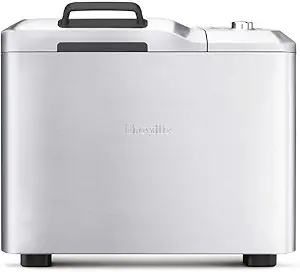 |
| Best Quality Built to a higher standard if you want something more solid | Zojirushi Home Bakery Virtuoso Plus BB-PDC20BA |  |
| Best Value The sweet spot between price and what you get | Elite Gourmet Bread Maker EBM8103B |  |
| Best Budget The cheapest option that still gets the job done reliably | NEWBULIG 21-in-1 Bread Maker |  |
| Top Rated A top-rated pick with lots of positive feedback | Saluna Bread Maker BM901 |  |
| Most Popular A crowd favorite that many people choose with confidence | Cuisinart Bread Maker CBK-110P1ES |  |
| Best Seller A high-volume bestseller chosen again and again | OSIPOTO Bread Maker BM8205 | 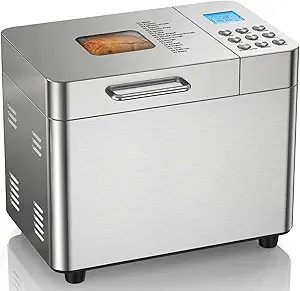 |
Breville Custom Loaf BBM800XL

| Capacity | 2.5 pounds |
|---|---|
| Wattage | 830 watts |
| Voltage | 120 volts |
| Number of Programs | 13 |
The Breville Custom Loaf BBM800XL is a feature-rich bread machine designed for home bakers who want control over loaf style and mix-ins. It offers 13 automatic programs plus nine custom settings so you can save personal recipes, and dedicated cycles include gluten-free, dough, jam, and crusty loaf options. The collapsible kneading paddle mixes ingredients on a platform then folds away before baking, reducing the large hole that paddle stubs leave in the crumb. An automatic fruit and nut dispenser times additions for even distribution, and a smart LCD shows program progress; power-interruption protection holds progress for up to 60 minutes. At 830 watts with a 2.5-pound capacity, it can produce family-sized loaves and supports experimenting with whole-grain recipes where longer kneading and customized cycles help. The machine is relatively heavy and requires hand washing for some parts, and like many automatic makers it cannot perfectly replicate oven-baked artisan crusts, but it significantly simplifies producing consistent, customized whole-grain loaves at home.
Best for: Home bakers who want a reliable, customizable machine to bake consistent whole-grain and specialty loaves without manual kneading and recipe guesswork.
Less Ideal for: Bakers who prioritize artisan oven-style crusts or a lightweight, compact machine for small kitchens should consider other options.
- Wide selection of automatic and custom programs for recipe flexibility
- Collapsible kneading paddle reduces large holes in the finished loaf
- Automatic fruit and nut dispenser times additions for even distribution
- 60-minute power interruption protection preserves progress during outages
- Heavier countertop footprint and parts require hand washing
Verdict: Choose the Breville Custom Loaf BBM800XL if you want a versatile, programmable bread maker that simplifies consistent whole-grain and customized loaves.
Zojirushi Home Bakery Virtuoso Plus BB-PDC20BA

| Capacity | 2 pounds |
|---|---|
| Wattage | 700 watts |
| Number of Programs | 7 |
| Voltage | 120 volts |
The Zojirushi Virtuoso Plus is a performance-focused breadmaker designed to produce consistent, bakery-style loaves at home. It bakes rectangular 2 lb loaves using dual heaters in the lid and base for more even browning and improved oven spring, and its double kneading blades help develop dough for higher rises and better crumb structure. The control panel offers seven programs including whole wheat, multigrain, rapid whole wheat, and gluten-free, plus three crust shades and a 13-hour delay timer so you can schedule fresh bread for morning or evening. Practical touches include a large viewing window, removable nonstick pan, and included measuring tools and recipe book. Trade-offs are its relatively heavy cabinet and the hand-wash care requirement for the pan, but for bakers focused on whole-grain and specialty loaves the machine delivers reliable results and time-saving convenience.
Best for: Home bakers who prioritize consistent, bakery-style results for whole-grain and specialty breads and want programs that handle denser doughs without manual shaping.
Less Ideal for: Casual users who only bake occasionally and need a lightweight, compact machine or fully dishwasher-safe parts should consider simpler models.
- Dual heaters top and bottom promote even browning and better rise for dense whole-grain loaves
- Double kneading blades improve dough development for higher rise and consistent crumb
- Dedicated healthy-course settings for whole wheat, multigrain, rapid whole wheat, and gluten-free
- 13-hour delay timer makes it easy to have fresh bread ready at a chosen time
- Relatively heavy unit that is less portable for small kitchens
- Bread pan and accessories require hand washing rather than dishwasher-safe cleaning
Verdict: Choose this Zojirushi if you want a high-performance breadmaker that consistently produces well-browned, well-risen whole-grain loaves with minimal fuss.
Elite Gourmet Bread Maker EBM8103B

| Capacity | 2 pounds |
|---|---|
| Wattage | 550 watts |
| Number of Programs | 19 |
| Voltage | 120 volts |
The Elite Gourmet EBM8103B automates kneading, rising, and baking to produce fresh loaves with minimal effort. You load ingredients, pick one of 19 programs and a loaf size, and the machine handles mixing and timing; programs cover whole wheat, gluten-free, pizza dough, and even jam. A 15-hour delay timer and 60-minute keep-warm function make it easy to plan fresh bread for breakfast or dinner. The nonstick pan and included measuring tools simplify cleanup and setup, and the compact footprint suits small kitchens that do not want to heat a full oven. With 550 watts it is energy efficient compared with oven baking, but the smaller 2 lb maximum loaf means it is best for families or cooks who plan modest batch sizes. Also, like most single-pan machines, crust and crumb variations can require a few trial runs to dial in color and texture for dense whole-grain recipes. For buyers prioritizing convenience and a wide set of presets, this model delivers predictable, hands-off bread-making.
Best for: Buyers who want a dependable, no-fuss machine to produce regular whole-grain and specialty loaves without mastering manual kneading or oven timing.
Less Ideal for: Bakers who need large loaves or who prefer full manual control over mixing and oven-based baking techniques should consider other options.
- Wide selection of 19 one-touch programs including whole wheat and gluten-free
- Three loaf size options (1, 1.5, 2 lb) for flexible batch sizing
- 15-hour delay timer and 60-minute keep-warm for scheduled fresh bread
- Compact, energy-saving design suitable for small kitchens
- Maximum loaf size is 2 lb which limits large-batch baking
- Crust color and crumb may need recipe adjustments and testing for whole-grain flours
Verdict: If you want a compact, programmable bread maker that reliably produces whole-grain and gluten-free loaves with minimal effort, this Elite Gourmet model is a practical choice.
NEWBULIG 21-in-1 Bread Maker

| Wattage | 650 watts |
|---|---|
| Voltage | 120 volts |
| Material | Stainless Steel |
| Included Components | Bread Pan, Heat-Resistant Glove, Measuring Cup, Measuring Spoon, User Manual |
The NEWBULIG 21-in-1 Bread Maker is a compact countertop machine that kneads, proofs, and bakes a variety of breads and other dough-based foods with minimal hands-on work. You pick ingredients, select one of the 11 bread modes or 10 specialty programs (yogurt, cake, noodles, dumpling wrappers and more), and the unit handles mixing, kneading, rising, and baking. The 650W motor and advertised 360° heat circulation aim to deliver an evenly browned crust and a fully cooked crumb, and the three loaf-size options (1, 1.5, 2 lb) plus three crust settings give useful flexibility for small households. It includes a nonstick pan and a basic kit of measuring tools and a heat glove, and the machine runs quietly with a 12-hour preset timer so you can schedule fresh bread for mornings or evenings. Expect typical limitations of compact bread makers: you cannot make very large artisan-style loaves or use very wet batters, and control over fine details of fermentation and shaping is limited compared with manual baking. For buyers who want dependable daily loaves without a steep learning curve, it covers the essentials well.
Best for: Buyers who want an affordable, easy-to-use machine to bake a variety of everyday and whole-grain loaves with minimal hands-on effort and scheduled baking capability.
Less Ideal for: Bakers seeking full manual control for artisan or very large loaves, advanced sourdough fermentations, or precise recipe tinkering should look elsewhere.
- Wide preset selection covering breads and specialty programs for versatile use.
- Three loaf sizes and three crust-color settings for portion and texture control.
- 650W motor with 360° heat circulation designed for even baking.
- Includes useful accessories (measuring cup, spoon, heat-resistant glove) and a nonstick pan.
- Quiet operation with a 12-hour preset timer for scheduled baking.
- Not suited for large artisan-style loaves or advanced sourdough techniques.
- Limited manual control over fermentation and shaping compared with hand baking.
Verdict: A budget-friendly, feature-rich bread maker that reliably produces everyday and whole-grain loaves with minimal fuss.
Saluna Bread Maker BM901

| Capacity | 2 pounds |
|---|---|
| Wattage | 600 watts |
| Number of Programs | 25 |
| Voltage | 120 volts |
The Saluna BM901 is a compact 2-pound bread maker designed to handle a wide range of home baking tasks, from basic loaves to cakes and specialty doughs. You pick a program on the touchscreen, add ingredients, and the machine mixes, kneads, proofs, and bakes automatically; the transparent lid makes it easy to monitor progress and the automatic nut/fruit dispenser adds inclusions at the right time. Practical features include a 13-hour delay timer for fresh morning bread, three loaf sizes and browning levels for consistent results, and online recipes and videos to speed up learning. The 600-watt heater and food-grade nonstick inner bucket are aimed at reliable, even baking and the detachable bucket is claimed to simplify cleanup. Limitations to note are modest power compared with professional units and a 2 lb maximum loaf size, which may be restrictive if you want very large or dense whole-grain loaves; also some parts require hand washing despite the removable bucket. For cooks who want dependable, user-friendly home baking with good control over loaf size and crust color, this machine covers most needs without a steep learning curve.
Best for: Home bakers who prioritize reliability and consistent results for everyday whole-grain and multi-style loaves and want an easy, mostly hands-off machine with preset controls and guidance.
Less Ideal for: Bakers who routinely make very large, commercial-size loaves or who need a higher-power oven-grade unit for fast baking and heavy artisan sourdoughs should look elsewhere.
- Wide program selection including 14 bread types and customizable setting for varied recipes
- Visible lid plus touchscreen makes monitoring and one-touch control straightforward
- Automatic nut/fruit dispenser times additions for consistent texture
- 13-hour delay timer lets you schedule fresh bread for mornings
- Supports three loaf sizes and three crust colors for precise results
- Maximum 2 lb loaf capacity limits very large or heavy whole-grain breads
- 600-watt power is moderate and may require longer cycles for dense doughs
Verdict: Choose the Saluna BM901 when you want a reliable, preset-driven bread maker that consistently produces well-controlled whole-grain and everyday loaves with minimal fuss.
Cuisinart Bread Maker CBK-110P1ES

| Capacity | 2 pounds |
|---|---|
| Wattage | 550 watts |
| Number of Programs | 12 |
| Voltage | 120 volts |
The Cuisinart CBK-110P1ES is a countertop bread machine that handles mixing, kneading, rising, and baking on a timer so you can wake to fresh bread or set it for later. It offers 12 menu programs that cover basic and specialty breads plus cakes and jams, and an LCD shows time remaining while audible beeps confirm selections. You can choose among three crust colors and three loaf sizes up to 2 pounds, and the removable nonstick vertical pan makes loaf removal straightforward. The 13-hour delay-start and 60-minute keep-warm functions add convenience for busy schedules. Practical limitations include a compact baking cavity that makes larger bakery-style loaves impractical and a single paddle design that can leave a small hole at the bottom of loaves. For whole-grain baking the preset programs and consistent temperature control simplify dense doughs, though you may still need to tweak hydration and knead settings for heavier mixes.
Best for: Home bakers who want a reliable, automated way to bake fresh whole-grain and specialty loaves without mastering manual mixing and shaping, and who value hands-off convenience and preset guidance.
Less Ideal for: Bakers seeking bakery-style large freeform loaves or those who want full manual control over every knead and rise step should consider stand mixers and oven baking instead.
- 12 built-in programs for a wide range of breads and nonbread recipes
- Three loaf size and crust color options for customization
- 13-hour delay-start and 60-minute keep-warm for timed baking
- Removable nonstick vertical bread pan for easier cleanup and loaf removal
- Compact cavity limits loaf shape and size compared with full-size ovens
- Single kneading paddle leaves a small hole in the bottom of finished loaves
Verdict: A compact, user-friendly bread maker that reliably produces up to 2 lb. whole-grain loaves with useful presets and timed baking convenience.
OSIPOTO Bread Maker BM8205

| Capacity | 2 pounds |
|---|---|
| Wattage | 600 watts |
| Number of Programs | 17 |
| Voltage | 120 |
The OSIPOTO BM8205 is a beginner-friendly bread machine designed to make homemade loaves with minimal fuss. You add ingredients, pick one of 17 preset programs (including whole wheat and gluten-free), and the machine handles kneading, rising, and baking up to a 2 pound loaf. Its stainless steel housing and nonstick baking pan simplify cleanup, and the clear LCD and simple controls make program selection straightforward. The 15-hour delay timer and 1-hour keep-warm function let you schedule bread for mornings or meals, and the 600W motor promises even heat distribution for consistent crust and crumb. Practical safety touches such as overheat protection help reduce concerns during long cycles. Expect quiet operation and a moderate bake time—roughly 3 hours 35–45 minutes depending on loaf size—but be aware the unit is compact and aimed at home bakers rather than commercial use. For risk-averse buyers, its preset programs and safety features make it an easy, predictable way to bake whole-grain loaves at home.
Best for: Home cooks who want a low-risk, set-and-forget machine for reliably baking whole-grain and family-sized loaves without needing technical baking experience.
Less Ideal for: Users who need a commercial-grade machine or plan to bake multiple loaves daily should look for heavier-duty, professional models instead.
- Large 2 lb capacity with three loaf size options for family-sized loaves
- 17 preset programs including whole wheat and gluten-free for reliable results
- Nonstick pan and included measuring tools simplify cleanup and portioning
- 15-hour delay timer and keep-warm function for scheduled baking
- Overheat protection and relatively quiet 600W motor for safer, low-noise operation
- Hand wash recommended for some components rather than full dishwasher-safe parts
- Not designed for commercial or heavy daily use due to compact home-oriented build
Verdict: If you want a safe, predictable way to bake whole-grain family loaves at home, this easy-to-use 2 lb bread maker delivers consistent results with minimal fuss.
Choosing the Right Bread Maker for Whole-Grain Bread: Key Factors to Consider
Kneading Power and Motor Torque
Whole-grain flours contain bran and germ that shorten gluten strands, so doughs are denser and more resistant to kneading. A bread maker with a robust motor and effective kneading paddle is less likely to stall when processing heavy doughs. Look for units where the manufacturer indicates higher torque or that have proven designs with stable kneading action.
Insufficient kneading leaves the crumb tight and uneven, while overstressed motors can overheat. Reliable motor performance means the machine can sustain longer kneading cycles needed for whole-grain recipes without inconsistent mixing.
Cycle Programmability and Whole-Grain Modes
Whole-grain loaves usually benefit from longer kneading and extended first rises. Machines with dedicated whole-grain or multigrain settings automatically adjust kneading duration and rest periods to suit denser doughs. Alternatively, programmable cycles let you extend specific phases to achieve better gluten development.
A flexible control panel that lets you alter knead time, rise time, and bake length gives you control when experimenting with different whole-grain blends. Delay-start and memory functions can also be useful, but only when their timers maintain stable temperatures during critical rises.
Heating Consistency and Crust Control
Even heating across the loaf pan produces uniform crumb and prevents underbaked centers. Whole-grain loaves are prone to dense centers if heat does not penetrate evenly. Bread makers with thoughtful heating element placement and reliable thermostat control will brown crusts evenly without overbaking the exterior.
Crust options let you choose a lighter or darker finish depending on the recipe. For whole-grain breads, a moderate crust often keeps the interior moist while still developing flavor from Maillard reactions on the exterior.
Loaf Capacity and Pan Shape
Whole-grain recipes can behave differently at various batch sizes. Make sure the loaf capacity matches the recipes you want to use; too-large pans may not heat through properly with heavy doughs, while too-small pans restrict expansion. The pan shape also affects the final loaf form, which matters if you slice for sandwiches or rustic servings.
Consider whether you prefer an identifiable sandwich loaf or a taller, artisanal-style shape. Also check that the pan is removable for easier handling and cleaning after dense doughs are baked.
Ease of Cleaning and Maintenance
Whole-grain flours are oilier and can leave more residue on kneading paddles and pans. Nonstick coatings that tolerate scraping and removable paddles reduce hassle when transferring loaves or cleaning up. A machine with straightforward disassembly and replaceable parts will save time over months of regular baking.
Also consider how the control layout and lid design affect cleaning. A lid with a removable viewing window or accessible seals is easier to keep sanitary when working with whole-grain doughs that can leave more debris.
Recipe Support and Documentation
Good documentation and included recipe books tailored to whole-grain flours make it simpler to get consistent results. Whole-grain baking often needs extra hydration and longer rest times compared with white-flour recipes. Machines that provide tested whole-grain recipes or clear guidelines for adjusting hydration and cycle lengths reduce guesswork.
Search for models whose manuals explain how to modify settings for different grain percentages or add-ins such as seeds and nuts, since these details materially affect dough behavior and final loaf quality.
Adjusting Hydration for Whole-Grain Recipes
Whole-grain flours absorb more water than refined flours, so you will often need to increase hydration to avoid a dry, crumbly loaf. Start by increasing liquid by small increments—one to two tablespoons at a time—and monitor the dough during the knead cycle. The dough should form a cohesive, slightly tacky ball rather than sticky or completely dry.
If your machine has a viewing window, observe the dough during kneading and add liquid or flour only during early stages. If you must rescue a loaf mid-cycle, use brief bursts of extra hydration and allow the machine to run a few more minutes before assessing.
- Increase liquid gradually for whole-grain blends
- Use warm water for faster yeast activity when required
- Add mix-ins like seeds near the end of kneading to avoid overworking dough
Timing and Temperature Tips for Better Rises
Whole-grain starters often need longer bulk fermentation. If your machine allows you to lengthen rise phases, do so in 10 to 20 minute increments to find the sweet spot for your flour mix. Ambient kitchen temperature will also affect rise time; cooler kitchens require longer rises or a warmer starting liquid.
Avoid using excessively hot liquid with whole-grain doughs because higher temperatures can damage yeast activity in dense doughs. Target lukewarm water unless a recipe specifies otherwise, and favor slightly longer, cooler rises for improved flavor and crumb structure.
- Extend initial rise for denser doughs
- Keep doughs in a consistent, draft-free environment
- Use thermometer when in doubt to monitor internal dough temperature
Managing Add-Ins and Texture
Seeds, nuts, and whole grains add flavor and texture but change dough dynamics. Add these ingredients late in the kneading cycle so they do not interfere with gluten development. If your machine has a dispenserslot for mix-ins, use it on the manufacturer-recommended timing for best distribution.
For uniform texture, chop larger add-ins and toast seeds beforehand to reduce moisture content. Keep total add-in volume to a reasonable proportion of the flour weight to avoid overloading the dough and impairing rise.
- Introduce add-ins during the final knead stage
- Toast seeds or nuts to reduce moisture
- Limit add-ins to avoid structural collapse
When to Use Hand-Finished Techniques
Some whole-grain bakers prefer using the bread maker for mixing and initial rises, then finishing the loaf in a conventional oven. This hybrid approach gives control over crust development and allows for larger or differently shaped loaves than the machine pan produces.
If you opt for hand-finishing, remove the dough after the first or second rise, shape it, and allow a final proof on a baking tray. Preheat the oven to ensure even oven spring and consider steam for improved crust color.
- Use machine for kneading and primary rise
- Finish baking in a conventional oven for custom crusts
- Allow final proof after shaping for best volume
Maintenance to Preserve Performance
Regular cleaning preserves nonstick coatings and prevents buildup that can affect kneading action. Remove paddles and pans promptly after cooling and wash according to the machine's care instructions. Avoid abrasive scrubbing that damages coatings.
Inspect seals and moving parts periodically. Replacing worn paddles or seals keeps mixing consistent and prevents motor strain when working with dense whole-grain doughs.
- Clean pans and paddles after each use
- Check seals and replace worn parts promptly
- Store the machine in a dry place to prevent corrosion
How We Chose the Best Bread Maker for Whole-Grain Bread
We applied practical, bake-focused filters to narrow the field to bread makers that handle whole-grain dough successfully. First, we required machines with a dedicated whole-grain or multigrain program or user-adjustable cycle times so that longer kneading and extended rise phases are possible. Second, we prioritized kneading mechanism design and motor torque because dense doughs need stronger, consistent mixing to develop structure. Third, we evaluated cycle flexibility, including programmable rise periods, crust options, and delay-start reliability for multi-stage bakes. Fourth, build quality and loaf capacity were considered so the machine can hold typical whole-grain recipes without overflow or uneven baking. Finally, we factored in ease of cleaning and user controls, since whole-grain baking often produces stickier pans and more residue. Exclusions included compact toaster-oven-style units and machines without any whole-grain or programmable cycle options, as these are unlikely to produce consistent whole-grain loaves. The dimensions that mattered most were kneading strength, cycle programmability, heat distribution, capacity, and maintainability.
Our full evaluation process is outlined in our review methodology.
FAQ
Can I use 100% whole-grain flour in a bread maker?
Often you can, but 100% whole-grain doughs usually require more hydration and longer kneading or rising times. Machines with dedicated whole-grain cycles or programmable settings manage these needs better than basic models.
How should I adjust yeast for whole-grain recipes?
You may need slightly more yeast or longer fermentation for whole-grain doughs, since denser flours slow gas expansion. Increasing yeast a small amount or allowing a longer rise typically produces better volume without overproofing.
Why does my whole-grain loaf come out dense in the center?
Dense centers often indicate insufficient kneading, inadequate hydration, or uneven heat penetration. Try increasing knead time, adding a bit more liquid, or ensuring the machine's heating is consistent and the pan size matches the recipe.
When should I add seeds or nuts during the cycle?
Add seeds and nuts toward the end of the kneading cycle or use the machine's mix-in dispenser if available. Adding them too early can interfere with gluten development and lead to uneven distribution.
Is it better to finish whole-grain loaves in a conventional oven?
Finishing in a conventional oven can improve crust color and allow larger or shaped loaves, but it adds steps. Use the machine for mixing and initial rising, then shape and bake in the oven if you want more control over the final crust and appearance.
Final Verdict
When choosing a bread maker for whole-grain bread, prioritize kneading strength, programmable whole-grain cycles, and even heating. These features address the core challenges of dense flours: adequate gluten development, proper rise timing, and complete bake-through. Expect tradeoffs between capacity, cleanup ease, and control flexibility. Focus on machines that let you tweak knead and rise phases and that have durable paddles and reliable heat delivery. With those priorities in mind, you can select a bread maker that consistently produces well-structured, flavorful whole-grain loaves.