
Note: This article contains affiliate links. If you click on these links and make a purchase, we may earn a small commission at no extra cost to you. This helps support our research and content. Read our full affiliate disclosure here.
If you bake whole wheat loaves at home, the right bread maker can make the difference between dense, gummy bread and a light, evenly baked loaf. A machine designed with whole-grain programs, stronger kneading action, and flexible cycle timing reduces guesswork and yields better results every bake. This guide looks at seven top bread makers optimized for whole wheat baking and explains the practical differences that matter for everyday use. We shortlisted models with dedicated whole-grain cycles, sturdy kneading mechanisms, and easy-to-use controls. Below you will find the factors we weighed, plus practical advice to help you pick the best bread maker for consistent whole wheat results.
Top Picks at a Glance
| Best Overall The best all-around choice for most situations | Zojirushi Home Bakery Virtuoso Plus BB-PDC20BA |  |
| Best Quality Built to a higher standard if you want something more solid | Cuisinart Bread Maker CBK-110P1ES |  |
| Best Value The sweet spot between price and what you get | Amazon Basics 2-Pound Bread Maker |  |
| Best Budget The cheapest option that still gets the job done reliably | Elite Gourmet Bread Maker EBM8103B |  |
| Top Rated A top-rated pick with lots of positive feedback | Saluna Bread Maker BM901 |  |
| Most Popular A crowd favorite that many people choose with confidence | KITCHENARM 29‑in‑1 Bread Machine |  |
| Best Seller A high-volume bestseller chosen again and again | OSIPOTO Bread Maker BM8205 | 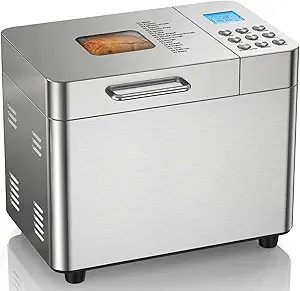 |
Zojirushi Home Bakery Virtuoso Plus BB-PDC20BA

| Capacity | 2 pounds |
|---|---|
| Wattage | 700 watts |
| Voltage | 120 volts |
| Number of Programs | 7 |
The Zojirushi Home Bakery Virtuoso Plus is a full-featured breadmaker built for consistent, home-baked loaves without fuss. You choose ingredients, pick one of seven programs (including whole wheat, multigrain, rapid whole wheat, and gluten-free), set crust shade, and the machine handles kneading, rising, and baking in the rectangular 2-pound pan. Dual heaters on the lid and bottom promote even browning while the twin kneading blades help develop dough for a higher rise. The large window and easy-to-read LCD make monitoring simple, and the 13-hour delay timer is handy for waking to fresh bread. Rapid cycles can deliver a loaf in about 2 hours 25 minutes when you need it faster, and included measuring tools and a recipe book ease getting started. The stainless steel housing is sturdy, though the unit is heavy and the bread pan requires hand washing. Overall, it is geared toward home cooks who want reliable whole wheat and specialty loaves with precise, repeatable results rather than a compact, grab-and-go appliance.
Best for: Home bakers who prioritize reliable, consistent whole-wheat and specialty loaves and want programmable settings and even baking rather than the smallest or cheapest unit.
Less Ideal for: Buyers who need a lightweight, travelable machine or want fully dishwasher-safe cleanup should look elsewhere.
- Dedicated whole-wheat and multigrain programs tailored for denser flours
- Dual heaters for more even baking and consistent crust color
- Double kneading blades that improve dough development and rise
- 13-hour delay timer lets you schedule fresh bread for mornings or evenings
- Rapid baking option produces a loaf in around 2 hours 25 minutes
- Heavy and bulky compared with compact breadmakers
- Bread pan and accessories need hand washing rather than dishwasher-safe
Verdict: Choose this Zojirushi if you want a dependable, program-rich breadmaker that produces consistently well-browned whole wheat and specialty loaves.
Cuisinart Bread Maker CBK-110P1ES

| Capacity | 2 pounds |
|---|---|
| Wattage | 550 watts |
| Number of Programs | 12 |
| Voltage | 120 volts |
The Cuisinart CBK-110P1ES is a compact automatic bread maker that mixes, kneads, proofs, and bakes up to a 2 lb. loaf using one of 12 preset programs. It is typically used on the kitchen counter for daily or weekly loaves and can handle everything from basic and whole wheat breads to cakes and jams thanks to its mix-and-bake cycles. Notable features include an LCD display with countdown timer, audible alerts, 13-hour delay start, 60-minute keep-warm, and three loaf sizes and crust color settings for recipe flexibility. Its vertical nonstick bread pan and 550W motor produce consistent kneading and a full-size vertical crumb, which helps when baking denser whole wheat doughs that need steady, even mixing and rise time. The machine is compact so it fits smaller kitchens, but the vertical loaf shape and single paddle design mean crust and crumb differ from an artisan oven loaf and the machine requires hand washing of removable parts. If you prioritize reliable, hands-off whole wheat loaves with programmable timing, this model delivers practical performance in a small footprint.
Best for: Bakers who want a dependable, hands-off machine that produces consistent whole wheat loaves on a regular schedule and values programmable timing and loaf-size flexibility.
Less Ideal for: Users seeking artisan-style, wide sandwich loaves or those who prefer fully dishwasher-safe components should consider alternative methods or models.
- 12 preset programs for a wide variety of breads and nonbread recipes
- Three loaf sizes and crust-color settings for recipe customization
- 13-hour delay start and 60-minute keep-warm for timed baking
- Compact footprint that still bakes full 2 lb. loaves
- Removable nonstick vertical bread pan simplifies loaf removal
- Vertical loaf shape differs from oven-baked artisan loaves
- Removable parts require hand washing rather than dishwasher-safe
Verdict: A compact, performance-oriented bread maker that reliably produces customizable whole wheat loaves with minimal active work.
Amazon Basics 2-Pound Bread Maker

| Capacity | 2 pounds |
|---|---|
| Wattage | 550 watts |
| Number of Programs | 14 |
| Voltage | 120 volts |
This Amazon Basics bread maker is a straightforward automatic machine for home bakers who want fresh loaves without fuss. You load ingredients, choose one of 14 programs and one of three crust settings, and the unit handles mixing, kneading, rising, and baking for up to a 2-pound loaf. The express bake mode can produce bread in under 90 minutes when you need a fast turnaround, and dedicated settings include dough, gluten-free, and jam cycles. The stainless steel body and nonstick pan make cleanup easier, and the 550-watt motor is adequate for regular home use. For whole wheat loaves the longer program and steady kneading produce consistent results, though denser breads will still depend on proper ingredient ratios and occasional recipe tweaking. It lacks advanced features like customizable knead cycles or downloadable recipes, but as an affordable, no-frills machine it reliably delivers good everyday loaves and saves time compared with hand baking.
Best for: Home bakers who want a reliable, no-frills machine to save time and produce consistent whole wheat and everyday loaves with minimal setup.
Less Ideal for: Bakers seeking highly customizable cycle control, app integration, or professional-level handling of very dense artisan breads should consider a more advanced model.
- 14 preset programs cover bread, dough, gluten-free, and jam for versatile baking
- ExpressBake option produces a loaf in under 90 minutes when short on time
- Nonstick pan and stainless steel exterior simplify cleanup
- 2-pound capacity lets you bake family-size loaves
- No advanced custom program or app connectivity for fine tuning cycles
- 550-watt motor may struggle with very heavy, whole-grain-heavy doughs
Verdict: A practical, affordable bread maker that reliably produces family-size whole wheat loaves with minimal effort.
Elite Gourmet Bread Maker EBM8103B

| Capacity | 2 pounds |
|---|---|
| Wattage | 550 watts |
| Number of Programs | 19 |
| Voltage | 120 volts |
The Elite Gourmet EBM8103B is a straightforward programmable bread machine designed to simplify home baking for everyday use. You load ingredients, pick one of 19 programs and the unit handles kneading, rising and baking for 1, 1.5 or 2 lb loaves; presets include whole wheat, gluten-free, rye, French and dough-only cycles so it suits a wide range of recipes. The 15-hour delay timer and 60-minute keep-warm make it easy to schedule fresh bread for mornings, and the nonstick pan plus included measuring tools keep setup and cleanup simple. At 550 watts the machine is compact and uses less energy than a conventional oven, which helps in small kitchens. Limitations are its basic control interface and modest power, which can mean longer bake cycles than larger, higher-wattage machines, and the aluminum construction and single kneading blade are functional but not premium. For budget-minded home bakers who want reliable whole wheat loaves without fuss, this model covers the essentials well.
Best for: Budget-conscious home bakers who want an easy, set-and-forget machine that reliably produces whole wheat and other common breads without the complexity of premium models.
Less Ideal for: Serious bakers who want fine control over crust and crumb, faster bake cycles, or premium build materials should consider a higher-end machine or using a conventional oven.
- 19 preset programs covering whole wheat, gluten-free, dough, jam and more
- Bakes three loaf sizes (1, 1.5, 2 lb) to fit different household needs
- 15-hour delay timer and 60-minute keep-warm for scheduled fresh bread
- Compact, energy-efficient 550-watt design suitable for small kitchens
- Basic controls and single kneading blade limit customization compared with higher-end models
- Lower wattage can lead to longer bake times and less powerful crust development
Verdict: A budget-friendly, no-frills bread maker that reliably produces whole wheat loaves with convenient preset programs and a long delay timer.
Saluna Bread Maker BM901

| Capacity | 2 pounds |
|---|---|
| Wattage | 600 watts |
| Number of Programs | 25 |
| Voltage | 120 volts |
The Saluna BM901 is a compact 2-pound bread machine aimed at home bakers who want a wide variety of presets and hands-off convenience. It offers 25 programs covering breads, cakes, special menus and a custom setting, plus three loaf sizes and three browning levels so you can tailor whole wheat loaves to taste. A touchscreen control panel and visible lid make it simple to start a cycle and monitor progress, while the 13-hour delay timer lets you load ingredients the night before for fresh bread in the morning. The built-in automatic nut/fruit dispenser times additions during kneading for consistent texture, and the machine runs on a 600 W heater with a food-grade nonstick aluminum baking pan and detachable paddle for easier cleanup. Practical limits are its modest 600 W power and 2 lb maximum capacity, which are fine for everyday family loaves but may be slow for dense whole wheat recipes that benefit from higher-power units or manual adjustments. Overall it is a reliable, feature-rich choice for making consistently good whole wheat bread at home without a steep learning curve.
Best for: Home bakers who prioritize dependable, hands-off baking with many preset programs and want fresh whole wheat loaves on a schedule without complex setup.
Less Ideal for: Bakers who regularly make very large batches or need high-power, commercial-style performance should consider larger-capacity or higher-watt machines.
- Large selection of 25 programs including custom setting for recipe tweaking
- Visible lid and touchscreen make monitoring and operation straightforward
- Automatic nut/fruit dispenser times add-ins for even distribution
- 13-hour delay timer for preparing dough ahead and having fresh bread when needed
- Three loaf sizes and three browning levels allow size and crust control
- 600 W motor and 2 lb capacity may produce longer bake times for very dense whole wheat loaves
- Some components are hand wash only, which requires extra care during cleaning
Verdict: Choose the Saluna BM901 if you want a reliable, easy-to-use bread machine with extensive presets and timed add-in dispensing for consistently good whole wheat loaves.
KITCHENARM 29‑in‑1 Bread Machine

| Voltage | 120 volts |
|---|---|
| Capacity | 2 pounds |
| Wattage | 550 watts |
| Number of Programs | 29 |
This KITCHENARM bread machine is built for people who want consistent homemade loaves without manual oven work. You pick a program or build a custom cycle, add ingredients, and the unit handles kneading, rising, and baking; presets include whole wheat, multigrain, gluten-free, sourdough and non-bread functions like cake and jam. The 29 automatic menus, three loaf sizes, three crust settings, 15-hour delay timer and 1-hour keep-warm make it flexible for weekday schedules. The machine also stores menu/size/crust choices so repeat recipes become one-button operations. Practical touches include a large 2.5-inch LCD, add-nuts alarm, and a nonstick Teflon-coated pan for easier loaf removal. On the downside, the pan uses a Teflon coating that requires gentle care, and the unit is moderately heavy, so it is less convenient to move frequently. It runs at 550 watts and is intended for North American 120V outlets. For buyers focused on reliable whole-wheat performance and programmable control, this machine delivers a wide range of factory presets and deep customization options.
Best for: Home bakers who prioritize reliable whole-wheat and specialty bread presets plus deep customization and want a machine that can save repeat recipes for one-button baking.
Less Ideal for: Users who need a lightweight, easily storable machine for occasional use or who prefer dishwasher-safe removable parts should consider other options.
- Extensive 29 preset programs including whole wheat, multigrain and gluten-free that cover many recipes.
- Customizable HOME MADE menu with cycle-level programming and up to four saved personalized menus.
- Three loaf sizes and three crust color settings for portion and texture control.
- 15-hour delay timer, 1-hour keep-warm, and add-nuts/reminder features for flexible scheduling.
- Nonstick Teflon-coated pan requires careful hand washing to preserve the coating.
- Relatively heavy unit, which makes it less portable for frequent storage or transport.
Verdict: Choose this machine if you want broad preset support for whole-wheat and specialty breads plus cycle-level customization that saves favorite recipes for repeat one-button baking.
OSIPOTO Bread Maker BM8205

| Capacity | 2 pounds |
|---|---|
| Wattage | 600 watts |
| Number of Programs | 17 |
| Voltage | 120 |
The OSIPOTO BM8205 is a 2 pound capacity bread machine intended for hands-off home baking from mixing through baking. You pick ingredients and one of 17 preset programs — including whole wheat and gluten-free options — then set a crust tone and loaf size; the 15-hour delay timer and keep-warm function let you schedule fresh bread for breakfast. The stainless steel housing and nonstick baking pan make cleanup straightforward and the manufacturer cites 360 degree heat distribution and a 600 W motor for even crust color and a soft interior. At about 50 dB operation it runs quietly compared with countertop ovens, but the machine is relatively compact and designed for family loaves rather than very large batches. The unit also includes an overheat protection routine that pauses baking if the motor overheats, which can add a cool-down interval before it resumes. For someone who wants reliable, no-fuss whole wheat loaves at home this machine simplifies the process, though occasional monitoring during new recipes will help dial in ideal timings and hydration.
Best for: Buyers who value predictable, beginner-friendly whole wheat baking and want a scheduleable, low-noise machine that reliably produces family-size loaves.
Less Ideal for: Not a good fit for bakers who need commercial capacity, very large batches, or a fully dishwasher-safe appliance for frequent heavy use.
- True 2 lb capacity with selectable 1, 1.5, and 2 lb loaf sizes for family portions
- 17 preset programs including a whole wheat setting for hands-off baking
- 15-hour delay timer and keep-warm keep bread ready when you need it
- Nonstick pan and included measuring tools simplify cleanup and measuring
- Quiet 600 W motor with even heat distribution for consistent crust and crumb
- Hand-wash recommended for care rather than dishwasher-safe parts
- May pause for a 20–30 minute cool-down if overheat protection engages
Verdict: A reliable, low-noise 2 lb bread maker with a dedicated whole wheat program and easy scheduling for fuss-free home loaves.
Choosing the Right Bread Maker for Whole Wheat Bread: Key Factors to Consider
Kneading Strength and Paddle Design
Whole wheat dough is denser and more abrasive than white flour dough, so the motor and paddle geometry matter. Stronger torque reduces the risk of the machine stalling during kneading and helps develop gluten more effectively, which leads to a better crumb structure.
Paddle shape and material influence how thoroughly flour and water incorporate. Look for machines with robust paddles and the option to switch to a second paddle or a dual-blade setup. Durable paddles and a reliable motor also mean fewer repairs and more consistent results over time.
Dedicated Whole-Grain and Custom Cycles
Whole-grain recipes often need longer soak and knead-rest phases to fully hydrate bran and germ, plus gentler rises to avoid overworking the dough. Machines with dedicated whole-grain settings or customizable program steps let you tailor timing, knead/rest cycles, and rise temperature to fit higher-fiber flours.
A true whole-grain program adjusts both kneading intensity and rest periods automatically. If a unit offers manual program editing, it provides extra flexibility for experimenting with hydration, mix-in timing, or extended fermentation for better flavor and texture.
Heating Performance and Temperature Control
Even heat distribution prevents dense centers and overly thick crusts. Bread makers with consistent top-to-bottom and side-to-side heating produce more uniform loaves, which is especially important for whole wheat blends that brown faster.
Accurate temperature control during the rise and bake phases matters for predictable yeast activity and final loaf volume. Machines that allow small temperature adjustments or that maintain stable internal temperatures across cycles will deliver more repeatable whole-wheat results.
Capacity, Pan Shape, and Crust Options
Choose a capacity that matches how much whole-wheat bread you bake regularly. Smaller pans work well for testing recipes and housing dense doughs, while larger pans suit batch baking for families. Pan shape affects slicing and crust-to-crumb ratios; taller loaves can retain moisture better but may need longer baking.
Crust control options let you fine-tune browning to avoid a burned exterior with a raw interior. If you plan to use mixed flours or add seeds and grains, consider a pan and paddle arrangement that accommodates mix-ins without clogging.
Ease of Use and Cleaning
Whole-grain doughs stick more and can leave residue on the pan and paddles. Removable, nonstick pans and easy-release paddles make cleanup faster and reduce wear. Simple control layouts with clear symbols or programmable memory help you switch between white and whole-grain settings without confusion.
Also check for user-friendly features like viewing windows to monitor progress, audible cycle alerts, and whether replacement parts are straightforward to source. Less fiddly maintenance means you will actually use the machine more often.
Programmability and Timing Features
Delayed start and programmable ferment times let you fit whole-wheat baking into your schedule while accommodating slower rises. For example, a cold start or longer pre-knead soak can improve hydration and flavor when using whole-grain flours.
Memory functions that store custom programs are helpful once you dial in a preferred whole-grain recipe. Also consider whether the machine supports rapid loaf cycles when you need a quicker bake, and whether those cycles are suitable for whole-wheat formulations.
How Whole Wheat Differs From White Flour Baking
Whole wheat flour contains bran and germ that interrupt gluten strands, absorb more water, and add chew and flavor. These properties require adjustments in mixing, hydration, and rise scheduling compared with white flour recipes.
Because of the structural differences, whole-wheat dough benefits from longer hydration times, stronger kneading, and often a longer fermentation to build extensibility and flavor without creating a dense crumb.
- Bran cuts gluten strands and needs more hydration to soften.
- Higher water absorption can require increased dough water or longer resting.
- Longer, gentler rises improve flavor and loaf volume.
Maximizing Rise and Volume With a Machine
To improve loaf height, use the machine's whole-grain setting or manually extend rise times. Starting with a slightly higher hydration and allowing a longer initial rest helps the bran absorb water and makes kneading more effective.
Timing additions like seeds or nuts toward the end of kneading prevents interference with gluten development. If the machine has dual knead cycles or mix-in timers, use them to preserve loaf structure.
- Increase hydration in small increments when testing new whole-grain recipes.
- Use delayed mix-in or add-ins chute features if available.
Maintenance Tips for Frequent Whole-Grain Baking
Clean the pan and paddles after each bake to prevent buildup that can affect future batches. If dough residue hardens, soak the parts in warm water before scrubbing to protect nonstick surfaces.
Inspect the kneading paddle and shaft for wear periodically. Replace worn paddles to maintain effective kneading and avoid motor strain. Keep vents clear to prevent overheating during long or repeated cycles.
- Soak removable parts for easier cleaning.
- Wipe internal cavity and heating elements with a dry cloth after cool down.
- Rotate between two pans or paddles if you bake very frequently to extend part life.
Adapting Recipes for Best Results
When converting a standard white bread recipe to whole wheat, reduce the flour proportion substitution gradually and increase hydration. Consider adding vital wheat gluten in small amounts to offset gluten cut by bran if you want a lighter crumb.
Monitor dough consistency during the first kneading cycle and be ready to add water or a bit more flour to reach the recommended dough stage. Keep notes of adjustments so you can replicate successful batches.
- Start with a 25 to 50 percent whole-wheat substitution and work up as you refine technique.
- Use powdered or instant yeast and keep yeast amounts consistent for repeatable rises.
- Record hydration percentages and cycle adjustments for repeatability.
When to Use Manual Interventions
Sometimes the machine needs a little help. If dough appears too dry during the knead, pause and add a tablespoon of water at a time. Conversely, if the machine struggles or stalls, remove some dough, redistribute, and restart the program.
For the best crust color and crumb set, you can finish baking the loaf briefly in a conventional oven if the top browns too quickly or the center seems underbaked. Use this sparingly and note any timing changes for future cycles.
- Pause to hydrate or remove excess dough if the motor is straining.
- Finish in a regular oven only when necessary and adjust future cycles accordingly.
How We Chose the Best Bread Maker for Whole Wheat Bread
We focused on attributes that directly affect whole wheat baking performance rather than only convenience features. Key criteria included kneading strength and paddle design, because whole wheat dough needs more mechanical work to hydrate and develop; dedicated whole-grain or custom dough cycles that adjust knead-rest-bake timing; heating consistency across the loaf pan to avoid overbaked crusts and underbaked centers; and capacity and pan shape options to match typical whole-wheat loaf sizes. We also considered programmability and timing features such as delayed start and crust control that let you adapt to slower-rising whole-grain dough. Ease of cleaning and durable, replaceable parts were included because whole-grain doughs are stickier and harsher on components over time. Noise and build quality were secondary filters for long-term user satisfaction. Excluded from the shortlist were machines lacking a true whole-grain or multistage dough option, units with underspecified motor torque, and countertop devices without removable pans for cleaning. The remaining models represent machines that balance power, programmability, and practical endurance for frequent whole wheat use.
Our full evaluation process is outlined in our review methodology.
FAQ
Can I bake 100 percent whole wheat bread in a bread maker?
Yes, many machines can bake 100 percent whole wheat, but success depends on using a strong kneading action, sufficient hydration, and a proper whole-grain program or custom settings. Expect to tweak hydration and timing for best results.
Do I need to add vital wheat gluten when using whole wheat flour?
Adding a small amount of vital wheat gluten can improve loaf volume and crumb when using high proportions of whole-wheat flour, but it is not always necessary. It depends on your flour protein content and the machine's kneading capability.
How do I prevent a gummy center in whole wheat loaves?
Gumminess often stems from underbaking or insufficient hydration and rest. Ensure the machine maintains steady baking temperatures and that you allow longer hydration and rise times so the bran softens and the crumb sets during baking.
What hydration level should I start with for whole wheat recipes?
Start slightly higher than for white bread, adding water in small increments during early kneading. Typical whole-wheat hydration is often 5 to 10 percent higher, but the exact amount depends on the flour's absorbency and your desired crumb.
Will seeds and grains interfere with kneading?
Large quantities of seeds or whole grains can interrupt gluten development if added too early. Use a machine feature that adds mix-ins near the end of kneading or add them manually after the main knead cycle to preserve loaf structure.
Final Verdict
Selecting the right bread maker for whole wheat baking means prioritizing stronger kneading, true whole-grain programs, and stable heating performance. Balance capacity and pan shape against how often you bake and whether you want room for mix-ins or larger family loaves. Pay attention to cleanability and programmability so you can consistently reproduce successful recipes. Focus on machines that make it easy to adjust hydration and timing, and expect to do a few test bakes while you tune settings. With the right combination of power and program flexibility you can reliably produce flavorful, well-structured whole wheat loaves at home.