
Note: This article contains affiliate links. If you click on these links and make a purchase, we may earn a small commission at no extra cost to you. This helps support our research and content. Read our full affiliate disclosure here.
If you want fresh bread without a high upfront cost, a budget bread maker can transform how you bake at home. The right machine handles mixing, kneading, rising, and baking automatically so you get consistent loaves with minimal hands-on time. For many home bakers under $100, ease of use, reliable loaf consistency, and straightforward cleaning matter most. This guide presents seven shortlisted bread makers under $100 that meet common home-baking needs. We assessed machines for consistent results, program flexibility, and long-term convenience. Read on for the evaluation criteria and practical tips to pick the best option for your kitchen.
Top Picks at a Glance
| Best Overall The best all-around choice for most situations | Briskind Bread Maker BM8605 |  |
| Best Quality Built to a higher standard if you want something more solid | CULINARY CHEF Bread Maker ccBRM100 |  |
| Best Value The sweet spot between price and what you get | VEVOR Bread Maker MBF-016 |  |
| Best Budget The cheapest option that still gets the job done reliably | Generic 2LB Bread Maker |  |
| Top Rated A top-rated pick with lots of positive feedback | Elite Gourmet Bread Maker EBM8103B |  |
| Most Popular A crowd favorite that many people choose with confidence | Amazon Basics 2-Pound Bread Maker |  |
| Best Seller A high-volume bestseller chosen again and again | OSIPOTO 2LB Bread Maker BM8205 | 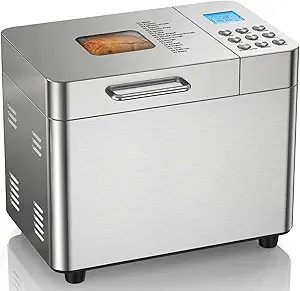 |
Briskind Bread Maker BM8605

| Capacity | 1.5 pounds |
|---|---|
| Wattage | 500 watts |
| Number of Programs | 19 |
| Voltage | 120 volts_of_alternating_current |
The Briskind BM8605 is a compact countertop bread machine designed to make small loaves for two to three people with minimal fuss. You add ingredients, pick one of 19 programs or use Knead/Rise/Bake-only modes, set loaf size and crust color, and the machine handles mixing, proofing and baking; it also offers a rapid cycle to cut bake time and a 15-hour delay timer to have fresh bread on schedule. Practical touches include a carrying handle, two kneading paddles, recipe booklet, a nut/fruit add reminder and a keep-warm function after baking. The unit is relatively lightweight and takes up little counter space, so it suits apartments, RVs or dorms. Expect consistent small loaves thanks to the built-in temperature sensor, but remember the 1.5 lb maximum limits batch size and the 500 W motor means longer cycles than high-power commercial models. Noise and simplicity are appropriate for home use, though serious bakers wanting larger loaves or faster commercial-style performance may find it limiting.
Best for: Buyers who want an easy, all-in-one countertop bread maker that produces reliable small loaves with convenient presets and minimal upkeep, especially for apartment or small-household use.
Less Ideal for: Households that regularly bake large loaves or need commercial-speed baking should consider larger, higher-power machines instead.
- Compact footprint and carrying handle make it easy to move and store
- Wide set of 19 programs including gluten-free, sourdough starter, jam and yogurt
- 15-hour delay timer and 1-hour keep-warm for scheduled baking
- Includes two kneading paddles and recipe booklet for beginner convenience
- Built-in temperature sensor adjusts fermentation for more consistent results
- 1.5 lb maximum capacity restricts loaf size for larger families
- 500-watt power limits speed compared with higher-wattage machines
- Some advanced users may miss more granular program customizations
Verdict: A compact, full-featured bread maker that delivers reliable small loaves and convenient presets, making it the best practical choice under $100 for couples or small households.
CULINARY CHEF Bread Maker ccBRM100

| Capacity | 2 pounds |
|---|---|
| Wattage | 710 watts |
| Number of Programs | 15 |
| Voltage | 110 volts |
This Culinary Chef bread maker is a solid budget-focused machine that handles everything from basic white loaves to gluten-free and cake programs using 15 pre-set cycles. It is typically used for home baking with options for 1, 1.5, or 2 lb loaves, a 15-hour delayed start to time fresh bread for meals, and a 60-minute keep-warm function so loaves stay ready after baking. Notable features include adjustable crust darkness, a large viewing window and LCD display for monitoring progress, and a removable nonstick pan with a kneading paddle for easier cleanup. At 710 watts it delivers reliable mixing and rising for everyday batches, and the stainless steel exterior gives it a more durable look than many low-cost models. Limitations include hand-wash-only care and the usual small-batch output that will not suit larger families, and paddle marks in the bottom of loaves are likely with the single kneading paddle design. For under-$100 performance this machine offers programmable flexibility and dependable results for routine home baking.
Best for: Buyers who prioritize reliable, programmable baking on a budget and want a compact machine that can produce a variety of loaf types and crust finishes for everyday home use.
Less Ideal for: People who need large or frequent loaves for bigger families or who want fully dishwasher-safe components should consider larger or more premium models.
- 15 automatic programs cover basics plus gluten-free, cake, and yogurt settings
- Adjustable crust control and three loaf sizes (1, 1.5, 2 lb) for flexible results
- Large viewing window and LCD display make it easy to monitor and schedule bakes
- Removable nonstick pan and kneading paddle simplify dough mixing and cleanup
- Small maximum loaf size limits output for larger households
- Pan and accessories require hand washing rather than dishwasher-safe care
Verdict: If you want a fully programmable, no-frills bread maker that handles gluten-free and multiple loaf sizes while staying under $100, this model delivers solid everyday performance.
VEVOR Bread Maker MBF-016

| Voltage | 110 volts |
|---|---|
| Capacity | 2 pounds |
| Wattage | 650 watts |
| Number of Programs | 19 |
This VEVOR bread maker is a compact, budget-friendly machine for making breads, doughs, jams, and cakes at home. You pick a program from 19 presets, choose one of three loaf sizes and three crust colors, then the machine handles kneading, proofing, baking and a 1-hour keep-warm automatically. The food-grade ceramic inner pan and nonstick mixing blade make removal and basic cleanup easier than bare-metal pans, and the 15-hour delay-start plus power-off memory are handy for scheduling fresh bread for meals. The viewing window and ingredient-add reminder help when adding nuts or seeds mid-cycle. At 650 watts it runs quietly but is sized for small to medium households only. Expect straightforward, no-frills performance rather than bakery-grade browning control, and note the manufacturer recommends hand washing the pan and parts.
Best for: Buyers who want a practical, programmable bread machine to make daily loaves and occasional specialty bakes without fuss and who prioritize ease of use and scheduling over large batch capacity.
Less Ideal for: People who need bakery-sized loaves, advanced browning precision, or automatic dishwasher-safe cookware should consider a larger or higher-end model.
- 19 preset programs cover bread, dough, jam and cake for versatile home baking
- Food-grade ceramic nonstick inner pan for easier release and safer heating
- 15-hour delay start and 1-hour keep-warm for convenient meal timing
- Ingredient-add reminder and top viewing window for mid-cycle additions and monitoring
- Designed for up to 2-pound loaves so it may be small for larger families
Verdict: A feature-rich, budget bread maker for small to medium households that makes scheduled fresh loaves easy and reliable.
Generic 2LB Bread Maker

| Capacity | 2 pounds |
|---|---|
| Wattage | 650 watts |
| Number of Programs | 19 |
This bread maker handles the whole bread-making process from mixing and kneading to proofing and baking, with one-touch programs that cover everything from basic loaves to gluten-free and cake. It is typically used for weekly home loaves or small-batch specialty breads and offers three loaf size options and three crust shades so you can tailor results to your household. The food-grade ceramic inner pan and a Teflon-coated mixing blade are meant to improve release and simplify cleanup compared with bare metal pans. Practical features include a 0–15 hour delay start, a 1-hour keep-warm function, an ingredient-add reminder beep, and a short power-interruption memory that resumes work within 15 minutes. At 650 watts it bakes reliably for home use, but the machine is a compact, basic appliance so it lacks advanced controls and pro-level programmability you might find on pricier models. For buyers focused on value, it covers a wide range of everyday recipes without a steep learning curve.
Best for: Buyers on a tight budget who want a simple, dependable machine to produce fresh loaves and a variety of preset recipes without needing advanced controls or professional features.
Less Ideal for: Bakers who want fine control over crusting, precise programmability, or commercial-level capacity should consider higher-end models instead.
- Wide selection of 19 preset programs for bread, dough, jam, and cake
- Food-grade ceramic nonstick inner pan for easier release and cleaning
- Delay start and keep-warm functions let you have fresh bread on a schedule
- Ingredient reminder and power-interruption memory improve reliability during long cycles
- Basic user interface with limited advanced customization
- Mixing blade uses a Teflon coating rather than a removable, heavy-duty paddle
Verdict: A budget-friendly countertop bread maker that delivers a broad set of preset baking options and a ceramic nonstick pan for everyday fresh loaves.
Elite Gourmet Bread Maker EBM8103B

| Capacity | 2 pounds |
|---|---|
| Wattage | 550 watts |
| Number of Programs | 19 |
| Voltage | 120 volts |
The Elite Gourmet EBM8103B automates kneading, rising, and baking to deliver fresh bread with minimal effort, making it a solid everyday countertop appliance. You load ingredients, pick one of 19 programs (including gluten-free, whole wheat, pizza dough, and jam), choose loaf size and crust darkness, then start; the 15-hour delay timer and 60-minute keep-warm let you schedule baking around your day. The unit is compact and uses 550 watts, so it is suitable for small kitchens and does not heat an entire oven. Included accessories like a nonstick pan, kneading blade, and measuring tools simplify setup and cleanup, and the dishwasher-safe parts help with maintenance. Expect reliably consistent loaves for standard recipes, though very advanced artisan techniques or large batch baking are outside its scope. For buyers who want straightforward, hands-off baking on a dependable budget model, this does the job well.
Best for: Buyers who prioritize a dependable, easy-to-use bread maker that produces consistent loaves with minimal intervention and scheduled baking convenience.
Less Ideal for: If you want to craft large artisan-style breads, experiment with advanced fermentation control, or bake bigger batches, choose a more advanced oven or larger-capacity machine.
- 19 preset programs cover gluten-free, whole wheat, dough, jam, and quick breads
- 15-hour delay timer and 60-minute keep-warm for scheduled baking
- Three loaf size options (1 lb, 1.5 lb, 2 lb) for flexible batch sizes
- Compact, energy-efficient design that avoids heating a full oven
- Not intended for advanced artisan or very large loaves beyond 2 lb
- Basic controls and features may lack precision desired by experienced bakers
Verdict: A reliable, no-frills bread maker that delivers scheduled, consistent homemade loaves for buyers seeking dependable performance on a budget.
Amazon Basics 2-Pound Bread Maker

| Capacity | 2 pounds |
|---|---|
| Wattage | 550 watts |
| Number of Programs | 14 |
| Voltage | 120 volts |
This Amazon Basics bread maker automates the whole bread process: it mixes, kneads, proofs, and bakes up to a 2-pound loaf using one of 14 preset programs that include dough, gluten-free, and jam. Setup is straightforward on the LCD control panel where you pick program, crust color, and delayed start so you can have fresh bread timed to your schedule. The nonstick pan and paddle simplify cleanup and the ExpressBake mode can produce a loaf in under 90 minutes when you need bread fast. At 550 watts it is suitably powered for home use but its smaller capacity and simple controls mean it lacks advanced features like dual pans or custom temperature curves. The machine is a solid budget choice for regular homemade loaves, quick bakes, and basic specialty settings, though serious hobbyists who want more program customization or larger batches may find it limited.
Best for: Buyers who want a reliable, no-frills machine to make fresh bread at home on a regular basis and who value preset convenience and social proof over advanced tuning.
Less Ideal for: If you bake large loaves frequently or need fine-grained program control and multiple loaf sizes, this model is not the best fit.
- 14 preset programs covering basic breads, doughs, gluten-free, and jams
- ExpressBake option makes a loaf in under 90 minutes for quick needs
- 2-pound capacity fits most household loaf requirements
- Nonstick pan and removable paddle ease cleaning
- Limited to a single 2-pound pan so you cannot bake larger loaves
- Basic control interface lacks deep customization for advanced bakers
Verdict: A dependable, budget-friendly bread maker that delivers fresh 2-pound loaves with convenient presets and a fast ExpressBake option.
OSIPOTO 2LB Bread Maker BM8205

| Capacity | 2 pounds |
|---|---|
| Wattage | 600 watts |
| Number of Programs | 17 |
| Voltage | 120 |
The OSIPOTO BM8205 is a straightforward automatic bread machine designed for everyday home baking. You add ingredients, pick one of 17 program presets (including basic, whole wheat, gluten-free, jam and yogurt), and the machine handles kneading, rising and baking. The 2 lb capacity supports three loaf sizes and three crust settings, while a 15-hour delay timer and one-hour keep-warm let you schedule fresh loaves for mornings or meals. The stainless steel housing with a removable nonstick pan simplifies cleanup, and the 600 W motor is rated for quiet operation so it does not dominate a kitchen. Practical safety features include overheat protection that pauses the cycle if the unit gets too hot. Expect typical bread-machine timing — larger loaves take around 3 hours 45 minutes — and note that some users must fine-tune ingredients and timing for best texture. For risk-averse buyers this model offers predictable presets, straightforward controls and a solid set of safety and convenience features, though it lacks advanced customization beyond the built-in programs.
Best for: Buyers who want a dependable, easy-to-use machine that produces consistent loaves with minimal fuss and prioritizes preset reliability and safety.
Less Ideal for: Bakers seeking full manual control over kneading and proofing steps or those who need dishwasher-safe removable parts should consider other options.
- Large 2 lb capacity with three loaf size options.
- A wide selection of 17 preset programs for common recipes.
- 15-hour delay timer and keep-warm for scheduled baking.
- Nonstick removable pan for easier cleaning and loaf removal.
- Quiet 600 W motor with overheat protection for safe operation.
- Limited fine-grain control for advanced bakers who want custom knead/rise profiles.
- Product care notes recommend hand washing parts rather than dishwasher safe.
Verdict: A reliable, beginner-friendly bread maker that delivers scheduled, consistent loaves with minimal setup and sensible safety features.
Choosing the Right Bread Maker: Key Factors to Consider
Loaf Size And Shape
Different bread makers produce different loaf shapes and capacities, typically measured in ounces or pounds. Choosing the right loaf size matters because it determines how much bread you can bake in a single cycle and whether slices will fit your household needs.
If you plan to bake for a couple or toasting needs, a smaller 1-pound capacity may be fine. Larger families will prefer 1.5- to 2-pound capacities. Also note that shape affects slicing and crust-to-crumb ratio; a taller loaf can have a thicker crust relative to interior volume, which changes texture and toasting behavior.
Program Presets And Customization
Preset programs simplify baking by automating mixing, kneading, rising, and baking stages for common recipes like white, whole wheat, and quick breads. Look at the number and type of presets, and whether the machine supports custom programs or adjustments for crust darkness and loaf size.
Customization is important when you use specialty flours or modify hydration. A machine that lets you tweak rise time or add extra kneading will produce better results when adapting recipes.
Kneading Paddle And Mixing Performance
The kneading paddle and motor determine how well dough develops gluten and how evenly ingredients are mixed. A weak paddle can leave lumps or under-kneaded dough, which leads to dense or uneven loaves.
Consider paddle design and how securely it attaches to the shaft. Machines with robust paddles and good motor torque will handle whole-grain or heavier doughs more reliably. Also note how easy it is to remove a stuck paddle for cleaning or replacement.
Ease Of Cleaning
Spills, stuck dough, and flour dust are inevitable with regular baking, so cleaning convenience matters. Removable, nonstick pans and paddles speed cleanup and reduce the risk of baked-on residue that affects later bakes.
Check whether the pan and paddle are dishwasher-safe or hand-wash recommended. Machines with few nooks and easy-to-access interiors cut down maintenance time and help keep the appliance hygienic between uses.
Control Panel And User Feedback
A clear and responsive control panel makes programming routines less error-prone. Look for readable displays, straightforward buttons, and audible or visual progress cues so you know what phase the cycle is in.
Some models include timers, delayed-start options, or countdown displays which are useful for planning fresh bread when you need it. Avoid overly complicated interfaces that hide common functions behind convoluted button sequences.
Construction Quality And Warranty
Even budget bread makers vary in construction quality, which affects longevity. Metal chassis, sturdy lids, and secure pan fittings resist wear better than thin plastic housings. Durable build reduces wobble during kneading and prevents premature failure of moving parts.
A reasonable warranty and availability of replacement paddles or pans offer extra assurance when buying lower-cost machines. Consider how repairable the unit appears and whether common wear parts are user-replaceable.
How To Get Consistent Results Every Time
Consistent loaves start with accurate measuring and flour handling. Use a kitchen scale when possible and avoid packing flour into measuring cups. Hydration changes with flour type, so adjust liquid quantities slightly when switching between white and whole-grain flours.
Positioning and loading matter too. Add ingredients in the order the manual specifies to ensure proper timing for yeast activation. For delayed-start cycles, place the yeast last and keep salty or acidic ingredients separated from the yeast at the bottom of the pan.
Finally, watch initial bakes closely. A short test loaf with a standard white-flour recipe helps you learn how a given machine mixes and bakes before you move on to more complex recipes.
- Use a scale for accuracy
- Follow ingredient order for delayed starts
- Test new machines with a basic loaf first
Adjusting Recipes For Budget Machines
Budget bread makers can have gentler motors and slightly different heat profiles than higher-end models. To accommodate, reduce dough hydration by a tablespoon or two when bread seems sticky after the initial knead. For dense loaves, try slightly increasing rise time within the available program.
Whole-grain recipes often need extra kneading or longer rise to achieve good crumb structure. If your machine lacks a specific whole-grain preset, choose a manual or multi-stage program and add extra knead cycles if possible.
- Reduce hydration if dough is sticky
- Increase rise time for dense or heavy doughs
- Use manual program options for whole-grain breads
Cleaning And Maintenance Tips
Clean the pan and paddle soon after baking to prevent residue from hardening. If the paddle is stuck in a baked loaf, soak the pan in warm water to loosen the dough before attempting removal. Wipe the interior with a damp cloth and avoid immersing the entire bread maker in water.
Inspect the paddle shaft and pan fittings periodically for wear. Replace a paddle that shows excessive wobble to avoid poor kneading. Keep vents clear and dust-free to maintain proper airflow and cooling.
- Soak stuck paddles in warm water
- Wipe interior vents and exterior regularly
- Replace paddles that wobble or deform
When To Use The Delay Timer Versus Fresh Dough
Delay timers are convenient for waking to fresh bread, but yeast behavior changes with long delays. For overnight baking, use recipes formulated for delayed starts or use instant yeast that tolerates longer standby periods. Avoid perishable add-ins like dairy or eggs in long delay cycles.
If you plan frequent same-day baking with minimal scheduling, a fresh-start cycle often yields slightly better oven spring because the yeast is active immediately.
- Use recipes designed for delayed starts
- Avoid perishable add-ins in long delays
- Prefer fresh starts for best oven spring
Troubleshooting Common Issues
Dense or under-risen loaves are usually caused by expired yeast, incorrect flour ratios, or insufficient kneading. Verify ingredient freshness and try a slightly longer knead or rise time. Also confirm that the pan properly seats and the lid closes fully to maintain internal temperature.
Uneven crust or burning on top can indicate incorrect pan position or a machine that runs hot. Check for manual settings to reduce crust darkness and ensure the machine sits level on your counter.
- Check yeast freshness and flour ratios
- Ensure pan is seated and lid closes fully
- Adjust crust settings if top burns
How We Chose the Best Bread Maker
We limited this roundup to bread makers priced under $100 and focused on real-world features that affect everyday use. Our filters prioritized machines that provide consistent loaf texture and reliable rise, because uneven kneading or poor temperature control is the main cause of failed bakes. We also looked for user-friendly control panels and a sensible set of preset programs that cover basic white, whole wheat, and quick loaf options. Practical maintenance features were another key filter. We excluded models with permanently attached pans or hard-to-clean components and favored machines with nonstick, removable pans and accessible interiors. Durability signals such as solid kneading paddles and straightforward construction were factored in to estimate lifespan at this price point. Safety features, reasonable warranty coverage, and available replacement paddles were also considered. Excluded from the list were units with inconsistent temperature control, missing basic loaf sizes, or no cooling/keep-warm function. Overall, we weighted consistent baking performance and ease of daily use most heavily, followed by cleaning and construction quality.
Our full evaluation process is outlined in our review methodology.
FAQ
Can I use whole-grain flours in a budget bread maker?
Often yes. Whole-grain flours require more kneading and longer rise times, so choose a program that allows extended kneading or manual adjustments. You may need to reduce hydration slightly or supplement with vital wheat gluten for better structure.
How long should I expect a bread maker to last under regular use?
It depends on construction and usage. With normal weekly use and proper maintenance, a well-built budget machine can last several years. Regular inspection of the paddle and pan and replacing worn parts extends service life.
Is it safe to leave ingredients in the machine overnight with the delay timer?
It usually is safe if the recipe and yeast type are intended for delayed starts. Avoid perishable ingredients like dairy or eggs in long delays and follow recommended recipes for overnight baking to prevent food-safety risks.
Why does the kneading paddle sometimes stick in the finished loaf?
The paddle sits in the center of the loaf and can become encased when dough rises fully. Soaking the pan in warm water loosens the bread and makes paddle removal easier. Some users remove the paddle before the final bake for a hole-free loaf.
Can I bake gluten-free bread in a standard bread maker under $100?
Some budget machines can handle gluten-free mixes, but success varies. Gluten-free doughs behave differently and often require specific program settings. Use a gluten-free preset if available or select a manual program with gentle mixing and shorter rise phases.
Final Verdict
When choosing a bread maker under $100, prioritize machines that deliver consistent loaf texture and are easy to clean. Program flexibility and a sturdy kneading paddle matter most if you bake whole-grain or specialty breads. Expect tradeoffs in materials and advanced features at this price, but with the right maintenance and recipe adjustments you can get reliable fresh bread regularly. Focus on loaf consistency, cleaning convenience, and a usable control panel when deciding. Those priorities will help you pick a budget machine that fits your baking routine and delivers dependable results over time.