
Note: This article contains affiliate links. If you click on these links and make a purchase, we may earn a small commission at no extra cost to you. This helps support our research and content. Read our full affiliate disclosure here.
If you bake bread at home regularly, a double-paddle bread maker can make the difference between misshapen, uneven loaves and perfectly formed, evenly mixed dough. These machines are designed to knead heavier doughs more reliably and to shape larger pans, which matters when you want consistent slices and repeatable results for sandwiches, toast, or artisan-style loaves. This guide shortlists the top Double-Paddle Bread Makers across common home baking needs and highlights which features affect everyday baking success. Below you will find concise descriptions of each shortlisted model and how they perform in real kitchens. We evaluated kneading and mixing, baking cycle options, programmability, and ease of cleaning to help you pick the right machine for your baking routine.
Top Picks at a Glance
| Best Overall The best all-around choice for most situations | Zojirushi Home Bakery Virtuoso Plus |  |
| Best Value The sweet spot between price and what you get | Davivy Bread Maker BM8901 |  |
| Best Budget The cheapest option that still gets the job done reliably | OSIPOTO Bread Maker BM8205 | 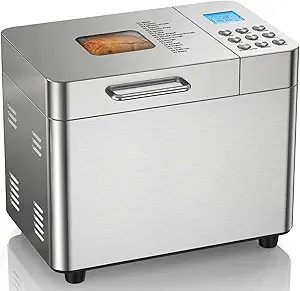 |
| Top Rated A top-rated pick with lots of positive feedback | Saluna Bread Maker BM901 |  |
| Most Popular A crowd favorite that many people choose with confidence | West Bend Hi-Rise Bread Maker |  |
| Best Seller A high-volume bestseller chosen again and again | KBS 2LB Bread Maker MBF-011 |  |
Zojirushi Home Bakery Virtuoso Plus

| Capacity | 2 pounds |
|---|---|
| Wattage | 700 watts |
| Voltage | 120 volts |
| Number of Programs | 7 |
The Zojirushi Home Bakery Virtuoso Plus is a capable countertop breadmaker designed for dependable, everyday loaves. It bakes a rectangular 2 lb loaf and uses two kneading blades plus dual heating elements (top and bottom) to promote thorough kneading, higher rise, and even browning across crust settings. The control panel and large LCD make program selection simple and the unit includes a range of programs for multigrain, whole wheat, rapid whole wheat, gluten free, vegan, and more, plus a rapid cycle that can finish a loaf in about 2 hours 25 minutes. A 13-hour delay timer is handy for scheduling fresh bread when you want it, and the removable nonstick pan and included measuring tools cover basic cleanup and recipe setup. At 700 watts the machine is reasonably efficient but the unit is substantial in weight so it is best for a permanent spot on the counter rather than frequent moving. This model favors consistent, fuss-free home baking with strong mixing and reliable crust control, while those wanting very compact or lightweight machines may prefer a smaller alternative.
Best for: Home bakers who want a reliable, feature-rich machine for making consistently good 2 lb loaves and value programmable options and strong kneading performance.
Less Ideal for: Buyers who need a lightweight, highly portable breadmaker or who prefer fully dishwasher-safe components should consider other models.
- Double kneading blades give thorough dough development and a higher rise
- Dual heaters on lid and bottom produce even baking and consistent crust color
- Wide selection of preset programs including gluten free and rapid cycles
- 13-hour delay timer lets you schedule fresh bread when convenient
- Heavy and bulky, not ideal for frequent storage or transport
- Nonstick parts require hand washing rather than dishwasher convenience
Verdict: Choose this breadmaker for strong dual-paddle kneading and even, repeatable results across a broad set of programs for 2 lb loaves.
Davivy Bread Maker BM8901

| Capacity | 3 pounds |
|---|---|
| Wattage | 850 watts |
| Number of Programs | 15 |
| Voltage | 120 |
The Davivy BM8901 is a full-featured home bread maker built around even mixing and flexible baking. It uses dual dough kneading paddles and a nonstick pan to produce well-kneaded loaves in three size options (2, 2.5, or 3 lb), and the 15 preset programs cover everything from basic and whole wheat to gluten-free, yogurt, jam, and rapid-bake modes. Practical touches include a nut add-in reminder, a 15-hour delay timer, a one-hour keep-warm function, and a viewing window so you can monitor progress. At 850 watts it has enough power for consistent crust development and the three crust-shade settings let you dial in color. The machine includes spare paddles, a measuring cup and spoons, a hook for removing paddles, and silicone gloves for handling hot parts. Limitations are typical for countertop machines: hand-wash care is required and the nonremovable paddles can trap some dough, so cleanup may take a bit more work than on single-paddle models with removable inserts. For someone optimizing home baking output and consistency, the dual-paddle design and multiple presets make this a capable, practical choice.
Best for: Buyers who prioritize consistent, home-baked loaves and want a versatile machine that handles multiple recipes and larger family-sized loaves with minimal setup.
Less Ideal for: Those who need fully dishwasher-safe, extremely low-maintenance machines or who bake very small single-serving loaves frequently.
- Dual kneading paddles for more even mixing and better gluten development
- 15 preset programs plus rapid-bake modes for wide recipe flexibility
- Three loaf sizes and three crust settings to match family needs
- Includes spare paddles and a comprehensive accessory set to get started
- Requires hand washing and paddle removal can be fiddly when dough sticks
- Nonstick pan and paddles may show wear over long-term heavy use
Verdict: If you want consistently mixed, family-sized loaves and recipe flexibility, the Davivy dual-paddle bread maker delivers practical, reliable results.
OSIPOTO Bread Maker BM8205

| Capacity | 2 pounds |
|---|---|
| Wattage | 600 watts |
| Number of Programs | 17 |
| Voltage | 120 |
The OSIPOTO BM8205 is a straightforward countertop bread maker designed to take the guesswork out of home baking. You add ingredients, pick one of 17 preset programs (including basic, whole wheat, gluten-free, jam, and yogurt), and the machine handles kneading, rising, and baking for up to a 2 lb loaf. The stainless steel housing and nonstick pan make cleanup easier, and the 15-hour delay timer plus keep-warm function are convenient for having fresh bread at a chosen time. At 600 watts the unit heats evenly for consistent crust and crumb, and the manufacturer notes low noise operation and an overheat protection feature for safer extended use. Practical limits include a single pan and paddle design that restricts the size and shape options compared with larger dual-paddle or professional machines, and hand-wash care instructions for some parts. For buyers working to a budget, this model balances useful presets and a family-sized loaf capacity without extra complexity.
Best for: Home bakers on a budget who want an easy, reliable way to make family-sized loaves without a steep learning curve or advanced features.
Less Ideal for: Serious hobbyists who want professional-style flexibility, larger capacity, or dual-paddle kneading should consider higher-end machines instead.
- Large 2 pound capacity supports family-sized loaves
- 17 preset programs for a wide range of breads and other recipes
- 15-hour delay timer and keep-warm function for scheduled baking
- Stainless steel exterior with a nonstick baking pan for easier cleaning
- Built-in overheat protection and relatively quiet operation
- Single baking pan and paddle limit loaf shape and kneading robustness compared with dual-paddle machines
- Some components require hand washing rather than dishwasher-safe cleaning
Verdict: A budget-friendly, no-frills bread maker that delivers family-sized loaves with a wide set of preset programs and convenient timing features.
Saluna Bread Maker BM901

| Capacity | 2 pounds |
|---|---|
| Wattage | 600 watts |
| Number of Programs | 25 |
| Voltage | 120 volts |
The Saluna BM901 is a full-featured countertop bread maker aimed at hands-off home baking. It offers 25 preset programs covering 14 bread styles plus cakes and special menus, a 2-pound capacity with three loaf-size and three crust-color options, and a 13-hour delay timer so you can schedule fresh loaves. The touchscreen simplifies program selection and the transparent lid makes it easy to monitor progress, while the built-in dispenser drops nuts or fruit at the correct time for even distribution. The unit runs at 600 watts and includes a nonstick aluminum pan and detachable blades that the listing says are dishwasher-friendly for easier cleanup. Practical downsides are that the machine uses a single paddle design typical of domestic machines rather than a dual-paddle knead system, and its 600 W motor may be slower on very dense doughs compared with higher-powered models. For everyday bread and baking experiments the BM901 gives reliable, repeatable results and useful automation features for busy kitchens.
Best for: Buyers who prioritize a dependable, set-and-forget bread machine that handles a wide range of recipes and delivers consistent home-baked loaves with minimal hands-on time.
Less Ideal for: Advanced bakers seeking a factory-quality double-paddle kneading system or a high-powered unit for frequent heavy artisan doughs should look at specialty models instead.
- Wide program selection with 25 presets including bread, cake, and custom settings
- 13-hour delay timer for ready-to-eat fresh bread on a schedule
- Automatic nut/fruit dispenser for even mix-ins without manual intervention
- Touchscreen controls and visible lid for easy monitoring and simple operation
- Single-paddle kneading implied rather than a double-paddle system which can affect crumb uniformity
- 600 W motor may be slower or struggle with very dense dough recipes
Verdict: Choose the BM901 if you want a reliable, automated 2 lb bread maker with many presets and convenient features for everyday home baking.
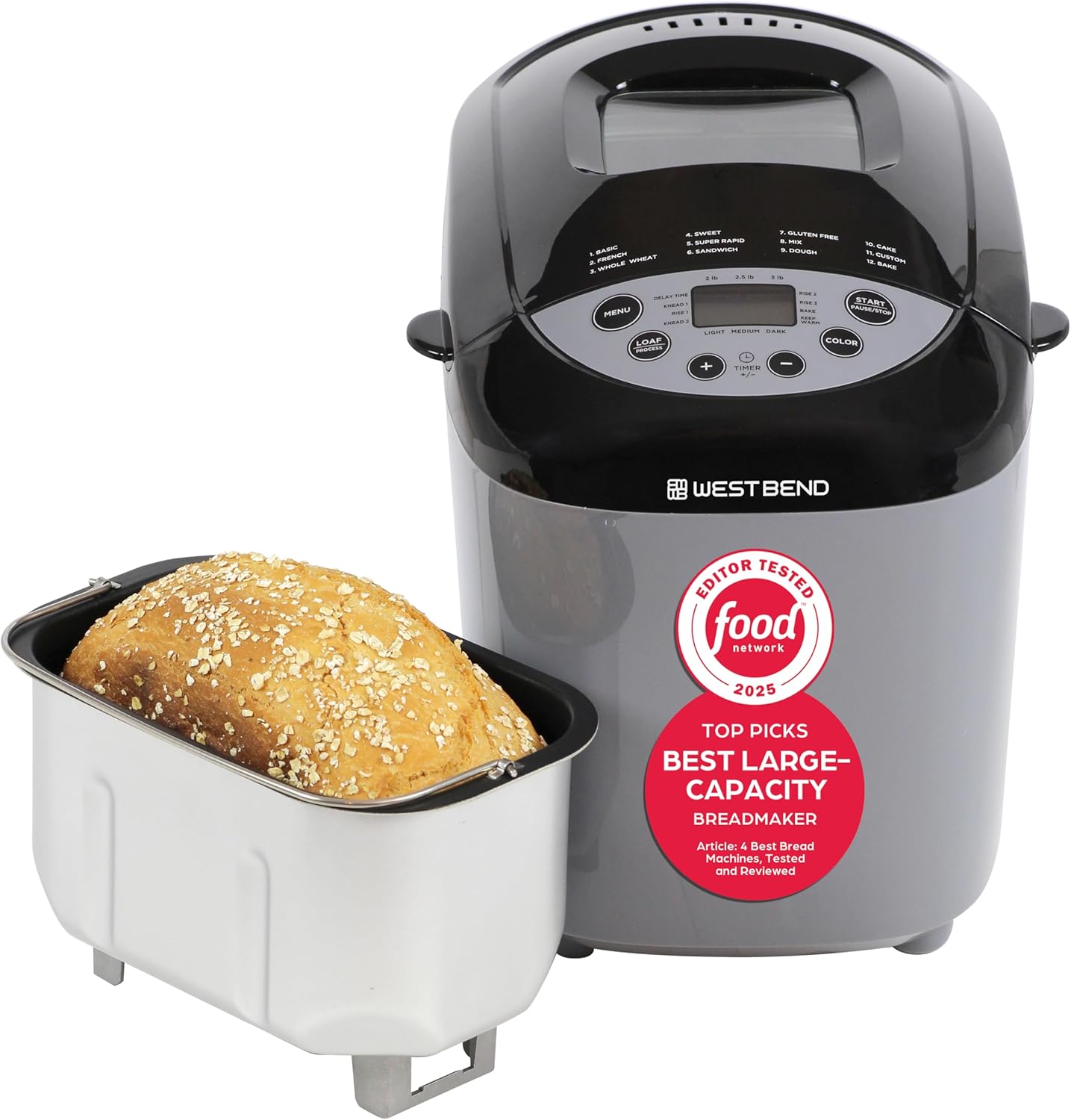
West Bend Hi-Rise Bread Maker
| Capacity | 3 pounds |
|---|---|
| Wattage | 432 watts |
| Number of Programs | 12 |
| Voltage | 110 volts |
The West Bend Hi-Rise Bread Maker automates mixing, kneading, rising, and baking for 2, 2.5 or 3 pound loaves using a traditionally shaped horizontal pan and dual knead blades. You pick a program from 12 presets — Basic, Wheat, French, Sweet, Dough, Gluten-Free and more — set loaf size and crust color, and the machine handles the rest; a delayed start up to 13 hours lets you time baking around your day. Dual paddles are the standout here, working together to knead dough more thoroughly for better rise and texture, and the nonstick pan plus included removal tool make cleanup and maintenance straightforward. Practical limits are its plastic exterior and hand-wash care instructions, and at 432 watts it is not the fastest oven for very large batches, but it is built around reliable, simple controls and useful recipe guidance for home bakers. Included measuring cup and spoon and the recipe booklet help you get consistent results with different doughs.
Best for: Buyers who want a dependable, easy-to-use home bread maker that consistently produces well-kneaded loaves and values proven features and recipe support.
Less Ideal for: People who need a heavy-duty, commercial-capacity bread machine or who prefer an all-metal, dishwasher-safe appliance.
- Dual knead blades for more thorough dough development and better rise
- Twelve programmable settings including a gluten-free cycle for versatile recipes
- Supports three loaf sizes (2, 2.5, 3 lb) and three crust color levels for customization
- Delayed start up to 13 hours to have fresh bread ready on schedule
- Includes useful accessories and a recipe booklet to help beginners get consistent results
- Plastic exterior and hand-wash-only parts may feel less durable than metal-bodied machines
- Not designed for very high-volume or commercial baking use
Verdict: Choose this dual-paddle West Bend if you want a straightforward, reliable home bread maker that delivers consistently well-kneaded loaves with flexible program and size options.
KBS 2LB Bread Maker MBF-011

| Capacity | 2 pounds |
|---|---|
| Wattage | 710 watts |
| Number of Programs | 17 |
| Voltage | 120 volts_of_alternating_current |
The KBS 2LB Bread Maker is a full-featured countertop machine aimed at home bakers who want reliable, hands-off loaves. It offers 17 preset programs including basic, whole wheat, gluten-free, sourdough, and a quick bake, plus three loaf sizes and three crust darkness options for flexible results. Dual quartz heaters and a 710 W motor with convection-style airflow are designed to give even browning and a crisp crust, while the included automatic stainless steel fruit and nut dispenser adds mix-ins without manual timing. The nonstick ceramic pan and paddle reduce concerns about Teflon coatings and clean-up is straightforward for routine use. A tempered glass touch panel, 15-hour delay timer, one-hour keep-warm, and a 15-minute power-failure recovery make it convenient for scheduling and risk-averse cooks. The unit ships with extra accessories and a recipe book, but the machine requires hand washing of parts and is relatively large on a counter. For buyers valuing consistent, mostly automatic baking with a double-paddle setup, this model delivers dependable performance and user-friendly controls.
Best for: Buyers who want a low-fuss, reliable bread machine that automates mix-ins and delivers consistent bakery-style loaves with programmable options and solid safety features.
Less Ideal for: People with very limited counter space or those who prefer dishwasher-safe components and the simplest low-power machines.
- Dual heaters with convection-style airflow for more even browning and faster bake times
- Automatic stainless steel fruit and nut dispenser for hands-off mix-ins
- Healthy nonstick ceramic pan and paddle instead of PTFE coatings
- 17 preset programs plus 3 loaf sizes and 3 crust colors for flexible baking
- 15-hour delay timer, keep-warm and power-failure recovery for scheduled baking
- Requires hand washing of parts rather than dishwasher-safe cleaning
- Relatively large footprint that may take significant counter space
- Higher wattage and convection features may use more electricity than basic models
Verdict: A dependable, feature-rich double-paddle bread maker that automates mix-ins and uses dual heaters to produce consistent, bakery-style loaves for cautious mainstream buyers.
Choosing the Right Double-Paddle Bread Maker: Key Factors to Consider
Kneading and Dough Handling
Effective kneading is the core job of a Double-Paddle Bread Maker. Two paddles spread the work across a larger area of the pan and reduce the chance of dry pockets or underworked dough. When choosing a unit, consider how the paddles engage with different dough consistencies, from enriched sandwich doughs to dense whole-grain or multigrain mixes.
Poorly designed paddles or weak drive mechanisms show up as uneven gluten development and inconsistent crumb structure. Look for machines with robust kneading action and paddles that are easy to remove for cleaning without trapping dough in hard-to-reach places.
Loaf Size, Pan Shape, and Crust Control
Bread pans and paddle placement determine the loaf shape and sliceability. Double-paddle systems are meant to produce wider, more uniformly shaped loaves, so check the pan dimensions and whether the unit offers multiple loaf size settings. A wider pan favors sandwich-style loaves while a taller, narrower pan yields slices better suited to artisan uses.
Crust control options matter for final texture and color. Adjustable crust settings and programmable bake times permit dialing in a light, medium, or dark crust, which affects both mouthfeel and moisture retention. Consider how the machine's heat distribution and baking cycle interact with pan geometry to produce the loaf finish you prefer.
Cycle Variety and Programmability
Different recipes require different timing for knead, rise, and bake phases. A good Double-Paddle Bread Maker includes a range of presets for basic white bread, whole-grain loaves, rapid bake, and dough-only modes. Programmability for custom cycles is useful if you follow specialized recipes or adjust fermentation times.
Timers and delayed-start features add convenience but also require reliable temperature control to avoid overproofing. Evaluate how easy it is to set and modify cycles and whether the machine stores custom programs for repeated use.
Power and Motor Durability
Kneading heavier doughs repeatedly places strain on the motor. Higher-wattage motors typically handle dense or large batches with less heat buildup and fewer signs of stress. Consider the motor's rated power and whether the design includes protections against overheating.
Durable gearing and a solid motor mount reduce noise and improve longevity. If you plan to bake daily or make specialty dense breads, prioritize machines built to withstand frequent heavy loads rather than occasional light use.
Cleaning, Maintenance, and Accessibility
Frequent use means frequent cleaning, so pick a model that minimizes trapped dough and allows for straightforward maintenance. Removable pans and paddles that are dishwasher-safe or have nonstick coatings reduce cleanup time. Pay attention to seams, hinges, and control panels where flour and crumbs can accumulate.
Also consider how easy it is to reach the paddles and pan without bending excessively or spilling. Machines with simple latch systems and clear disassembly steps will keep upkeep quick and encourage regular maintenance, which protects performance over time.
Why Double Paddles Matter
Double paddles change how the dough is mixed and developed. By spreading kneading forces across two implements, these machines reduce the risk of underworked spots and create a more consistent gluten network in wider pans. That results in even crumb and repeatable slice size.
For home bakers who make larger or denser loaves, the double-paddle design also lowers stress on each paddle and on the motor, which can reduce wear and improve longevity compared with single-paddle machines.
- More even kneading across the pan
- Better handling of heavy or wet doughs
- Potentially longer motor life under frequent use
Common Baking Programs and When To Use Them
Most Double-Paddle Bread Makers include presets for basic loaf, whole wheat, rapid bake, and dough-only programs. Basic loaf presets use longer rise phases and gentler kneading, while rapid bake shortens rises and increases bake time to compensate.
Use a dough-only setting when you plan to shape the loaf manually or finish in a conventional oven. Multigrain and heavy-loaf presets typically add extra knead cycles and longer fermentation to ensure even hydration and development.
- Basic/white: balanced knead and rise for standard loaves
- Whole grain: extended knead and rise, gentler heat
- Rapid: shorter rise, higher heat; best for fast needs
- Dough-only: prepares dough for manual shaping
Maintenance Tips to Keep Machines Working
Regular maintenance extends the life of any bread maker. Clean paddle shafts and the pan after each use to prevent dried dough buildup. If the paddles are removable, take them out and wash thoroughly to avoid trapped flour clumps that can burn during baking.
Check seals and hinges for flour accumulation and wipe the interior with a soft cloth. Avoid submerging control modules or using abrasive cleaners on nonstick surfaces, and consult the manual for recommended cleaning methods to protect coatings and motor seals.
- Remove and clean paddles after every bake
- Wipe interior surfaces before crumbs harden
- Inspect motor vents to avoid flour blockage
Troubleshooting Common Issues
Uneven crumb or dense centers often trace back to insufficient kneading or incorrect rise times. Try extending the knead phase or using a heavier hydration to improve gluten development. If the loaf collapses, verify that the baking cycle does not use too high a temperature during the rise.
If the paddles leave large holes in the bottom of the loaf, allow the bread to cool before removing from the pan and consider a paddle with a lower profile. Persistent motor noise or overheating should prompt a break in baking sessions and a check for trapped debris or loose gears.
- Dense center: extend knead or adjust hydration
- Large paddle holes: let loaf cool before removal
- Noise/heat: check for debris and allow cooldown
Recipes and Ingredient Tips for Best Results
Use a consistent measuring method for flour and liquids to avoid hydration swings that affect kneading. For whole-grain loaves, increase hydration slightly and allow longer rest times so the paddles can develop the crumb without tearing the grain structure.
When adding seeds, nuts, or dried fruit, use the machine's mix-in signal or add these ingredients late in the knead cycle to keep them evenly distributed without overloading the paddles.
- Weigh ingredients when possible for repeatability
- Add mix-ins near the end of kneading
- Increase hydration for dense whole-grain recipes
How We Chose the Best Double-Paddle Bread Maker
We focused on real-world baking performance and features that matter most to home bakers when selecting the six machines in this guide. Key filters included kneading effectiveness for a range of doughs, the machine's ability to produce uniformly shaped loaves, and the variety and precision of baking cycles available. We also prioritized build quality, control ergonomics, and how easy the machine is to clean and maintain, because those factors determine long-term satisfaction. Excluded from consideration were units that rely solely on a single small paddle likely to under-knead denser doughs, machines with no adjustable crust or loaf-size options, and models lacking basic safety features such as cool-touch exteriors or reliable timers. We gave extra weight to models that demonstrated consistent crumb structure across multiple loaf recipes and to units with clear, easy-to-set controls and helpful presets for common bread types. Finally, we considered accessory fit and pan design when assessing ease of loaf removal and cleanup.
Our full evaluation process is outlined in our review methodology.
FAQ
Are double-paddle bread makers better for whole-grain loaves?
Often yes. Double paddles distribute kneading forces more evenly across denser doughs, which helps develop gluten in whole-grain recipes. Results still depend on hydration and knead time, so use whole-grain presets or extend kneading when necessary.
Can I remove the paddles before baking to avoid holes in the loaf?
Some bakers remove paddles after the dough has risen to avoid holes in the base. Whether you can do this depends on the machine design; consult the manual. Removing paddles mid-cycle can work but may affect bake timing and loaf support.
How important is motor wattage in a bread maker?
Motor wattage indicates how much continuous power the machine can deliver, which matters for kneading heavy doughs repeatedly. Higher wattage can reduce strain and overheating, but durable gearing and ventilation are also essential for reliability.
Will a double-paddle machine fit standard bread recipes?
Yes. Double-paddle machines handle standard recipes but may benefit from adjustments in loaf size or hydration. You may need to tweak rise times or use the correct loaf size setting to match recipe yields.
How often should I clean the paddles and pan?
Clean the paddles and pan after every use to prevent buildup and maintain performance. Wipe interior surfaces after cooling and inspect seals and vents regularly to avoid trapped flour that can burn during baking.
Final Verdict
Choosing a Double-Paddle Bread Maker comes down to balancing kneading performance, programmable cycle flexibility, and ease of maintenance. Prioritize machines with dependable kneading mechanics and a pan shape that produces the loaf style you prefer. Consider motor durability and how easy the paddles and pan are to clean when you expect frequent use. If you bake varied recipes, look for units with a wide range of presets and adjustable cycle timing. For heavy or frequent baking, favor robust motor and gearing designs. With those tradeoffs in mind, you can confidently select a machine that delivers consistent, evenly shaped loaves for years of home baking.