
Note: This article contains affiliate links. If you click on these links and make a purchase, we may earn a small commission at no extra cost to you. This helps support our research and content. Read our full affiliate disclosure here.
If you squeeze citrus regularly, a dedicated budget citrus juicer can make morning routines faster and less messy. Affordable models focus on straightforward operation, compact footprint, and reliable extraction so you get more juice with less effort. This guide covers our shortlist of the best budget citrus juicers—seven compact machines selected for everyday home use. We evaluate each pick on practical factors like ease of use, extraction efficiency, build and cleaning, and durability. Read on for a concise look at what matters and which features to prioritize before you buy.
Top Picks at a Glance
| Best Overall The best all-around choice for most situations | Elite Gourmet ETS623 Citrus Juicer |  |
| Best Quality Built to a higher standard if you want something more solid | Breville Citrus Press Pro 800CPXL |  |
| Best Value The sweet spot between price and what you get | Etinslant Manual Citrus Juicer DT-LM3 |  |
| Best Budget The cheapest option that still gets the job done reliably | Zulay Kitchen Metal Lemon Squeezer |  |
| Top Rated A top-rated pick with lots of positive feedback | OXO Good Grips 2-in-1 Citrus Juicer |  |
| Most Popular A crowd favorite that many people choose with confidence | BLACK+DECKER Citrus Juicer CJ625 |  |
| Best Seller A high-volume bestseller chosen again and again | Zulay Metal 2-in-1 Lemon Squeezer | 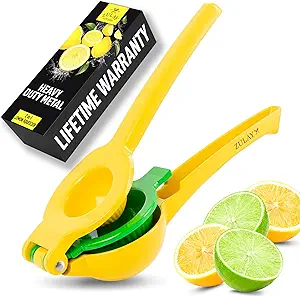 |
Elite Gourmet ETS623 Citrus Juicer

| Capacity | 24 oz |
|---|---|
| Wattage | 40 watts |
| Power Source | Corded Electric |
| Special Features | Quiet Motor, Auto-reversing reamer |
The Elite Gourmet ETS623 is a small, straightforward electric citrus juicer built for quick home use. It uses a 40-watt motor with an auto-reversing reamer that spins both directions to extract more juice with simple push-down activation, and the 24 oz container holds about 2 to 3 servings for easy batch juicing. A built-in pulp and seed filter helps deliver smoother juice, and the integrated easy-pour spout with handle makes serving direct into glasses or pitchers convenient. Its compact footprint and quiet motor make it suitable for apartments, dorms, or RV kitchens, and most detachable parts are top-rack dishwasher safe for faster cleanup. Limitations include modest motor power compared with larger electric or commercial models and a small capacity that requires multiple cycles for big batches, so it is best for everyday personal use rather than heavy-duty juicing sessions.
Best for: Buyers who want an affordable, space-saving citrus juicer for daily small-batch fresh juice and prefer an easy, low-effort appliance for apartments or occasional use.
Less Ideal for: People who need to juice large quantities frequently or want a high-power, professional-grade juicer for heavy daily use should consider larger models instead.
- 40W motor with auto-reversing reamer for more efficient extraction
- 24 oz container with built-in pulp and seed filter for smoother juice
- Compact, quiet design fits small kitchens and RVs
- Detachable parts are top-rack dishwasher safe for easy cleanup
- Small capacity requires repeated cycles for larger batches
- Not as powerful as larger commercial or high-end juicers
Verdict: A compact, budget-friendly citrus juicer that delivers efficient small-batch extraction for everyday home use.
Breville Citrus Press Pro 800CPXL

| Wattage | 110 watts |
|---|---|
| Power Source | Corded Electric |
| Voltage | 120 volts |
| Capacity | 800 ml |
| Number of Speeds | 1 |
The Breville Citrus Press Pro 800CPXL is a purpose-built lever-style electric juicer that uses a triple-hinged active arm and power-assisted lever to press whole citrus halves against a Quadra-Fin juicing cone for high extraction. It is typically used for making single-serve to small-batch fresh juice, cocktails, or recipes that call for citrus; the safety interlock prevents the cone from spinning until the arm is lowered and pressure is applied. The die-cast, acid-resistant cone and body give it a durable, factory-quality feel, and removable components including the cone, filter, juice collector and dome are dishwasher safe for easier cleanup. Practical touches such as the drip-stop spout reduce counter mess. Limitations are modest motor power and a single speed, so it is narrowly focused on citrus rather than versatile juicing of other produce, and the unit is relatively heavy compared with simple hand presses which can matter if you need frequent storage or portability.
Best for: Buyers who prioritize efficient, high-yield citrus extraction and a durable, well-built machine for regular home use will appreciate this press.
Less Ideal for: If you need a lightweight, ultra-portable manual squeezer or an all-purpose juicer for vegetables and hard fruits, this focused citrus press is not the best choice.
- Power-assisted lever and triple-hinged arm increase pressing force while reducing user effort
- Quadra-Fin juicing cone maximizes extraction across different citrus sizes
- Die-cast, acid-resistant cone and body resist corrosion for long-term use
- Removable juicing parts are dishwasher safe for easier cleanup
- Drip-stop spout helps prevent countertop mess when serving or storing juice
- Single-speed electric motor limits versatility to citrus fruits only
- Relatively heavy compared with simple manual presses or compact electric models
Verdict: Choose the Breville Citrus Press Pro if you want a durable, lever-assisted citrus juicer that squeezes more juice with less effort.
Etinslant Manual Citrus Juicer DT-LM3

| Material | Stainless Steel (18/8) |
|---|---|
| Capacity | 300 ml |
| Power Source | Manual Winding |
| Special Features | Slotted sieve, double pouring spouts |
This Etinslant manual citrus juicer is a compact, all-stainless tool for squeezing lemons, limes, small oranges and similar fruits without electricity. You press and rotate halves on the pointed 11-tooth cone while juice drains through the slotted sieve into the 300 ml bowl, which catches pulp and seeds and offers two pour spouts for easy transfer. Built from 18/8 stainless steel it feels sturdy and resists rust and citric corrosion much better than plastic presses, and the polished finish cleans easily by hand or on the dishwasher top rack. The device is small and portable for countertop use, camping, or an office kitchen, and the design reduces wasted juice compared with pinch-style squeezers. Limitations are straightforward: the 300 ml capacity means you will refill for larger batches, and the manual action takes more effort than an electric model when juicing many fruits.
Best for: Buyers who prioritize a durable, no-frills tool for daily single-glass citrus use or an easy portable juicer for travel and small kitchens.
Less Ideal for: People who need to juice large quantities regularly or want an electric, no-effort juicing solution should look at motorized models instead.
- Durable 18/8 stainless steel construction resists rust and acid
- Slotted sieve effectively separates seeds and lets juice drain quickly
- Two pour spouts and dual handles make pouring and handling easy
- Dishwasher-safe design for simple cleanup
- 300 ml bowl is small for batch juicing and requires frequent emptying
- Manual reaming requires physical effort for many fruits
Verdict: A sturdy, easy-to-clean stainless steel manual juicer that delivers efficient single-glass extraction and durable everyday use on a budget.
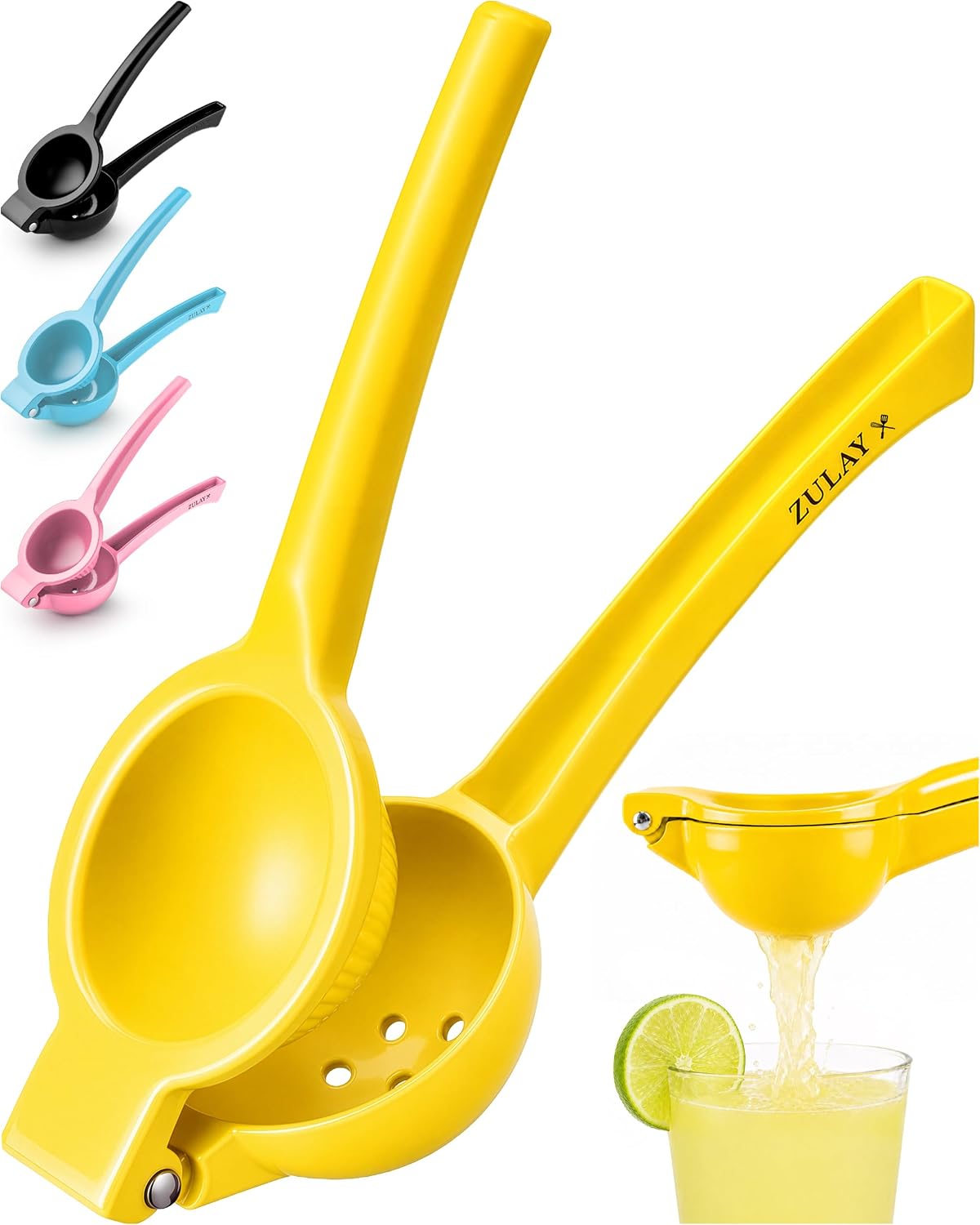
Zulay Kitchen Metal Lemon Squeezer
| Power Source | Manual |
|---|---|
| Material | Stainless Steel |
| Special Features | Lemon Squeezer |
This handheld stainless steel citrus press is a simple, no-frills tool for squeezing lemons, limes, and small oranges by hand. You place a halved fruit in the bowl and press the ergonomic handles together to force juice through the perforated bottom while the strainer keeps pulp and seeds out. It is lightweight, requires no power or batteries, and is small enough to store in a drawer or take to a picnic. The coated metal finish and dishwasher-safe claim make cleanup quick, and the sturdy aluminum construction feels durable for everyday kitchen and bar use. Limitations are inherent to manual presses: large oranges will not fit, and you need some hand strength for tougher citrus, but for single servings, cocktails, dressings, and recipes it delivers more juice than reaming by hand and wastes little fruit.
Best for: Shoppers who need a reliable, low-cost citrus press for occasional juicing, cocktails, and recipes and prefer a compact, easy-to-clean tool over powered appliances.
Less Ideal for: Those who juice large quantities, regularly process big oranges, or want a hands-free electric juicer should look at larger or motorized models instead.
- Stainless steel/aluminum construction for durability
- Built-in perforated strainer keeps pulp and seeds out
- Compact manual design requires no power and stores easily
- Dishwasher-safe finish for quick cleanup
- Not suited for large oranges or high-volume juicing
- Requires manual force which may be tiring for frequent use
Verdict: A straightforward, budget-friendly manual squeezer that reliably extracts juice for single servings and occasional use.
OXO Good Grips 2-in-1 Citrus Juicer

| Power Source | Manual |
|---|---|
| Capacity | 350 ml |
| Material | Plastic |
| Special Features | Pulp Control |
The OXO Good Grips 2-in-1 Citrus Juicer is a simple, reliable manual juicer that handles lemons, limes, oranges and grapefruit with two removable reamers that snap on for easy switching. It is used by cutting fruit in half and pressing on the appropriate reamer while the contoured body channels juice into the cup, where measurement markings up to 350 ml help with recipes. The drip-free pour spout and nested reamers make pouring and storage tidy, and all removable parts are dishwasher-safe which keeps cleanup quick. Because it is fully manual there is no motor noise or complexity, and the plastic construction keeps weight and cost low while remaining BPA-free. The main limitations are its small capacity for batch juicing and plastic reamer surfaces that may wear faster than metal on heavy daily use, so it is best suited to home kitchens rather than commercial settings.
Best for: Buyers who want a dependable, no-frills manual juicer for occasional home use and value straightforward, low-maintenance kitchen tools.
Less Ideal for: People who need to juice large volumes regularly or want a motorized extractor for maximum yield and speed should consider different options.
- Two interchangeable reamers for both small and large citrus
- Clear measurement markings up to 350 ml for recipe accuracy
- Drip-free pour spout and nesting reamers for tidy pouring and storage
- Dishwasher-safe, BPA-free plastic parts for easy cleaning
- Plastic reamers may wear faster than metal with heavy use
- 350 ml capacity is small for juicing large batches
Verdict: A reliable, low-maintenance manual juicer that delivers accurate small-batch citrus juice with minimal cleanup.
BLACK+DECKER Citrus Juicer CJ625

| Power Source | Corded Electric |
|---|---|
| Wattage | 150 watts |
| Special Features | Auto-Reversing |
| Product Care Instructions | Dishwasher Safe |
| Capacity | 2 pounds |
The BLACK+DECKER CJ625 is a straightforward countertop citrus juicer designed for everyday home use. It uses two cone sizes and an auto-reversing reamer to coax juice from lemons, limes, and oranges, while an adjustable pulp basket and clear pitcher let you control and measure yield. The pitcher has an easy-pour spout and dishwasher-safe parts, which keeps cleanup simple after morning batches. With corded electric power and a simple pressure-activated operation, it is quick to start and suitable for single-serving to small-batch juicing, though it is not intended for processing whole grapefruits or continuous heavy-duty use. The plastic construction keeps the unit lightweight and affordable, but buyers should expect basic build materials rather than premium finishes. For budget shoppers who want reliable, no-frills juicing and easy maintenance, the CJ625 covers the essentials without extra complexity.
Best for: Budget-minded buyers who want a dependable, easy-to-use citrus juicer for daily single-serve or small-batch juicing and who value simple operation and easy cleanup backed by many user reviews.
Less Ideal for: People seeking a heavy-duty commercial machine, a premium metal finish, or a model for frequent large-fruit or high-volume juicing should consider sturdier or higher-capacity alternatives.
- Auto-reversing reamer improves juice extraction from citrus
- Adjustable pulp basket lets you control pulp level
- Clear pitcher with measurement marks and drip-free spout for easy pouring
- Dishwasher-safe components simplify cleaning
- Plastic construction feels basic and may not be as durable as metal-bodied models
- Not designed for heavy continuous use or very large fruit
Verdict: A practical, low-cost citrus juicer that delivers easy, no-frills juicing and simple cleanup for everyday home use.
Zulay Metal 2-in-1 Lemon Squeezer

| Material | Aluminum |
|---|---|
| Power Source | Manual |
| Blade Material | Stainless Steel |
| Capacity | 0.5 liters |
The Zulay Metal 2-in-1 Lemon Squeezer is a simple, manual citrus press built for quick home use. It combines a bowl with a lever and perforated base so you place a halved fruit in the cup and squeeze to extract juice while seeds are filtered out. Made from aluminum with stainless steel contact points and an ergonomic handle, it is designed for steady pressure and repeated use without electricity or batteries. Its compact shape stores easily in a drawer and is suitable for making a single glass of lemonade or adding fresh citrus to recipes and cocktails. Care is straightforward: hand wash recommended per the listing, and the uncoated finish means you should dry it to avoid spotting. Because it is a manual tool, squeezing larger volumes takes more effort than an electric model and the bowl size limits use to small citrus. For buyers who want a reliable, no-frills juicer that lasts and is easy to use, this is a practical budget option.
Best for: Buyers who want a dependable, low-risk kitchen tool for occasional fresh citrus—someone prioritizing durability, simplicity, and predictable performance over bells and whistles.
Less Ideal for: People who need to juice large quantities regularly or prefer the speed and convenience of electric juicers should consider a powered model instead.
- Manual lever design extracts juice without power or batteries
- Aluminum construction with stainless steel parts for durability
- Perforated base filters seeds and pulp while juicing
- Ergonomic handle reduces hand strain during use
- Bowl size limits output to one citrus half at a time
- Requires physical effort for larger batches
Verdict: A sturdy, no-frills manual citrus press that delivers reliable, seed-filtered juice without electricity, making it a smart budget pick for cautious buyers.
Choosing the Right Budget Citrus Juicer: Key Factors to Consider
Extraction Efficiency
How well a citrus juicer squeezes fruit determines how much juice you get per piece and how much pulp is left behind. Machines with appropriately matched reamers and motor torque will extract more liquid from the same orange or lemon, which matters if you juice frequently or use larger fruit. A more efficient unit reduces waste and the number of fruits you need to buy.
Ease of Cleaning
Cleaning frequency is a major long-term cost in time and effort. Look for models with removable, dishwasher-safe parts or smooth surfaces that rinse clean quickly. Hard-to-reach crevices trap pulp and can lead to odor or sticky buildup, so simpler assemblies and minimal small parts are preferable. For budget buyers, easy maintenance often outweighs a slight edge in extraction performance.
Build Durability and Materials
Even budget machines vary widely in material quality. Plastic components may reduce cost but can wear or stain faster, while key stress points that use metal or reinforced plastics tend to last longer. Check seals and motor housings for solid assembly because repairs are less practical on inexpensive units. A durable build lowers the chance of leaks, broken pieces, or premature motor failure.
Countertop Footprint and Storage
If counter or cabinet space is limited, footprint becomes a big consideration. Compact units are easier to tuck away and are more likely to see daily use rather than languish in storage. Consider overall height as well if you plan to store the unit in an overhead cabinet. Lightweight, slim designs trade some stability for convenience, so balance size with stable base features.
User Convenience and Controls
Convenience factors such as single-button operation, automatic start/stop when pressing the fruit, and reversible reaming heads make everyday use faster and less fiddly. Intuitive controls reduce the learning curve and lower the risk of misuse. Also consider whether the unit accommodates different citrus sizes without extra tools, since versatility increases utility for varied recipes.
Stability and Splash Control
A stable base and effective splash guards keep countertops cleaner and make juicing safer. Lightweight juicers can shift during use if not designed with anti-slip feet or weight distribution in mind. Look for designs that channel juice into a cup or container with minimal drip, and that include guards or lids that reduce pulp and juice spray.
Manual Vs. Motorized Budget Options
Budget citrus juicers come in two main types: manual press or simple motorized reamers. Manual presses require physical force but offer predictable results and minimal parts to clean, while motorized reamers do the work for you and often extract more consistently with less effort.
When deciding between the two, factor in how much daily juicing you plan to do and whether you prefer hands-on control. Manual models are quieter, portable, and often more compact. Motorized budget units are best when you squeeze frequently or prepare larger batches.
- Manual: quieter, no motor maintenance, often lighter and more portable
- Motorized: faster extraction, consistent torque, needs careful cleaning
What Size Fruit Can Be Handled
Not all budget citrus juicers handle every fruit size equally. Some small reamers are optimized for lemons and limes, while larger cones or adjustable heads work better for oranges and grapefruit. Check whether the design includes multiple reamer sizes or a tapered reamer that accommodates a range of diameters.
If you plan to alternate between small and large citrus, prioritize a unit that either has interchangeable heads or a reamer shape proven to work across sizes. That flexibility reduces the need for additional gadgets and ensures consistent results.
- Interchangeable heads increase versatility
- Tapered reamers can work acceptably across sizes
Noise, Motor Longevity, and Duty Cycle
Budget motorized juicers vary in noise level and how long their motors can run continuously before overheating. If you intend to juice multiple batches in a short time, look for models that specify a reasonable duty cycle or offer cooling vents and sturdy motor housings.
Noise matters if you use the juicer in the early morning. Opt for quieter units if sound is a concern, and be realistic about performance expectations: lower-cost motors can be perfectly adequate for light daily use but may struggle under heavy loads.
- Check stated duty cycle or user guidance on continuous use
- Quieter motors may cost a little more but improve user comfort
Drainage, Containers, and Measuring
Think about how the juice is collected. Some units have built-in containers with measurement markings to help with recipes, while others funnel juice directly into your glass. Built-in jugs reduce spills and make batching easier, but removable collection cups add cleaning steps.
If you use juice as an ingredient, measurement markings or a poured-friendly spout can save time. Conversely, if you prefer juicing directly into glasses, a narrow spout and drip guard help keep counter areas tidy.
- Built-in containers aid batching and measuring
- Spouts and drip guards reduce cleanup
Maintenance Tips for Longevity
Routine care extends the life of a budget citrus juicer. Rinse or wash removable parts immediately after use to prevent pulp from drying and sticking. Wipe the motor housing with a damp cloth and avoid submerging electrical components.
Inspect seals and moving parts periodically for wear and replace small parts if available. Proper storage—fully dry and assembled or stored with parts separated—prevents mildew and keeps the unit ready for regular use.
- Rinse parts right away to avoid dried pulp
- Avoid direct water on motor housings; wipe clean instead
How We Chose the Best Budget Citrus Juicer
We prioritized machines that deliver the essentials buyers need from a budget citrus juicer: consistent extraction, simple operation, quick cleanup, and a small footprint for countertop or cabinet storage. Our filters excluded specialty or high-end commercial models and countertop combos that add unrelated functions. We evaluated motor and reamer design for extraction efficiency, material choices and sealing for longevity, ease of disassembly for cleaning, and stability features that reduce spillage during use. Usability factors included whether models handle a range of citrus sizes and if controls are intuitive. We also considered safety features such as automatic shutoff or user-protective guards, plus warranty terms and replacement-part availability as signals of long-term value. The final list favors units that balance dependable daily performance with a low purchase barrier.
Our full evaluation process is outlined in our review methodology.
FAQ
Are budget citrus juicers worth it for daily use?
Often yes for light to moderate daily use. Many budget models provide reliable extraction and quick cleanup, but heavy or commercial-level use will stress lower-cost motors and components more quickly.
How do I prevent a citrus juicer from clogging or smelling?
Rinse removable parts immediately after use and wash them regularly to remove pulp and oils. Allow parts to dry completely before reassembly and store in a ventilated area to prevent odors.
Can budget juicers handle grapefruit-sized fruit?
It depends on the model. Some budget reamers accommodate larger citrus, while others work best with lemons and oranges. Look for wider or interchangeable reamer heads if you regularly juice grapefruit.
Is pulp control adjustable on inexpensive models?
Some budget units include simple pulp filters or strainers to control pulp level, but adjustability is often limited compared with higher-end designs. For finer control, you can strain juice after extraction.
What maintenance will extend a budget juicer's life?
Regular cleaning, avoiding overloading the motor, and checking seals and fittings for wear will help. Replace worn parts promptly when spares are available and follow manufacturer usage guidelines to prevent overheating.
Final Verdict
When choosing a budget citrus juicer, prioritize the few features that most affect daily satisfaction: extraction efficiency, ease of cleaning, and a stable compact design. Expect some tradeoffs in materials and motor sophistication compared with higher-end units, but a well-chosen budget model can deliver years of simple, reliable squeezing. Focus on the practical fit for your routine—how much fruit you process, where you will store the unit, and how much cleaning you are willing to do—to select the best affordable option for your kitchen.