
Note: This article contains affiliate links. If you click on these links and make a purchase, we may earn a small commission at no extra cost to you. This helps support our research and content. Read our full affiliate disclosure here.
Choosing the right Budget Digital Thermostat matters because the control you give your heating and cooling system affects comfort, energy use, and long-term operating cost. A simple, well-calibrated digital thermostat can reduce temperature swings, make scheduling easier, and avoid unnecessary HVAC runtime. This guide shortlists the top Budget Digital Thermostats across common home setups and evaluates them on accuracy, installation, and daily usability. Read on to see which options best match common installation scenarios and performance needs before you pick a unit.
Top Picks at a Glance
| Best Overall The best all-around choice for most situations | Amazon Smart Thermostat |  |
| Best Quality Built to a higher standard if you want something more solid | Honeywell Home RTH7600D Thermostat |  |
| Best Value The sweet spot between price and what you get | ELECTECK Digital Thermostat KRT1H1CB |  |
| Best Budget The cheapest option that still gets the job done reliably | Miuputake STN601 Digital Thermostat |  |
| Top Rated A top-rated pick with lots of positive feedback | Garystat G701 Nonprogrammable Thermostat |  |
| Most Popular A crowd favorite that many people choose with confidence | Google Nest Thermostat |  |
Amazon Smart Thermostat
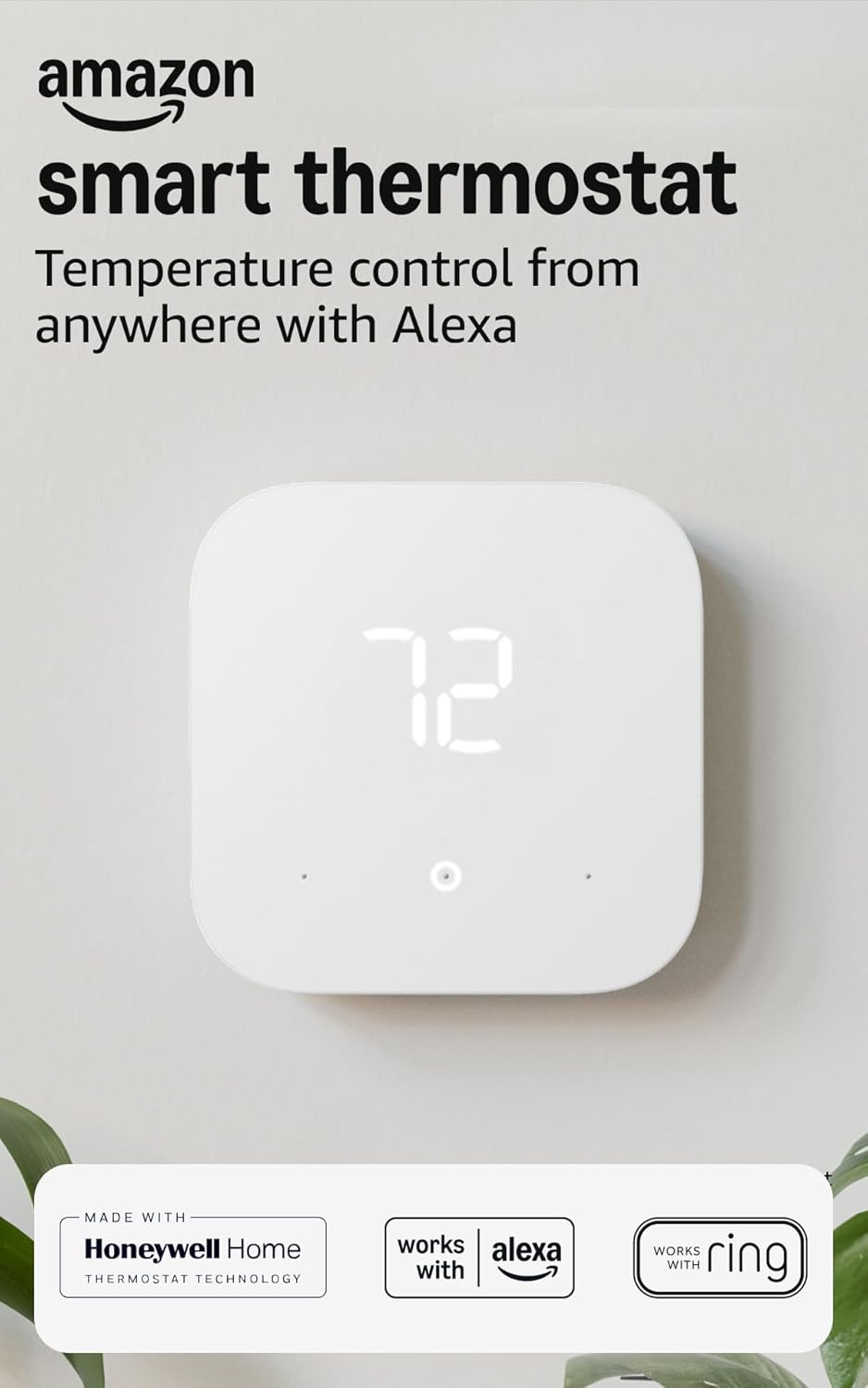
| Compatible voice assistants | Alexa, Ring |
|---|---|
| Installation | Requires C-wire |
| Control | Alexa app remote control |
| Technology partner | Honeywell Home technology |
The Amazon Smart Thermostat is a simple, Alexa-integrated thermostat meant to replace a conventional wall thermostat and add basic smart scheduling and remote control. It installs DIY with guidance in the Alexa app and requires a C-wire; once set up it can run home, away and sleep schedules, respond to voice commands through Alexa or Ring devices, and be controlled from the Alexa app when you are away. The unit leans on Honeywell thermostat technology for core controls and includes Alexa+ features for routines and multi-device automation, which is useful if you already use Alexa in the home. The practical benefits are straightforward: easier scheduling, remote adjustments, and the potential for modest energy savings through automated setpoints and presence-aware adjustments. Limitations include dependence on the Alexa ecosystem for full functionality and the requirement of a C-wire for installation, which may mean extra wiring work for older homes without a common wire.
Best for: Buyers who want an affordable, no-frills smart thermostat that adds Alexa voice control and basic scheduling to a standard HVAC system without a steep learning curve.
Less Ideal for: Homes or buyers who need a thermostat that works independently of Alexa or who require advanced HVAC diagnostics and zoning controls.
- Simple Alexa integration for voice control and routines.
- DIY installation guided by the Alexa app with Honeywell-backed controls.
- Remote access and scheduling from the Alexa app for on-the-go adjustments.
- Energy-saving scheduling and presence-aware adjustments for lower runtime.
- Requires a C-wire which may need additional wiring in older homes.
- Relies primarily on the Alexa ecosystem for advanced features and automations.
Verdict: A budget-friendly smart thermostat for buyers who want easy Alexa voice control, simple scheduling, and basic energy-saving features.
Honeywell Home RTH7600D Thermostat

| Controller Type | Touch |
|---|---|
| Program Mode | 7-Day programmable |
| Power Source | Battery Powered or wired (24 volts) |
| Display Type | Digital backlit touchscreen |
The Honeywell Home RTH7600D is a wall-mounted 7-day programmable thermostat built around a large backlit touchscreen and menu-driven programming. You set four periods per day for each weekday and the unit displays both current and set temperatures simultaneously, making schedule tweaks quick. Smart Response Technology learns how long your heating or cooling system takes to reach setpoints so the house is comfortable at the programmed times, and an auto changeover mode switches between heating and cooling as needed. It runs on 24V systems and can be powered by batteries or wired connection, and includes alerts such as filter replacement and low battery. Installation is straightforward for typical residential HVAC wiring and mounting, but the unit is a basic non‑smart thermostat with no Wi‑Fi or app control and limited compatibility details for some specialized systems. If you want reliable, schedule-driven control and improved comfort timing without paying for a smart thermostat, this model delivers those essentials in a simple package.
Best for: Buyers who want dependable, schedule-based temperature control and improved comfort timing without paying for a smart thermostat, and who prioritize straightforward installation and tactile controls.
Less Ideal for: Users seeking remote control, voice integration, or advanced energy reporting should choose a Wi‑Fi enabled smart thermostat instead.
- Large backlit touchscreen makes programming and viewing temperatures easy.
- 7-day, four-period-per-day scheduling for flexible temperature profiles.
- Smart Response Technology preheats or precools so rooms reach set temperatures on time.
- Auto changeover between heating and cooling simplifies season transitions.
- Filter and low-battery alerts help protect equipment and maintenance needs.
- No Wi‑Fi or remote app control for smart-home integration.
- Not suitable for some specialized or multi-stage systems without checking compatibility.
Verdict: A budget-friendly programmable touchscreen thermostat that delivers reliable schedule control and Smart Response comfort timing without smart‑home features.
ELECTECK Digital Thermostat KRT1H1CB

| Controller Type | Push Button |
|---|---|
| Specific Uses For Product | gas, oil, electric furnaces, Single Stage, 1 Heat/1 Cool |
| Voltage | 24 volts |
| Display Type | Digital, Manual |
| Screen Size | 4.5 inches |
The ELECTECK KRT1H1CB is a straightforward nonprogrammable thermostat built for single-stage heating and cooling systems. It provides a large 4.5-inch backlit LCD and clearly labeled push buttons for setting temperature, fan mode, and basic functions, which makes it easy to use in living rooms, entryways, or utility spaces. Installation is simple: the unit accepts 24VAC power or two AAA batteries and uses a universal sub-base with common terminal labels (RH, RC, G, Y, W, O, B, C) so wiring to gas, oil, or electric single-stage systems is familiar for DIYers. Practical features include selectable compressor-delay protection, room temperature calibration, separate heating/cooling cycle adjustments, and low-battery indication. Limitations are that it is not programmable and does not support multi-stage systems, smart home connectivity, or 120/240V baseboard heat, so it only covers basic set-and-forget temperature control rather than energy scheduling or remote access. For buyers seeking a simple, reliable replacement thermostat without advanced automation, this model covers the essentials well.
Best for: Buyers who want a no-frills, easy-to-install replacement thermostat that provides accurate manual temperature control and simple operation without smart features.
Less Ideal for: People who want programmable schedules, app control, energy-reporting, or support for multi-stage HVAC systems should choose a different model.
- Large 4.5-inch backlit LCD with easy-to-read characters
- Simple push-button interface with clear terminal labeling for straightforward installation
- Dual power options: 24VAC or 2xAAA batteries so it works without a C-wire
- Selectable 5-minute compressor delay and room temperature calibration for finer control
- Universal sub-base mounts to wall or junction box for easy replacement of existing thermostats
- Nonprogrammable so it cannot run schedules or energy-saving programs
- No Wi-Fi, smart-home integration, or remote control options
Verdict: A budget-friendly, easy-to-install nonprogrammable thermostat that delivers simple, reliable manual control for single-stage heating and cooling systems.
Miuputake STN601 Digital Thermostat

| Controller Type | Push Button |
|---|---|
| Temperature Control Type | Manual |
| Power Source | 24VAC or 2 AAA batteries |
| Display Type | LCD |
| Mounting Type | Wall Mount |
The Miuputake STN601 is a straightforward, budget-friendly digital thermostat designed for single-stage heat and cool systems and several other common HVAC types. It mounts to a universal sub-base and uses 24VAC power or two AAA batteries so it can replace many standard forced-air and heat-only thermostats without needing a common wire. The backlit LCD, push-button control and large terminal blocks make installation and daily adjustments easy for DIYers, and features like adjustable temperature swing, display calibration and selectable compressor delay add practical control for energy savings and equipment protection. It does not support heat pumps with auxiliary/emergency heat, line-voltage or mini-split systems, and lacks programming or smart connectivity, so temperature must be changed manually. For buyers prioritizing a low-cost, no-frills replacement that is easy to install and read, this model covers the basics reliably; those who want scheduling, remote control, or broad compatibility should look elsewhere.
Best for: Buyers looking for a low-cost, easy-to-install replacement thermostat that provides clear temperature readout and basic manual control for standard single-stage HVAC systems.
Less Ideal for: People who want programmable schedules, smart home integration, or who have heat pump systems with auxiliary/emergency heat or nonstandard HVAC types.
- Works with many common single-stage forced-air and heat-only systems without a C-wire on most setups
- Dual power options (24VAC or 2 AAA batteries) for flexible installation
- Backlit LCD and simple push-button controls for easy everyday use
- Large terminal blocks and universal sub-base make DIY installation quick
- Nonprogrammable so it requires manual temperature changes throughout the day
- Not compatible with heat pumps that need auxiliary/emergency heat or with line-voltage and mini-split systems
Verdict: A simple, low-cost digital thermostat that reliably replaces basic single-stage systems and is ideal for budget-focused DIY installations.
Garystat G701 Nonprogrammable Thermostat

| Control Type | Button Control |
|---|---|
| Voltage | 24 |
| Display Type | LCD |
| Specific Uses For Product | Heat Pump |
| Controller Type | Push Button |
The Garystat G701 is a straightforward digital thermostat designed for single-stage heating and cooling systems. It provides simple, button-based setpoint control, a large blue backlit LCD for easy reading, and an optional humidity display so you can monitor indoor relative humidity alongside temperature. Installation is typical for line-voltage 24VAC systems and the unit runs on 24VAC or two AAA batteries so it will keep basic functions if power wiring lacks a C-wire. The control offers fan ON/AUTO, compressor delay protection, separate heat/cool cycle adjustments, and easy wire-coded terminals for faster hook-up. Practical benefits include clear readability for older users, battery backup, and small calibration options for fine-tuning room temperature. Limitations are that it is nonprogrammable and only supports single-stage conventional systems; it is not compatible with heat pumps, multistage systems, line-voltage baseboard heat, mini-splits, or RV systems, so it is only suitable where those systems are not present.
Best for: Homeowners who prioritize a reliable, no-frills thermostat for a single-stage furnace or central A/C and value easy installation and clear display over scheduling features.
Less Ideal for: People with heat pump, multistage, mini-split, line-voltage baseboard, RV, or complex HVAC systems should choose a model designed for those platforms.
- Large backlit LCD with easy-to-read characters for quick setpoint changes
- Optional indoor humidity readout to monitor relative humidity alongside temperature
- Dual power: works on 24VAC or two AAA batteries so C-wire is not strictly required
- Simple wire-coded terminal block and universal sub-base speed up installation
- Selectable compressor delay and temperature calibration for stable, tunable control
- Nonprogrammable so no scheduling or energy-saving automatic setbacks
- Only compatible with single-stage conventional systems and excludes heat pumps and line-voltage systems
Verdict: Choose the Garystat G701 when you need an affordable, dependable single-stage digital thermostat with a clear backlit display and simple installation.
Google Nest Thermostat
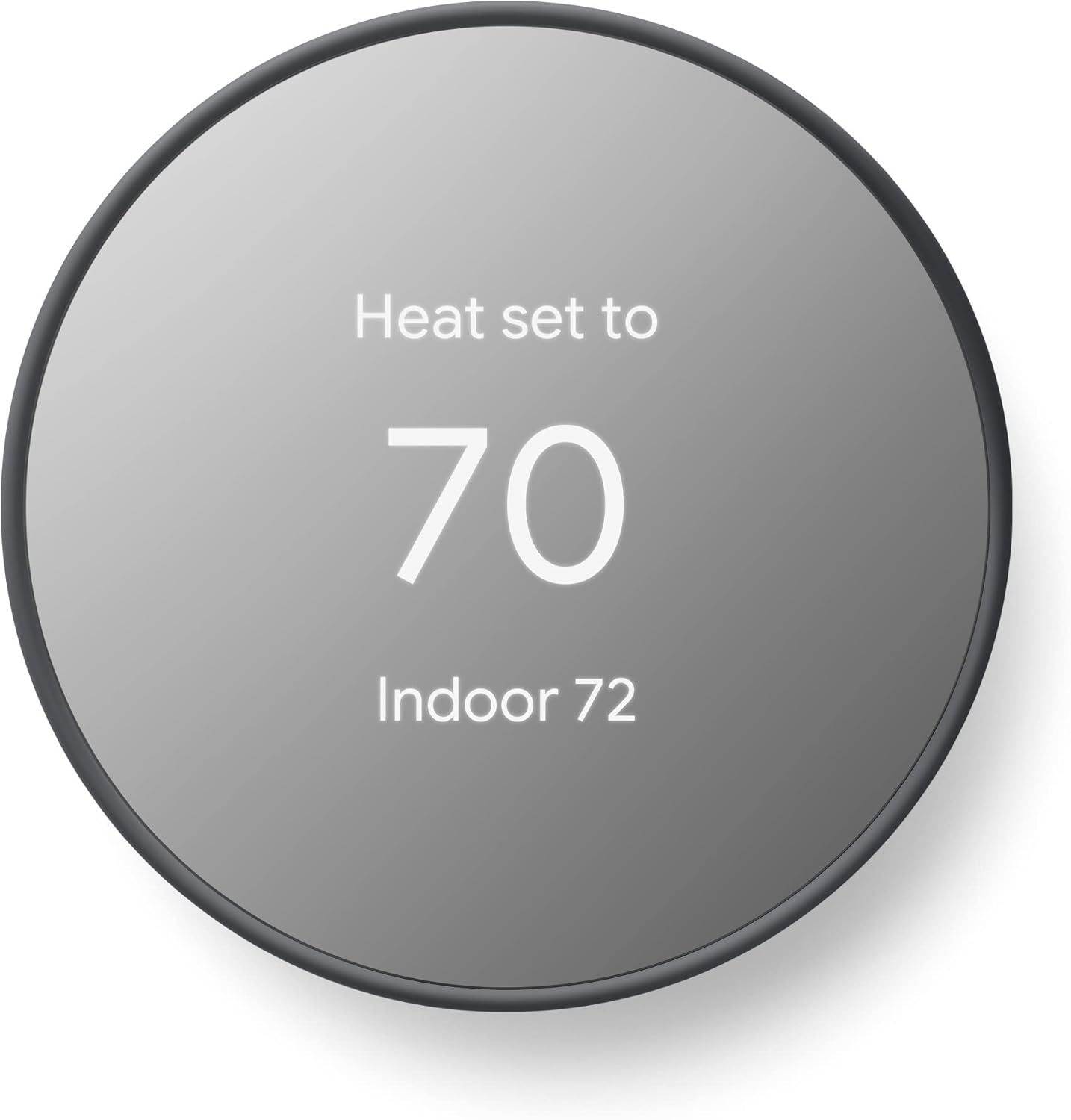
| Connectivity Technology | Bluetooth, Wi-Fi |
|---|---|
| Power Source | Battery Powered |
| Display Type | LCD |
| Control Type | Remote Control, Voice Control |
| Number of Batteries | 2 A batteries required (included) |
The Google Nest Thermostat is a budget-friendly smart thermostat that replaces a standard wall thermostat and connects to your Wi‑Fi for remote control and basic automation. It installs on most home HVAC systems, usually without a C wire, and is set up and controlled through the Google Home app or by swiping the touch bar on the device. Features include Savings Finder suggestions, Eco Temperatures when the house is empty, HVAC monitoring that can send alerts, and voice control via compatible assistants. Practical benefits are straightforward: easy scheduling from your phone, the ability to change temperatures remotely, and automated savings modes that reduce wasted heating or cooling. Limitations include reliance on a working internet connection and compatible voice devices for some features, potential need for a C wire in certain system types, and fewer advanced learning options than higher-end Nest models. The display and controls are simple rather than full‑featured, but they cover core smart thermostat needs for most homes.
Best for: Buyers who want an affordable, easy-to-install smart thermostat that provides reliable remote control, basic energy-saving automation, and broad smart-home compatibility.
Less Ideal for: Users seeking deep HVAC diagnostics, advanced self-learning schedules, or enterprise-grade commercial controls should consider higher-end or professional models instead.
- Works with Google Home and common voice assistants for hands-free control
- Remote scheduling and temperature control via the Google Home app
- Energy-saving features like Eco Temperatures and Savings Finder suggestions
- Easy DIY installation in many homes and included mounting hardware
- Some HVAC setups require a C wire or power accessory to operate
- Depends on internet and Wi‑Fi for remote features and voice control
- Fewer advanced learning and customization features compared with higher-end Nest thermostats
Verdict: A practical, budget smart thermostat that delivers app control and energy-saving features for homeowners who want easy setup and reliable remote control.
Choosing the Right Budget Digital Thermostat: Key Factors to Consider
Compatibility with Your HVAC Wiring
Thermostat compatibility is the first practical factor because most budget digital models assume a standard 24-volt control system. Confirm the number of control wires in your wall and whether a common 24V power (C) wire is present. Some low-cost thermostats still work without a C wire, but that can limit display brightness, backlight, or advanced features.
If your system uses millivolt controls, high-voltage line-voltage, or proprietary connectors, many budget options will not be compatible. Choosing a model that matches your wiring prevents expensive extra components or a service call. Also consider whether the thermostat supports conventional heat/cool or heat pump configurations if your system uses reversing valves or multi-stage equipment.
Temperature Sensing and Accuracy
Accuracy determines how close the thermostat's readout is to actual room temperature and how often the HVAC cycles. Look for units with reliable internal sensors and minimal reported offset. A consistent one-degree error can cause noticeable comfort or energy penalties.
Placement also matters. A unit with a good sensor and the option to calibrate or adjust setpoint offsets will be more useful in rooms with unusual drafts or solar gain. For multi-room comfort, check whether the thermostat has simple averaging or external remote sensor support, though external sensors are less common on budget models.
Ease of Installation and Mounting
DIY installation is a key benefit of budget thermostats, so clear mounting hardware, labeled terminals, and straightforward wiring diagrams matter. Look for models with a leveled backplate, wire labels, and a detachable front that lets you connect wires safely without the display in the way.
Also consider whether the thermostat requires a neutral or C wire and whether it supports common retrofit features like jumpers or battery power. Units that include clear step-by-step guides and a simple wire-check routine reduce the risk of miswiring and cut down installation time.
Programming, Usability, and Interface
For everyday use, the interface should make routine tasks fast. Simple button layouts, readable displays, and intuitive menus reduce errors when setting schedules or changing setpoints. Evaluate how many program periods the unit allows per day, whether it supports weekday/weekend differentials, and how easy it is to override a program temporarily.
The best budget digital thermostats favor basic, reliable scheduling over complex menus. Consider whether the unit uses physical buttons or touchscreen controls, the size and contrast of the display, and whether it offers clear icons for mode and fan operation.
Durability and Control Feel
Lower-cost products can vary in mechanical quality. Durable plastics, responsive buttons, and a secure mounting plate prevent loose contacts and accidental setting changes. A thermostat that feels cheap may still function, but poor tactile feedback or fragile clips can cause long-term frustration and service calls.
Consider the expected lifetime in a frequently used hallway or main living area. Even budget units should offer stable temperature control without drifting menus or sticky buttons after months of daily use.
Energy Features and Convenience
While advanced connectivity is not expected in a budget unit, basic energy-focused features can still save runtime. Look for simple programmable schedules, setback presets, and auto-changeover between heating and cooling. Minimum cycle controls and adjustable temperature differentials can reduce short-cycling on some systems.
Convenience features such as a hold button, temporary overrides, and a visible energy-saving indicator help users adopt efficient habits without complexity. These small features can make a measurable difference in seasonal energy consumption when used consistently.
Wiring Scenarios and What They Mean
Different wall setups change which budget digital thermostats will work out of the box. A basic check of wire count and terminal labels tells you whether a unit that needs a common power connection will function without adapter hardware.
If you only have two wires, you may be limited to simple on-off thermostats or battery-powered digital units that do not require a C wire. Homes with four or more wires usually support a broader selection of digital options, and a clearly labeled backplate prevents wiring mistakes.
- Two-wire systems: often heat-only without C wire support.
- Three to five wires: typical compatibility with conventional 24V thermostats.
- C wire present: enables brighter displays and continuous power for features.
Retrofit Tips for Old Mounting Plates
Older thermostats may leave behind oddly shaped plates or wallpaper rings. Choose a budget digital thermostat that hides blemishes with a larger backplate or includes a trim plate adapter.
Use long drywall anchors or adhesive mounting options if original screw holes are stripped, and verify the chosen model's depth so the new unit sits flush against the wall for a clean look.
- Trim plates help conceal wall repair marks.
- Check clearance for protruding HVAC wiring.
- Label wires during removal to avoid confusion.
Balancing Simplicity and Scheduling Needs
Many buyers prefer the simplest programmable features: weekday/weekend schedules, a few temperature setpoints, and temporary overrides. If you need only basic setbacks, pick a model with easy programming flow rather than richer but more complicated menus.
If you plan to manage several different occupied schedules, verify how many program periods the thermostat supports per day and whether it allows copying between days to speed setup.
- Basic schedules: 2 to 4 periods per day are common.
- Advanced scheduling: look for weekday/weekend programming if needed.
- Temporary hold: useful for short-term changes without losing the base schedule.
Display Readability and Night Use
A clear display and readable backlight make a budget thermostat more usable in hallways and bedrooms. Contrast, font size, and whether the backlight is always on or only when buttons are pressed are practical details to check.
If you want a low-light option for bedrooms, choose models with dimmer controls or battery power that allows a less bright screen. Avoid displays that wash out at narrow viewing angles if the thermostat sits in a vestibule or high-traffic area.
- Adjustable backlight reduces nighttime glare.
- Large digits improve readability from across a room.
- Icons for heating/cooling mode should be unambiguous.
Basic Troubleshooting Steps
When a new thermostat does not respond, begin with a wire check, power verification, and by ensuring breakers or switches feeding the HVAC remain on. A quick voltmeter check at the terminals confirms the presence of 24V power when expected.
Resetting or reattaching the display, ensuring correct terminal screws are tightened, and reviewing the installation guide wiring diagram usually resolves common issues. If persistent errors appear, double-check system type settings for conventional heat versus heat pump modes.
- Verify power at the R and C terminals when present.
- Ensure terminals match the original thermostat's function labels.
- Use system mode settings to match heat pump or conventional systems.
How We Chose the Best Budget Digital Thermostat
We focused on practical criteria that matter for buyers who want a low-cost digital thermostat that works reliably in real homes. Primary evaluation points included temperature accuracy and sensor quality because small calibration errors affect comfort and runtime. We checked wiring and installation compatibility and how straightforward the hardware and instructions are for DIY mounting. Programming and control were assessed for clarity of menus, scheduling flexibility, and the usefulness of any basic setback features. We also measured build quality and button or interface durability to estimate how the unit holds up to repeated use. Energy-saving features such as basic scheduling, auto-changeover between heating and cooling, and minimum swing settings were considered because they directly influence HVAC runtime. We excluded units that require proprietary cloud services, complex smart-home hubs, or advanced integrations that exceed a typical budget buyer's expectations. Also excluded were thermostats that demand specialized HVAC wiring beyond common 24V systems. The shortlist contains models that met compatibility checks, provided clear installation paths, and offered verifiable accuracy and usable scheduling at an entry-level price.
Our full evaluation process is outlined in our review methodology.
FAQ
Do budget digital thermostats save energy?
Often they can. Basic programmable schedules and setback features reduce HVAC runtime compared with manual thermostat use. The actual savings depend on how consistently schedules are used and the efficiency of your heating or cooling system.
Can I install a budget digital thermostat myself?
Usually yes for standard 24V systems. Many models are designed for DIY installation with labeled terminals and step-by-step guides. If your wiring is nonstandard or you are uncomfortable working with electrical connections, professional help is advisable.
What if my thermostat has no C wire?
Many budget digital thermostats can operate on batteries without a C wire but may limit display brightness and continuous features. There are wiring adapters and strategies to add a C connection, but those can complicate an otherwise simple installation.
How accurate are inexpensive digital thermostats?
They are usually accurate within about one degree when placed in a representative location. Some units let you apply a small calibration offset if the sensor consistently reads high or low compared with a reference.
Will a budget thermostat work with heat pumps?
Some budget units support basic heat pump functions, including changeover and auxiliary heat settings. Confirm the thermostat's stated system compatibility and available mode settings before installation to ensure proper control of reversing valves and backup heat.
Final Verdict
When choosing a Budget Digital Thermostat, prioritize compatibility and accuracy first. Confirm wiring and system type, then evaluate how easy the unit is to install and program. Durable controls and clear displays make daily operation less frustrating, while simple scheduling and setback options deliver the most reliable energy savings for budget-conscious buyers. Match the device to your home's wiring and the level of programming you will actually use. With those tradeoffs in mind, you can select an affordable digital thermostat that provides stable temperature control and straightforward operation for years.