
Note: This article contains affiliate links. If you click on these links and make a purchase, we may earn a small commission at no extra cost to you. This helps support our research and content. Read our full affiliate disclosure here.
If you are starting out with home espresso and want good results without a steep learning curve, a budget espresso machine for beginners can get you pulling tasty shots quickly. The right machine balances straightforward controls, reliable temperature and pressure, and an easy-to-clean setup so you spend time making coffee, not troubleshooting it. This guide covers seven shortlisted machines that fit those priorities, and explains the practical tradeoffs between size, steaming capability, and maintenance. Below you will find our top picks followed by clear buying criteria and user-focused guidance to help you find an entry-level machine that suits your kitchen and daily routine.
Top Picks at a Glance
| Best Overall The best all-around choice for most situations | CASABREWS 3700 Essential |  |
| Best Quality Built to a higher standard if you want something more solid | De'Longhi Stilosa EC260BK | 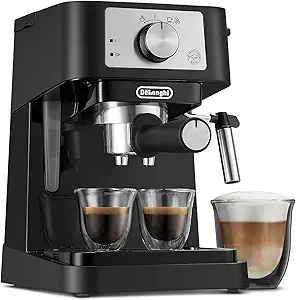 |
| Best Value The sweet spot between price and what you get | AMZCHEF Espresso Machine CM1861 |  |
| Best Budget The cheapest option that still gets the job done reliably | SHARDOR 3.5 Bar Espresso Machine 4-Cup |  |
| Top Rated A top-rated pick with lots of positive feedback | AMZCHEF Espresso Machine EM3131 |  |
| Most Popular A crowd favorite that many people choose with confidence | Gevi 20 Bar Espresso Machine ECMG0 | 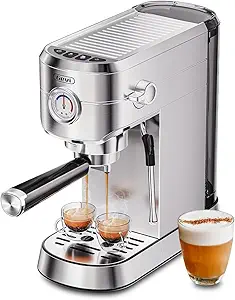 |
| Best Seller A high-volume bestseller chosen again and again | CASABREWS CM5418 Espresso Machine |  |
CASABREWS 3700 Essential

| Output Pressure | 20 bar |
|---|---|
| Wattage | 1350 watts |
| Operation Mode | Semi-Automatic |
| Coffee Input Type | Ground |
| Capacity | 43.9 fluid ounces |
The CASABREWS 3700 Essential is a compact semi-automatic espresso machine aimed at home users who want café-style drinks without a steep learning curve. It brews with a 20-bar Italian pump and uses PID temperature control to keep extraction temperatures stable, which helps produce richer crema and more consistent shots. The machine includes a powerful steam wand for frothing milk into microfoam for lattes and cappuccinos and offers single- and double-shot filter options with a 51 mm portafilter size. Practical touches include a removable 43.9 oz water tank for easy refills, a removable drip tray that fits taller cups, and a built-in cup warmer. Setup and programming are straightforward with button controls and programmable shot volumes. Trade-offs are typical for a budget home unit: it is a single-boiler system so switching quickly between brewing and steaming requires short waits, and while the metal housing looks and feels sturdy, full commercial-grade components are not implied. For beginners wanting better-than-basic espresso and milk drinks at home, it strikes a useful balance of performance and value.
Best for: Home users who want a beginner-friendly machine that produces café-style espresso and milk drinks with reliable temperature control and simple programmable shot settings.
Less Ideal for: People who need commercial throughput, integrated grinding, or fully automated one-touch drink presets should look at higher-end or super-automatic machines instead.
- 20-bar pump and PID temperature control for more consistent extraction
- Powerful steam wand capable of producing microfoam for milk-based drinks
- Detachable 43.9 oz water tank for easier refills and multiple servings
- Includes single- and double-shot stainless steel filter baskets and a 51 mm portafilter
- Compact stainless steel housing with removable drip tray and cup warmer
- Single-boiler design requires waiting between steaming and brewing for optimal temperature
- No built-in grinder so you need pre-ground coffee or a separate grinder
Verdict: A compact, budget-friendly semi-automatic that gives beginners PID-controlled espresso and capable milk steaming without the complexity of pro machines.
De'Longhi Stilosa EC260BK
| Output Pressure | 15 bar |
|---|---|
| Wattage | 1100 watts |
| Power Source | AC adapter |
| Coffee Input Type | ground_coffee |
| Filter Type | Reusable |
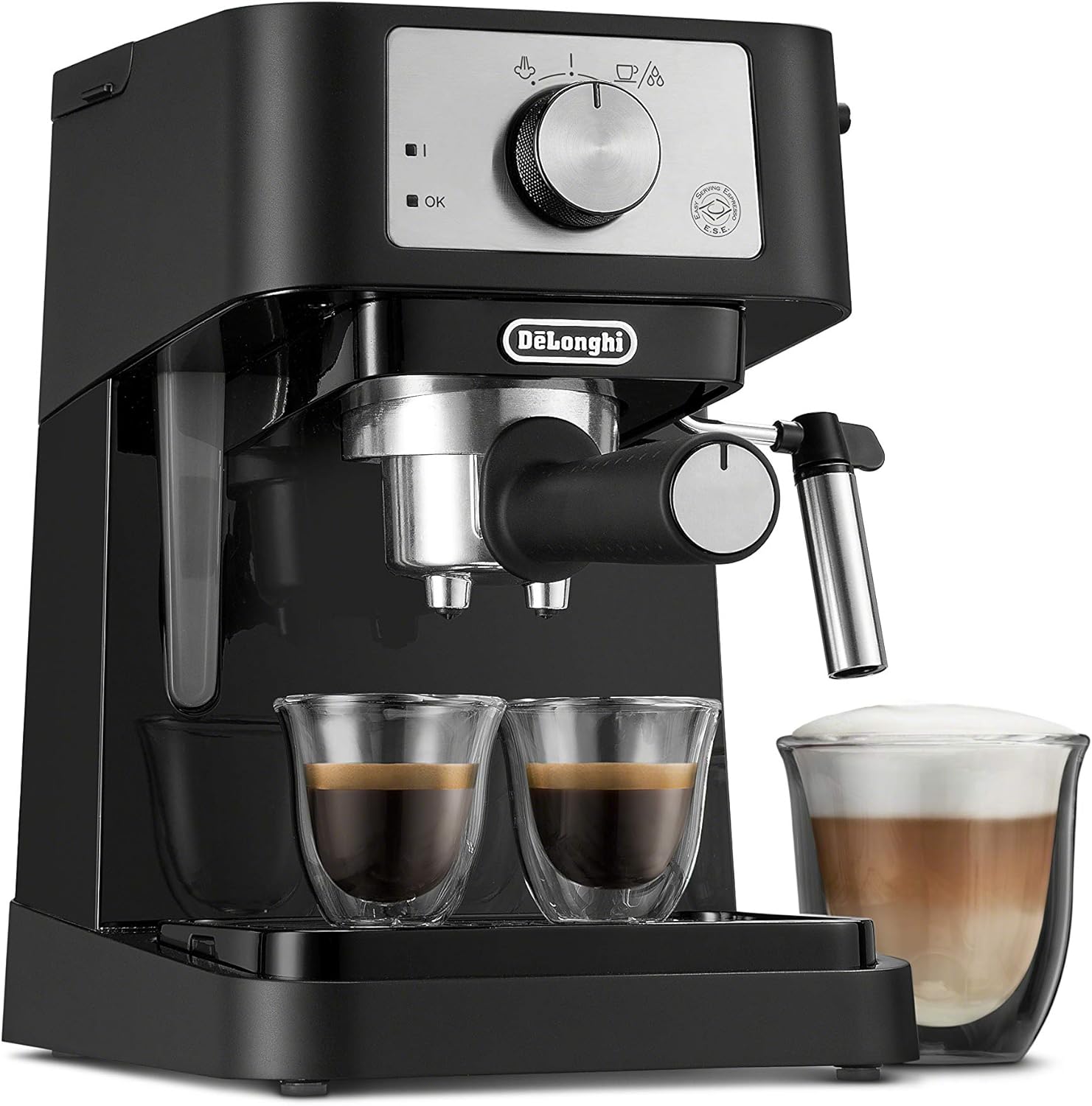
The De'Longhi Stilosa EC260BK is a compact manual espresso machine designed for home users starting their espresso journey. It uses a 15-bar pump and a stainless steel boiler to pull single or double shots from ground coffee, and the included portafilter, tamper, and single/double filters give basic control over extraction. A manual steam wand lets you texture milk for lattes and cappuccinos, though it requires some practice to get microfoam. The two-level cup holder accommodates taller mugs and the removable 33.8 fl. oz water tank simplifies refills and cleaning. At 1100 watts the machine heats quickly and the reusable filter reduces ongoing filter costs. Limitations are typical of entry-level manuals: there is no automatic dosing, temperature PID control, or built-in grinder, so consistent results depend on grind quality and tamping technique. For buyers prioritizing performance on a budget, Stilosa delivers solid extraction capability and durable boiler construction but expects a learning curve to dial in shot consistency.
Best for: Buyers who want the strongest possible espresso performance for the price and are willing to learn basic tamping and steaming techniques to get consistent shots.
Less Ideal for: People who want fully automatic espresso with one-touch brewing, an integrated grinder, or precise temperature control without manual tuning.
- 15-bar pump with stainless steel boiler for robust extraction and durability
- Includes portafilter, tamper, and single/double filters for hands-on shot control
- Manual steam wand for textured milk drinks once you learn technique
- Compact footprint and two-level cup holder fit varied cup sizes and small counters
- Removable 33.8 fl. oz water tank makes refilling and cleaning straightforward
- No built-in grinder or automatic dosing so consistent shots require external grinder and practice
- Lacks temperature PID control so shot temperature can vary between pulls
Verdict: If you want a budget-friendly, performance-focused manual machine that can pull strong espresso shots and steam milk with hands-on control, the Stilosa is an excellent starter choice.
AMZCHEF Espresso Machine CM1861

| Output Pressure | 20 bar |
|---|---|
| Wattage | 1350 watts |
| Operation Mode | Semi-Automatic |
| Coffee Input Type | ground |
This AMZCHEF CM1861 is a compact semi-automatic espresso machine aimed at users who want café-style shots without a large footprint or a steep learning curve. It heats in about 30 seconds and uses a 20-bar pump to produce crema-rich single or double shots, while a 360-degree steam wand lets you froth milk for cappuccinos and lattes. The HD touchscreen offers one-touch single or double pulls plus manual control and a memory mode so you can save a preferred shot length. Practical touches include a removable 44-ounce water tank for easy refilling and a 15-minute auto-off for safety. For a beginner-friendly machine it balances automation with hands-on options, although advanced users may find the built-in features limiting compared with prosumer machines. The stainless-steel body is compact enough for small counters but the machine still requires periodic cleaning and some basic skills to dial in grind size and tamping for best crema.
Best for: Buyers who want a practical, space-saving espresso setup that delivers quick café-style shots and simple milk steaming while offering a little room to learn hands-on technique.
Less Ideal for: People seeking a fully automatic bean-to-cup workflow or commercial-grade machine with advanced temperature PID tuning and heavy daily use should look elsewhere.
- Fast 30-second heat-up and 20-bar pump produce crema quickly
- Three temperature levels and touchscreen memory let you reproduce favorite shots
- 360° swivel steam wand for flexible milk texturing and latte art practice
- Removable 44-ounce water tank simplifies refills and maintenance
- Semi-automatic operation requires learning grind, dose, and tamp to get consistent results
- Not as feature-rich or durable as higher-end prosumer machines
Verdict: A compact, beginner-friendly semi-automatic that delivers fast, crema-forward espresso and usable steam capability without taking up much counter space.
SHARDOR 3.5 Bar Espresso Machine 4-Cup

| Output Pressure | 3.5 bar |
|---|---|
| Wattage | 800 watts |
| Operation Mode | Semi-Automatic |
| Coffee Input Type | Ground |
| Capacity | 4 cups |
The SHARDOR 3.5 Bar Espresso Machine is a small, budget-friendly home espresso maker aimed at everyday drinkers who want simple espresso and milk-based drinks. It uses an 800W heating system and a die-cast aluminum boiler to reach brewing temperature quickly, and the 3.5-bar output pressure produces a lighter espresso-style shot with some crema rather than a high-pressure commercial extraction. Controls are pared down to a single intuitive knob to switch between brewing and steaming, and the adjustable steam wand makes it possible to froth milk for cappuccinos and lattes. The unit includes a reusable filter and basic accessories like a carafe and milk frother, and the compact footprint fits tight counters. Expect straightforward performance for routine use, but not the strong, barista-level espresso that comes from higher-pressure machines, and materials are primarily plastic which keeps cost and weight down. For someone starting out, this machine delivers approachable drinks quickly, with simple cleaning and basic safety protections built in.
Best for: Beginners on a tight budget who want a compact, easy-to-use machine to make everyday espresso-style drinks and basic milk drinks without a steep learning curve.
Less Ideal for: Users seeking true barista-level pressure and extraction, heavy daily commercial use, or a metal-bodied, long-lasting machine should consider higher-end models instead.
- Fast 800W heating with die-cast aluminum boiler reduces wait time for brewing
- Simple one-knob control makes brewing and steaming easy for beginners
- Adjustable steam wand allows basic milk texturing for cappuccinos and lattes
- Reusable filter and included frother/carafe mean fewer immediate extra purchases
- 3.5-bar output delivers milder espresso-style shots rather than intense, high-pressure extraction
- Plastic-heavy construction limits perceived durability compared with metal-bodied machines
Verdict: A compact, no-frills espresso machine that lets budget-minded beginners make quick espresso-style shots and frothed milk with minimal fuss.
AMZCHEF Espresso Machine EM3131
| Output Pressure | 20 bar |
|---|---|
| Wattage | 1350 watts |
| Human Interface Input | Buttons |
| Coffee Input Type | ground |
| Filter Type | Reusable |
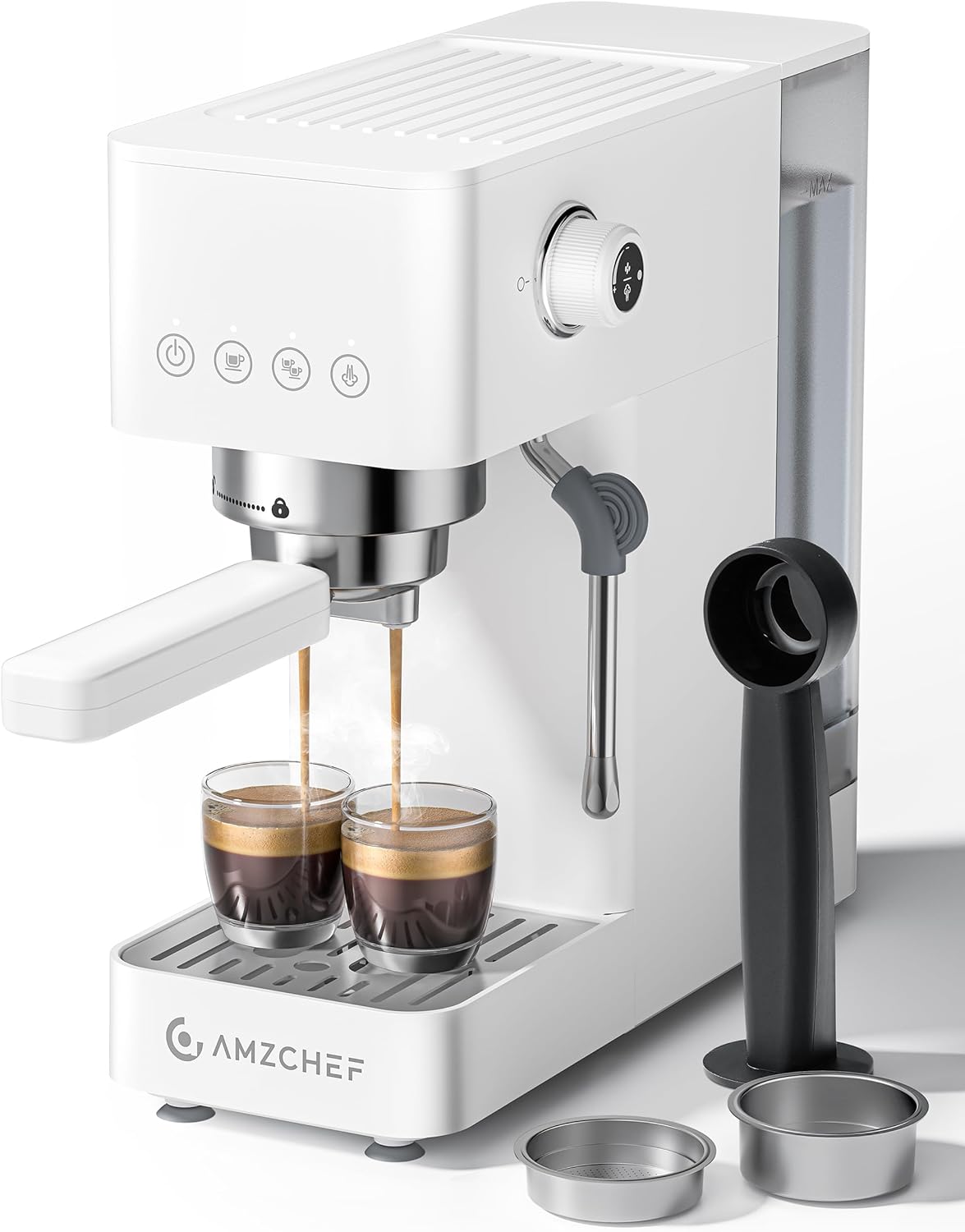
The AMZCHEF EM3131 is a budget-friendly semi-automatic espresso maker aimed at home users who want stronger espresso and basic milk drinks. It uses a 20 bar Italian pump and PID temperature control to stabilize brew temperature, and a 1350W heater that reaches operating temperature in about 30 seconds. Operation is button-driven with single and double-shot options and adjustable extraction time, while the stainless steam wand and 360° rotation let you texture milk for lattes and cappuccinos. The removable 50 oz tank makes multiple drinks between refills and the reusable filter accepts ground coffee, though there is no built-in grinder so pre-ground or a separate grinder is required. For the price it offers good temperature control and a capable steam system, but expect plastic construction and some manual cleaning and routine maintenance. Cup clearance limits taller mugs and the machine is best suited to users willing to learn basic dosing and tamping to get consistent results.
Best for: Buyers who prioritize a dependable, easy-to-operate machine that delivers consistent temperature and reliable steam performance on a budget and are willing to learn basic espresso technique.
Less Ideal for: People who want an all-in-one appliance with a built-in grinder or those seeking premium metal construction and commercial-grade durability.
- 20 bar Italian pump for stronger crema and extraction potential
- PID temperature control for more consistent brew temperature
- Fast 30 second heat-up time for quick use
- Removable 50 oz water tank reduces the need for frequent refills
- Stainless steam wand with 360° rotation for effective milk frothing
- No built-in grinder so you must use pre-ground coffee or a separate grinder
- Plastic-heavy construction compared with higher-end metal-bodied machines
- Cup clearance limited to under 4 inches which restricts taller mugs
Verdict: A reliable, beginner-friendly espresso machine that delivers consistent temperature and strong extraction without the premium price.
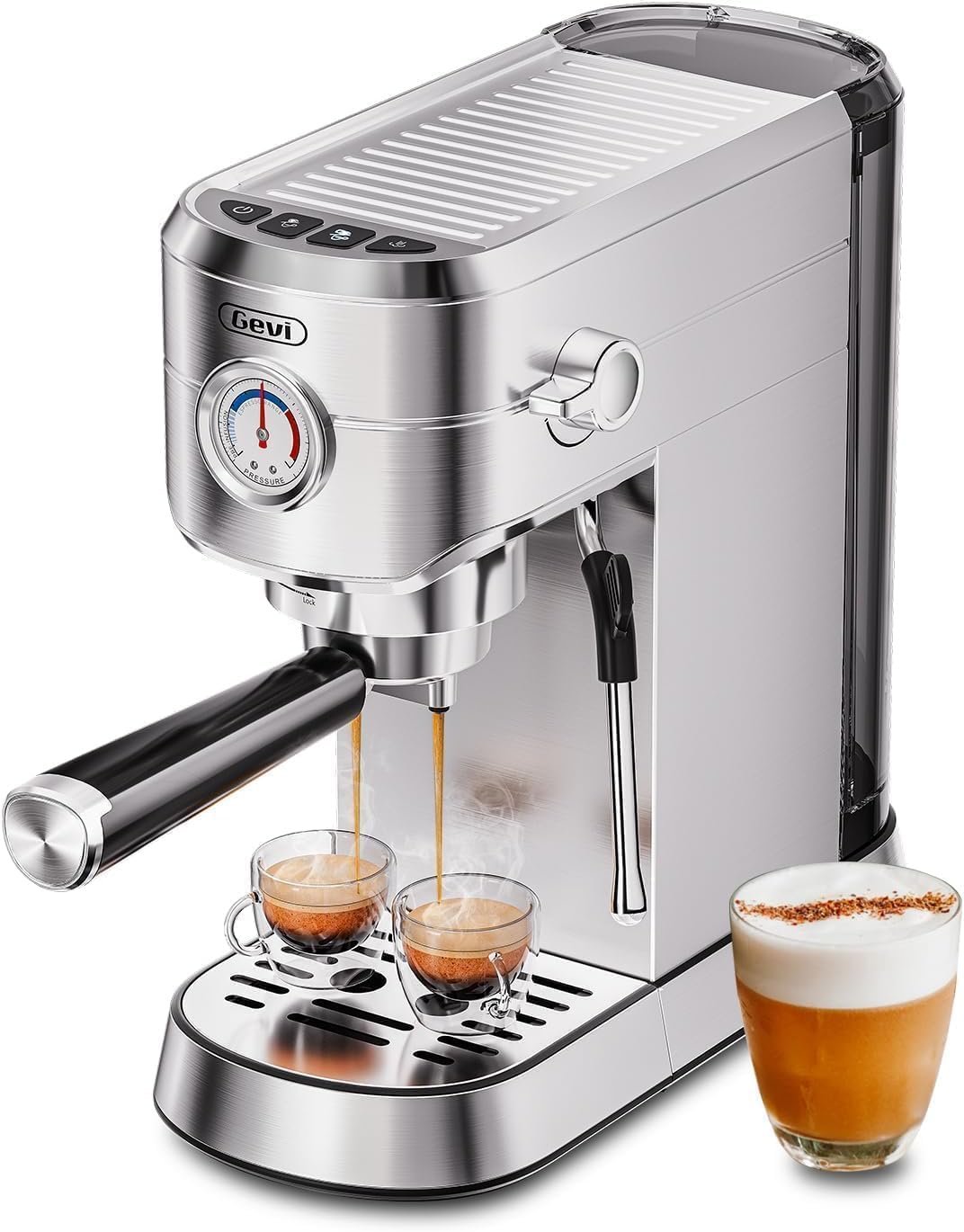
Gevi 20 Bar Espresso Machine ECMG0
| Output Pressure | 20 bar |
|---|---|
| Operation Mode | Semi-Automatic |
| Wattage | 1350 watts |
| Coffee Input Type | ground_coffee |
| Filter Type | Reusable |
The Gevi 20 Bar Espresso Machine is a compact semi-automatic unit aimed at home users who want espresso-based drinks without a steep learning curve. It uses a 20-bar pump, NTC temperature control, and a pressure gauge so you can monitor extraction, and the pre-infusion and adjustable shot volume help produce more consistent shots. The machine includes a steam wand and removable froth nozzle for steaming milk and a removable 34 oz water tank for easier refills and cleaning. Controls are button-based and straightforward, and the stainless steel housing gives a durable, countertop-friendly fit. Expect some vibration and pump noise during extraction, and the machine requires basic hands-on tamping and routine cleaning of the portafilter and steam wand. It does not include a built-in grinder, so you will need pre-ground coffee or a separate grinder to get the best results. For beginners this model balances useful espresso features with an approachable operation, but you should plan for a learning curve around tamping, dosing, and milk texturing to hit café-style drinks.
Best for: Buyers seeking an affordable, feature-forward entry espresso machine that gives hands-on control and visible pressure feedback while learning espresso basics.
Less Ideal for: Those who want a fully integrated grind-and-brew machine or a near-silent commercial unit for heavy daily use should consider different models.
- 20-bar pump with pressure gauge and pre-infusion for more consistent extraction
- Powerful steam wand with removable froth nozzle for cappuccinos and lattes
- Removable 34 oz water tank and removable drip tray for easier refills and cleaning
- Durable stainless steel housing and compact footprint suitable for small countertops
- No built-in grinder so a separate grinder or pre-ground coffee is required
- Produces noticeable vibration and pump noise during operation
- Portafilter and filter baskets are not dishwasher-safe and need careful manual cleaning
Verdict: A compact, beginner-friendly espresso machine that gives real extraction control and a steam wand for milk drinks without costing much.
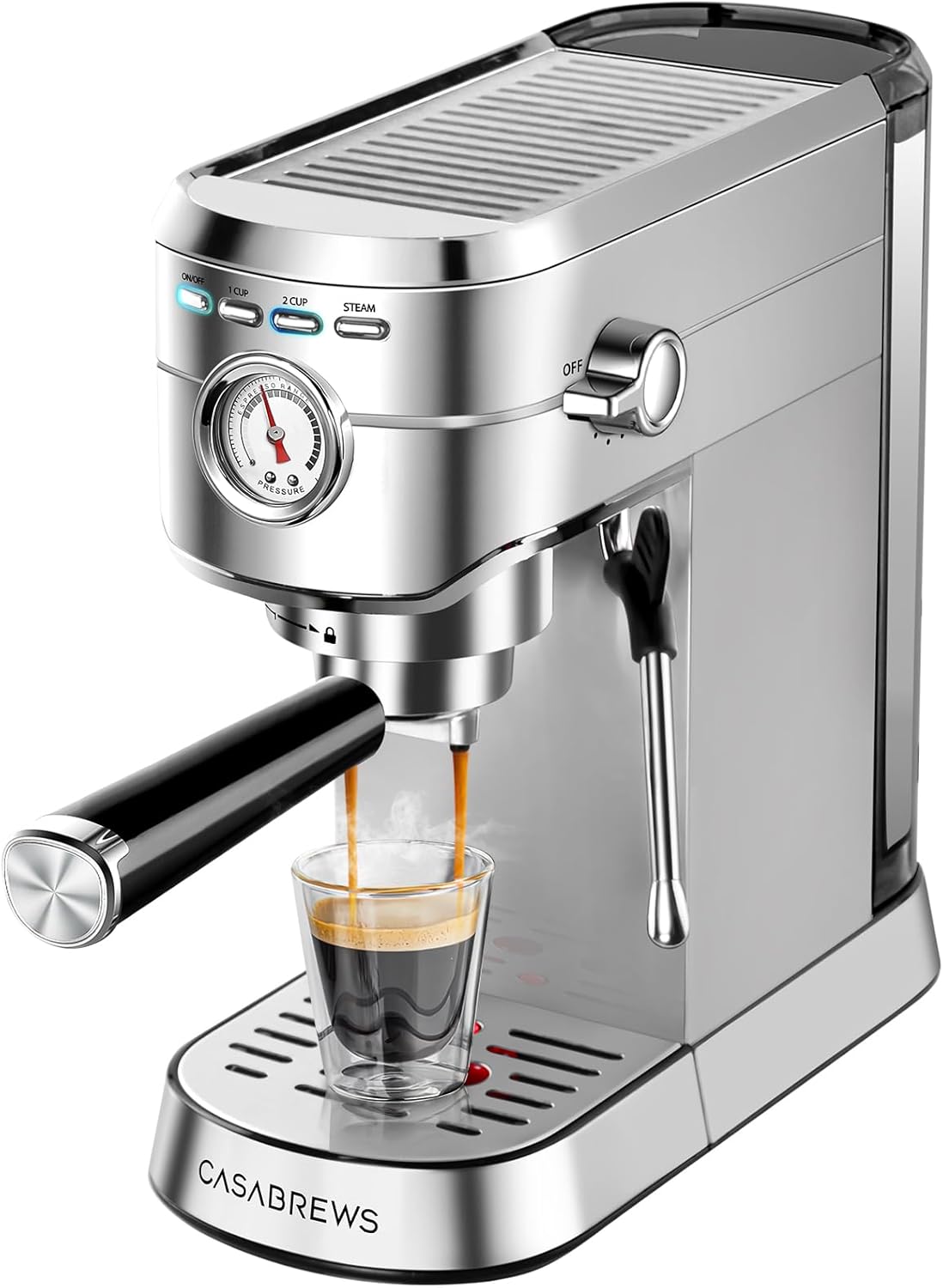
CASABREWS CM5418 Espresso Machine
| Operation Mode | Semi-Automatic |
|---|---|
| Wattage | 1350 watts |
| Output Pressure | 20 bar |
| Coffee Input Type | ground_coffee |
| Filter Type | Reusable |
The CASABREWS CM5418 is a small semi-automatic espresso maker aimed at home users who want café-style drinks without a large setup. It uses a 20-bar Italian pump and a built-in pressure gauge to help dial in extraction, while a low-pressure pre-infusion step and adjustable shot volume let you tweak single or double servings. The powerful steam wand produces microfoam suitable for lattes and cappuccinos, and the 34 oz removable water tank reduces refill frequency. Controls are button-based and the stainless steel housing keeps the footprint neat on a countertop. Expect a short warm-up and straightforward daily use, though the single-boiler design means you should allow cooling between steaming and brewing to avoid over-temperature protection. The machine requires ground coffee and manual tamping, so a separate grinder and some practice are needed for consistent shots. For cautious buyers the included user guide and pressure feedback make learning easier, but regular cleaning and occasional descaling are necessary to maintain performance.
Best for: Buyers who want an affordable, compact machine that teaches the basics of espresso and milk texturing with visible pressure feedback and straightforward controls.
Less Ideal for: People who need rapid back-to-back drinks for groups or who want an all-in-one grinder-brew solution should consider different machines.
- 20-bar pump with built-in pressure gauge for visible extraction feedback
- Powerful steam wand capable of producing microfoam for milk drinks
- Compact stainless steel body with removable 34 oz water tank for easy refills
- Button controls and adjustable shot volume simplify single vs double servings
- Single boiler requires cooling between steaming and brewing which slows back-to-back drink preparation
- Uses ground coffee only so a separate grinder is needed for freshest shots
Verdict: A compact, budget-friendly semi-automatic that gives beginners pressure feedback and a capable steam wand to learn espresso and milk skills.
Choosing the Right Budget Espresso Machine for Beginners: Key Factors to Consider
Shot Consistency and Temperature Control
Consistent water temperature and stable pressure are the foundation of reliable espresso. For beginners, a machine that holds temperature within a narrow range reduces the number of variables you must learn to manage. Poor temperature stability leads to sour or bitter shots even when dosing and tamping are correct.
Look for machines with a simple but effective heating system and clear indicators that the unit is at the ready. Micro-adjustment features are helpful, but at the budget level it is better to prioritize a unit that delivers repeatable results with minimal fiddling.
Ease Of Use and Controls
Simple, intuitive controls lower the barrier to entry. Machines with one-touch brew options, straightforward power and steam switches, and clear fill indicators let you focus on grind and tamp rather than navigating menus. Programmable advanced features are nice, but for many beginners they add complexity without improving day-to-day results.
Consider the clarity of the portafilter, the accessibility of the water tank, and whether the machine uses single or double shots by default. A responsive pump and a forgiving pump activation design reduce common operator errors.
Steam Performance And Milk Texture
If you want lattes or cappuccinos, steam performance matters. A steam wand that produces consistent pressure and mixes air steadily will let you practice milk texturing and build microfoam. At the budget level, expect longer steaming times for larger milk volumes; however, a properly designed wand and tip will still produce acceptable texture for small drinks.
Assess how easy it is to purge and wipe the wand, and whether the machine includes basic steam tips or frothing aids. These small details affect how quickly you can learn milk techniques and keep drinks consistent.
Cleaning, Maintenance, And Daily Upkeep
Routine cleaning is a frequent pain point for new owners. Machines with accessible group heads, removable drip trays, and straightforward backflush or blind-puck procedures simplify maintenance. Hard-to-reach internal parts or sealed designs that prevent basic servicing can increase long-term costs and downtime.
Consider water filtration options and how easy it is to descale the unit. Clear user-serviceable parts and a simple disassembly path for maintenance make it more likely your machine will stay reliable over time.
Size, Water Capacity, And Kitchen Fit
Counter space and how often you want to refill matter, especially for daily users. Smaller machines are great for tight kitchens but often have smaller reservoirs that require frequent topping up. Larger reservoirs reduce interruptions but take more space behind the machine.
Think about how the machine sits on your counter, access to an electrical outlet, and whether the drip tray and water tank are easy to remove in your typical kitchen layout.
Build Quality And Serviceability
Even at the budget level, a solid chassis, quality portafilter, and replaceable wear parts extend the useful life of the machine. Look for metal components where they matter, like the portafilter and steam wand, and plastics that are molded cleanly and feel sturdy.
Machines designed with common replaceable seals, gaskets, and screens make it possible to keep the unit functional with basic parts over several years. Poor build quality often shows up as leaks, inconsistent pressure, or frequent component replacements.
What You Can Realistically Expect From Budget Machines
Budget espresso machines for beginners will often trade advanced control for convenience. Expect reliable single- or double-shot extraction for everyday drinks, and steaming that handles milk for single-serve lattes and cappuccinos. They are rarely designed for continuous commercial use or demanding back-to-back shots.
You should not expect highly precise PID control or professional-grade steam pressure at this price point. Instead, look for machines that minimize the variables you need to master so you can build core skills like dosing, tamping, and basic milk texturing.
- Good for learning extraction basics and dialing in grind size
- Sufficient steam for single-serve milk drinks, not high-volume steaming
- Simpler maintenance routines than prosumer machines
Grinders And Coffee Freshness
A capable grinder is as important as the espresso machine itself. Many beginners underestimate the impact of grind consistency on extraction. Even the best entry-level machines will produce poor shots with inconsistent grounds.
If you do not already own a grinder, prioritize a burr grinder with reasonable dose control that fits your budget. Freshly ground beans and a consistent grind size will make the biggest single improvement to shot quality.
- Aim for a burr grinder rather than a blade grinder
- Consistency matters more than absolute fineness at first
- Adjust grind in small increments when dialing in
Water Quality And Its Effect On Taste And Equipment
Water quality affects both flavor and machine longevity. Hard water accelerates scale buildup and can impair temperature transfer, while very soft water may produce flat-tasting espresso. For budget machines, using filtered water or a simple inline filter can reduce maintenance and improve cup quality.
Check the machine's recommendations for hardness and descaling intervals. Regular descaling and replacing filters when suggested will help avoid premature failures and keep shot consistency steady over time.
- Use filtered water when possible to balance taste and scale control
- Follow the manufacturer's descaling schedule
- Replace inline filters per usage frequency
Simple Tricks To Improve Results Without Extra Cost
You can improve shots substantially with small, low-cost changes. Tamping evenly and applying consistent pressure improves extraction. Using a dosing funnel helps prevent grounds spillage for smaller baskets. Warm the portafilter before brewing by running a short shot of hot water through it.
Practice milk texturing by focusing on small pitchers and short steaming bursts. Microfoam takes time to learn, but even modest improvements make lattes taste sweeter and feel more pleasant.
- Use consistent tamping pressure and level the puck
- Purge and wipe the steam wand before and after every steam
- Preheat cups and portafilter for more stable shots
Setting Up For Success In Your Kitchen
Place your machine on a stable, level surface near a grounded outlet and within reach of your water source for easy refills. Consider a small drip mat or tray to protect counters while you practice tamping and steaming. Keep basic tools close at hand: tamper, small brush, cloth, and a pitcher for milk.
Routine organization reduces friction and keeps you focused on learning. A tidy setup makes it easier to perform quick maintenance tasks that prolong machine life and keep results consistent.
- Keep tools and cleaning supplies nearby to build consistent habits
- Allow ventilation space around the machine for heat dissipation
- Have a pour size plan for single and double shots to reduce waste
How We Chose the Best Budget Espresso Machine for Beginners
We focused on machines that match real-world beginner needs: consistent extraction, simple controls, and low ongoing maintenance. We prioritized units with reliable boiler or thermoblock temperature stability and pressure delivery that support basic espresso extraction without requiring advanced tuning. Ease of steaming and frothing was included for buyers who want milk drinks, and water capacity and footprint were weighed for people with limited counter space. Durability of base components and the availability of replaceable seals and screens were examined to avoid short-lived purchases. We also considered how easy each machine is to clean day-to-day and how accessible common service tasks are. Models that required extensive manual profiling, advanced skills, or frequent calibration were excluded, as were machines lacking basic safety features or clear user controls. The result is a set of beginner-focused machines that score well on extraction consistency, user-friendliness, steaming ability, build quality, and maintenance needs.
Our full evaluation process is outlined in our review methodology.
FAQ
Can a budget machine really make good espresso?
Yes, a budget machine can produce satisfying espresso if you control key variables like grind, dose, and tamping. Expect limitations in steam power and long-term durability compared with higher-end units, but many beginners achieve excellent daily results.
Do I need a separate grinder right away?
Usually yes. A proper burr grinder has a bigger impact on shot consistency than spending more on the machine alone. Even an inexpensive burr grinder will improve extraction and make dialing in shots far easier.
How often should I descale and clean a budget espresso machine?
Cleaning should be daily for removable parts and the steam wand, with backflushing or recommended cleaning cycles weekly if the machine supports it. Descale frequency depends on water hardness but is typically every 2 to 6 months for regular use with untreated water.
Is steaming milk on a budget machine difficult to learn?
Steaming takes practice but is very doable on entry-level machines. Expect slower steam recovery and smaller capacity, which means practicing with smaller pitchers and short bursts until you develop consistent technique.
What should I do if my shots are sour or bitter?
Sour shots commonly indicate under-extraction or low temperature, while bitter shots often point to over-extraction or too-fine a grind. Start by adjusting grind coarser or finer in small steps and verifying tamping consistency; also ensure the machine is fully warmed up before brewing.
Final Verdict
For beginners, the best approach is to prioritize machines that simplify core tasks: stable temperature, easy-to-use controls, and manageable steam performance. Balance size and water capacity against how much counter space you have and how often you want to make milk drinks. Expect to supplement the machine with a decent burr grinder and basic maintenance routines. Choose a machine that minimizes variables so you can develop repeatable habits. Focus on shot consistency and serviceability first, then add complexity as your skills improve. That way you get satisfying espresso without a steep learning curve or unnecessary upkeep headaches.