
Note: This article contains affiliate links. If you click on these links and make a purchase, we may earn a small commission at no extra cost to you. This helps support our research and content. Read our full affiliate disclosure here.
Running a small coffee business means every minute behind the bar counts and every shot needs to be consistent. The right commercial espresso machine for small business determines speed, drink quality, and how easily your team can manage peak service. This guide shortlists the top options across popular configurations and explains the factors that matter most to back-of-house operations, daily maintenance, and long-term reliability. Below you will find our top picks and a clear explanation of how we evaluated each machine to help you choose the one that fits your volume, menu, and staffing needs.
Top Picks at a Glance
| Best Overall The best all-around choice for most situations | Gaggia Classic E24 RI9380/51 |  |
| Best Quality Built to a higher standard if you want something more solid | Nuova Simonelli Appia Life 2-Group |  |
| Best Value The sweet spot between price and what you get | CASABREWS Ultra Espresso Machine |  |
| Best Budget The cheapest option that still gets the job done reliably | Neretva Espresso Machine 20 Bar |  |
| Top Rated A top-rated pick with lots of positive feedback | HIBREW H10 Espresso Machine |  |
| Most Popular A crowd favorite that many people choose with confidence | Breville Barista Express BES870XL |  |
| Best Seller A high-volume bestseller chosen again and again | CASABREWS CM5418 Espresso Machine |  |
Gaggia Classic E24 RI9380/51

| Operation Mode | Semi-Automatic |
|---|---|
| Output Pressure | 9 bar |
| Wattage | 1200 watts |
| Coffee Input Type | ground, pod |
| Filter Type | Reusable |
The Gaggia Classic E24 is a compact, made-in-Italy semi-automatic espresso machine aimed at serious home users and small-business environments that need cafe-style performance in a small footprint. It brews at 9 bar extraction pressure through a 58 mm commercial portafilter and offers both commercial single/double shot baskets plus a pressurized basket for pods or preground coffee. The machine includes a commercial steam wand for creating textured microfoam for lattes and cappuccinos, and its steel housing and commercial components are built for frequent use. Practical updates on this model include quieter pump mounting and a boiler designed to resist scale, which helps reliability in daily operation. Limitations are its relatively small water capacity and manual dosing/steaming workflow, so it requires an operator comfortable with tamping, timing shots, and steaming milk for consistent output during busy service. Compared with full-size commercial machines, it sacrifices automation and fast throughput but delivers café-grade shots and milk texture in a durable, serviceable package.
Best for: Small cafés, pop-ups, or businesses wanting café-quality espresso and steamed milk from a durable, compact machine when an experienced operator is available to handle manual dosing and steaming.
Less Ideal for: High-volume commercial shops that need automated, high-throughput machines or teams needing fully automatic operation during peak service.
- 58 mm commercial-style portafilter and commercial single/double baskets for pro-level shot extraction
- Commercial steam wand capable of producing velvety microfoam for latte art
- Steel housing and commercial-grade components designed for heavy use and serviceability
- Updated pump mounting and boiler improvements for quieter operation and better scale resistance
- Small water reservoir limits continuous service during busy periods
- Manual semi-automatic operation requires trained staff to maintain shot and milk consistency
Verdict: A compact, durable semi-automatic built to deliver café-grade shots and milk texture for small businesses that can staff a skilled operator.
Nuova Simonelli Appia Life 2-Group

| Operation Mode | Fully Automatic |
|---|---|
| Wattage | 3400 watts |
| Voltage | 240 volts |
| Coffee Input Type | Volumetric |
| Capacity | 11.01 liters |
The Nuova Simonelli Appia Life 2-Group is a commercial-grade, volumetric espresso machine built for busy coffee environments. It provides programmable volumetric dosing on each group head so baristas can set four shot volumes for one-touch consistency, and it includes automated backflushing to simplify group cleaning. The push-pull steam system and cool-touch steam wand make steaming milk faster and less fatiguing during long shifts, while pressure gauges let operators monitor pump and steam pressure to dial in extraction and texture. Construction uses stainless steel and formed ABS panels on a solid steel frame, and the machine requires a 240V cold water connection and drain, plus a water softener to maintain the warranty. Practical limitations include the need for commercial plumbing and hardwiring, and the machine's size and service requirements which make it best for a staffed operation rather than occasional home use. For a small business seeking reliable throughput and consistent dosing, the Appia Life offers factory-grade durability and features geared to daily professional use.
Best for: Small cafés, restaurants, or high-volume coffee operations that prioritize consistent shot production, easy daily maintenance, and durable factory-quality construction.
Less Ideal for: Home users, pop-ups, or very small operations without commercial plumbing or trained staff should consider smaller countertop models or leased alternatives.
- Programmable volumetric dosing per group for consistent one-touch shots
- Automated backflushing speeds regular maintenance and reduces downtime
- Push-pull steam system and cool-touch wand reduce operator fatigue and improve safety
- Stainless steel construction and solid steel frame built for commercial durability
- Pressure gauges for pump and steam allow practical monitoring and fine-tuning of performance
- Requires 240V hardwiring, cold water connection, drain, and a water softener for warranty compliance
- Large footprint and professional service needs make it unsuitable for casual or infrequent use
Verdict: Choose the Appia Life 2-Group when you need a factory-quality, high-throughput espresso machine that delivers consistent, programmable dosing and professional steam performance for a small commercial setting.
CASABREWS Ultra Espresso Machine

| Wattage | 1350 watts |
|---|---|
| Voltage | 120 volts |
| Operation Mode | Semi-Automatic |
| Coffee Input Type | ground_coffee |
| Filter Type | 58mm Portafilter & one/two cup filters |
The CASABREWS Ultra is a semi-automatic espresso machine aimed at bringing café-style extraction to a compact counter. It uses a 20-bar Italian pump and a 1350W heater to deliver steady extraction and dense crema, while a PID-style temperature system offers four brew temperature settings for dialing in shots. The machine includes a 58mm portafilter, single-boiler heating, a removable 73 oz water tank, and a commercial-style 10mm steam wand for building microfoam. Controls are button-based with an LCD that shows status and lets you switch between brewing, steaming, and hot water. Practical touches include pre-infusion, an automatic pressure release via a 3-way solenoid valve for drier pucks, and a cup warmer on top. Trade-offs for small-business use are the single boiler design, which means steaming and brewing cannot be done simultaneously, and a mid-size water tank that will require regular refills under steady service. The Ultra is well suited to operators who want professional features and consistent extraction in a compact footprint, but businesses with high-volume continuous steaming needs should consider a dual-boiler option instead.
Best for: Small cafes or foodservice operators who need café-grade extraction and flexible temperature control in a compact machine and prioritize consistent shot quality over continuous high-volume steaming.
Less Ideal for: High-volume shops or busy kiosks that require simultaneous brewing and steaming for continuous service should look at dual-boiler commercial machines instead.
- Powerful 20-bar Italian pump for consistent extraction and good crema.
- Adjustable brew temperature with four settings for finer control over flavor.
- Commercial-style 58mm portafilter and included barista tools for stable dosing.
- 10mm commercial steam wand that produces strong steam for quality microfoam.
- Removable 73 oz water tank and cup warmer improve workflow and service speed.
- Single boiler limits simultaneous brewing and steaming during busy shifts.
- Mid-size water tank will need frequent refills in higher-volume environments.
Verdict: For small commercial operations that value consistent, café-quality espresso in a compact package, the CASABREWS Ultra delivers professional extraction and strong steam performance without a large footprint.
Neretva Espresso Machine 20 Bar

| Pump pressure | 20 bar |
|---|---|
| Power | 1350W |
This Neretva machine is a compact semi-automatic espresso maker that brings a 20-bar pump and 1350W boiler into a small footprint, letting users pull espresso and steam milk for lattes and cappuccinos. Typical use is at a counter for single-shot to double-shot extraction using the included portafilter and pressurized filter baskets, while the built-in steam wand produces milk foam suitable for basic latte art. Practical features include a temperature display for monitoring brew and steam temperatures, a low-pressure pre-infusion to help even extraction, and stainless-steel external parts for durability. The unit is easy to set up and fits well in tight spaces, making it convenient for light-duty service or for a back-bar station where countertop space is limited. Limitations are its consumer-focused accessory set and pressurized filters, which reduce the ability to fine-tune shots to the level a commercial machine provides, and the small water capacity and build are not designed for sustained high-volume service. For low-volume environments the machine delivers capable espresso and steaming at a modest price, but it is not a substitute for commercial-grade boilers or heavy daily throughput.
Best for: Small operators seeking a low-cost, space-saving espresso machine for light commercial or satellite service that prioritizes basic steaming and quick setup over full commercial robustness.
Less Ideal for: Busy cafes or high-volume settings that require commercial boilers, larger water capacity, and components built for continuous daily service should choose a true commercial machine instead.
- High 20-bar pump and 1350W boiler give strong extraction and steam power for a compact unit
- Temperature display and low-pressure pre-infusion help more consistent shots
- Compact footprint fits small counters and back-bar spaces
- Includes portafilter and pressurized filter baskets for easy use
- Pressurized filters limit ability to dial in espresso like a commercial machine
- Small water capacity and consumer-grade build are not suited for sustained high-volume use
Verdict: A budget-friendly, compact option that delivers strong pump pressure and basic steaming for low-volume commercial or satellite espresso needs.
HIBREW H10 Espresso Machine

| Operation Mode | Semi-Automatic |
|---|---|
| Wattage | 1350 watts |
| Voltage | 110 volts |
| Output Pressure | 20 bar |
| Capacity | 1800 ml |
The HIBREW H10 is a compact, semi-automatic espresso machine built around a 58mm commercial-style group head and a digital control panel that exposes temperature, extraction time, and pre-infusion settings. It lets you set extraction temperature in small increments and program shot time up to 100 seconds, which helps dial in consistent pulls for different roasts. A one-touch switch toggles between steaming and extraction with minimal wait, and the powerful steam wand produces microfoam quickly for lattes and cappuccinos. The unit also includes a separate hot water outlet and a continuous-brew mode with auto pressure release that supports multiple back-to-back shots. Practical touches—removable drip tray with level indicator, large flip-top 1.8L water tank, and full accessory kit including a 58mm portafilter and tamper—make daily use and maintenance straightforward. Trade-offs are that it is aimed at prosumer and small-office workloads rather than heavy commercial throughput, and the stainless-steel minimal body means servicing access may be tighter than on larger commercial machines.
Best for: A buyer who prioritizes consistent, café-style extraction and approachable daily reliability for a small business, office, or low-volume café setting and wants precise temperature and timing control without full commercial complexity.
Less Ideal for: Businesses that need high-volume, heavy-duty commercial throughput all day should consider a true commercial espresso machine with larger boilers and serviceable internals.
- 58mm metal commercial group head for café-style extraction
- Fine-grained control of extraction temperature and time for repeatable shots
- One-touch steam/extraction switch and powerful steam wand for quick milk texturing
- Separate hot water outlet and continuous-brew mode for consecutive drinks
- Large 1.8L water tank and removable drip tray simplify daily use and monitoring
- Designed for prosumer or small-office service rather than high-volume commercial cafés
- Compact stainless-steel chassis may limit internal serviceability compared with larger commercial machines
Verdict: If you run a small business or office that needs café-quality, repeatable espresso with reliable temperature and timing control, the HIBREW H10 delivers a professional-feeling, compact solution.
Breville Barista Express BES870XL

| Wattage | 1600 watts |
|---|---|
| Voltage | 120 |
| Coffee Input Type | whole_beans |
| Filter Type | Reusable |
| Capacity | 1 cups |
The Breville Barista Express BES870XL combines an integrated conical burr grinder, a 54mm portafilter, and a thermocoil heating system to let users grind, dose, and extract espresso from whole beans in one compact unit. It is typically used by a single operator who grinds directly into the portafilter, tamps manually, and steams milk with the powerful steam wand to produce lattes and cappuccinos. Notable features include 16 grind settings, dose trimming with the included razor tool, low-pressure pre-infusion for balanced extraction, and PID temperature control for consistent shots. Practical benefits are fast bean-to-shot workflow, good temperature stability, and the ability to hand-texture microfoam for latte art. Important limitations are that it is a manual, single-group machine intended for one cup at a time and requires operator skill for consistent results, so it is not a push-button commercial espresso solution and lacks the throughput and automation of larger commercial machines.
Best for: Small-business operators who need a compact, high-quality espresso workflow and are willing to rely on an experienced operator rather than automated commercial throughput.
Less Ideal for: High-volume cafes or environments that require multiple simultaneous drinks, automated dosing, or full commercial throughput without a trained barista.
- Built-in conical burr grinder with 16 grind settings for fresh dosing
- PID thermocoil temperature control for consistent extraction
- Powerful steam wand capable of manual microfoam for latte art
- 54mm stainless steel portafilter and included dosing/tamping tools for precise preparation
- Single-group, single-cup workflow limits throughput for busy commercial service
- Manual operation requires barista skill to achieve consistent results
Verdict: Choose the Barista Express if you want a compact, integrated grinder-to-shot machine that delivers cafe-quality espresso when run by a skilled operator.
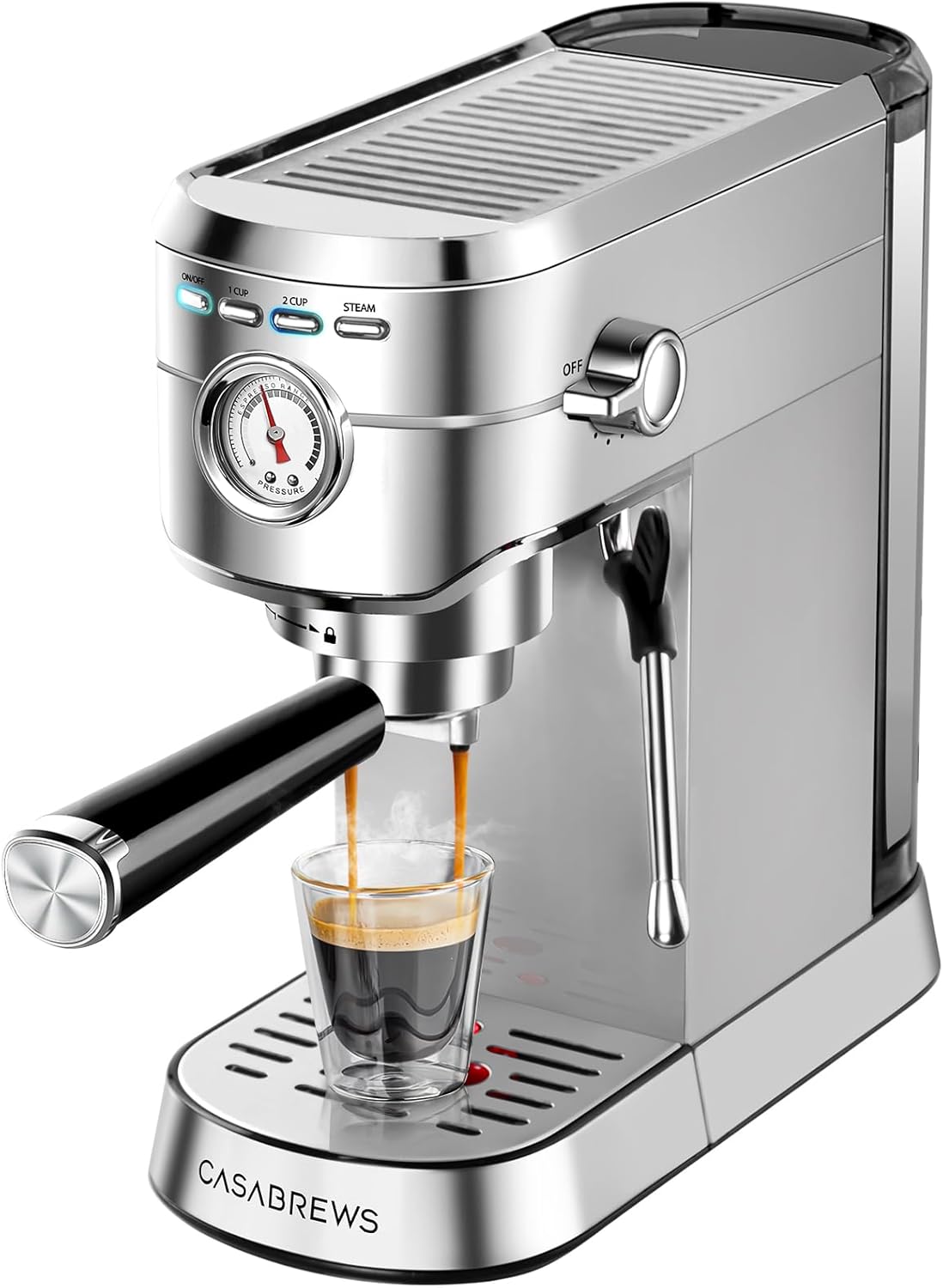
CASABREWS CM5418 Espresso Machine
| Operation Mode | Semi-Automatic |
|---|---|
| Wattage | 1350 watts |
| Output Pressure | 20 bar |
| Coffee Input Type | ground_coffee |
| Filter Type | Reusable |
The CASABREWS CM5418 is a small semi-automatic espresso machine built to deliver café-style shots and steamed milk in a compact footprint. It uses a 20-bar Italian pump with a built-in pressure gauge and pre-infusion to help dial in extraction, and a powerful steam wand that produces microfoam suitable for lattes and cappuccinos. Controls are button-based for single or double volume selection, and a removable 34 oz tank makes refilling straightforward. Practical touches include a cup-warming tray and a removable drip tray that fits taller mugs. Expect good crema and consistent milk texture once you learn recommended grind, dose, and tamping, but note the single-boiler design requires cooling between steam and brew cycles which slows back-to-back drinks. The machine includes portafilter baskets, a tamper, and a reusable filter, but its compact size and home-focused construction mean heavy commercial use will accelerate maintenance needs. For careful users who follow the maintenance guidance, it provides strong performance in a small package; for continuous high-volume service, a prosumer or true commercial unit is a better fit.
Best for: Buyers who prioritize reliable extraction and milk texturing in a compact machine and want a user-friendly unit they can maintain carefully for steady, quality espresso service.
Less Ideal for: Businesses needing high-throughput continuous service or commercial-grade durability should choose a dedicated commercial machine built for heavy daily use.
- 20-bar pump with built-in pressure gauge for visible extraction feedback
- Pre-infusion and adjustable volume for better shot control
- Powerful steam wand capable of producing microfoam for latte art
- Compact stainless steel body with removable 34 oz water tank for easy refills
- Includes portafilter, single and double baskets, and tamper so you can start brewing immediately
- Single-boiler design requires cooling between steaming and brewing, limiting throughput
- Designed for home/office use so long-term heavy commercial use may increase maintenance frequency
Verdict: If you need a compact, user-friendly machine that delivers café-style shots and good milk foam for low- to moderate-volume service, the CM5418 is a reliable choice.
Choosing the Right Commercial Espresso Machine for Small Business: Key Factors to Consider
Boiler Type and Capacity
Boiler design determines how well a machine delivers hot water and steam under continuous demand. Shops with moderate to high milk-based drink volume need ample steam capacity or multiple boilers to maintain pressure and temperature between successive drinks.
A single-boiler, heat-exchanger design can work for lower-volume operations but requires attention to recovery time. Multiple or dedicated steam boilers reduce wait time and make steaming several drinks in a row easier, which directly affects throughput during peak periods.
Grouphead Temperature Control
Stable grouphead temperature directly influences shot consistency across the day. Machines with PID or electronic temperature control keep extraction variables steady, reducing taste drift as the machine heats up under load.
If you plan to program volumetrics or use pre-infusion settings, precise grouphead control helps maintain repeatable results regardless of staff skill level. For shops offering specialty espresso beverages, tighter temperature control supports flavor clarity and extraction accuracy.
Steam Wand Performance
Steam wand power and design affect how quickly and easily baristas texturize milk. A wand with strong steam pressure and good tip geometry will reach the desired microfoam faster, freeing staff to focus on latte art and speed.
Heat recovery between steam cycles matters. Look for machines with good steam recovery or dual steam boilers if you routinely steam many drinks consecutively, because slow recovery creates bottlenecks at peak times.
Ease of Use and Programmability
Intuitive controls, programmable shot volumes, and clear feedback reduce training time and minimize operator error. For small businesses with rotating staff or casual hires, straightforward programmability ensures more consistent drinks without deep barista expertise.
Features like volumetric dosing, pre-infusion options, and simple maintenance alerts let you standardize recipes and catch minor issues before they affect service quality.
Serviceability and Parts Access
Commercial machines need routine maintenance and occasional repairs. A design that offers easy access to wear components, clearly documented service intervals, and available replacement parts reduces downtime and the cost of ownership.
Consider how serviceable the brew group, pumps, solenoids, and seals are. Machines that allow a qualified technician to swap common parts quickly will keep a small business running smoothly with minimal disruption.
Footprint and Power Requirements
Counter space is often limited in small operations, so machine footprint and layout matter. Measure available counter depth and width and compare them with machine dimensions to avoid installation issues.
Electrical and water requirements are equally important. Confirm the machine's voltage and amperage needs and whether your location can support single- or three-phase power. Plumbing and drain access affect where the unit can be sited and how easily it integrates into your service area.
Understanding Commercial Configurations
Commercial espresso machines come in common configurations such as single boiler, heat exchanger, and multi-boiler systems. Each addresses tradeoffs between cost, steam capacity, and temperature stability, so matching the configuration to your menu and hourly volume is essential.
For example, venues that serve many milk drinks during peak hours often benefit from a dedicated steam boiler or a multi-boiler arrangement. Simpler configurations may work well for shops focused on straight espresso or lower throughput, but they require more attention to recovery times and operator technique.
- Single boiler: simpler but limited for continuous steaming
- Heat exchanger: good balance for mixed menus with moderate volume
- Multi-boiler: best for high-volume milk-heavy service and precise control
Installation, Utilities, and Placement
Before committing, verify electrical supply, water connection type, and drain placement. Some machines require hard plumbing and specific voltage or phase, which may necessitate an electrician or plumber during installation.
Placement affects workflow. Position the machine to minimize steps between grinder, tamping area, and service counter. Adequate ventilation and space for steam wand operation are practical considerations often overlooked during planning.
- Check voltage and amperage requirements
- Plan for water filtration and waste drain
- Leave clearance for service access and ventilation
Daily Maintenance and Cleaning Routines
Consistent maintenance preserves performance and reduces flavor issues. Daily tasks typically include grouphead backflushing, cleaning portafilters, wiping and purging steam wands, and checking water filtration and tank levels.
Weekly and monthly procedures such as descaling, replacing gaskets, and servicing solenoids are important for long-term reliability. Establishing simple checklists for staff reduces the likelihood of missed maintenance and the need for emergency repairs.
- Daily backflush and wand purge
- Weekly deep clean of groups and steam tips
- Regular water filter and softener checks
Training Staff for Consistent Service
Invest in short, focused training that covers shot timing, tamping consistency, milk texturing basics, and routine machine care. Even a few hours of standardized training can dramatically reduce variation between baristas and speed up service.
Use programmable dosing and shot timers to help less experienced staff produce consistent results. Encourage a culture of cleaning as you go so the machine remains service-ready throughout busy periods.
- Standardize recipes and tamping pressure
- Train on steaming technique and wand cleaning
- Assign daily maintenance ownership
Optimizing Menu and Workflow for Throughput
Designing a menu that reflects your machine's strengths helps maintain speed and quality. If your equipment has limited steam capacity, consider offering fewer milk-heavy specialty drinks during peak times or batching popular items where appropriate.
Workflow tweaks such as setting up two steaming stations, pre-texturing milk, or staging cups and pitchers can shave critical seconds off each drink and improve overall throughput.
- Align menu with machine steam and water capacity
- Use staging and batching for high-demand items
- Monitor peak periods and adjust offerings as needed
How We Chose the Best Commercial Espresso Machine for Small Business
Our selection process prioritized features and specs that directly affect daily service at small coffee shops, cafes, offices, and pop-ups. We looked for machines with proven steam boiler capacity and steam recovery, fast and consistent grouphead temperature stability, and robust pump and heating systems that handle repeated pulls during rush periods. Workflow considerations included ergonomics of the grouphead and steam wand placement, programmability for consistent dosing, and intuitive controls that reduce barista training time. Durability criteria emphasized commercial-grade materials, serviceability, and ease of replacing wear parts. Energy use and idle recovery were considered for shops that run long service hours. We excluded consumer and prosumer machines not rated for continuous commercial use and units designed only for low-volume home environments. We also filtered out models lacking basic service documentation and parts availability. The final shortlist balances extraction consistency, steam performance, workflow efficiency, daily upkeep, and long-term serviceability to reflect what matters most in a small-business setting.
Our full evaluation process is outlined in our review methodology.
FAQ
How much daily volume can a small business expect from a compact commercial machine?
Daily volume depends on configuration and usage patterns. A compact heat-exchanger machine can typically support moderate volume if staff manage steam cycles carefully. For consistent high-volume milk drinks, a multi-boiler unit is usually required.
Do I need a water filtration system for a commercial espresso machine?
Yes. Proper water filtration protects internal plumbing and improves flavor by reducing mineral buildup. Filtration also extends the interval between descaling and reduces the likelihood of premature part failure.
What power requirements should I check before buying?
Confirm the machine's voltage, amperage, and whether it needs single- or three-phase power. Also check whether a dedicated circuit is required. An electrician can verify your supply and advise on any necessary upgrades.
How often should I schedule professional service?
Professional service frequency depends on volume and water quality but typically ranges from every 6 to 12 months for most small businesses. Higher-volume operations or those using harder water may need more frequent preventative maintenance.
Can I run a commercial machine on a standard small-business counter?
Possibly, but you must verify footprint, ventilation, and clearances. Ensure the counter can support the machine's weight and that there is room for steam wand operation and service access without obstructing workflow.
Final Verdict
Prioritize the features that match your service pattern: choose higher steam capacity and better recovery if you serve many milk-based drinks, or focus on precise grouphead temperature control if espresso clarity is your priority. Balance footprint and utility needs with long-term serviceability to minimize downtime and ownership costs. With a clear sense of daily volume, staff skill level, and available utilities, you can select a commercial espresso machine for small business that delivers reliable shots and sustainable operation for years.