
Note: This article contains affiliate links. If you click on these links and make a purchase, we may earn a small commission at no extra cost to you. This helps support our research and content. Read our full affiliate disclosure here.
If you want café-style espresso without an expensive setup, a budget espresso machine for home can deliver strong, concentrated shots and a pleasing crema with minimal fuss. Choosing the right budget machine matters because differences in boiler design, pump strength, and portafilter quality affect shot consistency and ease of use more than sticker price. This guide covers the seven best budget espresso machines for home use, shortlisted for steady extraction, steam performance, and simple maintenance. Below you will find practical evaluation notes and clear criteria to help you pick the model that matches how you plan to brew and care for it.
Top Picks at a Glance
| Best Overall The best all-around choice for most situations | atatix EM3111 Espresso Machine |  |
| Best Quality Built to a higher standard if you want something more solid | Neretva Espresso Machine 15 Bar |  |
| Best Value The sweet spot between price and what you get | XIXUBX EM720 Espresso Machine |  |
| Best Budget The cheapest option that still gets the job done reliably | Imusa Electric Espresso Maker |  |
| Top Rated A top-rated pick with lots of positive feedback | AMZCHEF CM1636 Espresso Machine |  |
| Most Popular A crowd favorite that many people choose with confidence | CASABREWS CM5418 Espresso Machine |  |
| Best Seller A high-volume bestseller chosen again and again | CASABREWS 3700 Essential |  |
atatix EM3111 Espresso Machine

| Operation Mode | Semi-Automatic |
|---|---|
| Wattage | 1350 watts |
| Voltage | 120 volts |
| Output Pressure | 20 bar |
| Filter Type | Reusable |
This atatix EM3111 is a compact semi-automatic espresso maker designed for home or small-office use. It uses a 20-bar pump with dual-wall filters and an NTC + PID temperature control system to stabilize extraction and deliver consistent shots in about 30 seconds of warm-up. The machine offers both automatic and manual extraction modes so you can pull timed single or double shots or control extraction time for stronger brews, and a powerful steam wand produces dense microfoam for lattes and cappuccinos. Practical touches include a removable 45 oz water tank, reusable filter baskets for one or two cups, a cup-warming top, and silicone feet to reduce vibration. Limitations to note are its small footprint and modest reservoir, which mean more frequent refills for multi-cup use, and it is positioned as a budget friendly unit so build and long-term serviceability may not match higher-end prosumer machines.
Best for: Buyers who want a capable, budget-friendly machine that makes espresso and milk drinks at home and who value consistent temperature control and frothing ability over pro-level durability.
Less Ideal for: Those who need a high-volume machine for entertaining, commercial use, or want long-term serviceability and heavy-duty metal construction should look at higher-end prosumer models.
- 20-bar pump with dual-wall filters for stable extraction and crema
- PID + NTC temperature control for more consistent shot temperatures
- Powerful steam wand that creates dense microfoam for milk-based drinks
- Compact footprint with removable water tank and reusable filters for easy maintenance
- Small water tank and capacity make it less convenient for many consecutive drinks
- Construction is budget-oriented and may not match durability of higher-end machines
Verdict: A compact, budget-friendly semi-automatic that delivers consistent shots and strong steam performance for home baristas who want espresso and creamy milk drinks without a premium price.
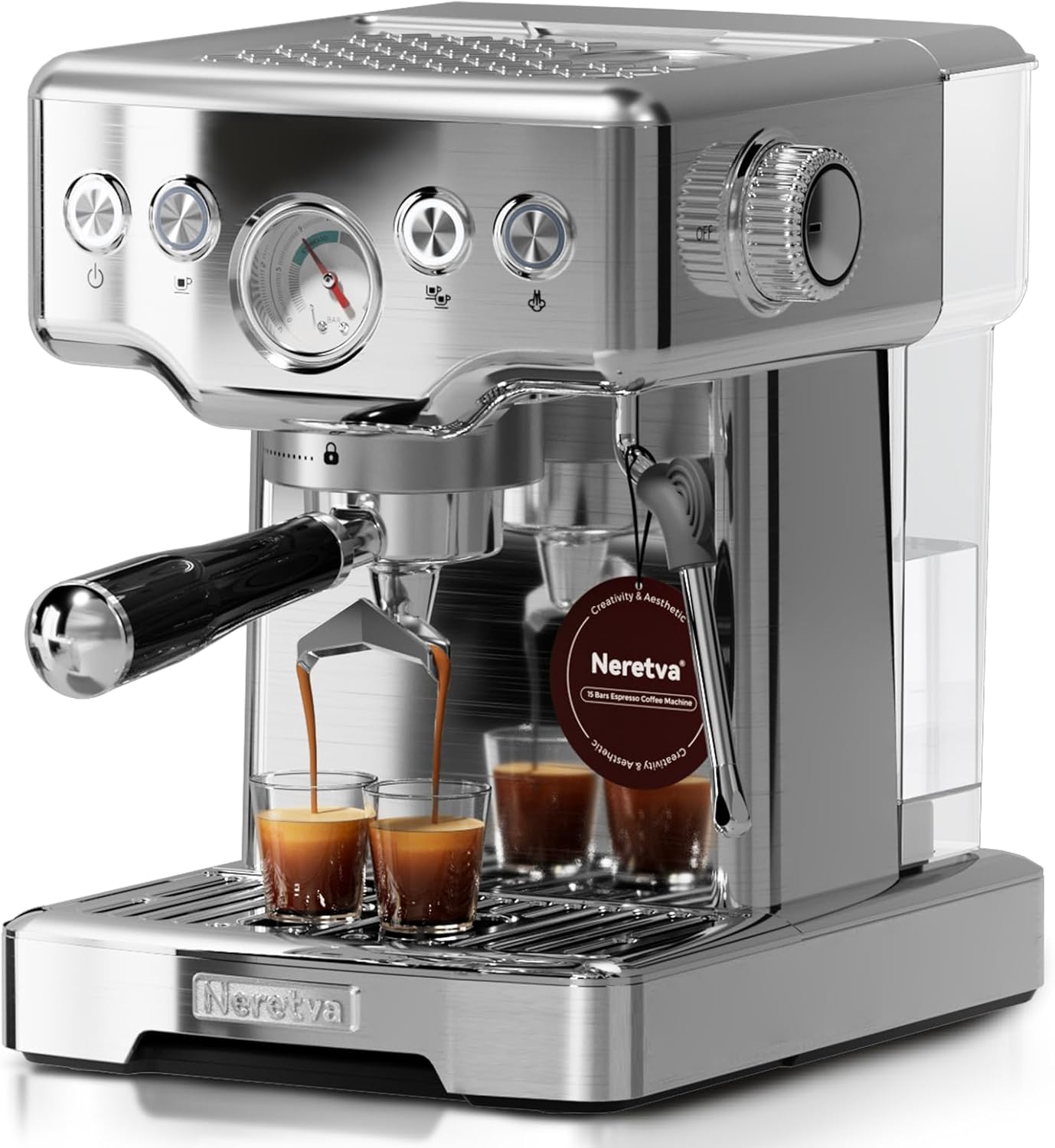
Neretva Espresso Machine 15 Bar
| Output Pressure | 15 bar |
|---|---|
| Operation Mode | Semi-Automatic |
| Wattage | 1350 watts |
| Capacity | 1.8 liters |
The Neretva Espresso Machine is a compact semi-automatic unit aimed at home baristas who want stronger control over extraction without a pro price. It uses a 15-bar pump, visible pressure gauge, and low-pressure pre-infusion to help produce fuller crema and more consistent shots, while a built-in OPV prevents overpressure. The stainless steel body includes a powerful steam wand and frothing pitcher for latte and cappuccino prep, plus a cup-warming surface and removable 1.8 L water tank for convenient daily use. Controls are button-based and the machine accepts ground coffee with single- and double-shot pressurized filters included, which makes dialing in easier for beginners. Practical limits include a 230 V rating that suits certain regions only and pressurized filters that simplify dosing but limit the finesse of experienced espresso users seeking full manual control. The machine is reasonably compact and comes with the essential accessories, so it works well as a budget-friendly way to step up from pod machines while still requiring some learning to get ideal shots.
Best for: Home users who prioritize stronger, barista-style espresso and milk drinks on a budget and want visible pressure feedback to learn and improve their shots.
Less Ideal for: People seeking a true prosumer setup for advanced manual dosing and non-pressurized extraction or shoppers needing a 110–120 V machine for North American outlets without modification.
- 15-bar pump plus visible pressure gauge for clearer feedback during extraction
- Low-pressure pre-infusion and automatic pressure relief for more consistent shots and safety
- Powerful steam wand and included frothing pitcher for making lattes and cappuccinos
- Removable 1.8 L water tank and cup warmer improve daily convenience
- Includes portafilter, single/double pressurized filters, tamper and dosing tools so you can start brewing right away
- Uses pressurized filters which limit the ability to fully control extraction compared with non-pressurized baskets
- Rated for 230 volts which may not match all home electrical standards without an appropriate outlet
Verdict: A budget-friendly semi-automatic machine that gives home baristas visible pressure control and strong steaming power to make espresso-based drinks without a high-end price.
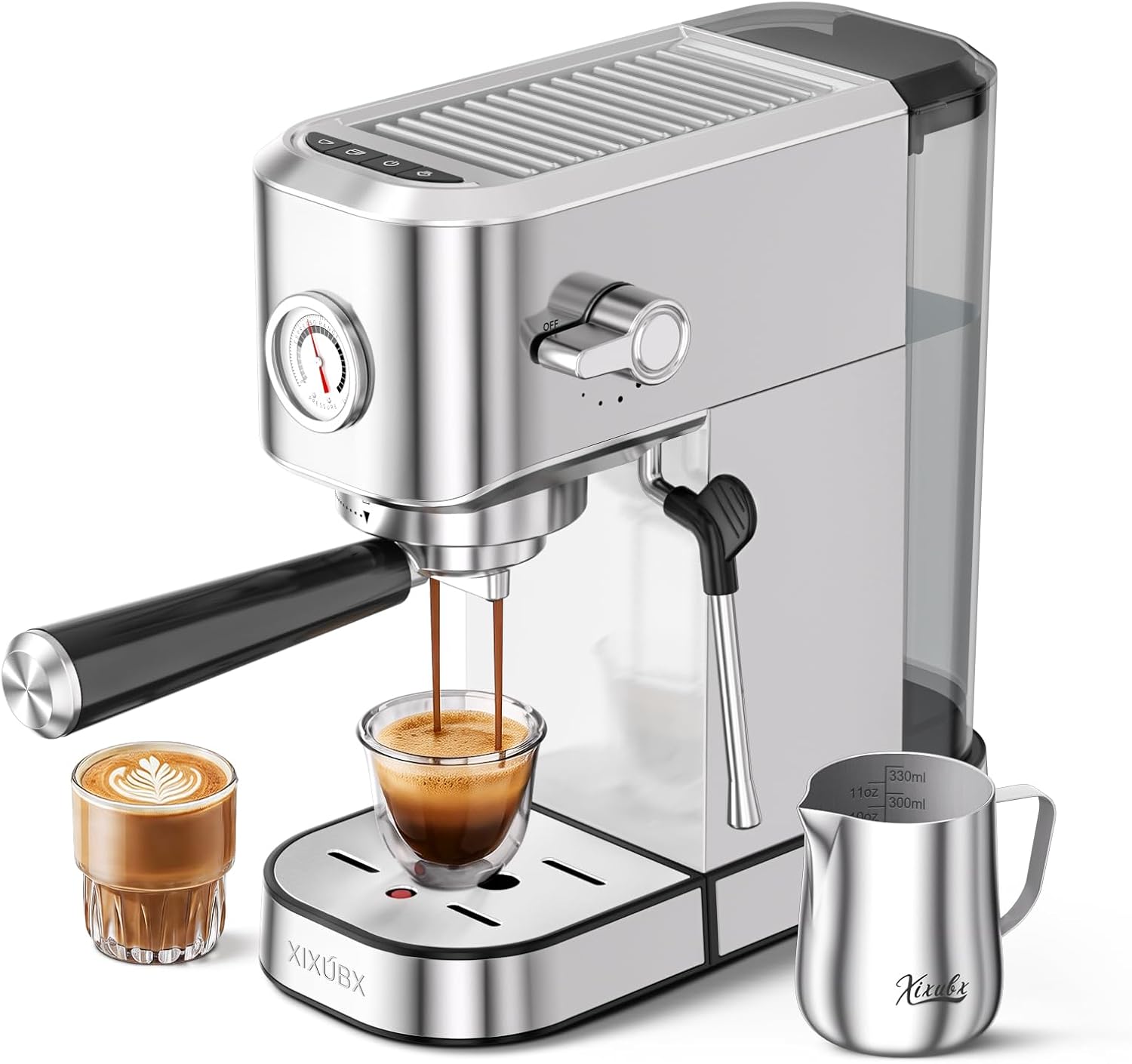
XIXUBX EM720 Espresso Machine
| Operation Mode | Semi-Automatic |
|---|---|
| Wattage | 1350 watts |
| Voltage | 120 volts |
| Output Pressure | 20 bar |
| Capacity | 42 fluid ounces |
The XIXUBX EM720 is a budget-friendly semi-automatic espresso machine aimed at home use that pairs a 20-bar pump with instant-heating technology so you can brew and froth back-to-back without long warm-up or cooldown periods. It accepts ground coffee, offers single and double-brew baskets, and has a visible pressure gauge to help dial in extraction. The 360° swivel steam wand and included stainless steel frothing pitcher make it straightforward to produce microfoam for cappuccinos and latte art, while the 42 oz removable tank reduces refills for multiple servings. Controls are button-based and simple for beginners, and the unit includes basic accessories like a tamper and two filter baskets. Expect a compact stainless steel body that fits small kitchens, dorms, or offices, but note the portafilter uses die-cast aluminum and plastic and should be hand washed. For practical buyers focused on value, it delivers café-style drinks at home with sensible convenience features, though it does not replace a prosumer machine in build quality or commercial durability.
Best for: Buyers who want a capable, no-frills home espresso setup that makes café-style drinks reliably and values continuous brewing and easy milk frothing over heavyweight commercial build.
Less Ideal for: People seeking a long-term prosumer machine with all-metal commercial components or a fully automatic bean-to-cup workflow should consider higher-end alternatives.
- 20-bar pump with visible pressure gauge to help achieve better extraction
- Instant heating technology allows brewing and steaming back-to-back without cooldown
- 42 oz removable water tank supports multiple cups before refilling
- 360° swivel steam wand and stainless steel pitcher for making microfoam and latte art
- Compact stainless steel design fits small kitchens, offices, or RV use
- Portafilter is die-cast aluminum and plastic and is not dishwasher safe
- Not built to the same durability standard as higher-end prosumer machines
Verdict: A practical, budget-friendly home espresso machine that lets you brew café-style shots and froth milk back-to-back with minimal fuss.
Imusa Electric Espresso Maker

| Wattage | 230 watts |
|---|---|
| Voltage | 230 volts_of_alternating_current |
| Coffee Input Type | ground |
| Filter Type | Reusable |
| Capacity | 6 cups |
The Imusa Electric Espresso Maker is a simple stoveless moka-style espresso brewer that plugs in and automates the extraction for 3 or 6 small espresso servings. You fill the lower chamber with water, add ground coffee to the funnel, set the carafe on the detachable electrical base and press the one-touch button; a visual brewing indicator and cool-touch handle make pouring straightforward and safe. Its cast aluminum body and reusable filter are durable and keep brewing times short while producing concentrated, moka-style espresso suitable for Cuban or Italian preparations. Because it runs on its own base and uses ground coffee, it is easy to use at home, in an office, or when traveling. Limitations include fixed small serving sizes (1.5 oz cups) and a manual fill/filter workflow, so it is not a full automatic espresso machine with milk frothing or pressure profiling. This is a practical, low-cost way to get strong espresso-style coffee without complicated maintenance or large counter footprint.
Best for: Buyers looking for an inexpensive, no-frills way to make strong espresso-style coffee at home or in small shared spaces who prioritize simplicity and low upfront cost.
Less Ideal for: People who want full-featured automatic espresso machines, integrated milk steaming, or larger-volume café-style servings should look elsewhere.
- Brews concentrated moka-style espresso quickly with a one-touch base
- Detachable electric base for countertop brewing and easy serving
- Durable cast aluminum construction and reusable filter reduce waste
- Cool-touch handle and visual indicator improve safety and ease of use
- Limited to small 1.5 oz espresso servings per cup
- No built-in milk frother or advanced pressure controls
Verdict: A budget-friendly plug-in moka espresso maker that delivers quick, durable, and simple small servings of strong coffee for home use.
AMZCHEF CM1636 Espresso Machine

| Operation Mode | Semi-Automatic |
|---|---|
| Output Pressure | 20 bar |
| Wattage | 1350 watts |
| Display Type | LCD |
| Coffee Input Type | Ground |
The AMZCHEF CM1636 is a compact semi-automatic espresso machine designed for everyday home use by beginners and families. It uses a 20‑bar Italian pump and NTC temperature control to deliver espresso with crema, and accepts ground coffee and ESE pods. Basic operation is simplified with single-button controls for single or double shots and one-touch modes for espresso, cappuccino, and latte, while the LCD reports brew temperature and a shot timer. The integrated automatic milk frother has a detachable 24 oz milk reservoir with a self-clean function that produces microfoam quickly without manual steaming. Practical touches include an auto-rinse cycle, overheat and dry‑boil protections, and a large 61 oz removable water tank that reduces refill frequency. Trade-offs are typical for budget home machines: it is not a commercial-grade grinder or PID-controlled prosumer unit, and advanced manual steaming or grind-to-shot workflow is limited. For buyers who want reliable, easy daily espresso and milk drinks without a steep learning curve, this machine offers strong value and safeguards for long-term home use.
Best for: Home users who prioritize a dependable, low-maintenance machine that reliably makes espresso-based drinks with minimal setup or barista skills.
Less Ideal for: Experienced home baristas who want full manual control, integrated grinding, or commercial‑level steam performance should consider higher-end prosumer models.
- 20‑bar pump and NTC temperature control for consistent extraction
- One-touch buttons and LCD display simplify shot selection and monitoring
- Automatic milk frother with detachable reservoir and self-cleaning for easy milk drinks
- Large 61 oz removable water tank reduces how often you refill
- Built-in safety features including overheat, dry‑boil, and over‑pressure protection
- Not a prosumer machine so lacks advanced manual temperature or steam control
- Does not include an integrated grinder so a separate grinder is needed for best results
Verdict: A straightforward, reliability-focused espresso machine that delivers consistent one-touch espresso and milk drinks for everyday home use.
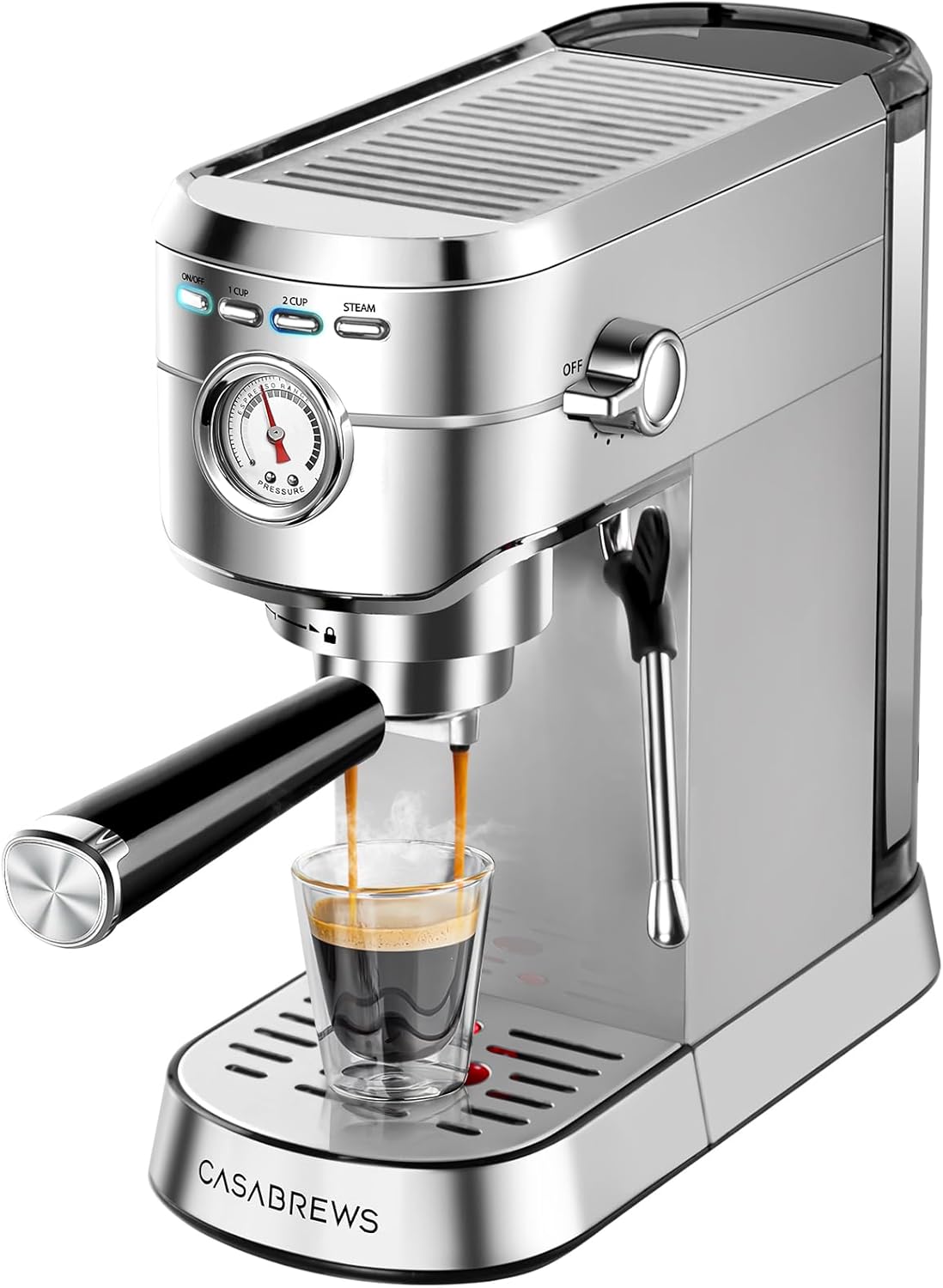
CASABREWS CM5418 Espresso Machine
| Output Pressure | 20 bar |
|---|---|
| Wattage | 1350 watts |
| Operation Mode | Semi-Automatic |
| Coffee Input Type | ground_coffee |
| Filter Type | Reusable |
The CASABREWS CM5418 is a compact semi-automatic espresso maker aimed at home baristas who want café-style espresso without a lot of fuss. It uses a 20-bar Italian pump and a built-in pressure gauge to help dial in extraction, and a low-pressure pre-infusion feature that can improve flavor balance. The machine includes a 51mm portafilter, one- and two-cup filter baskets, and a powerful steam wand that textures milk for cappuccinos and lattes. The removable 34 oz water tank and cup-warming tray make routine use convenient, and the stainless steel body fits easily on a small counter. Users should expect a short warm-up cycle and to follow the cooling steps after steaming milk to avoid the overheat protection that pauses brewing. Because it requires manual dosing, grinding, and tamping, getting consistently great shots takes some practice, but the pressure gauge and accessories make learning straightforward. For a budget home machine, it balances useful controls with a compact footprint, though it is best for daily drinkers willing to invest time in technique rather than those seeking a fully automatic, maintenance-free machine.
Best for: Buyers who want a budget-friendly machine that offers hands-on control and visual pressure feedback so they can learn and improve espresso technique over time.
Less Ideal for: People who want fully automatic one-touch brewing or who need rapid successive drinks without waiting for the machine to cool are better off choosing a higher-end dual-boiler or super-automatic model.
- 20-bar pump with built-in pressure gauge aids shot tuning and consistent crema
- Powerful steam wand capable of producing microfoam for lattes and cappuccinos
- Compact stainless steel design with removable 34 oz water tank for easy refills
- Includes 51mm portafilter, one- and two-cup baskets, and tamper for a complete start-up kit
- Single boiler design requires cooling between steaming and brewing which slows back-to-back drinks
- Semi-automatic operation needs manual dosing, tamping, and grinder adjustments to achieve consistent results
Verdict: A compact, budget-oriented semi-automatic that gives home users pressure feedback and a steam wand to learn true espresso and milk-texturing skills.
CASABREWS 3700 Essential

| Output Pressure | 20 bar |
|---|---|
| Wattage | 1350 watts |
| Operation Mode | Semi-Automatic |
| Coffee Input Type | Ground |
| Capacity | 43.9 fluid ounces |
The CASABREWS 3700 Essential is a compact semi-automatic espresso maker aimed at home users who want café-style drinks without a complicated setup. It brews under 20-bar pressure and uses PID temperature control to hold stable heat for more consistent extraction, while a powerful steam wand produces microfoam for lattes and cappuccinos. The machine includes a 51mm portafilter with one- and two-cup stainless steel filters, a removable 43.9 oz water tank for several servings between refills, and a removable drip tray that accepts taller cups. Controls are button-based and programmable for single or double cup volumes, and the stainless-steel housing feels sturdier than many entry-level machines. Expect a short warm-up time and basic maintenance like regular descaling and steam-wand cleaning. Limitations are typical for its class: it is single-boiler so you may need a brief pause between steaming and brewing, and it lacks a pressure gauge and advanced profiling features found on higher-end units. For someone seeking predictable, good espresso at a value price, it covers the essentials well.
Best for: Buyers who want reliable, café-style espresso and milk drinks at home without a steep learning curve or big investment, and who prioritize consistent temperature and simple programmable doses.
Less Ideal for: Those who want pro-level workflow with simultaneous steam and brew or fine-grained pressure monitoring should consider higher-end machines with dual boilers and pressure gauges.
- 20-bar pump with PID temperature control for more consistent extraction
- Powerful steam wand capable of producing microfoam for lattes and cappuccinos
- Detachable 43.9 oz water tank for easy refills and multiple servings
- Includes 51mm portafilter with single- and double-shot stainless steel filters
- Stainless-steel body and removable drip tray for simpler cleaning
- Single-boiler design requires waiting between steaming and brewing for best temperature
- No pressure gauge or advanced shot-profiling features for more precise tuning
Verdict: A compact, value-focused semi-automatic espresso machine that delivers consistent shots and capable milk steaming for home users who want café-style drinks without complexity.
Choosing the Right Budget Espresso Machine for Home: Key Factors to Consider
Extraction Consistency
Consistent extraction determines shot quality from one use to the next. On budget machines, pump performance, grouphead stability, and boiler temperature control vary widely. A unit that holds stable pressure and temperature will extract oils and soluble solids evenly, producing a balanced shot instead of thin or sour results.
Consistency matters because you will likely dial in a single bean and grind size at home. If the machine fluctuates, you will spend more time adjusting grind and tamp rather than enjoying espresso. Look for machines that cite stable pump ratings and practical features such as a pre-infusion cycle or a thermally stable brew path.
Steam and Frothing Capability
If you plan to make milk drinks, steam performance is crucial. Budget machines use a range of boiler arrangements from single thermoblocks to small single boilers, and those differences change how quickly you can steam milk and how fine the microfoam will be.
Good steam ability reduces time at the wand and gives better texture for lattes and cappuccinos. Consider whether the wand has enough power to create a rolling vortex in a small pitcher and whether it is easy to purge and clean after use. Weigh steam strength against how often you expect to froth milk to avoid buying more machine than you need.
Build Quality and Materials
Durable materials affect longevity and how the machine performs over months and years. Metal portafilters, brass or stainless brew paths, and replaceable gaskets are indicators of better long-term value even at low prices. Thin plastic components can save cost initially but may fail earlier and are more likely to affect temperature stability.
A solid chassis will also reduce vibration and noise during brewing. Inspectable and replaceable parts, such as a removable water tank and a screw-in portafilter basket, make maintenance simpler and extend usable life.
Ease of Cleaning and Maintenance
Regular cleaning keeps espresso tasting good and machines working reliably. Budget machines should offer practical cleaning access: removable drip trays, accessible water tanks, and simple backflush or descaling steps when applicable. Complex disassembly or hidden seals make routine maintenance difficult.
Maintenance frequency affects ongoing ownership costs and convenience. Machines that minimize hidden cavities and provide clear cleaning paths reduce the chance of scale buildup and bacterial growth, which preserves both taste and machine health.
User Controls and Ergonomics
How you interact with the machine shapes daily enjoyment. Clear buttons, reliable switches, and an ergonomically placed steam wand and portafilter simplify the workflow from start to cup. Adjustable settings such as cup volume or a manual steam control help tailor drinks without complicated menus.
Ergonomics also includes water tank placement for easy refills, a comfortable portafilter handle for repetitive use, and visible indicators for temperature or descaling that reduce guesswork. Even on a budget, intuitive controls save time and frustration.
Single Boiler Vs Thermoblock: What Works for Home Use
Budget espresso machines typically use either a small single boiler or a thermoblock heating system. Single boilers give steady temperature for brewing and steaming separately but may require a short wait between functions. Thermoblocks heat water on demand, offering quicker readiness and lower standby energy but sometimes at the cost of temperature stability during extraction.
For everyday home use, consider how often you will switch between brewing and steaming. If you plan to make mostly straight espressos, a unit that prioritizes stable brew temperature will be helpful. If you want a machine ready to make milk drinks back-to-back, a faster heat-up system may be more convenient despite slightly higher extraction variability.
- Single boiler: better temperature stability, may need wait time between brewing and steaming.
- Thermoblock: faster readiness, lower idle heat, variable consistency.
Portafilter Size and Its Effect on Shots
Portafilter diameter and basket type influence dosing, tamping, and crema. Many budget machines use smaller, 51 mm-style portafilters or pressurized baskets to simplify extraction for beginners. Pressurized baskets can compensate for imperfect grind and tamp, which is useful for novices, but they limit control for those aiming to fine-tune shots.
If you want more control as your skills grow, prioritize machines that accept a larger, non-pressurized basket and offer a standard portafilter. This allows you to experiment with dose and grind without the masking effects of pressure-compensating baskets.
- Pressurized baskets: forgiving for inconsistent tamping and grind.
- Non-pressurized baskets: better for dialing in and richer crema when paired with proper technique.
Water Quality, Filtration, and Descaling
Hard water shortens component life and degrades flavor through scale buildup. Budget machines often lack built-in filtration, so using filtered or softened water preserves performance and reduces descaling frequency. Regular descaling is essential, especially in hard-water areas, and some models include simple descaling indicators or procedures.
Consider whether you can comfortably perform the recommended descaling schedule. If not, a machine that tolerates occasional maintenance with easy-to-follow steps and accessible internal parts will be a more practical choice for long-term ownership.
- Use filtered water to reduce scale and improve taste.
- Follow a regular descaling routine to maintain performance.
Space, Footprint, and Kitchen Fit
Size matters when counter space is limited. Budget machines come in compact footprints that fit small kitchens, but you should account for extra clearance for the steam wand, portafilter swing, and removable water tank. A machine that fits neatly under cabinets while leaving room to maneuver will be easier to use daily.
Also consider where you will store accessories like tampers and pitchers. Integrated storage solutions or a thoughtful layout for drip tray and cup clearance make setup more streamlined in tight spaces.
- Measure height for under-cabinet clearance.
- Check side and front clearance for steam wand and portafilter.
Accessories and Upgrade Paths
Budget machines may be limited in bundled accessories, but some accept aftermarket improvements like better portafilters, dedicated tampers, or small PID controllers for temperature management. Planning for modest upgrades can extend a machine's useful life and improve results without replacing the entire unit.
Think about the access and compatibility of common upgrades when choosing. Machines that expose serviceable components or use standard parts are easier to improve incrementally.
- Look for standard-sized portafilters and replaceable parts.
- Consider whether common accessories will fit or require adapters.
How We Chose the Best Budget Espresso Machine for Home
We focused on machines that balance reliable espresso extraction with everyday usability and low ongoing maintenance. Our selection process prioritized units that have consistent pressure delivery, a workable steam wand or frothing option, and durable brew-group components suited to repeated home use. We favored machines with accessible descaling and cleaning paths and tolerable energy use for daily operation. Key evaluation criteria included extraction consistency under typical home conditions, steam performance for milk drinks, build quality of parts that contact water and coffee, and user-facing maintenance like access to water tanks and removable drip trays. We excluded machines that require extensive commercial plumbing, professional maintenance, or proprietary single-use capsules, since those do not match the budget home-use scope. We also filtered out units with inadequate pump pressure or poor steam capability that consistently underperform for espresso or milk drinks.
Our full evaluation process is outlined in our review methodology.
FAQ
How often should I descale a budget espresso machine for home?
Descale frequency depends on water hardness and usage. In areas with hard water, descaling every 1 to 3 months is common; with soft or filtered water, every 3 to 6 months is usually sufficient. Follow the machine's maintenance guide and inspect for slowed flow or unusual tastes as warning signs.
Can a budget machine produce true espresso crema?
Yes. Many budget machines, especially those with adequate pump pressure and a proper portafilter, can produce a noticeable crema. Consistent grind, fresh coffee, and correct dosing are just as important as machine capability for good crema.
Is a steam wand necessary if I only drink black espresso?
No. If you mainly drink straight espresso, a powerful brew system and stable extraction matter more than steam. Machines without a strong steam wand can still produce excellent shots and are often simpler to maintain.
Should I buy a machine with a pressurized basket?
Pressurized baskets are forgiving and help beginners get acceptable shots with inconsistent grind and tamp. If you plan to learn barista techniques and adjust grind and dose, a non-pressurized basket gives more control and reward for skill development.
How important is pump pressure on budget units?
Pump pressure influences extraction force and crema formation. Many budget machines use a 15-bar nominal pump but actual effective pressure during extraction matters more. Look for machines that describe steady pressure delivery or include pre-infusion to improve extraction even if nominal pressure figures are similar.
Final Verdict
When choosing a budget espresso machine for home, prioritize extraction consistency and the steam capability that matches the drinks you plan to make. Durable materials, easy access for cleaning, and straightforward controls reduce frustration and extend useful life more than small differences in advertised features. Balance your priorities: opt for better temperature and pressure stability if you want high-quality shots, or choose a faster heat-up system if convenience and quick milk drinks matter most. With the right tradeoffs and a modest set of upgrades, a budget machine can deliver satisfying espresso for everyday home use.