
Note: This article contains affiliate links. If you click on these links and make a purchase, we may earn a small commission at no extra cost to you. This helps support our research and content. Read our full affiliate disclosure here.
Picking the right budget juicer matters if you want fresh juice without fuss or a large upfront cost. With many low-cost models available, differences in extraction efficiency, ease of cleaning, and long-term durability determine which machines actually save you time and deliver usable juice. This guide shortlists the top budget juicers that balance performance and convenience for everyday use. Each pick was selected with practical kitchen needs in mind and evaluated on extraction, cleanup, and build considerations. Read on for the factors we used to choose these models and what to expect from each type.
Top Picks at a Glance
| Best Overall The best all-around choice for most situations | Breville Juice Fountain Compact BJE200XL |  |
| Best Quality Built to a higher standard if you want something more solid | Hurom H70 Slow Juicer |  |
| Best Value The sweet spot between price and what you get | AMZCHEF Cold Press Juicer 1902B |  |
| Best Budget The cheapest option that still gets the job done reliably | QCen 500W Centrifugal Juicer | 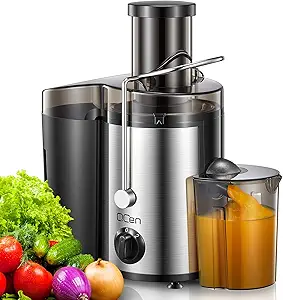 |
| Top Rated A top-rated pick with lots of positive feedback | ECOSELF Cold Press Juicer |  |
| Most Popular A crowd favorite that many people choose with confidence | Juilist Centrifugal Juicer AMR526 |  |
| Best Seller A high-volume bestseller chosen again and again | Elite Gourmet ETS623 Citrus Juicer |  |
Breville Juice Fountain Compact BJE200XL

| Capacity | 25 fluid ounces |
|---|---|
| Maximum Power | 700 watts |
| Power Source | Electric |
| Number of Speeds | 1 |
The Breville Juice Fountain Compact is a small, countertop centrifugal juicer built for fast everyday use. Its 3-inch extra-wide chute reduces prep by letting you juice many whole fruits and vegetables without cutting, while a titanium-reinforced disc and stainless steel micro-mesh filter basket help extract juice efficiently. The included 25 fl oz jug has a built-in froth separator for smoother pours, and cord storage under the base keeps counters neater. With a 700-watt motor and a single-speed control, it handles common produce like apples, carrots, celery, and oranges quickly, though it will produce more foam and slightly less yield than a slow masticating model. Cleanup is straightforward because many parts are dishwasher-safe and a cleaning brush is included, but the compact footprint also means a smaller pulp container so very large batches require more emptying. For buyers who want quick, regular juice without a large appliance, this model balances performance, size, and convenience.
Best for: Anyone seeking an affordable, space-conscious juicer for daily fresh juices who values quick prep and easy cleanup over maximum yield.
Less Ideal for: People who prioritize maximum juice yield, very large batch juicing, or the quietest operation should consider slower masticating models instead.
- 3-inch extra-wide chute reduces prep by fitting many whole fruits and vegetables
- Titanium-reinforced disc and stainless steel micro-mesh basket for efficient extraction
- Built-in froth separator in the juice jug for smoother pours
- Compact footprint with cord storage fits small kitchens
- Most removable parts are dishwasher-safe and a cleaning brush is included
- Single-speed centrifugal design can produce more foam and slightly lower yield than slow juicers
- Smaller pulp container requires frequent emptying during large batches
Verdict: A compact, no-nonsense centrifugal juicer that delivers fast, convenient daily juices for budget-minded buyers with limited counter space.
Hurom H70 Slow Juicer

| Wattage | 150 watts |
|---|---|
| Power Source | Corded Electric |
| Material | Plastic |
| Special Features | Easy to Clean |
The Hurom H70 is a slow, single-auger masticating juicer built to maximize juice yield while keeping cleanup simple. It uses a strainer-free Easy Clean chamber and a two-part auger system that separates pulp without a mesh filter, so parts rinse clean quickly and you get smoother juice with less scrubbing. The front-facing gauge and larger self-feeding hopper cut prep time by letting you add larger pieces or multiple ingredients while juicing, and the 150-watt motor turns at low speed for quieter operation and gentler extraction—good for leafy greens and harder produce alike. In daily use it produces high-yield, low-pulp juice and the simplified assembly makes it approachable for frequent juicers. The unit is mostly plastic which keeps it lightweight but may feel less premium than heavier metal models, and the compact footprint limits bowl capacity compared with full-size commercial machines. For buyers prioritizing yield and easy maintenance in a compact package, the H70 delivers useful performance without complicated parts.
Best for: Buyers who want strong everyday juice performance and high yield without fiddly filters, and who value quick cleanup and a compact countertop fit.
Less Ideal for: People who need heavy-duty, commercial-scale juicing or the highest-end metal construction should consider larger, more robust models instead.
- Strainer-free Easy Clean chamber reduces cleaning time and prevents mesh buildup.
- Self-feeding, wide hopper minimizes chopping and speeds up prep.
- Slow masticating extraction yields more juice with less pulp for higher efficiency.
- Front-facing gauge lets you monitor juice level and texture during operation.
- Main construction is plastic, which may feel less durable than metal-bodied juicers.
- Smaller capacity and compact size limit large-batch juicing for big households.
Verdict: If you want efficient cold-press juice and minimal cleanup in a compact, performance-focused machine, the Hurom H70 is a strong budget-friendly choice.
AMZCHEF Cold Press Juicer 1902B

| Wattage | 300 watts |
|---|---|
| Maximum Power | 350 watts |
| Power Source | Electric |
| Voltage | 120 volts |
| Capacity | 5 pounds |
The AMZCHEF 1902B is a slow masticating juicer built to handle whole fruits and vegetables with minimal prep thanks to its 5.4-inch feed chute. Its single auger and upgraded spiral produce high juice yield while separating dry pulp for smoother, less pulpy juice, and the stainless steel blade and body give a durable feel. The motor runs quietly and includes overheat protection and auto-reverse to clear jams, which helps with dense items like carrots or leafy greens. Detachable parts and straightforward one-button operation make assembly and rinsing quick, and the included shaker cup is handy for serving. Limits to consider: it is a slow extractor so batch times are longer than centrifugal models, and hard or uncut ingredients still benefit from some prepping despite the wide chute. Capacity is aimed at household use rather than commercial volumes. For budget-focused buyers who want better yield and quieter operation than fast juicers, this model hits the key points without extra complexity.
Best for: Buyers who want a budget-friendly cold-press juicer that maximizes juice yield and minimizes prep time while staying quiet for daily household use.
Less Ideal for: People who need very fast throughput for large volumes or want fully dishwasher-safe components should consider other models.
- 5.4-inch wide feed chute reduces prep by fitting whole fruits and many vegetables
- Upgraded spiral auger and stainless steel blade for higher juice yield and durable performance
- Quiet heavy-duty motor suitable for early-morning use
- Auto-reverse and overheat protection reduce jams and protect the motor
- Detachable parts and simple one-button operation make cleaning and use straightforward
- Slower extraction speed than centrifugal juicers, so larger batches take more time
- Hand wash only for removable parts rather than dishwasher-safe
Verdict: A cost-conscious cold-press juicer that delivers high yield and quiet, low-fuss operation for everyday home juicing.
QCen 500W Centrifugal Juicer

| Maximum Power | 500 watts |
|---|---|
| Number of Speeds | 2 |
| Power Source | Corded Electric |
| Voltage | 120 volts |
| Capacity | 3 liters |
The QCen 500W centrifugal juicer is an entry-level countertop machine designed to turn whole or roughly chopped fruits and vegetables into juice quickly. It uses a 500W motor and a 3-inch wide feed chute to accept larger pieces so you spend less time prepping produce, and two speed settings let you choose lower RPMs for soft fruits and higher RPMs for harder items like carrots. A safety lock arm prevents the unit from running unless the cover is secured, and an overload protection circuit will cut power if the motor overheats. Most removable parts are dishwasher-safe by hand wash instructions and detach for cleaning, though centrifugal models typically produce more foam and pulp than slow masticating juicers. Expect quick extraction and decent yield on common kitchen produce, but finer nutrient extraction and quieter operation are not this machine's strengths. Its stainless steel components and button controls keep operation straightforward for daily use.
Best for: Buyers looking for an affordable, fast juicer that minimizes prep time and delivers straightforward daily juice without premium features.
Less Ideal for: Those who prioritize maximum nutrient yield, very quiet operation, or cold-press style extraction should consider higher-end masticating models instead.
- 500W motor provides quick extraction for most fruits and vegetables
- 3-inch wide feed chute reduces chopping and saves prep time
- Two speed settings let you match speed to soft or hard produce
- Safety lock arm and overload protection improve user safety
- Removable parts disassemble for easier cleaning
- Centrifugal design generates more foam and pulp compared with slow masticating juicers
- Cleaning still requires hand washing as specified in care instructions
Verdict: A budget-friendly centrifugal juicer that speeds up prep with a wide feed chute and delivers simple, fast everyday juicing.
ECOSELF Cold Press Juicer

| Material | Acrylonitrile Butadiene Styrene (ABS) |
|---|---|
| Special Features | Easy to Clean, High Juice Yield, Reverse Function, Self Feeding, Wide Feed Chute |
The ECOSELF Cold Press Juicer is a slow masticating, single-auger machine built for straightforward daily juicing. It accepts whole fruits and vegetables through a wide feed chute and uses an auto-feeding, hands-free design so you can drop produce in and let it run, which saves prep time. The low-speed cold-press extraction aims to reduce heat and oxidation for smoother, nutrient-rich juice and the manufacturer claims very high juice yield with minimal waste. Practical touches include a reverse function to clear clogs, a simple rotary knob for one-touch control, and an included cleaning brush that makes assembly and quick cleaning easier. The motor is described as high power but low noise, which helps for morning routines. Limits to expect are typical for slow juicers: extraction is slower than centrifugal models and the unit is optimized for fresh produce rather than high-throughput commercial use. For buyers prioritizing reliable, low-waste home juicing on a budget, this model covers the essentials with user-friendly features.
Best for: Buyers who want a dependable, easy-to-use cold-press juicer for daily home use and value high juice yield and low waste over speed.
Less Ideal for: People needing very fast extraction or heavy-duty commercial capacity should consider higher-throughput or commercial-grade machines instead.
- Wide feed chute and auto-feeding design reduce prep time by fitting whole fruits and vegetables
- Slow masticating extraction preserves enzymes and reduces oxidation for smoother juice
- Reverse function helps clear clogs for more reliable continuous operation
- Simple one-touch rotary control and included cleaning brush make daily use and cleanup easier
- Slower extraction speed compared with centrifugal juicers, so longer run times for large batches
- Designed for home use rather than high-volume or commercial juicing
Verdict: A budget-friendly cold-press juicer that prioritizes reliable, low-waste home juicing with hands-free feeding and clog-preventing features.
Juilist Centrifugal Juicer AMR526

| Maximum Power | 800 watts |
|---|---|
| Wattage | 400 watts |
| Feed Chute | 3" |
| Number of Speeds | 3 |
| Material | Stainless Steel |
The Juilist Centrifugal Juicer AMR526 is a budget-friendly machine built for quick, everyday juice prep. It uses a high-speed motor (advertised up to 800W peak, 400W running) and a 3" wide feed chute so you can juice many fruits and most vegetables with minimal chopping. Three speed settings cover soft fruits, harder produce, and a pulse/high option for tougher items, while a visible window and one-button controls keep operation simple. The stainless steel cutting disc and micro-mesh filter are dishwasher-safe and come with a cleaning brush, which makes post-juice cleanup easier than many entry-level models. Safety features include a double-lock arm and thermal overheat protection to reduce risk during heavy use. Expect a compact footprint that fits small counters but a centrifugal design means it will produce more foam and less long-term nutrient retention than slower masticating juicers; very hard items, frozen produce, and sugar cane are not recommended. For the price point it offers fast, straightforward juicing with practical safety and cleaning touches, but it is best for users prioritizing speed and convenience over the highest juice yield or cold-pressed quality.
Best for: Buyers seeking an affordable, fast juicer that minimizes prep and cleanup and who value straightforward operation and safety features over maximum juice longevity.
Less Ideal for: Those wanting cold-pressed, high-yield extraction or who plan to regularly juice very hard or frozen ingredients should consider a masticating or higher-end model instead.
- Wide 3" feed chute reduces prep time for whole fruits and large pieces
- Three speed settings plus pulse let you match speed to soft or hard produce
- Dishwasher-safe parts and included brush simplify cleaning
- Visible window and one-button control make operation intuitive
- Built-in thermal protection and safety lock arm improve safe use
- Centrifugal extraction creates more foam and can yield less shelf-stable juice than slow juicers
- Not suitable for very hard items, sugar cane, or frozen produce
Verdict: A fast, easy-to-use budget centrifugal juicer that cuts prep and cleanup time for everyday home juicing.
Elite Gourmet ETS623 Citrus Juicer

| Maximum Power | 40 watts |
|---|---|
| Capacity | 24 oz (3 cups) |
| Power Source | Corded Electric |
| Special Features | Auto-reversing reamer, Quiet Motor |
The Elite Gourmet ETS623 is a simple countertop citrus juicer built for everyday home use. Its 40-watt motor and auto-reversing reamer help extract juice efficiently from oranges, lemons, limes, and grapefruit using a push-down, manual activation, while a built-in pulp and seed filter yields smoother juice. The 24-ounce container holds about three cups so you can make small batches for two to three servings and pour directly from the ergonomic spout. Detachable parts are designed for quick cleanup and are top-rack dishwasher safe, though the manufacturer recommends hand washing for longevity. The unit is compact and BPA-free, making it a practical choice for apartments, dorms, or RVs where counter space is limited. Expect straightforward performance without advanced settings or heavy-duty commercial power, so it is best for routine home juicing rather than frequent large-volume use.
Best for: Buyers who want a reliable, no-frills citrus juicer for occasional to moderate home use and prioritize ease of use, compact size, and straightforward cleaning.
Less Ideal for: Not a good fit for users who need a heavy-duty or high-volume juicer for frequent large batches or commercial-style use.
- Stronger 40-watt motor and auto-reversing reamer for better extraction than typical 25W models
- 24 oz (3-cup) integrated container with easy-pour spout and handle for direct serving
- Built-in pulp and seed filter for smoother juice
- Compact footprint and BPA-free construction suited to small kitchens and RVs
- Detachable parts are top-rack dishwasher safe for easier cleanup
- Not designed for heavy commercial or continuous large-batch juicing
- Some components are hand-wash recommended to preserve longevity
Verdict: A compact, easy-to-use citrus juicer that delivers better extraction than budget 25W units, making it the practical choice for risk-averse buyers seeking a dependable home juicer.
Choosing the Right Budget Juicer: Key Factors to Consider
Extraction Efficiency
How much juice the machine yields from fruits and vegetables directly affects how economical and convenient it is. Higher extraction efficiency means less produce wasted and fewer trips to the store. Efficiency depends on the juicer type, motor speed, and the design of the cutting or auger system.
For budget models, expect some tradeoffs compared with pricier units, but good low-cost designs can still deliver competitive yields for common home produce such as apples, carrots, and celery.
Ease of Cleaning
Cleaning time is a major day-to-day cost of owning a juicer. Models that disassemble quickly and have dishwasher-safe parts reduce friction and make routine juicing sustainable. Mesh filters and fine screens can be effective but often require brushing.
Consider whether parts have lots of small crevices or fixed blades that are hard to access. If you plan to juice daily, prioritize designs with fewer parts and clear access to the pulp chamber.
Build Durability and Materials
Durability determines how long a budget juicer will perform acceptably. Look for robust housings, sturdy feed chutes, and juice-contact parts made from BPA-free plastic or stainless steel. Motor protection features like overload cutoffs help prevent premature failure during heavy use.
Plastic components can be fine if molded well, but thin, brittle parts are common failure points. For a low-cost purchase to remain low-cost over time, pick units whose frequently handled pieces show solid design and fit.
Feed-Chute Size and Prep Time
A larger feed chute reduces the need to pre-cut produce, saving time during prep. Small chutes increase prep work, which adds up when juicing multiple servings or making juice for a family. Some budget models include wider chutes or auger designs that accept larger pieces.
Also consider whether the machine can process both soft fruits and harder vegetables without repeated jamming. For mixed-ingredient juices, a design that accommodates varied textures will speed workflow.
Noise Level and Countertop Footprint
Noise can determine whether juicing fits into your morning routine. High-speed centrifugal machines are typically louder than slow masticating or auger-style units. If you have roommates or early schedules, choose a quieter design.
Footprint matters in small kitchens. Check the base size and overall height to ensure the unit stores easily and fits on your counter. Some budget machines trade compact size for reduced performance, so weigh footprint against extraction needs.
Centrifugal Vs Slow Juicers: What to Expect
Budget juicers generally fall into two mechanical categories: fast-spinning centrifugal models and slow-turning masticating or auger units. Centrifugal machines extract juice quickly and cost less up front, making them attractive for users who prioritize speed. However, they often produce more foam, may yield slightly less juice from leafy greens, and tend to be louder.
Slow juicers operate at lower speeds and extract by crushing and pressing produce. They usually deliver higher yield from greens and reduce oxidation, which can slightly extend fresh juice shelf life. On budget models the performance gap narrows, so consider whether you want speed or slightly better yield and quieter operation.
- Centrifugal: faster, smaller prep time, louder, may yield less from greens
- Slow: better yield for leafy vegetables, quieter, typically slower throughput
Maintaining a Budget Juicer for Longevity
Routine maintenance keeps a low-cost juicer performing well longer. Rinse parts immediately after use to avoid dried pulp buildup that can be harder to remove and can stress seals or meshes. Regularly check and gently clean the filter or screen to maintain extraction efficiency.
Inspect seals and gaskets periodically and replace worn pieces if they are available. Lubricate any recommended moving parts according to the manual. Avoid pushing very hard items through the chute and cut fibrous produce into smaller pieces if the manufacturer suggests it.
- Rinse parts right after juicing to prevent stuck pulp
- Use a brush for mesh screens to keep holes clear
- Replace seals and filters when visibly worn to prevent leaks
Best Produce Prep Practices
Proper prep affects both yield and machine stress. Wash and, when needed, core or peel produce to avoid tastes from skins and to reduce grit. Harder vegetables like beets or carrots should be cut into pieces that match the feed-chute recommendation on the unit.
Remove large pits from stone fruits and trim excessively fibrous items. For leafy greens, bundle into small rolls to help the juicer feed them consistently. Proper prep reduces jamming and keeps the motor from stalling under load.
- Trim and cut hard produce to fit the feed chute
- Remove pits and large seeds to avoid blade damage
- Bundle leafy greens for more consistent feeding
Common Shortcomings of Very Cheap Models
Extremely low-cost juicers can cut initial expense but introduce compromises that matter over time. Typical issues include thin plastic parts that crack under stress, weak motors that overheat with heavy use, and poor sealing that leads to leaks and messy counters. These shortcomings increase maintenance needs and can negate the savings of a low purchase price.
Another common problem is inadequate customer-facing design such as unclear safety interlocks or filters that are difficult to clean. When evaluating budget options, prioritize units that address these common failure modes through simple, robust design rather than cutting features entirely.
- Watch for thin plastics around the feed chute and pulp bin
- Check for clear safety interlocks to prevent misuse
- Ensure filters and screens are accessible for cleaning
Using Juice Yield and Waste Metrics
Two practical metrics to compare models are juice yield from a standard basket of produce and the dryness of the expelled pulp. Higher yield and drier pulp indicate better extraction efficiency. While exact numbers vary by produce type, a unit that consistently leaves visibly drier pulp will save money in the long run.
If you plan to juice mainly greens or wheatgrass, seek specifications or reports that address those categories specifically. Otherwise, check user feedback on yield for mixed fruit and vegetable blends to ensure the machine performs across typical household recipes.
- Compare how dry the pulp looks after juicing similar produce
- Test with both hard vegetables and soft fruits to gauge versatility
How We Chose the Best Budget Juicer
We focused on practical, measurable traits that matter when buying a budget juicer for regular home use. Our editorial filters prioritized extraction efficiency, because producing more juice with less waste is the primary goal for most buyers. We also measured ease of cleaning and disassembly, since time spent cleaning often outweighs upfront cost in day-to-day use. Build quality and parts durability were considered to assess whether an economical unit will last through frequent use. Hopper size and feed-chute design were included because they affect prep time and workflow. Noise level and countertop footprint were assessed for small-kitchen compatibility. Excluded from consideration were novelty units, single-use citrus-only models when a multi-fruit/vegetable option was requested, and products with proprietary replacement parts that dramatically increase upkeep cost. We examined spec sheets, user-reported longevity signals, and manufacturer materials to evaluate motor protection, materials used for juice-contact parts, and the presence of useful features such as pulp control and safety interlocks. These concrete dimensions guided selections and the scorecard labels used in each product entry.
Our full evaluation process is outlined in our review methodology.
FAQ
Can a budget juicer handle leafy greens effectively?
Often it depends on the juicer type. Slow-turning or auger-style budget units typically extract more from leafy greens than fast centrifugal models, though some centrifugal machines still perform adequately with proper prep.
How often will I need to clean a budget juicer?
You should rinse or clean parts after every use. Mesh filters and pulp chambers can clog quickly, so routine brushing and occasional deeper cleaning keep performance consistent and prevent odors.
Are replacement parts commonly available for budget models?
Availability varies, but many budget juicers offer basic replaceable parts like filters and gaskets. Check a unit's manual or product documentation for replaceable part listings before buying if long-term maintenance is a priority.
Is it worth choosing a quieter model if I juice daily?
Yes. If you juice every morning, a quieter machine will be less disruptive. Slow juicers usually run quieter than centrifugal models, but some budget centrifugal units are still tolerable for daily use.
What should I do if my juicer clogs?
Stop the motor and unplug the unit before clearing a jam. Remove the pulp bin and filter, then clear fiber carefully. For persistent clogs, cut produce into smaller pieces and avoid overfeeding in a single pass.
Final Verdict
For most buyers seeking a Budget Juicer, prioritize extraction efficiency, ease of cleaning, and durable parts over aesthetic extras. Expect tradeoffs: the least expensive machines save money initially but may require more maintenance or offer lower yields. If you juice regularly, a slightly higher-quality budget unit with better parts and a quieter motor will deliver the most satisfaction over time. Decide first whether speed or yield matters more to your routine, then match a model with the best combination of extraction performance and cleaning convenience. That approach will help you pick a reliable, low-cost juicer that fits your kitchen and habits.