
Note: This article contains affiliate links. If you click on these links and make a purchase, we may earn a small commission at no extra cost to you. This helps support our research and content. Read our full affiliate disclosure here.
If you want fresh glassware of orange juice without relying on electricity, a Manual Orange Juicer is a straightforward solution. The right tool matters because it affects how much juice you get, how much time you spend prepping and cleaning, and how pleasant the squeezing process feels. This guide covers the six top manual orange juicers we shortlisted for home use. We evaluated each option for extraction efficiency, comfort, durability, and how simple it is to clean and store. Read on for practical buying guidance and the factors that matter when picking the best juicer for your kitchen routines.
Top Picks at a Glance
| Best Overall The best all-around choice for most situations | Zulay Cast Iron Juicer |  |
| Best Quality Built to a higher standard if you want something more solid | Eurolux Cast Iron Manual Juicer ELJ-5001B |  |
| Best Value The sweet spot between price and what you get | Etinslant Manual Citrus Juicer DT-LM3 |  |
| Best Budget The cheapest option that still gets the job done reliably | ChefVille 4-in-1 Manual Juicer |  |
| Most Popular A crowd favorite that many people choose with confidence | OXO Good Grips 2-in-1 Citrus Juicer |  |
| Best Seller A high-volume bestseller chosen again and again | Zulay Metal 2-in-1 Lemon Squeezer | 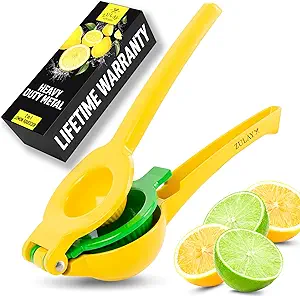 |
Zulay Cast Iron Juicer

| Material | Cast Iron & Stainless Steel |
|---|---|
| Capacity | 0.6 liters |
| Power Source | Manual |
| Recommended Uses For Product | Citrus |
This Zulay cast iron juicer is a manual lever press built for daily home use or light commercial duty. Its cast iron frame and long lever arm provide strong mechanical advantage so you can crush thick-skinned citrus with minimal effort, and the 5-inch bowl handles fruit sizes from limes to grapefruits. A stainless steel strainer and detachable parts keep seeds out of the juice and make it easier to rinse, though the unit is hand-wash only. Rubberized feet help stabilize the press during operation and the generous capacity funnel directs juice to a glass or container below. The main trade-offs are its weight and bench footprint which make it less convenient to move or store, and the need for hand cleaning rather than dishwasher-safe parts. If you want a rugged, simple tool that consistently yields more juice than handheld squeezers, this delivers repeatable performance and long-term durability.
Best for: Buyers who want a durable, high-yield manual juicer for frequent home use or occasional commercial tasks and prioritize solid construction and easy pressing over compactness.
Less Ideal for: Anyone seeking a lightweight, portable juicer, a dishwasher-safe machine, or a compact squeezer for occasional, low-volume use should consider smaller handheld or electric options instead.
- Sturdy cast iron construction built for heavy use and long service life
- Long lever arm and 5-inch bowl deliver strong leverage and high juice yield
- Stainless steel strainer keeps seeds out for cleaner juice
- Rubberized feet improve stability during pressing
- Heavy and bulky, not convenient for frequent storage or travel
- Hand wash only parts require more cleaning effort
Verdict: A rugged manual press that maximizes citrus yield and durability for buyers who want a long-lasting, high-performance juicer.
Eurolux Cast Iron Manual Juicer ELJ-5001B

| Material | Stainless Steel Cast Iron |
|---|---|
| Capacity | 15 ounces |
| Power Source | Manual |
| Special Features | Easy to Clean, Portable, Rust Resistant |
This Eurolux cast iron manual juicer is built for heavy use and uses a long lever to press citrus or pomegranate halves into a stainless steel cup, which makes extracting juice quick and forceful without electric power. In practice you cut fruit in half, position it face down in the bowl, and pull the lever to compress the fruit against the reamer; the design concentrates pressure so you get thorough extraction with less arm strain than smaller handheld presses. Detachable parts that touch fruit are dishwasher-safe, and suction feet on the base keep the unit stable during repeated cycles. The unit is quite heavy and feels commercial-grade on the counter, which helps with leverage and durability but reduces portability. Capacity is limited by the 15-ounce cup, so you will need to empty it frequently for batch juicing. Overall this is a powerful, easy-to-clean manual press suited to kitchens that need fast, repeatable citrus extraction without electricity.
Best for: Buyers who prioritize extraction performance and a durable, commercial-feel manual press for frequent citrus or pomegranate juicing.
Less Ideal for: People seeking a lightweight, compact juicer for occasional home use or those who need large-capacity batch juicing without stopping to empty a cup.
- Cast iron construction for heavy-duty, commercial-style durability
- Long lever provides strong mechanical advantage for efficient juice extraction
- Detachable, dishwasher-safe fruit-contact parts for easier cleaning
- Included stainless steel cup collects juice neatly and fits the press
- Suction feet improve stability during repeated pressing
- Relatively heavy and bulky, which limits portability and countertop storage
- 15-ounce cup requires frequent emptying during large batches
Verdict: Choose this heavy-duty lever press when you want a high-performance, commercial-style manual juicer that extracts more juice with less effort.
Etinslant Manual Citrus Juicer DT-LM3

| Material | Stainless Steel (304/18/8) |
|---|---|
| Capacity | 300 ml |
| Power Source | Manual Winding |
| Wattage | 5 watts |
This Etinslant manual citrus juicer is a simple hand squeezer built around a pointed reamer and a perforated bowl that catches seeds while routing juice into a 300 ml container. You use it by cutting citrus in half and pressing and rotating the fruit on the cone; the 11-tooth reamer and slot-style sieve are designed to maximize extraction and let juice drain quickly. The all-304 stainless construction feels sturdy compared with plastic models and resists rust and citric corrosion, and the two handles plus dual pour spouts make transferring juice straightforward. It is compact and portable for small kitchens, camping, or occasional use and is dishwasher-safe on the top rack for easy cleanup. Limitations are its capacity and manual operation: it works well for lemons, limes, mandarins and small oranges but is slower than electric juicers and requires physical effort for larger batches, and very large grapefruits may not fit comfortably on the cone.
Best for: Buyers who want a durable, no-frills tool to squeeze fresh citrus by hand for daily glasses of juice or small batches and who prioritize longevity and easy cleanup over speed.
Less Ideal for: People who need to juice large volumes regularly, want one-handed electric operation, or need to process very large grapefruits quickly.
- Durable 304 (18/8) stainless steel construction resists rust and citric corrosion.
- Pointed 11-tooth reamer and slotted sieve for efficient juice extraction and seed capture.
- Integrated 300 ml bowl with two handles and dual pour spouts for easy pouring.
- Dishwasher-safe design simplifies cleaning and maintenance.
- Small 300 ml capacity makes repeated presses necessary for larger quantities.
- Manual operation requires physical effort and is slower than electric juicers.
Verdict: A robust, all-stainless manual juicer that delivers efficient extraction and easy cleanup for small daily batches.
ChefVille 4-in-1 Manual Juicer

| Capacity | 591 ml |
|---|---|
| Material | Polypropylene (PP) |
| Power Source | Manual |
| Special Features | Portable |
This ChefVille 4-in-1 manual juicer is a lightweight, budget-friendly tool for extracting juice from lemons, limes, oranges and other produce. It pairs two reaming heads so you can switch between a 12-tooth precision cone for small citrus and a 3-claw head for larger fruit, and the clear cup has ml markings for easy measuring while you squeeze. The side-grip ergonomic design and anti-slip silicone base let you press firmly without using the detachable handle for leverage, and the flip-top design keeps the unit compact for drawer storage. Beyond juicing it can separate egg yolks and act as a small grater or crusher for garlic and ginger, which makes it handy for simple kitchen tasks. Because it is fully manual and made of polypropylene, it is quiet and inexpensive to own, though it requires more elbow grease than a lever press for large batches and is hand-wash only. For everyday household juicing and occasional cooking tasks this is a practical, space-saving choice for cost-conscious buyers.
Best for: Anyone seeking an inexpensive, space-saving juicer for occasional to moderate household use who values simple, manual operation and measuring built into the cup.
Less Ideal for: Those who need to juice large quantities quickly, want dishwasher-safe components, or prefer heavy-duty metal presses for long-term commercial use.
- Two interchangeable reamers for small and large citrus
- 16.9 oz measuring cup with clear ml markings for precise portions
- Ergonomic side-grip and non-slip silicone base for controlled squeezing
- Multi-function design doubles as egg separator and small grater to reduce clutter
- Compact flip-top design and detachable handle for easy storage and pouring
- Manual operation can be tiring for large volumes of fruit
- Fully polypropylene construction may not be as durable as metal alternatives
Verdict: A low-cost, compact 4-in-1 manual juicer that delivers measured, versatile citrus juicing for budget-minded home cooks.
OXO Good Grips 2-in-1 Citrus Juicer

| Capacity | 350 ml |
|---|---|
| Power Source | Manual |
| Material | Plastic |
| Product Care Instructions | Dishwasher Safe |
The OXO Good Grips 2-in-1 Citrus Juicer is a simple handheld juicer built for everyday kitchen use. It includes two removable reamers so you can switch between small citrus like lemons and limes and larger fruit such as oranges and grapefruits, and the reamers nest for compact storage. The body is contoured for a comfortable grip and features clear measurement markings up to 350 ml to help you measure juice as you go. A drip-free pour spout reduces mess when transferring juice to a glass or bowl, and all parts are dishwasher safe for easy cleanup. Because it is fully manual and made of plastic, it works quietly and requires no counter space or power, but it does rely on user effort and will be slower than electric juicers for large batches. The plastic construction keeps weight low and the BPA-free design is practical for casual juicing, though users seeking heavy-duty durability or metallic parts may prefer a different style.
Best for: Buyers who want a reliable, low-effort manual juicer with clear measurements and easy cleanup for occasional to moderate home juicing and who value social-proofed choices.
Less Ideal for: Not a great fit for users who need high-volume or commercial juicing or who prefer a heavy-duty metal juicer for long-term durability.
- Two interchangeable reamers for small and large citrus
- Clear measurement markings up to 350 ml for on-device measuring
- Drip-free pour spout reduces spills when pouring
- Removable reamers nest for compact storage and are dishwasher safe
- All-plastic construction may feel less durable than metal alternatives
- Manual operation requires effort for large volumes of juice
Verdict: A compact, user-friendly manual juicer with two reamers and built-in measurements that delivers reliable results for home citrus juicing.
Zulay Metal 2-in-1 Lemon Squeezer

| Material | Aluminum |
|---|---|
| Blade Material | Stainless Steel |
| Power Source | Manual |
| Capacity | 0.5 liters |
The Zulay Metal 2-in-1 Lemon Squeezer is a simple, manual citrus press that uses a hinged bowl-and-cone design to extract juice with minimal effort. You place a halved lemon, lime, or small orange in the bowl and squeeze the ergonomic handles together to press juice through a seeded, pulp-filtering base. Constructed from aluminum with stainless steel cutting edges, it feels sturdy and built for frequent kitchen use, and the compact form stores easily in a drawer. Its manual operation means no power, no batteries, and immediate cleanup by rinsing or placing in the dishwasher. Limitations are its size and bowl capacity, which suit single servings rather than juicing large quantities, and the hand-wash guidance in some listings means extra care if you want to preserve the finish. For straightforward citrus tasks—cocktails, dressings, and single glasses of juice—this squeezer delivers reliable extraction and a reassuringly heavy build.
Best for: Buyers who want a dependable, no-frills manual citrus press that feels durable and extracts juice efficiently for single servings, cocktails, and occasional kitchen use.
Less Ideal for: People who need to juice large volumes regularly or want an electric juicer for speed and hands-off operation should consider other options.
- Heavy-duty aluminum construction provides a solid, durable feel
- Ergonomic handle reduces hand strain during squeezing
- Built-in holes filter seeds and most pulp for cleaner juice
- Compact, manual design needs no power and stores easily
- Small bowl capacity makes it slow for larger batches
- Finish may require hand washing to maintain appearance
Verdict: Choose this robust manual squeezer if you want a compact, heavy-duty tool that reliably extracts juice for single servings without electricity.
Choosing the Right Manual Orange Juicer: Key Factors to Consider
Extraction Efficiency
How much juice you can get from each orange affects time and waste. Efficient juicers use presses or reamer geometries that compress fruit thoroughly while minimizing pulp and pith in the cup. Better extraction reduces the number of oranges you must use to reach a serving, which matters if you juice daily or for a family.
Consider juicers that create even pressure and capture juice cleanly rather than simply spinning or tearing the fruit. Efficiency also ties to how the machine handles different orange sizes; some designs adapt better to small or large fruit without losing yield.
Ease of Cleaning
Frequent cleaning is the reality of citrus juicing because sticky juice and pulp can build up quickly. Choose designs with straightforward disassembly, smooth surfaces, and minimal small crevices where residue can hide. Components that are dishwasher-safe or rinse-clean easily save time and encourage more frequent use.
Materials that resist staining and odor retention are also important. Stainless or BPA-free plastics with simple forms are easier to maintain than complex mechanisms that require tools to take apart.
Build Quality and Materials
The acidity of citrus can corrode low-quality metals and degrade certain plastics over time. Juicers constructed from corrosion-resistant stainless steel, anodized aluminum, or durable food-grade plastics will last longer and keep working consistently. Pay attention to fasteners, pivots, and seals since these are common failure points on manual presses.
Solid construction also affects stability during use. Heavier, well-engineered bases reduce slipping and rocking as you apply pressure, improving safety and user confidence.
User Comfort and Leverage
Manual juicing is a mechanical task, so ergonomic handle placement, comfortable grips, and effective leverage shorten effort and reduce wrist strain. Lever-based presses amplify force, letting you extract more juice with less effort, while small hand-held reamers may be tiring for multiple servings.
If you plan to juice frequently or for several people, prioritize designs that offer mechanical advantage and a natural hand position. Non-slip grips and well-balanced components make repetitive use less fatiguing.
Stability and Footprint
A stable base reduces movement and spillage while juicing. If counter space is limited, footprint matters: some manual presses have a small vertical profile but need clearance for the lever, while others fold or disassemble for storage. Consider both the operational footprint and how the unit stores when not in use.
Heavier bases or suction feet increase stability but add weight for storage. Think about where you will use and store the juicer so you select a form factor that fits your kitchen routine.
Juice Quality and Pulp Control
Different people prefer more or less pulp in their juice, and the juicer you pick affects that outcome. Reamer-style units often let more pulp through, whereas press-style machines can yield clearer juice with less suspended fibers. Some models include strainers or adjustable filters to dial in pulp level.
Consider whether you value clearer juice for drinking straight or a fuller texture for recipes and smoothies. Filters and strainers also impact cleanup, so weigh pulp control against maintenance needs.
Manual Press Vs Reamer: Which Suits Your Routine
Manual presses use a lever and a compression plate to squeeze juice out with minimal hand-cranking. They are usually faster and less tiring for multiple oranges because the leverage multiplies your force. Reamers require twisting or pressing the fruit onto a ridged cone and tend to be simpler and more compact, but they demand more wrist work for larger batches.
If you plan to juice one or two oranges occasionally, a compact reamer might be the most convenient. If you regularly prepare several servings at once, a lever press can save effort and produce more consistent extraction.
- Press: Better leverage, higher yield for multiple oranges
- Reamer: Compact, straightforward, lower initial cost of effort
- Consider how often and how many servings you will prepare
Material Choices and Corrosion Resistance
Citrus juice is acidic and can discolor or corrode some metals and plastics. Stainless steel and anodized aluminum resist this wear, while food-safe plastics vary in long-term durability. Look for parts labeled food-grade and corrosion-resistant, especially for components that contact juice directly.
Rubber or silicone feet and handles improve grip and protect counters. Also check for coatings on pressure plates and pivots that prevent rust and make cleaning simpler.
- Stainless steel for long-term durability
- Anodized or coated metals resist corrosion
- Smooth plastics are easier to clean but may scratch over time
Cleaning Strategies to Keep Your Juicer Fresh
Designs that disassemble into a few large pieces are easiest to clean by hand or in the dishwasher. Rinse immediately after use to prevent sticky residue from drying. If a juicer includes a built-in strainer, remove and rinse the strainer thoroughly to avoid pulp buildup.
For stubborn stains or odors, soaking in warm soapy water followed by a vinegar rinse helps remove residue. Avoid abrasive pads on coated surfaces to preserve finishes.
- Immediate rinse prevents drying and sticky buildup
- Dishwasher-safe parts reduce labor if compatible
- Soak and use mild acid rinses for odors and stains
Storage and Counter Placement Tips
Think about where the juicer will live when not in use. If you have limited cabinet space, favor compact or foldable designs. If you keep it on the counter, prioritize an attractive finish and a stable base that sits cleanly under a citrus press.
Some models stand upright and take minimal horizontal space but need vertical clearance for the lever. Others break down into pieces for flat storage in a drawer. Choose the format that fits your kitchen layout to ensure the juicer is accessible when you want it.
- Measure storage space before choosing a larger press
- Consider weight if you plan to move the juicer often
- Non-slip feet help on smooth countertops
Common Maintenance Issues and How to Avoid Them
Pivots and hinges are common wear points on lever presses. Keep them clean and dry after washing, and apply a food-safe lubricant if the manufacturer recommends it. Tighten fasteners periodically to maintain rigid operation.
For plastic components that stain, avoid prolonged contact with strongly colored citrus peels or storage in closed damp compartments. Regular rinsing and drying reduce odor and discoloration risk and extend usable life.
- Inspect hinges for buildup and clean regularly
- Dry all parts before storage to prevent corrosion
- Replace worn seals or grips to restore stability
How We Chose the Best Manual Orange Juicer
We focused on features that actually change the day-to-day experience of using a manual orange juicer. First, extraction efficiency: we prioritized mechanisms and geometries that consistently yield more juice from a single orange with minimal pith and waste. Second, build and materials: corrosion-resistant parts and sturdy construction matter for longevity with acidic fruit. Third, user comfort and leverage: handles, press geometry, and grip design determine how easy it is to juice multiple oranges without strain. Fourth, cleaning and maintenance: simple disassembly, few crevices, and dishwasher-safe components reduce friction in regular use. Fifth, footprint and storage: compact, stable designs are better for small kitchens or occasional use. We excluded machines that require electricity or are positioned as commercial equipment because this guide focuses on home manual juicers. Products were filtered for widely applicable features, reliable materials, and clear maintenance expectations. The final shortlist reflects options that balance yield, comfort, durability, and ease of cleaning for typical household citrus tasks.
Our full evaluation process is outlined in our review methodology.
FAQ
Can a manual orange juicer extract as much juice as an electric model?
Often manual presses can extract nearly as much juice per orange as electric juicers because they apply direct compression. Results depend on design and your technique. For consistent high-yield extraction, lever presses generally outperform small handheld reamers.
How do I prevent bitter pith from getting into my juice?
Avoid pressing or reaming too deep into the peel. Cut oranges in half and press with steady force without crushing the rind. Some juicers include strainers that trap coarse pith; using a fine strainer after juicing also improves clarity.
Are manual juicers suitable for large batches or entertaining?
Manual presses with good leverage handle multiple oranges more comfortably than hand reamers and can work well for small gatherings. However, for very large batches an electric option will be faster. Consider the number of servings you routinely prepare when choosing a style.
What is the best way to clean sticky pulp from the strainer?
Rinse the strainer immediately under running water and use a soft brush to dislodge trapped fibers. For dried pulp, soak the strainer in warm soapy water for a few minutes before brushing. Avoid metal brushes that could damage fine mesh.
Will citrus juice damage juicer parts over time?
Acidic juice can wear non-resistant metals and some plastics over long periods. Choosing corrosion-resistant materials and rinsing parts promptly after use reduces risk. Regular inspection and maintenance help catch wear before it affects performance.
Final Verdict
When choosing a Manual Orange Juicer focus on the tradeoffs between effort, yield, and convenience. If you juice frequently or make multiple servings, prioritize extraction efficiency and good leverage. For occasional single-glass use, a compact reamer with easy cleanup may be sufficient. Also weigh build materials and cleaning ease because acidic juice accelerates wear and residue buildup. Pick a design whose footprint and storage fit your kitchen so the juicer is easy to access and maintain. Prioritize the criteria that match your routine and you will end up with a reliable, satisfying juicing solution.