
Note: This article contains affiliate links. If you click on these links and make a purchase, we may earn a small commission at no extra cost to you. This helps support our research and content. Read our full affiliate disclosure here.
Picking the right budget manual orange juicer matters if you want fresh juice without taking up counter space or dealing with complicated cleanup. A good manual orange juicer gives consistent yield, squeezes efficiently, and stays sturdy through daily use. This guide presents seven shortlisted budget-friendly manual orange juicers that stood out for build, extraction efficiency, and ease of upkeep. You will get clear evaluation criteria and practical notes to help you match a compact juicer to your routine. Read on for a concise breakdown that leads into the top picks.
Top Picks at a Glance
| Best Overall The best all-around choice for most situations | Kensington London Lemon Squeezer |  |
| Best Quality Built to a higher standard if you want something more solid | Eurolux Cast Iron Juicer ELJ-5001B |  |
| Best Value The sweet spot between price and what you get | Etinslant Manual Citrus Juicer |  |
| Best Budget The cheapest option that still gets the job done reliably | Pebipoo Lemon Squeezer |  |
| Top Rated A top-rated pick with lots of positive feedback | OXO Good Grips 2-in-1 Citrus Juicer |  |
| Most Popular A crowd favorite that many people choose with confidence | Zulay Metal 2-In-1 Lemon Squeezer | 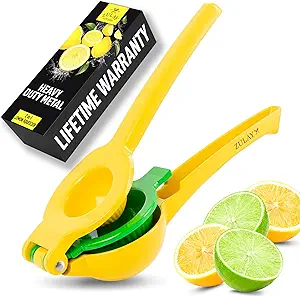 |
| Best Seller A high-volume bestseller chosen again and again | ChefVille 4-in-1 Manual Juicer |  |
Kensington London Lemon Squeezer

| Material | Stainless Steel |
|---|---|
| Power Source | Manual |
| Product Care Instructions | Dishwasher Safe |
| Recommended Uses For Product | Lemon, Lime, Orange |
| Capacity | 0.6 liters |
This handheld citrus press uses long, ergonomic handles and a sturdy 304 stainless steel body to squeeze halved fruit and capture juice without seeds. You place a half fruit in the cup and press the handles together; the reinforced joints and extra leverage make it easier to extract more juice than a basic hand reamer. Silicone grips reduce slipping during use and the whole tool is dishwasher-safe for quick cleanup. Its construction feels robust enough for frequent home use and the shallow cup works well for lemons and limes while still handling smaller oranges. Limitations are typical of manual presses: it requires two-handed pressing for larger batches and will not replace an electric juicer when you need high-volume output quickly. The simple design means almost no maintenance or moving parts to fail, making it a practical budget choice for everyday citrus tasks.
Best for: Buyers who want a durable, no-fuss manual citrus press for regular home use and care about extracting more juice with minimal cleanup.
Less Ideal for: People who need to juice large quantities quickly or want an automated, hands-free juicing solution should choose an electric juicer instead.
- Durable 304 stainless steel construction for long-term use
- Silicone non-slip grips and long handles provide strong leverage with less hand strain
- Dishwasher-safe for easy cleaning
- Cup design reduces seeds and channels juice efficiently
- Reinforced joints and simple manual mechanism minimize maintenance
- Not suited for high-volume juicing compared with electric juicers
- Requires two-handed pressing and some effort for larger fruit
Verdict: A rugged, easy-to-clean stainless steel press that delivers more juice than basic squeezers and suits budget-conscious home cooks.
Eurolux Cast Iron Juicer ELJ-5001B

| Capacity | 15 ounces |
|---|---|
| Material | Stainless Steel Cast Iron |
| Power Source | Manual |
| Special Features | Easy to Clean, Portable, Rust Resistant |
This Eurolux cast iron juicer is built like a small commercial press and is designed to squeeze citrus and similar fruits quickly with minimal hand fatigue. The long lever and heavy cast-iron frame give strong mechanical advantage so you can press halved oranges, lemons, and pomegranates with a single pull. The parts that contact fruit are removable and dishwasher-safe, and the included stainless steel collecting cup catches juice cleanly for recipes or drinks. Suction feet keep the press stable during use and the durable stainless/cast-iron construction is resistant to rust and everyday wear. It is relatively heavy for a countertop gadget, and its bulk plus fixed capacity limit portability and storage in small kitchens. The unit does not automate pulp or seed separation beyond the manual basket, so expect some cleanup and occasional trimming for very seedy fruit. For users who need a sturdy, high-output manual press, this performs well; for occasional single servings or tight-countertop kitchens a smaller hand juicer may be easier to store and faster to grab.
Best for: Buyers who prioritize high extraction power and durable, long-lasting build for frequent or heavy manual juicing tasks.
Less Ideal for: People who want a lightweight, compact juicer for occasional single servings or who need a highly portable appliance for small kitchens.
- Commercial-grade cast iron construction for durability and strong leverage
- Long lever reduces hand effort for high-volume juicing
- Removable parts and stainless steel cup simplify cleaning and juice collection
- Suction feet provide stable, secure pressing during use
- Heavy and bulky compared with handheld juicers
- Fixed 15-ounce capacity limits batch size before emptying
Verdict: Choose this Eurolux press if you want a rugged, high-leverage manual juicer built to handle frequent, heavy-duty citrus extraction.
Etinslant Manual Citrus Juicer

| Material | Stainless Steel (304/18/8) |
|---|---|
| Capacity | 300 ml |
| Power Source | Manual Winding |
| Special Features | Slotted sieve, double pouring spouts |
This Etinslant manual citrus juicer is a compact, all-stainless tool for squeezing lemons, limes, mandarins and small oranges without electricity. You press a halved fruit onto the pointed 11-tooth reamer and rotate to force juice through the slotted sieve into the 300 ml bowl while seeds are caught; two pouring spouts and side handles make transferring juice simple. The 18/8 stainless steel construction is rust-resistant and heavier-duty than plastic presses, and the unit is dishwasher-safe for easy cleanup. Its small footprint and lack of moving parts make it reliable for daily use at home or for travel and camping. Limits include the fixed cone size, which is best for small to medium citrus and less convenient for very large grapefruits, and manual operation means it is slower than electric juicers for high-volume tasks. For buyers who want a durable, low-maintenance hand squeezer that keeps pulp control and easy pouring in mind, this is a practical budget choice.
Best for: Buyers who prioritize durable, no-frills kitchen tools and want an inexpensive, low-maintenance way to squeeze fresh citrus for daily use or occasional outdoor trips.
Less Ideal for: People who regularly juice large volumes or very large citrus fruits should consider an electric or larger-capacity juicer instead.
- 304 (18/8) stainless steel construction resists rust and acid for long life
- Slotted sieve catches seeds while allowing fast juice drainage
- Dual spouts and side handles make pouring and gripping easier
- Dishwasher-safe design simplifies cleanup
- Fixed cone size is not ideal for very large grapefruits
- Manual operation is slower than electric juicers for large batches
Verdict: A sturdy, budget-friendly stainless steel hand juicer that reliably extracts juice with easy pouring and cleanup for everyday citrus needs.
Pebipoo Lemon Squeezer

| Material | Stainless Steel |
|---|---|
| Power Source | Manual |
| Special Features | Portable |
This stainless steel hand press squeezes citrus quickly and with minimal fuss, using a simple hinged bowl-and-press design that fits single fruits like lemons and small oranges. You place a halved fruit in the bowl and press the handles together to extract juice while the built-in strainer keeps most seeds and pulp out. The polished stainless construction makes it durable and corrosion resistant for everyday kitchen use, and the bowl can double as a small mixing or marinating cup. It is manually operated so you get full control over extraction without electricity or complicated parts, and the compact size is easy to store. Limitations are its small capacity and single-fruit fit, which make it less efficient for juicing large quantities or bigger citrus like grapefruit, and hand washing is recommended despite claims of dishwasher safety in some descriptions. For cheap, reliable single-serving juicing it performs exactly as expected.
Best for: Buyers looking for a very affordable, no-fuss way to juice single lemons or small oranges for cooking, drinks, or dressings without needing electricity.
Less Ideal for: People who regularly juice large volumes or larger citrus fruits should choose a larger manual press or electric juicer instead.
- Stainless steel construction resists corrosion and feels durable
- Simple manual design requires no power and is easy to use
- Built-in strainer reduces seeds and large pulp during pressing
- Compact and portable for small kitchens or travel
- Small bowl fits single lemons or small oranges only, not efficient for large batches
- Hand wash recommended which may be less convenient than fully dishwasher-safe tools
Verdict: A low-cost, durable stainless steel hand press that delivers quick single-fruit juicing for budget-minded buyers.
OXO Good Grips 2-in-1 Citrus Juicer

| Power Source | Manual |
|---|---|
| Capacity | 350 ml |
| Material | Plastic |
| Product Care Instructions | Dishwasher Safe |
The OXO Good Grips 2-in-1 Citrus Juicer is a simple, reliable manual juicer that covers lemons, limes, oranges and grapefruits by swapping between two reamers. You use the large or small reamer depending on fruit size, press and twist over the contoured body, and pour through the drip-free spout into the built-in measuring container. Its snap-off reamers nest for compact storage, the measurement markings go to 350 ml, and all parts are dishwasher safe which keeps cleanup quick. Because it is fully manual there is no motor noise or electronics to fail, and the plastic construction keeps it lightweight while still feeling sturdy for everyday kitchen use. The main limitations are capacity and speed compared with electric juicers and that plastic reamers can wear faster under heavy professional use, but for home kitchens this delivers dependable, low-maintenance citrus juicing on a budget.
Best for: Home cooks who want a dependable, low-maintenance manual juicer for occasional to daily citrus use and value reliability over high throughput.
Less Ideal for: People who need to juice large volumes quickly or who prefer heavy-duty metal commercial equipment should choose a larger electric or metal juicer instead.
- Two reamers for small and large citrus for versatile use
- Drip-free pour spout with measurement markings up to 350 ml
- Snap-off parts are dishwasher safe and nest for compact storage
- Manual design has no electronics to fail, increasing long-term reliability
- Plastic reamers and body may wear sooner than metal under heavy use
- Smaller capacity and slower than electric juicers for large-volume juicing
Verdict: A straightforward, dependable manual juicer that covers both small and large citrus and keeps maintenance simple for budget-minded kitchens.
Zulay Metal 2-In-1 Lemon Squeezer

| Material | Aluminum |
|---|---|
| Blade Material | Stainless Steel |
| Power Source | Manual |
| Capacity | 0.5 liters |
This Zulay Metal 2-in-1 Lemon Squeezer is a simple, hand-operated citrus press that combines a bowl and reamer to extract juice from lemons, limes, and small oranges. It is used by placing a halved fruit in the bowl and squeezing the ergonomic handles together so the reamer presses the fruit into the perforated bowl, which filters out seeds and larger pulp. The aluminum construction and stainless-steel blade material give it a heavy-duty feel compared with plastic models, and the ergonomic handle reduces hand strain for repetitive use. It cleans quickly by hand washing and is compact enough to tuck in a drawer when not in use. Limitations include a 0.5-liter capacity suited only to single servings or batch-juicing small amounts, and the manual operation means it is slower than electric juicers for large volumes. For buyers prioritizing durability and straightforward performance on a budget, this squeezer delivers predictable, low-maintenance results.
Best for: Buyers who want a reliable, low-cost handheld citrus press that feels sturdy and gives consistent results for single servings or occasional cocktail and cooking use, and who prefer proven customer-backed products.
Less Ideal for: People who need to juice large batches regularly or want a hands-free electric juicer for high-volume or commercial use.
- Durable aluminum construction feels heavier and more solid than typical plastic press juicers
- Ergonomic handle design reduces hand fatigue during repeated squeezes
- Built-in perforated bowl filters seeds and larger pulp for cleaner juice
- Compact, easy-to-store manual design requires no power or batteries
- Half-liter capacity and manual use make it impractical for juicing large quantities
- Requires hand wash only care despite product description mentioning dishwasher in one place
Verdict: A durable, no-frills manual citrus press that gives consistent single-serving extraction on a budget.
ChefVille 4-in-1 Manual Juicer

| Capacity | 591 ml |
|---|---|
| Material | Polypropylene (PP) |
| Power Source | Manual |
| Special Features | Portable |
This ChefVille 4-in-1 Manual Juicer is a simple, plastic hand press designed for everyday citrus tasks. It includes two reamer heads (one for small citrus, one for larger fruits), a built-in seed filter, a flip-top compact body and a detachable handle for carrying and pouring. You use it by cutting fruit in half and pressing with the side-grip while the reamer extracts juice into the 591 ml cup with measuring marks, which makes it useful for cocktails, marinades, and small batches of juice. Because it is fully manual and made from food-grade polypropylene, it is lightweight, portable and easy to clean by hand, and the silicone base helps keep it steady while squeezing. The plastic construction keeps cost and weight down but means it lacks the durability and leverage of metal presses for very hard or large fruits, and hand washing is required to preserve the parts and printed scales. For buyers seeking a low-cost, space-saving citrus tool, it handles routine household juicing and light prep reliably.
Best for: Buyers who want an inexpensive, no-frills citrus tool that saves space and reliably produces measured juice for everyday cooking, drinks, or small gatherings.
Less Ideal for: People who need heavy-duty, high-leverage extraction for frequent large batches or who prefer a metal, long-lasting press for years of heavy use.
- Dual reamer heads for small and large citrus to improve extraction across fruit sizes
- 591 ml cup with clear ml markings lets you measure juice without an extra container
- Lightweight, portable plastic design stores compactly and is easy to carry
- Built-in seed filter and V-shaped spout reduce spills and make pouring neater
- All-plastic construction is less durable and gives less mechanical advantage than metal presses
- Requires hand washing and printed scales may wear over time
Verdict: A compact, budget-friendly manual juicer that gives measured, mess-reduced citrus juice for everyday household use.
Choosing the Right Budget Manual Orange Juicer: Key Factors to Consider
Extraction Efficiency
Extraction efficiency determines how much juice you get from each orange, which affects cost per glass and how often you need to prep fruit. A more efficient juicer reduces waste and makes fresh juice more practical for everyday use. For manual orange juicers, efficiency depends on the reamer shape or press geometry and how well the unit lets you apply and hold pressure. Consider whether the design allows continuous twisting, pressing, or a mechanical advantage to extract liquid with less repeated effort.
Higher extraction efficiency also reduces the number of oranges you must cut and process, saving prep time. If you plan to juice for more than one person, prioritize models with stronger leverage or optimized reamers since small differences in yield add up quickly.
Ease of Cleaning
Manual juicers are only convenient when cleanup is quick; difficult-to-clean pieces can discourage daily use. Look for units with minimal parts and smooth surfaces that rinse cleanly. Dishwasher-safe components can simplify maintenance, but even handwashing should be straightforward—avoid fine mesh or hard-to-reach crevices that trap pulp and sticky oils.
Consider whether seals or gaskets need disassembly and if the materials can stain or retain citrus odors. A design that allows rapid rinsing or has a removable juice container reduces downtime between uses and keeps the juicer sanitary over time.
Build Quality and Materials
The materials and construction influence how long a budget manual orange juicer will last and how it performs under repeated stress. Look for corrosion-resistant metals or high-density plastics in the press and reamer areas, and check that moving parts have solid fittings rather than thin molded connections likely to crack.
Durable materials also maintain consistent performance; softer plastics can deform under pressure, reducing extraction and causing leaks. Pay attention to the join points, handles, and any screw fittings—these are common failure spots on budget models.
Ergonomics and Effort Required
How comfortable the juicer is to use affects whether you will reach for it regularly. Ergonomics includes handle shape, grip texture, necessary force, and how the device distributes pressure. Good leverage or an efficient reamer reduces wrist strain and makes juicing multiple oranges manageable.
Consider the size of the pressing surface versus your typical fruit size. A model that fits your hands and fruit comfortably will feel easier to operate. If mobility or hand strength is a concern, prioritize options designed to minimize required force.
Storage and Counter Footprint
A compact juicer saves space in kitchens with limited counter or cabinet room. Storage-friendly features include stackable parts, a small base, or a design that disassembles flat. If you keep the juicer on the counter, consider whether it has a stable, non-slip base and a tidy appearance.
For occasional use, choose models that tuck neatly into a drawer or cupboard. For daily use, a slightly larger but more ergonomic unit that sits on the counter might be preferable. Think about where you will keep it and how easy it is to reassemble after storage.
Manual Vs Reamer Style: Which Works Better for Oranges
There are two common manual approaches to juicing oranges at home. Reamer-style units require you to press and twist fruit on a ridged cone. Press-style or lever models use a mechanical advantage to apply direct pressure without much twisting. Each style has practical tradeoffs in yield, speed, and required effort.
Reamers tend to be compact and quick for single servings, but they can leave more pulp and require more hand work. Press-style designs typically extract more juice with less effort but can take more storage space and may have a few more parts to clean.
- Reamer: small, fast setup, more manual twisting
- Press: higher yield, less wrist force, larger footprint
Sizing for Household Needs
Match the juicer size to your typical serving needs. If you make one glass of orange juice a day, a compact handheld or countertop reamer will be convenient. For families or meal prep, choose a unit with better leverage or a larger capacity to handle multiple oranges quickly.
Also consider how much pulp you prefer and whether you want to strain juice separately. Larger models with integrated containers streamline multi-servings, while small models are better if you do just a quick squeeze now and then.
- Single-serve use favors compact reamers
- Daily family use favors lever or press designs
Maintenance Tips to Extend Lifespan
Rinse parts immediately after use to prevent citrus oils from sticking and causing stains or odors. Use warm, soapy water for a full wash, paying attention to any crevices around the reamer or valve areas. If pieces are dishwasher-safe, place them on the top rack and avoid overcrowding.
Inspect seals and fasteners periodically. Tighten screws if they loosen and replace any soft gaskets if they begin to crack. Storing the juicer dry and disassembled when possible prevents mold and prolongs material life.
- Rinse right away to avoid sticky residue
- Check fittings and gaskets every few months
Design Features That Reduce Mess
Look for splash guards, integrated pour spouts, or drip trays that keep counters clean during juicing. A well-designed spout makes transferring juice into a glass less messy, while a pulp catcher prevents overflow. Non-slip bases and stable clamp systems reduce tipping risk when applying pressure.
Small touches like measurement markings on the juice container or a reversing reamer to adapt to different citrus sizes can improve daily usability without adding complexity.
- Splash guards and pour spouts minimize spills
- Pulp catchers and measurement markings increase convenience
Materials and Food Safety
Ensure contact surfaces are made from food-grade materials that resist corrosion and staining. Stainless steel components last longer and are less likely to retain odors than lower-grade metals. BPA-free plastics are common on budget models and are suitable if they are thick and well-molded.
Avoid finishes that flake or coatings that might degrade with citrus acidity. When possible, choose parts that come into direct contact with juice that can be removed and cleaned separately to maintain hygiene.
- Stainless contact parts resist corrosion
- Thick, BPA-free plastics are acceptable for non-contact pieces
How We Chose the Best Budget Manual Orange Juicer
We focused on attributes that matter most to people buying an inexpensive manual orange juicer for everyday home use. Our evaluation prioritized extraction efficiency, build and durability, ease of cleaning, ergonomics and comfort, and size and storage footprint. For extraction efficiency we looked for mechanisms and designs that consistently produce a high yield without excessive effort. Build and durability considered materials and construction likely to last repeated use. Ease of cleaning emphasized designs with few crevices, dishwasher-safe parts, or quick rinsing. Ergonomics covered handle comfort, leverage, and thumb safety for repeated squeezing. Size and storage judged countertop footprint and whether the unit nests or stores compactly. We excluded units that rely on electricity or require complex maintenance, and we did not consider heavy-duty commercial presses that are outside a home budget. Products that failed basic safety or stability checks were removed. The shortlisted picks therefore reflect a balance of affordability and the practical performance metrics buyers actually experience during routine juicing.
Our full evaluation process is outlined in our review methodology.
FAQ
Are manual orange juicers worth it for daily use?
Often yes. Manual juicers can be quick and produce fresh juice without electricity. Their suitability depends on how many servings you make and your tolerance for hand effort. For single servings or occasional use they are very practical; for large volumes, they require more time and effort.
Can manual juicers extract as much juice as electric models?
It depends. Well-designed manual presses can approach the yield of electric citrus juicers because of effective pressure and reamer shape. Simpler handheld reamers may leave more juice in the pulp, so press-style manual units usually outperform basic cone reamers in yield.
How do I avoid a bitter taste from the peel?
Avoid over-pressing or scraping the orange peel into the juice. Use a design that separates pulp from peel and stop squeezing once most juice is released. Rinsing pulp away promptly and storing juice briefly before drinking also reduces bitter compounds from lingering oils.
Are manual juicers easy to clean by hand?
Usually. Most manual juicers are designed to disassemble into a few parts that rinse clean. Models with many small crevices or irreversible seals are harder to clean. Look for smooth surfaces and removable juice containers to make handwashing fast.
What should I do if a part cracks or wears out?
Check whether the manufacturer supplies replacement parts or if the design allows you to swap a worn component. If that is not an option, inspect the rest of the unit for damage and consider replacing the whole unit if it affects safety or hygiene. Regular maintenance can reduce the likelihood of premature wear.
Final Verdict
For budget manual orange juicers, prioritize extraction efficiency, ease of cleaning, and a comfortable user experience. Expect tradeoffs between compact convenience and extraction power; compact reamers are great for quick single servings while press-style units give better yield with less effort. Focus on durable contact materials and a small storage footprint that fits your kitchen routine. With those priorities in mind, you can confidently choose a budget manual juicer that delivers fresh juice reliably and lasts through regular use.