
Note: This article contains affiliate links. If you click on these links and make a purchase, we may earn a small commission at no extra cost to you. This helps support our research and content. Read our full affiliate disclosure here.
If you want a compact unit that chills and stores bottles without taking over a kitchen or entertaining area, a budget small wine cooler can be the smart solution. These compact coolers aim to balance temperature control, bottle capacity, and quiet operation while keeping upfront cost and operating expenses low. In this guide we spotlight seven shortlisted small wine coolers that fit value-focused budgets, explain the features that matter most, and show how to match a model to your space and drinking habits. Read on for straightforward buying guidance and the criteria we used to pick the top options.
Top Picks at a Glance
| Best Overall The best all-around choice for most situations | Wine Enthusiast 6-Bottle Countertop Cooler |  |
| Best Quality Built to a higher standard if you want something more solid | Cuisinart 8-Bottle Wine Cellar CWC-800CEN |  |
| Best Value The sweet spot between price and what you get | ROVSUN 18-Bottle Wine Fridge |  |
| Best Budget The cheapest option that still gets the job done reliably | YDOOLNG 23L Wine Cooler JC-23 |  |
| Top Rated A top-rated pick with lots of positive feedback | Vushine 12" Wine Cooler JCS-58QE |  |
| Most Popular A crowd favorite that many people choose with confidence | Antarctic Star Wine Cooler 1.7 cu ft | 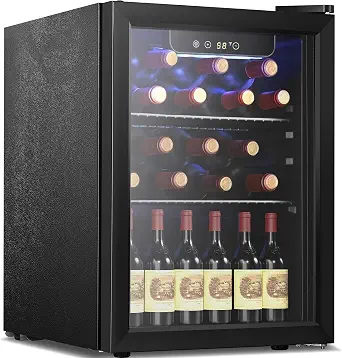 |
| Best Seller A high-volume bestseller chosen again and again | EUHOMY 18L Wine Fridge |  |
Wine Enthusiast 6-Bottle Countertop Cooler

| Capacity | 6-Bottle |
|---|---|
| Cooling Method | Thermoelectric |
| Shelves | 3 wood shelves |
| Installation Type | Countertop |
| Energy Rating | Energy Star |
This Wine Enthusiast 6-bottle countertop cooler is built for small collections that need consistent, quiet temperature control. It uses thermoelectric (solid-state) cooling and a digital touchscreen with LED readout to set and monitor storage temperatures for reds, whites, or rosés, and is designed to sit on a counter or bar. The unit has three wood shelves and three door shelves that keep bottles organized while the glass door and metallic finish give it a clean, modern look. Because it is thermoelectric rather than compressor-driven it runs quietly and is more energy-efficient, but it works best in moderate ambient conditions and may struggle to reach the lowest setpoints if the room is warmer than recommended. The cooler is freestanding only and needs clearance for airflow, so it is not suitable for built-in installation. For someone who wants a compact, low-noise cooler to protect a handful of bottles, this is a practical, space-saving option; buyers who need heavy-duty cellar temperatures or built-in undercounter fitment should look elsewhere.
Best for: Buyers who prioritize quiet, energy-efficient countertop cooling for a small, curated wine selection and want straightforward digital temperature control.
Less Ideal for: Not a good fit for collectors needing built-in or undercounter installation or for users who require very low cellar temperatures in warm environments.
- Compact footprint fits on counters or small bars
- Digital touchscreen and LED display for precise temperature setting
- Thermoelectric solid-state cooling provides quiet, vibration-free operation
- Three wood shelves plus door shelves keep bottles organized and accessible
- Energy Star rated for efficient everyday use
- Thermoelectric cooling is less effective than a compressor in hot ambient rooms
Verdict: A compact, quiet, and energy-efficient countertop cooler that reliably stores a small wine collection with precise digital temperature control.
Cuisinart 8-Bottle Wine Cellar CWC-800CEN
| Cooling Method | Thermoelectric |
|---|---|
| Number Of Shelves | 8 |
| Capacity | 6 liters |
| Power Source | Electric |
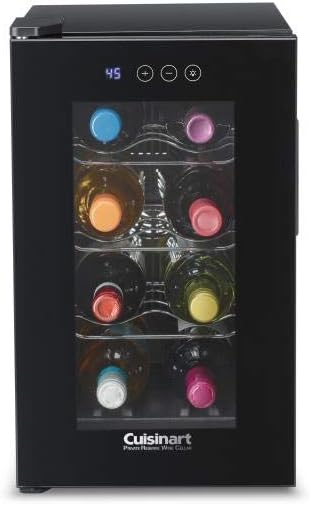
The Cuisinart 8-Bottle Private Reserve Wine Cellar is a small freestanding cooler designed to keep a selection of reds, whites, or sparkling wines at controlled serving temperatures. It uses a thermoelectric cooling system, which runs quietly and is more energy efficient than compressor units, and a touchscreen control with LED readout lets you set temperatures from 39°F to 68°F. Inside, contoured chrome racks and soft interior lighting make bottle access and display simple, and the unit ships with three removable racks to organize various bottle shapes. Typical use is for short- to medium-term storage and serving in an apartment, kitchen, or home bar where vibration-free, quiet operation matters. Limitations include the small 8-bottle capacity and thermoelectric cooling, which performs best in moderate ambient temperatures and is not suited for long-term cellar aging or very warm rooms. For buyers prioritizing quiet performance and a compact footprint, this is a practical countertop or freestanding option; buyers needing larger capacity or cooler performance for hot spaces should look at compressor-based models instead.
Best for: Buyers who want a quiet, energy-conscious small wine cooler to keep a few bottles at serving temperature and prefer a compact freestanding unit for a kitchen, office, or home bar.
Less Ideal for: Collectors who need long-term proper cellar conditions, those with larger collections, or people who will place the cooler in consistently hot rooms.
- Quiet thermoelectric cooling with low vibration suitable for delicate wines
- Touchscreen controls and LED display for easy temperature setting
- Soft interior lighting and contoured chrome racks for neat presentation and access
- Compact freestanding design fits small kitchens, apartments, or bars
- Only holds up to eight bottles, limiting larger collections
- Thermoelectric cooling is less effective than compressor units in very warm ambient temperatures
Verdict: Choose this Cuisinart if you want a quiet, compact 8-bottle cooler that maintains serving temperatures with energy-efficient thermoelectric performance.
ROVSUN 18-Bottle Wine Fridge

| Capacity | 1.8 cubic feet |
|---|---|
| Size | 18 Bottle |
| Temperature range | 41-64°F |
| Cooling Method | Compressor refrigeration |
| Power | 115 volts |
This ROVSUN 18-bottle wine fridge uses a compressor refrigeration system to cool bottles faster and across a wider temperature range than thermoelectric units, making it suitable for storing reds, whites, champagne, or beer between 41 and 64°F. It is designed as a freestanding unit with removable chrome-plated metal shelves, a soft LED interior light, and an exterior touch control panel so you can adjust temperature without opening the door. The compressor is described as whisper quiet and the double-layer glass door plus good sealing help maintain steady internal temperatures. Practical features include an automatic defrost system, a keyed lock, and ETL specification compliance. Expect typical small-fridge trade-offs such as limited internal capacity for oversized bottles and the footprint of a 30-inch-tall cabinet, but the compressor cooling and touch controls deliver reliable, consistent performance for everyday home use.
Best for: Buyers who want a compact, budget-friendly wine cooler that prioritizes reliable compressor cooling and easy temperature control for everyday home use.
Less Ideal for: Collectors needing storage for large-format or long-term cellaring should look at larger or dedicated wine cellar options instead.
- Compressor refrigeration provides faster, more stable cooling than thermoelectric designs
- External touch control panel lets you change temperature without opening the door
- Removable chrome-plated metal shelves for flexible bottle arrangement
- Double-layer glass door with LED light and good sealing helps keep temperature steady
- 18-bottle capacity may not fit oversized or international-format bottles
- Freestanding footprint requires planning in tight spaces
Verdict: A compact, budget-conscious compressor wine fridge that delivers faster, steadier cooling and simple touch controls for everyday home wine storage.
YDOOLNG 23L Wine Cooler JC-23

| Capacity | 23 liters |
|---|---|
| Cooling Method | Compressor |
| Power | 55W |
| Voltage | 110 volts |
| Defrost System Type | Automatic |
This compact wine cooler is built as a budget-friendly freestanding unit that uses a compressor cooling system and a digital LED display for temperature control. It is sized for small collections and typically sits on a countertop or cabinet; buyers set a target temperature using the touch panel and the cooler circulates air with an internal fan for more even cooling. Notable features include double-layer tempered glass with interior blue LED lighting, five removable shelves/racks that match bottle shapes, and an automatic defrost system. The unit is relatively quick to cool thanks to its 55W compressor and is intended for ambient indoor use only rather than built-in installation. Expect simple, straightforward operation and modest energy use, but also a very small total capacity and a basic 3-month warranty, so long-term reliability and advanced vibration or humidity controls are limited compared with higher-end models.
Best for: Buyers prioritizing the lowest-cost way to keep a few bottles at serving temperature who need a small freestanding cooler for an apartment, office, or secondary spot.
Less Ideal for: Collectors who need long-term storage, strict humidity control, or room for dozens of bottles should choose a larger, feature-rich cellar instead.
- Compact 23L capacity fits small collections and tight spaces
- Compressor cooling with internal fan provides faster, more consistent cooling than passive units
- Digital LED display and touch controls allow precise temperature selection
- Double-layer tempered glass door with interior LED light lets you check bottles without opening the door
- Five removable shelves/racks accommodate common bottle shapes
- Very limited overall capacity for larger collections
- Short 3-month warranty and basic feature set compared with premium coolers
Verdict: If you want an inexpensive, countertop-friendly compressor cooler to chill a handful of bottles reliably, this 23L unit is a practical budget pick.
Vushine 12" Wine Cooler JCS-58QE

| Capacity | 2.1 cubic feet |
|---|---|
| Bottle capacity | 21 bottles |
| Temperature range | 41-64°F (5-18°C) |
| Cooling method | Compressor |
| Installation type | Built-In or Freestanding |
This Vushine 12" wine cooler is a small compressor-driven cellar intended for undercounter installation or standalone use in a kitchen, bar, or office. It provides precise temperature control via a touch digital display with a 41–64°F range and a circulation fan to keep temperature uniform across its removable wooden shelves. The unit is rated for low noise and automatic defrost, and the double-pane UV-blocking glass door plus interior LED lighting help protect and present bottles. In daily use it handles chilling and short-term storage well and the compressor system cools faster and holds steady compared with thermoelectric designs. Expect straightforward setup: adjustable feet and multiple shelves let you fit different bottle sizes, but the unit is compact so capacity is limited to about 18–21 bottles. Buyers should also note the left-hinged door orientation and that it requires the usual 24-hour upright sit time before first use. For someone who wants a solid, small wine fridge that focuses on stable temperatures and build-in flexibility, this delivers sensible performance without extra bells.
Best for: Buyers who prioritize steady, reliable temperature control and a compact, installable wine fridge for everyday storage or entertaining will appreciate this unit.
Less Ideal for: Collectors who need high capacity, long-term aging storage or those who require a right-hinged door or larger footprint should consider larger models.
- Compressor cooling for faster, more stable chilling than thermoelectric units
- Digital touch temperature control with 41–64°F range for precise settings
- UV-blocking double-pane glass and interior LED protect and display bottles
- Adjustable wooden shelves and feet allow flexible storage and installation
- Automatic defrost and low-noise design suit frequent household use
- Small internal capacity limits long-term collections to roughly 18–21 bottles
- Door is left-hinged only, which may restrict placement options
Verdict: A compact, compressor-cooled wine fridge that delivers dependable, precise temperature control for everyday home use under $500.
Antarctic Star Wine Cooler 1.7 cu ft
| Capacity | 1.7 cubic feet |
|---|---|
| Bottle Capacity | 16 Bottle |
| Cooling Method | Compressor |
| Temperature Range | 40°F – 61°F |
| Number of Shelves | 2 |
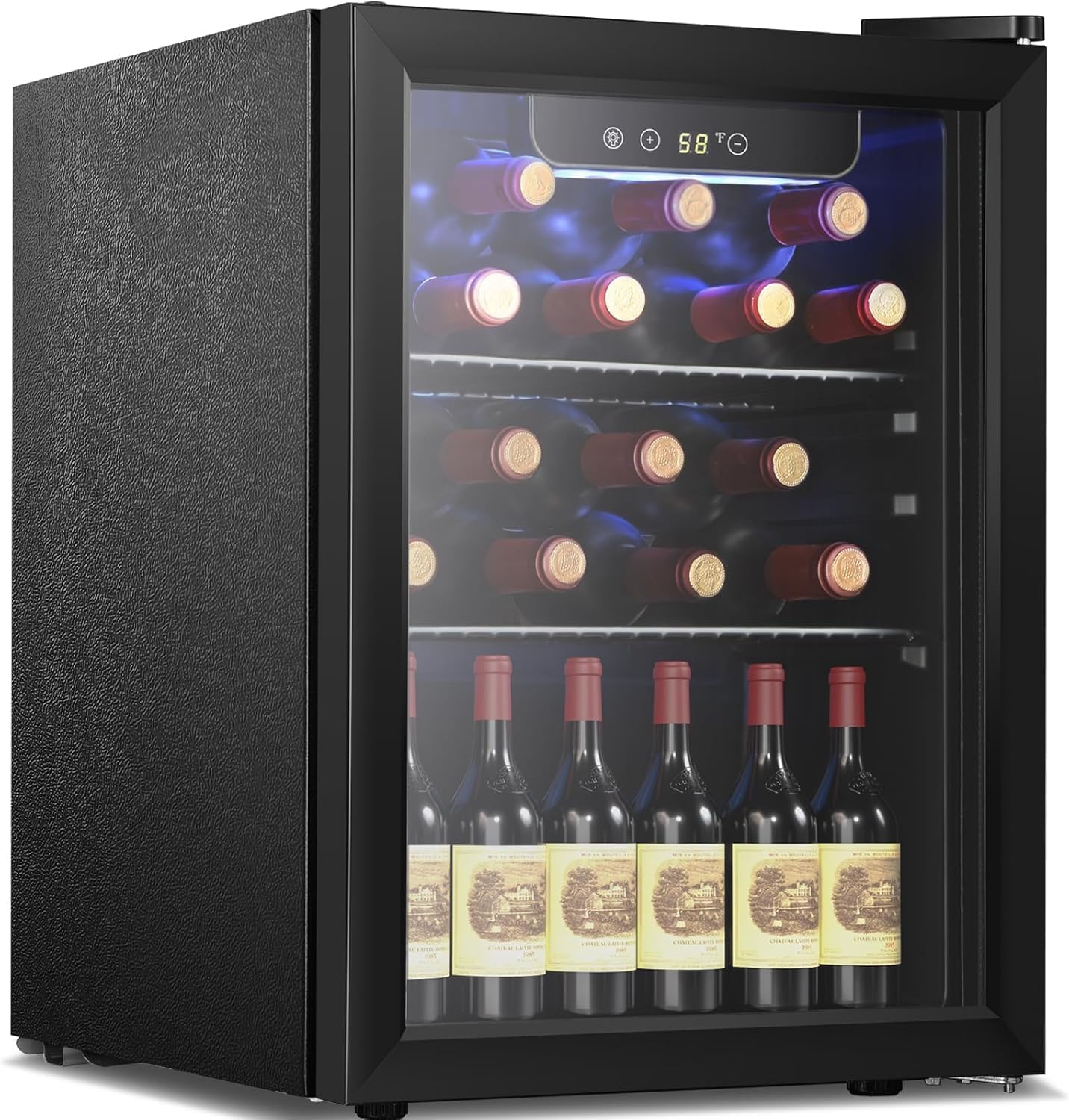
This Antarctic Star wine cooler is a small freestanding unit intended to chill wine and beverages without a freezer compartment. It holds about 16 bottles or roughly 68 cans across two adjustable shelves and uses a compressor cooling system with digital thermostatic controls to set temperatures between 40 and 61°F. The reversible double-pane glass door and airtight seal help insulation while an internal blue LED light improves visibility. In everyday use it works like a countertop or under-counter beverage cellar for a small home collection, entertaining space, or office. Notable practical benefits are its quiet compressor operation, adjustable shelving for different bottle shapes, and a clear display for easy temperature adjustments. Important limitations are its modest capacity and manual defrost system, so it is not suitable as a primary refrigerator or for storing fresh food, and larger collections will need a bigger unit.
Best for: Buyers who prioritize a reliable, compact beverage cooler to keep a modest home wine or drink selection at consistent temperatures and who value quiet, steady operation.
Less Ideal for: Those needing large-capacity storage, freezer capability, or a unit for chilling fresh food should choose a larger refrigerator or dedicated wine cellar instead.
- Compact footprint fits on counters or in small spaces
- Compressor cooling with digital thermostat for stable temperature control
- Reversible double-pane glass door with airtight seal for insulation and display
- Adjustable shelving accommodates different bottle sizes
- Quiet operation suitable for indoor living areas
- Limited 1.7 cu ft capacity not suited for medium or large wine collections
- Manual defrost requires occasional user maintenance
Verdict: A dependable, quiet compressor wine cooler that keeps a small home collection consistently chilled in a compact footprint.
EUHOMY 18L Wine Fridge
| Capacity | 18 liters |
|---|---|
| Cooling Method | Compressor |
| Temperature Range | 40°F to 61°F |
| Number Of Shelves | 1 |
| Installation Type | Countertop |
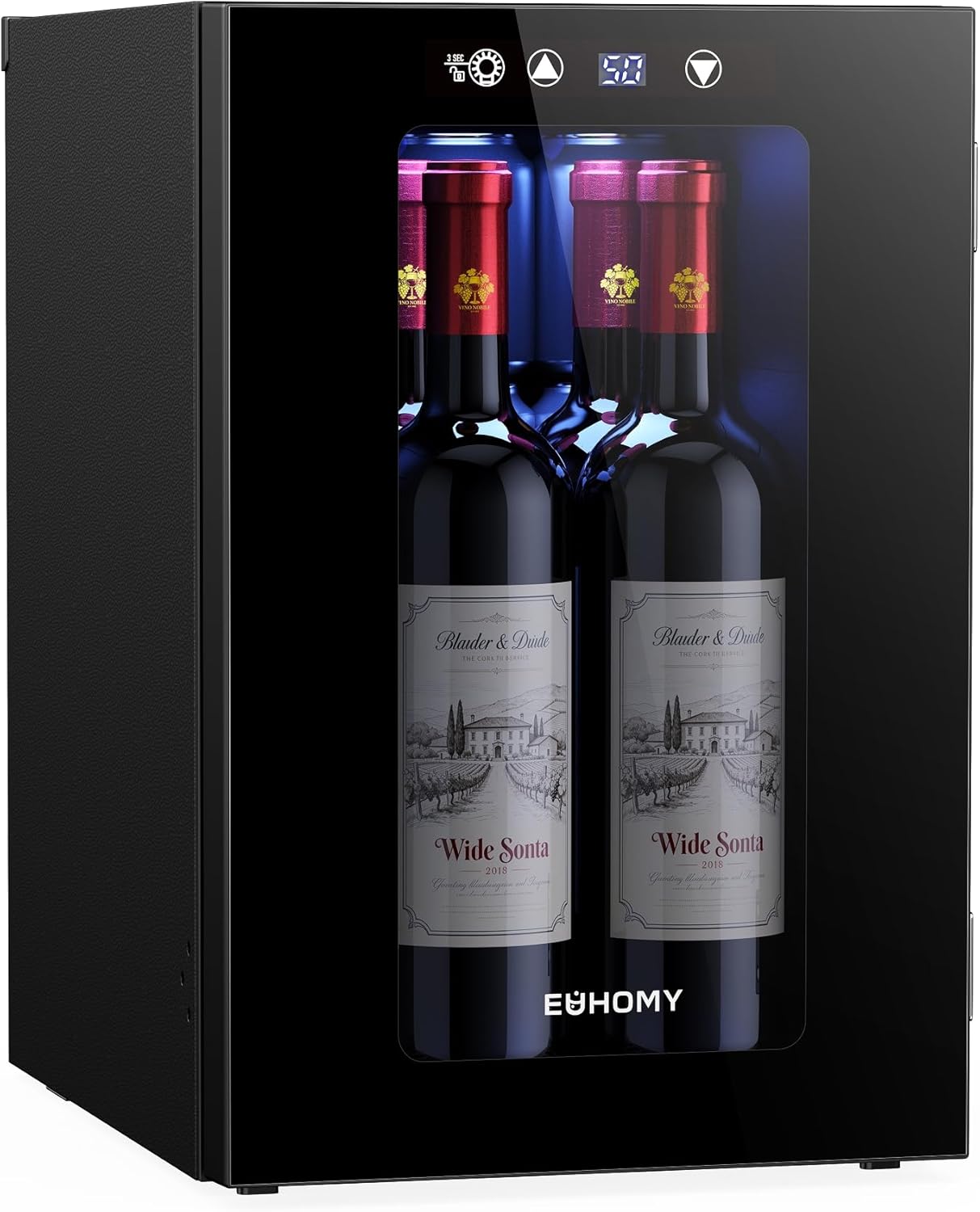
The EUHOMY 18L Wine Fridge is a small compressor-cooled cooler designed for countertop or freestanding use to store a handful of bottles and cans. It offers a digital touchscreen that sets temperatures between 40°F and 61°F, a double-pane glass door with LED interior lighting, and one removable shelf so you can fit bottles or stacks of cans. The compressor system provides steady cooling and the manufacturer states quiet operation around 38 dB, which helps the unit sit beside a bar, office, or kitchen without creating a constant noise nuisance. Practical benefits include the ability to keep red, white, sparkling wine, or beer at ready-to-serve temperatures and the compact footprint that fits tight spaces. Limitations to expect are the very small 18 L capacity that only holds about four 750 ml bottles or up to two dozen cans when arranged differently, manual defrosting, and a single door orientation without reversible mounting, so placement options are somewhat constrained.
Best for: Buyers who want a reliable, compact cooler to keep a small selection of wines or beverages at controlled serving temperatures without complicated setup or large space requirements.
Less Ideal for: Those who need to store larger collections, organize many bottle sizes, or require a built-in undercounter installation should look at larger-capacity or different-format coolers.
- Digital touchscreen with adjustable 40°F–61°F temperature range for precise control
- Compressor cooling for consistent, dependable chilling compared with thermoelectric units
- Compact countertop form that fits small kitchens, dorms, or home bars
- Double-pane glass door with LED lighting showcases contents while blocking UV rays
- Very limited 18 L capacity suitable for only a few bottles or a small can stash
- Manual defrost requires occasional maintenance and can be inconvenient
Verdict: A compact, compressor-cooled countertop wine fridge that delivers quiet, accurate temperature control for buyers who need dependable short-term storage for a few bottles.
Choosing the Right Budget Small Wine Cooler: Key Factors to Consider
Temperature Range And Control
A reliable temperature range matters because different wines need different serving and storage temperatures. Look for coolers that can reach and hold temperatures appropriate for whites, rosés, and lighter reds. Precision matters more than an advertised low or high number; consistent control keeps flavors stable and prevents unwanted aging.
Controls should be easy to read and adjust. Digital thermostats typically offer finer adjustments and easier recovery after door openings than basic dial controls. If you plan to store both whites and reds, consider whether the unit supports dual zones or wide enough single-zone control to handle both styles safely.
Usable Storage Layout
Capacity is about more than a bottle count. Shelf spacing, rack depth, and the ability to accommodate standard 750 ml bottles or slightly larger formats determine how many bottles you can actually store. Removable or sliding shelves increase flexibility for odd-shaped bottles and partial loads.
Pay attention to how the manufacturer measures capacity. A cooler listed for a certain number of bottles may only reach that number with very narrow, neck-first placement. For practical daily use, look for racks that support horizontal storage with easy access and consistent airflow around each bottle.
Noise Level And Vibration Control
Noise affects where you can place a cooler in your home. A unit intended for a living area, open-plan kitchen, or home office should run quietly. Compressor-driven models are more common and usually efficient, but some produce more mechanical noise and vibration than thermoelectric designs.
Vibration matters because it can disturb sediment in older wines and affect long-term storage. Look for units with vibration-dampening mounts or low-vibration compressors. If quiet placement is a priority, check measured decibel ratings or user feedback on hum and motor cycling frequency.
Energy Use And Running Costs
Budget coolers can save money up front but vary widely in operating efficiency. Energy consumption affects ongoing costs and the environmental footprint of ownership. Consider the cooler's insulation, compressor efficiency, and thermostat regulation when estimating annual use.
Smaller units generally use less power, but poor insulation or frequent compressor cycling can raise consumption. Also consider LED lighting over incandescent bulbs and auto-shut features that prevent excessive cooling when the unit is empty or during long idle periods.
Door And Seal Design
A tight door seal helps maintain steady temperatures and reduces compressor cycling. Look for solid gasket design, magnetic seals, and doors that close firmly without gaps. Glass doors are common on small units for display, so check for UV-filtering glass if you will store wines in sunlight-exposed areas.
Reversible doors and the ability to fully open with adjacent cabinetry are useful installation conveniences. Also consider lockable doors if you need security in shared living spaces.
Maintenance And Usability
Easy maintenance reduces long-term hassle. Removable shelves, accessible drip trays, and straightforward defrosting methods simplify upkeep. Consider how filters and condensers can be accessed for cleaning without moving the entire unit.
User-friendly features include interior lighting with low heat output, intuitive controls, and clear indicators for set temperature. Durability of interior components and availability of common replacement parts also affect ownership satisfaction.
Single-Zone Versus Dual-Zone Options
Most budget small wine coolers are single-zone, which is perfectly suitable if you mainly store one wine type at a time or rotate bottles and serve by the glass. Single-zone units keep a consistent temperature through the cabinet and are simpler to operate and typically more affordable.
Dual-zone compact coolers exist but are less common at strict budget price points. They let you store whites and reds at their respective ideal temps in the same footprint. If you frequently keep both wine types ready to serve, a dual-zone design may be worth seeking out, but for many buyers a well-controlled single-zone cooler offers the best value.
- Single-zone: simpler, steadier, usually lower cost
- Dual-zone: more versatile but rarer in budget models
- Consider how often you need two serving temps simultaneously
Placement And Installation Tips
Measure the intended spot carefully and leave clearance for ventilation. Small coolers need airflow at the back or sides depending on the condenser layout. Tight cabinetry without ventilation will raise operating temperatures and increase compressor cycle time.
Place the cooler on a level surface to avoid door alignment issues and reduce vibration transfer. Avoid direct sunlight and keep it away from heat sources like ovens or radiators. If you plan to integrate the unit under a counter, verify whether the model is designed for built-in use or requires freestanding clearance.
- Allow recommended clearance for ventilation
- Keep out of direct sunlight and heat
- Use a level surface to minimize vibration
How To Maximize Cooling Efficiency
Set the temperature once the unit is loaded and avoid frequent wide-open door access. Every door opening forces the compressor to work harder to re-establish the set point. Group bottles so airflow circulates freely between racks rather than being tightly packed.
Keep the interior clean and check seals regularly to prevent cold air loss. If your cooler has an auto-defrost feature, follow manufacturer guidance so ice buildup does not reduce cooling performance. For best efficiency, let newly chilled bottles reach the desired temperature before storing large additional loads.
- Minimize door openings and avoid overpacking
- Inspect door gaskets periodically
- Follow recommended defrost or maintenance schedules
Storing Different Bottle Types In A Small Unit
Standard 750 ml bottles are the baseline for capacity planning, but some wines come in wider or taller formats. Use removable shelves or angled racks to accommodate larger bottles when needed. For long-term storage, keep bottles horizontal to keep corks moist.
If you store sparkling wines, ensure the rack supports the heavier weight and consider slightly colder serving temps. For mixed collections, rotate stock so bottles destined for near-term drinking are easiest to access without disturbing those intended for aging.
- Horizontal storage preserves corks
- Use adjustable shelves for larger bottles
- Keep everyday bottles within easy reach
When To Choose A Thermoelectric Versus Compressor Unit
Thermoelectric coolers are quieter and produce less vibration, which can be an advantage in quiet living areas. They tend to be more efficient only in moderate ambient temperatures and are best for smaller capacities in temperature-stable rooms.
Compressor-based models are better at holding lower temperatures and coping with warmer surroundings. For reliable cooling in heated kitchens or when you need lower set points, a compressor unit typically offers stronger performance even if it makes slightly more noise.
- Thermoelectric: quieter, low vibration, best in stable rooms
- Compressor: stronger cooling, better in warm environments
- Match the cooling method to installation location and temperature needs
How We Chose the Best Budget Small Wine Cooler
We evaluated models that prioritize consistent temperature control, sensible storage capacity for real bottle sizes, quiet operation for indoor use, and reasonable energy use to keep running costs low. We required units to offer a clear temperature range suitable for common wine types, stable digital or analog controls, and rack layouts that accept standard 750 ml bottles. Noise and vibration performance were considered because these affect wine aging and placement in living spaces. We also looked at build quality cues such as door seal design and internal insulation, plus practical details like reversible doors, LED lighting, and easy-to-clean interiors. Excluded items included oversized or freestanding refrigeration units that do not qualify as small wine coolers, models without clear temperature control, and units designed only for beverage cans. Final selections were based on how well each cooler balanced temperature accuracy, usable bottle capacity, sound levels, energy efficiency, and daily usability features.
Our full evaluation process is outlined in our review methodology.
FAQ
How many bottles does a small wine cooler usually hold?
Small wine coolers typically hold between 6 and 24 standard 750 ml bottles depending on rack layout and footprint. Usable capacity depends on shelf spacing and whether bottles are stored neck-first or horizontally.
Is a glass-front cooler OK for long-term storage?
Glass doors are convenient for display but can allow light that may affect wine quality. If you use a glass-front cooler for long-term storage, choose one with UV-filtering glass and avoid placing it in direct sunlight.
Can I install a small wine cooler under the counter?
Some small coolers are designed for built-in installations and have front-venting to allow under-counter placement. Confirm the model's installation type and leave required clearances for ventilation if it is freestanding.
How important is vibration control in a compact cooler?
Vibration can disturb sediment and potentially affect aging, so look for models with low-vibration compressors or vibration-damping mounts. For short-term serving chilled wines, vibration matters less than for long-term cellar use.
Will a small cooler keep bottles cold during a power outage?
A small cooler provides limited thermal buffering and will slowly warm without power. Insulation quality and how full the unit is determine how long bottles stay near temperature. For extended outages, expect temperatures to drift within a few hours to a day.
Final Verdict
For budget-focused buyers, prioritize consistent temperature control, practical usable storage, and low noise when choosing a small wine cooler. Decide whether you need dual zones or can manage with a single-zone unit and match the cooling method to your environment. Pay attention to door seals and rack layout to ensure bottles are stored safely and accessibly. With those tradeoffs in mind, you can confidently select a compact cooler that balances upfront cost with the reliability and performance you need.