
Note: This article contains affiliate links. If you click on these links and make a purchase, we may earn a small commission at no extra cost to you. This helps support our research and content. Read our full affiliate disclosure here.
If you want safer drinking water without a big upfront investment, a budget under-sink water filter can be a practical upgrade for most kitchens. These systems fit under the counter and connect directly to your cold-water line, reducing common contaminants and improving taste without taking up countertop space. This guide covers seven shortlisted budget under-sink water filters that balance filtration performance, ease of installation, and ongoing operating cost. We evaluated each option for contaminant reduction, filter life, and DIY friendliness so you can pick the best match for your household and water quality concerns. Read on to see the evaluation criteria and find a simple, affordable under-sink filter that meets your needs.
Top Picks at a Glance
| Best Overall The best all-around choice for most situations | Aquasana 2-Stage Under Sink Filter |  |
| Best Quality Built to a higher standard if you want something more solid | APEC Water ROES-50 |  |
| Best Value The sweet spot between price and what you get | ICEPURE WFS5300A Under-Sink Filter |  |
| Best Budget The cheapest option that still gets the job done reliably | Dreamwills DS10 Under Sink Filter | 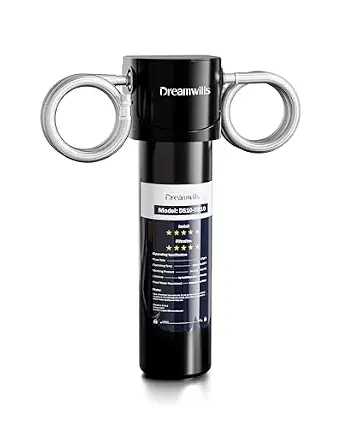 |
| Top Rated A top-rated pick with lots of positive feedback | Waterdrop WD-10UB Under Sink Filter |  |
| Most Popular A crowd favorite that many people choose with confidence | iSpring RCC7AK-BN Reverse Osmosis |  |
| Best Seller A high-volume bestseller chosen again and again | Waterdrop WD-10UA Under Sink Filter | 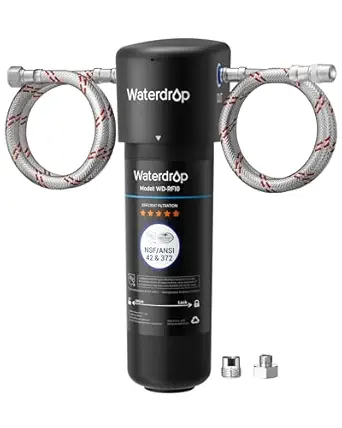 |
Aquasana 2-Stage Under Sink Filter

| Capacity | 500 gallons |
|---|---|
| Filter Life Cycle | 6 months |
| Maximum Flow Rate | 0.5 gpm |
| Supported Water TDS Level Maximum (PPM) | 300 |
| Installation Type | Under Sink |
The Aquasana 2-Stage Under Sink Filter installs under a kitchen sink and delivers treated tap water through its included metal faucet, using a sediment pre-filter and Claryum selective filtration to cut chlorine, lead, mercury, pesticides, pharmaceuticals, microplastics and other contaminants. It is rated to treat about 500 to 600 gallons or roughly six months per filter set and operates without electricity at a flow rate of about 0.5 gallons per minute, so you get near-instant filtered water rather than waiting for slow drip systems. Filter replacements twist off the housing for straightforward DIY swaps, and the system is WQA tested and certified to NSF/ANSI 42, 53, and 401. Practical limitations include the need for roughly 12 inches of clearance under the sink and moderate flow compared with whole-house systems; it does not reduce total dissolved solids. For buyers focused on value, this system balances strong contaminant reduction, retained beneficial minerals, and easy maintenance at a lower operating cost than many competitor cartridges.
Best for: Someone wanting a budget-friendly under-sink system that delivers broad contaminant reduction, better tasting water, and easy DIY maintenance without adding complexity or electricity.
Less Ideal for: Homes that need whole-house treatment, very high daily filtered volumes, or are trying to lower total dissolved solids should look at different solutions.
- Reduces a broad set of contaminants including chlorine, lead, PFAS, mercury and microplastics as WQA/NSF tested.
- Selective Claryum filtration retains beneficial minerals for better taste.
- Includes metal faucet and all installation parts for a complete under-sink setup.
- Non-electric, on-demand flow at about 0.5 gallons per minute for immediate filtered water.
- Twist-off filter housings and tool-free replacements simplify maintenance.
- Requires approximately 12 inches of under-sink clearance which may not fit tight cabinets.
- Filter life is limited to about 500–600 gallons or six months, requiring regular replacements.
Verdict: A cost-conscious under-sink system that delivers certified multi-contaminant reduction, retained minerals for taste, and easy twist-off filter changes.
APEC Water ROES-50

| Purification Method | Reverse Osmosis |
|---|---|
| Filtration Stages | 5-Stage |
| Capacity | 50 gallons |
| Operating Pressure Range | 40-85 psi |
| Filter Life Cycle | 6 months |
The APEC ROES-50 is a five-stage under-sink reverse osmosis system designed to deliver very pure drinking water for typical households. It uses sequential prefilters, an RO membrane, and a post-filter to remove chlorine, heavy metals, fluoride, and many other contaminants, and includes a storage tank and dedicated faucet for steady delivery. Installation is DIY-friendly with quick-connect fittings and color-coded tubing, and the unit is sized to fit under most sinks. Practical benefits include high contaminant rejection, WQA/NSF-level certification claims, and long filter life when maintained—prefilters typically last 6–12 months while the membrane and post-filter last up to 12–24 months depending on feed water. Limitations are its modest 50 GPD output which can be slow during heavy use and the need for periodic filter replacements and a drain connection for waste water. The system is plastic-bodied, so mounting and space planning matter during installation.
Best for: Buyers who prioritize high contaminant removal on a budget and want a durable under-sink RO that they can install and maintain themselves.
Less Ideal for: People who need very high flow rates from filtered tap water or who cannot accommodate a storage tank and drain connection under the sink.
- Five-stage RO filtration removes a wide range of contaminants including heavy metals and fluoride
- Includes storage tank and faucet for consistent access to filtered water
- DIY-friendly quick-connect fittings and color-coded tubing simplify installation and maintenance
- Long filter life for membrane and post-filters reduces replacement frequency
- 50 GPD output can be limiting for simultaneous heavy use or large families
- Produces wastewater as part of the RO process
Verdict: If you want high-performance RO-level purification without splurging, the ROES-50 delivers strong contaminant removal and DIY-friendly installation at a budget-friendly level.
ICEPURE WFS5300A Under-Sink Filter

| Purification Method | Activated Carbon |
|---|---|
| Maximum Flow Rate | 2.5 gpm |
| Filter Life Cycle | 3 years |
| Capacity | 22000 gallons |
| Other Special Features of the Product | Chlorine Reduction, NSF certified |
The ICEPURE WFS5300A is a compact under-sink activated carbon filter designed to deliver improved drinking water taste and reduced chlorine and lead for up to 22,000 gallons or roughly three years. It installs directly on the cold water line with included adapter hardware and is intended for quick, tool-light installs and fast cartridge swaps. The filter uses coconut shell carbon with a 0.5 micron outer layer and is NSF/ANSI 42 and 372 certified, so it focuses on taste, odor, chlorine reduction, and lead-free materials rather than lowering total dissolved solids. With a tested maximum flow of 2.5 gpm it supports normal kitchen use without noticeable slowdown. The system is compact and claims food-grade, BPA-free construction, but it only connects to 1/2" or 3/8" female NPT cold-water lines and does not treat hot water or perform multi-stage contaminant removal. For buyers who want a long-life, low-maintenance taste-and-odor under-sink filter on a budget, this is a practical choice; those needing broader contaminant reduction should consider multi-stage or specialty systems.
Best for: Buyers seeking a low-cost, low-maintenance under-sink filter that prioritizes long run time and improved taste with minimal installation effort.
Less Ideal for: Households requiring broad-spectrum contaminant removal, hot-water treatment, or specific reductions such as fluoride or microbial pathogens.
- High rated capacity of 22,000 gallons (~3 years) for reduced replacement frequency
- NSF/ANSI 42 and 372 certifications for chlorine, taste, odor reduction and lead-free materials
- Fast plug-and-play installation with included adapters for 1/2" and 3/8" cold water lines
- High tested flow rate of 2.5 gpm suitable for regular kitchen use
- Only treats cold water and is limited to chlorine/taste/odor and lead-free certification
- Not a multi-stage filter so it does not target a wide range of contaminants like VOCs or fluoride
Verdict: A budget-friendly, long-life under-sink carbon filter built for easy installation and reliable taste and chlorine reduction.
Dreamwills DS10 Under Sink Filter

| Maximum Flow Rate | 1.3 gpm |
|---|---|
| Purification Method | Carbon Block |
| Supported Water TDS Level Maximum (PPM) | 600 |
| Filter Life Cycle | 2 years |
| Capacity | 8000 gallons |
The Dreamwills DS10 is an under-sink carbon block filtration system built for simple, budget-minded kitchen water purification. It installs without tools and connects to the cold water line, fitting into tight cabinet spaces while delivering a factory-calibrated 1.3 gpm flow so you get near-immediate filtered water for drinking and cooking. The unit uses coconut shell carbon and is tested to NSF/ANSI 42 for chlorine and aesthetic reduction, which translates to noticeably better taste and reduced bleach or chemical smells. Dreamwills limits the recommended service life to 1 year or 8,000 gallons, prioritizing fresh media over ultra-long replacement intervals. Practical limits: it is intended for cold water only, does not claim to lower TDS, and the carbon block focus means it targets chlorine and taste issues rather than heavy metal removal beyond tested claims. For a low-cost, easy-to-install under-sink filter that improves everyday tap water flavor, the DS10 is a solid, no-frills choice.
Best for: Buyers seeking an inexpensive, easy-to-install under-sink filter that noticeably improves tap water taste without complicated plumbing or premium features.
Less Ideal for: Households that need comprehensive contaminant removal (heavy metals, high TDS) or hot-water filtration should choose a different system.
- Tool-free, compact under-sink installation suitable for crowded cabinets
- Hydraulically calibrated 1.3 gpm flow gives near-instant filtered water
- Uses coconut shell carbon and meets NSF/ANSI 42 for chlorine and taste reduction
- 1 year or 8,000 gallon filter life encourages regular media replacement for freshness
- Designed for cold water only, not rated for hot water use
- Does not advertise reduction of total dissolved solids or broad contaminant removal beyond NSF/ANSI 42
Verdict: A straightforward, budget-friendly under-sink carbon filter that delivers fast, NSF-tested chlorine and taste reduction with tool-free installation.
Waterdrop WD-10UB Under Sink Filter

| Purification Method | Activated Carbon |
|---|---|
| Filter Life Cycle | 1 years |
| Maximum Flow Rate | 0.75 gpm |
| Capacity | 11000 gallons |
| Installation Type | Under Sink |
The Waterdrop WD-10UB is an under-sink activated carbon filter designed to deliver cleaner drinking water through a separate stainless faucet. It installs inline to a cold-water feed using push-to-connect fittings and a included 3/8"–1/2" convertor, so most homeowners can fit it under the sink in minutes without special tools. The cartridge uses multistage filtration to target chlorine, heavy metals, PFAS/PFOA/PFOS and sediment while retaining beneficial minerals, and the twist-and-lock replacement cartridge is quick to swap. Waterdrop rates the system for up to 11,000 gallons per cartridge and lists a tested flow around 0.75 gpm at 60 psi (with higher outlet flow options noted), which is sufficient for a single dedicated drinking faucet but not for whole-kitchen demand. Certifications against NSF/ANSI 42 and 372 and third-party testing for lead reduction add confidence in performance. This is a budget-oriented under-sink solution that prioritizes straightforward installation and maintenance, though it is intended only for municipal cold water and not for well water or hot lines.
Best for: Buyers who want a reliable, no-frills under-sink filter that is easy to install and maintain and who prioritize tested contaminant reduction and simple ownership.
Less Ideal for: People with well water, households that need whole-kitchen filtration, or users who need hot-water compatible filters should look elsewhere.
- Certified reduction for chlorine, taste and lead with NSF/ANSI 42 and 372 related certifications
- Includes a dedicated lead-free stainless faucet for separate filtered water access
- Tool-free push-to-connect fittings and twist-and-lock cartridge make installation and replacements fast
- High advertised cartridge capacity (11,000 gallons) reduces replacement frequency
- Designed for municipal cold water only and not suitable for well water or hot lines
- Flow rate is aimed at a single drinking faucet and may feel slow for larger simultaneous uses
Verdict: A reliable, low-cost under-sink filter that delivers certified reduction of common contaminants with very easy installation and tool-free cartridge changes.
iSpring RCC7AK-BN Reverse Osmosis

| Purification Method | Reverse Osmosis, Alkaline, Activated Carbon, Carbon block |
|---|---|
| Capacity | 75 gallons |
| Maximum Flow Rate | 284 liters_per_day |
| Operating Pressure Range | 70 psi |
| Filter Life Cycle | 6 months |
The iSpring RCC7AK-BN is a six-stage under-sink reverse osmosis system that combines sediment and carbon prefiltration, a high-efficiency RO membrane, and a mineral AK remineralization stage to restore balanced pH and taste. It is typically used as a dedicated drinking-water tap installed under a kitchen sink and pairs with the included brushed nickel faucet and storage tank for steady household supply. Notable features include NSF/ANSI 58 certification for the full system, a transparent first-stage housing for visual filter checks, push-to-connect fittings and color-coded tubing that simplify DIY installation, and a convertible feed adapter compatible with common fittings. Practical benefits are very high contaminant reduction (TDS, lead, PFAS and more), no electricity requirement, and clear guidance and support resources for setup and maintenance. Limitations are the need for periodic filter and membrane replacements on a schedule, a storage tank that adds to under-sink footprint, and a typical RO drain flow that wastes some water compared with non-RO options.
Best for: Buyers who prioritize verified contaminant removal and want a cost-conscious under-sink RO system backed by strong user feedback and certification.
Less Ideal for: Households that need minimal under-sink footprint, zero wastewater, or instant high-flow hot and cold dispensing should consider other filtration options.
- Full-system NSF/ANSI 58 certification verifies lab-tested contaminant reduction
- Six-stage filtration with alkaline remineralization improves taste and pH
- Operates without electricity and delivers up to 75 gallons per day
- Transparent sediment housing and push-to-connect fittings simplify maintenance and DIY installation
- Requires regular replacement filters and membrane to maintain performance
- Takes up under-sink space because of the storage tank and multiple housings
- RO process produces wastewater and has lower water recovery compared with non-RO filters
Verdict: A certified, budget-friendly under-sink RO system for buyers who want proven contaminant reduction and improved taste without needing electricity.
Waterdrop WD-10UA Under Sink Filter

| Purification Method | Activated Carbon |
|---|---|
| Installation Type | Under Sink |
| Maximum Flow Rate | 2.5 gpm |
| Filter Life Cycle | 1 years |
| Supported Water TDS Level Maximum (PPM) | 700 |
The Waterdrop WD-10UA is a compact under-sink activated-carbon filtration system intended to connect directly to a cold water supply and deliver improved tasting water for drinking and cooking. It installs with push-to-connect fittings and a twist-and-lock filter housing, and includes hoses and a 3/8"–1/2" converter for common sink hookups. The cartridge is NSF/ANSI 42 and 372 listed and is rated to reduce PFAS/PFOA/PFOS, lead, chlorine, and odors while retaining essential minerals. Waterdrop advertises a long service life for the cartridge up to 12 months for typical municipal water and a tested flow of roughly 0.75 gpm at 60 psi with an upgraded 3/8" outlet reported near 1.33 gpm. The system is mechanical-pressure powered so no electricity is required, and replacement filters (WD-RF10) are widely available and inexpensive relative to some multi-stage systems. Limitations are that it is meant for cold municipal water only, it is a single-stage carbon filter so it will not remove all contaminants that multi-stage or reverse-osmosis systems target, and performance depends on local water quality and pressure.
Best for: Buyers who want a low-cost, easy-to-install under-sink filter that improves taste and reduces common contaminants from municipal tap water with minimal maintenance and risk.
Less Ideal for: Homes using well water, those needing removal of dissolved solids or comprehensive multi-contaminant treatment, or users who require hot-water filtration should consider other systems.
- NSF/ANSI 42 & 372 listed for reduction of chlorine and taste/odor and lead-related claims
- Quick push-to-connect and twist-and-lock design simplifies DIY installation and filter changes
- Long advertised filter life up to 12 months for typical municipal water and high claimed capacity
- Mechanical operation requires no power and maintains a steady household flow for drinking and cooking
- Compact footprint fits easily under most sinks and includes common fittings and hoses
- Designed for cold municipal water only and not suitable for well water or hot water applications
- Single-stage activated carbon does not target dissolved solids or many inorganic contaminants removed by multi-stage systems
Verdict: A straightforward, budget-friendly under-sink carbon filter that delivers NSF-listed reduction of chlorine, lead, and PFAS-like contaminants with simple DIY installation and year-long cartridge life.
Choosing the Right Budget Under-Sink Water Filter: Key Factors to Consider
Filtration Performance and Certifications
Understand which contaminants you most want to remove and confirm the filter media and certifications that address those concerns. NSF/ANSI standards, when available, indicate laboratory-tested reductions for specific contaminants such as chlorine, lead, cysts, or VOCs. A unit claiming general "improved taste" is less useful than one certified for the specific contaminant you care about.
Higher-rated filtration stages or specialized media add complexity and sometimes cost, but they can be necessary if your water report shows heavy specific contaminants. For routine municipal chlorine taste and odor issues, a carbon-based stage is often sufficient; for heavy metals or specific health contaminants, look for explicit reduction claims or certifications.
Installation Complexity and Plumbing Compatibility
Under-sink systems range from simple cartridge housings that attach to the cold-water line to more involved multi-stage setups that require additional shutoff valves and fittings. Consider whether you are comfortable turning off and working on the under-sink plumbing, making basic connections, and drilling a hole for a dedicated faucet if required.
Check inlet and outlet connection types and whether adapters are included for your sink's shutoff valve. Systems that use standard 1/4-inch push-fit tubing and include clear instructions reduce the chance of mistakes. If you rent or lack tools, a model with minimal modifications and quick-connect fittings will simplify installation and lower the risk of leaks.
Filter Life, Replacement Frequency, and Ongoing Cost
A low initial purchase price can be offset by expensive replacement cartridges or short filter life. Estimate your household water usage and compare the stated capacity for each filter stage to determine realistic replacement intervals. Filters rated for higher gallon capacity or longer time intervals reduce the frequency of replacement and often lower annual operating costs.
Also consider how easy it is to source replacement cartridges and whether multiple grades are available. Some systems use generic or widely available cartridges that reduce long-term cost; others rely on proprietary filters that may carry a higher price premium.
Flow Rate and Usable Capacity
Under-sink filters must provide adequate flow at the point of use. Low flow rates can be frustrating when filling pots or dispensing drinking water. Look at the stated gallons per minute (GPM) or the system's maximum flow at typical household pressure to ensure it meets daily needs.
Capacity interacts with flow because higher-capacity filters may sustain flow longer before clogging. If your household uses a lot of filtered water for cooking or beverages, prioritize systems with higher throughput and larger capacity to avoid frequent slowdowns.
Physical Footprint and Under-Sink Clearance
Space under sinks is often limited by plumbing traps, garbage disposals, and stored items. Measure the available vertical and horizontal clearance before selecting a system. Some budget units are compact and mount to the cabinet wall or floor, while others have bulky housings that require more room and may interfere with other items.
Also consider accessibility for cartridge changes. A unit that fits but places the housings behind obstructions will make maintenance awkward. A simple, compact layout that keeps cartridges reachable will encourage timely replacements and reduce the risk of installation errors.
Materials, Leak Protection, and Warranty
Even budget systems should use reliable materials for housings, fittings, and seals to minimize leak risk. Check for reinforced housings, quality O-rings, and brass or reinforced plastic fittings. Leak-protection features such as built-in shutoff valves, pressure relief, or mounting brackets that reduce strain on connections are valuable for long-term durability.
A clear limited warranty and straightforward customer support add reassurance if a component fails. While warranties do not replace good installation practice, they indicate manufacturer confidence in materials and workmanship and can reduce long-term ownership risk.
Types of Budget Under-Sink Filters
Budget under-sink filters generally fall into single-cartridge carbon units or simplified multi-stage systems that add a sediment or micron barrier. Single-cartridge carbon filters focus on taste, odor, and chlorine reduction and are the most compact and inexpensive to operate. Multi-stage units combine sediment prefiltration with carbon or specialty media to handle a broader range of contaminants while still keeping costs low.
Choosing between types depends on your source water. If municipal water tests show only aesthetic issues such as taste and chlorine, a carbon-only unit is often adequate. If you have visible particulates, frequent discoloration, or known contaminants that require mechanical filtration, a model with a sediment stage will prolong the activated carbon life and protect downstream media.
- Single-cartridge carbon: compact, lowest cost, good for taste and chlorine
- Two-stage: sediment prefilter plus carbon for longer life and broader coverage
- Modular multi-stage: more capability but slightly larger footprint
Preparing Your Sink Area Before Installation
Measure the under-sink cabinet space, check for obstructions, and photograph existing plumbing to plan connections. Turn off the cold-water shutoff and relieve line pressure before disconnecting fittings. Gather basic tools such as an adjustable wrench, screwdriver, tubing cutter, and a bucket to catch water.
Confirm whether you need a dedicated faucet hole or if the system can connect to an existing faucet with an adapter. Running the new tubing route before installing the unit helps avoid surprises and makes the final mounting cleaner.
- Measure cabinet height and width first
- Check shutoff valve type and thread size
- Have tools and a towel or bucket ready
Maintenance Schedule and Troubleshooting
Set a calendar reminder for filter replacements based on the rated capacity and your household usage. Changing cartridges on schedule maintains contaminant reduction and prevents flow decline. Inspect connections and O-rings at each change to catch small leaks early.
Common troubleshooting steps include checking for kinked tubing, ensuring fittings are fully seated, and confirming the dedicated faucet valve is open. If flow drops gradually, the prefilter may be clogged and need replacement sooner than the carbon stage.
- Replace cartridges per rated gallons or months
- Inspect seals during each service visit
- Check tubing and fittings for kinks or loose connections
How to Read Performance Claims
Manufacturers often present contaminant reduction data in terms of parts per million or percent reduction. Look for test conditions and which contaminants the claim covers. Third-party certifications or test reports that reference recognized standards provide stronger evidence than unaudited manufacturer claims.
Pay attention to stated flow rates at specified pressure. A high contaminant reduction with a very low flow rate might be fine for occasional drinking water but frustrating for regular kitchen use. Match the performance numbers to your real-world needs.
- Check for third-party certification where possible
- Compare flow rate figures at standard household pressure
- Match capacity to your typical daily water usage
Reducing Overall Ownership Cost
To keep long-term costs low, choose systems with longer filter intervals and reasonably priced replacement cartridges. Buying replacement filters in multipacks or selecting systems that accept generic cartridges can lower annual spend. Also maintain the system properly to avoid premature clogging which increases replacement frequency.
Monitor water quality and replace filters based on both time and performance. If you notice odor or taste return before the recommended interval, replace the cartridge early to avoid using degraded filtration.
- Compare annual replacement costs, not just purchase price
- Consider multipack replacements for lower per-cartridge cost
- Follow maintenance to avoid premature filter failure
How We Chose the Best Budget Under-Sink Water Filter
We focused on systems that deliver measurable contaminant reduction while remaining affordable to buy and maintain. Key evaluation dimensions included certified filtration performance for common tap-water contaminants, user-replaceable filter life and cost, and how straightforward installation is for a typical homeowner. We also examined flow rate and capacity to ensure a balance between usable water output and filter longevity, plus materials and build quality that affect leak resistance and durability. Additional practical filters included availability of standard replacement cartridges and clear maintenance requirements. We excluded whole-house systems, countertop pitchers, and install-only-by-professional units to keep the scope strictly to under-sink point-of-use filters intended for budget-minded buyers. Systems that required proprietary-only replacements with poor availability were also deprioritized. The resulting list favors units that offer documented contaminant reduction, reasonable running costs, and do-it-yourself installation for most household plumbing setups.
Our full evaluation process is outlined in our review methodology.
FAQ
How do I know if an under-sink filter will remove lead or other specific contaminants?
Check the filter's published reduction claims and any third-party certifications. Look for specific listings against contaminants such as lead or VOCs rather than general taste improvement. Independent test reports or NSF/ANSI references provide the clearest evidence of capability.
Can I install a budget under-sink filter myself?
Most budget under-sink filters are designed for do-it-yourself installation and use quick-connect fittings. Installation requires basic tools and turning off the cold-water shutoff. If you are uncomfortable with plumbing work or your shutoff valve is nonstandard, professional help may be needed.
How often should I change the filter cartridges?
Follow the manufacturer's recommended interval based on gallons or months, and adjust for your household usage. Heavy use, poor source water quality, or visible decreases in flow may require earlier replacement. Regular inspection of seals and fittings at each service helps prevent leaks.
Will an under-sink filter reduce my water pressure at the faucet?
A properly sized system should maintain acceptable flow for drinking and cooking. Very small-capacity or heavily clogged filters can reduce flow. Selecting a filter with an appropriate flow rating for your household and replacing cartridges on schedule helps avoid noticeable pressure loss.
Are replacement filters easy to source for budget units?
Many budget systems use common cartridge sizes or widely available media, making replacements straightforward to source. However, some models use proprietary cartridges with limited availability, which increases long-term cost and hassle. Verify replacement availability before buying.
Final Verdict
A budget under-sink water filter can be an efficient way to improve tap water taste and reduce common contaminants without a large investment. Prioritize verified filtration performance, realistic filter life, and straightforward installation when choosing a unit. Balance flow rate and capacity against cabinet space and replacement costs to find a system that fits both your cooking habits and maintenance preferences. Focus on the criteria discussed here to weigh tradeoffs between initial cost and ongoing operating expense. With the right choice, you can get reliable filtered water from your kitchen tap while keeping long-term ownership affordable.