
Note: This article contains affiliate links. If you click on these links and make a purchase, we may earn a small commission at no extra cost to you. This helps support our research and content. Read our full affiliate disclosure here.
Picking a budget water filter for home use matters because tap water quality and household habits vary widely, and the right filter can reduce contaminants without costing a fortune or adding complicated upkeep. You want a solution that delivers noticeably cleaner tasting water, reliable contaminant reduction, and straightforward maintenance that fits a household routine. This guide shortlists seven practical options that balance price, performance, and ease of upkeep. Below we explain how we evaluated filtration capability, filter life, installation and maintenance effort, and other decision points so you can quickly find the best fit for your home.
Top Picks at a Glance
| Best Overall The best all-around choice for most situations | CuZn UC-200 Under Sink Filter |  |
| Best Quality Built to a higher standard if you want something more solid | Aquasana Rhino WH-1010-CT-LM |  |
| Best Value The sweet spot between price and what you get | Amazon Basics Under-Sink Water Filter |  |
| Best Budget The cheapest option that still gets the job done reliably | Waterdrop PT-05 Pitcher |  |
| Top Rated A top-rated pick with lots of positive feedback | Waterdrop WD-10UA Under Sink Filter | 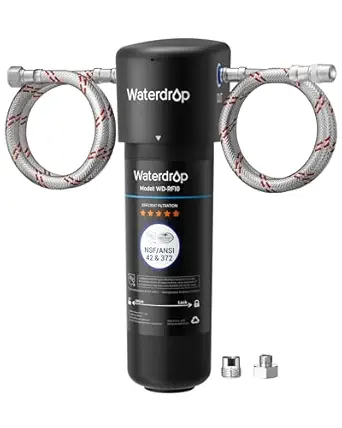 |
| Most Popular A crowd favorite that many people choose with confidence | DREO RO Countertop WF112 | 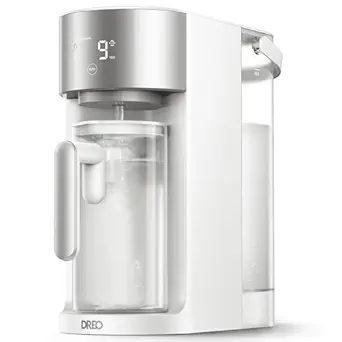 |
| Best Seller A high-volume bestseller chosen again and again | SimPure DB10P 10" Filter Housing |  |
CuZn UC-200 Under Sink Filter

| Model Number | UC-200 |
|---|---|
| Included Components | Stainless Steel Connection Hose |
| Material Type | NSF Approved Material Components |
| Filter Life | Up to 5 years / 50,000 gallons (depending on water quality) |
The CuZn UC-200 is an inline under-sink filter designed for simple DIY installation and long service life. It combines a micro sediment membrane, KDF-55 media, and coconut shell carbon to cut chlorine, lead, PFAS/PFOA, sediment and improve taste and odor without stripping healthy minerals. Installation is straightforward: connect the included stainless steel hose to your cold-water line and tuck the cylinder under the sink with minimal space required and no drilling. The standout feature is its rated longevity — up to five years or 50,000 gallons depending on feed water — which reduces replacement frequency and ongoing cost compared with cartridge-style systems. It is independently tested and uses NSF/ANSI 42 approved materials for contaminant reduction, though it does not lower total dissolved solids so it is not a replacement for reverse osmosis. Practical limits include the single-stage flow path that may not address every specific contaminant profile and the need to size expectations around local water quality. For buyers wanting a low-maintenance, long-lived under-sink filter that improves tap water taste and removes common contaminants, the UC-200 is a solid budget-conscious option.
Best for: Buyers who want a low-maintenance, cost-effective under-sink filter that improves everyday tap water taste and reduces common contaminants without frequent cartridge changes.
Less Ideal for: Homes that need deep TDS reduction, desalination, or highly customized multi-stage treatment should choose reverse osmosis or specialized filtration instead.
- Long rated filter life (up to 5 years or 50,000 gallons) reduces replacement frequency
- Three-stage media (micro sediment, KDF-55, coconut shell carbon) targets chlorine, lead, PFAS and improves taste
- Easy inline under-sink installation with included stainless steel connection hose and no drilling
- Retains beneficial minerals because it is not an RO system
- Does not remove total dissolved solids (TDS) so it will not soften or desalinate water
- Single-filter design may not address highly specific or unusual contaminant profiles
Verdict: If you want a simple, long-lived under-sink filter that noticeably improves tap water taste and cuts common contaminants with minimal upkeep, the UC-200 is a smart budget pick.
Aquasana Rhino WH-1010-CT-LM

| Maximum Flow Rate | 7 gpm |
|---|---|
| Operating Pressure Range | 20-100 psi |
| Supported Water TDS Level Maximum (PPM) | 500 |
| Filter Life Cycle | 10 years |
| Purification Method | Copper-Zinc (KDF) and Carbon |
The Aquasana Rhino WH-1010-CT-LM is a high-capacity whole-home filter and conditioner designed to supply cleaner water to every tap without softening. It installs on the main line and uses a multi-stage approach with a 20" pre-filter, carbon and copper-zinc (KDF) media, a tall salt-free conditioner, and a 10" post-filter to reduce chlorine, sediment, and inhibit bacteria while preserving beneficial minerals. Typical use is continuous household service for drinking, cooking, showering, and laundry, and the system is sized to support multiple showers and appliances at once thanks to its high rated flow. Notable benefits are the long 10-year filter life or one million gallon capacity, built-in drain and shut-off components for easier flushing, and a kit that supports common 3/4" or 1" mains. Important trade-offs are that it conditions rather than softens water so it will not remove dissolved hardness minerals, and installation requires space and plumbing work which may favor professional fitting for best performance.
Best for: Buyers who prioritize sustained, whole-home contaminant reduction and low ongoing maintenance and who need a system that can supply multiple fixtures simultaneously.
Less Ideal for: Households seeking active softening or removal of dissolved hardness should look at dedicated water softeners instead.
- Long service life rated for 10 years or 1,000,000 gallons, reducing replacement frequency
- Multi-stage carbon and KDF media that reduces up to 97% of chlorine and sediment
- High flow capacity suitable for multiple showers and household appliances
- Includes pre- and post-filters plus installation components and integrated drain valve
- Does not soften water or remove dissolved hardness minerals
- Requires space and plumbing installation that may need a professional
Verdict: Choose this system if you want a low-maintenance, high-flow whole-home filter that reliably cuts chlorine and protects plumbing for up to a decade.
Amazon Basics Under-Sink Water Filter

| Installation Type | Under Sink |
|---|---|
| Purification Method | Activated Carbon |
| Capacity | 11000 gallons |
| Certifications | NSF/ANSI 42 & 372 |
| Supported Water TDS Level Maximum (PPM) | 500 |
This Amazon Basics under-sink filter is a straightforward, no-frills activated carbon system that connects directly to standard 3/8" or 1/2" cold water lines and is intended to improve tap taste by reducing chlorine and odors. Installation is user-friendly: the twist-and-lock housing and push-to-connect fittings simplify a direct feed hookup under the sink, and the included hoses and converter fitting cover common plumbing hookups. The system is manual and does not require electricity, making it quiet and low-maintenance; the filter element is rated for up to 11,000 gallons or 12 months with municipal water, which should cover an average household without frequent cartridge changes. Because it is certified to NSF/ANSI 42 and 372, it meets basic standards for aesthetic contaminant reduction and material safety. The trade-offs are that it is an activated carbon-only system so it does not remove dissolved solids or heavy metals, and it requires periodic replacement on a yearly or gallon-based schedule to maintain performance. For buyers who want simple chlorine and taste improvement at low cost, this is a practical choice.
Best for: Buyers who prioritize a budget-friendly, easy-to-install under-sink solution to improve tap taste and reduce chlorine without electrical components or complex plumbing changes.
Less Ideal for: Households that need removal of heavy metals, high TDS, or microbiological contaminants should consider multi-stage or specialized filtration systems instead.
- Easy twist-and-lock housing and push-to-connect fittings for fast under-sink installation
- NSF/ANSI 42 and 372 certification for chlorine/taste reduction and material safety
- High claimed service life of 11,000 gallons or 12 months reduces replacement frequency
- Includes hoses and a 3/8"–1/2" converter to fit common sink feed lines
- Activated carbon only — does not address dissolved solids, heavy metals, or microbiological contaminants
- Manual system lacks pressure-monitoring or electronic indicators for filter life
Verdict: A practical, low-cost under-sink carbon filter that delivers simple chlorine and taste improvement with minimal installation fuss.
Waterdrop PT-05 Pitcher

| Capacity | 7-Cup |
|---|---|
| Filter lifespan | Up to 200 gallons / 3 months |
| Certifications | NSF/ANSI 42, 372 |
| Material Type | BPA-free, lead-free |
The Waterdrop PT-05 is a slim 7-cup pitcher designed for everyday countertop use, pairing a BPA-free plastic pitcher with a long-life replacement filter. It uses an activated carbon fiber element that is NSF/ANSI 42 and 372 certified to reduce chlorine, taste, odor, and select contaminants including PFOA and PFOS, and the filter is rated for up to 200 gallons or about three months under typical use. Setup is straightforward: soak the cartridge, press it into the reservoir, then discard the first two pitchers of water as recommended. The lid includes a simple mechanical life recorder so you can track when to change the filter. For budget-minded households this model delivers reliable basic filtration, a compact slim profile that fits fridge doors, and lower ongoing replacement frequency compared with shorter-life cartridges. Expect typical pitcher limitations though: it does not reduce total dissolved solids and throughput is limited by gravity so filling large quantities takes time compared with plumbed systems or reverse osmosis units.
Best for: Buyers seeking an affordable, low-maintenance pitcher that improves tap water taste and reduces common contaminants for everyday drinking water.
Less Ideal for: Homes that need heavy-duty contaminant removal, low TDS water, or fast large-volume filtration should consider under-sink or RO systems instead.
- NSF/ANSI 42 and 372 certified for chlorine, taste, and certain contaminants reduction
- Long-life filter rated up to 200 gallons or about 3 months to reduce replacement frequency
- Slim shape fits most fridge doors and counters for easy storage
- Mechanical life recorder on the lid for simple filter replacement tracking
- Gravity-fed pitcher so filtering a lot of water is slower than plumbed or electric systems
- Does not lower total dissolved solids (TDS)
Verdict: A cost-conscious countertop pitcher that delivers certified basic contaminant reduction and longer filter life for everyday drinking water.
Waterdrop WD-10UA Under Sink Filter

| Purification Method | Activated Carbon |
|---|---|
| Maximum Flow Rate | 2.5 gpm |
| Filter Life Cycle | 1 years |
| Supported Water TDS Level Maximum (PPM) | 700 |
| Capacity | 11000 gallons |
The Waterdrop WD-10UA is an under-sink activated carbon filter that connects directly to standard cold-water feed lines and is intended for everyday drinking and cooking use. Installation uses twist-and-lock construction with push-to-connect fittings and a 3/8" line so most users can fit it under a sink without drilling; replacement cartridges are simple to swap thanks to a quick twist mechanism. The cartridge is NSF/ANSI 42 certified and rated to reduce PFAS, PFOA/PFOS, lead, chlorine, bad taste and odor while retaining beneficial minerals, and the manufacturer rates the filter life at about 12 months with municipal water. Flow rates are reasonable for single-faucet use and the system is compact enough for small or rented kitchens and RVs. Limitations: it is designed for cold municipal water only, not well water or hot lines, and it requires compatible female-thread faucet connections; it also will not lower TDS readings because it leaves dissolved minerals intact. For buyers seeking an affordable, easy-to-install point-of-use filter that improves taste and removes common contaminants, this is a practical choice.
Best for: Homeowners or renters who prioritize a reliable, low-maintenance under-sink filter to improve drinking water taste and remove common chemical contaminants without complex installation.
Less Ideal for: People with well water, high-TDS water issues, or those who need hot-water or whole-house filtration should look at other systems designed for those conditions.
- NSF/ANSI 42 certified for chlorine, taste and odor reduction and common contaminants
- Twist-and-lock plus push-to-connect fittings enable fast tool-free installation and quick cartridge changes
- Compact footprint suits small cabinets, rented properties, and RVs
- Rated 12-month filter life for typical municipal water use, simplifying maintenance
- Not suitable for well water or hot water supply
- Requires compatible faucet/pipe fittings and may need an adapter for some setups
Verdict: A reliable, budget-friendly under-sink filter that delivers NSF-certified contaminant and taste reduction with simple, fast installation and year-long cartridge life.
DREO RO Countertop WF112

| Purification Method | Reverse Osmosis |
|---|---|
| Capacity | 3 liters |
| Pure to Drain Rate | 3:1 |
| Included Components | Body, RO filter, Autofill pitcher |
The DREO WF112 is a countertop reverse osmosis purifier designed to deliver low-waste RO drinking water for one to two people without permanent installation. It uses a 7-stage RO filter and reports a 3:1 pure-to-drain ratio while an integrated TDS meter and filter-life indicator let you monitor water quality and replacement timing. The unit includes an autofill 1.1L pitcher with a sensor for hands-free refills and a self-clean cycle that flushes internal tubing to help maintain purity between filter changes. Setup is plug-and-play with no plumbing needed and the twist-to-install cartridge makes replacements quick. Practical limits are its modest 3L reservoir and 265-gallon filter runtime, so it suits light daily use rather than large households, and like most countertop RO systems it produces some wastewater and requires periodic descaling. For buyers watching reviews and real-world reliability, the product has broad social proof and visible monitoring features that make maintenance less guesswork.
Best for: Buyers who prioritize verified performance and visible maintenance feedback and who need a compact, no-plumb RO purifier for light daily household use.
Less Ideal for: Large families or users who need high daily output or want a whole-house solution should consider higher-capacity or plumbed systems instead.
- Built-in TDS meter and filter-life indicator for real-time water quality and maintenance alerts
- Autofill pitcher with sensor for convenient hands-free refills
- Self-cleaning auto-flush reduces manual tube maintenance
- Compact, installation-free countertop design that is easy to set up
- 7-stage RO filtration removes a wide range of impurities per manufacturer testing
- Filter capacity and reservoir size are best for 1–2 people, not larger households
- Produces wastewater inherent to RO systems, despite a relatively efficient 3:1 ratio
Verdict: A compact, installation-free countertop RO system that gives visible TDS monitoring and easy maintenance, making it a confident budget choice for one- to two-person households.
SimPure DB10P 10" Filter Housing

| Inlet/Outlet | 1" NPT Brass Port |
|---|---|
| Maximum Flow Rate | 20 gpm |
| Compatible Filter Size | 10" x 4.5" |
| Working Water Temperature | 5-38 ℃ (41-100 ℉) |
| Applicable Water TDS Max | 500 ppm |
The SimPure DB10P is a simple, rugged whole-house filter housing that accepts standard 10" x 4.5" cartridges to remove sediment and improve taste and odor before water reaches appliances. It installs on a 1" NPT line and includes a brass inlet/outlet, a heavy-duty mounting bracket, wrench, screws, and a built-in red pressure-relief button to make cartridge changes easier. The polypropylene housing is food-grade and reinforced for strength and corrosion resistance, and the unit is rated for up to 20 gpm flow and typical municipal or well water conditions. Because cartridges are sold separately you can choose sediment, granular carbon, or pleated filters to match your needs, but that also means additional ongoing cost and a bit of planning to pick the right replacement. The housing is straightforward to mount and service and is a budget-friendly pre-filter to protect water heaters, washing machines, and downstream filters, though it requires adequate installation space and basic plumbing skills to avoid leaks.
Best for: Buyers who want an affordable, no-frills whole-house prefilter to protect appliances and plumbing and who prefer a straightforward, serviceable housing they can maintain themselves.
Less Ideal for: People who need a complete filtration system with included cartridges or those unwilling to perform basic plumbing installation or periodic cartridge replacements.
- Fits standard 10" x 4.5" cartridges so replacements are widely available
- 1" NPT brass inlet/outlet provides a reliable threaded connection
- Includes mounting bracket, wrench, and screws for installation
- Built-in pressure-relief button simplifies cartridge changes
- Food-grade reinforced polypropylene construction resists corrosion
- Cartridges are not included so ongoing costs and cartridge selection are required
- Requires sufficient installation space and basic plumbing skills to install
Verdict: A budget-friendly, factory-quality 10" whole-house housing that makes adding pre-filtration easy and affordable for protecting home plumbing and appliances.
Choosing the Right Budget Water Filter for Home Use: Key Factors to Consider
Contaminant Reduction
Different filters target different contaminants such as chlorine, lead, sediments, or microbial cysts. Knowing which contaminants are most relevant to your water source matters because a unit that reduces chlorine taste will not necessarily remove heavy metals or pathogens.
Check independent test claims or third-party certifications when possible. For budget options, focus on systems that clearly state what they remove and provide removal rates or standard testing references. Prioritizing the contaminants you care about ensures you get the health or taste benefits you expect without overspending on unnecessary capabilities.
Filter Life And Replacement Cost
Filter lifespan varies by technology and household water usage and is typically expressed in gallons or months. A lower upfront price can be offset by expensive replacement cartridges or short service intervals.
Estimate your household consumption and compare the replacement interval and per-cartridge cost. Consider availability of replacement filters and whether generic or store-brand cartridges are compatible. Long life and affordable replacements usually lead to lower total cost of ownership for budget-focused buyers.
Installation Requirements
Some systems install in minutes on a faucet or sit on the counter, while others require under-sink plumbing work. Installation complexity affects whether you can set up the unit yourself or need professional help, which adds cost and time.
If you rent or prefer no-permanent changes, choose non-invasive designs. For homeowners comfortable with basic plumbing, under-sink or inline systems can offer better performance but require correct fittings and occasional shutoff valve use during cartridge changes.
Flow Rate And Everyday Capacity
Flow rate determines how quickly you can fill a glass, pitcher, or kettle. Some budget filters significantly reduce flow, creating inconvenience during meal prep or when multiple people need water.
Look for rated flow in gallons per minute or specifications on pitcher fill time. Also consider the system's storage or throughput capacity so the filter does not become a bottleneck for daily tasks. Higher household demand benefits from filters designed for steady flow and decent throughput between cartridge changes.
Maintenance Simplicity
Maintenance steps include replacing cartridges, sanitizing housings, and resetting indicators. Simpler maintenance means you are more likely to perform required upkeep on time, preserving filtration performance and avoiding bacterial growth in neglected housings.
Favor units with tool-free cartridge changes, clear replacement schedules, and accessible parts. Indicators or simple calendar reminders help, as do systems with few small parts that can be lost or cross-threaded during servicing.
Certifications And Transparency
Independent certifications from recognized labs or clear test reports increase confidence that a budget product performs as claimed. Certification is particularly important when health-related contaminants like lead or microbial hazards are at issue.
If formal certification is not present, rely on detailed performance data from manufacturers and on clear labeling of what the filter reduces. Transparency about test methods, flow conditions, and end-of-life specifications helps avoid surprises and supports better long-term decisions.
Common Filter Types And What They Do
Budget home water filters typically fall into a few technology categories: carbon-based filters, mechanical sediment filters, ion-exchange softeners or deionizers, and simple membrane systems. Each type performs differently and suits different goals.
Carbon filters are effective at improving taste and removing chlorine and many organic molecules. Mechanical sediment filters trap particles and protect downstream media. Ion-exchange units help reduce hardness or specific dissolved ions. Membranes such as microfiltration or reverse osmosis provide finer removal but often at higher cost and slower flow.
- Carbon filtration: best for taste and chlorine reduction
- Sediment filters: protect other media and remove visible particles
- Ion exchange: targets hardness and certain dissolved minerals
- Membrane filters: finer contaminant removal, often with slower flow
Where To Install Budget Filters In Your Home
Common installation points include the countertop or faucet, under-sink, or at the point-of-entry for whole-house setups. For budget-focused drinking water improvement, point-of-use locations such as the kitchen sink or a dedicated pitcher are the most practical.
Countertop and faucet-mounted units require minimal plumbing and are ideal for renters or those who want a quick setup. Under-sink systems keep the filter out of sight and can provide higher capacity but may need basic plumbing skills to install.
- Faucet-mounted: quickest to install, limited flow for simultaneous use
- Countertop: portable and easy to refill, moderate capacity
- Under-sink: larger cartridges and better flow, needs more space
Maintenance Routines That Keep Filters Working
A simple maintenance plan prevents taste decline and microbial buildup. Replace cartridges on the schedule recommended by the manufacturer or sooner if flow slows or water quality changes. Rinse or sanitize housings during cartridge swaps when the design allows.
Keep a small kit with replacement O-rings and a soft cloth for cleaning. For cartridge swaps, work over a sink to catch water and follow torque or hand-tightening instructions to avoid leaks. Log replacement dates to stay on schedule and avoid reduced performance.
- Record cartridge install dates and expected end-of-life
- Use gentle cleaning solutions recommended by the manufacturer
- Inspect fittings and O-rings during each change for wear
Estimating Long-Term Cost Of Ownership
Initial purchase price is only part of the equation. Estimate costs across a year or multiple years by adding replacement cartridge costs and expected service intervals. Calculate the cost per gallon or per household member to compare different systems fairly.
Also consider incidental costs such as replacement O-rings, occasional sanitizing supplies, and potential plumbing parts for under-sink installs. Systems with longer filter life and inexpensive cartridges usually win for budget-conscious households.
- Compare cost per gallon to normalize different lifespans
- Factor in possible installation supplies or minor tools
- Account for disposal or recycling options for used cartridges
Common Installation Pitfalls To Avoid
Avoid cross-threading fittings, overtightening plastic housings, and ignoring shutoff valves during installs. Read instructions thoroughly and confirm faucet thread types before purchase when choosing faucet-mounted options.
If working under the sink, turn off the water supply and keep towels ready for spills. For systems requiring plumbing changes, have basic tools on hand and confirm you can easily access replacement cartridges and parts.
- Check thread compatibility for faucet-mounted models
- Keep spare O-rings and hand tools for safe installation
- Always test for leaks at low flow after installation
How We Chose the Best Budget Water Filter for Home Use
We focused on filters that deliver measurable contaminant reduction, simple installation, and low ongoing cost because budget-minded buyers need both performance and predictable upkeep. Our selection criteria were practical and testable: certified contaminant reduction where available, filter lifespan measured in gallons or months, ease of installation without specialized tools, frequency and cost of replacement cartridges, and overall daily convenience such as flow rate and faucet compatibility. We prioritized units that require minimal plumbing changes and that homeowners can maintain easily. Systems that demand complex modifications or professional installation were excluded. We also filtered out products with unusually short usable life or unclear replacement-part availability. The final choices reflect a balance of filtration effectiveness, total cost of ownership, user-friendly installation and maintenance, and consistent flow for normal household use. This approach ensures the list favors durable, understandable options that deliver real value for everyday drinking water needs.
Our full evaluation process is outlined in our review methodology.
FAQ
How do I know which contaminants my home water needs filtered?
Start with your local water quality report or a home test kit to identify common issues like chlorine, lead, or hardness. Match filter capabilities to the contaminants you find most relevant rather than buying the most complex system available.
Are budget filters effective at removing lead or microbial contaminants?
Some budget filters reduce lead or certain microbes, but effectiveness varies by technology and certification. Look for explicit performance claims or third-party testing for these specific contaminants before relying on a low-cost unit.
How often will I need to replace cartridges in a typical budget filter?
Replacement intervals usually range from a couple of months to a year depending on the filter and household usage. Check the rated gallons or months for the cartridge and estimate replacements based on your daily consumption.
Can I install a budget water filter myself?
Many countertop, pitcher, and faucet-mounted filters are designed for tool-free DIY installation. Under-sink or inline systems may require basic plumbing skills, shutoff valve access, and small fittings, so choose based on your comfort level.
Do budget filters slow down water flow significantly?
Some do, especially finer membrane or heavily loaded carbon filters. Manufacturers often list flow rates; pick a system rated for reasonable gallons per minute if you need faster fills or have multiple simultaneous users.
What should I do with used cartridges?
Check the manufacturer's guidance for disposal or recycling options. Some cartridges can be recycled through third-party programs, while others must be discarded as solid waste. Rinse housings and follow local regulations for disposal.
Final Verdict
When choosing a budget water filter for home use, prioritize the contaminants you need reduced, realistic filter life, and ease of installation and maintenance. Balancing upfront cost with replacement cartridge price and everyday flow needs will help you pick a system that actually saves time and money over the long run. For most households, the best choice is the one that clearly addresses your local water issues, fits your kitchen setup, and keeps maintenance simple. Focus on transparent performance claims and predictable ongoing costs to make a confident selection.