
Note: This article contains affiliate links. If you click on these links and make a purchase, we may earn a small commission at no extra cost to you. This helps support our research and content. Read our full affiliate disclosure here.
A persistent rotten egg smell in tap water usually means dissolved hydrogen sulfide or sulfur compounds are present. That odor can make drinking, cooking, and bathing unpleasant and may hint at underlying water chemistry issues. Choosing the right water filter for rotten egg smell matters because different filtration methods target sulfur gases, bacteria-related sources, or mineral interactions in different ways. This guide shortlists seven top-performing water filters that address sulfur odor for home use. We evaluated options that suit whole-house systems, under-sink setups, and point-of-use cartridges. Below you will find clear buying guidance based on contaminant reduction, flow performance, maintenance demands, and installation factors to help you pick a practical solution.
Top Picks at a Glance
| Best Overall The best all-around choice for most situations | iSpring WGB31B-KDS Whole House Filter |  |
| Best Quality Built to a higher standard if you want something more solid | A. O. Smith Whole House Filter AO-WH-Filter |  |
| Best Value The sweet spot between price and what you get | Pentair Pentek GAC-BB Carbon Filter |  |
| Best Budget The cheapest option that still gets the job done reliably | Pentek EPM-10 Carbon Block Filter |  |
| Top Rated A top-rated pick with lots of positive feedback | Waterdrop WD-15UA Under Sink Filter |  |
| Most Popular A crowd favorite that many people choose with confidence | CuZn UC-200 Under Sink Filter |  |
| Best Seller A high-volume bestseller chosen again and again | GE FXWTC Whole House Filter |  |
iSpring WGB31B-KDS Whole House Filter

| Maximum Flow Rate | 15 gpm |
|---|---|
| Supported Water TDS Level Maximum (PPM) | 500 |
| Filter Life Cycle | 12 months |
| Inlet / Outlet | 1 inch Female NPT |
| Operating Temperature | 40-100 ºF |
The iSpring WGB31B-KDS is a compact whole-house system designed to protect plumbing and improve water taste and odor without removing healthy minerals. It pairs a polyphosphate descaler to inhibit scale and corrosion with a composite filter that targets heavy metals, hydrogen sulfide, and other contaminants, and finishes with a coconut-shell carbon block for chlorine and odor reduction. The unit supports up to 15 gpm and is sized for apartments, small homes, or vacation properties where space is limited. Installation is DIY-friendly with included hardware and a video guide, and pressure-release buttons make cartridge swaps cleaner and faster. It does not soften water or change TDS, so households needing true softening will still require a separate softener. Also keep in mind the system is intended for indoor, protected installation and has specified pressure and pH operating ranges that should be checked before purchase.
Best for: Homeowners or renters who want broad whole-house odor and heavy-metal reduction plus scale protection in a compact, low-maintenance system and who prioritize easy DIY installation.
Less Ideal for: Homes that require actual water softening or households that need an outdoor-ready system without additional weatherproofing should look at different solutions.
- Three-stage design combines descaler, heavy-metal/composite filtration, and carbon block for broad contaminant removal
- High flow capacity up to 15 gallons per minute suitable for whole-house use
- Long filter life rated up to 12 months or 80,000 gallons for low maintenance
- Compact, wall-mountable footprint fits tight mechanical spaces and apartments
- DIY-friendly installation with included kit, manual, and video guidance
- Does not actually soften water or remove calcium/magnesium that cause hardness
- Recommended for indoor installation only and needs protection from frost and direct weather
Verdict: Choose the WGB31B-KDS when you need compact whole-house protection that cuts chlorine, odors, heavy metals, and scale buildup without removing healthy minerals.
A. O. Smith Whole House Filter AO-WH-Filter

| Purification Method | Activated Carbon |
|---|---|
| Maximum Flow Rate | 7 gpm |
| Operating Pressure Range | 20-100 psi |
| Filter Life Cycle | 6 years |
| Capacity | 600000 gallons |
The A. O. Smith AO-WH-Filter is a tank-style whole-house activated carbon system designed to remove chlorine taste and odor from all taps. It installs on the main line and is supplied with a shut-off valve, nipple and hose adapter so most handy homeowners can complete a DIY install without a plumber. The unit is intended for continuous household use — filtering water used for drinking, cooking, bathing and showers — and is sized to serve larger families. Its key practical strengths are the long service life and capacity: the carbon media is rated for about 600,000 gallons or roughly six years of typical use, and the unit supports flow rates up to 7 gpm with standard household pressures. Because it is an activated carbon filter, it effectively reduces chlorine taste and odor and can improve skin and air quality by limiting chlorine off-gassing, but it does not soften water or remove hydrogen sulfide that causes persistent rotten egg smell, nor will it remove dissolved iron or bacteria. The fiberglass tank and manual operation mean low ongoing maintenance, though pre-filtration is recommended where sediment is present to protect the carbon bed.
Best for: Buyers seeking a low-maintenance, high-capacity whole-house carbon filter to eliminate chlorine taste and odor across all taps and reduce chlorine off-gassing in a performance-focused household.
Less Ideal for: Homes whose main problem is rotten egg smell from hydrogen sulfide, bacterial contamination, heavy iron, or where water softening is required should consider targeted sulfur, microbial or softening solutions instead.
- Long rated service life of about 600,000 gallons or six years, reducing replacement frequency.
- Factory-style activated carbon media targets chlorine taste and odor across the whole house.
- Supports up to 7 gallons per minute flow, suitable for typical household demand.
- Includes shut-off valve and hose adapter for straightforward DIY installation.
- Does not remove hardness, hydrogen sulfide (rotten egg odor) long-term, or dissolved iron.
- No powered features or filtration stages for bacteria or fine particulates; a pre-filter may be required in dirty supply conditions.
Verdict: Buy this if you want a long-lasting, high-capacity whole-house carbon filter that reliably removes chlorine taste and odor for a performance-focused household.
Pentair Pentek GAC-BB Carbon Filter

| Material Type | Granular Activated Carbon |
|---|---|
| Capacity | ~12,500 gallons |
| Flow/Pressure Drop | 4 psi drop at 2 gpm |
| Fits Size | 10" x 4.5" |
| Certification | NSF |
The Pentair Pentek GAC-BB is a 10-inch Big Blue cartridge filled with granular activated carbon that reduces chlorine taste and many common tastes and odors in household water. It installs into 10" x 4.5" Big Blue housings and is used as a whole-house or under-sink carbon stage to improve flavor and remove chlorine smell. The cartridge is built with an internal expansion pad to reduce channeling and a permanently attached spun polypropylene post-filter that traps carbon fines so downstream plumbing stays cleaner. Pentair rates it for roughly 12,500 gallons of service at low pressure drop (about 4 psi at 2 gpm), and recommends replacing it roughly every three months or sooner if flow or taste degrades. Practical benefits include straightforward drop-in compatibility with Big Blue housings, effective odor/taste reduction, and an NSF-tested construction. Limitations are that GAC targets chlorine and organic tastes but will not remove hydrogen sulfide confidently when rotten-egg smell is present, and it requires periodic replacement and flushing during installation to clear fines.
Best for: Buyers looking to optimize household water taste and odor with a durable, drop-in carbon cartridge for Big Blue housings who prioritize straightforward performance and low pressure loss.
Less Ideal for: Homes where rotten-egg hydrogen sulfide is the primary smell source should consider catalytic carbon or sulfur-targeted media instead of this general-purpose GAC cartridge.
- Effective reduction of chlorine taste and common odors using granular activated carbon
- Post-filtered design reduces carbon fines entering downstream plumbing
- Built to fit 10" x 4.5" Big Blue heavy-duty housings for easy replacement
- Low pressure drop at typical household flow rates for minimal impact on water pressure
- Not formulated to reliably remove hydrogen sulfide responsible for rotten-egg smell
- Requires regular replacement and initial flushing to avoid carbon dust in supply
Verdict: Choose the GAC-BB when you want a reliable, drop-in carbon cartridge to noticeably reduce chlorine taste and everyday odors in Big Blue housings.
Pentek EPM-10 Carbon Block Filter
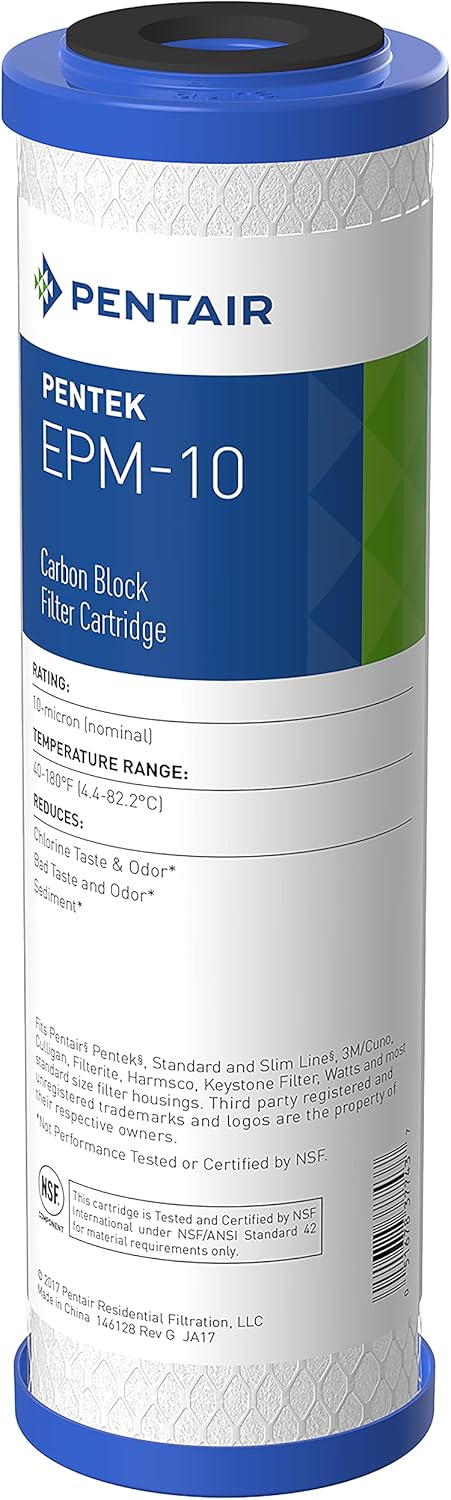
| Material Type | Extruded Carbon Block |
|---|---|
| Filtration Rating | 10 Micron |
| Capacity | 3,000 Gallons |
| Length | 10" |
The Pentek EPM-10 is a straightforward 10" carbon block cartridge for under-sink and inline housings that targets chlorine taste and odor and removes sediment down to about 10 microns. You install it into any standard 10" x 2.5" housing where it performs as an economical maintenance filter for drinking and tap water, with a high-porosity design that resists premature plugging and helps maintain flow. The cartridge includes an outer wrap to trap larger sediment and extend useful life, and it carries NSF/ANSI testing certifications for added confidence. Pentek rates it for roughly 3,000 gallons or about three months of typical use, so expect regular replacements if water quality or pressure declines. It is not formulated specifically for hydrogen sulfide removal, so it may reduce mild odors associated with organics or chlorine but is unlikely to fully eliminate a strong rotten egg smell from dissolved hydrogen sulfide without a dedicated sulfur-removal media or multi-stage system.
Best for: Buyers seeking an inexpensive, NSF-tested carbon-block replacement for general chlorine taste and odor control and basic sediment reduction in a standard 10" under-sink housing.
Less Ideal for: Homes with persistent rotten egg smell caused by hydrogen sulfide or severe sulfur contamination should consider a dedicated sulfur-removal filter or multi-stage system instead.
- Extruded carbon block media reduces chlorine taste and common odors
- High porosity design resists plugging to preserve flow
- Outer wrap traps larger sediment to extend cartridge life
- NSF/ANSI tested and certified
- 10-micron rating may not catch very fine particulates or provide fine polishing
- Not formulated specifically to remove hydrogen sulfide or strong rotten egg odors
Verdict: A budget-friendly, NSF-tested 10" carbon block cartridge that reliably reduces chlorine taste and basic sediment in standard under-sink housings.
Waterdrop WD-15UA Under Sink Filter
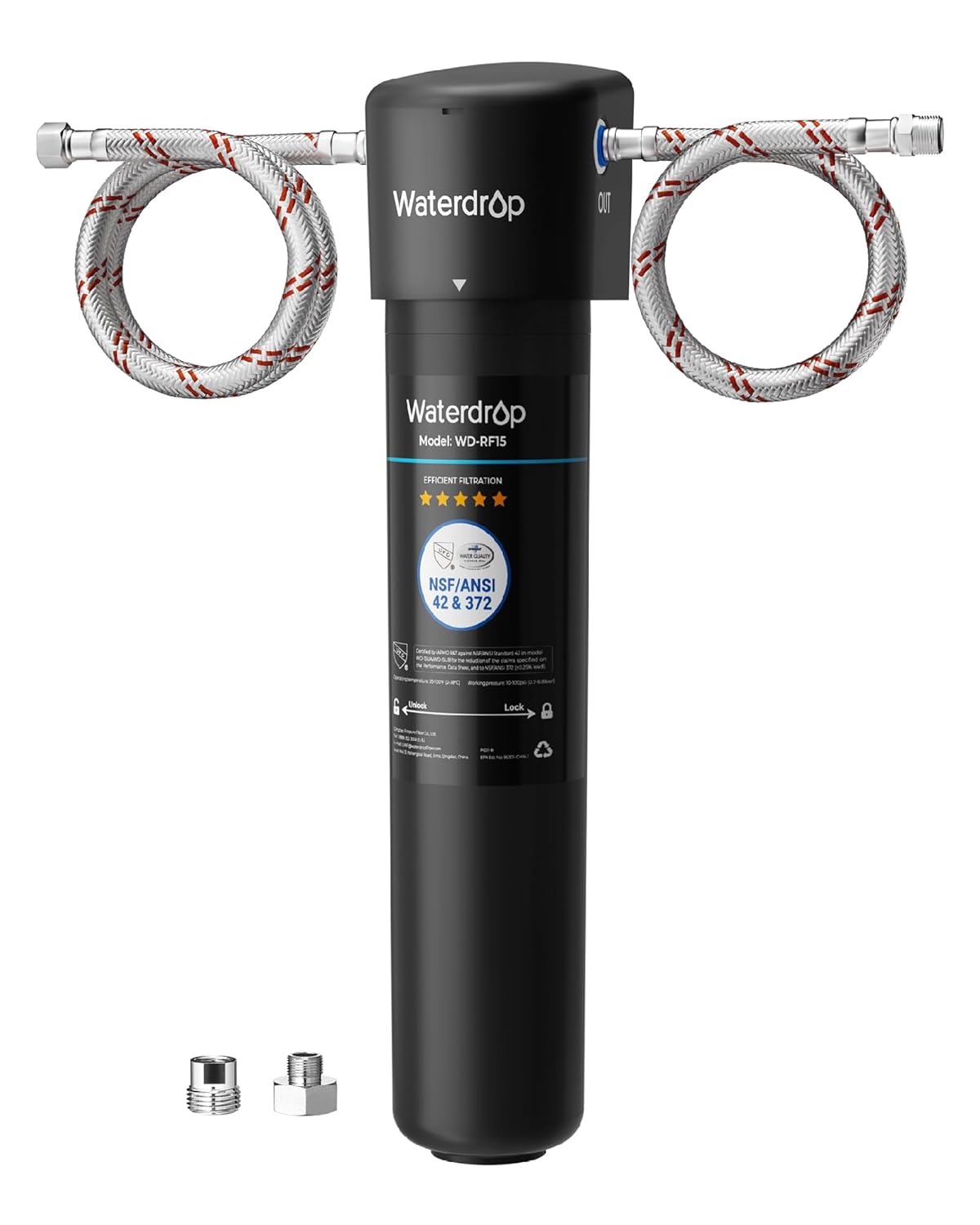
| Purification Method | Activated Carbon |
|---|---|
| Filter Life Cycle | 2 years |
| Capacity | 19000 gallons |
| Maximum Flow Rate | 0.75 gpm |
The Waterdrop WD-15UA is an under-sink activated carbon filter built for long service life and simple installation. It connects directly to the cold-water feed with push-to-connect fittings and a 3/8" direct hose plus a 3/8"–1/2" converter, so no plumber is typically required. Its multilayer carbon media and upgraded surface area are designed to reduce chlorine, lead, PFAS/PFOA/PFOS, sediment and common causes of bad taste and odor such as rotten egg smell in municipal tap water. The manufacturer rates the system for 19,000 gallons or about 24 months on municipal supplies, which reduces the frequency of replacements and maintenance. Flow is steady at up to 0.75 gpm at 60 psi, so filtered water is available for drinking and cooking without a long wait. Limitations: the unit is intended for cold municipal water only and not suitable for well water or hot water applications, and its larger cartridge requires enough under-sink clearance. Overall the WD-15UA is a practical, low-maintenance option when odor and chlorine are the primary concerns and you want a long-lasting under-sink solution.
Best for: Buyers who prioritize a reliable, low-maintenance under-sink filter to consistently remove chlorine and common odor-causing contaminants without frequent cartridge changes.
Less Ideal for: People who need treatment for well water contaminants, hot-water filtration, or those with very limited under-sink space should consider other systems.
- Very long rated service life (approx. 19,000 gallons or 24 months) reduces replacement frequency
- Multistage activated carbon media certified to reduce chlorine, lead and taste/odor issues
- Push-to-connect direct install with included hose and adapter makes installation fast without a plumber
- Maintains a usable flow rate (0.75 gpm at 60 psi) for drinking and cooking
- Designed for cold municipal water only and not recommended for well water or hot water
- Larger cartridge size requires checking under-sink clearance before purchase
Verdict: Choose the WD-15UA when you want a long-lasting, easy-install under-sink filter that reliably cuts chlorine and bad tastes or odors with minimal maintenance.
CuZn UC-200 Under Sink Filter

| Model Number | UC-200 |
|---|---|
| Included Components | Stainless Steel Connection Hose |
| Material Type | NSF Approved Material Components |
| Filter Life | Up to 5 years or 50,000 gallons (dependent on water quality) |
The CuZn UC-200 is an under‑sink inline filter designed to deliver better tasting tap water without removing beneficial minerals. It uses a three‑stage blend of micro sediment membrane, KDF-55 media, and coconut shell carbon to reduce chlorine, lead, PFAS/PFOS and common tastes and odors, which makes it effective against rotten‑egg smell tied to chlorine or other contaminants. Installation is a direct cold‑water connection and includes a stainless steel connection hose, so most DIYers can fit it without drilling. The standout is its ultra‑high capacity claim — up to five years or 50,000 gallons depending on incoming water quality — which lowers replacement frequency and plastic waste compared with short‑life cartridges. Limitations: it does not lower total dissolved solids so it will not fix mineral‑based hardness or all sulfur issues caused by hydrogen sulfide gas, and performance depends on your feed‑water chemistry and flow demands. For homes dealing with chlorine or many taste and odor problems the UC‑200 is a low‑maintenance option, but it is not a substitute for reverse‑osmosis or specialized sulfur removal systems when those are required.
Best for: Buyers who prioritize proven performance and social proof and want a low‑maintenance under‑sink filter that tackles chlorine, lead and common taste and odor problems with minimal cartridge changes.
Less Ideal for: Homes that need distilled‑level purity, heavy TDS reduction, or specialized sulfur/hydrogen sulfide removal should consider reverse osmosis or dedicated sulfur treatment instead.
- Long claimed service life up to five years or 50,000 gallons reduces replacement frequency
- Three‑stage filtration (micro sediment, KDF-55, coconut shell carbon) targets chlorine, lead, PFAS and common tastes and odors
- Includes stainless steel connection hose for straightforward under‑sink installation
- Does not remove beneficial minerals since it is not an RO system
- Does not reduce total dissolved solids so it will not address mineral hardness
- May not remove hydrogen sulfide gas responsible for some rotten egg smells, requiring a dedicated sulfur treatment
Verdict: Choose the UC‑200 if you want a proven, low‑maintenance under‑sink filter that removes chlorine, lead and many taste and odor issues while minimizing cartridge changes.
GE FXWTC Whole House Filter

| Unit Count | 2 Count |
|---|---|
| Compatible Water Purifier Models | GE GXWH04F, GE GXWH20S |
| External Testing Certification | NSF |
| Filter Life | 3 months or 16,000 gallons |
These GE FXWTC replacement cartridges are a basic, drop-in-style whole-home filter sold as a two-pack and intended for 10" high-flow systems like the GXWH04F and GXWH20S. Installation is straightforward for standard twist-and-drop housings and the polypropylene/plastic cartridges target sediment, rust, sand and chlorine taste and odor, which helps protect plumbing and appliances. The filters are NSF/ANSI certified and are rated to last about three months or roughly 16,000 gallons under typical use, so you should expect scheduled replacements every season. As a basic-level filter they excel at particulate reduction down to about 30 microns but are not designed for fine chemical or hydrogen sulfide removal specifically responsible for rotten egg smell, so homes with that issue may need a sulfur-specific media or catalytic carbon stage. For buyers seeking a reliable, certified sediment-and-chlorine replacement that fits common 10" housings, these are a low-friction, dependable choice, but they are not a targeted solution for strong sulfur odors.
Best for: Buyers who prioritize a certified, easy-to-install replacement filter to maintain basic sediment and chlorine control across a whole-home system and prefer predictable, seasonal maintenance.
Less Ideal for: Homes dealing with strong sulfur or rotten-egg odors or those needing fine chemical removal should choose a dedicated sulfur-removal or catalytic carbon filter instead.
- NSF/ANSI certified to reduce sediment, rust and chlorine taste and odor
- Universal fit for most 10" drop-in whole-house housings including GE GXWH systems
- Sold as a two-pack for synchronized replacements
- Simple drop-in installation suitable for routine seasonal maintenance
- Filtration is basic (around 30-micron particulate) and not formulated to remove hydrogen sulfide that causes rotten egg smell
Verdict: A dependable, NSF-certified two-pack for routine whole-home sediment and chlorine control when you want reliable, low-effort replacements.
Choosing the Right Water Filter for Rotten Egg Smell: Key Factors to Consider
Filtration Technology
Different filter technologies remove sulfur odor by different mechanisms. Activated carbon adsorbs some sulfur compounds and improves taste, but its capacity varies with media type and contaminant load. Oxidizing media convert dissolved hydrogen sulfide to particles that can be trapped mechanically. Specialized catalytic or manganese greensand media treat higher concentrations but may need conditioning or regeneration.
Understanding the underlying technology helps you match a system to the severity of the odor. Simple carbon cartridges can work for low-level, intermittent smells. For steady or high sulfur levels, oxidizing or catalytic media with proper preconditioning will be more reliable.
Source Water and Odor Cause
The origin of the rotten egg smell influences which solution will work. In well water, hydrogen sulfide often comes from natural geological sources or anaerobic bacteria. In municipal systems, transient sulfur can appear after maintenance or from source water chemistry.
A brief water test to measure hydrogen sulfide concentration and basic parameters like iron and manganese will guide your choice. Systems designed for dissolved gas removal differ from those targeting bacterial production or mineral-related discoloration, so matching the cause to the treatment method avoids unnecessary expense and complexity.
Flow Rate and Household Demand
A filter that removes sulfur odor but reduces water flow too much will be impractical for daily use. Consider peak household demand such as simultaneous showers and appliance use. Whole-house systems must maintain adequate pressure across multiple fixtures, while point-of-use units only need to support a single tap or appliance.
Look for rated flow performance at typical residential pressures and plan for future demand changes. If you have hard water or high sediment, factor in how those will further reduce effective flow and require prefiltration to protect the sulfur-targeting media.
Maintenance and Media Replacement
Different systems require different upkeep. Cartridge-based filters usually need predictable periodic changes, often every few months depending on usage and water quality. Media beds in whole-house systems may need backwashing, regeneration with chlorine or potassium permanganate, or periodic media replacement.
Estimate annual maintenance time and whether you prefer a low-touch cartridge swap or are comfortable with occasional backwash/regeneration cycles. Also consider the availability and cost of replacement media and whether you can perform maintenance yourself or will need a professional.
Installation and Plumbing Compatibility
Some sulfur-removal systems are simple under-sink cartridges that fit standard housings, while others are larger whole-house units requiring shutoff valves, bypass plumbing, and space for tanks. Check connection sizes, mounting requirements, and whether any electrical or drainage access is needed for backwash cycles.
If you rent or have limited space, a compact point-of-use filter may be the best option. For a whole-house approach, plan where the unit will sit, how you will access it for maintenance, and whether additional prefilters or softening are required to protect the system.
Cost of Ownership
Upfront cost is only part of the picture. Factor in ongoing expenses like replacement cartridges, media regeneration chemicals, and potential professional servicing. More robust media that treats high sulfur loads may cost more to maintain but last longer between interventions.
Balance initial investment against long-term maintenance and the inconvenience of service downtime. A moderately priced system with predictable, low-cost cartridge swaps can be a better overall value than a complex system with expensive regeneration requirements.
How Sulfur Odor Forms in Residential Water
Hydrogen sulfide gas causes the classic rotten egg smell and can originate from natural sulfate-reducing bacteria, decaying organic matter in wells, or dissolved minerals. Its presence does not always indicate an immediate health risk, but it does affect water usability and may corrode plumbing over time.
Treatment approaches differ depending on whether the sulfur is dissolved gas, particulate-bound, or biologically produced. Identifying the likely source early helps narrow system choices and prevents repeated installations that do not address the root cause.
- Dissolved hydrogen sulfide is gaseous and may require oxidation to remove
- Biological sources may respond to disinfection plus filtration
- Mineral-related odors often coexist with iron or manganese that require combined treatment
Point-of-Use Vs Whole-House Solutions
Point-of-use filters installed at a single tap can deliver odor-free water for drinking and cooking with minimal space and cost. These solutions are best when the smell is only a problem at a kitchen sink or for drinking water.
Whole-house systems treat water before it reaches any fixture and are preferable when the odor affects showers, laundry, and all taps. They require more space and plumbing work but provide comprehensive odor control for the entire home.
- Point-of-use: compact, lower cost, treats one outlet
- Whole-house: broader coverage, higher installation complexity
- Consider household size and where odor is noticeable when choosing
Testing Your Water Before Buying
A simple quantitative test for hydrogen sulfide concentration will clarify how aggressive a treatment you need. Many local labs and home test kits provide measures of sulfur and related parameters like iron and manganese, which influence system selection.
Collect samples from the outlet where you notice the odor and note when the smell is strongest. Testing after stagnant periods, in the morning, or after plumbing work can reveal patterns that point to either source water or in-home plumbing causes.
- Measure hydrogen sulfide concentration to guide media selection
- Test for iron and manganese which may require combined treatment
- Retest after any treatment to verify effectiveness
Pre-Filtration and System Protection
High sediment, iron, or manganese can foul sulfur-targeting media and reduce lifespan. Installing a sediment prefilter or iron filter ahead of the sulfur treatment protects the main media and maintains flow.
Prefiltration also reduces maintenance frequency and can prevent channeling in media beds. Match prefilter micron ratings to the particulate load in your water and ensure easy access for cartridge changes.
- Use sediment filters to protect downstream media
- Address iron and manganese to avoid media fouling
- Ensure prefilter housings are accessible for routine maintenance
Common Installation Mistakes to Avoid
A frequent error is undersizing a system relative to household flow demands, which leads to low pressure and unsatisfactory performance. Another is skipping prefiltration when source water contains iron or heavy sediment, causing premature media exhaustion.
Improper bypass plumbing or lack of a bypass valve can make maintenance disruptive. Plan installation to include shutoffs and clear access to serviceable parts to minimize downtime when replacing cartridges or regenerating media.
- Size systems for peak household flow
- Include prefilters if iron or sediment are present
- Install shutoffs and bypass for easier maintenance
How We Chose the Best Water Filter for Rotten Egg Smell
We limited selections to filters and systems designed to reduce hydrogen sulfide and sulfur-related odors in typical residential water supplies. Our evaluation prioritized technologies proven effective against dissolved sulfur gas and related causes, while also assessing real-world usability for homeowners. Key evaluation criteria included contaminant removal effectiveness for hydrogen sulfide and sulfur compounds, typical flow rate and pressure retention under residential conditions, media lifespan and replacement cadence, ease of installation and compatibility with common plumbing, and maintenance complexity including backwashing or cartridge replacement. We also considered how systems perform on both well water and municipal supplies when sulfur odor sources vary. We excluded general-purpose filters that only address chlorine taste without claims or data for sulfur removal, and we left out products that require commercial-grade treatment beyond typical home plumbing. The final shortlist therefore focuses on practical, serviceable solutions that balance odor reduction, consistent water delivery, and manageable upkeep.
Our full evaluation process is outlined in our review methodology.
FAQ
How do I tell if the rotten egg smell is in my water or my plumbing?
Run cold water at multiple fixtures to see where the smell occurs. If it is present at every tap and when water first flows, the source is likely the supply. If it appears after running taps for a while or only at one fixture, the plumbing or drains may be contributing.
Can a simple carbon filter remove hydrogen sulfide smell?
Carbon can reduce mild sulfur odors, especially when fresh and sized appropriately. For moderate to high hydrogen sulfide levels, carbon alone often lacks sufficient capacity and may require oxidation or specialized media to be effective.
Should I test my water before choosing a filter?
Yes. Testing for hydrogen sulfide concentration and related parameters like iron and manganese helps you select the right technology and avoid systems that will fail prematurely. Tests also let you verify treatment success after installation.
Are whole-house sulfur-removal systems difficult to maintain?
Maintenance complexity varies. Some systems need only occasional cartridge swaps, while media beds can require backwashing or chemical regeneration. Regular prefilter changes and scheduled service keep performance stable and predictable.
Will fixing sulfur odor protect my plumbing?
Treating hydrogen sulfide can reduce corrosion and the risk of sulfur-related damage over time. However, if the odor stems from bacterial activity or other contaminants, additional disinfection or targeted treatments may be needed to protect plumbing effectively.
Final Verdict
Prioritize matching the treatment method to the cause and concentration of the sulfur odor. For isolated, low-level smells, a point-of-use carbon-based cartridge may be sufficient. For persistent or higher concentrations, choose a system with oxidizing or catalytic media and include prefiltration to protect media life. Balance flow requirements and maintenance capability with the system's contaminant reduction performance. With a clear water test and attention to installation and upkeep, you can select a practical water filter for rotten egg smell that restores usable water throughout the home or at critical taps.