
Note: This article contains affiliate links. If you click on these links and make a purchase, we may earn a small commission at no extra cost to you. This helps support our research and content. Read our full affiliate disclosure here.
Picking the right budget water filter matters because poor filtration can leave taste, odor, and common contaminants in your tap water while a bad fit wastes time and money. This guide focuses on affordable household water filters that balance contaminant reduction, cartridge life, and straightforward installation. You will find seven shortlisted picks selected for reliability and real-world usability. The guide also explains the practical tradeoffs you should expect when choosing a lower-cost filter and the criteria we used to evaluate each option.
Top Picks at a Glance
| Best Overall The best all-around choice for most situations | ZeroWater 22-Cup Ready-Read Dispenser |  |
| Best Quality Built to a higher standard if you want something more solid | iSpring RCC7AK-BN 6-Stage RO |  |
| Best Value The sweet spot between price and what you get | Amazon Basics Pitcher Water Filters (3-Pack) |  |
| Best Budget The cheapest option that still gets the job done reliably | Waterdrop PT-05B-L Pitcher | 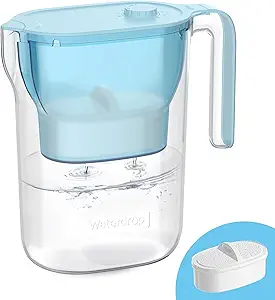 |
| Top Rated A top-rated pick with lots of positive feedback | Waterdrop Lucid Pitcher WD-PT-07B |  |
| Most Popular A crowd favorite that many people choose with confidence | AQUA CREST Pitcher Water Filter 6-Pack |  |
| Best Seller A high-volume bestseller chosen again and again | DREO RO Countertop WF113 |  |
ZeroWater 22-Cup Ready-Read Dispenser

| Capacity | 5.2 liters |
|---|---|
| Purification Method | Ion Exchange |
| Supported Water TDS Level Maximum (PPM) | 1 |
| Included Components | 22-Cup Dispenser, 5-Stage Filter, TDS Meter |
The ZeroWater 22-Cup Ready-Read dispenser is a countertop pitcher-style system that uses a 5-stage ion-exchange filter to remove total dissolved solids and common contaminants, and it includes a TDS meter so you can monitor water purity and know when to replace the cartridge. It is designed for everyday use: fill the top reservoir, let water pass through the multi-stage filter, and pour from the spigot into glasses or pitchers. Notable features include IAPMO certification for reduction of lead, PFOA/PFOS, chromium, and mercury, an ergonomic handle, and a change-filter indicator driven by the TDS reading. The 22-cup capacity makes it useful for families or small offices where refrigerated filtered water is needed without hard plumbing changes. Trade-offs are typical for pour-through systems: filter life and flow rate depend on incoming water quality, and replacement filters are required to maintain the low TDS performance. The included TDS meter is handy for validating effectiveness, and the BPA-free plastic housing keeps it lightweight and easy to place on a counter or in the fridge.
Best for: Buyers who want a low-cost, non-plumbed filtration solution that removes dissolved solids and lets them verify water quality with an onboard meter.
Less Ideal for: People who need instant high flow or whole-home/under-sink permanent filtration should consider hard-plumbed or point-of-entry systems instead.
- 5-stage ion-exchange filtration certified to reduce lead, PFOA/PFOS, chromium, and mercury
- Integrated TDS meter and ready-read indicator for easy, objective filter-change checks
- Large 22-cup capacity suitable for families or small offices
- Includes one replacement filter and TDS meter in the box
- Countertop design with ergonomic handle that fits in most refrigerators
- Flow rate is slower than inline or under-sink systems due to multi-stage pour-through filtration
- Requires periodic replacement filters which vary in lifespan based on source water TDS
Verdict: Choose this dispenser if you want an affordable, countertop 5-stage filter with an onboard TDS meter to reliably reduce dissolved solids and contaminants.
iSpring RCC7AK-BN 6-Stage RO

| Purification Method | Reverse Osmosis, Alkaline, Activated Carbon, Carbon block |
|---|---|
| Capacity | 75 gallons |
| Maximum Flow Rate | 284 liters_per_day |
| Operating Pressure Range | 70 psi |
| Filter Life Cycle | 6 months |
The iSpring RCC7AK-BN is a six-stage under-sink reverse osmosis system designed to produce very low-TDS drinking water while restoring healthy minerals and a balanced pH. It uses sediment, carbon, and RO membrane stages plus an alkaline mineral stage and ships with a storage tank and brushed-nickel faucet for point-of-use dispensing. Typical use is straightforward: feed a cold water line, install the clear sediment housing for easy visual checks, and route filtered water to the included faucet; no electricity is required. Notable strengths are NSF/ANSI 58 certification for the full system, high contaminant reduction (including PFAS and lead), and push-fit color-coded tubing that simplifies DIY installation. Practical benefits include low operating cost, long membrane life when prefilters are maintained, and an alkalizing stage that improves taste. Limitations are that the unit requires under-sink space for the tank and housings, produces water at the slower RO rate typical of gravity/storage systems, and periodic filter changes are necessary to maintain performance.
Best for: Buyers who prioritize proven contaminant removal and water quality on a budget and are comfortable installing and maintaining an under-sink RO system themselves.
Less Ideal for: People with very limited under-sink space, those who need instant high-flow filtered water without a storage tank, or users unwilling to perform regular filter replacements.
- NSF/ANSI 58 certified full-system purification for verified contaminant reduction
- Six-stage filtration with alkaline remineralization for improved taste and balanced pH
- Operates without electricity and includes a storage tank and faucet for point-of-use access
- Transparent first-stage housing allows quick visual inspection of the sediment filter
- Push-fit, color-coded tubing and online installation videos make DIY installation approachable
- Requires under-sink space for tank and multiple housings
- RO output is relatively slow and depends on household water pressure
- Filters and membrane require periodic replacement to maintain performance
Verdict: If you want certified, high-performance under-sink RO water with remineralization at a budget-friendly level, this iSpring system is a strong choice.
Amazon Basics Pitcher Water Filters (3-Pack)

| Unit Count | 3 Count |
|---|---|
| Compatible Water Purifier Models | Brita and Amazon Basics pitchers (excludes Brita Stream) |
| External Testing Certification | WQA certified to NSF/ANSI 42, 53, 401 & 372 |
| Included Components | 3 replacement water filters |
These Amazon Basics replacement pitcher filters are a budget-focused alternative for Brita-style water pitchers, sold as a 3-pack and manufactured in Europe. They use a multi-stage carbon-and-mesh design to reduce nine contaminants including chlorine taste and odor, certain metals, and selected organic compounds, and carry WQA certification against NSF/ANSI 42, 53, 401 and 372. Each cartridge is rated for about 40 gallons or two months of typical household use and is intended to cut single-use plastic waste by replacing up to 300 bottles over its lifetime. The filters fit most standard Brita pitchers and similar Amazon Basics dispensers (not compatible with Brita Stream) and are BPA-free and lead-free. Practical buyers will appreciate the certifications and the straightforward replacement cadence, while those needing specialty contaminants removed beyond the certified list or longer-life cartridges should note the typical 40-gallon lifespan and pitcher-only form factor.
Best for: Buyers who want an affordable, certified replacement filter to keep pitcher-style water dispensers stocked with reliably filtered, better-tasting water without overpaying for brand-name cartridges.
Less Ideal for: People who need a longer-life cartridge, under-sink or whole-home filtration, or filtration tested for contaminants outside the listed NSF/WQA certifications should look at other systems.
- WQA certified to NSF/ANSI 42, 53, 401 and 372 for verified contaminant reduction
- Compatible with most Brita-style pitchers, making replacements simple
- Each filter lasts about 40 gallons or two months, supporting routine household use
- Made in Europe and BPA-free, meeting common safety and manufacturing standards
- Not compatible with Brita Stream pitchers
- Filter life is the standard pitcher duration (about 40 gallons), requiring regular replacement
Verdict: A cost-conscious, WQA/NSF-certified pitcher filter pack that delivers verified contaminant reduction and simple drop-in compatibility for Brita-style pitchers.
Waterdrop PT-05B-L Pitcher

| Capacity | 7-Cup |
|---|---|
| Filter life | Up to 200 gallons / 3 months |
| Certifications | NSF/ANSI 42 & 372 |
| Material | BPA-free, lead-free |
The Waterdrop PT-05B-L is an affordable countertop water filter pitcher designed for daily drinking water improvement. It holds roughly seven cups and uses an activated carbon fiber filter that is NSF certified to reduce chlorine, taste and odor as well as contaminants like PFOA and PFOS, delivering noticeably better-tasting tap water. The filter is rated for up to 200 gallons or about three months of use, which lowers replacement frequency and cuts down on single-use bottles. Setup is simple: soak the filter, press it into the reservoir, and use the mechanical life dial on the lid to track filter life. The pitcher is made from BPA-free plastic with an ergonomic handle and a slim profile that fits in most refrigerator doors. Downsides are that it does not reduce total dissolved solids and the capacity is modest for larger households, so frequent refills may be necessary. For its price point the PT-05B-L offers reliable, certified filtration and a long-lasting replacement filter that keeps ongoing costs lower than many competitors.
Best for: Buyers looking for a low-cost, certified pitcher filter that improves taste and reduces specific contaminants while keeping replacement frequency and ongoing cost down.
Less Ideal for: Those who need large-capacity filtration, want TDS reduction, or require under-sink/whole-home filtration solutions should consider different options.
- NSF certified filtration that reduces chlorine, PFOA/PFOS and other common contaminants
- Long filter life up to 200 gallons or about three months reduces replacement frequency
- Slim pitcher profile and ergonomic handle fit most refrigerator doors
- Includes a mechanical life dial to track filter usage
- Does not lower total dissolved solids (TDS)
- 7-cup capacity is small for larger households
Verdict: A budget-friendly pitcher that delivers certified contaminant reduction and long filter life to keep replacement costs low.
Waterdrop Lucid Pitcher WD-PT-07B

| Capacity | 2.4 liters |
|---|---|
| Filter life cycle | 200 gallons / 3 months |
| Purification method | Activated Carbon |
| Maximum flow rate | 0.5 gpm |
The Waterdrop Lucid WD-PT-07B is a countertop 10-cup water filter pitcher designed for everyday use in kitchens, dorms, and offices. It uses a multi-stage activated carbon filter certified to NSF/ANSI 42 and 372 to reduce chlorine, PFOA/PFOS, and several metal ions, and the filter is rated for about 200 gallons or three months of use. The pitcher has a hands-free lid for pour-and-dispense convenience and a slim shape intended to fit most refrigerator doors. An LED indicator tracks filter life so you know when to replace cartridges, and the non-electric design means no setup or power required. Trade-offs are the modest capacity—better for small households—and the filter does not lower total dissolved solids, so it will not reduce overall mineral content or hardness. Replacement filters are model PF-01A, and using genuine cartridges is advised for consistent performance.
Best for: Buyers who prioritize reliable, third-party tested contaminant reduction in an affordable, low-maintenance pitcher for daily drinking water.
Less Ideal for: Households needing high-capacity or whole-house treatment, or users who want TDS reduction and water softening should look at other systems.
- NSF/ANSI 42 and 372 certified filtration for verified reduction of chlorine and certain contaminants
- Long-life filter rated ~200 gallons/3 months reduces frequency of cartridge changes
- LED filter-life indicator simplifies maintenance
- Slim pitcher profile designed to fit most refrigerator doors
- 2.4 liter (10-cup) capacity may be small for larger families
- Does not lower total dissolved solids so it will not soften water or remove dissolved minerals
Verdict: A dependable, NSF-certified budget pitcher that delivers verified contaminant reduction with a long-life filter and simple maintenance.
AQUA CREST Pitcher Water Filter 6-Pack

| Unit Count | 6 Count |
|---|---|
| Material Type | Activated Carbon & Resin |
| Lifespan | 2 months / 40 gallons |
| Certification | NSF42 & 372 |
These AQUA CREST replacement cartridges offer four-stage filtration using coconut shell activated carbon and ion-exchange resin to reduce chlorine, taste and odor, sediment and rust while maintaining a high flow rate. They are sold as a six-pack intended for standard pitcher and dispenser use and are made from food-grade, BPA-free materials with NSF/ANSI 42 and 372 certification for chlorine reduction and lead-free construction. Installation is the same as other pitcher cartridges and the filters are rated for about 40 gallons or roughly two months of typical use per cartridge, so a six-pack covers roughly a year for one household. Practical benefits include steady flow through the pitcher, clear reduction in chlorine smell, and lower plastic waste versus single-use bottled water. The main limit is that these are pitcher cartridges only and do not reduce dissolved solids (TDS) or replace under-sink filtration for broader contaminant removal, so buyers needing heavy-duty filtration should look elsewhere.
Best for: Buyers who want an affordable, certified pitcher filter that demonstrably reduces chlorine and improves taste and who prefer a multi-month supply backed by many user reviews.
Less Ideal for: People who need broad contaminant removal, lower TDS, or a filtration solution for bottles, instant systems, or whole-house use should choose a different product.
- NSF/ANSI 42 and 372 certified for chlorine reduction and lead-free materials
- Four-stage filtration with activated carbon and ion-exchange resin for improved taste and reduced sediment
- High and stable flow rate for normal pitcher use
- Six-pack supply provides about one year of filters for a typical household
- Does not reduce total dissolved solids (TDS) or provide advanced contaminant removal
- Compatible only with pitcher and dispenser systems, not suitable for bottle, stream, or whole-house filtration
Verdict: AQUA CREST offers a budget-friendly, NSF-certified six-pack of pitcher filters that reliably reduces chlorine and improves taste for routine pitcher use.
DREO RO Countertop WF113

| Purification Method | Reverse Osmosis |
|---|---|
| Capacity | 5 liters |
| Pure to Drain Rate | 3:1 |
| Included Components | RO body, 1 RO filter, 2 autofill pitchers |
The DREO WF113 is a plug-in countertop RO purifier designed to deliver low-waste, drinkable water without plumbing. It uses a 7-stage reverse osmosis cartridge and a 3:1 pure-to-drain ratio to reduce common contaminants, and the unit displays real-time TDS readings and filter life so you can monitor water quality and maintenance needs. Setup is install-free: place on the counter, plug in, and the system auto-fills two included pitchers while an auto-flush self-cleaning routine helps keep internal tubing clear. Practical benefits include a slim footprint that fits small kitchens or offices, a twist-to-replace filter for quick swaps, and one pitcher ready-to-use while the other refills. Expect steady filtered output suitable for daily drinking and cooking for a small household, but note the filter life specification (about 265 gallons / 1000 L) and the 3:1 drain ratio mean periodic replacement and some water waste compared with tankless filters. The plastic ABS housing keeps weight down but is less premium than metal alternatives. For buyers wanting monitored, easy-to-use RO water on a budget, this model covers the essentials with sensible convenience features.
Best for: Buyers who prioritize user-friendly, monitored RO filtration without plumbing and want a compact countertop system that is simple to set up and maintain.
Less Ideal for: Homes that need high daily throughput, very low water waste, or prefer metal-bodied, heavy-duty units for long-term commercial use should consider other options.
- 7-stage RO filtration with built-in TDS meter and filter life indicator for visible water-quality monitoring
- Auto-fill dual-pitcher system for hands-free refills and one grab-and-go pitcher
- Self-cleaning auto-flush function to reduce maintenance of internal tubing
- Compact, install-free countertop design that requires no plumbing
- Twist-to-install filter replacement for quick, user-friendly servicing
- 3:1 pure-to-drain ratio still produces wastewater compared with tankless or zero-waste systems
- Filter capacity (around 265 gallons/1000 L) requires periodic cartridge replacements
Verdict: A budget-friendly countertop RO that gives visible TDS monitoring, auto-fill convenience, and easy filter changes for buyers who want reliable, install-free purified drinking water.
Choosing the Right Budget Water Filter: Key Factors to Consider
Filtration Ability and Contaminant Targets
Know what you need the filter to remove. Some budget filters focus on improving taste and odor by reducing chlorine and organic compounds, while others include media aimed at sediment, heavy metals, or microbial cysts.
Matching filter media to your water concerns prevents under- or over-buying. For instance, a carbon-only cartridge will improve taste and remove chlorine but will not reliably remove dissolved lead or nitrate. Review local water quality reports or test results to identify the priority contaminants and choose a filter whose documented reductions align with those needs.
Installation Type and Compatibility
Consider how the filter connects to your home. Under-sink and countertop units typically require different levels of plumbing work, and faucet-mounted or pitcher-style filters are simpler but may offer more limited performance.
Check thread sizes, adapter needs, and whether the unit works with your faucet or plumbing without special tools. Ease of installation affects whether you can set up the filter yourself and how quickly you will get treated water, which is especially important for budget shoppers who want low upfront hassle.
Filter Life and Ongoing Replacement Costs
A low purchase price can be offset by frequent cartridge replacements. Look at the stated capacity in gallons and typical lifespan under real household use to estimate annual costs.
Some budget filters use proprietary cartridges that cost more to replace than generic media. Calculate expected replacement frequency based on your household water use and local water quality so you can compare total cost of ownership rather than upfront price alone.
Flow Rate and Daily Convenience
Flow rate affects how practical a filter is for everyday tasks like filling a kettle or pot. High resistance or slow flow can be a daily annoyance, especially in busy kitchens.
Choose a model with a balance between filtration thoroughness and acceptable flow for your routine. Some budget systems include bypass settings or dual-flow modes to speed dispensing when maximum filtration is not required.
Certifications and Independent Testing
Certifications from recognized testing organizations or independent lab results provide objective evidence of performance. While not every budget product will have full certifications, documented test results for the specific contaminants you care about offer confidence.
When certifications are absent, clear data on media types, reduction claims, and user-accessible test reports become more important. Avoid relying solely on marketing language without supporting details.
Durability, Materials, and Leak Risk
Lower-cost units can still be well-built, but material quality and seal design determine how likely a system is to develop leaks or fail over time. Examine housing materials, sealing methods, and whether the design minimizes stress points.
Reliable fittings and a clear warranty or support path reduce the downside of a budget purchase. Think about the installation location and whether a failed seal would cause significant damage to cabinets or counters.
Types of Budget Water Filters
Budget water filters come in several common formats: pitcher filters, faucet-mounted filters, countertop units, and compact under-sink systems. Each type trades off between filtration depth, installation complexity, and daily convenience.
Pitcher-style filters are the simplest to use and require no plumbing changes, but they usually offer modest contaminant reduction and smaller capacities. Faucet-mounted filters are easy to attach and provide on-demand filtered water, though they may not fit all faucet designs. Countertop and under-sink systems generally provide better filtration media and higher flow, but they require more space or basic plumbing connections.
- Pitcher: Minimal installation, limited capacity, best for taste and chlorine reduction
- Faucet-mounted: On-demand filtering, simple setup, check faucet compatibility
- Countertop: Better media options, moderate installation, higher flow
- Under-sink: Most thorough for the budget segment, needs basic plumbing work
How to Estimate Total Cost of Ownership
Upfront price is only part of the picture. Total cost includes replacement filter cartridges, any required adapters or parts, and potential plumbing labor if you need professional help. Multiply cartridge unit cost by expected annual replacements to compare realistic yearly expenses.
Also factor in reduced flow or inconvenience costs, such as time spent refilling pitchers or using slow filters. Budget options that require infrequent cartridge changes and use widely available replacement media often deliver the best long-term value.
- Check stated gallon capacity and convert to expected months of use
- Compare replacement cartridge availability and pricing
- Consider whether adapters or tools are needed for installation
Installation Tips for Easy Setup
Prepare the installation area first by clearing the sink cabinet or counter. Gather basic hand tools and read the included instructions fully before starting. For faucet-mounted models, verify thread type and whether a simple adapter is included.
When replacing cartridges, follow the priming steps to purge trapped air and carbon dust. Tighten fittings hand-firm plus a small additional turn only if specified. If you encounter persistent leaks or complex plumbing fittings, stop and consult a plumber rather than forcing connections.
- Always shut off water before disconnecting lines for under-sink installs
- Keep a towel or shallow pan nearby for water drips during swaps
- Record cartridge change dates so you replace on schedule
Maintenance and Troubleshooting
Routine maintenance includes timely cartridge replacement, occasional exterior cleaning, and monitoring for changes in taste, odor, or flow rate. A sudden drop in flow often indicates a clogged cartridge or debris in an inlet screen.
If you detect persistent taste or odor after a filter change, run several full-capacity flushes to condition the new media. Persistent leaks usually trace to loose fittings or worn O-rings which are commonly replaceable parts. Keep spare O-rings and basic replacement parts on hand if your unit is older or in heavy use.
- Flush new cartridges per instructions to avoid carbon fines in water
- Replace O-rings when changing filters to minimize leak risk
- Test water occasionally if your source changes seasonally
When a Budget Filter Isn't Enough
Budget water filters are designed to address common issues like chlorine taste, particulates, and some organics. They are not intended as a complete solution for serious contamination such as high lead levels, nitrate, or microbiological hazards in compromised wells.
If testing shows contaminants beyond what common carbon or sediment media remove, consider stepping up to a professionally certified treatment designed for those specific issues. For temporary or emergency situations, point-of-use budget filters can still improve palatability while you arrange a broader solution.
- Use budget filters for taste, odor, and basic particulate removal
- Seek specialized treatment when tests reveal heavy metals or pathogens
- Budget filters can be part of a staged approach to water quality
How We Chose the Best Budget Water Filter
We selected budget water filters by prioritizing measurable filtration performance, user-focused installation and maintenance, and realistic long-term costs. Filters had to demonstrably reduce common municipal and well-related contaminants such as chlorine, particulate matter, and sediment. We assessed documented contaminant reduction, filter media type, and independent test evidence where available. Practical installation matters for budget buyers, so we favored designs that require no special tools, offer clear instructions, and fit standard household plumbing or faucet configurations. Cartridge lifespan and replacement cost were evaluated to estimate ongoing expenses. Build quality and leak risk were considered to judge durability without relying on premium materials. We excluded unit types intended for specialized industrial use or systems that require professional plumbing for initial setup. Units that lacked basic performance claims or provided no clarity on replacement filter specifications were also filtered out. The resulting selections balance effective contaminant reduction, simple installation, manageable upkeep costs, and overall durability.
Our full evaluation process is outlined in our review methodology.
FAQ
How often should I replace the cartridge in a budget water filter?
Most budget cartridges are rated by gallons or months. Typical household use means replacements every 2 to 6 months depending on capacity and local water quality. Monitor flow rate and taste as practical signals to replace earlier.
Can a budget filter remove lead or nitrates?
Many low-cost carbon-based filters reduce chlorine and improve taste but do not reliably remove dissolved lead or nitrates. For those contaminants you need cartridges or systems specifically rated for them, or independent lab verification of performance.
Are faucet-mounted filters compatible with all faucets?
Faucet compatibility varies. Some units fit standard threaded faucets while others need an adapter. Pull-out or spray-style faucets may require a different approach. Check thread size and included adapters before purchase.
Will a budget filter slow my water flow significantly?
Some budget filters reduce flow, especially as cartridges load with particulates. Systems designed for higher flow or with larger media volumes maintain better dispensing speed. If flow matters, prioritize models that list higher flow rates or larger capacities.
Is installation difficult for an under-sink budget filter?
Basic under-sink installs can be done by a confident DIYer with common tools, but they require shutting off water and working with fittings. If plumbing is unfamiliar or space is tight, professional help avoids leaks and installation errors.
Final Verdict
Budget water filters can be an effective, low-cost way to improve taste, reduce chlorine, and remove common particulates when chosen to match your water issues. Prioritize documented contaminant reduction, realistic cartridge life, and installation compatibility with your plumbing to avoid unexpected costs or poor performance. Keep in mind the tradeoff between deeper contaminant removal and convenience or flow rate. For most households seeking better-tasting and safer everyday tap water, a carefully selected budget filter that fits your faucet or under-sink space will deliver the best balance of performance and ongoing cost.