
Note: This article contains affiliate links. If you click on these links and make a purchase, we may earn a small commission at no extra cost to you. This helps support our research and content. Read our full affiliate disclosure here.
Picking the right water filter for your kitchen faucet matters because it directly affects the safety, taste, and convenience of the water you use every day. A good faucet-mounted or inline filter reduces common contaminants and improves flavor while fitting your sink setup and watering habits. This guide shortlists top-performing water filters for kitchen faucet use and explains how each option stands out on core practical measures such as filtration capability, installation, and ongoing maintenance. Below you will find our top picks followed by clear guidance on what to consider, how we evaluated these filters, and answers to common buyer questions to help you make a confident choice.
Top Picks at a Glance
| Best Overall The best all-around choice for most situations | ICEPURE Under Sink Water Filter WFS5300A |  |
| Best Quality Built to a higher standard if you want something more solid | CuZn UC-200 Under Sink Filter |  |
| Best Value The sweet spot between price and what you get | Waterdrop WD-10UB Under-Sink Filter |  |
| Best Budget The cheapest option that still gets the job done reliably | Vortopt T1 Faucet Filter |  |
| Top Rated A top-rated pick with lots of positive feedback | Waterdrop WD-10UA Under Sink Filter | 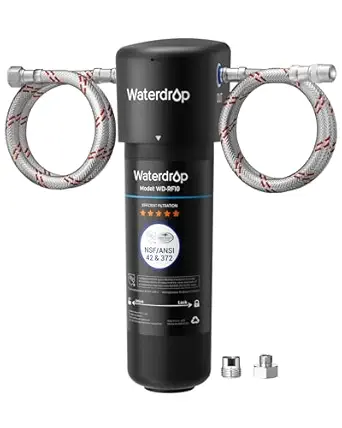 |
| Most Popular A crowd favorite that many people choose with confidence | Brita On Tap Faucet Filter |  |
| Best Seller A high-volume bestseller chosen again and again | PUR Plus Faucet Replacement Filter |  |
ICEPURE Under Sink Water Filter WFS5300A

| Purification Method | Activated Carbon |
|---|---|
| Maximum Flow Rate | 2.5 gpm |
| Filter Life Cycle | 3 years |
| Capacity | 22000 gallons |
The ICEPURE WFS5300A is an under-sink carbon block filtration unit designed to supply a dedicated cold-water drinking line without altering your main faucet. Installation is intended to be quick and tool-light with a direct-connect head that fits 1/2" or 3/8" female NPT threads, and filter changes are straightforward thanks to the plug-and-play cartridge design. The filter uses coconut-shell activated carbon with an outer 0.5 micron layer to target chlorine, taste, odor, sediments, and some heavy metals while preserving beneficial minerals, and it carries NSF/ANSI 42 and 372 listings. With a claimed service life of 22,000 gallons or roughly three years, this model targets buyers who want a long-lasting, low-maintenance under-sink option and a high flow rate up to 2.5 GPM at 60 PSI. Limitations include support only for cold-water lines and a single-stage carbon cartridge, so it will not remove dissolved solids or provide multi-stage contaminant removal that some buyers prefer for broader contaminant reduction.
Best for: A practical kitchen buyer who wants a robust, low-maintenance under-sink filter that improves taste and odor for everyday drinking and cooking without frequent cartridge swaps.
Less Ideal for: Those who need comprehensive multi-stage filtration for dissolved solids, fluoride, or microbiological threats should consider systems with additional stages or specialized media.
- Long rated service life of 22,000 gallons (about 3 years) reduces frequency of replacement
- NSF/ANSI 42 and 372 certifications for chlorine reduction and lead-free materials
- High tested flow rate up to 2.5 GPM that keeps water delivery fast
- Simple plug-and-play installation and quick cartridge changes without professional help
- Only filters cold-water lines and requires matching faucet thread type
- Single-stage activated carbon design does not reduce total dissolved solids or some specific contaminants like fluoride
Verdict: Choose this unit if you want a long-life, NSF-certified under-sink carbon filter that delivers good taste and high flow with minimal maintenance.
CuZn UC-200 Under Sink Filter

| Model Number | UC-200 |
|---|---|
| Included Components | Stainless Steel Connection Hose |
| Material Type | NSF Approved Material Components |
| Filter Life | Up to 5 years / 50,000 gallons |
The CuZn UC-200 is a three-stage under-sink filter built for long service life and steady performance at a kitchen faucet. It combines micro-sediment membranes, KDF-55 media, and coconut shell carbon to cut chlorine, bad tastes and odors, lead, PFAS/PFOA/PFOS, and microplastics while leaving beneficial minerals intact. Installation is designed to be straightforward for a DIYer, connecting inline to the cold supply without drilling and including a stainless steel connection hose. The unit is bacteriostatic and rated to last up to five years or about 50,000 gallons depending on water quality, which reduces maintenance frequency and replacement cost compared with short-life cartridge filters. It does not lower total dissolved solids, so it will not perform like a reverse osmosis system for very low-TDS water, and its performance depends on incoming water conditions. For households that want improved drinking water taste and targeted contaminant reduction without frequent cartridge swaps, the UC-200 delivers a practical, low-hassle solution.
Best for: Buyers who prioritize long-term contaminant reduction and low-maintenance operation for their kitchen faucet and want noticeably better-tasting, safer tap water without an RO system.
Less Ideal for: People seeking near-complete mineral removal or very low TDS water for specialized needs should choose a reverse osmosis system instead.
- Very long service life rated up to 5 years or 50,000 gallons, reducing replacement frequency.
- 3-stage media (micro-sediment membrane, KDF-55, coconut shell carbon) targets chlorine, lead, PFAS and improves taste.
- Designed for simple inline under-sink installation with included stainless steel connection hose.
- Bacteriostatic construction helps inhibit bacterial growth in the filter.
- Retains beneficial minerals by not removing TDS like RO systems do.
- Does not reduce total dissolved solids so it will not produce RO-level purity.
- Actual lifespan depends on incoming water quality and may be shorter in poor feed conditions.
Verdict: Choose the UC-200 when you want a durable, low-maintenance under-sink filter that delivers multi-contaminant reduction and long service life for a kitchen faucet.
Waterdrop WD-10UB Under-Sink Filter

| Purification Method | Activated Carbon |
|---|---|
| Maximum Flow Rate | 0.75 gpm |
| Supported Water TDS Level Maximum (PPM) | 700 |
| Filter Life Cycle | 1 years |
| Included Components | System, SS304 faucet set, 3/8"-1/2" convertor set, accessory kit |
The Waterdrop WD-10UB is an under-sink filtration system designed to supply filtered cold water to a dedicated faucet. It uses a multistage activated carbon block cartridge to target chlorine, bad taste and odor, PFAS/PFOA/PFOS, and lead, and it ships with a brushed stainless steel faucet and fittings for a separate drinking tap. Installation is straightforward with push-to-connect fittings and a twist-and-lock cartridge design that the company says can be swapped in seconds without tools. The system is intended for municipal cold water only and offers a long advertised capacity and one-year filter life cycle; Waterdrop also provides a replaceable WD-RF10 cartridge to lower ongoing costs. Performance claims include a tested flow of up to 0.75 gpm at 60 psi and a higher 3/8" outlet spec for improved flow; it keeps dissolved beneficial minerals while removing contaminants targeted by NSF/ANSI testing. Limitations: it is not suitable for well water or hot water and users should confirm compatibility with their under-sink space and plumbing before buying.
Best for: Buyers who want a practical, no-frills under-sink filter that installs quickly and delivers drinking-water improvements without removing beneficial minerals.
Less Ideal for: People on well water, users who need hot-water filtration, or those who prefer whole-house systems or countertop reverse-osmosis units.
- Reduces PFAS, PFOA/PFOS, lead, chlorine, taste and odor per third-party/IAPMO testing claims
- Includes a dedicated brushed stainless steel faucet and necessary adapters for installation
- Push-to-connect fittings and twist-and-lock cartridge enable quick, tool-free installation and filter replacement
- Keeps beneficial dissolved minerals while removing harmful contaminants
- Advertised high capacity and steady flow with upgraded outlet to reduce clogging risk
- Designed for municipal cold water only so it is unsuitable for well water or hot water use
- Filter life and contaminant reduction depend on local water quality and may require more frequent changes than listed
Verdict: A straightforward, easy-to-install under-sink filter with a dedicated faucet that focuses on reducing PFAS, lead, chlorine, and bad taste for users who want practical, improved drinking water.
Vortopt T1 Faucet Filter

| Purification Method | Activated Carbon |
|---|---|
| Capacity | 400 gallons |
| Maximum Flow Rate | 1.78 gpm |
| Filter Life Cycle | 3 months |
| Installation Type | Faucet Mount |
The Vortopt T1 is a compact faucet-mount filter designed to deliver filtered tap water quickly without plumbing changes. It installs to most standard faucets with the included adapters and offers two water modes for filtered or raw flow, letting you switch when you need unfiltered water for tasks like rinsing. The unit uses a 5-stage filtration path led by activated carbon fiber to cut chlorine and bad tastes and is NSF/ANSI 42 certified for those reductions. At a rated flow of 1.78 GPM the T1 fills multiple bottles fast, so it does not feel like a slow point-of-use filter. Filter life is specified at about 400 gallons or roughly 3–6 months depending on use, and replacement cartridges are available. The body is lightweight plastic which keeps cost and installation simple but may not match metal-bodied alternatives for long-term durability or aesthetics. It also will not lower TDS since it is not a reverse-osmosis system, so dissolved minerals remain in the water.
Best for: Buyers who want an inexpensive, no-plumbing way to improve tap water taste and odor and prefer a fast-flowing filter they can install themselves.
Less Ideal for: People who need heavy-duty contaminant removal such as dissolved solids, lead, or those who want a metal-bodied fixture-focused solution should look at under-sink or RO systems instead.
- NSF/ANSI 42 certification for reduction of chlorine, taste, and odor
- Fast flow rate around 1.78 GPM so filtered water dispenses quickly
- Simple faucet-mount installation with multiple adapters included
- 5-stage filtration including activated carbon fiber for improved taste
- Plastic body may feel less durable or premium than metal alternatives
- Does not reduce total dissolved solids (TDS) or remove dissolved minerals
Verdict: An affordable, easy-to-install faucet filter that delivers faster filtered water and noticeably better taste for budget-minded kitchen use.
Waterdrop WD-10UA Under Sink Filter

| Purification Method | Activated Carbon |
|---|---|
| Filter Life Cycle | 1 years |
| Maximum Flow Rate | 2.5 gpm |
| Supported Water TDS Level Maximum (PPM) | 700 |
| Power Source | Mechanical Water Pressure |
The Waterdrop WD-10UA is an under-sink activated carbon filter that installs directly to a cold-water feed and is intended for daily kitchen use like drinking, cooking, and ice makers. Its twist-and-lock housing and push-to-connect fittings simplify installation and replacement, and the system ships with hoses and a converter for 3/8"–1/2" connections. The filter is NSF/ANSI 42 and 372 certified for chlorine, taste and odor reduction and is rated to cut PFAS, PFOA/PFOS and lead while retaining beneficial minerals. Waterdrop rates the lifespan at roughly 12 months with municipal water and claims a tested flow around 0.75 gpm at 60 psi, with an upgraded 3/8" outlet offering faster flow. Practical strengths are the compact footprint that fits under most sinks and the long advertised service life that reduces how often you change cartridges. Limitations include suitability only for cold municipal water and incompatibility with well water or hot lines, and the stated flow depends on household water pressure so flow may be lower on some installations.
Best for: Buyers who prioritize a dependable, easy-to-install under-sink filter for municipal tap water and want a long single-filter lifespan with certified chlorine and taste reduction.
Less Ideal for: Homes supplied by well water, users needing hot-water filtration, or installations that require specialty threaded faucet connectors.
- NSF/ANSI 42 and 372 certified for chlorine, taste and odor reduction
- Reduces PFAS, PFOA/PFOS, lead and common contaminants while keeping beneficial minerals
- Twist-and-lock and push-to-connect fittings for quick installation and cartridge changes
- Long advertised filter life of about 12 months for typical municipal water use
- Not designed for well water or hot water lines
- Flow rate depends on household pressure and may be lower than advertised in some homes
Verdict: A reliable, compact under-sink carbon filter that delivers certified chlorine and contaminant reduction with easy installation and year-long cartridge life for municipal cold-water kitchens.
Brita On Tap Faucet Filter

| Capacity | 100 gallons |
|---|---|
| Filter Life Cycle | 4 months |
| Maximum Flow Rate | 0.5 gpm |
| Supported Water TDS Level Maximum (PPM) | 1000 |
The Brita On Tap Faucet Filter mounts directly to a standard kitchen faucet to deliver filtered water without pitchers or bottles. Installation is tool-free and uses adapters for common faucet thread types, and the cartridge snaps into the filter cup for a simple one-click replacement. The system uses carbon-block filtration and a status indicator to help you know when to change the filter, which is rated for about 100 gallons or roughly four months of typical family use. It offers three spray options and a choice between filtered and unfiltered flow so you can switch for tasks like rinsing dishes. Practical benefits include reduced chlorine taste and odor, certified lead reduction, and lower plastic waste compared with single-use bottles. Limitations: it does not fit pull-out or spray-style faucets and its maximum flow rate is modest, which can feel slower than unfiltered tap water during filling tasks.
Best for: Buyers who want a proven, easy-to-install faucet filter that reliably improves tap water taste and reduces common contaminants and who value visible maintenance cues and social-proof of effectiveness.
Less Ideal for: Those with pull-out or spray-style faucets or households that need high flow for frequent large-fill tasks should look at other filtration formats.
- Tool-free installation with adapters for standard faucet threads
- Carbon-block filter certified to reduce chlorine taste and odor and lead
- Built-in indicator and easy one-click cartridge replacement simplify maintenance
- Option to switch between filtered and unfiltered water and three spray settings
- Does not fit pull-out or spray-style faucets
- Lower maximum flow rate (0.5 gpm) compared with an unfiltered faucet
Verdict: A simple, widely used faucet-mounted system that delivers certified chlorine and lead reduction with easy installation and visible filter status, making it a low-risk choice for improving kitchen tap water.
PUR Plus Faucet Replacement Filter

| Unit Count | 2 Count |
|---|---|
| Model Number | RF-9999-2 |
| Included Components | 2 replacement filters |
| External Testing Certification | NSF, WQA |
These PUR Plus faucet replacement filters are genuine faucet-mount cartridges sold as a two-pack and designed for straightforward, on-tap filtration for drinking and cooking. Each cartridge uses a 14-layer, 3-in-1 design and an expanded surface area to capture chlorine, lead, PFAS, microplastics, VOCs and other chemical and physical contaminants that affect taste and safety. Installation is simple with a pull-tab cartridge design that fits PUR and Beautiful by PUR faucet systems, and each filter is rated for roughly 100 gallons or about three months of typical household use. The filters are NSF and WQA tested, which supports consistent performance for buyers who prefer certified products. Limitations include the need for regular replacement every few months and that these cartridges do not filter microbes. Buyers should also stick with genuine PUR filters for certified performance rather than off-brand alternatives.
Best for: Buyers who prioritize certified, proven contaminant reduction and prefer a low-effort faucet-mounted filtration solution for everyday drinking and cooking water.
Less Ideal for: Homes needing microbiological disinfection or whole-house treatment should consider different technologies or systems tailored to those needs.
- Genuine PUR cartridges certified by NSF and WQA for reliable contaminant reduction
- Broad contaminant list including lead, PFAS, VOCs and microplastics
- Simple pull-tab installation for PUR faucet-mount systems
- Each filter rated for about 100 gallons or roughly three months of regular use
- Does not remove microbes or biological contaminants
- Requires periodic replacement every ~3 months to maintain performance
Verdict: Choose these genuine PUR Plus faucet filters if you want a certified, easy-to-install faucet cartridge that reliably reduces lead, PFAS and other common tap-water contaminants.
Choosing the Right Water Filter for Kitchen Faucet: Key Factors to Consider
Filtration Capability
Not all faucet filters remove the same contaminants. Check which certified reductions a filter offers, such as chlorine, lead, cysts, or VOCs. The specific contaminants filtered affect both health-related outcomes and tap water taste.
Higher-rated filtration media or multi-stage cartridges typically remove a broader range of impurities but can increase resistance to flow. Balance the contaminants you need removed against how aggressive the media is, and verify third-party testing or certifications when possible.
Installation Compatibility
Kitchen faucets vary in thread size, spray head style, and whether they have pull-down or pull-out sprayers. Confirm a filter's included adapters and whether it attaches to the aerator, sits inline under the sink, or replaces the spray head. Simpler install types usually work with more faucets and are easier to move if you relocate.
If your faucet uses a pull-down sprayer or has nonstandard fittings, look for filters that explicitly list compatibility or use an inline adapter. Consider tools and basic plumbing skills required; some installs will be twist-on while others may need a wrench or brief shutoff of the cold-water supply.
Flow Rate and Performance
A strong filtration system should not make your kitchen faucet impractically slow. Flow rate matters for filling pots, rinsing produce, and everyday chores. Check manufacturer-stated flow rates and consider user reports for how the filter performs when new and near cartridge end-of-life.
Filters with very fine media or dense carbon blocks often reduce flow more than simple sediment or basic carbon filters. If you frequently need high flow for cooking or cleaning, prioritize options designed to preserve faucet performance or that include a bypass setting.
Maintenance and Filter Lifetime
Replacement frequency affects both ongoing cost and convenience. Filters typically list life in months or gallons; choose a lifespan that fits your household water use and budget. Also check how easy it is to swap cartridges — tool-free twist systems are faster and less likely to be installed incorrectly.
Consider availability of replacement cartridges and whether they require subscription purchase or third-party sourcing. Long-life cartridges reduce replacement frequency but may be larger or more costly when they are changed.
Materials and Build Quality
Durable housing, BPA-free plastics, and corrosion-resistant fittings matter for long-term reliability. Poor materials can lead to leaks, plastic taste, or breakage at pivot points. Look for sturdy threads and quality seals to minimize drip risks.
Also consider how visible components are integrated into your sink area. Low-profile attachments tend to look neater and suffer less accidental bumping. Materials impact both aesthetics and the unit's resistance to hot or cold water exposure over time.
Certifications and Testing
Independent certifications and test results give confidence that claimed reductions are real. Look for third-party lab data for the specific contaminants you care about rather than general marketing claims. Certifications from recognized bodies verify performance for specified contaminants and flow conditions.
Keep in mind that certifications often apply to specific configurations and replacement cartridges. If certification data is important to you, verify which cartridge and flow conditions were tested and whether the cert applies to the model you intend to buy.
Types of Faucet Filters and Where They Fit
There are three common forms of faucet water filtration for kitchens: faucet-mounted attachments, inline under-sink connectors, and replacement spray-head assemblies. Faucet-mounted units clamp to or replace the aerator and are the quickest to install. Inline options sit on the cold-water feed and are less visible but require loosening the supply line. Spray-head replacements combine filtering with the sink sprayer, offering a tidy integrated solution.
Each form has tradeoffs. Mounts are portable and simple but might interfere with pull-down sprayers. Inline systems keep the sink area clear but take slightly more effort to install. Consider your sink layout, how often you change filters, and whether you prefer a visible tap attachment or hidden plumbing.
- Faucet-mounted: Fast install, visible on tap, versatile adapters
- Inline under-sink: Hidden, preserves faucet look, needs brief plumbing
- Spray-head replacement: Integrated, usually elegant, may be model specific
How Filter Media Works
Most kitchen faucet filters rely on one or more stages of media. Activated carbon is common for removing chlorine and improving taste. Granular carbon and carbon blocks differ in contact time and removal efficiency. Some cartridges include ion-exchange resins to reduce heavy metals like lead, or mechanical screens to catch sediment.
The specific combination of media determines what a filter reduces and how it impacts flow. Carbon block filters generally offer stronger contaminant reduction than loose carbon but can be denser and slow flow more. Look for clear media descriptions so you know which impurities are targeted.
- Activated carbon: Good for chlorine, taste, and many organic compounds
- Carbon block: Denser, often better contaminant reduction
- Ion exchange: Helpful for certain heavy metals and water softening
- Mechanical filters: Capture larger particulates and sediment
Installation Tips and Common Pitfalls
Before buying, measure your faucet thread or inspect the current aerator to confirm compatibility. Keep basic tools on hand: an adjustable wrench, plumber's tape, and a soft cloth to protect finishes. When removing aerators, turn counterclockwise and expect some mineral buildup that may require soaking.
Common pitfalls include using the wrong adapter, overtightening plastic fittings, and not flushing a new cartridge before use. Always follow the provided flush instructions to remove loose carbon dust, and avoid mixing hot water with filters not rated for high temperatures to prevent damage.
- Measure thread size and check for pull-down sprayer interference
- Use plumber's tape on metal threads when recommended
- Flush cartridges as instructed to avoid black carbon particles
Maintaining Flow and Extending Cartridge Life
To maximize effective life, pre-filter heavily sediment-laden water where possible because large particles accelerate cartridge clogging. If your water has high particulate loads, choose a filter with a mechanical pre-screen or a dedicated sediment stage. Regularly monitoring flow and replacing cartridges at recommended intervals prevents bacteria buildup and ensures consistent performance.
Store replacement cartridges in a cool, dry place and follow replacement reminders. If you notice a sudden decline in flow or change in taste, replace the cartridge early rather than continuing to use a compromised filter.
- Install a sediment pre-filter in high particulate areas
- Track gallons or months to replace cartridges reliably
- Watch for taste or odor changes as signs of cartridge exhaustion
Environmental and Waste Considerations
Filtered cartridges produce periodic waste. Some manufacturers offer recycling programs or take-back options for spent cartridges. If minimizing waste is a priority, look for recyclable elements and check whether filters can be refilled or use replaceable media instead of full plastic housings.
Choosing longer-life cartridges reduces packaging waste over time, but ensure longer-life media still meets the contaminant reductions you need. Balance environmental concerns with practical maintenance needs for your household.
- Check for recycling or take-back options
- Longer cartridge life reduces frequency of waste
- Consider refillable or partial-replacement designs
How We Chose the Best Water Filter for Kitchen Faucet
We focused on attributes that matter most for kitchen faucet water filters and applied strict selection filters to produce a practical shortlist. First, we prioritized verified contaminant reduction: filters had to address common concerns such as chlorine, lead, volatile organic compounds, and particulate matter. Second, we evaluated installation and compatibility options, selecting units that work with typical faucet fittings or provide straightforward adapters. Third, flow and usability were assessed to ensure filtering did not excessively slow tap water or interfere with spray functions. Fourth, maintenance and filter life were considered, favoring cartridges with clear replacement intervals and widely available replacements. Finally, build quality and materials were reviewed to avoid units with known durability issues or problematic plastics. We excluded specialty whole-house systems and countersink under-sink designs to keep the list focused on faucet-mounted and inline solutions. Products that required complicated plumbing alterations or proprietary, hard-to-find replacement cartridges were not included. The filters that made the cut balanced measurable contaminant reduction, simple installation, consistent flow, and manageable upkeep.
Our full evaluation process is outlined in our review methodology.
FAQ
Will a faucet water filter remove lead from tap water?
Some faucet filters are designed to reduce lead when they include appropriate media, such as specialized carbon block or ion-exchange stages. Check test data or certifications to confirm lead reduction capability for the specific cartridge you choose.
Can I install a faucet filter on a pull-down sprayer?
Pull-down sprayers often interfere with faucet-mounted filters. Inline or spray-head replacement designs are better suited for those faucets. Verify compatibility and adapter options before purchasing to avoid fitment issues.
How often should I change the cartridge?
Replacement intervals typically depend on gallons filtered or months of use. Many cartridges last several months under average household use, but heavy use or poor source water quality can shorten life. Follow manufacturer guidance and replace earlier if flow or taste declines.
Does a faucet filter affect water pressure?
Filters can reduce outlet flow, especially as cartridges load with particles. High-quality designs minimize pressure loss, and some models include a bypass to preserve flow. If maintaining high flow is critical, choose filters that specify minimal flow impact.
Are replacement cartridges widely available?
Availability varies by design. Common cartridge formats tend to be easier to find through multiple suppliers, while proprietary cartridges can be harder to source. Consider long-term replacement availability before committing to a particular filter design.
Final Verdict
When choosing a water filter for a kitchen faucet, prioritize the contaminants you need removed, how the unit will attach to your faucet, and the expected cartridge life. Balance strong filtration with acceptable flow for everyday tasks and pick a installation style that fits your sink layout. Also consider materials and ongoing replacement availability to avoid surprises. Focus on demonstrable contaminant reduction, straightforward installation, and predictable maintenance. That approach will help you choose a faucet filter that delivers clear taste improvements and dependable daily performance.