
Note: This article contains affiliate links. If you click on these links and make a purchase, we may earn a small commission at no extra cost to you. This helps support our research and content. Read our full affiliate disclosure here.
Installing the right built-in dual-zone wine cooler changes how you store and serve bottles at home. You want consistent temperatures for reds and whites, quiet operation near living spaces, and a layout that fits your available cabinetry. This guide covers six shortlisted built-in dual-zone wine coolers chosen for stability, usable capacity, and integration-friendly design. Below you will find our top picks, plus straightforward buying guidance and the factors we used to evaluate each option so you can match a cooler to your space and drinking habits.
Top Picks at a Glance
| Best Overall The best all-around choice for most situations | Kalamera 24" Dual Zone Wine Cooler |  |
| Best Quality Built to a higher standard if you want something more solid | Tylza 24" Dual Zone Wine Refrigerator |  |
| Best Value The sweet spot between price and what you get | BODEGA Dual-Zone Wine Fridge |  |
| Top Rated A top-rated pick with lots of positive feedback | Vushine 24" Dual-Zone Wine Fridge |  |
| Most Popular A crowd favorite that many people choose with confidence | Velieta 24 Inch Dual Zone Wine Refrigerator |  |
| Best Seller A high-volume bestseller chosen again and again | Kalamera 24" Dual-Zone Wine Fridge |  |
Kalamera 24" Dual Zone Wine Cooler

| Capacity | 5.65 cubic feet |
|---|---|
| Bottle capacity | 46 bottles (approx.) |
| Temperature range (upper) | 40-50°F |
| Temperature range (lower) | 50-66°F |
| Installation type | Built-In, Freestanding |
The Kalamera 24-inch dual-zone wine cooler splits storage into two temperature zones so you can chill whites and reds at different set points, and it is designed for either built-in or freestanding installation. It uses a compressor cooling system and an electronic LED control to set upper and lower zone temperatures (upper 40-50°F, lower 50-66°F). The unit ships with five removable wooden shelves with stoppers and a stainless steel framed reversible glass door with a keyed lock, while soft blue LED interior lighting aids bottle selection. Practical benefits include a relatively large 5.65 cu ft capacity for a 24-inch cabinet, temperature memory after power loss to protect the collection, and the option to install undercounter. Trade-offs are typical for compressor coolers at this size: it requires adequate ventilation when built in and consumes noticeable energy compared with smaller thermoelectric models, and very large-format bottles like some Champagnes may reduce total bottle count. Installation flexibility and the dual-zone control make it a solid all-round choice for home kitchens or bars that need separate temperature storage.
Best for: Buyers who want a flexible undercounter-capable cooler that stores both reds and whites at separate temperatures and value wooden shelving and a lockable stainless-steel door.
Less Ideal for: If you need the quietest, lowest-energy option for a small space or primarily store oversized bottles, consider a smaller thermoelectric unit or a model sized specifically for large-format bottles.
- Dual-zone thermostat for separate red and white storage
- Removable wooden shelves with stoppers to protect bottles when pulled out
- Built-in or freestanding installation option for undercounter use
- Temperature memory after power loss to preserve set temperatures
- Stainless steel framed reversible glass door with keyed lock and interior LED lighting
- Annual energy consumption is relatively high for continuous compressor operation
- Large-format bottles may reduce the advertised 46-bottle capacity
Verdict: A versatile 24-inch built-in-ready dual-zone cooler that balances sizable capacity, wooden shelving, and separate temperature control for buyers who want one undercounter unit to store both reds and whites.
Tylza 24" Dual Zone Wine Refrigerator

| Capacity | 4.2 cubic feet |
|---|---|
| Temperature range left zone | 35-50°F |
| Temperature range right zone | 41-64°F |
| Annual energy consumption | 163 kilowatt hours per year |
| Installation type | Under-Counter/Freestanding/Built-In |
This Tylza 24" dual-zone fridge is a focused beverage chiller for households or small bars that need separate temperature control for wine and drinks. It provides two independently controlled cooling zones with adjustable ranges (left 35–50°F, right 41–64°F) and a touch control panel with temperature memory to restore settings after power interruptions. The unit fits under counters or works freestanding and offers a mix of metal and wood shelving that can be rearranged to fit bottles or stacks of 12‑oz cans, with the manufacturer listing capacity for about 20 Bordeaux bottles and 88 cans. A rotary scroll inverter compressor and fan circulation aim for even cooling while running quietly under 38 dB, and the double-layered glass door plus a keyed lock help protect stored bottles. Practical limits include a moderate 4.2 cu ft capacity that will not suit large collections and a 24" footprint that requires planning for built-in installation; buyers should also expect typical compressor vibration and longer pull-down times compared with commercial blast chillers. For a performance-focused mini fridge that balances low noise, dual zones, and flexible shelving, this is a sensible option.
Best for: Buyers who prioritize precise temperature control and low-noise operation for mixed wine and beverage storage in a home bar or under-counter setup.
Less Ideal for: Those needing large-capacity cellars or professional rapid-cooling performance for high-volume commercial use should look elsewhere.
- Independent dual cooling zones with specific temperature ranges for wine and beverages
- Quiet inverter compressor design operating under 38 dB for low noise environments
- Touch control with temperature memory restores settings after power outages
- Flexible metal and wood shelving that can be removed or rearranged to fit bottles and cans
- Built-in or freestanding installation options for versatile placement
- 4.2 cubic foot capacity limits the number of bottles for serious collectors
- Not a rapid commercial-style cooler so pull-down times may be slower than specialty units
Verdict: Choose this fridge when you want a quiet, dual-zone under-counter cooler that keeps wine and cans at independently controlled serving temperatures.
BODEGA Dual-Zone Wine Fridge

| Capacity | 3.2 cubic feet |
|---|---|
| Bottle capacity | Holds 30 bottles |
| Temperature range | 41°F–72°F |
| Cooling method | Compressor |
| Installation | Freestanding/Built-In/Undercounter |
This compact 15-inch wine fridge gives you two independently controlled zones so red and white bottles can be stored at different serving temperatures, with a digital LED panel for 1°F adjustments and temperature memory. It uses compressor cooling and front-vent airflow, which speeds recovery after door openings and makes it suitable for undercounter installation. Five removable wood-look shelves let you rearrange for larger bottles or champagne, and the double-glazed tempered glass door with UV protection and blue LED lighting helps preserve and display the collection. Practical extras include an automatic lock with key, adjustable feet for leveling, and a quiet operation that the listing cites around low 40s dB. Expect reliable cooling and flexible placement, though a 30-bottle capacity and 3.2 cu ft interior are best for small collections rather than large cellars, and built-in installation requires the front vent remain unobstructed. For someone fitting a compact built-in dual-zone cooler, this model balances features and footprint well.
Best for: Buyers who need a compact built-in dual-zone cooler to store a modest collection and prioritize precise temperature control and quiet compressor performance in a small footprint.
Less Ideal for: Collectors who need high-capacity storage or large-format bottle capacity should look at larger dedicated cellar units instead.
- True dual-zone control with 41°F–72°F range and 1°F adjustment increments
- Compressor cooling with front vent allows built-in or freestanding installation
- Double-glazed tempered glass with UV protection and interior LED lighting
- Five removable shelves let you fit different bottle sizes including champagne
- Security lock, temperature memory, and adjustable leveling feet for stable installation
- 3.2 cu ft capacity holds about 30 bottles, which is small for larger collections
- Built-in use requires keeping the front vent clear which can limit placement flexibility
Verdict: A compact built-in-ready dual-zone cooler that delivers precise temperature control and strong cooling performance for small to medium wine collections.
Vushine 24" Dual-Zone Wine Fridge
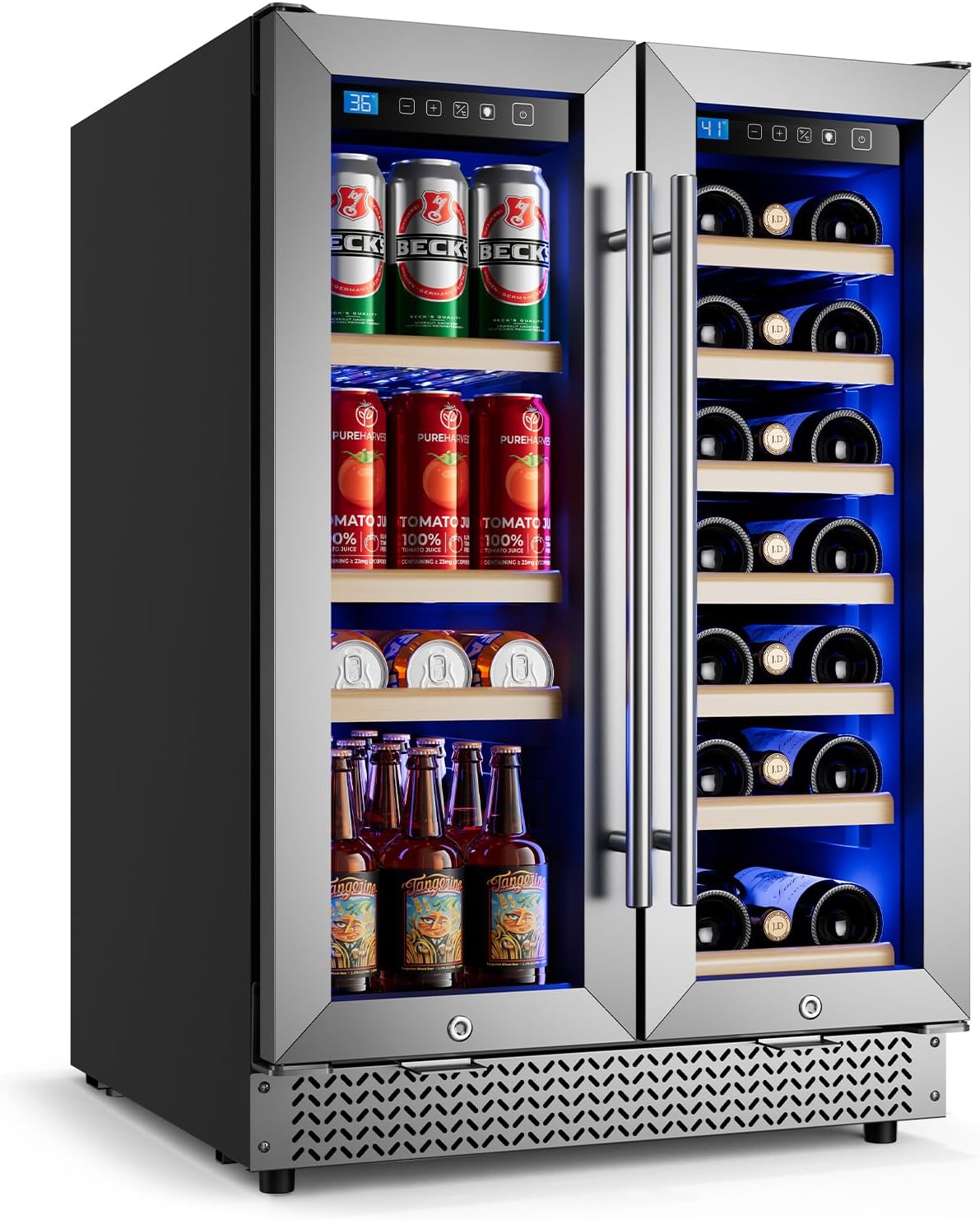
| Capacity | 4.2 cubic feet |
|---|---|
| Bottle capacity | 21 Bottles |
| Can capacity | 88 Cans |
| Temperature range | 36–64°F (dual zone) |
| Cooling method | Compressor |
This Vushine 24-inch dual-zone fridge separates a beverage zone (36–50°F) and a wine zone (41–64°F) so you can store cans and wine at their ideal temperatures simultaneously. It uses a compressor with 360-degree air circulation and automatic defrosting to provide steady, low-vibration cooling that works well in kitchens, undercounter built-ins, or as a freestanding unit. The cabinet holds up to 88 cans or 21 bottles and offers ten adjustable wire and wood shelves so you can arrange tall bottles or mixed packs for entertaining. Controls are via a touch panel with blue LED lighting for night access, and the reversible door and front-venting airflow make installation flexible. Practical benefits include quiet operation, a safety lock and UV-resistant glass for protection, and digital temperature control for consistent storage. Consider that the usable capacity and shelving layout determine exactly how many bottle types fit, and like most compressor fridges it requires adequate ventilation when built in to maintain peak performance.
Best for: Buyers who prioritize steady, reliable cooling and want a built-in-capable dual-zone unit for everyday mixed beverage use and occasional entertaining.
Less Ideal for: Those building a large wine cellar or needing storage primarily for oversized magnum bottles should look for larger dedicated wine refrigerators.
- Independent dual-zone temperature control for beverages and wine
- Front-venting design supports built-in or freestanding installation
- Quiet compressor operation with 360° air circulation reduces vibration
- Ten adjustable shelves provide flexible storage for cans and bottles
- Touch controls and blue LED lighting for easy, low-light access
- 4.2 cu ft capacity may limit large collections of full-size wine bottles
- Requires proper ventilation when installed as a built-in to avoid overheating
Verdict: Choose this dual-zone built-in-capable fridge if you want dependable, low-vibration compressor cooling that keeps drinks and wine at separate, precise temperatures for everyday use.
Velieta 24 Inch Dual Zone Wine Refrigerator

| Capacity | 4.24 cubic feet |
|---|---|
| Cooling Method | Compressor |
| Installation Type | Built-in/under counter/Freestanding |
| Temperature Range (Beverage zone) | 35°F-50°F |
| Temperature Range (Wine zone) | 41°F-64°F |
This Velieta 24-inch dual-zone wine and beverage refrigerator splits storage into two independently controlled compartments so you can keep beverages and wines at different temperatures at once. The left side uses wire racks for cans and bottles and ranges from about 35°F to 50°F while the right side has wooden shelves for wine and a 41°F to 64°F range, making it useful for everyday entertaining and wine preservation. It uses a compressor with fan circulation for steady cooling and claims quiet operation, and the front-vent design lets you install it under a counter without extra clearance. The touch LCD makes temperature adjustments simple and the blue LED lighting helps locate bottles at night; a charcoal filter and door lock are practical extras. Capacity is sized for roughly 18 bottles and about 88 cans and several removable shelves let you reconfigure space. Buyers should note the unit is a compressor fridge so it needs a power connection and may produce some operational noise and heat at the front vent during heavy use.
Best for: Buyers who want a built-in-capable dual-zone cooler that keeps wine and drinks at separate, target temperatures and value flexible shelving and simple digital controls.
Less Ideal for: Those needing a completely silent, off-grid solution or users who prefer passive thermoelectric coolers for very low energy use.
- Independent dual-zone temperature control suitable for both wine and beverage storage
- Front ventilation allows built-in under-counter installation without side or rear clearance
- Touch LCD control and blue LED lighting for easy adjustments and visibility
- Removable shelves and mixed wire/wood shelving give flexible storage configurations
- Charcoal filter and door lock help control odor and secure the collection
- Compressor operation can generate noise and heat at the front vent during heavy use
- Power required for operation so not suitable where an outlet is unavailable
- Annual energy consumption is relatively high compared with some smaller thermoelectric units
Verdict: Choose this Velieta 24-inch dual-zone unit if you need a built-in-capable cooler that reliably stores wine and drinks at different temperatures with flexible shelving and easy digital controls.
Kalamera 24" Dual-Zone Wine Fridge

| Capacity | 5.3 cubic feet |
|---|---|
| Cooling Method | Compressor |
| Refrigerant | R-600A |
| Installation Type | Built-In |
| Number Of Shelves | 12 |
This Kalamera 24" dual-zone wine and beverage fridge is designed for under-counter installation or freestanding use and keeps wine and drinks at two independently controlled temperatures. The cabinet separates wine and beverage storage so you can set the left zone for wine (40 to 66°F) and the right zone for colder beverages (38 to 50°F), while a compressor-based cooling system aims to maintain stable temperatures with relatively low noise. The unit includes a mix of wooden and metal removable shelves to hold bottles and cans and a double-glass, UV-resistant door to reduce light exposure. Practical features include adjustable foot pads for leveling when built in and a power-off temperature memory that restores settings after an outage. Downsides are its fairly high annual energy consumption and substantial weight, which make installation and long-term running cost considerations for cautious buyers. The stainless steel door gives a clean built-in look but may show fingerprints in everyday use.
Best for: Buyers who want a built-in-capable cooler that keeps wine and drinks at separate, precise temperatures and prefer a conservative, durable appliance with practical features for home use.
Less Ideal for: People looking for an ultra-lightweight or extremely low-energy countertop cooler, or those who need a higher-capacity professional cellar-grade unit.
- True dual-zone controls for separate wine and beverage temperatures
- Built-in friendly design with stainless steel front and adjustable leveling feet
- Mix of wooden and metal movable shelves for flexible storage
- Double-glass UV-resistant door to protect wine from light
- Compressor cooling provides steady, low-noise operation
- Relatively high annual energy consumption compared with compact units
- Heavy unit that may require help for installation
Verdict: Choose this Kalamera if you need a built-in-style dual-zone cooler that reliably stores wine and colder beverages separately with a durable, appliance-grade design.
Choosing the Right Built-In Dual-Zone Wine Cooler: Key Factors to Consider
Temperature Control and Range
Accurate temperature control is the primary purpose of a dual-zone cooler. Stable setpoints and modest fluctuation margins matter because wine ages and tastes differently at specific temperatures. Look for independent control for each zone and clear temperature readouts.
Range matters too: one zone should reliably reach typical red-serving and cellaring temperatures while the other can chill whites and sparkling bottles. Controls that allow fine adjustments make it easier to accommodate different varietals.
Zone Separation and Leakage
True physical and thermal separation between the two zones prevents heat transfer that can undermine storage conditions. Effective seals, separate evaporators or well-engineered airflow, and properly positioned thermostats reduce cross-contamination of temperatures.
Poor separation results in one zone doing most of the cooling work and inconsistent bottle temperatures. For long-term storage or mixed collections, prioritize models with demonstrable zone isolation.
Usable Capacity and Shelf Layout
Advertised capacity often counts tightly packed bottles; usable capacity depends on shelf type and spacing. Pull-out shelves, adjustable spacing, and shallow lip designs make it easier to store a mix of Bordeaux, Burgundy, and larger-format bottles.
Consider how many bottles you normally keep chilled versus cellared. A cooler with flexible shelving and clear labeling or zone markers will better suit rotating collections and entertaining needs.
Noise Level and Vibration Control
Built-in coolers are often installed near living areas or kitchens where noise matters. Compressor systems can be quieter than poorly implemented thermoelectric designs, but any unit should minimize vibration that can disturb sediment in aged wines.
Look for measured decibel ratings and features such as vibration-dampening racks or isolated compressors. Lower vibration improves long-term storage and reduces audible disruption.
Installation and Ventilation
Built-in models need compatible ventilation to avoid overheating and shortened compressor life. Front-venting options are essential when mounting under counters or within enclosed cabinetry.
Check clearances, whether the unit supports flush installation, and whether the manufacturer specifies minimal cabinet vents. Easy-to-follow installation features speed fitting and reduce the chance of airflow restriction.
User Controls, Lighting, and Finish
Simple, reliable controls and readable displays make daily use less error-prone. Interior LED lighting helps identify bottles without warming the compartment. Door glass should be UV-protective to limit light exposure.
A neutral exterior finish and reversible or standard hinge options affect how the unit integrates visually with surrounding cabinetry and room layouts.
Sizing the Cooler for Your Space
Measure the installation opening and plan for ventilation. Built-in coolers commonly come in undercounter widths that match standard cabinet gaps, but depth and height vary and dictate how many bottles fit without crowding.
Think beyond nominal width: account for a grille or vent at the front and allow for recommended clearance in the installation guide. If you have a limited footprint, prioritize models with efficient vertical layouts or slimline profiles.
- Verify front-venting capability if installing in tight cabinetry.
- Confirm shelf spacing for the bottle types you own.
- Plan for door swing and clearance in the finished kitchen layout.
Temperature Settings for Reds, Whites, and Long-Term Storage
Set the cooler zones with the end use in mind. Use the warmer zone for red wines and cellar storage temperatures, and the cooler zone for whites and sparklings that you serve chilled. Avoid frequent large setpoint swings to prevent unnecessary compressor activity.
If you plan to age wines, set the storage zone slightly cooler and keep that compartment stable. For bottles you drink soon, err toward serving temperatures with quicker recovery specs to handle repeated door openings.
- Warmer zone: suitable for reds and cellaring.
- Cooler zone: for whites and ready-to-serve bottles.
- Minimize door openings to maintain stability.
Mitigating Vibration and Light Exposure
Vibration can disturb sediment and accelerate chemical reactions in wine. Choose a cooler with vibration-resistant shelving or isolated compressor mounts to protect delicate bottles. Pack shelves so bottles do not rattle when the unit cycles.
Glass doors should include UV protection and interior LED lights should be low-heat. Use lighting selectively, illuminating only when needed to avoid unnecessary exposure.
- Prefer racks with rubber or anti-vibration mounts.
- Look for tinted, UV-filtering door glass.
- Use interior lighting sparingly to limit heat.
Maintenance and Long-Term Reliability
Routine maintenance keeps a built-in cooler operating efficiently. Clean condenser vents and door gaskets periodically, and check seals to preserve consistent temperatures. Replace filters or fans according to the manufacturer schedule if the model uses them.
Plan for service access when installing. Units with front-venting and removable grilles simplify maintenance without removing cabinetry, which helps extend working life in a built-in application.
- Keep vents clear and dust-free for efficient cooling.
- Inspect door seals annually for wear.
- Schedule professional servicing if unusual noises or temperature drift occur.
Design and Integration Tips
Match the cooler finish and handle placement with adjacent cabinetry for a cohesive look. Some built-in models support panel-ready installations to allow a custom-faced door. Verify hinge orientation and whether the door is reversible to suit your kitchen layout.
Consider whether you want a dual-zone cooler with a single door or split doors. Split doors can reduce warm-air exchange when accessing one zone, which is useful if you frequently open only one compartment.
- Panel-ready options allow seamless cabinetry integration.
- Reversible doors increase installation flexibility.
- Split-door designs help maintain separate zone stability.
How We Chose the Best Built-In Dual-Zone Wine Cooler
We selected products that deliver consistent, usable dual-zone performance suitable for built-in installation. Key evaluation criteria included temperature stability between zones, usable bottle capacity and shelf flexibility, noise level and vibration control for living-area placement, and ventilation or installation options that affect cabinet fit. We also considered temperature control precision and user interface simplicity for everyday adjustments, plus build quality and internal lighting for safe long-term storage. Exclusions: We excluded models that lacked true independent dual-zone control, units intended only for freestanding use without reasonable built-in venting options, and coolers with unclear temperature spec ranges. The shortlist prioritizes coolers that combine reliable thermoelectric or compressor refrigeration performance with low-vibration operation, clear zone separation, and installation-friendly features such as front-venting and adjustable shelving. Each product was judged on measurable specs and real-world usability rather than marketing claims.
Our full evaluation process is outlined in our review methodology.
FAQ
Can a built-in dual-zone wine cooler be installed under any countertop?
Often it can, but you must confirm the model supports undercounter installation and front ventilation if the cabinet does not provide airflow. Check the unit's clearance and venting requirements before cutting cabinetry.
How should I set the two zones for mixed collections?
Set one zone to a stable cellar-like temperature for reds you plan to age or serve at room temperature, and the other slightly cooler for whites and sparkling wines. Avoid large temperature swings and minimize door openings.
Is vibration a real concern for wine coolers?
Yes, sustained vibration can disturb sediment and affect aging. Look for units with vibration-dampening shelves or isolated compressors and place the unit on a stable surface to reduce movement.
Do I need a professional to install a built-in unit?
Installation requirements vary. Many installations are straightforward for competent DIYers if you follow the ventilation and electrical guidelines, but professional installation ensures correct airflow and secure mounting.
How often should I clean or service a wine cooler?
Clean door seals and vents every few months and wipe shelves as needed. Schedule more comprehensive service if you notice temperature drift, excessive noise, or reduced cooling performance.
Final Verdict
Prioritize temperature stability, effective zone separation, and installation compatibility when choosing a built-in dual-zone wine cooler. Decide how many bottles you need to store and whether you will age wine or keep mostly ready-to-serve bottles, then match capacity and shelving to those needs. Balance noise and vibration performance with ventilation requirements and choose a layout that integrates cleanly into your cabinetry. Focusing on these tradeoffs will help you select a cooler that preserves bottles and fits your space confidently.