
Note: This article contains affiliate links. If you click on these links and make a purchase, we may earn a small commission at no extra cost to you. This helps support our research and content. Read our full affiliate disclosure here.
If you spend a lot of time behind the wheel, the air in your car matters for comfort and health. A Car Air Purifier with HEPA Filter can remove fine particles, pollen, and many allergens that accumulate in a vehicle cabin, helping you breathe easier on commutes and road trips. This guide shortlists the top picks in the category and explains the practical tradeoffs that matter to real drivers, including filtration performance, noise, and installation ease. Read on to see which options fit different cabin sizes, driving habits, and maintenance preferences before you check the product list.
Top Picks at a Glance
| Best Overall The best all-around choice for most situations | IMUNSEN M-003 HEPA Car Air Purifier |  |
| Best Quality Built to a higher standard if you want something more solid | LUFTRUM Car Air Purifier C401A |  |
| Best Value The sweet spot between price and what you get | Aucleia Portable Car Air Purifier KQ-20 |  |
| Best Budget The cheapest option that still gets the job done reliably | AIRFEEL Car Air Purifier F011 |  |
| Top Rated A top-rated pick with lots of positive feedback | IQAir Atem Car |  |
| Most Popular A crowd favorite that many people choose with confidence | Pure Enrichment PureZone Mini |  |
IMUNSEN M-003 HEPA Car Air Purifier
| Filter type | H13 true HEPA, carbon, pre-filter, cypress wood filter |
|---|---|
| Power | USB 5V |
| Controls | One-button with LED indicator |
| Noise | Low noise level |
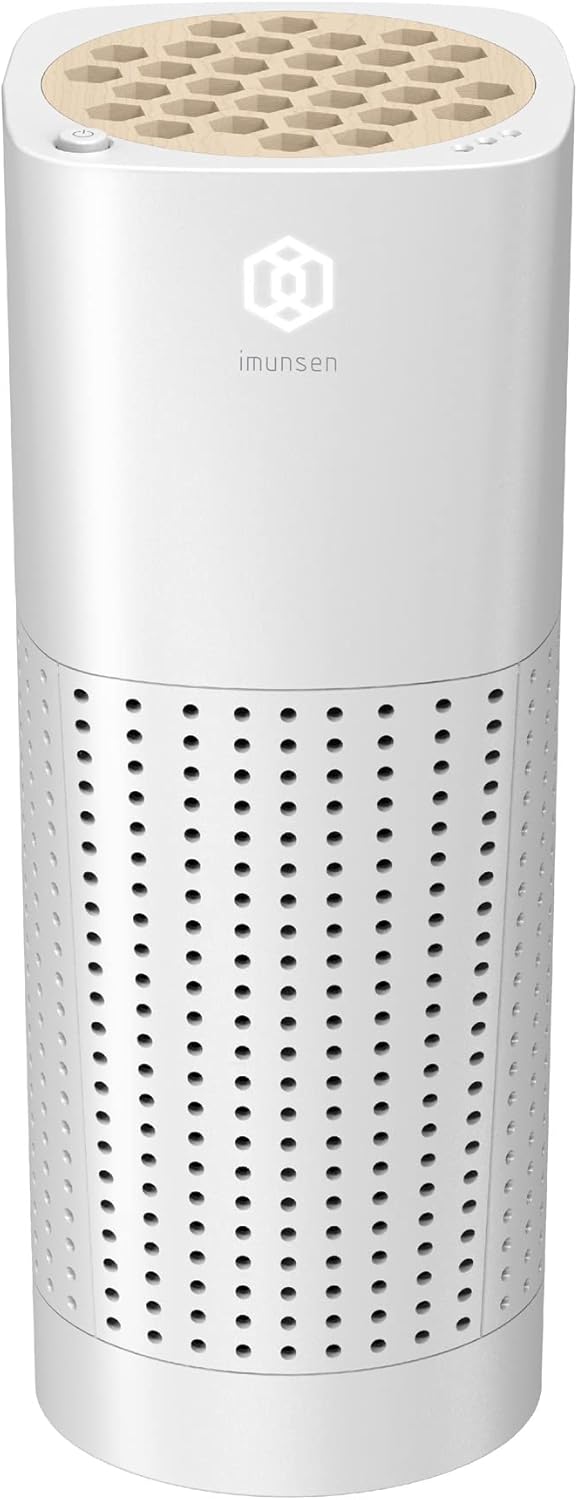
The IMUNSEN M-003 is a portable air purifier built for small spaces like car interiors, desks, and cup-holder placement. It uses a four-stage filtration system that includes an H13 true HEPA filter, activated carbon layer, pre-filter, and a proprietary cypress wood filter intended to add natural antibacterial and aromatic effects. The unit runs from a 5V USB connection and is controlled with a single-button interface while an LED signals when the filter needs replacement. In everyday use it is quiet and unobtrusive, suitable for reducing dust, pet dander, smoke and common odors in confined spots rather than whole cabins. Its size and USB power make it easy to move between a vehicle, backpack, and office, and the LED filter indicator simplifies maintenance. Limitations are inherent to the form factor: coverage is small so it is best for one-seat zones, and the specialty wood filter and aromatherapy claims are not a replacement for targeted medical or large-room solutions.
Best for: Buyers who want a quiet, portable HEPA purifier to improve air at a single seat or small area in cars and on desks and who value easy USB power and simple operation.
Less Ideal for: People seeking whole-car or whole-room purification, clinical-grade medical devices, or high-flow performance should consider larger cabin or room units instead.
- H13 true HEPA filter captures 99.97% of fine particles for effective allergen and smoke reduction
- Compact design sized to fit car cup holders and small desks for convenient placement
- USB 5V power lets it run from a car adapter, laptop, or power bank
- One-button control and LED filter-replacement indicator simplify operation and maintenance
- Small coverage area unsuitable for full-size vehicle cabins or larger rooms
- Aromatherapy and cypress wood filter benefits are supplemental and not clinically verified
Verdict: A small, USB-powered HEPA purifier that fits cup holders and desks for focused, low-noise air cleaning in cars and personal spaces.
LUFTRUM Car Air Purifier C401A

| Filtration | 4-stage with H13 true HEPA |
|---|---|
| Particle removal | Down to 0.1 microns (claimed) |
| Power | 4W |
| Certifications | CARB and ETL certified |
This compact LUFTRUM car purifier uses a 4-stage filtration system topped by an H13 true HEPA element to tackle exhaust fumes, smoke, odors, and volatile organic compounds in a vehicle cabin. It is designed to power on and off with the car ignition and offers three fan speeds controlled by a touch power button, with a high-performance fan rated up to 5300 RPM and a low 4W power draw for energy-efficient operation. A built-in PM2.5 sensor provides real-time air-quality feedback while the manufacturer claims a 99.9% removal rate to 0.1 microns and rapid cleaning cycles that can refresh cabin air multiple times per hour. Practical benefits include quiet operation, easy installation using the long power cord, and CARB and ETL certifications that address ozone and safety concerns. Limits to consider are that stated removal percentages come from manufacturer claims rather than independent lab reports provided here, and the small size means it is optimized for single vehicles or small cabins rather than large open spaces.
Best for: Buyers who prioritize measurable in-cabin air cleaning performance and want a plug-and-play unit that runs with the car and reports PM2.5 levels while staying quiet and energy-efficient.
Less Ideal for: People needing whole-house or multi-zone purification or those who want independently certified lab results included with purchase documentation.
- H13 true HEPA plus 4-stage filtration for capturing particles and reducing VOCs
- Auto on/off with vehicle ignition for hands-free operation
- Built-in PM2.5 sensor gives real-time air quality feedback
- Low power draw (4W) and quiet high-RPM fan for efficient, unobtrusive use
- Manufacturer removal claims are not backed by independent test data in the listing
- Designed for single-car use so effectiveness falls with larger or shared spaces
Verdict: A performance-focused, energy-efficient car purifier with H13 HEPA and PM2.5 sensing that is built to run automatically with your vehicle for cleaner in-cabin air.
Aucleia Portable Car Air Purifier KQ-20

| Filter type | True H13 HEPA |
|---|---|
| Noise level | 22 dB |
| Power | USB-powered |
| Modes | 3 adjustable modes |
The Aucleia KQ-20 is a cup-holder friendly car and travel air purifier that uses a True H13 HEPA filter plus a negative-ion function to capture 99.97% of common airborne particles and help neutralize odors. It is powered by USB, has a built-in aromatherapy pad, and three fan modes (standard, fast, boost) so you can scale airflow and noise for short commutes or longer drives. A filter replacement indicator notifies you after about 360 hours of use, and the unit is rated to run very quietly at around 22 dB, making it unobtrusive on night drives or when sitting on a desk. Practical benefits include easy placement in standard cup holders, simple maintenance when the filter light blinks, and noticeably reduced smoke, pet, and pollen smells in small cabins. Limitations are expected for a travel-size purifier: it is designed for small enclosed spaces and will not replace a whole-car HVAC filtration system or handle very large volumes of air quickly.
Best for: A practical buyer who wants a low-maintenance, portable purifier to reduce odors, pollen, pet dander, and smoke in cars or hotel rooms and values quiet, USB-powered convenience.
Less Ideal for: Users seeking whole-vehicle or high-CADR performance for large SUVs, trucks, or persistent heavy smoke should consider larger dedicated car or cabin systems instead.
- True H13 HEPA filter captures 99.97% of dust, pollen, pet dander and smoke
- Compact design fits standard car cup holders for convenient placement
- Three adjustable modes let you balance cleaning speed and noise
- Quiet operation around 22 dB suitable for sleep or focused work
- USB power and built-in aromatherapy pad add portability and scent control
- Small travel-size unit cannot rapidly clean large or heavily contaminated cabins
- Requires periodic filter replacements indicated after approximately 360 hours
Verdict: Choose the Aucleia KQ-20 if you want a quiet, cup-holder friendly HEPA purifier that delivers portable, low-effort odor and particle reduction for daily commutes and travel.
AIRFEEL Car Air Purifier F011

| Filter type | H13 True HEPA |
|---|---|
| Power | DC 5V 1A (USB) |
| Model number | F011 |
The AIRFEEL Car Air Purifier F011 is a plug-and-play cup‑holder purifier that uses an H13 true HEPA filter and a small fan to capture dust, pollen and other fine particles while circulating a light fragrance from its built-in perfume platform. It is powered by a standard 5V USB connection and is sized for in-car use and travel; installation is simply placing it in the cup holder and connecting USB power. The unit includes an aromatherapy feature so you can add a few drops of essential oil or a perfume pad to mask odors, and the manufacturer recommends a replacement filter after about six months of typical use. Practical benefits are quiet operation, a compact carbon-fiber wrapped housing that resists wear, and a targeted airflow pattern when placed upright. Limitations are the small coverage area inherent to a travel-size purifier, the need to replace filters periodically, and dependence on USB power so it does not run independently of a power source or vehicle USB port.
Best for: Buyers who want an inexpensive, easy-to-install in-car purifier that combines particle filtration with a light fragrance for daily commutes and travel.
Less Ideal for: People needing whole-house or multi-room purification, or drivers who want a battery-powered or fully autonomous purifier without USB power access.
- True H13 HEPA filter for capturing fine particles
- Aromatherapy/perfume platform to add fragrance or mask odors
- Cup‑holder form factor for simple, secure in-car placement
- USB 5V power for compatibility with car chargers and power banks
- Quiet fan design intended for low noise during drives
- Small unit designed for a single vehicle cabin rather than large spaces
- Requires periodic filter replacements
- Relies on external USB power and cannot run on batteries
Verdict: A compact, budget-friendly car purifier that pairs H13 HEPA filtration with a built-in fragrance platform for simple in-vehicle odor control and particle removal.
IQAir Atem Car

| Filtration type | HyperHEPA + gas-phase |
|---|---|
| Particle removal | Down to 0.003 microns |
| Mounting | Headrest or portable |
| Connectivity | Bluetooth / Atem app |
The IQAir Atem Car is a compact, headrest-mountable air purifier designed to clean the air inside vehicles and small personal spaces. It uses IQAir's HyperHEPA filtration to capture ultrafine particles down to 0.003 microns and pairs that particle filtration with gas-phase media to reduce odors, smoke, and vehicle fumes. Setup is straightforward: mount it to a headrest or place it on a flat surface, connect via the Atem app or Bluetooth to change fan speeds and check filter life, and run it while you drive or ride. It is exceptionally quiet for in-cabin use, making it suitable for conversations and sleeping passengers, and its portability means you can also use it in hotels or small rooms. The main trade-offs are its car-focused coverage—it is optimized for the cabin and not intended to replace a whole-house purifier—and the price is toward the premium end for a personal unit. Filter replacements and app connectivity are useful but add to ongoing ownership costs.
Best for: Buyers who prioritize dependable, high-performance in-cabin air cleaning and want a portable, quietly operating purifier for everyday driving, travel, or for passengers with respiratory sensitivities.
Less Ideal for: People seeking whole-house or large-room air purification or a budget plug-and-play car gadget should consider larger room purifiers or lower-cost portable units instead.
- HyperHEPA filtration captures ultrafine particles down to 0.003 microns.
- Includes gas-phase media to reduce odors, smoke, and vehicle fumes.
- Quiet operation suitable for use while driving or with sleeping passengers.
- Portable design with headrest mount and Bluetooth/app control for convenience.
- Designed primarily for vehicle cabins so it does not cover larger rooms effectively.
- Premium price and ongoing filter replacement costs.
Verdict: If you want the most reliable, high-performance air cleaning for your car cabin, the IQAir Atem Car delivers industry-leading filtration in a quiet, portable package.
Pure Enrichment PureZone Mini

| Filtration | 2-stage (Activated Carbon + True HEPA) |
|---|---|
| Battery | Rechargeable lithium-ion (up to 12 hours low) |
| Fan speeds | 3 settings |
| Coverage claim | Cleans 6 ft² in 12 minutes |
The Pure Enrichment PureZone Mini is a portable True HEPA air purifier designed for single-person spaces like a car seat, desk area, or bedside. It uses a two-stage system with an activated carbon pre-filter for odors and a True HEPA stage that captures 99.97% of common airborne particles; the manufacturer cites cleaning about 6 ft² in 12 minutes under its test metric. It runs on a rechargeable lithium-ion battery that can last up to 12 hours on the low setting and offers three fan speeds so you can prioritize runtime or stronger airflow. The adjustable handle doubles as a stand and can be removed for compact packing, and the unit is light enough to move between car, office, and travel bags. Expect limited room coverage—this is a personal purifier, not a cabin or whole-car solution—and the quoted cleaning rate is modest compared with larger in-car purifiers, so you will need higher fan speeds for faster results which reduces battery life. Filters are replaceable and the simple controls make it straightforward to use on the go.
Best for: Buyers who want a compact, easy-to-carry purifier to improve the immediate breathing zone in a car, at a desk, or while traveling and who value tested filtration plus visible user reviews for reassurance.
Less Ideal for: People seeking whole-cabin car purification or fast turnover of large interior volumes should choose a larger in-vehicle purifier with higher CADR.
- True HEPA filtration captures 99.97% of fine particles.
- Activated carbon pre-filter reduces odors and gases.
- Rechargeable battery allows cordless use up to 12 hours on low.
- Lightweight and portable with an adjustable handle that doubles as a stand.
- Three fan speeds let you balance airflow and runtime.
- Designed for very small personal areas so it will not purify an entire car cabin effectively.
- Higher fan speeds shorten battery life and increase noise.
Verdict: If you need a lightweight, cordless HEPA purifier to clear the air in your personal space or car seat, this mini unit delivers proven filtration in a travel-friendly package.
Choosing the Right Car Air Purifier with HEPA Filter: Key Factors to Consider
Filtration Efficiency and True HEPA Rating
A genuine HEPA-grade filter is central to a car air purifier's purpose because it captures fine particulates such as PM2.5, pollen, and many allergens that penetrate deep into the lungs. Look for stated particle-capture efficiencies and whether the filter meets a true HEPA standard rather than a generic "HEPA-like" claim.
Higher efficiency matters most if you drive in high-traffic, dusty, or pollen-heavy environments. A true HEPA element reduces particulate exposure inside the cabin even when windows are down; combining it with an activated carbon layer also helps with odors and volatile compounds.
Airflow Relative to Cabin Size
A compact purifier must still move enough air to circulate the cabin several times per hour. Consider the unit's airflow specification or CADR-equivalent and compare that to your vehicle's cabin volume. Stronger airflow shortens the time required to clear contaminants, which is important during short trips and after picking up passengers.
Higher-speed settings increase throughput but consume more power and may raise noise. Balance airflow needs against typical trip length and whether you plan to run the purifier continuously while driving or only intermittently.
Noise Level During Operation
Noise is a major practical consideration in a confined car cabin. Even a modest fan can seem loud in a small space. Evaluate reported decibel levels at low and medium fan speeds and prefer models designed for quiet operation if you regularly make calls, listen to music, or drive with children asleep.
Lower noise at the same airflow usually indicates better fan and housing design. Keep in mind that many purifiers are acceptably quiet on low settings but louder at max, so think about which speeds you will actually use most of the time.
Power Options and Installation Flexibility
How a purifier draws power determines where you can place it and how convenient it is to use. Common options include 12V cigarette-style adapters, USB power, and internal rechargeable batteries. A unit that runs from a USB port or cigarette outlet offers the easiest, most universal installation without modifications.
Consider whether you need a portable battery option for switching between vehicles or a fixed power connection for a single car. Cable length, adapter compatibility, and whether the device can run while the car is off are practical points that affect daily usability.
Filter Life and Ongoing Maintenance
Filters are consumables, so replacement frequency and ease of access affect lifetime cost and convenience. Check estimated service life for both HEPA and prefilter stages, and whether filters are easy to remove and replace without tools.
Prefilters that trap hair and larger particles can meaningfully extend HEPA life. Also consider how clearly filter change indicators or maintenance reminders are implemented, since timely replacement keeps filtration performance high.
Size, Mounting, and Usability
The purifier should fit comfortably in your car without blocking vents, cup holders, or controls. Look at mounting options such as cup-holder fit, dashboard pads, or dedicated clips. Compact designs are easier to stow and move between vehicles.
Usability features like simple controls, indicator lights for fan speed and filter life, and adjustable airflow direction improve daily experience. A thoughtful physical design reduces the chance of the unit becoming an annoyance rather than a benefit.
How HEPA Works In A Car Cabin
HEPA filtration captures tiny particles by forcing cabin air through a dense mat of fibers where particles are trapped via interception, impaction, and diffusion. In the small volume of a car, even modest filtration rates can produce noticeable reductions in airborne particulates within minutes.
Because cars are frequently opened and closed, airborne contaminants enter regularly. A purifier with a proper HEPA element plus a prefilter and activated carbon stage addresses particles, odors, and many common airborne irritants simultaneously, making the cabin feel cleaner between regular ventilation cycles.
- Prefilters extend HEPA life by catching larger debris and pet hair.
- Activated carbon helps reduce odors from food, smoke, and off-gassing.
- Placement matters: center-console or rear-seat locations affect how evenly air circulates.
Placement and Installation Tips
Position the purifier where airflow is least obstructed and where it can draw air from the cabin interior rather than directly from a vent. Cup-holder mounts and under-seat placements are convenient but ensure vents or footwells do not block air intake or exhaust.
If the unit runs on a short cable, consider a nearby USB port or a longer 12V adapter to avoid tight bends. For rechargeable units, verify runtime at your typical fan setting so the device does not shut off mid-trip.
- Avoid placing the purifier in direct sunlight in hot climates to protect electronics.
- Keep filters accessible for quick replacement without tools.
- Test low and medium fan speeds during normal driving to find the quietest usable setting.
Maintenance Best Practices
Regularly vacuum the purifier intake grill and clean any prefilter elements to maximize HEPA life. A clogged prefilter reduces airflow and increases fan wear. Follow the manufacturer's replacement interval but also inspect visually for heavy soiling, which warrants earlier change.
Record filter replacement dates and keep spare filters on hand if you drive in dusty or high-pollen areas. For rechargeable models, follow recommended battery care routines to preserve runtime and avoid capacity loss over time.
- Check the intake every month in heavy-use scenarios.
- Replace activated carbon layers as recommended for odor control.
- Store replacement filters in a dry place to avoid moisture contamination.
When To Run Your Car Purifier
Running the purifier continuously on low while driving provides steady reduction of particulates and is often the most practical approach for daily commuters. For short trips, a higher-speed boost for a few minutes before passengers enter can help clear recent contaminants.
If you park frequently in polluted areas or ride with high-allergen passengers, run the purifier during and for a short period after drives to reduce lingering particles that settle into upholstery.
- Use low setting for continuous background cleaning.
- Use medium or boost for quick clearing after high-exposure events.
- Turn off or use lowest setting when battery-powered and the vehicle is off to preserve charge.
Understanding Noise Versus Performance Tradeoffs
Noise increases with fan speed, so consider how much cabin noise is tolerable versus how quickly you want to clear the air. Many drivers prefer quiet low-speed operation that still provides meaningful filtration over short bursts of high-speed cleaning that can be loud.
Some units use optimized fan housings or multiple fan blades to minimize perceived noise at a given airflow. Look for models that publish decibel figures for different speeds or note special quiet modes intended for night driving.
- Accept some tradeoff between maximum clearance time and acceptable cabin noise.
- Try to match typical trip length with a fan speed that balances noise and effectiveness.
- If you take calls while driving, prioritize quiet operation at workable airflow.
How We Chose the Best Car Air Purifier with HEPA Filter
We evaluated candidates against automotive realities rather than generic home metrics. Key filters included filtration efficiency for submicron particles, verified HEPA-grade performance, and the presence of prefilters to extend HEPA life. We prioritized airflow and CADR-equivalent throughput scaled to typical car cabin volumes so units can move sufficient air while driving or parked. Noise output was measured in reported decibels or manufacturer specs to ensure quiet operation at low and medium fan speeds. Power and installation flexibility were considered, including USB, 12V adapters, and battery options that suit different vehicle setups. Durability and ease of filter replacement were important to reduce long-term upkeep. We excluded large-room or home-only machines and any units that lack a true HEPA-grade element. The result is a set of compact, car-focused purifiers that balance real-world filtration, usable airflow, and acceptable noise for everyday driving.
Our full evaluation process is outlined in our review methodology.
FAQ
Will a car HEPA purifier remove odors from food and smoke?
A HEPA element removes particles but does not absorb gases or odors. Units that include an activated carbon stage are better at reducing many common odors from food, smoke, and vehicle off-gassing. For the best odor control, choose a purifier that pairs HEPA filtration with sufficient carbon media.
How often should I replace the HEPA filter in a car purifier?
Replacement depends on use patterns and exposure; many HEPA filters last several months to a year in typical driving. Heavy use in dusty or high-pollen environments shortens life. Inspect prefilters regularly and replace the HEPA element according to the manufacturer's guidance or when airflow noticeably decreases.
Can I run a car air purifier while the engine is off?
Some purifiers can run from a rechargeable battery or the vehicle's accessory power when the engine is off, but runtime will depend on battery capacity and fan speed. Using the unit while the engine is off may drain the vehicle battery if it draws from the car without proper accessory circuits, so check power requirements and safe operating instructions.
Do small car purifiers actually reduce allergy symptoms?
They can reduce airborne allergens, especially pollen and fine dust, which may help allergy sufferers notice fewer symptoms during drives. The degree of benefit depends on filter quality, airflow, and how often the purifier is run. A true HEPA-grade filter is important for measurable reductions.
Is a prefilter necessary in addition to HEPA?
Yes. A washable or replaceable prefilter captures larger particles and hair that would otherwise clog the HEPA element. This extends HEPA life and maintains airflow, reducing the frequency of HEPA replacements.
Final Verdict
When choosing a car air purifier with a HEPA filter, focus first on genuine HEPA filtration and sufficient airflow for your vehicle cabin size. Balance filtration efficiency against noise and power convenience so the unit can be used consistently during commutes and trips. Factor in filter life and replacement ease to avoid unexpected maintenance costs. Prioritize a compact design with flexible power options if you move the unit between vehicles. With those tradeoffs in mind, you can pick a purifier that meaningfully improves cabin air without creating new hassles.