
Note: This article contains affiliate links. If you click on these links and make a purchase, we may earn a small commission at no extra cost to you. This helps support our research and content. Read our full affiliate disclosure here.
A carbon monoxide detector that also senses natural gas can be a straightforward way to reduce two different home safety risks with one device. Whether you want early warnings of an invisible CO leak or to catch a natural-gas odorless leak before it accumulates, picking the right detector affects response time, false alarms, and long-term reliability. This guide shortlists the top options for households seeking combined CO and natural-gas sensing and explains the key specs and performance traits to weigh. Below are our top picks and a detailed look at the features and tradeoffs that matter when choosing a dual-function gas detector.
Top Picks at a Glance
| Best Overall The best all-around choice for most situations | Safe T Alert 25-741 Mini Dual LP/CO Alarm |  |
| Best Quality Built to a higher standard if you want something more solid | First Alert CO710 |  |
| Best Value The sweet spot between price and what you get | X-Sense SC07 Combination Detector |  |
| Best Budget The cheapest option that still gets the job done reliably | Kidde Carbon Monoxide Detector KN-COB-LP2 | 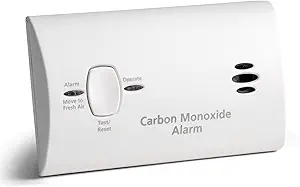 |
| Top Rated A top-rated pick with lots of positive feedback | Kidde Carbon Monoxide Detector KN-COPP-3 |  |
| Most Popular A crowd favorite that many people choose with confidence | First Alert CO606 Plug-In CO Alarm |  |
| Best Seller A high-volume bestseller chosen again and again | USI Electric MCN108 Carbon Monoxide & Gas Alarm |  |
Safe T Alert 25-741 Mini Dual LP/CO Alarm

| Power Source | Corded Electric (12V DC) |
|---|---|
| Alarm | Audible |
| Sensor Type | DUAL_LP_CO |
| Product Style | Wall-Mounted |
This Safe T Alert mini dual LP/CO alarm combines propane and carbon monoxide detection in a small, surface-mounted 12V unit intended for RVs, campers, and other tight spaces. It is hardwired to 12V DC so it runs continuously without batteries, and the audible alarm plus a mute button make it practical if a transient nuisance trigger occurs while you ventilate. The patented dual sensor design provides both propane and CO coverage in one device, and the compact plastic enclosure fits where wall space is limited. The unit is rated to operate in extreme temperatures, which is useful for vehicles and outdoor-exposed installations. Because it is a dedicated 12V alarm, it needs a compatible DC power source and professional or careful DIY wiring for installation, and it does not include wireless monitoring or battery backup. For buyers who need a simple, factory-style replacement alarm that covers both hazards in small living spaces, it is a focused, space-saving option.
Best for: Buyers who want a compact, factory-style alarm that covers both propane and carbon monoxide in RVs, trailers, or other small mobile living spaces and prefer a hardwired 12V solution.
Less Ideal for: People who need a battery-powered, plug-in, or smart-connected CO detector for a typical home should look at AC- or battery-based models with network features instead.
- Dual LP and CO sensing provides two-hazard protection in a single unit
- Runs on 12V DC so it provides continuous, maintenance-free power without batteries
- Compact surface-mount design fits well in RVs and other tight spaces
- Wide operating temperature range suitable for harsh or variable conditions
- Requires a 12V DC power connection so it is not plug-and-play for household AC-only locations
- No wireless connectivity or remote monitoring features
Verdict: A compact, hardwired 12V alarm that delivers combined propane and carbon monoxide detection ideal for RVs and small mobile living spaces.
First Alert CO710

| Power Source | Battery Powered |
|---|---|
| Sensor Type | Electrochemical |
| Alarm | Audible |
| Product Style | 10 Year Battery With Digital Display |
| Operating Humidity | 10-95% RH |
The First Alert CO710 is a tabletop carbon monoxide monitor that uses an electrochemical sensor and a built-in 10-year lithium battery for long-term, maintenance-free detection. It displays ambient temperature plus current and peak CO concentrations on a backlit digital screen, which helps you spot transient spikes from appliances or natural gas leaks. The unit sounds an 85-decibel horn when levels are dangerous and includes a test/silence button for routine checks and nuisance silencing. Because it is battery powered and standalone, it continues to monitor through power outages and is easy to place on a dresser, shelf, or counter without wiring. The design is compact and simple, but it lacks network connectivity or interconnect to other alarms, so it is best used as a reliable local detector rather than part of a smart alarm system. For buyers who prioritize proven sensor accuracy and long-life battery protection, this CO710 provides practical, low-maintenance coverage for living areas and near fuel-burning appliances.
Best for: Buyers who want a low-maintenance, high-accuracy CO detector that reliably alerts to elevated levels and records peak exposures without needing battery swaps or wiring.
Less Ideal for: Households that need integrated, whole-home alarm networks or smart-home notifications should consider interconnected or Wi-Fi-enabled models instead.
- Electrochemical sensor for accurate CO detection
- Built-in 10-year lithium battery eliminates periodic battery changes
- Backlit digital display shows current and peak CO levels plus temperature
- 85-decibel alarm with test/silence button for easy verification
- No wireless connectivity or alarm interconnect for whole-home notifications
- Designed as a tabletop/standalone unit rather than a flush-mounted option
Verdict: Choose the CO710 if you want a dependable, maintenance-free CO detector with a factory-quality electrochemical sensor and a 10-year sealed battery for long-term protection.
X-Sense SC07 Combination Detector

| Power Source | 10-Year Sealed Battery |
|---|---|
| Alarm | 85 dB |
| Sensor Type | Photoelectric, Electrochemical |
| Battery Type | Lithium metal |
| Safety Standards | UL 217 & UL 2034 |
The X-Sense SC07 combines photoelectric smoke sensing with an electrochemical carbon monoxide sensor in a compact, standalone unit designed for simple home protection. It is powered by a sealed 10-year lithium battery so you can mount it and forget routine battery changes, and the unit includes an LCD that displays status information. Installation is straightforward using the supplied bracket, screws, and anchors for ceiling or wall mounting, and the photoelectric sensor helps reduce nuisance alarms from cooking while responding well to smoldering fires. The electrochemical CO sensor provides reliable detection of carbon monoxide produced by natural gas appliances. Certification to UL 217 and UL 2034 supports code-compliant use. Limitations: the SC07 is not networked or interconnectable and lacks Wi-Fi or RF linking, so it will not alert other alarms or a smart home system during an event; homes that require whole-house interconnection should choose a different model. The unit is a practical, low-maintenance option for single-room protection where standalone detectors are acceptable.
Best for: Buyers who want dependable, low-maintenance smoke and carbon monoxide protection for a single room or location and prioritize long battery life and simple installation.
Less Ideal for: Homes that need networked or radio-interconnected alarms for whole-house notification or integration with smart home monitoring should consider an interconnected model instead.
- Built-in 10-year sealed lithium battery eliminates regular battery swaps and low-battery chirps
- Photoelectric smoke sensor that reduces cooking false alarms and detects smoldering fires quickly
- Electrochemical CO sensor suitable for detecting carbon monoxide from natural gas appliances
- Meets UL 217 and UL 2034 safety standards for smoke and CO detection
- Easy ceiling or wall installation with included mounting bracket and hardware
- No wireless interconnection or Wi-Fi, so it will not link with other alarms or smart home systems
- Standalone unit only — not suitable for code situations that require interconnected alarms
Verdict: Choose the SC07 if you want a low-maintenance, UL‑certified standalone smoke and CO detector with decade-long battery life and reliable natural-gas CO detection.
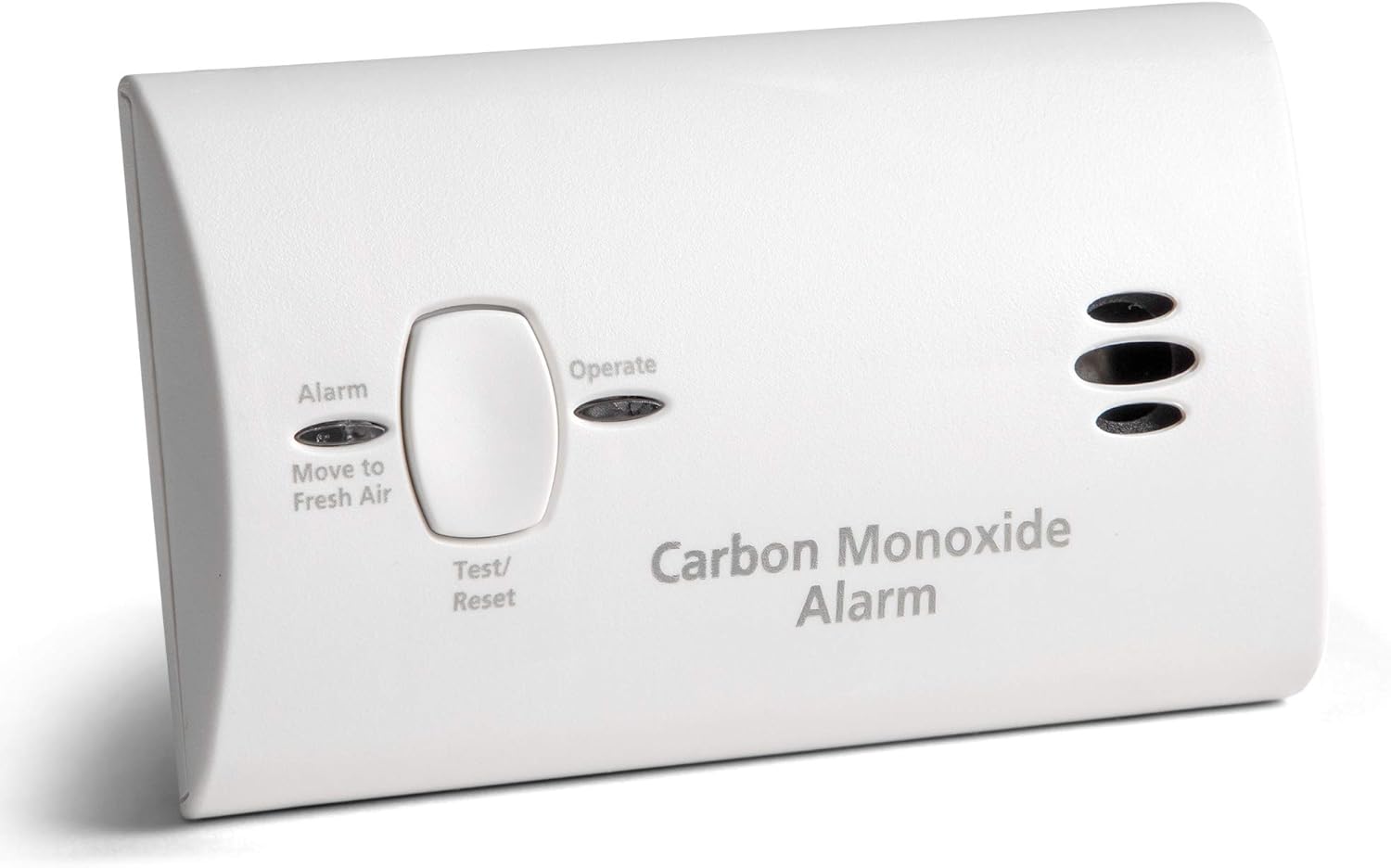
Kidde Carbon Monoxide Detector KN-COB-LP2
| Power Source | Battery Powered (2 AA) |
|---|---|
| Alarm | 85 dB Audible |
| Operating Humidity | 10 to 95% RH, non-condensing |
| Product Style | 3rd Edition |
The Kidde KN-COB-LP2 is a simple, battery-powered carbon monoxide detector that uses an electrochemical sensor to spot CO and alert you with an 85 dB alarm and flashing red LED. It runs on two AA batteries so it keeps working during power outages and can be wall-mounted or placed on a tabletop for temporary needs like travel or rental spaces. The unit has a test/hush button, a green power LED, and event memory to record the last detection or test, which helps with situational follow-up. Its portability and easy installation make it practical for budget-focused buyers who need basic CO protection without wiring. Limitations include the absence of a digital CO readout or network features and reliance on user-replaced AA batteries, which means periodic battery checks and potential mid-life chirps. For straightforward CO coverage near sleeping areas or portable use, this unit provides dependable, UL-certified protection at a low entry cost.
Best for: Buyers looking for an affordable, no-frills CO alarm to add basic, portable protection in bedrooms, rental units, or while traveling will appreciate this unit.
Less Ideal for: Those who want a connected detector with a digital readout, long-life sealed battery, or interconnectable system should consider more advanced models.
- Electrochemical sensor technology for accurate CO detection
- Operates on 2 AA batteries so it works during power outages and needs no wiring
- Portable design supports wall mounting or tabletop placement for travel
- 85 dB alarm and LED indicators provide clear audible and visual alerts
- Event memory records the last detection or test for follow-up
- No digital CO level display to show current concentration
- Requires periodic AA battery replacement and will chirp when low
- Lacks smart features or interconnect capability with other alarms
Verdict: A cost-effective, portable CO detector that gives reliable, UL-certified audible and visual alerts for basic home and travel protection.
Kidde Carbon Monoxide Detector KN-COPP-3

| Power Source | Plug In; 9V Backup (included) |
|---|---|
| Alarm | Audible, 85 dB |
| Sensor Type | Electrochemical / Nighthawk |
| Operating Humidity | 5% to 95% relative humidity, non-condensing |
The Kidde KN-COPP-3 is a plug-in carbon monoxide (CO) alarm intended for home use that combines continuous digital readout with battery backup so it keeps working during power outages. It uses an electrochemical/Nighthawk sensor to sample air and updates the LED display every 15 seconds, while an 85 dB audible alarm and peak-level memory record the highest CO reading since reset. Installation is simple — plug into a standard 120V outlet or use the included extension cord for tabletop placement, and the unit can also be wall-mounted. The Smart-Hush button lets you silence nuisance alerts briefly, and the unit reports CO concentration rather than just “alarm”/“no alarm,” which helps assess low-level exposures. Limitations to expect are that it is a single-station detector without Wi-Fi or networked interconnect, and the sensor type and lifespan mean you will want to replace units per manufacturer guidance every few years to maintain accuracy.
Best for: Buyers who prioritize a dependable, easy-to-install CO alarm with clear numeric readout and battery backup for continuous home protection.
Less Ideal for: Users who want smart-home features, remote alerts, or a networked multi-unit system should consider models with Wi-Fi and interconnect capabilities instead.
- Digital LED display shows real-time CO concentration for ongoing monitoring.
- 9V battery backup keeps the alarm functional during power outages.
- Peak level memory records the highest CO reading since last reset for post-event review.
- Simple plug-in installation with included extension cord allows flexible placement and optional wall mounting.
- No Wi-Fi, voice alerts, or app connectivity for remote notifications or smart-home integration.
- Not a multi-sensor networked alarm so it will not trigger other alarms in the house.
Verdict: Choose this Kidde plug-in CO alarm if you want a straightforward, reliable detector that displays actual CO levels and keeps working during power outages.
First Alert CO606 Plug-In CO Alarm

| Power Source | Corded Electric |
|---|---|
| Sensor Type | Electrochemical |
| Alarm | Carbon Monoxide |
| Operating Humidity | 10-95% RH |
The First Alert CO606 is a simple plug-in carbon monoxide alarm that uses an electrochemical sensor to detect CO and provides continuous protection through an outlet plus a 9V battery backup. It installs by plugging directly into a standard wall receptacle so no mounting hardware is required, and a single button lets you test the unit or silence nuisance chirps. The alarm uses an electrochemical sensor, which is more accurate than basic semiconductor sensors, and emits an 85 dB alert when dangerous CO levels are detected. Battery backup keeps the detector active during power outages and a low-battery mute can silence the warning chirp for a limited time. The unit meets UL standards and includes an end-of-life chirp to prompt replacement after its service life. Trade-offs are minimal but include the fixed plug design that determines placement and the absence of a digital concentration readout or smart connectivity for remote alerts.
Best for: Buyers who prioritize a proven, easy-to-use CO alarm with reliable sensing and continuous protection for living areas where a plug-in unit is convenient.
Less Ideal for: People who need wall- or ceiling-mounted detectors, a digital CO ppm readout, or smart/home-automation integration should consider other models.
- Electrochemical sensor for accurate CO detection
- Battery backup maintains protection during power outages
- Simple plug-in installation requires no tools or mounting
- Single button for test and silence keeps operation straightforward
- Fixed plug-in form limits optimal placement options
- No digital CO concentration display or network connectivity
Verdict: Choose this plug-in First Alert if you want a simple, accurate CO alarm with battery backup and no-fuss installation.
USI Electric MCN108 Carbon Monoxide & Gas Alarm

| Power Source | Corded Electric |
|---|---|
| Battery Average Life | 4380 hours |
The USI Electric MCN108 is a hardwired combination alarm that monitors both carbon monoxide and natural gas while offering a battery backup so it stays active during power outages. It mounts to a standard wiring junction box and uses a front-loading battery drawer and quick-activation pull tab for easier battery replacement without removing the unit from its bracket. Typical installation is permanent wiring to home power with the added safety of the backup battery, which makes it suitable for kitchens, sleeping areas, and utility rooms where both CO and gas leaks are a concern. The dual-sensor design reduces the need for two separate devices and the corded power source means you do not rely solely on batteries for everyday protection. Limitations include the need for hardwiring during installation and that it does not list wireless connectivity or smart notifications, so remote alerts are not available; routine testing and battery replacement are still required to maintain protection.
Best for: Buyers who prioritize reliable, permanently mounted protection against both carbon monoxide and natural gas and want a straightforward, low-maintenance alarm with battery backup.
Less Ideal for: Those who need wireless monitoring, smart home integration, or a purely plug-in/portable solution should consider other options.
- Combined CO and natural gas detection in a single hardwired unit
- Battery backup keeps the alarm functioning during power outages
- Front-loading battery drawer and pull-tab for easier battery replacement
- Mounts to standard wiring junction box for secure, permanent installation
- Requires hardwiring, which may need an electrician for safe installation
- No Wi-Fi or smart alerting features for remote notifications
- Manufacturer information does not list advanced sensor diagnostics or display readouts
Verdict: Choose this hardwired dual CO and natural gas alarm if you want a simple, permanently mounted detector with battery backup for dependable in-home protection.
Choosing the Right Carbon Monoxide Detector with Natural-Gas Detection: Key Factors to Consider
Sensor Technology and Detection Ranges
Sensor type determines how reliably a detector reads carbon monoxide and natural gas. Electrochemical CO sensors are the industry standard for accuracy and stability; they respond proportionally to CO concentration and tend to drift less than cheaper alternatives.
For natural-gas detection, most consumer units use combustible-gas sensors tuned for methane or propane. Check stated detection ranges and thresholds so you understand the concentrations that trigger a warning. Lower trigger points give earlier alerts but can increase nuisance trips in some environments.
Alarm Speed, Loudness, and Notification Types
How quickly a detector signals a hazard and how noticeable the alarm is are critical safety factors. Alarm speed depends on sensor sensitivity and internal logic that decides when to trigger. Loudness is measured in decibels; alarms should be clearly audible in sleeping areas and larger homes.
Many detectors also offer visual indicators, voice alerts, or wireless notifications. Consider which notification types you need so an alarm will get noticed day or night. If you have hearing limitations in the household, look for detectors with strobe or companion notification compatibility.
Power Source, Longevity, and Maintenance
Power design affects reliability during outages and the frequency of maintenance. Hardwired detectors with battery backup offer continuous power but require proper installation. Battery-powered units are flexible and easy to place but need regular battery replacement and testing.
Check for low-battery warning behavior, battery life estimates, and whether the unit has sealed long-life batteries versus replaceable cells. Also look for end-of-life alerts and recommended sensor replacement intervals to avoid relying on degraded sensors.
Installation and Placement Options
Correct placement is essential for both CO and natural-gas detection. CO disperses with airflow and tends to mix evenly over time, so detectors should be placed on every floor and near sleeping areas. Natural-gas (methane) is lighter than air and can collect near the ceiling, so ceiling or high-wall mounting may be preferred for gas sensors.
Consider whether a detector offers flexible mounting brackets, magnetic mounts, or plug-in options. Also verify clearances from appliances, ventilation ducts, and kitchens to reduce false alarms while still ensuring timely detection.
Ease Of Use and User Interface
A detector should make it easy to confirm its status and respond to alarms. User-friendly features include single-button testing and silencing, clear LED status lights, readable display panels for current CO ppm if provided, and voice or text indications of the hazard type.
Simple maintenance and obvious indicators reduce the chance that a detector is ignored or improperly maintained. If you plan to integrate the detector with a smart home setup, check the pairing and app reporting workflow for clarity and reliability.
Certifications and Reported Reliability
Safety listings, certifications, and documented reliability history are strong signals about a detector's suitability. Look for devices that meet relevant national or regional standards for CO and combustible-gas detection and that provide clear manufacturer guidance on testing and replacement intervals.
Warranty terms and the presence of replaceable sensor modules or service options can also affect long-term ownership costs and reliability. Devices with routine self-test behavior and explicit end-of-life notices help ensure you are not relying on a worn-out sensor.
Understanding Dual-Sensor Detectors
Dual-sensor detectors combine two different sensing technologies into a single housing to monitor both carbon monoxide and combustible gases. That reduces the number of separate devices you need to install while offering coordinated alerts from one unit.
Know that the two sensors operate differently and have distinct placement and maintenance requirements. CO sensors respond to a toxic gas produced by incomplete combustion, while combustible-gas sensors detect flammable gas concentrations that could create an explosion risk.
- CO sensors are typically electrochemical and report concentrations in parts per million.
- Combustible-gas sensors often detect methane or propane and trigger based on percent-of-lower-explosive-limit thresholds.
- Combined units simplify installation but require attention to both CO and gas-specific siting.
Where to Place Your Combined Detector
Plan placement to address both hazards. For CO, install detectors on every level and outside sleeping areas. For natural-gas detection, higher mounting closer to the ceiling is often better because methane is lighter than air.
Avoid installing directly above stoves, grills, or flues where normal appliance operation could create false triggers. Maintain manufacturer-recommended clearances from vents, fans, and cooking surfaces to balance responsiveness with nuisance reduction.
- Install at least one detector on each floor, plus one outside each sleeping area.
- Mount combustible-gas sensors higher on walls or on the ceiling when recommended.
- Test placement by following the unit's testing procedure and adjust if nuisance alarms occur.
Testing, Maintenance, and End-of-Life Management
Routine testing keeps detectors reliable. Use the built-in test function monthly to confirm the alarm circuitry and status indicators. Replace batteries promptly when low-battery signals begin and follow the manufacturer schedule for sensor replacement.
Pay attention to end-of-life notices. Sensors degrade over time and can develop slower response or drift. A clear replacement interval and an audible or visual end-of-life indicator are important features that prevent long-term blind spots in protection.
- Test alarms monthly using the unit's test button.
- Replace or recharge batteries as recommended and note low-battery behavior.
- Record sensor replacement dates and plan for unit refresh at end-of-life.
Integrating Detectors With Home Notification Systems
Many modern detectors offer wired interconnects, wireless interconnects, or smart-home app integration to send alerts beyond the device. Interconnect functionality can trigger all alarms in a house if one unit detects a hazard, increasing the chance occupants will be alerted quickly.
If you use a smart home platform, check for reliable push notifications and whether the system reports both CO ppm readings and combustible-gas events. Consider whether battery backup is available so notifications persist during power outages.
- Interconnected alarms improve whole-home awareness.
- Choose systems with clear app notifications and event logs if remote monitoring is needed.
- Verify power backup behavior for connected features during outages.
Common Causes of False Alarms and How to Avoid Them
False alarms sometimes stem from placement too close to cooking appliances, grills, or damp areas. Combustion appliances with normal brief emissions can trip overly sensitive units if installed improperly. High humidity, aerosol sprays, and strong chemical odors can also interfere with sensors.
To reduce false alarms, follow placement guidance, ensure good ventilation in appliance areas, and choose units with documented tolerance to household contaminants. Regular maintenance and timely sensor replacement also lower nuisance alerts over the device life.
- Avoid mounting directly above stoves or inside kitchens.
- Ventilate areas prone to short-term combustion byproducts.
- Replace aged units promptly to prevent increased false positives.
How We Chose the Best Carbon Monoxide Detector with Natural-Gas Detection
We evaluated detectors with a focus on the attributes that most directly affect home safety, day-to-day reliability, and ease of ownership. Selection began by screening models that explicitly combine electrochemical carbon monoxide sensing with combustible-gas detection appropriate for natural gas. From that pool, we applied these product-level filters: sensor type and stated detection ranges, independent alarm responsiveness, power source and battery longevity, user interface and ease of testing, mounting options and placement flexibility, and certification or safety listings. We prioritized devices using proven sensor technology for CO (electrochemical) and recognized methods for combustible-gas detection, and we favored units with clear alarm thresholds and end-of-life notifications. We excluded detectors that only offered single-gas sensing, consumer alarm-only add-ons without listed sensitivity data, and units lacking basic safety certifications. The resulting shortlist emphasizes measurable detection performance, dependable power options, straightforward maintenance, and clear user feedback features that matter for everyday home use.
Our full evaluation process is outlined in our review methodology.
FAQ
How often should I test my carbon monoxide detector with natural-gas detection?
Test the unit at least once a month using the built-in test button to confirm the alarm and indicators work. Also replace or recharge batteries according to the manufacturer's schedule and act on any low-battery warnings immediately.
Can one combined detector protect a whole house?
One combined detector can provide local protection but is not sufficient for a whole house. Install detectors on every level and outside sleeping areas to ensure timely alerts throughout the home.
Where should the natural-gas sensor be mounted relative to the ceiling?
Natural-gas sensors are generally mounted high on a wall or on the ceiling because methane is lighter than air. Follow the specific product guidance for exact height and horizontal clearances from corners and vents.
What does the detector display when it senses carbon monoxide?
Many detectors show a parts-per-million (ppm) reading for CO events and will sound an alarm at established threshold levels. Some units also provide voice announcements or distinct alarm patterns to indicate the hazard type.
How do I avoid nuisance alarms from my combined detector?
Avoid placing the unit too close to kitchens, bathrooms, or appliances that briefly emit combustion byproducts. Maintain good ventilation, follow manufacturer placement instructions, and replace sensors or units at the recommended interval.
Final Verdict
When choosing a carbon monoxide detector with natural-gas detection, prioritize reliable sensor types, clear alarm behavior, and sensible placement to catch both CO and combustible-gas hazards quickly. Balance sensitivity and nuisance-resistance by following recommended siting and by selecting units with clear test, maintenance, and end-of-life features. Focus on devices that offer the power and notification options you need for your home and commit to a routine testing and replacement schedule so the detector remains effective for the long term.