
Note: This article contains affiliate links. If you click on these links and make a purchase, we may earn a small commission at no extra cost to you. This helps support our research and content. Read our full affiliate disclosure here.
A Carbon Monoxide Detector with Gas Detection does more than sound an alarm for CO. In homes where fuel-burning appliances, gas lines, or garages are present, a single unit that senses multiple dangerous gases can reduce response time and simplify monitoring. You want dependable sensor accuracy, timely alerts, and an installation style that fits your floor plan. This guide shortlists seven top options across the multi-gas detector category. We focus on the features that matter for real-world home safety, including sensing technology, alarm clarity, mounting and power choices, and easy upkeep. Read on to compare the traits that help you pick the right multi-gas detector for your living space.
Top Picks at a Glance
| Best Overall The best all-around choice for most situations | Kidde KN-COEG-3 Carbon Monoxide & Gas Alarm |  |
| Best Quality Built to a higher standard if you want something more solid | FORENSICS DETECTORS FD 4-Gas Monitor FD-600-4GAS |  |
| Best Value The sweet spot between price and what you get | X-Sense SC07 Combination Detector |  |
| Best Budget The cheapest option that still gets the job done reliably | Safe T Alert 35 Series Dual LP/CO Alarm |  |
| Top Rated A top-rated pick with lots of positive feedback | First Alert CO400 Carbon Monoxide Alarm 2-Pack |  |
| Most Popular A crowd favorite that many people choose with confidence | First Alert CO606 Plug‑in CO Alarm |  |
| Best Seller A high-volume bestseller chosen again and again | Kidde Carbon Monoxide Detector KN-COB-LP2 | 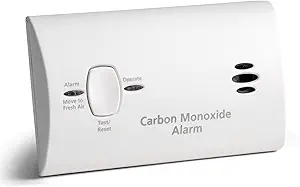 |
Kidde KN-COEG-3 Carbon Monoxide & Gas Alarm

| Power Source | Plug In; 9V Backup (included) |
|---|---|
| Alarm | 85 dB audible |
| Operating Humidity | 5 to 95% relative humidity (RH), non-condensing |
| Product Style | 3rd Edition |
The Kidde KN-COEG-3 detects carbon monoxide plus explosive gases such as methane, propane, and natural gas using an electrochemical CO sensor and a gas sensing function that displays "GAS" on the digital readout. It is designed to plug into a standard 120V outlet and includes a 9V battery backup so the alarm continues to function during power outages, and an included extension cord lets you place it on a table or shelf if needed. The digital LED updates CO level every 15 seconds and stores a peak level memory so you can see the last event, while Smart-Hush silences nuisance alarms for about eight minutes. At 85 decibels the alarm is loud enough to alert a household, and the unit is UL listed and meets relevant standards. Practical limitations are that it requires access to an outlet for primary power and does not offer Wi-Fi or app connectivity for remote alerts, so monitoring depends on the built-in display and sound. For buyers who prioritize clear local detection of both CO and combustible gas in an easy plug-in form, this is a straightforward option.
Best for: Buyers who want a reliable, easy-to-install local alarm that monitors both carbon monoxide and common combustible gases and prioritizes clear in-home alerts and simple operation.
Less Ideal for: Users who need remote monitoring or app notifications for multiple properties or who require a battery-only, wall-free installation option.
- Combination detection for carbon monoxide and explosive gases in one unit
- Digital LED display shows CO concentration and indicates when explosive gas is sensed
- 9V battery backup maintains protection during power outages
- Peak level memory records the last CO event for easy review
- Smart-Hush button silences nuisance alarms temporarily
- Requires a standard 120V outlet for primary operation so placement is outlet-dependent
- No Wi-Fi or remote notification capability for off-site alerts
Verdict: A straightforward plug-in combo alarm that delivers clear local detection of carbon monoxide and explosive gases with battery backup and a readable digital display.
FORENSICS DETECTORS FD 4-Gas Monitor FD-600-4GAS
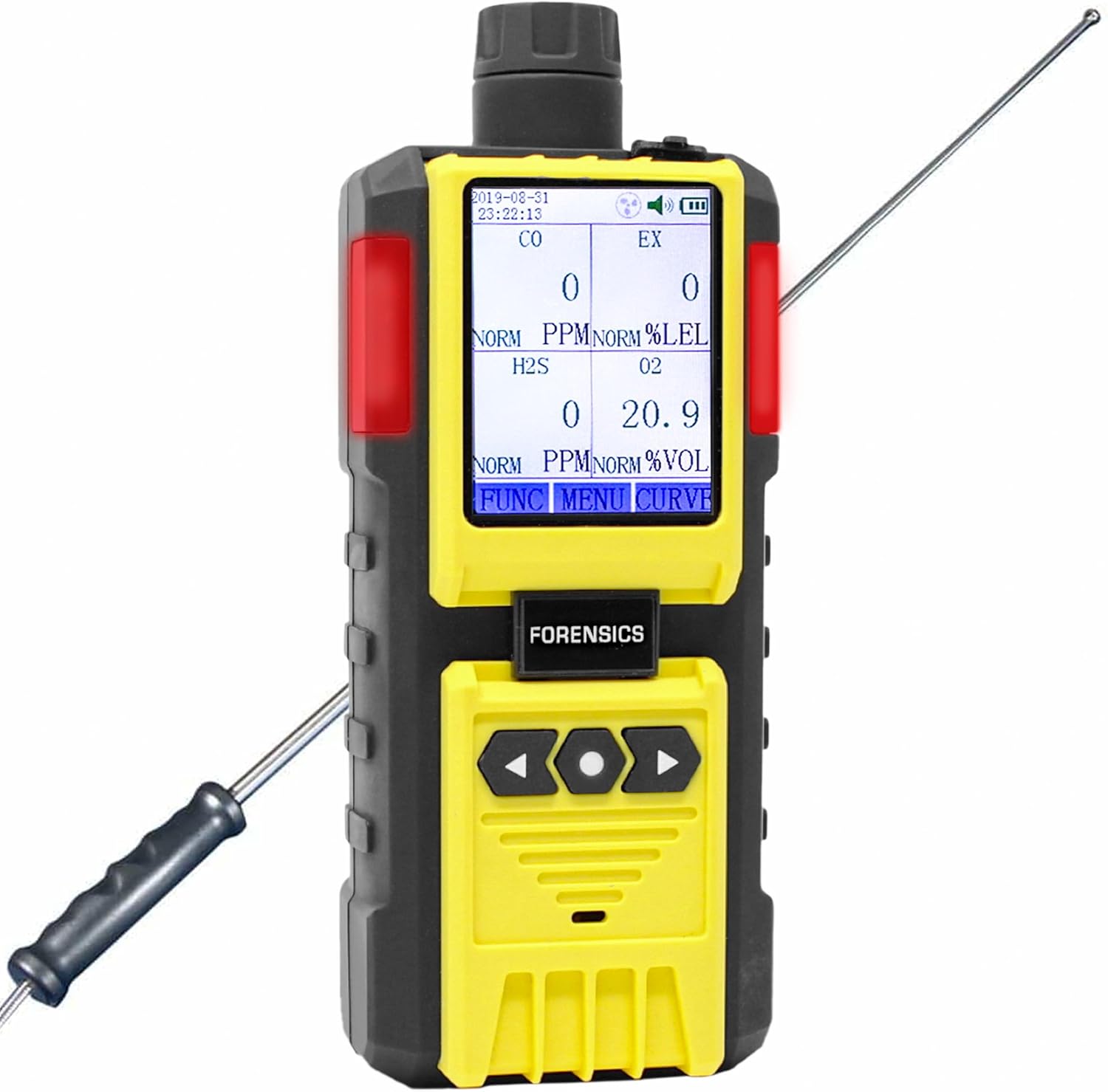
| Gases detected | CO, H2S, O2, LEL |
|---|---|
| Detection range | CO 0–999 ppm; H2S 0–100 ppm; O2 0–30%; LEL 0–100% |
| Response time | <30 seconds |
| Battery | 3.7V Li-ion, 3200 mAh |
| Calibration standard | USA NIST traceable |
The FD-600-4GAS is a professional handheld 4-gas meter designed for point and continuous sampling in hazardous atmospheres. It measures carbon monoxide, hydrogen sulfide, oxygen, and combustibles with electrochemical and catalytic sensors, and the integrated pump plus a 4 ft telescopic probe speeds sampling from confined spaces. The color LCD and graphing let you track trends on the device, while built-in data logging stores alarm events for later computer download. Calibrated to a USA NIST traceable source at the factory, the unit aims for better than 5% full-scale accuracy and offers audible, visual, and vibration alarms plus ATEX explosion protection for working in classified areas. Practical strengths include rechargeable Li-ion power for long shifts and a rugged ABS housing with a stainless belt clip. Expect routine calibration and sensor replacement every 1–3 years, and a learning curve to fully use graphing and data-export functions compared with simpler single-gas detectors.
Best for: Performance-focused users who need a rugged, calibrated multi-gas detector for industrial confined-space or safety inspections and who prioritize fast sampling, data logging, and on-device graphing.
Less Ideal for: Casual home users or those who only need a simple carbon monoxide alarm without data logging or industrial certifications should choose a simpler, lower-cost CO-only detector.
- Built-in pump and 4 ft probe enable fast point sampling from confined spaces.
- Color display with graphing provides on-device trend visualization for quicker diagnosis.
- USA NIST traceable factory calibration boosts confidence in accuracy.
- Data logging stores alarm events and allows computer export for recordkeeping.
- ATEX Ex ib IIC T4 Gb rating and rugged ABS enclosure suit industrial environments.
- Complex feature set requires time to learn compared with basic single-gas alarms.
- Sensors have limited service life and need periodic replacement and calibration.
Verdict: Buy this when you need a factory-calibrated, pump-equipped 4-gas detector with on-device graphing and data logging for professional safety and confined-space work.
X-Sense SC07 Combination Detector

| Power Source | 10-Year Sealed Battery |
|---|---|
| Alarm | 85 dB |
| Sensor Type | Photoelectric, Electrochemical |
| Battery Type | Lithium metal |
The X-Sense SC07 combines a photoelectric smoke sensor and an electrochemical CO sensor into a single, easy-to-install standalone unit powered by a 10-year sealed lithium battery. It mounts to a ceiling or wall with the included bracket and hardware and displays readings on a small LCD while delivering an 85 dB alarm for alerts. The photoelectric sensor is tuned to respond quickly to slow, smoldering fires and helps reduce cooking false alarms compared with ionization alarms, while the electrochemical CO sensor provides continuous monitoring for dangerous gas levels. Because the battery is built in and rated for a decade, the unit requires minimal upkeep and avoids the nuisance of low-battery chirps or annual battery swaps. It is UL 217 and UL 2034 certified, which supports code-compliant installs. The trade-offs are that the SC07 is a basic standalone model with no wireless interconnect, Wi-Fi, or app features, so it will not link with other alarms or smart home systems.
Best for: Buyers who prioritize low-maintenance, reliable gas and smoke detection and want a certified standalone alarm that works reliably without regular battery changes.
Less Ideal for: Households that need alarms linked across multiple rooms, smart-home integration, or remote notifications should choose an interconnected or Wi-Fi model instead.
- 10-year sealed lithium battery eliminates battery changes and most maintenance
- Photoelectric smoke sensor reduces cooking false alarms and detects smoldering fires quickly
- Electrochemical CO sensor provides continuous carbon monoxide monitoring
- Meets UL 217 and UL 2034 safety standards for smoke and CO detection
- No wireless interconnection or smart features for multi-unit linking or remote alerts
Verdict: A low-maintenance, UL-certified combination smoke and CO detector ideal for buyers who want reliable decade-long protection without battery changes.
Safe T Alert 35 Series Dual LP/CO Alarm

| Power Source | Corded Electric (12V DC) |
|---|---|
| Alarm | Audible |
| Sensor Type | DUAL_LP_CO |
| Enclosure Material | Plastic |
This Safe T Alert 35 Series Dual LP/CO Alarm combines propane and carbon monoxide detection in a single flush-mount unit intended for 12V RV installations. It replaces many single-function 12V propane alarms without extra wiring and is typically used in Class A, B, C motorhomes, travel trailers, fifth wheels, and campers to provide continuous, maintenance-light protection. The unit runs on 12V DC so no batteries are required, includes a mute button to silence nuisance alarms temporarily, and has low-voltage warning and power-conserving circuitry for reliable operation on vehicle power. Its certified operating range covers extreme temperatures, and the rapid-recovery sensor and self-resetting behavior mean the alarm returns to monitoring after a transient event. Limitations include the need for a 12V electrical hookup—it is not a standalone battery alarm for homes—and the plastic enclosure and vehicle-focused mounting mean it is optimized for RV use rather than permanent home installation.
Best for: Buyers looking for an affordable, compact safety upgrade for an RV or camper who want both propane and CO detection in a single, low-maintenance 12V unit.
Less Ideal for: People seeking a battery-powered or hardwired home CO alarm for fixed residential installation should consider home-focused models instead.
- Dual propane (LP) and carbon monoxide detection in one unit reduces the need for separate alarms
- Flush-mount design fits RV installations and replaces many single-function 12V propane alarms without rewiring
- Runs on 12V DC so no batteries to change, with low-voltage warning and power-conserving circuitry
- Mute button and self-resetting sensor improve usability during transient events
- Certified to operate across a wide temperature range suitable for vehicle environments
- Requires 12V power so it is not suitable as a standalone battery-powered home alarm
- Plastic enclosure and RV-focused design limit suitability for permanent residential mounting
Verdict: A practical, budget-friendly dual propane and CO alarm built for RVs that delivers combined gas detection without battery maintenance.
First Alert CO400 Carbon Monoxide Alarm 2-Pack

| Power Source | Battery Powered |
|---|---|
| Alarm | Audible, Visual |
| Sensor Type | Electrochemical |
| Operating Humidity | 10-95% RH |
The First Alert CO400 2-pack provides straightforward, reliable carbon monoxide monitoring for homes without hardwiring. Each unit uses an electrochemical CO sensor, which is the most accurate sensor technology for CO detection, and the alarms run on a single 9V battery so they continue to protect during power outages. Installation is simple since the units are tabletop-ready and include optional wall mounts, and a single test/silence button makes periodic checks and nuisance-silencing easy. When dangerous CO levels are detected an 85-decibel horn and visual indicator alert occupants, and the devices include low-battery and end-of-life signals so you know when maintenance or replacement is needed. The design focuses on dependable function rather than smart features, so you should not expect app alerts or network integration. For basic, room-level CO protection across multiple bedrooms and floors this pack is practical and confidence-inspiring, though buyers wanting wireless monitoring or longer sensor lifetimes may look at other options.
Best for: Buyers who prioritize reliable, proven CO detection and want straightforward, plug-and-play units to place on each level and in bedrooms for primary safety coverage.
Less Ideal for: Users who need Wi-Fi or app-connected monitoring, integrated home automation, or extended sensor lifetimes beyond standard replacement intervals.
- Electrochemical sensor for accurate CO detection
- Battery-powered operation ensures protection during power outages
- Loud 85-decibel alarm plus visual indicator for clear alerts
- Simple one-button test/silence and optional wall mount make placement and maintenance easy
- No smart connectivity or remote notifications
- Sensor and unit require replacement after the five-year end-of-life period
Verdict: Choose this CO400 2-pack when you want simple, battery-operated carbon monoxide protection with accurate electrochemical sensing and clear audible alarms.
First Alert CO606 Plug‑in CO Alarm

| Power Source | Corded Electric |
|---|---|
| Sensor Type | Electrochemical |
| Alarm | Carbon Monoxide |
| Product Style | Plug in Alarm with Battery Backup |
| Operating Humidity | 10-95% RH |
The First Alert CO606 is a simple plug-in carbon monoxide alarm that protects a room by continuously monitoring CO levels with an electrochemical sensor and sounding an 85 dB alarm if dangerous concentrations are detected. It plugs into any standard outlet and includes a 9V battery backup so the unit remains active during power outages, and a single button handles testing and silencing nuisance alerts. The electrochemical sensor is a practical choice for reliable CO detection, and the unit meets UL standards and signals end-of-life when it needs replacement. Installation is effortless because no mounting hardware or wiring is required, making it suitable for bedrooms, hallways, and living areas. Limitations include its room-level coverage only (a single plug-in unit will not protect an entire home) and minimal display or connectivity features for advanced monitoring; it does not offer digital readouts or smart alerts. For buyers who want a straightforward, factory-quality CO alarm for defined locations, this is a dependable option.
Best for: Buyers who value a proven, easy-to-install CO alarm with reliable sensing and backup power for bedroom or room-level protection and who prioritize straightforward operation and safety certifications.
Less Ideal for: Users who want whole-house monitoring, networked alerts, or detailed on-device CO concentration readouts should consider more advanced or smart models.
- Electrochemical sensor for accurate CO detection
- Battery backup keeps the alarm active during power outages
- Single test/silence button simplifies operation
- Meets UL standards and includes end-of-life signal
- No digital display or numeric CO readout
- No Wi-Fi or smart notification capabilities
Verdict: A no-nonsense plug-in CO alarm with an accurate electrochemical sensor and battery backup that delivers reliable, room-level protection.
Kidde Carbon Monoxide Detector KN-COB-LP2
| Power Source | Battery Powered |
|---|---|
| Alarm | Audible (85 dB) |
| Operating Humidity | 10 to 95% RH, non-condensing |
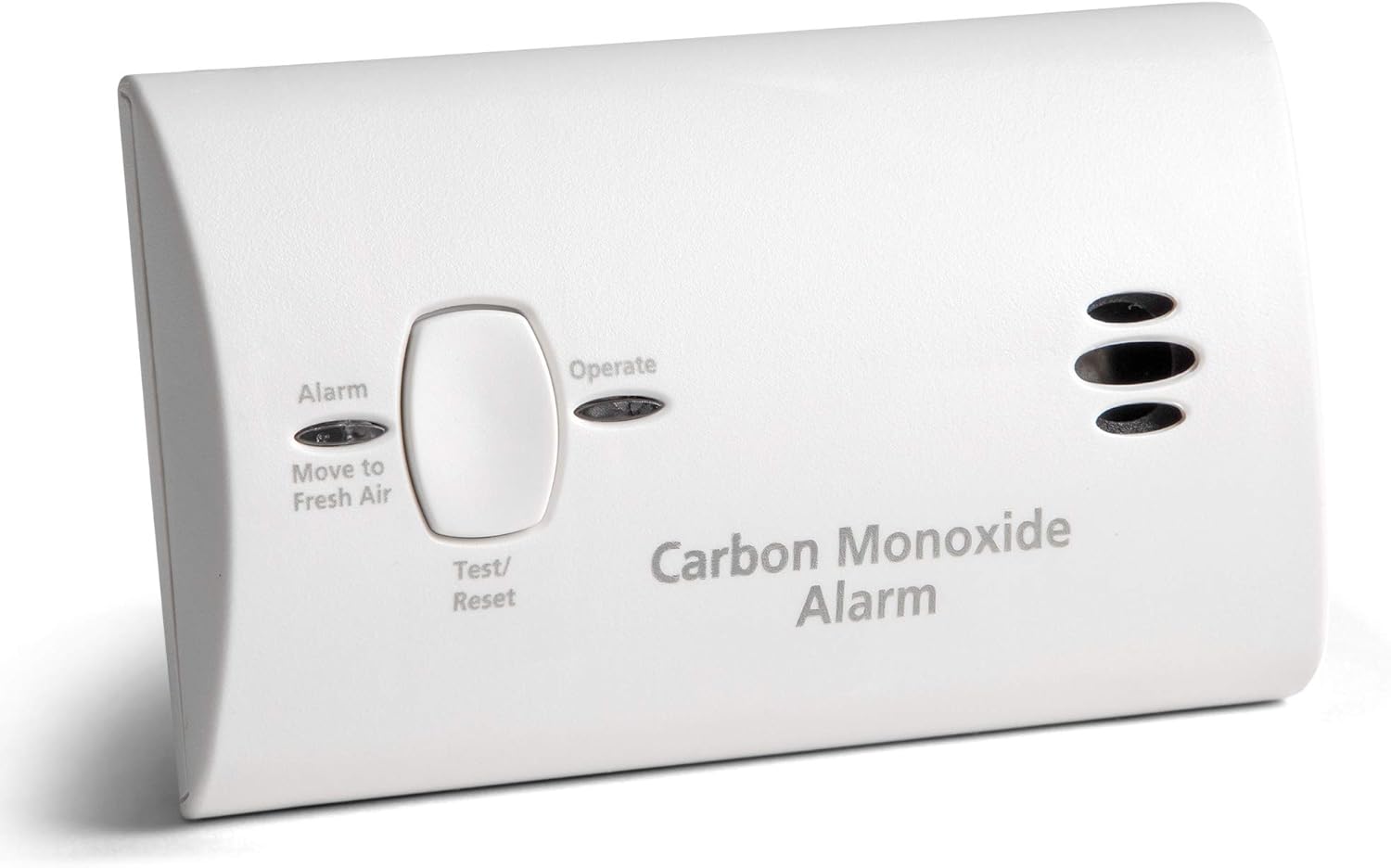
The Kidde KN-COB-LP2 is a simple, battery-powered carbon monoxide (CO) alarm designed for easy installation and everyday home protection. It uses an electrochemical sensor to detect CO and signals danger with an 85 dB audible alarm plus a flashing red LED, while a green LED shows normal power. Powered by two AA batteries, the unit runs during power outages and can be mounted on a wall or set on a tabletop, making it useful in bedrooms, travel, or rental units. The test-reset button verifies battery and alarm operation and the hush function silences nuisance chirps temporarily; event memory records the last detection or test. Practical benefits include no wiring required, portability, and straightforward visible indicators for quick status checks. Limitations are the reliance on replaceable AA batteries so routine battery changes are required and the unit provides CO-only detection without integrated smoke sensing or digital concentration readout.
Best for: Buyers who prioritize straightforward, proven CO protection and want an easy-to-install, battery-operated alarm they can place by bedrooms or take when traveling.
Less Ideal for: People seeking multi-hazard units with smoke detection or a numeric CO readout should consider combined alarms or digital-display models instead.
- Electrochemical sensor provides reliable CO detection
- Operates on two AA batteries so it continues during power failures
- 85 dB alarm and LED indicators make alerts and status easy to notice
- Portable design supports wall mount or tabletop placement
- Test-reset and hush functions for verification and temporary silencing
- No digital CO concentration display to show ppm levels
- Requires periodic replacement of AA batteries
Verdict: A no-frills, battery-operated CO alarm that delivers dependable detection and easy installation for safety-minded households.
Choosing the Right Carbon Monoxide Detector with Gas Detection: Key Factors to Consider
Sensor Technology and Target Gases
Different sensor types respond to gases in different ways. Electrochemical sensors are common for carbon monoxide because they provide precise readings and stable baselines over time. Semiconductor or catalytic bead sensors are often used for combustible gas detection, while some hazardous-gas sensors rely on specialized sensing elements. Understand which gases each unit actually detects and whether the sensor type is appropriate for those gases.
Knowing the target gases matters because not all "gas detection" units are the same. A detector that lists general combustible gases may miss specific toxic vapors. Choose a unit whose sensing technology and listed target gases match the fuel sources and potential leak types in your home.
Alarm Performance and User Alerts
An effective alarm is loud enough to be heard in sleeping areas and distinct enough to differentiate between carbon monoxide and other gas warnings. Look for measured decibel ratings and separate alert patterns or tones for different gases. Visual indicators such as flashing LEDs and textual error codes can improve situational awareness, especially for occupants with hearing limitations.
Some devices also include local voice alerts or progressive alarm stages that escalate as concentrations rise. Consider how clearly the device communicates both the presence of a hazard and what action occupants should take.
Placement, Mounting, and Coverage
Proper placement determines how quickly a detector senses a leak. Carbon monoxide is slightly lighter than air when warm and tends to mix into living spaces, so detectors are often installed at normal breathing height in sleeping areas and near fuel-burning appliances. Combustible gas like natural gas (methane) is lighter than air and may collect near ceilings, while propane is heavier and can pool near the floor. Follow the manufacturer guidance for mounting height relative to the gases the unit detects.
Also consider coverage area per unit and plan for multiple detectors if your home has several potential leak sources. Devices with removable wall-mount brackets or tabletop feet add flexibility for different rooms.
Power Source and Backup
Power reliability is critical for safety devices. Battery-only units offer continued operation during power outages but require regular battery checks and replacements. Hardwired units may offer continuous power and, when paired with a battery backup, combine the benefits of both approaches. Some detectors include rechargeable batteries or long-life lithium cells that extend maintenance intervals.
Evaluate how the detector reports low power and whether it allows easy battery replacement without removing the whole unit. Backup power choices affect how and where you can install the detector and influence long-term upkeep.
Connectivity and Remote Alerts
Connected detectors can send notifications to your phone or home automation system when a hazard is detected. This is useful for homeowners who are away or for caretakers monitoring an elderly occupant. Consider whether the device requires a proprietary hub, supports Wi-Fi directly, or uses local interconnect to other detectors.
Keep in mind that connectivity adds complexity and potential failure modes. If you prioritize remote alerts, check for reliable push notifications, offline behavior, and how firmware updates are handled.
Maintenance, Sensor Life, and Replaceability
Sensors degrade over time and may need calibration or replacement. Look for devices that clearly state sensor life expectancy, end-of-life alerts, and whether replacement sensors or units are available. Regular testing routines and accessible test buttons help you verify function without technical tools.
Consider how the unit communicates maintenance needs and whether it provides simple steps for battery or sensor replacement. Low-maintenance designs reduce the chance that a detector will be left in an inoperable state.
Where to Install a Multi-Gas Detector
Placement should reflect the gases you need to detect and the layout of your home. Install detectors near sleeping areas, adjacent to attached garages, and close to fuel-burning appliances such as furnaces, water heaters, or stoves. For combustible gas detection, follow guidance on mounting height: ceiling or high-wall placement for lighter-than-air gases, and lower placement if the unit specifically lists heavier gases.
Avoid mounting directly over stoves or very close to vents where false alarms are more likely. Also keep detectors away from drafty spots that may dilute gas samples and slow detection. Plan coverage so no single room with a potential leak source is left unmonitored.
- Install at least one detector on each level with sleeping rooms
- Place detectors 3 to 5 feet from known fuel-burning appliances
- Do not install inside bathrooms or within a few feet of vents and fans
- For garages, mount detectors on a wall close to the door into the house
Interconnected Systems and Home Safety Networks
Interconnected detectors that communicate locally can alert the whole household even if the hazard starts in another room. Hardwired interconnect systems or wireless mesh links allow alarms to trigger network-wide alerts, which is particularly important at night when occupants may be asleep.
If you opt for networked detectors, verify how the interconnect handles power loss and whether the connection is local-only or relies on internet services. Local interconnect reduces dependence on remote servers and often keeps the system responsive during outages.
- Local interconnect is more resilient to internet failures
- Wireless interoperability varies; confirm protocol compatibility
- Interconnected alarms should preserve distinct signals for different gases
Understanding Sensor End-of-Life and Replacement
Most gas sensors have a finite service life after which sensitivity and accuracy decline. Units often include end-of-life indicators that alert you when the sensor can no longer be trusted. Take these warnings seriously and plan for replacement ahead of time so coverage is uninterrupted.
Some models allow sensor modules to be swapped by the homeowner, while others require full-unit replacement. Consider how easy and affordable replacement is before choosing a detector, because a device that is difficult to service may be ignored when problems arise.
- Expect sensor lifespans to vary; check manufacturer-stated years
- End-of-life alerts are essential for continuous safety
- Evaluate whether replacements are user-installable or require professional service
Avoiding Nuisance Alarms
Nuisance alarms undermine confidence and can lead to disabled devices. To minimize false triggers, avoid installing detectors next to fuel-burning appliances that emit short, harmless startup emissions or near kitchens where cooking fumes are common. Choose devices with intelligent alarm logic or delayed thresholds that reduce false positives without compromising safety.
Regular maintenance such as dusting the sensor openings and checking battery contacts also reduces nuisance alerts. If you have pets or children, pick a detector with tamper-resistant features to ensure the unit stays functional.
- Place detectors away from high-traffic cooking zones
- Opt for models with selectable sensitivity settings if available
- Perform monthly tests to confirm proper operation
Installation Tips for DIY and Professional Setups
Many homeowners can install plug-in or battery-operated detectors without professional help. Follow mounting instructions carefully, use the included templates for drilling, and test each unit after installation. For hardwired or interconnected systems, consider hiring a qualified electrician if local codes require it or if you are uncomfortable with wiring.
Record installation locations and test dates so you have a maintenance log. This helps ensure batteries and sensors are replaced on schedule and makes it easier to diagnose issues if an alarm occurs.
- Always test units after power-up and monthly thereafter
- Label hardwired circuits and document interconnect configurations
- If in doubt about wiring, consult a licensed electrician
How We Chose the Best Carbon Monoxide Detector with Gas Detection
We selected products based on measurable safety and usability attributes that matter for household multi-gas detection. Key evaluation criteria included sensor technology and accuracy to ensure rapid detection of carbon monoxide and common combustible or toxic gases, plus alarm volume and clarity so occupants can hear and identify a hazard quickly. Installation flexibility and power options were assessed to accommodate different home layouts and to reduce dead zones. We checked user serviceability, including sensor life indicators and battery replacement procedures, because long-term maintenance affects reliability. Connectivity and interface usability were considered for buyers who want remote alerts or simple local controls. Finally, we screened for robust build quality and certifications relevant to gas and CO sensing. Excluded from consideration were devices that only detect a single gas or that lack common safety certifications. We also deprioritized units whose core specs did not include clear sensor lifespan information or that lacked basic alarm-volume metrics. These filters ensured the final list emphasizes dependable, maintainable multi-gas detectors suited for everyday home use.
Our full evaluation process is outlined in our review methodology.
FAQ
How often should I test a carbon monoxide detector with gas detection?
Test detectors at least once a month using the unit's test button to verify both audio and visual alerts. Some devices also run self-checks and will report faults; do not ignore these notifications.
Where is the best place to mount a multi-gas detector in a bedroom?
Mount a detector on a wall near the sleeping area at a height recommended by the manufacturer, typically at normal breathing height or following guidance for the specific gases. Keep it away from windows, vents, and direct airflow.
Will a detector detect small gas leaks from an appliance?
Many multi-gas detectors can sense low concentrations, but detection speed depends on sensor type, leak size, and distance from the source. For persistent or suspected leaks, follow established safety procedures and contact qualified service personnel.
Do smart detectors still alert locally if the Wi-Fi is down?
Most well-designed smart detectors include local alarms that operate independently of Wi-Fi. Remote push notifications may fail without internet access, so rely on the unit's local audio and visual alerts for immediate safety.
What should I do when an alarm sounds for carbon monoxide or gas?
If a carbon monoxide or gas alarm activates, evacuate occupants to fresh air, avoid operating ignition sources, and call emergency services from a safe location. Follow the device's alarm instructions and do not re-enter until the area is declared safe.
Final Verdict
Prioritize devices that match the gases you need to detect and that offer clear, reliable alerts. Balance sensor technology, placement flexibility, and power options to ensure continuous protection where it matters most. Consider connectivity and maintenance needs only after confirming that the detector provides strong baseline sensing and clear end-of-life indicators. Choose a multi-gas detector that fits your home layout and maintenance habits. Favor units with straightforward serviceability, audible and visual clarity, and the right mounting options so you can confidently protect occupants from carbon monoxide and hazardous gas exposure.