
Note: This article contains affiliate links. If you click on these links and make a purchase, we may earn a small commission at no extra cost to you. This helps support our research and content. Read our full affiliate disclosure here.
When you are staying in unfamiliar places, a compact carbon monoxide detector can provide an added layer of safety. Travel carbon monoxide detectors are designed for portability, fast detection, and easy setup so you can quickly verify sleeping areas are safe. This guide highlights a shortlist of top travel detectors chosen for real-world use, focusing on sensor responsiveness, power options, and usability on the road. Read on to understand the features that matter and how each pick meets common travel needs before the product list.
Top Picks at a Glance
| Best Quality Built to a higher standard if you want something more solid | TOPTES CT-913 Carbon Monoxide Detector |  |
| Best Value The sweet spot between price and what you get | HEIMAN C1-S CO Detector |  |
| Best Budget The cheapest option that still gets the job done reliably | First Alert CO400 Carbon Monoxide Alarm |  |
| Top Rated A top-rated pick with lots of positive feedback | Kidde Carbon Monoxide Detector KN-COB-LP2 | 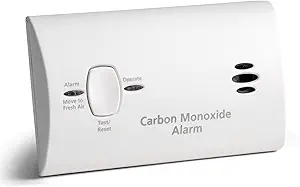 |
| Most Popular A crowd favorite that many people choose with confidence | Kidde CO Detector COB |  |
TOPTES CT-913 Carbon Monoxide Detector

| Power Source | Battery Powered |
|---|---|
| Alarm | Audible, Visual, Vibration |
| Detection Range | 0–1000 PPM |
The TOPTES CT-913 is a rechargeable portable CO detector designed for travel, inspection, and light professional use. It measures 0 to 1000 ppm and displays real-time readings on a TFT color screen alongside a trend graph, which makes it easy to spot rising CO levels over time. The unit uses an upgraded UK DDS electrochemical sensor for faster response and includes customizable alarm thresholds with audible, visual, and vibration alerts so you can notice danger even in noisy environments. A 4000 mAh battery delivers more than 60 hours between charges and charges via USB-C, reducing downtime on trips or job sites. The compact ABS housing and included storage case make it convenient to carry in an RV, boat, or toolbox. Limitations are typical of handheld analyzers: it is a single-gas CO monitor without multi-gas sensing and professional users needing lab-grade calibration protocols may want a dedicated calibration service beyond the built-in zero function. For travelers and inspectors who need clear, portable CO readings, the CT-913 balances accuracy, runtime, and convenience.
Best for: Travelers, RV and boat owners, and field inspectors who prioritize fast, portable CO readings and long battery life for on-the-go monitoring and short-term site checks.
Less Ideal for: Users who need a multi-gas safety monitor or a calibrated laboratory instrument for formal testing and regulatory compliance should consider other specialized equipment.
- Wide 0–1000 ppm measurement range with real-time numeric and trend-graph display
- Triple alarm system (audible, visual, vibration) for reliable alerts in varied environments
- Long runtime from a 4000 mAh rechargeable battery with USB-C charging
- Upgraded UK DDS electrochemical sensor for faster response to CO changes
- Single-gas CO detector without combustible gas or multi-gas capability
- Not intended as a lab-grade analyzer; professional calibration beyond onboard zero may be required for some inspections
Verdict: For travel and field checks where quick, clear CO readings and long battery life matter, the CT-913 is a capable portable monitor that balances responsiveness and runtime.
HEIMAN C1-S CO Detector

| Power Source | Battery Powered |
|---|---|
| Sensor Type | Electrochemical |
| Alarm | Audible/Visual |
| Battery Average Life | 10 years |
| Operating Humidity | 5%-95% relative humidity |
The HEIMAN C1-S is a small, standalone CO detector designed for straightforward, low-maintenance protection. It uses a FIGARO electrochemical sensor to detect carbon monoxide and alerts with an 85 dB audible alarm plus an LED visual indicator; a single Test/Silence button makes checks and temporary muting simple. Because it runs on a long-life lithium battery rated for 10 years, you do not need to worry about frequent battery changes or nightly chirps, which is useful when placing it in secondary spaces or while traveling. The compact, flame-retardant ABS+PC housing and included mounting hardware let you wall- or ceiling-mount the unit or set it on a tabletop. Practical limitations include the lack of smart app connectivity or hardwire options and a basic feature set aimed at reliable detection rather than advanced monitoring. For buyers wanting a no-fuss, legally compliant detector with long battery life, this unit delivers straightforward protection in a small package.
Best for: Buyers prioritizing low-maintenance, reliable CO protection who need a compact, travel-friendly unit they can mount or set up quickly without wiring or ongoing battery chores.
Less Ideal for: Users who want smart monitoring, app alerts, or hardwired interconnectivity for whole-home systems should consider different models with those capabilities.
- FIGARO electrochemical sensor for accurate CO detection
- 10-year long-life lithium battery reduces maintenance
- Compact, flame-retardant ABS+PC housing suitable for mounting or tabletop use
- Loud 85 dB alarm plus LED for clear audible and visual alerts
- One-touch Test/Silence button for easy checks and temporary silencing
- No smartphone app or remote monitoring features
- Not hardwired or interconnected with other alarms
Verdict: A compact, travel-friendly CO detector that delivers dependable, low-maintenance protection thanks to a FIGARO sensor and a 10-year battery.
First Alert CO400 Carbon Monoxide Alarm

| Power Source | Battery Powered |
|---|---|
| Alarm | Audible (85 dB) |
| Sensor Type | Electrochemical |
| Operating Humidity | 10-95% RH |
The First Alert CO400 is a simple, battery-operated carbon monoxide (CO) alarm that puts reliable sensing into a compact, no-frills package. It uses an electrochemical sensor—the most accurate consumer sensor type—to monitor CO and sounds an 85 dB horn when dangerous levels are detected. Powered by a single 9V battery, the unit runs during power outages and can be placed on a bedside table or mounted using the included bracket, so it is easy to use while traveling or in temporary housing. The test/silence button makes checks straightforward and an end-of-life chirp and low-battery alerts remove guesswork about maintenance. Key practical limits are its fixed five-year sensor life and lack of digital readout or wireless connectivity, so you get basic alarm-only protection rather than continuous numeric monitoring or smartphone alerts. For travelers or budget buyers who want a small, dependable CO alarm they can take on trips, this unit covers the essentials without complexity.
Best for: Travelers or budget-minded buyers who need a compact, fuss-free CO alarm to carry between temporary lodging and small living spaces and prefer straightforward, audible protection.
Less Ideal for: Users who want continuous numeric CO readings, smart-home integration, or long-term monitoring with remote alerts should consider more feature-rich detectors.
- Electrochemical sensor for accurate CO detection.
- Battery powered with included 9V battery allows use during power outages and while traveling.
- Loud 85 dB alarm easy to hear in sleeping areas.
- Simple test/silence button and audible/visual low-battery notifications.
- Optional wall mount and compact form factor for portable placement.
- No digital CO concentration display or numeric readings.
- No wireless connectivity or app integration for remote alerts.
- Sensor has a fixed service life of up to five years requiring replacement afterward.
Verdict: A compact, battery-powered CO alarm that delivers accurate, portable protection for travelers and budget-conscious buyers who want simple, reliable audible alerts.
Kidde Carbon Monoxide Detector KN-COB-LP2
| Power Source | 2 AA batteries |
|---|---|
| Alarm | 85 dB audible |
| Operating Humidity | 10 to 95% relative humidity (RH), non-condensing |
| Product Style | 3rd Edition |
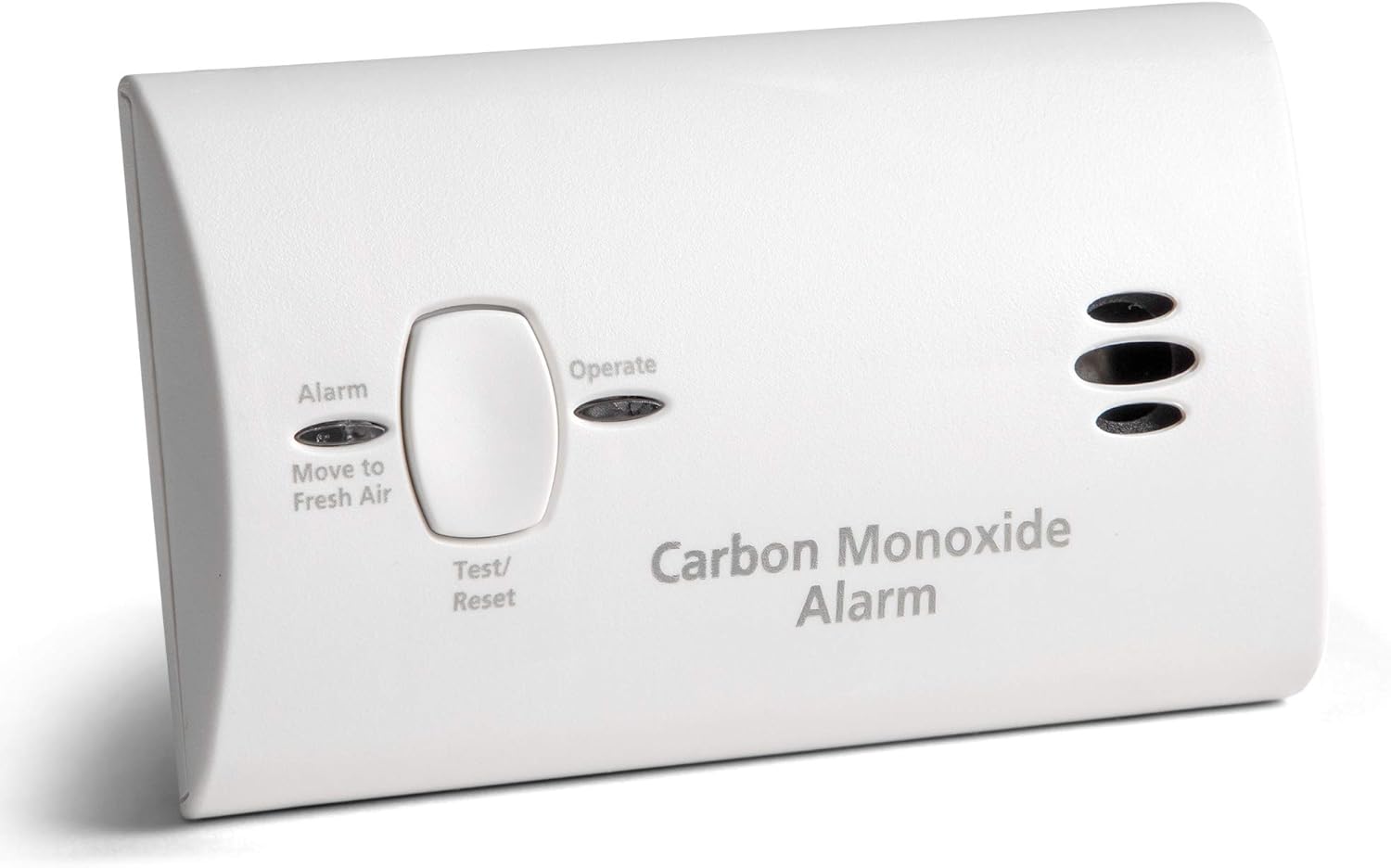
This Kidde unit is a simple, travel-friendly CO detector that runs on two AA batteries and uses electrochemical sensing to detect carbon monoxide. It is small enough to sit on a tabletop or be mounted on a wall, so you can move it between rooms or pack it for a trip. A green LED shows power status while a red LED flashes when CO is detected, and an 85 dB alarm provides a loud audible warning. The test-reset button and low-battery hush let you verify operation and silence nuisance chirps temporarily, and the unit records the last detected event for basic incident tracking. Because it is battery powered with no wiring required, it continues to protect during power outages and is straightforward to install and operate. The device is focused on core detection rather than smart features, so it lacks wireless alerts, a numeric readout, or integrated smoke sensing, which may matter if you want more digital detail or integration with other alarms.
Best for: Buyers who prioritize dependable, easy-to-use CO protection for short-term stays or moving between locations and who value straightforward battery operation over smart features.
Less Ideal for: People who want real-time numeric CO concentration, app notifications, or multi-sensor integration should consider models with displays or wireless features instead.
- Portable battery operation for use in hotels or different rooms
- Electrochemical sensor technology for reliable CO detection
- 85 dB audible alarm and flashing red LED for clear alerts
- Simple test/reset and hush functions for easy maintenance and silencing
- Event memory records the last detection or test event
- No digital CO reading or numeric display to see concentration levels
- No wireless connectivity or home integration for remote alerts
Verdict: A compact, battery-powered CO detector built for reliable, no-fuss protection when traveling or for portable home use.
Kidde CO Detector COB

| Power Source | Battery Powered |
|---|---|
| Alarm | Audible, Visual |
| Sensor Type | Electrochemical |
| Operating Humidity | 10 to 95% Relative Humidity, Non-Condensing |
| Upper Temperature Rating | 100 °F |
The Kidde COB is a compact, AA battery-powered carbon monoxide detector intended for portable and household protection. It uses an electrochemical sensor to monitor CO levels and sounds a loud 85 dB alarm while also showing status with colored LED lights, and a Test/Hush button makes brief silencing or checks straightforward. You can wall-mount it or set it on a tabletop, and the included AA batteries let it keep working during power outages and make it easy to pack for trips. The unit meets UL 2034 5th Edition requirements and is ETL listed, giving reassurance about its testing and safety standards. Limitations to note are that it is not approved for RV or boat use and it does not include smart features or a built-in display of CO concentration, so you get alerting rather than numeric readings or remote monitoring.
Best for: Buyers who prioritize tested, portable CO protection and want a simple, travel-ready detector they can trust without needing app features.
Less Ideal for: Those who need remote monitoring, numeric CO readings, or a unit approved specifically for RVs or boats should look at other options.
- Electrochemical sensor for reliable CO detection
- Loud 85 dB alarm plus LED status lights for clear alerts
- Battery-powered with included AA batteries for use during outages and travel
- Wall-mount or tabletop placement for flexible installation
- Meets UL 2034 5th Edition and is ETL listed for tested safety
- No numeric CO concentration readout or smart connectivity
- Not approved for RV or boat use
Verdict: A compact, tested, battery-powered CO detector that delivers dependable audible and visual alerts for travelers and home users who want straightforward protection.
Choosing the Right Travel Carbon Monoxide Detector: Key Factors to Consider
Sensor Response Time
How quickly a detector senses rising carbon monoxide levels affects how much warning you get in a dangerous situation. Faster response time can mean earlier evacuation, which is critical in enclosed sleeping spaces. When evaluating travel detectors, look for units with clearly stated response characteristics or certifications that indicate prompt detection.
Response time also interacts with sensor type and placement. Portable units are often placed on a bedside surface or hung near the sleeping area, so sensors that react quickly at low concentrations give you more time to act if CO levels begin to climb.
Battery Life And Power Options
Travel detectors should offer reliable power without requiring specialized tools or frequent replacement. Long battery life reduces the chance the detector is dead when you need it, and readily available battery types or built-in rechargeable batteries simplify maintenance on the road.
Consider whether the unit allows you to test battery condition easily and whether it has low-battery warnings that are loud and unmistakable. For multi-night trips, rechargeable detectors with USB charging can be convenient, while units using common disposable batteries may be better for longer trips without charging access.
Portability And Mounting
Size, weight, and carrying options matter for a travel device. A compact detector that fits in a carry-on or day pack is more likely to accompany you. Look for lightweight designs with protective cases, clips, or hanging loops to position the device near the sleeping area.
Mounting versatility is also important. Some units stand on surfaces, attach to headboards, or hang from nails or hooks. A detector that can be placed at the recommended height relative to sleeping occupants and stay secure improves both detection reliability and convenience.
Alarm Loudness And Visual Indicators
An alarm must be audible above background noise in hotel rooms, hostels, or campgrounds. Loudness matters, but so do clear visual indicators for hearing-impaired users or noisy environments. Look for devices with high-decibel alarms and bright LEDs or display readouts that show concentration levels or status.
Also consider how the alarm sounds and whether it is distinct from other common alarms. Intelligible, unmistakable signals reduce confusion during an emergency and increase the chance everyone in the room recognizes the hazard quickly.
Durability And Build Quality
Travel gear endures movement, packing, and occasional bumps. A detector built from robust materials with a secure battery compartment and protected sensor port will last longer and provide consistent performance. Water resistance is not typically expected, but a solid enclosure that resists dust and light impacts helps.
Inspect whether the device ships with a protective pouch or case and whether buttons and switches have a tactile, positive feel. Durable construction reduces false alarms caused by damage and ensures the unit is ready when you need it.
User Interface And Testing Features
Simple controls and a dedicated test function let you confirm the detector works before you settle in. A visible test button, clear status indicators, and concise user instructions are essential for travelers who may use the device infrequently.
Additional useful features include self-test schedules, auto-check diagnostics, and clear labeling of status lights. These elements improve confidence that the detector is functioning correctly throughout your trip.
Where To Place A Travel Carbon Monoxide Detector
Placement affects how quickly a detector will sense hazardous CO levels. In most sleeping scenarios, position the unit at or slightly above head height on a nightstand, shelf, or wall hook near where people sleep. Avoid placing it directly against curtains, inside closed cabinets, or behind bulky pillows where airflow is restricted.
For rooms with multiple sleeping areas, place the detector centrally or, when possible, keep a detector in each sleeping space. In RVs or camper vans, mount the unit near sleeping platforms but away from cooking appliances to avoid frequent nuisance alerts from transient cooking fumes.
- Keep the detector within hearing range of sleeping occupants.
- Avoid placing the device directly next to open windows or vents that could dilute concentrations.
- Do not block the sensor vents with luggage or bedding.
Understanding Sensor Lifespan And Replacement
Carbon monoxide sensors degrade over time and often have a published service life. For travel detectors, confirm the expected operational lifespan and whether the sensor or entire unit is replaceable. Some compact detectors are designed as sealed units with a multi-year lifespan, while others allow sensor module replacement.
Track the installation or purchase date and heed end-of-life indicators. Even if a detector still powers on, a sensor past its service life may detect more slowly or less reliably, so timely replacement or rotation is critical for ongoing safety.
- Check the manufacturer's stated sensor life before buying.
- Make a note of the purchase date and set a reminder for replacement.
- Prefer units that provide an explicit end-of-life warning.
Travel-Friendly Features That Save Time
Small conveniences can make a big difference when packing and using a detector on the go. Look for fold-flat designs, integrated clips or straps, and simple charging via USB. A travel case or pouch prevents the sensor openings from being clogged by lint in your bag.
Other helpful features include a visible battery indicator, a one-button test, and a silence or hush function for brief, non-dangerous nuisance alarms. These features keep the device ready and reduce hassle during short stays.
- USB charging reduces the need to carry spare batteries.
- A dedicated test button simplifies pre-sleep checks.
- A hush function can temporarily mute non-hazardous alerts for maintenance or transient fumes.
Interpreting Alarm Levels And What To Do
Carbon monoxide alarms may indicate varying concentrations using steady or pulsed tones and display values in parts per million. Learn what the alarm thresholds mean and have an action plan. Any unexpected alarm when people are present should be treated seriously: ventilate the area, turn off potential combustion sources, and move outdoors to fresh air.
If symptoms of CO poisoning occur, such as headache, dizziness, nausea, or confusion, seek fresh air immediately and get medical attention. Do not assume low-level beeps are false; the detector is indicating a potential hazard and should be addressed promptly.
- Treat every alarm as an immediate safety event.
- Open windows and doors to ventilate and leave the space.
- If symptoms appear, seek medical help without delay.
Maintaining And Testing Your Detector On The Road
Make a habit of testing the detector each time you set it up in a new location. A quick test confirms battery condition and alarm audibility. Keep spare batteries or a charging cable in your luggage so the detector is always ready.
Clean dust from the sensor openings with compressed air or a soft brush and avoid using cleaning solvents. Store the detector in a protective pouch when not in use to prevent accidental activation or damage.
- Perform a test on arrival and nightly if staying several nights.
- Bring spare power options based on the unit's requirements.
- Inspect the sensor openings and remove debris gently.
How We Chose the Best Travel Carbon Monoxide Detector
We selected travel carbon monoxide detectors using criteria that reflect how people actually use them on the road. First, sensor responsiveness and detection accuracy were prioritized because quick, reliable alerts are essential in unfamiliar sleeping spaces. Second, power and battery options were evaluated to favor models that work with common travel constraints, including long battery life and easy battery replacement or rechargeable operation. Third, portability and mounting options were considered so the detector can fit in luggage and be placed properly in hotel rooms, rentals, or RVs. Fourth, audible and visual alert clarity was checked to ensure alarms are noticeable above ambient noise and in dim conditions. Finally, ease of use and setup matter for travelers who need a straightforward experience without extra equipment. We excluded full-home, wired hardwired models that are impractical for travel and units that lack independent battery operation. We also filtered out designs with unclear sensor specifications or missing basic safety certifications. The result is a list of compact, self-contained detectors that emphasize fast CO detection, dependable power, and simple operation.
Our full evaluation process is outlined in our review methodology.
FAQ
Do travel carbon monoxide detectors need special batteries?
Not usually. Many travel detectors use common disposable batteries or built-in rechargeable packs. Choose a unit with battery types you can easily replace or recharge while traveling.
Can a travel detector be used in an RV or camper?
Yes. Portable detectors work in RVs and campers, but place them away from cooking appliances to reduce nuisance alerts and follow placement guidance for sleeping areas.
How often should I test a travel carbon monoxide detector?
Test the detector each time you set it up in a new location and perform periodic tests on extended stays. Regular testing confirms battery status and alarm audibility.
Will airport security allow carrying a travel CO detector in carry-on luggage?
Policies vary by airport, but compact CO detectors are typically allowed in carry-on baggage. Check local travel and airline rules if you have concerns about battery types or devices.
How long do the sensors in travel detectors last?
Sensor lifespan varies by model and chemistry, often ranging from three to ten years. Look for a stated service life and end-of-life indicator to know when replacement is needed.
Final Verdict
When choosing a travel carbon monoxide detector, prioritize fast sensor response, dependable power options, and an alarm that is loud and clear in sleeping environments. Portability and simple mounting make it more likely you will carry the device and position it effectively. Balance sensor lifespan and maintenance needs against your travel frequency so the detector remains reliable. Ultimately, choose a compact, easy-to-use unit with transparent specifications for detection and power. That approach ensures you have timely alerts and practical readiness during trips.