
Note: This article contains affiliate links. If you click on these links and make a purchase, we may earn a small commission at no extra cost to you. This helps support our research and content. Read our full affiliate disclosure here.
If you are starting to roast green coffee at home, the right coffee roaster for beginners makes learning efficient and enjoyable. New roasters vary in how much control they give you, how easy they are to clean, and how consistent their results are from batch to batch. This guide covers seven shortlisted roasters that are well suited to entry-level users, focusing on features that flatten the learning curve and help you dial in flavor faster. We evaluate practicality, roast reliability, safety, and upkeep so you can choose a machine that matches your time, space, and taste goals.
Top Picks at a Glance
| Best Overall The best all-around choice for most situations | Fresh Roast SR540 Coffee Roaster | 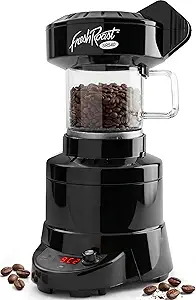 |
| Best Quality Built to a higher standard if you want something more solid | MAGO MAGA Roma Pro Coffee Roaster |  |
| Best Value The sweet spot between price and what you get | ZEVELOO 750g Coffee Roaster |  |
| Best Budget The cheapest option that still gets the job done reliably | Kllkmmws Coffee Roaster 500g |  |
| Top Rated A top-rated pick with lots of positive feedback | Nuvo Eco Ceramic Handy Roaster |  |
| Most Popular A crowd favorite that many people choose with confidence | Fresh Roast SR800 Coffee Roaster |  |
| Best Seller A high-volume bestseller chosen again and again | JIAWANSHUN Home Coffee Roaster FBA066 |  |
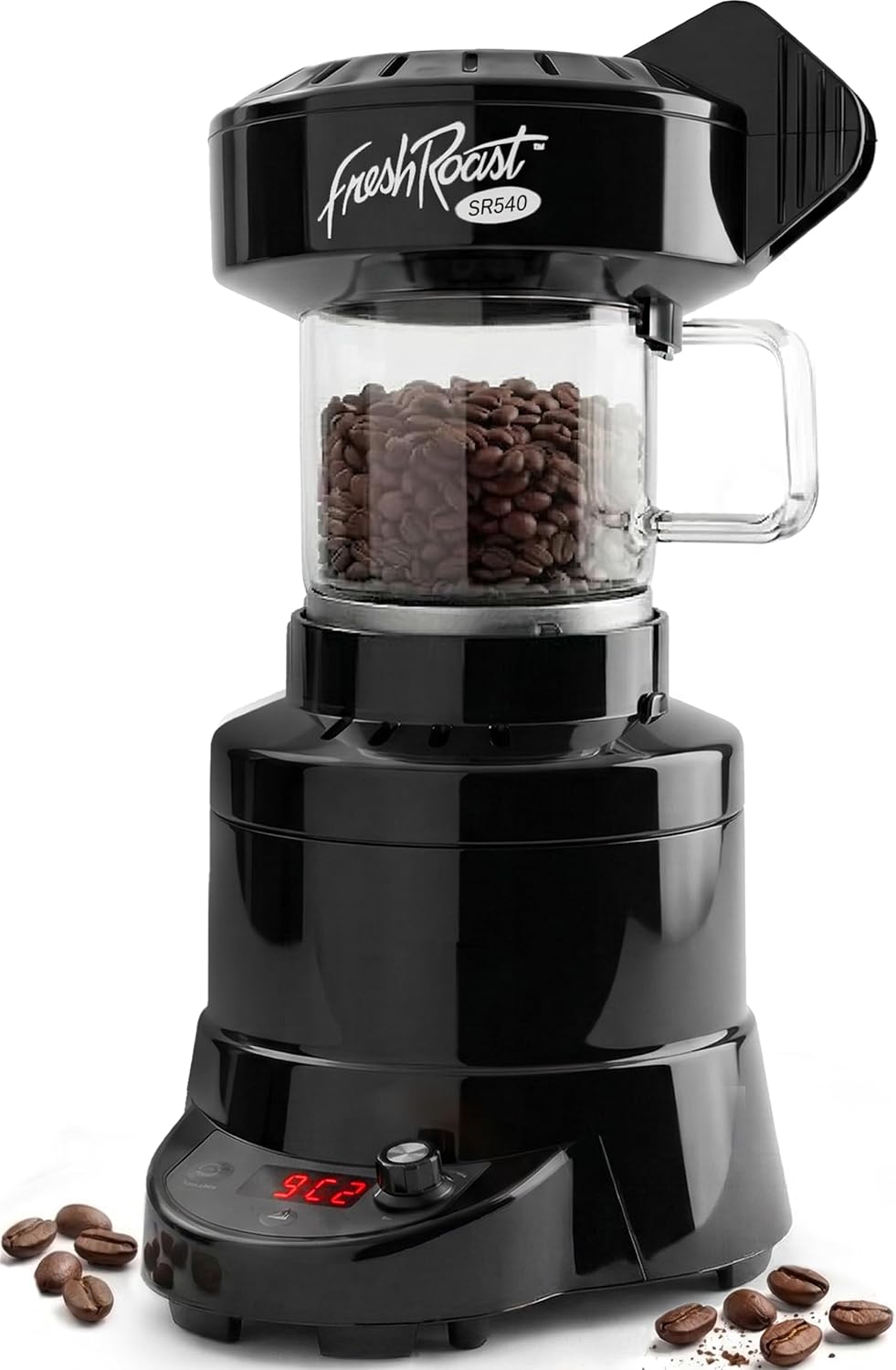
Fresh Roast SR540 Coffee Roaster
| Model Number | SR540 |
|---|---|
| Included Components | Chaff Basket, Glass Roasting Chamber |
| Item Form | Whole Bean |
| Unit Count | 1 Count |
The Fresh Roast SR540 is a small, countertop coffee roaster designed for home users who want to roast 3–4 oz (roughly 1 scoop) batches of green beans quickly. It uses a glass roasting chamber so you can watch color changes and a push-turn knob to adjust nine heat levels, nine fan speeds, and a timer while showing real-time temperature. Typical use is straightforward: load the beans, set heat and fan, roast in under 10 minutes, then let the integrated cooling cycle bring beans down. Notable features include the speed-roast system for fast, even roasts, a removable chaff basket, and a compact footprint that fits most kitchens. Practical benefits are daily-fresh small batches, easy visual monitoring, and granular control for learning roast profiles. Limitations are the small batch capacity that is not suited to brewing for larger households or batching for storage, and the learning curve if you want consistent results across roasts since it relies on manual adjustments rather than preset programs.
Best for: Home brewers who want to learn roasting and make daily small-batch fresh coffee with hands-on control and visual feedback.
Less Ideal for: People who need to roast large quantities at once or who prefer fully automated, preset roasting programs for consistent results without manual tweaking.
- Clear glass chamber for visual roast monitoring
- Nine heat and nine fan speed settings for fine-grained control
- Fast small-batch roast cycle—typically under 10 minutes
- Includes chaff basket and glass roasting chamber for easy cleanup
- Small roast capacity not suitable for large households or batch storage
- Manual controls require experimentation to dial in repeatable profiles
Verdict: Choose the SR540 if you want an affordable, hands-on small-batch roaster that lets beginners learn roasting fast with visual monitoring and detailed manual control.
MAGO MAGA Roma Pro Coffee Roaster

| Capacity | 0.3 kg |
|---|---|
| Coffee Input Type | green coffee beans |
| Power Source | AC adapter |
| Filter Type | Reusable |
The Roma Pro is a compact hot-air home coffee roaster designed to give hobbyists consistent, small-batch roasts. You load up to 300 g of green beans into the bean bin, choose auto mode for a guided roast or switch to manual mode to adjust temperature and timing, then watch progress through the double-layer glass window and digital display. The unit uses a chaff collector and claims ultra-low smoke, and an auto-cooling cycle helps stop development quickly when the roast finishes. Practical benefits include easy repeatable results from the preset auto profiles, hands-on control for dialing in roast curves, and a visible roast chamber so you can learn roast color changes in real time. Important limitations are its 300 g capacity, which is suitable for home use but slow for larger batches, and that it is a roaster only, not a brewer, so you will need separate equipment to brew the beans. Noise and exact temperature stability will vary with manual use, so expect a short learning curve if you prioritize precise microprofiles.
Best for: Home coffee enthusiasts who want to learn roasting and graduate from preset profiles to manual control, focusing on taste development and repeatable small-batch results.
Less Ideal for: Those who need to roast large volumes quickly, want an all-in-one brewer/roaster, or prefer a purely hands-off subscription-style coffee solution.
- Auto and manual roast modes for both beginners and experienced hobbyists
- Digital display with Celsius/Fahrenheit switch for clear monitoring
- Transparent double-layer window lets you observe roast development in real time
- Auto-cooling and chaff collection reduce carryover and help preserve flavor
- 300 g batch size limits output for larger households or frequent roasting
- Designed only to roast green beans so a separate grinder and brewer are required
Verdict: Choose the Roma Pro if you want a beginner-friendly hot-air roaster that also offers manual control for learning and improving your home roast profiles.
ZEVELOO 750g Coffee Roaster

| Capacity | 1.7 pounds |
|---|---|
| Operation Mode | Fully Automatic |
| Wattage | 800 watts |
| Voltage | 110 volts |
This ZEVELOO roaster is a straightforward, semi-pro style machine aimed at home users who want to roast batches of beans without complicated setup. It accepts whole beans, heats via an internal element with adjustable temperatures up to 240°C, and uses a stirring rod plus a transparent lid so you can watch color changes during the roast. The 750g capacity lets you roast larger batches, though the manual suggests 300–500g for best flavor, and the Teflon-coated honeycomb pan and reusable filter make cleanup easier. Programmable controls, an auto-clean function, and a fully automatic operation mode simplify repeatable roasts for beginners learning profiles. Limits to consider are the stated difference between set temperature and actual bean temperature — a probe thermometer is recommended for precise control — and the unit material choices (Teflon surface) that some users may prefer to avoid. Expect a learning curve to dial in roast times and temperatures, but the visibility, stirring, and programmable settings make this a practical first roaster for committed beginners.
Best for: Home coffee enthusiasts who want to learn roasting fundamentals and run consistent medium-to-large batches with minimal fuss and visible process control.
Less Ideal for: Users seeking laboratory-grade temperature accuracy or those who prefer non-coated metal roast chambers should consider more advanced or different-material roasters.
- Large 750g capacity suitable for batch roasting or sharing samples
- Adjustable temperature control up to 240°C for varied roast profiles
- Transparent lid and stirring rod let you monitor and ensure even roasting
- Programmable and fully automatic operation simplifies repeatable roasts
- Teflon honeycomb pan and reusable filter make cleanup easier
- Set temperature may not reflect bean temperature so separate probe recommended
- Teflon-coated interior may be a concern for users preferring metal or ceramic surfaces
Verdict: If you want a practical, entry-level roaster that handles larger home batches and makes visible, repeatable roasts easy, this ZEVELOO 750g unit is a solid choice.
Kllkmmws Coffee Roaster 500g

| Power | 800W |
|---|---|
| Voltage | 110V |
| Capacity | 500g/1.1lbs |
| Adjustable Temperature Range | 0-240°C |
This small tabletop coffee roaster is designed for home users and beginners who want to roast small batches of beans. It uses an 800W corded heating element and a honeycomb-style pot bottom to promote even heating, and a visible glass lid with ventilation holes lets you watch color and aroma development during roasting. Temperature is adjustable from 0 to 240°C so you can experiment with roast profiles, and the 500 g (1.1 lb) capacity is large enough for multiple home batches. The unit is portable with side handles and is made from PP and glass, so it is lightweight and easy to move but not heavy-duty for continuous commercial use. Practical limits include a manual stirring requirement for best results and uneven roasting if batches are under about 0.66 lb, so small test batches may need extra care. For a beginner the machine makes it straightforward to learn how temperature and time affect flavor, but expect a learning curve to consistently produce even roasts.
Best for: Beginners and hobbyists on a budget who want a simple, hands-on roaster to learn how temperature and roast time affect coffee flavor.
Less Ideal for: Users who need a heavy-duty or fully automated commercial roaster or who want large continuous throughput.
- Adjustable temperature up to 240°C for experimenting with roast profiles
- 500 g capacity suits multiple home batches
- Glass lid with ventilation holes allows visual monitoring of roast color and aroma
- Honeycomb pot bottom promotes more even heating during roasting
- Made of polypropylene and glass so it is not built for heavy commercial use
- Batches under about 0.66 lb may roast unevenly, requiring careful manual attention
Verdict: An affordable, beginner-friendly electric roaster that lets you experiment with roast profiles at home without a big upfront investment.
Nuvo Eco Ceramic Handy Roaster

| Material Type | Ceramic, Cowhide |
|---|---|
| Capacity | 70 g |
| Model Number | NV-1CHR |
The Nuvo Eco Ceramic Handy Roaster is a compact, 100% ceramic pan with a waffle-shaped interior meant for evenly roasting small batches of green coffee beans. You roast by hand over heat while turning the beans; the waffle texture and rear vent aim to promote uniform heat exposure and let you hear bean cracking during the roast. Its all-ceramic construction resists direct flame heat and avoids metallic flavors, and the cowhide grip gives a comfortable hold while rotating or shaking the roaster. Capacity is best around 30 g for consistent results, though it can hold up to 70 g if you need slightly larger tiny batches. Because it is manual, consistent technique and attention are required; it does not include a thermometer, stirring mechanism, or insulation, and roast times will vary with your heat source and skill. For beginners who want a reliable, simple way to learn roast profiles and hear first and second crack, this roaster provides a low-tech, durable platform without electronics or moving parts.
Best for: Buyers who prioritize a simple, durable tool to learn home roasting fundamentals and prefer a low-tech, reliable device they can control manually.
Less Ideal for: People who need to roast larger quantities regularly or who want automated temperature control and hands-off operation.
- All-ceramic body reduces risk of metallic flavors and tolerates direct heat
- Waffle-shaped interior promotes more even bean movement and heat exposure
- Compact size is suitable for learning roast technique with small batches
- Rear vent allows you to hear bean cracking for better roast timing
- Very small batch capacity limits throughput for regular coffee drinkers
- Manual operation requires close attention and practice to achieve consistent roasts
Verdict: A sturdy, all-ceramic handheld roaster that is ideal for beginners who want a reliable, low-tech way to learn small-batch coffee roasting.
Fresh Roast SR800 Coffee Roaster

| Roast capacity | 6–8 oz (170–226 g) |
|---|---|
| Heat settings | 9 levels |
| Fan settings | 9 levels |
| Roast time | Under 10 minutes |
The Fresh Roast SR800 is a countertop coffee roaster aimed at home users who want to roast small batches quickly and with control. You load up to 6–8 ounces of green beans into the clear roasting chamber, set heat and fan across nine levels using the single push-turn knob, and watch the beans darken while a real-time temperature display reports progress. Typical roasts finish in under 10 minutes and the unit includes an automatic cool-down stage and chaff capture to simplify cleanup. The SR800 is useful for beginners because the controls are simple and visible feedback from the glass chamber makes it easy to learn roast colors and timing, while experienced hobbyists will appreciate the nine power and fan settings for experimenting. Limitations are its small batch size — it is designed for household quantities rather than batch or commercial use — and it requires attention during roasting to hit consistent profiles. For at-home hobby roasting where quick results and hands-on learning matter, the SR800 is a practical choice.
Best for: Buyers who want an affordable, hands-on way to learn and practice home coffee roasting in small batches and who value visible controls and quick roasts.
Less Ideal for: People needing large-volume roasting or a fully automated, hands-off commercial system should look elsewhere.
- Clear glass chamber provides visible feedback for learning roast stages
- Nine heat and nine fan levels let you fine-tune roast profiles
- Real-time temperature display helps track roast progress
- Fast roast cycle completes typical small-batch roasts in under 10 minutes
- Small 6–8 oz capacity limits output to household batches
- Requires hands-on monitoring to achieve repeatable results
Verdict: If you want a simple, visible, and adjustable machine to learn home coffee roasting in small batches, the SR800 delivers quick, controllable roasts ideal for beginners.
JIAWANSHUN Home Coffee Roaster FBA066
| Capacity | 1.1 lb (500g recommended per batch) |
|---|---|
| Wattage | 1200 |
| Voltage | 120 volts |
| Temperature range | 100–240℃ |
| Special features | Timer, Temperature Adjustment, Easy to Clean |
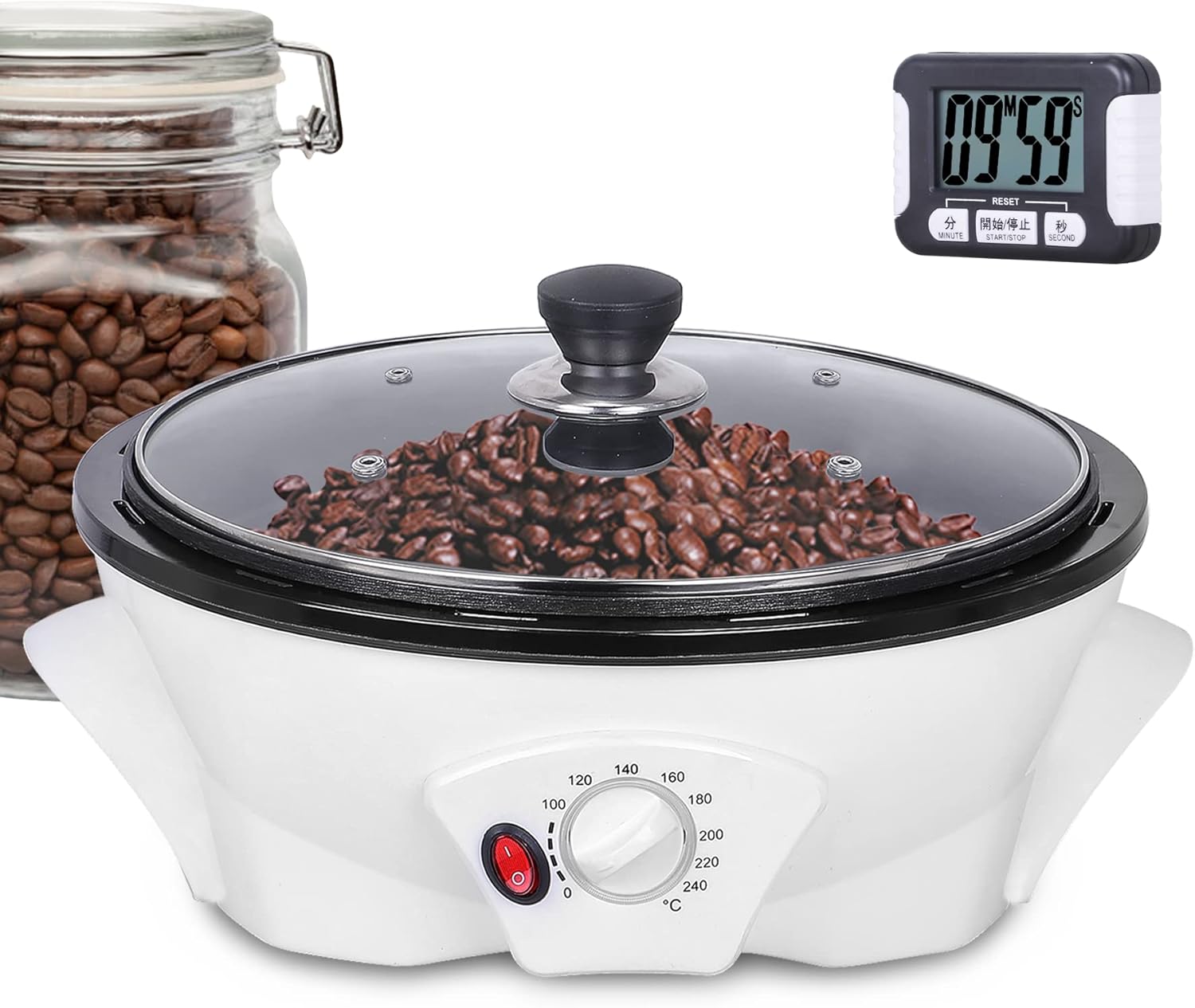
This JIAWANSHUN electric roaster is a simple, beginner-friendly machine for roasting small batches of coffee beans at home. It offers 100–240°C temperature control, a timer, and an automatic stirring rod so beans rotate and heat more evenly during a roast. The clear glass lid and ventilation holes let you watch color development, and the nonstick honeycomb interior wipes clean with a damp cloth. The unit is fairly powerful at 1200W, which shortens roast time and makes it practical for home use, and the manufacturer recommends 300–500g per batch for the most even results. Practical limitations include a mechanical stirring rod that can jam if very small or defective beans are left in the mix and a modest capacity for households that want larger batches. For a cautious beginner this model is easy to operate and gives direct control over roast degree, though users who need larger scale roasting or fully automated profile logging will want a different class of machine.
Best for: A cautious beginner who wants direct control over roast degree and an easy, low-risk way to learn home roasting one small batch at a time.
Less Ideal for: Experienced roasters who need larger batch capacity, programmable roast profiling, or automated logging should look at more advanced or commercial machines.
- Adjustable temperature range (100–240°C) for light to dark roasts
- Built-in timer and one-key operation simplify use for beginners
- Automatic stirring rod promotes more even roasting
- Transparent glass lid lets you monitor progress during a roast
- Nonstick honeycomb interior is easy to wipe clean
- Stirring rod can jam if very small or defective beans are not removed before roasting
- Capacity and recommended batch size are modest for users who want larger volumes
Verdict: If you want a straightforward, controllable home roaster to learn roasting basics and produce small fresh batches, this JIAWANSHUN model is an easy, low-risk choice.
Choosing the Right Coffee Roaster for Beginners: Key Factors to Consider
Batch Size and Footprint
Batch size determines how much roasted coffee you get per cycle and affects how quickly you can iterate on roast profiles. Smaller batches let beginners practice more frequently without wasting beans, but tiny capacities may not meet the needs of someone who wants daily larger-volume brewing. Consider where the roaster will live. A compact footprint fits on most kitchen counters but may limit airflow and cooling features. Match the machine's capacity to how often you plan to roast and the amount of storage you have for green beans and roasted coffee.
Control Options and Feedback
Control options range from single-knob presets to fully manual temperature and air adjustments. For beginners, intuitive, labeled controls and visible feedback are more useful than raw precision. Look for clear indicators of roast stage, audible cues or timers, and simple ways to adjust heat or airflow mid-roast. Machines that offer data logging or connection to apps can accelerate learning, but they are not required if the unit provides reliable analog feedback like temperature readouts or consistent color changes.
Roast Consistency and Evenness
Even heat distribution keeps beans roasting uniformly and reduces the risk of under- or over-developed flavor pockets. Drum design, airflow, and agitation method all contribute to evenness. Consistent performance across batches gives beginners a stable baseline to evaluate changes in time, temperature, and bean origin. When testing options, consider whether the roaster produces repeatable results with the same settings and whether small adjustments produce predictable changes to the roast profile.
Ease of Cleaning and Maintenance
Routine cleaning affects both flavor and longevity. Oils and chaff build up quickly, and machines that are difficult to disassemble will discourage regular maintenance. For beginners, removable chaff trays, accessible interiors, and simple brush or vacuum access are high-value features. Also consider replacement parts and whether common wear items are easy to source. A roaster that is easy to clean reduces downtime between sessions and helps preserve consistent flavor over time.
Safety Features and Ventilation Needs
Roasting generates heat, smoke, and chaff, so safety features and clear ventilation guidance matter. Automatic shutoff, cool-touch exteriors, and secure bean access points lower the risk of burns or accidental fires. Understand the ventilation needs for your space: some roasters work fine on a turned-on kitchen hood while others require a dedicated venting approach. For apartment users, lower-smoke designs and integrated chaff capture systems are particularly important to avoid smoke alarms and indoor odor buildup.
Learning Resources and Community Support
A roaster backed by clear documentation and active user communities makes the learning curve shorter. Good manuals, step-by-step roast profiles, and accessible troubleshooting tips help beginners avoid common mistakes. Online forums, local roasting groups, or educational videos that focus on the model or similar designs are useful resources. Because roasting is partly a craft, the availability of recipes and peer feedback can be as important as technical features when you are starting out.
Introductory Roast Profiles to Try
When you first start, use simple, repeatable profiles to learn how time and heat affect flavor. A basic three-stage profile with a controlled warm-up, a development phase around first crack, and a short cool-down is a good starting point.
Track one variable at a time. For example, keep your time-to-first-crack consistent while experimenting with development length to understand its impact on acidity, body, and sweetness.
- Sample profile: Warm 3–4 minutes, ramp to first crack at 8–10 minutes, develop 1–2 minutes.
- Note color and aroma at first crack and record roast duration for each batch.
- Cool beans quickly after the desired development to stop the roast and preserve the profile.
Setting Up Your Space
Plan a dedicated spot for roasting that accounts for heat and chaff. Place the roaster on a heat-resistant surface with clear access to ventilation. Keep a small tool kit handy: a heat-resistant glove, a metal cooling tray, and cleaning brushes.
Consider proximity to an extractor hood or an open window. Even low-smoke novice roasters benefit from directed airflow to reduce indoor odor and minimize smoke alarm triggers.
- Protect counters with a heat pad or metal tray.
- Keep flammable materials away and maintain a small clear zone around the machine.
- Store green beans in sealed containers away from light and heat.
Common Beginner Mistakes and How to Avoid Them
Rushing the roast by using too much heat is a frequent error that causes uneven development and smoky or ashy flavors. Start with gentler heat and longer development windows to gain control.
Neglecting cleanup leads to off-flavors and mechanical problems. Empty the chaff collector after each session and wipe accessible surfaces weekly to prevent buildup.
- Avoid overcrowding the roast chamber; follow the manufacturer capacity guidelines.
- Make single-variable changes between roasts to isolate effects.
- Allow the roaster to reach thermal stability before adding beans for more repeatable results.
How Roast Degree Affects Brewing
Roast level influences acidity, body, and perceived sweetness. Lighter roasts preserve origin character and acidity, while darker roasts yield more body and roasted notes. Match roast degree to your preferred brewing method.
For filter brewing, many beginners prefer medium roasts to balance clarity and sweetness. For espresso, slightly darker profiles can help with crema and body, though grind and extraction also play major roles.
- Lighter roasts: brighter acidity, more origin clarity.
- Medium roasts: balanced acidity and body, versatile across brew methods.
- Darker roasts: heavier body and roast-derived flavors, may mask origin nuances.
Scaling Your Setup Over Time
As your skills improve, you may want a larger capacity or additional control features. Consider whether the unit supports modular upgrades, spare parts, or accessories like better cooling trays or roast logging tools.
Think about storage for more green beans and where you will perform larger batches. Upgrading may mean accepting different maintenance needs, so weigh the tradeoffs before moving away from a compact beginner unit.
- Test small batches first to refine profiles before increasing batch size.
- Look for roasters with upgrade paths or widely available parts.
- Evaluate whether your ventilation and cleanup routine can handle more frequent or larger roasts.
How We Chose the Best Coffee Roaster for Beginners
We selected roasters that prioritize approachable controls and predictable results for first-time home roasters. Our editorial filters favored machines with clear temperature or time controls, consistent air and drum circulation, and safety features that reduce the chance of user error. Portability and footprint were considered because many beginners roast in small kitchens or apartments. We also looked for designs that make post-roast cleanup straightforward to minimize maintenance barriers to frequent practice. Excluded items included industrial or commercial-grade equipment, complex research-focused lab roasters, and appliances that require professional installation or specialized ventilation. The final picks were judged on roast consistency across multiple small batches, clarity and responsiveness of user controls, build quality relative to typical hobby use, and the overall time and effort required to roast, cool, and clean. We prioritized features that help a beginner learn repeatable roast profiles without steep technical overhead.
Our full evaluation process is outlined in our review methodology.
FAQ
How often should a beginner roast to improve skill?
Often. Regular, small-batch practice helps you understand how changes in time and heat affect flavor. A few short sessions per week is usually enough to build repeatable techniques without wasting beans.
Do beginner roasters need an external exhaust system?
It depends. Many entry-level roasters work with normal kitchen ventilation, but some produce enough smoke and chaff that a hood or open window is recommended. Check the machine's ventilation guidance and your living situation before roasting indoors.
What maintenance is required after each roast?
At minimum, empty the chaff collector and let the unit cool. Weekly cleaning of accessible surfaces and occasional deeper cleaning of airflow paths helps prevent smoke and off-flavors. Follow the manufacturer's maintenance schedule for longer-term care.
Can I roast for espresso with a beginner machine?
Usually. Many beginner roasters can reach roast degrees suitable for espresso, but extraction also depends on grind, dose, and espresso equipment. Aim for consistent, repeatable profiles rather than chasing very dark roasts on a small machine.
How important is bean freshness for home roasting?
Very important. Green bean quality and storage directly affect resulting flavor and roast behavior. Store green beans in cool, dark, airtight containers and use consistent lots when practicing to get reliable comparisons.
Final Verdict
Prioritize repeatability, ease of use, and manageable cleanup when choosing a coffee roaster for beginners. A machine that delivers consistent heat distribution and clear feedback will shorten the learning curve and make it easier to refine profiles. Balance batch size and footprint with your kitchen space and roasting frequency, and pick a roaster that matches your tolerance for maintenance and ventilation needs. With a stable platform and focused practice, you can progress quickly and choose upgrades based on the specific gaps you identify in capacity or control.