
Note: This article contains affiliate links. If you click on these links and make a purchase, we may earn a small commission at no extra cost to you. This helps support our research and content. Read our full affiliate disclosure here.
If you make carrot juice regularly, the right cold press juicer makes a noticeable difference in yield, texture, and nutrient retention. Carrots are fibrous and dense, so centrifugal machines often leave usable juice in the pulp and produce a foamy texture. A dedicated cold press juicer extracts juice more gently, producing clearer, higher-yield batches with less heat and oxidation. This guide covers the top shortlisted cold press juicers for carrots and explains the practical tradeoffs that matter for regular carrot juicing. We evaluated extraction efficiency, ease of cleaning, feed and chopping needs, and durability to help you pick the best option for your routine. Read on for what to expect and how to choose the right model for your kitchen and juicing habits.
Top Picks at a Glance
| Best Overall The best all-around choice for most situations | Ninja NeverClog Cold Press Juicer JC151 |  |
| Best Quality Built to a higher standard if you want something more solid | Hurom H330 Slow Juicer |  |
| Best Value The sweet spot between price and what you get | TUUMIIST Cold Press Juicer TM-580SJ |  |
| Best Budget The cheapest option that still gets the job done reliably | NEWBULIG Cold Press Juicer |  |
| Top Rated A top-rated pick with lots of positive feedback | NAMA J2 Cold Press Juicer |  |
| Most Popular A crowd favorite that many people choose with confidence | Jocuu Slow Masticating Juicer |  |
| Best Seller A high-volume bestseller chosen again and again | EanOruus 3-in-1 Cold Press Juicer E-18 |  |
Ninja NeverClog Cold Press Juicer JC151

| Maximum Power | 150 watts |
|---|---|
| Number of Speeds | 2 |
| Capacity | 24 fluid ounces |
| Power Source | Corded Electric |
The Ninja NeverClog JC151 is a slow masticating juicer designed to process fibrous produce like carrots, celery, and leafy greens with minimal clogging. Its 150-watt high-torque auger runs at low speed to cold-press juice, which helps preserve nutrients and reduce foam, and the two interchangeable pulp filters let you choose between smoother juice or thicker, fiber-forward results. The larger 24 oz juice jug and 36 oz pulp container make it easier to prepare multiple servings or larger batches for meal prep. One-touch controls with a reverse function simplify operation when tougher pieces threaten to jam, and the anti-drip lever helps avoid messes while pouring. Most juice-contact parts are dishwasher safe and the unit is designed for straightforward assembly and cleanup. Limitations include a modest 150W motor versus heavy-duty commercial models and a relatively compact footprint that may require cutting large produce into smaller pieces before feeding, but for home users focused on carrot and green juices it offers strong extraction and easy maintenance.
Best for: Home cooks who want reliable cold-pressed juice from carrots and leafy greens with easy pulp control and batch capacity for weekly prep.
Less Ideal for: Those needing a heavy-duty, commercial-capacity juicer for constant large-volume use or professional settings should consider a higher-powered model.
- High-torque 150W auger extracts juice from fibrous vegetables like carrots and kale effectively
- Two interchangeable pulp filters allow control over juice texture
- Large 24 oz juice jug and 36 oz pulp container support batch juicing
- Reverse function and NeverClog design reduce jams and improve continuous operation
- Most juice-contact parts are dishwasher safe for easier cleanup
- 150W motor is less powerful than commercial-grade masticating juicers
- May require chopping large produce into smaller pieces before juicing
Verdict: A user-friendly cold-press juicer that handles carrots and other fibrous produce well while offering easy pulp control and batch-friendly capacity for home use.
Hurom H330 Slow Juicer

| Capacity | 2 liters |
|---|---|
| Auger Speed | 50 RPM |
| Power Source | Corded Electric |
| Material | Plastic |
| Blade Material | Stainless Steel |
The Hurom H330 is a cold-press masticating juicer built for batch juicing of whole fruits and vegetables without a lot of prep. Its self-feeding 2-liter hopper accepts whole apples, carrots, celery, and leafy greens so you can load several pounds, press start, and walk away while the single auger runs at 50 RPM to gently squeeze juice with minimal heat and foam. The unit includes fine and coarse strainers for low-pulp or fuller-texture juices and can be used to make nut milk and frozen-fruit sorbets with the right attachments. Practical benefits are high nutrient retention and extended fridge life for juice, quiet operation suitable for early mornings, quick disassembly for hand washing, and safety shut-off if the hopper is opened. The H330 is relatively heavy and meant to sit on a counter, and most parts are hand-wash only, so cleaning still requires a bit of effort compared with dishwasher-safe models. It offers solid yield and gentle extraction that is especially good for fibrous produce like carrots, making it a reliable choice for regular juicers who prioritize performance.
Best for: Buyers who want maximum juice yield and nutrient preservation from carrots and other whole produce and who value a self-feeding, low-speed extractor for regular batch juicing.
Less Ideal for: Those who need a lightweight, travel-friendly juicer or prefer fully dishwasher-safe parts and ultra-simple daily cleanup should consider other options.
- Large 2-liter self-feeding hopper accepts whole produce to batch juice without pre-cutting
- Slow 50 RPM auger preserves nutrients and reduces heat and oxidation
- Includes fine and coarse strainers for control over pulp level
- Quiet motor and safety shut-off make it convenient for early-morning use
- Quick-disassembly removable parts speed up hand-cleaning
- Most parts require hand washing rather than dishwasher-safe cleaning
- Heavier countertop footprint and weight limit portability
Verdict: Choose the Hurom H330 if you want a high-performance, self-feeding cold-press juicer that maximizes carrot juice yield and nutrient retention for regular batch use.
TUUMIIST Cold Press Juicer TM-580SJ
| Maximum Power | 300 watts |
|---|---|
| Wattage | 300 |
| Power Source | AC |
| Voltage | 120 volts_of_alternating_current |
| Number of Speeds | 55 |
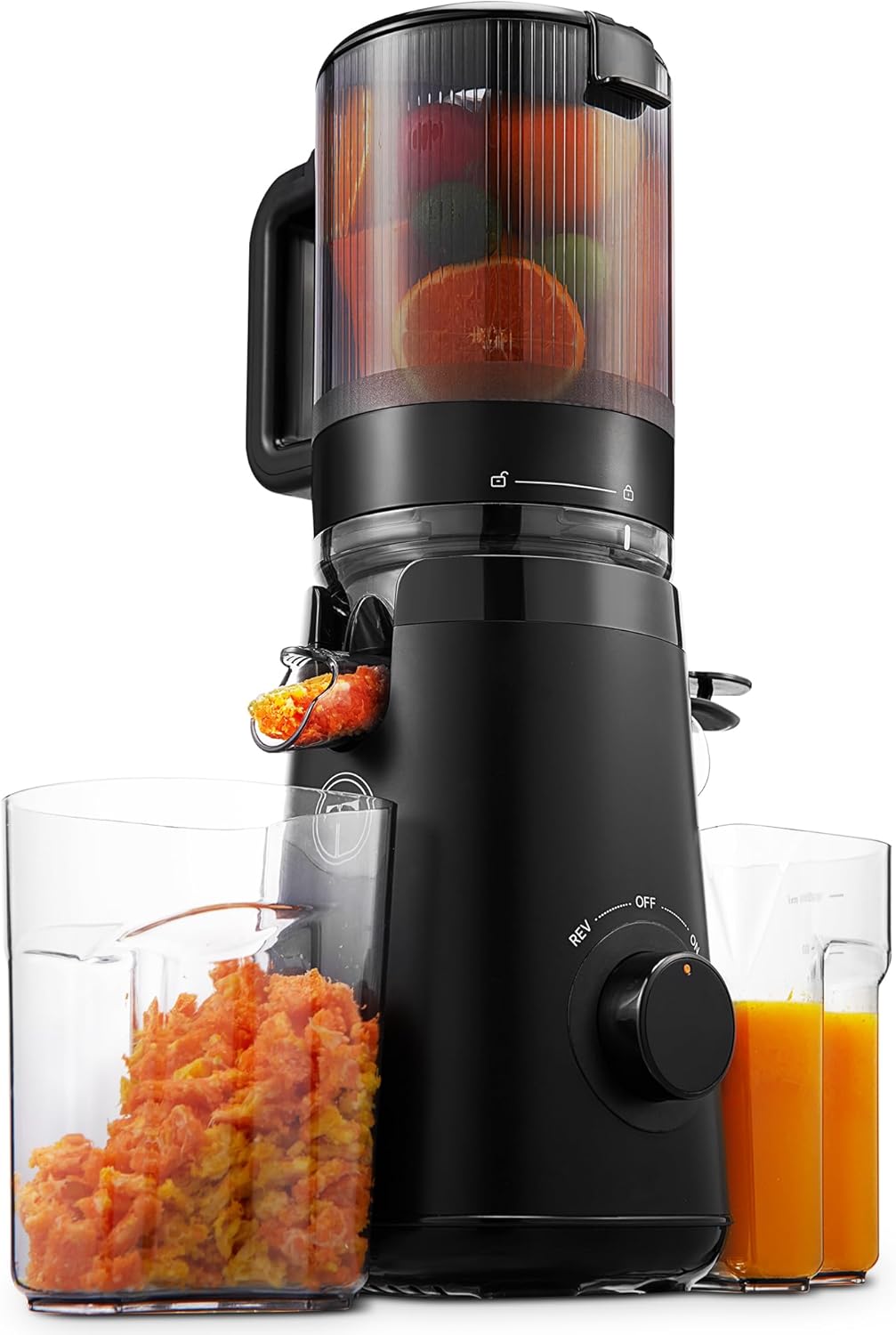
The TUUMIIST TM-580SJ is a masticating cold press juicer built to extract high yields from whole fruits and vegetables without extensive prep. It uses a 55 RPM single auger and 300-watt motor to slowly crush produce, which helps preserve nutrients and produces less foam than high-speed centrifugal machines. The 5.8-inch extra-large feed chute takes larger pieces and sometimes whole carrots, cutting prep time, and the no-mesh-filter design promises straightforward pulp separation and easier cleaning. Included accessories like a cleaning brush, juice cup, and pulp cup make routine use simpler, and many parts are dishwasher-safe to speed cleanup. Limitations include a modest 300-watt motor that may process very hard produce more slowly than higher-power models and a predominantly plastic ABS construction that favors lightweight handling over heavy-duty durability. For carrot-centric juicing you get good juice yield and nutrient retention, but expect slower throughput on very dense batches.
Best for: Buyers who want efficient, nutrient-focused juicing with minimal prep and easy cleanup and who prioritize juice yield and simplicity over high throughput speed.
Less Ideal for: Users who need very high-capacity commercial-style juicing or the fastest processing of large batches of hard produce should consider more powerful, commercial-grade machines.
- Large 5.8-inch feed chute reduces prep by fitting large pieces and some whole carrots
- Low-speed 55 RPM extraction maximizes juice yield and preserves nutrients
- No-mesh-filter design and included cleaning brush simplify cleaning
- Dishwasher-safe components and simple one-piece assembly speed routine maintenance
- 300-watt motor can be slower with large volumes of very hard produce
- Mostly ABS plastic construction may feel less durable than metal-bodied juicers
Verdict: A practical, low-speed cold press juicer that minimizes prep for carrots and other produce while maximizing juice yield and nutrient retention.
NEWBULIG Cold Press Juicer
| Wattage | 200 watts |
|---|---|
| Voltage | 120 volts |
| Special Features | Easy to Clean, Masticating, Quiet Motor, Safety Lock |
| Included Components | Fruit residue cup, Juice cup, Power supply base |
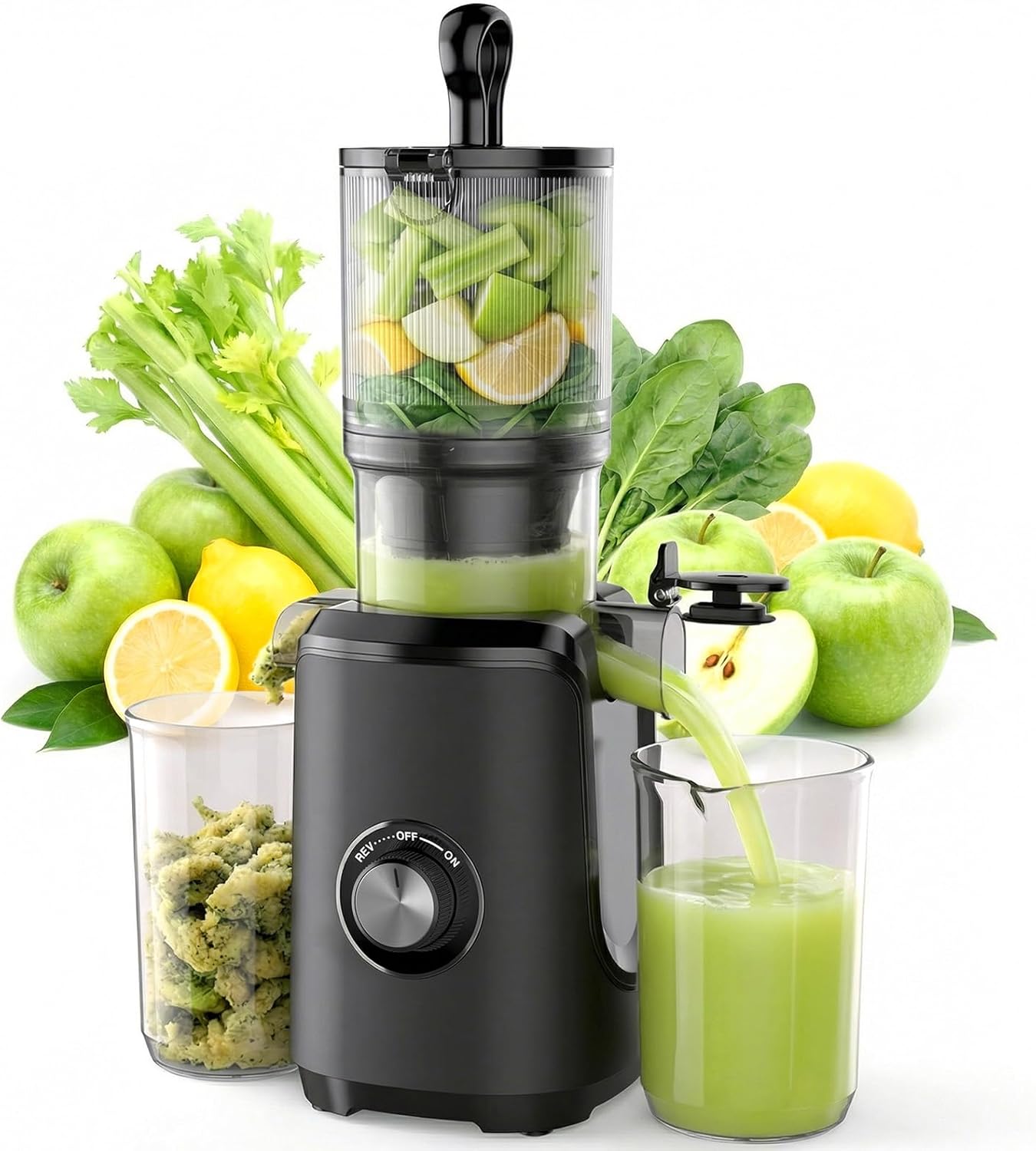
The NEWBULIG Cold Press Juicer is a single-auger masticating machine built for everyday home juicing, especially handy for carrots and other whole vegetables. It uses a low-speed, quiet 200-watt motor to crush and press produce, which reduces heat and oxidation so juice retains more nutrients and a fresher taste. A 4.25-inch feed chute lets you fit whole carrots with minimal prep, and the reverse function clears clogs quickly without disassembly. Parts detach easily for hand washing and the package includes a cleaning brush and juice/pulp cups, while an automatic safety lock stops operation when opened. Practical limitations are its hand-wash care instructions and modest motor power compared with high-end models, so very large commercial batches will be slower. For budget buyers you get useful features—wide chute, reverse, and quieter operation—packed into a compact, kid-safe design.
Best for: Buyers looking for an affordable cold-press juicer that handles whole carrots with minimal prep and prioritizes nutrient-rich, quiet home juicing.
Less Ideal for: Anyone needing a commercial-speed juicer or frequent high-volume juicing for large households or events should consider a higher-power machine.
- 4.25-inch feed chute accepts whole carrots and reduces prep time
- Reverse function clears jams quickly without taking the unit apart
- Low-speed masticating action reduces oxidation for better nutrient retention
- Detachable parts and included cleaning brush make maintenance straightforward
- Safety lock and blade-free design improve home safety around kids
- Requires hand washing; not fully dishwasher-safe
- 200-watt motor is modest, so juicing very large volumes takes longer
Verdict: A budget-friendly cold press juicer that accepts whole carrots and offers nutrient-preserving slow juicing with practical anti-clog and easy-clean features.
NAMA J2 Cold Press Juicer

| Maximum Power | 200 watts |
|---|---|
| Power Source | Corded Electric |
| Voltage | 120 |
| Number of Speeds | 1 |
| Capacity | 30 fluid ounces |
The NAMA J2 is a slow, single-auger cold press juicer built for hands-free batch juicing of fruits and vegetables, including hard produce like carrots. Its self-feeding wide-mouth hopper lets you load a whole recipe and walk away while the 200 W motor spins at a low speed to minimize heat and oxidation, which helps preserve nutrients and flavor. The unit includes an auger, coarse strainer, juice and pulp containers, and a cleaning brush, and many parts are quick-release for straightforward rinsing and light scrubbing. In practice the J2 yields more juice with less pulp than centrifugal models and runs quietly during operation, making it suitable for regular kitchen use. Important limitations: it has a single speed so you cannot fine-tune extraction for delicate ingredients, and parts are hand-wash only which adds a bit of cleanup time compared with dishwasher-safe alternatives. The J2 is solidly engineered for daily juicing where yield and nutrient preservation matter most.
Best for: Buyers who prioritize consistent, reliable cold-press extraction and want a hands-free machine that produces higher yields from carrots and other hard vegetables without fuss.
Less Ideal for: Users who need adjustable speed control for custom extraction profiles or those who prefer fully dishwasher-safe parts for faster cleanup.
- Self-feeding wide-mouth hopper for hands-free batch juicing
- Cold-press single-auger design preserves nutrients and increases juice yield
- Quiet 200 W motor operating at low RPM for gentle extraction
- Includes necessary accessories and a cleaning brush for maintenance
- Stainless steel and Tritan components designed for durable use
- Only one speed available so no extraction adjustments for different produce
- Parts require hand washing rather than dishwasher-safe cleaning
Verdict: Choose the NAMA J2 when you want a dependable, hands-free cold press juicer that maximizes yield from carrots while protecting nutrients.
Jocuu Slow Masticating Juicer

| Wattage | 150 watts |
|---|---|
| Number of Speeds | 2 |
| Power Source | Corded Electric |
| Special Features | Auto-Reversing, Portable |
| Product Care Instructions | Dishwasher Safe |
The Jocuu Slow Masticating Juicer is a single-auger cold-press machine designed to extract juice from fibrous produce like carrots with minimal oxidation. It uses a low-speed spiral auger and two speed settings for soft or hard produce, plus an auto-reverse to clear jams and a motor protection chip that auto-shuts off after extended runs. Typical use is straightforward: feed chunked carrots and other vegetables through the chute on the hard setting for maximum yield, then disassemble the plastic parts for quick cleaning or pop them in the dishwasher. At 150 watts it runs relatively quietly and the included brush and reverse function reduce clogging during long juicing sessions. Limitations are its smaller feeding chute and modest capacity, so you will spend more time prepping and juicing for larger batches, and the plastic housing means it is lighter duty than some pricier metal-bodied models. For carrot juice specifically it delivers high-purity pulp separation and consistent extraction but is best suited to daily or occasional home use rather than heavy commercial workloads.
Best for: Buyers who want a reliable cold-press juicer for home use and prioritize quiet operation, easy cleaning, and features that reduce clogging when juicing carrots and other fibrous vegetables.
Less Ideal for: People who need to juice very large quantities frequently or require a heavy-duty, commercial-grade machine should consider higher-capacity, metal-bodied models instead.
- Two-speed spiral auger handles soft and hard produce for better carrot extraction
- Auto-reverse and motor protection reduce clogging and protect the motor
- Dishwasher-safe detachable parts and included brush make cleaning easier
- Quiet operation suitable for home kitchens
- Smaller feeder chute and modest capacity require more prep for large carrot batches
- Predominantly plastic construction feels less durable than metal-bodied machines
Verdict: A cost-conscious, quiet cold-press juicer that delivers good carrot juice yield and easy cleanup for regular home use.
EanOruus 3-in-1 Cold Press Juicer E-18

| Maximum Power | 250 watts |
|---|---|
| Power Source | ac |
| Voltage | 110 volts |
| Capacity | 100 fluid ounces |
The EanOruus E-18 is a single-auger masticating juicer aimed at heavy household use and meal preppers. It accepts whole fruit and vegetables through a 6.5-inch extra-wide chute and feeds them into a slow-turning auger to extract juice, produce creamy nut milk or make frozen fruit sorbet using interchangeable strainers. The 250 W AC motor is designed for steady, high-torque performance and includes auto-reverse and overheat protection to handle fibrous produce like carrots without stalling. Its very large 100 oz hopper reduces how often you refill during batch juicing, and most removable parts are hand-washable for cleaning. Expect quieter operation than centrifugal models and better nutrient retention from slow extraction, but the unit is relatively heavy and requires hand cleaning of parts rather than dishwasher convenience. The plastic auger and polycarbonate components keep cost down but may feel less premium than metal alternatives.
Best for: Buyers who prioritize reliable, low-noise cold pressing for frequent batch juicing and want a forgiving machine that handles fibrous produce like carrots with minimal clogging.
Less Ideal for: Users who need lightweight, compact machines for occasional single servings or who want fully dishwasher-safe parts should consider smaller centrifugal options or models with dishwasher-safe components.
- Extra-wide 6.5-inch chute accepts whole fruits and large vegetables to minimize prep time
- Large 100 oz hopper for batching multiple servings without frequent refills
- 250 W AC motor with auto-reverse and overheat protection handles fibrous produce reliably
- Versatile 3-in-1 design supports juice, nut milk and sorbet with interchangeable strainers
- Quieter masticating operation preserves nutrients and reduces kitchen noise
- Removable parts are hand wash only, no dishwasher-safe convenience
- Auger and blade components are plastic rather than metal, which may affect long-term durability
Verdict: Choose this juicer if you want a quiet, high-capacity cold press that handles carrots and other fibrous produce with reliable, batch-friendly performance.
Choosing the Right Cold Press Juicer for Carrots: Key Factors to Consider
Juice Yield and Nutrient Retention
How much liquid a juicer extracts from carrots is the most direct measure of efficiency. Cold press designs squeeze produce slowly, reducing heat and oxidation and often producing a higher yield versus fast-spinning alternatives.
Higher yield means fewer whole carrots needed per glass and less wasted pulp. For frequent carrot juicing, prioritize machines that demonstrate consistent extraction of liquid with minimal moisture left in the pulp to improve both cost-effectiveness and nutritional value.
Pulp Dryness and Fiber Separation
Pulp dryness indicates how thoroughly the machine separates juice from fibrous material. With carrots, well-separated pulp should be compact and dry rather than wet and pulpy.
A drier pulp signals efficient extraction and produces clearer juice with less sediment. Good fiber separation also reduces clogging and improves the taste and texture of carrot juice, which is naturally thick and can be gritty if not processed properly.
Ease of Cleaning and Maintenance
Frequent juicing demands a machine that is simple to disassemble, rinse, and reassemble. Complex assemblies, tiny screens, or hard-to-reach crevices can make cleaning a chore and discourage daily use.
Look for straightforward tool-free disassembly, dishwasher-safe components where appropriate, and a minimal number of parts. Maintenance matters too; seals, gaskets, and augers should be easy to inspect and replace to keep the unit hygienic and functioning over time.
Feed Opening and Prepping Needs
Carrots are long and sometimes thick, so the size and shape of the feed chute influence how much prep you must do. A wider or taller feed opening accepts longer carrots and reduces chopping time.
If a machine requires extensive pre-cutting, that adds prep time and may be less convenient for daily users. Conversely, a compact feed can still work if the unit offers a high-efficiency auger, but be realistic about how much prepping you are willing to do.
Motor Strength and Durability
A juicer's motor and auger design determine how well it handles dense roots without stalling or overheating. Consistent torque at low speeds is essential for cold press operation and for preventing jams when processing fibrous carrots.
Robust internal components and good thermal protection improve longevity. Consider how often you expect to use the machine and choose one built for that workload to avoid premature wear or motor strain.
Noise, Footprint, and Countertop Fit
Home kitchens vary in space and noise sensitivity. Cold press juicers are typically quieter than centrifugal models, but designs differ. If you juice early in the morning, lower noise helps household routines.
Also assess the appliance footprint and storage options. A compact unit or one with a vertical design may fit better in smaller kitchens. Balance storage and counter presence against performance needs so the machine is convenient to keep and use regularly.
Preparing Carrots for Cold Press Juicing
Proper preparation improves consistency and reduces strain on the juicer. Wash carrots thoroughly to remove dirt, and trim the tops. If the feed opening is narrow, cut carrots into lengths that fit comfortably without forcing them.
Peeling is optional. For organic carrots, leaving the skin can add nutrients. For conventionally grown carrots, you may prefer to peel to reduce exposure to residues. Hard, woody cores on older carrots can be halved to improve extraction and protect the auger.
- Trim greens and wash to remove soil
- Cut to feed-chute length if required
- Optional peeling for conventional produce
- Halve very thick carrots to avoid jamming
How to Increase Yield When Juicing Carrots
Use firm, fresh carrots for maximum liquid and sweetness. Softer or older carrots may yield less juice and produce wetter pulp. Alternating carrots with a softer produce like apple or cucumber can help flush the auger and extract residual juice.
Slow, steady feeding avoids air pockets and improves extraction. Do not overload the hopper or force large pieces. Let the machine work through dense sections before adding more produce.
- Choose firm, fresh carrots
- Alternate with softer produce to flush the system
- Feed in steady, consistent streams
Cleaning Tips to Speed Up Turnaround
Rinse parts immediately after use to prevent pulp from drying in crevices. Soak stubborn screens briefly in warm water to loosen trapped fibers. Use a small brush to clear mesh or auger grooves before a final rinse.
Plan a quick teardown routine: remove the pulp container, auger, and screen first, then rinse the chassis without immersing electrical components. Regular light cleaning prevents buildup that otherwise requires deeper scrubbing later.
- Rinse immediately after juicing
- Soak and brush screens to remove trapped fiber
- Avoid immersing the motor base
Common Problems When Juicing Carrots and How to Fix Them
Clogging and jamming are the most common issues. If the auger stalls, stop the machine and clear any compacted pulp. Cutting overly thick carrots into smaller pieces and feeding more slowly typically prevents repeats.
Wet or foamy juice often results from insufficient pulp separation. Running the machine longer or letting juice settle before drinking can reduce foam. If pulp remains very wet, the unit may be underpowered for heavy carrot loads and benefit from a different extraction design.
- Clear jams promptly and feed more slowly
- Cut very thick carrots to reduce load
- Allow juice to settle to lower foam
Storage and Shelf Life of Fresh Carrot Juice
Fresh carrot juice is best consumed soon after juicing for maximum flavor and nutrient value. If you need to store it, refrigerate in an airtight container and consume within 24 to 48 hours. Cold press juices resist oxidation better than hot or high-speed extractions, but they still degrade over time.
Leave a little headspace in the container and minimize air contact to preserve color and taste. For longer storage, freezing in small portions is an option, though texture and some nutrient qualities may change after thawing.
- Refrigerate in airtight containers
- Consume within 24 to 48 hours for best quality
- Freeze in portions for extended storage
How We Chose the Best Cold Press Juicer for Carrots
We focused on attributes that directly affect carrot juicing performance and day-to-day usability. Primary evaluation criteria included juice yield and fiber separation, since carrots are dense and the goal is to extract the most liquid with minimal pulp waste. We also assessed ease of cleaning and disassembly because frequent juicing requires quick teardown and rinse-friendly parts. Feed design and pre-cutting requirements matter for carrots, so we checked whether each unit accepts long roots or needs chopping. Durability of the auger and motor was reviewed to ensure long-term performance under hard juicing loads. Finally, noise and countertop footprint were considered for kitchen practicality. Excluded from consideration were features unrelated to carrot extraction, such as specialty citrus attachments or general-purpose blender functions, to keep the list focused. We prioritized units with clear documentation of cold-press operation and those designed for high-fiber vegetables. Our shortlisting favored equipment built for regular carrot use rather than occasional juicing or multi-function appliances.
Our full evaluation process is outlined in our review methodology.
FAQ
Do I need to peel carrots before cold press juicing?
Peeling is optional. For organic carrots, the skin can be left on to retain nutrients. For conventionally grown carrots, peeling reduces potential residue. Either way, wash thoroughly to remove soil.
How often should I clean the juicer when juicing carrots daily?
Rinse parts after each use and do a more thorough clean at least once a day. Immediate rinsing prevents pulp from drying and reduces the need for intensive scrubbing.
Can I juice large carrots whole in a cold press juicer?
That depends on the feed opening. Some models accept long carrots with minimal trimming, while others require cutting to fit. Check the feed design and be prepared to halve very thick roots to avoid jamming.
Why is my carrot juice foamy or pulpy?
Foam and pulp can result from air introduced during feeding or inadequate fiber separation. Try feeding more slowly, alternating with softer produce to flush, and letting the juice settle before serving to reduce foam.
How long does fresh carrot juice last in the fridge?
Cold-pressed carrot juice typically stays best for 24 to 48 hours when stored cold in an airtight container. Flavor and nutrients decline over time, so aim to drink it as soon as practical.
Final Verdict
For regular carrot juicing, prioritize extraction efficiency, drier pulp, and a machine that is quick to clean. Those three factors most directly affect how much juice you get, how pleasant the texture is, and whether you will use the juicer routinely. Consider feed-chute size and motor durability based on how often and how much you plan to juice. Balance countertop fit and noise against performance. If you juice daily, choose a model designed for heavy root-vegetable use and easy maintenance. That way you get steady yields and minimal downtime for cleaning, making fresh carrot juice a simple part of your routine.