
Note: This article contains affiliate links. If you click on these links and make a purchase, we may earn a small commission at no extra cost to you. This helps support our research and content. Read our full affiliate disclosure here.
If you drink celery juice regularly, a machine built for gentle, low-heat extraction makes a noticeable difference in yield, texture, and nutrient retention. A cold press juicer for celery juice compresses fibrous stalks slowly to squeeze out more liquid with less oxidation, giving you smoother juice and better everyday efficiency. This guide covers seven shortlisted cold press juicers chosen for their extraction efficiency, cleaning practicality, and reliability. We describe the features that matter for heavy-fiber vegetables like celery and explain how each pick measures up on the key decision factors buyers care about.
Top Picks at a Glance
| Best Overall The best all-around choice for most situations | Ninja NeverClog Cold Press Juicer JC151 |  |
| Best Quality Built to a higher standard if you want something more solid | Hurom H400 Slow Juicer |  |
| Best Value The sweet spot between price and what you get | VMIXBLE Cold Press Juicer MP-802V |  |
| Best Budget The cheapest option that still gets the job done reliably | Elite Gourmet EJX600 Mini Masticating Juicer |  |
| Top Rated A top-rated pick with lots of positive feedback | anybear Cold Press Juicer SJ054C |  |
| Most Popular A crowd favorite that many people choose with confidence | AAOBOSI Cold Press Juicer JS2401 |  |
| Best Seller A high-volume bestseller chosen again and again | EanOruus 3-in-1 Cold Press Juicer E-18 |  |
Ninja NeverClog Cold Press Juicer JC151

| Maximum Power | 150 watts |
|---|---|
| Number of Speeds | 2 |
| Capacity | 24 fluid ounces |
| Power Source | Corded Electric |
The Ninja NeverClog JC151 is a masticating cold-press juicer built to handle fibrous produce like celery, kale, and carrots using a 150-watt high-torque auger and NeverClog technology. You operate it with two simple one-touch programs and a reverse function to clear jams, while two interchangeable pulp filters let you choose smoother juice or thicker, fiber-rich results. The included 24 oz juice jug and 36 oz pulp container make it convenient for preparing larger servings or multiple glasses at once, and an anti-drip lever helps avoid spills when pausing to pour. Cleanup is straightforward because juice-contact parts are dishwasher safe and the design is easy to disassemble. Because it runs at low speeds to reduce foam and preserve nutrients, extraction takes longer than centrifugal juicers, and the unit is moderately heavy for countertop placement. For users who prioritize steady, high-yield extraction from fibrous ingredients and easy pulp control, this model balances performance and daily convenience without complex settings.
Best for: Buyers who want reliable cold-pressed extraction from fibrous vegetables for daily green or celery juice and who value easy pulp control and larger batch capacity.
Less Ideal for: People who need very fast single-serve juices, a lightweight travel-friendly unit, or the smallest possible countertop footprint should consider other styles.
- High-torque 150W auger handles fibrous produce like celery and kale
- NeverClog design plus reverse function reduces jams and maintains flow
- Two interchangeable pulp filters let you choose less or more pulp
- Larger 24 oz juice jug and 36 oz pulp container for batch juicing
- Dishwasher-safe juice-contact parts for easier cleanup
- Slower extraction speed compared with centrifugal juicers, so juicing takes more time
- Relatively heavy and takes countertop space, which may matter in small kitchens
Verdict: Choose the Ninja JC151 if you want a steady, clog-resistant cold-press juicer that extracts high-yield juice from fibrous ingredients like celery while offering simple pulp control and easy cleanup.
Hurom H400 Slow Juicer

| Capacity | 2 liters |
|---|---|
| Wattage | 240 watts |
| Power Source | Corded Electric |
| Voltage | 120 |
| Number of Speeds | 1 |
The Hurom H400 is a single-auger, masticating cold-press juicer built to extract high-yield, low-pulp juice with minimal preparation. It uses a slow squeeze process and a strainer-free chamber to reduce oxidation and deliver smoother juice that can stay fresher up to 72 hours refrigerated. The large self-feeding hopper accepts whole or larger pieces of produce so you can run apples, celery, and leafy greens with less chopping, and the quiet 90 RPM motor keeps operation unobtrusive in the morning. Cleaning is simplified by the strainer-free design and included brush, though the unit still requires hand washing of parts. At 240 watts it handles dense vegetables like celery and fibrous greens consistently, producing a high-quality, low-foam cup of juice; expect slower throughput than centrifugal machines but noticeably better nutrient retention and yield. The H400 is relatively heavy and takes counter space, and full disassembly is needed for a thorough clean, but for buyers prioritizing juice quality and extraction efficiency it performs very well.
Best for: Buyers who want the highest-quality, nutrient-rich cold-pressed juice—especially for fibrous produce like celery—and who prioritize extraction efficiency and flavor over speed.
Less Ideal for: Users who need very fast single-serve juice on demand or who want a compact, lightweight countertop appliance for occasional use.
- High extraction yield with low pulp for clearer juice
- Self-feeding wide hopper reduces prep and fits larger produce
- Quiet slow-mastication motor suitable for early-morning use
- Strainer-free chamber simplifies cleaning compared with traditional strainers
- Requires hand washing and full disassembly for deep cleaning
- Slower throughput compared with high-speed centrifugal juicers
Verdict: Choose the H400 if your priority is maximum yield and smooth, low-pulp celery juice rather than speed or ultra-light portability.
VMIXBLE Cold Press Juicer MP-802V

| Maximum Power | 300 watts |
|---|---|
| Voltage | 120 volts_of_alternating_current |
| Number of Speeds | 1 |
| Capacity | 100 fluid ounces |
The VMIXBLE MP-802V is a slow masticating juicer built for daily home use and larger batches, with a 5.8-inch feed chute that accepts whole fruits and vegetables and a 300W motor that runs the auger at low speed to reduce heat and oxidation. It is typically used for leafy greens and fibrous produce like celery, carrots, and apples; the wide chute cuts prep time and the single-gear auger plus metal-free filter aim to maximize juice yield while leaving drier pulp. Practical features include a reverse function to clear clogs, safety auto-stop when the lid opens, dishwasher-safe removable parts, and an anti-clog system for smoother operation. The design emphasizes quiet operation and simple three-step assembly so it fits a busy kitchen routine, and the unit includes a pusher, pressing cup, and pulp container for batch juicing. Limitations are a single speed so you cannot adjust pressure for delicate blends, and the plastic construction and plastic blade parts may feel less durable than higher-end commercial units.
Best for: Buyers who want a practical, no-fuss cold press juicer that minimizes prep time and maximizes juice yield for regular home celery and vegetable juicing.
Less Ideal for: Users seeking commercial-grade durability, multiple speed control, or stainless-steel construction should consider higher-end models instead.
- 5.8-inch wide feed chute reduces chopping and speeds prep for large or whole produce
- 300W motor with low-speed auger preserves nutrients and yields more juice from leafy greens
- Reverse function and anti-clog system help clear jams without disassembly
- Most removable parts are dishwasher-safe for faster cleanup
- Only one speed setting limits control for delicate or mixed texture blends
- Plastic construction and components may feel less robust than metal alternatives
Verdict: A practical cold press juicer with a wide feed chute and strong low-speed motor that makes quick, high-yield celery and vegetable juicing easy for everyday home use.
Elite Gourmet EJX600 Mini Masticating Juicer

| Capacity | 16 ounces |
|---|---|
| Wattage | 100 watts |
| Power Source | Corded Electric |
| Number of Speeds | 1 |
The Elite Gourmet EJX600 is a space-saving masticating juicer built for single-serve cold-pressed juice. Its low-speed 70 RPM single-auger design minimizes foam and oxidation, which helps preserve nutrients when juicing leafy greens like celery. The unit includes a 16 oz Tritan juice cup and a small feed chute, so produce must be cut into smaller pieces before feeding; that makes it best for one or two servings rather than large batches. With a 100-watt motor, overload and overheat protection are included for safer operation. The EJX600 disassembles into three removable parts and ships with a cleaning brush, and most removable parts are top-rack dishwasher safe which simplifies cleanup. Practical limits are its small capacity and narrow feed chute, which add prep time for hard produce and prevent continuous high-volume juicing. For buyers who want a compact, nutrient-focused cold press option for occasional celery or green juices, this model delivers reasonable performance for the price point.
Best for: Buyers on a tight budget who want a compact cold-press juicer for occasional single-serve green or celery juices and who prioritize nutrient preservation over high-volume output.
Less Ideal for: People who need to make large quantities, juice frequently for a family, or want a wide feed chute to handle whole fruits and vegetables with minimal prep.
- Low-speed 70 RPM masticating extraction reduces foam and oxidation for smoother, nutrient-rich juice
- Very compact single-serve footprint fits small kitchens and dorms
- Only three removable parts and included cleaning brush make cleanup quick
- BPA-free and Tritan materials with stainless-steel blade for food-safe construction
- Built-in overload and overheat protection enhances motor safety
- Small 3/4" feed chute requires extra chopping and slows prep for hard produce
- 16 oz capacity is not suited for batch juicing or multiple bottles in one run
Verdict: A compact, budget-friendly cold-press juicer that preserves nutrients in single-serve celery and green juices without taking up counter space.
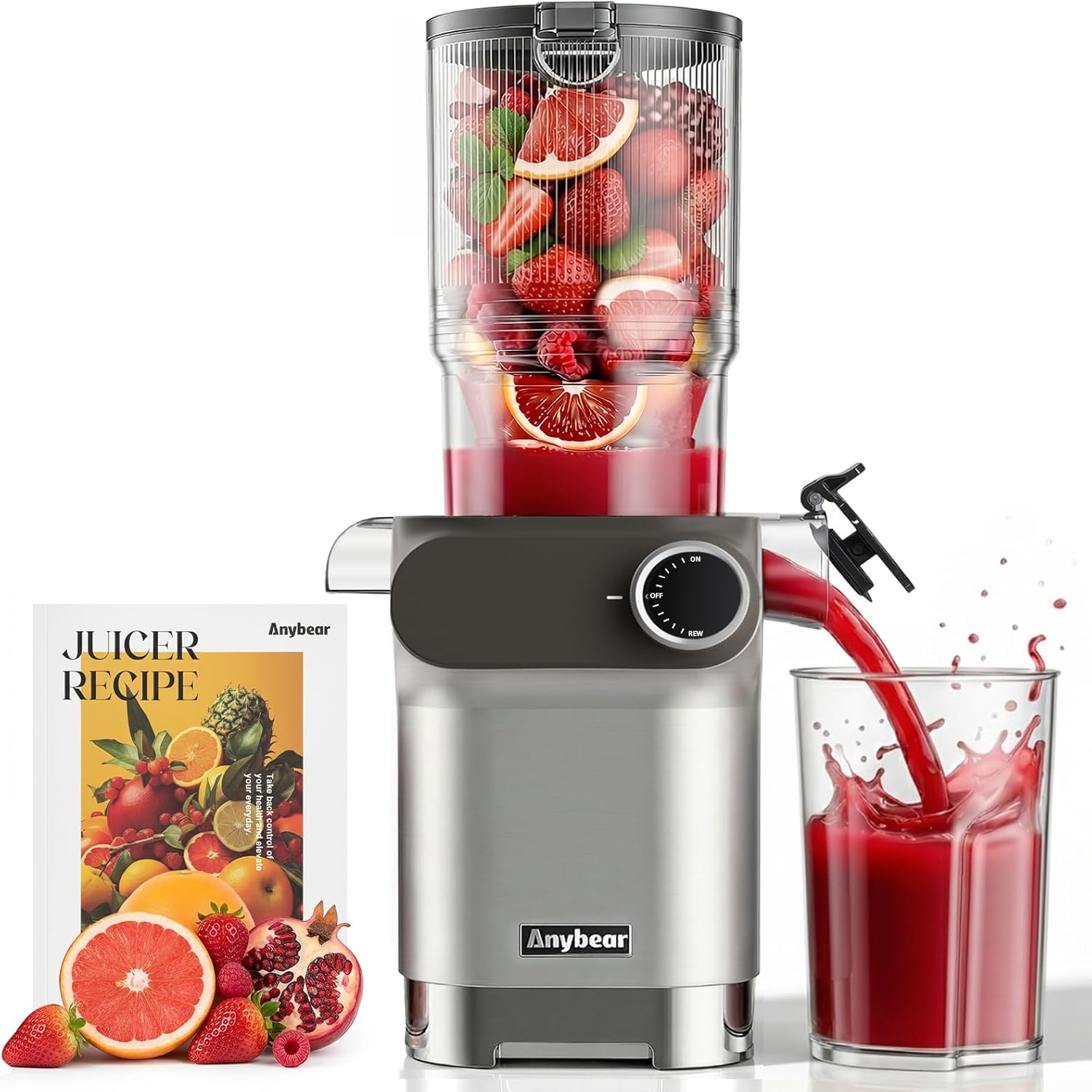
anybear Cold Press Juicer SJ054C
| Maximum Power | 200 watts |
|---|---|
| Wattage | 200 watts |
| Voltage | 110 volts |
| Special Features | Easy to Clean |
The anybear Cold Press Juicer SJ054C is a slow masticating juicer that uses a 200W high-torque motor and a single auger to extract juice at about 65 RPM. It is set up for whole or large produce with a 4.3-inch feed chute that reduces prep time and a Tritan feed component meant to preserve flavor. The one-piece stainless steel filter and included brush simplify cleaning, and the slow extraction minimizes oxidation for fresher-tasting juice and higher yield. Practical benefits include an emphasis on gentle extraction for leafy vegetables like celery and a heavy-duty auger claimed to boost yield. Limitations are typical of masticating machines: processing very hard items or large batches can be slower than centrifugal models, and the unit is hand-wash only which adds post-use cleanup time. The package includes recipes and a promise of extended warranty support, which can help with long-term ownership confidence.
Best for: Buyers who prioritize reliable, nutrient-preserving extraction for leafy greens and want a machine that reduces prep work and maximizes yield over time.
Less Ideal for: If you need very fast, high-volume juicing for many servings at once or prefer dishwasher-safe parts, this is not the best fit.
- Low-speed masticating action preserves nutrients and reduces oxidation for fresher juice
- 4.3-inch feed chute accepts larger pieces to cut prep time
- 200W high-torque motor and auger designed for better juice yield from leafy greens
- One-piece stainless steel filter and included brush make cleaning simpler than multi-part filters
- Hand-wash only care increases cleanup time compared with dishwasher-safe parts
- Slower throughput than centrifugal juicers for very large batches
Verdict: Choose this cold press juicer if you want a dependable, low-speed machine that prioritizes high yield and fresh-tasting celery and leafy-green juices.
AAOBOSI Cold Press Juicer JS2401

| Feed chute | 6.5" |
|---|---|
| Special Features | Easy to Clean, Masticating, Quiet Motor |
| Capacity | 100oz |
The AAOBOSI JS2401 is a single-auger cold press juicer built for everyday home use and family servings. It accepts whole produce through a 6.5-inch feed chute so you can juice apples, oranges, and long stalks like celery with minimal prep, and its slow masticating auger aims to extract juice gently for higher yield and reduced foam. The included components detach for quick rinsing and the manufacturer highlights a smooth internal path to limit clogging from fibrous greens. Noise is low enough for early-morning routines, and the unit can also be used to make nut milk and sorbet, expanding its kitchen utility. Practical limitations include hand-wash-only care and the need to clear very fibrous material occasionally despite anti-clog design; it is not a commercial machine so expect typical home-use throughput rather than continuous heavy-duty operation. For buyers focused on daily cold-press juice like celery blends, the JS2401 pairs easy prep and quiet performance with family-sized capacity.
Best for: Buyers who prioritize reliable, quiet cold-press extraction for daily green and celery juices and want an appliance that reduces prep time while fitting into morning routines.
Less Ideal for: People needing a commercial-grade juicer for heavy continuous use or those who require dishwasher-safe parts for minimal cleanup effort.
- 6.5-inch wide feed chute reduces prep by fitting whole fruits and many vegetables
- Slow masticating auger designed to improve juice yield and reduce foam
- Quiet motor suitable for early-morning use
- Detachable parts and smooth internal design for faster cleaning
- 3-in-1 capability: juice, nut milk, and sorbet increases versatility
- Hand wash only; not dishwasher-safe
- Not intended for continuous commercial use so throughput is limited
Verdict: Choose the AAOBOSI JS2401 when you want a quiet, wide-chute cold-press juicer that simplifies prep and consistently extracts family-sized servings of celery and green juices.
EanOruus 3-in-1 Cold Press Juicer E-18

| Capacity | 100 fluid ounces |
|---|---|
| Maximum Power | 250 watts |
| Power Source | ac |
| Voltage | 110 volts |
The EanOruus E-18 is a slow single-auger masticating juicer that focuses on high-capacity, low-prep juicing. It uses a 250 W AC motor and a 6.5-inch extra-wide chute so you can feed whole apples and large stalks of celery with minimal chopping, and the 100 oz hopper lets you batch juice for family servings or multiple bottles at once. Two interchangeable strainers expand use beyond juice to sorbets and nut milks, and an auto-reverse plus overheat protection help clear clogs and protect the motor during heavy runs. Detachable components simplify cleaning, though parts are hand-wash only. The robust motor and whole-fruit capability make it well suited to steady daily use and tough produce like celery, but the unit is relatively heavy and takes up counter space, and plastic parts mean buyers concerned about long-term durability or premium materials may prefer other models. For those who want quiet, high-yield cold-press extraction and bulk prep, it delivers practical performance with straightforward maintenance needs.
Best for: Buyers who want a reliable, high-yield cold-press juicer for daily or batch celery juice and value a quiet, powerful motor and easy feeding over luxury materials.
Less Ideal for: Those who need an ultra-compact or lightweight juicer for occasional use or who prefer all-metal components and dishwasher-safe parts.
- Extra-wide 6.5-inch chute reduces prep time by accepting large whole fruits and stalks
- 100 oz hopper lets you batch juice for multiple servings without frequent refills
- 250 W AC brushless motor provides steady, high-torque extraction for fibrous produce
- Interchangeable strainers enable juice, sorbet, and nut milk from one machine
- Auto-reverse and overheat protection help manage clogs and protect the motor
- Most removable parts require hand washing rather than dishwasher-safe cleaning
- Unit is relatively heavy and needs dedicated countertop space
Verdict: Choose this juicer if you want a quiet, high-torque cold-press machine that handles whole produce and large batches of celery juice with minimal prep.
Choosing the Right Cold Press Juicer for Celery Juice: Key Factors to Consider
Juice Yield and Pulp Dryness
Yield matters because celery is fibrous and watery, and small differences in extraction can change how many stalks you need per glass. A juicer that leaves very dry pulp gets more liquid out of the same produce, lowering food waste and reducing the time you spend prepping and buying celery.
Look for machines with slow rotational speeds and an auger that compresses rather than tears materials. Consistently dry pulp is also an indicator of efficient internal geometry and good juicing mechanics, which makes a daily celery routine more economical and predictable.
Auger Design and Motor Torque
Celery stalks can wrap, string, or bind in the feed path, so robust auger geometry and sufficient torque are essential. Higher torque reduces the chance of stalls when processing long stalks or thicker batches, and an auger profile that shears and presses progressively will avoid repeated manual clearing.
Consider how the motor handles continuous runs if you plan to juice multiple servings at once. Thermal protection and automatic reverse functions are helpful, but the underlying torque and feed design determine how smoothly the machine will handle celery without extra effort.
Ease of Cleaning and Maintenance
Daily juicing routines demand quick and simple cleanup. Look for units with accessible pulp chambers, minimal small crevices, and removable parts that rinse clean under running water. Brush tools and dishwasher-safe components can save time, but pay attention to whether the assembly requires careful alignment on reassembly.
Frequent users should favor designs that avoid a lot of nooks where fibrous strings collect. The less hands-on scrubbing required, the more likely you are to maintain a consistent celery-juicing habit.
Build Materials and Food Safety
Parts that contact juice should be food-safe and durable to avoid staining and odors from green juices. BPA-free plastics, stainless steel screens, and reinforced augers extend lifespan and reduce long-term maintenance concerns. Materials also influence how the machine tolerates repeated use and cleaning routines.
Higher-quality seals and gaskets help prevent leaks and maintain suction during extraction. Avoid models with unclear material specifications or suspect finishes if you plan to juice daily.
Throughput and Feed Chute Size
If you make multiple servings at once, feed-chute size and overall throughput determine how much prep you need to do. Wider chutes reduce chopping time and let you process longer stalks more efficiently, while smaller-chute machines often require more cutting and handling.
Throughput also impacts heat buildup and motor stress during continuous runs. Choose a capacity that matches your typical batch size to avoid unnecessary strain and to keep cleanup manageable.
Noise, Vibration, and Countertop Fit
Noise and vibration affect where and when you can juice. A quieter machine is friendlier to household routines, especially early mornings. Vibration also ties to build quality; heavier or better-damped units tend to stay put on the counter and feel more stable during processing.
Consider the unit's footprint and how it fits under cabinets or on narrow counters. If storage is an issue, compact components or an easy disassembly process will make daily use more convenient.
Why Cold Press Extraction Suits Celery
Cold press extraction uses low-speed compression to separate juice from fiber, reducing heat and oxidation. For celery, that gentle action helps preserve delicate green flavors and keeps the juice from foaming or separating quickly.
The slow, high-pressure method also tends to produce smoother juice with less stringy pulp, which improves mouthfeel and reduces the need for additional straining.
- Slower speeds limit heat-related nutrient loss
- Better flavor and smoother texture than high-speed shredding
- Typically yields drier pulp from fibrous greens
Preparing Celery for Best Results
Trim core ends and remove any damaged sections, then cut stalks to a length that matches the feed chute if needed. Removing excess leaves is optional depending on taste; leaves contain flavor and nutrients but can increase sediment and bitterness.
If you plan to juice a lot at once, alternating celery with a softer vegetable such as cucumber or apple in the feed can help keep the auger moving and reduce binding during long runs.
- Cut stalks to chute-appropriate lengths
- Consider alternating produce types to prevent wrapping
- Rinse thoroughly to remove soil and grit before juicing
Daily Maintenance Tips to Keep Performance High
Rinse components immediately after juicing to prevent dried residue and staining. For fibrous juices, use a narrow brush to clear stringy material from the screen and auger grooves before it dries into place.
Inspect seals and gaskets periodically and replace them if they show wear. Lubricate any recommended parts according to the manufacturer instructions to maintain smooth auger action and avoid motor strain.
- Rinse right away to avoid stubborn stains
- Use provided brush on screens and crevices
- Check seals and serviceable parts monthly with regular use
Countertop Placement and Storage
Place the juicer on a stable, flat surface away from the edge of the counter. If you juice early in the morning, plan for a model with lower noise to avoid disrupting others in the house.
If counter space is limited, choose a machine with compact footprint or easy disassembly for storage. Some users prefer to leave certain removable parts assembled to save setup time while keeping the main housing tucked away.
- Ensure stable placement to reduce vibration
- Consider noise level for early-morning routines
- Pick a size that matches your storage habits
Common Troubleshooting With Fibrous Vegetables
If the unit stalls or the auger binds, try feeding shorter pieces and avoid packing the chute too tightly. Using a push tool at a steady pace is better than forcing large bundles of stalks.
Persistent clogging typically points to either underpowered torque or an auger profile that is not optimized for long fibers. Allow the machine to cool if it trips thermal protection and clear pulp before restarting to avoid compounding the issue.
- Feed shorter pieces and maintain steady pressure
- Clear pulp frequently during large batches
- Allow cool-down if thermal cutoff engages
How We Chose the Best Cold Press Juicer for Celery Juice
We focused on machines designed to handle fibrous vegetables and high-volume home juicing. Primary evaluation criteria included extraction yield and pulp dryness to measure how much usable juice you get from celery; motor torque and auger design to assess whether the unit can process long, stringy stalks without clogging; and ease of cleaning because celery juice routines benefit from quick turnarounds. Additional criteria covered build quality and materials to ensure food-safe, long-lasting parts, plus noise and vibration levels for comfortable daily use. We also considered feeding-chute size and throughput for people who juice larger batches and safety features for regular operation. Units that required extensive reprocessing, used questionable food-contact plastics, or lacked clear cleaning access were excluded. The final selections represent machines that balance yield, durability, and practical upkeep for consistent celery juicing.
Our full evaluation process is outlined in our review methodology.
FAQ
How much celery do I need per glass of juice?
It usually takes several medium stalks to produce a single serving because celery is mostly water but compresses into pulp. Yield depends on the juicer's efficiency, so higher extraction machines will require fewer stalks for the same volume.
Can I juice celery leaves and core?
Yes. Leaves and cores contain flavor and nutrients, but they can increase sediment and the intensity of the flavor. If you prefer a milder cup, use fewer leaves or blend them with milder produce.
Will celery juice clog my cold press juicer?
Celery can string and wrap, which may cause occasional clogging on some machines. Choosing an auger with good torque and feeding shorter pieces reduces the risk, and regular clearing during batches prevents buildup.
How often should I clean the juicer when juicing celery daily?
Rinse removable parts after each use and deep-clean screens and crevices at least weekly for daily users. Prompt cleaning prevents staining, odors, and fiber buildup that reduce performance.
Is there a difference in nutritional value between cold press and centrifugal extraction for celery?
Cold press extraction minimizes heat and oxidation, which can help retain certain heat-sensitive compounds and slow separation. The practical nutritional difference depends on frequency of consumption, storage time, and exact processing conditions.
Final Verdict
Prioritize extraction efficiency, auger torque, and cleaning practicality when choosing a cold press juicer for celery juice. High yield and dry pulp reduce per-glass produce needs and make daily routines more economical, while solid build materials and easy-to-clean components reduce maintenance time. Balance throughput with your typical batch size and countertop constraints. Focus on the tradeoffs that matter most to your routine — faster cleanup or higher continuous throughput — and pick a machine that aligns with those priorities for dependable celery juicing.