
Note: This article contains affiliate links. If you click on these links and make a purchase, we may earn a small commission at no extra cost to you. This helps support our research and content. Read our full affiliate disclosure here.
If you drink celery juice regularly, the juicer you pick affects how much usable juice you get and how often you actually use the machine. A cold press juicer for celery is designed to extract liquid gently, preserving nutrients while reducing foam and heat that can degrade flavor. This guide presents seven shortlisted cold press juicers selected for celery use, focusing on extraction yield, pulp dryness, and everyday usability. Below you will find practical evaluation points, buying factors, and clear guidance to help you choose the best option for consistent celery-juice results.
Top Picks at a Glance
| Best Overall The best all-around choice for most situations | Omega Masticating Juicer MM900HDS |  |
| Best Quality Built to a higher standard if you want something more solid | NAMA J2 Cold Press Juicer |  |
| Best Value The sweet spot between price and what you get | AMZCHEF Cold Press Juicer 1902B |  |
| Best Budget The cheapest option that still gets the job done reliably | NEWBULIG Cold Press Juicer |  |
| Top Rated A top-rated pick with lots of positive feedback | ECOSELF Cold Press Juicer |  |
| Most Popular A crowd favorite that many people choose with confidence | Ninja NeverClog Cold Press Juicer JC151 |  |
| Best Seller A high-volume bestseller chosen again and again | EanOruus 3-in-1 Cold Press Juicer |  |
Omega Masticating Juicer MM900HDS

| Wattage | 200 watts |
|---|---|
| Power Source | Corded Electric |
| Number of Speeds | 1 |
| Capacity | 0.8 liters |
| Voltage | 120 |
The Omega MM900HDS is a low-speed masticating juicer built for cold-press extraction, with a special end cap and adjustable dial optimized for celery. It runs at about 80 RPM using triple-stage masticating technology to squeeze more juice and reduce oxidation, which helps preserve enzymes and allows juice to be stored longer. The unit includes a dedicated celery end cap plus a standard cap for other fruits and vegetables, a large feed chute to cut prep time, and automotive pulp ejection to keep the machine running during batch juicing. Most removable parts are top-rack dishwasher safe, and the stainless-steel blade and plastic housing are easy to maintain. At 200 watts and a single low speed, it focuses on nutrient retention rather than speed, so it produces higher yields from leafy greens and wheatgrass but is slower than centrifugal models. The long 15-year parts and performance coverage is a standout for buyers who plan heavy use. If you want a reliable, enzyme-preserving machine specifically tuned for celery and other cold-press juices, this model delivers consistent, high-quality results.
Best for: Buyers who prioritize nutrient preservation and consistent high juice yield from celery and leafy greens and want a durable, long-lived cold-press juicer for regular home use.
Less Ideal for: People who need very fast juicing, frequent multi-speed control, or a lightweight portable unit for occasional use should consider other styles of juicers.
- Special celery end cap extracts more juice from whole celery with less waste
- Low 80 RPM speed and triple-stage masticating action reduce oxidation and preserve nutrients
- Large feed chute and automotive pulp ejection speed up batch juicing and simplify cleanup
- Most removable parts are top-rack dishwasher safe for easier maintenance
- 15-year parts and performance coverage offers long-term reliability
- Single low speed limits versatility for high-speed tasks or thicker nut milks
- Plastic exterior increases weight compared with some compact metal-bodied models
Verdict: Choose the Omega MM900HDS if you want a purpose-built cold-press juicer that maximizes celery juice yield and nutrient retention for regular, health-focused juicing.
NAMA J2 Cold Press Juicer

| Capacity | 30 fluid ounces |
|---|---|
| Wattage | 200 watts |
| Power Source | Corded Electric |
| Number of Speeds | 1 |
The NAMA J2 is a compact cold press (masticating) juicer built for easy, hands-free operation and high yield. It uses a wide self-feeding hopper so you can add a full recipe and let the auger work at a low 50 RPM pace driven by a 200 W motor, which helps reduce heat and preserve nutrients while extracting juice from fruits and vegetables. Practical details include a coarse juice strainer, separate juice and pulp containers, a spinning brush for cleanup, and quick-release parts that make disassembly and hand washing straightforward. Because it processes produce slowly, it is effective on leafy greens and fibrous items like celery, producing less pulp and more juice per batch. The unit is relatively quiet during operation and emphasizes durability with stainless steel and Tritan components. Limitations are its single-speed design and modest 30 fl oz capacity, so it is best for daily personal batches rather than large parties or continuous commercial use.
Best for: Buyers focused on getting maximum juice from greens like celery and who want a convenient hands-free cold press for daily personal or small household use.
Less Ideal for: Those who need large-volume or continuous juicing for parties or commercial use should consider higher-capacity or multi-speed machines.
- Self-feeding wide hopper lets you load a whole recipe and run hands-free
- 200 W motor and 50 RPM masticating action preserve nutrients and extract high juice yield
- Includes dedicated juice and pulp containers plus strainers for cleaner juice
- Quick-release parts and included spinning brush make cleaning simple
- Quiet operation suitable for early morning juicing
- Single speed limits control over different produce types
- 30 fl oz capacity is small for batch or entertaining use
Verdict: A compact, hands-free cold press juicer that maximizes juice yield from celery and leafy greens for daily personal use.
AMZCHEF Cold Press Juicer 1902B

| Wattage | 300 watts |
|---|---|
| Maximum Power | 350 watts |
| Power Source | Electric |
| Voltage | 120 volts |
| Capacity | 5 pounds |
This AMZCHEF 1902B is a single-auger cold press juicer designed to squeeze whole fruits and vegetables with minimal prep thanks to its 5.4-inch oversized feed chute. It uses a slow masticating auger and upgraded stainless steel blade to extract juice with a focus on high yield and dry pulp separation, which is useful when juicing fibrous produce like celery. The unit includes auto-reverse and overheat protection to clear jams and protect the motor, and detachable parts make rinsing straightforward after use. Its quiet heavy-duty motor keeps noise low for early morning juicing, and the included shaker cup helps collect servings. Limits to expect are hand-wash care for parts and a moderate power rating (300–350 W), so very heavy commercial use or continuous long runs could strain the motor more than higher-power models. For home kitchens the machine balances convenience, good extraction, and straightforward maintenance for daily green juice routines.
Best for: Buyers who want a practical, efficient home juicer that minimizes prep time and maximizes juice from fibrous greens like celery while staying quiet and easy to maintain.
Less Ideal for: Users needing a commercial-grade juicer for continuous heavy throughput or those who prefer fully dishwasher-safe components for cleanup.
- 5.4-inch wide feed chute accepts whole celery stalks and other produce with little pre-chopping
- Slow masticating auger and upgraded spiral deliver higher juice yield and drier pulp
- Auto-reverse and overheat protection reduce clogging and protect the motor
- Quiet heavy-duty motor suitable for morning use without disturbing others
- Mostly detachable parts for easy rinsing and faster cleaning
- Requires hand washing for parts rather than dishwasher-safe cleaning
- 300–350 W power is moderate and may limit very heavy continuous use
Verdict: A practical, quiet cold-press juicer that fits home routines and delivers high juice yield from celery and other greens with minimal prep.
NEWBULIG Cold Press Juicer
| Wattage | 200 watts |
|---|---|
| Voltage | 120 volts |
| Material | ABS, PC, Silicone, Stainless Steel |
| Special Features | Easy to Clean, Masticating, Quiet Motor, Safety Lock |
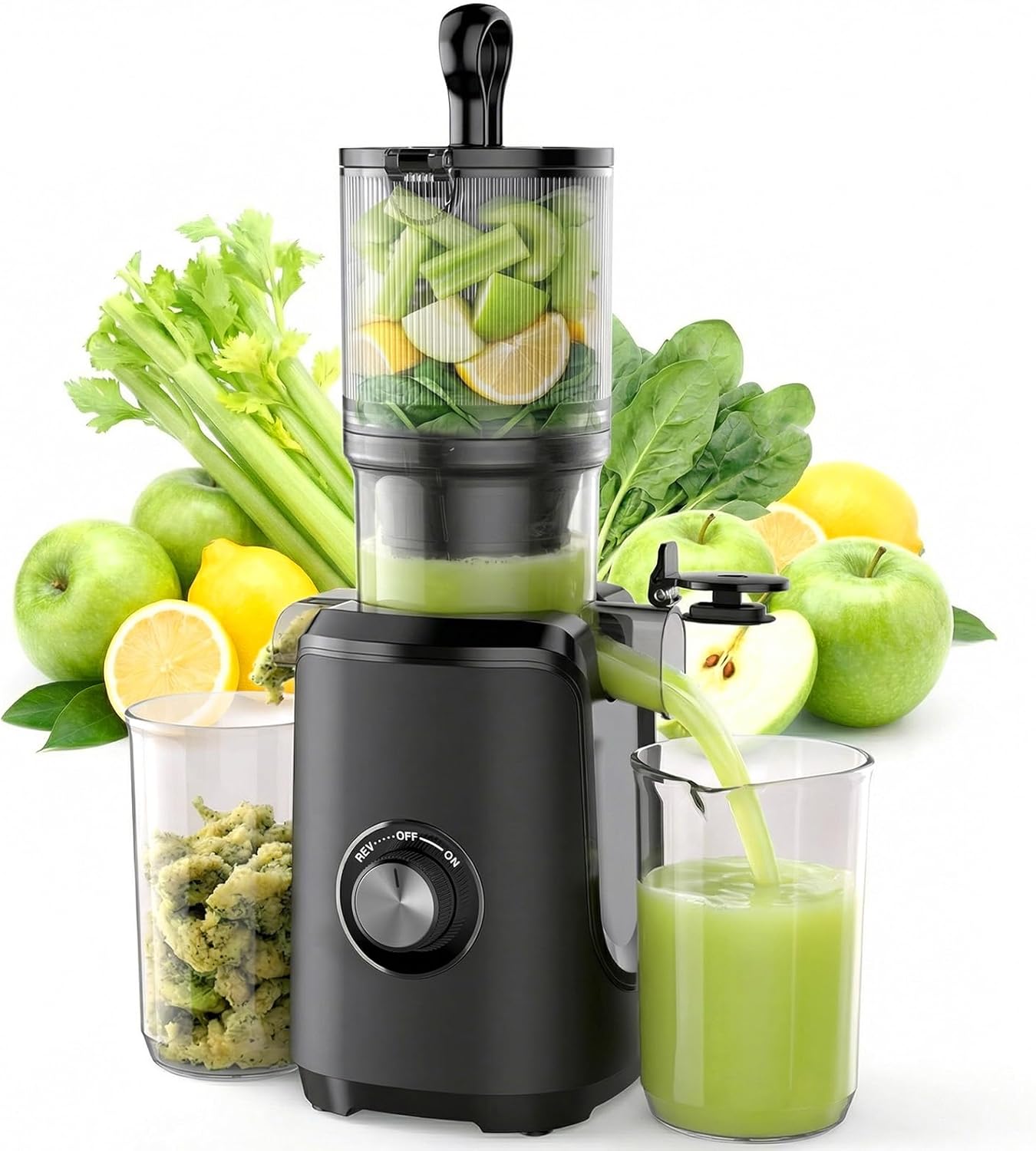
This NEWBULIG cold press juicer is a single-auger masticating machine intended for steady, nutrient-preserving juicing of fruits and vegetables including fibrous produce like celery. Its 4.25-inch feed chute accepts long pieces with less prep, and the 200-watt slow-speed motor minimizes heat and oxidation so juice retains more enzymes and flavor. A reverse function clears clogs quickly without full disassembly, and the included brush plus hand-wash-only parts make cleanup straightforward for daily use. Safety features such as a blade-free design and an automatic safety lock make it family friendly and reduce the risk of operation when opened. Expect quieter operation compared with centrifugal models, but juicing will be slower and better suited to extracting rather than high-speed batch processing. Materials are a mix of ABS, PC, silicone, and stainless steel, and the unit is compact enough to sit on a countertop. For buyers focused on preserving nutrients and handling celery well, this unit balances performance with a budget-friendly feature set, though it requires hand washing and patience during longer juicing sessions.
Best for: Buyers who want a cost-conscious cold press juicer that preserves nutrients and handles fibrous produce like celery with minimal chopping and safer operation.
Less Ideal for: People who need rapid, high-volume juice production or prefer dishwasher-cleanable components should consider other options.
- 4.25-inch feed chute reduces prep for long produce like celery
- Slow masticating motor preserves nutrients and reduces oxidation
- Reverse function clears clogs quickly without disassembly
- Automatic safety lock and blade-free design improve user safety
- Includes cleaning brush and easily detachable parts for faster cleanup
- Parts must be hand washed rather than dishwasher-safe
- Slower juicing speed compared with centrifugal juicers
Verdict: A budget-friendly masticating juicer that handles celery and other fibrous greens well while preserving nutrients and offering user-friendly safety features.
ECOSELF Cold Press Juicer

| Material | Acrylonitrile Butadiene Styrene (ABS) |
|---|---|
| Special Features | Easy to Clean, High Juice Yield, Reverse Function, Self Feeding, Wide Feed Chute |
| Style | Premium Black |
The ECOSELF Cold Press Juicer is a slow masticating, single-auger machine designed for hands-free juicing of whole fruits, vegetables, and leafy greens. Its wide feed chute and auto-feeding hopper let you drop in long produce like celery stalks without much pre-cutting, while the low-speed extraction reduces heat and oxidation to preserve enzymes and nutrients. The unit includes a reverse function to clear jams, a rotary one-touch control for simple operation, and an integrated filter and brush that make assembly and cleaning quick for daily use. ECOSELF claims high juice yield with minimal waste, and the machine's design prioritizes steady, continuous performance rather than speed, which suits people who juice frequently. Limitations include slower throughput compared with centrifugal models and the typical masticating need to feed tougher produce patiently to avoid clogging, but the reverse function and self-feeding design help mitigate that. For someone seeking reliable, nutrient-preserving extraction of celery and other greens, this model is a practical and easy-to-use choice.
Best for: Home juicers who prioritize consistent, nutrient-preserving extraction and want a hands-free workflow for items like celery and leafy greens.
Less Ideal for: Buyers who need very fast, high-volume output or want the lowest possible upfront speed for occasional, infrequent juicing.
- Wide feed chute and auto-feeding design accommodate whole stalks and reduce prep time
- Slow masticating extraction preserves enzymes and reduces oxidation for fresher-tasting juice
- Reverse function and one-touch control help clear jams and simplify operation
- Integrated filter and included brush make assembly and cleaning faster for daily use
- Slower juicing throughput compared with centrifugal juicers
- May require patient feeding for very fibrous produce to avoid occasional clogging
Verdict: A reliable slow juicer built for easy, hands-free extraction of celery and greens while preserving nutrients.
Ninja NeverClog Cold Press Juicer JC151

| Maximum Power | 150 watts |
|---|---|
| Number of Speeds | 2 |
| Capacity | 24 fluid ounces |
| Included Components | 24 oz juice jug, 36 oz pulp container, 2 pulp filters |
| Product Care Instructions | Dishwasher Safe |
The Ninja NeverClog JC151 is a slow masticating juicer designed to handle fibrous produce like celery, kale, and carrots using a 150-watt high-torque auger and NeverClog cold press technology. It comes with two interchangeable pulp filters so you can select a smoother juice or a thicker, fiber-forward drink and includes a 24 oz juice jug and 36 oz pulp container for making multiple servings without stopping. Operation is simple with two one-touch programs including a reverse function to clear jams, and the anti-drip lever reduces spills when pouring mid-cycle. Cleanup is easier than many slow juicers because most juice-contact parts are dishwasher safe and the design is marketed as easy to assemble. Practical limits include a modest 150W motor that is strong for home use but not intended for heavy commercial workloads, and the unit is compact so very large-capacity batch pressing will still require repeats. For people who want reliable extraction of leafy and fibrous vegetables at home with straightforward controls and manageable cleanup, this juicer performs well.
Best for: Buyers who prioritize consistent, clog-resistant extraction from fibrous vegetables and want clear social proof of performance before committing, seeking a practical home cold-press juicer with simple controls and easy cleanup.
Less Ideal for: People needing a commercial-grade machine for continuous large-scale juicing or those who want the highest-capacity, industrial-style throughput.
- High-torque 150W auger designed to extract juice from fibrous ingredients like celery and kale
- Two interchangeable pulp filters for customizable pulp control
- Large included containers (24 oz juice jug, 36 oz pulp bin) reduce interruptions during batch juicing
- Reverse program helps clear jams and improve extraction
- Most juice-contact parts are dishwasher safe for easier cleanup
- 150W motor is suited to home use but may struggle with continuous heavy commercial workloads
- Compact capacity still requires multiple cycles for very large batches
Verdict: Choose the Ninja JC151 if you want a home cold-press juicer that reliably handles celery and other fibrous greens with customizable pulp control and easy cleanup.
EanOruus 3-in-1 Cold Press Juicer
| Maximum Power | 250 watts |
|---|---|
| Power Source | AC |
| Voltage | 110 volts |
| Capacity | 100 fluid ounces |
| Special Features | Auto-Reversing, Overheat Protection, Whole Fruit Processing |
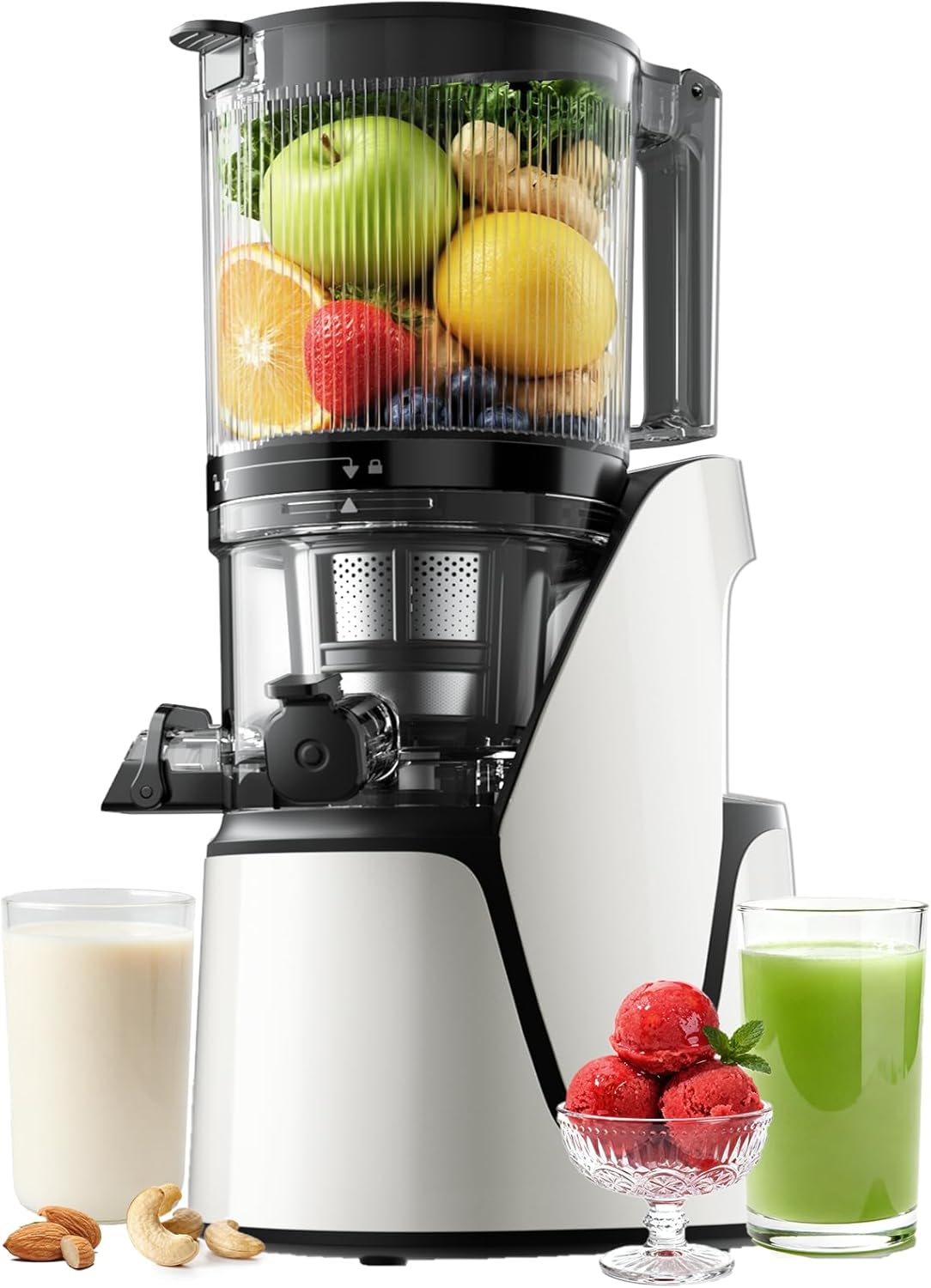
The EanOruus 3-in-1 cold press juicer is a single-auger masticating machine aimed at high-volume home juicing and versatile kitchen tasks like nut milk and sorbet. It accepts large whole produce through a 6.5-inch chute and feeds into a 100 oz hopper so you can process multi-serving batches without constant refilling. The unit uses a 250 W AC motor with auto-reverse and overheat protection, which helps it handle tough fibrous items while reducing jams. Included strainers let you swap between juice and sorbet or nut-milk modes, and several detachable parts plus a removable pulp outlet simplify cleanup when you follow the hand-wash guidance. Expect quiet operation compared with centrifugal machines, steady yields from low-speed masticating extraction, and sensible safety features. Downsides are the plastic auger and blade materials and a hand-wash-only requirement, which make it less durable-feeling than metal-component models and add more cleanup care. For celery specifically, the wide chute and slow press make efficient, low-foaming extraction possible, but routine cleaning after fibrous batches is necessary to keep performance consistent.
Best for: Buyers who prioritize low-foam, nutrient-preserving cold-pressed juice and want a high-capacity machine that handles whole produce with minimal chopping and reliable safety features.
Less Ideal for: Shoppers seeking the most heavy-duty, metal-component commercial unit or fully dishwasher-safe cleanup should consider other, more industrial models.
- Extra-wide 6.5-inch chute reduces prep time by fitting whole fruits and stalky produce like celery
- Large 100 oz hopper supports batch juicing for families or meal prepping
- Auto-reverse and overheat protection help prevent clogs and protect the motor during heavy use
- Quiet AC brushless motor provides steady, low-speed extraction suited for nutrient retention
- Multiple strainers allow juicing, nut milk, and sorbet without buying separate appliances
- Major wearing parts and blade are plastic rather than metal which may limit long-term durability
- Removable parts require hand washing rather than dishwasher-safe cleanup
Verdict: If you want a quiet, large-capacity cold press juicer that handles whole celery stalks and multi-serving batches with safety features, this EanOruus model is a practical, risk-averse choice.
Choosing the Right Cold Press Juicer for Celery: Key Factors to Consider
Juice Yield and Extraction Efficiency
A cold press juicer for celery should extract as much liquid as possible from fibrous stalks. Higher yield means fewer stalks needed for a single serving and better cost efficiency over time. Machines with slow, high-torque augers and tightly fitting screens typically produce wetter pulp and more usable juice.
Pay attention to published yield claims but also consider pulp dryness and real-world reports on celery performance. Yield directly affects how often you need to prepare stalks and how viable daily consumption is for your routine.
Pulp Texture and Dryness
Pulp dryness indicates how effectively the juicer separates juice from fiber. For celery, dry pulp means the machine is extracting efficiently rather than leaving liquid trapped in fibrous strands. Drier pulp also reduces waste volume and makes it simpler to compost or discard.
Look for juicers with well-matched auger and screen tolerances. Some designs include a secondary compression stage or manual re-pressing options that can further reduce moisture in the pulp.
Feeding Design and Prep Time
Celery stalks are long and often require trimming to fit into narrow feed chutes. A juicer with a wider chute or an efficient feed mechanism reduces prep work and speeds up the juicing process. Consider whether the machine accepts longer pieces, includes a pusher that handles stringy material cleanly, or requires you to cut stalks into many short segments.
Faster feeding translates to smoother morning routines and less time wrestling with tangled fiber. Appliances that reduce the need for extensive pre-cutting are especially helpful for daily users.
Cleaning, Disassembly, and Maintenance
Frequent juicing requires a design that is quick to take apart and easy to rinse or brush clean. Complex assemblies with many small parts or inaccessible crevices will slow you down and increase microbial risk. Dishwasher-safe components can save time but check manufacturer guidance if dishwashers are allowed.
Also consider whether the screen and auger materials resist staining from green juices and whether included cleaning tools effectively clear fibrous residue. Simpler maintenance increases the likelihood you will use the juicer consistently.
Motor Torque and Heat Management
Cold press juicers rely on steady, low-speed torque to crush and press fiber without generating heat. For celery, sufficient torque prevents stalling when processing stubborn strands and helps achieve higher yield. Overheating can reduce nutrient retention and shorten component life, so look for motors rated for sustained low-speed operation with built-in thermal protection.
Spec sheets rarely tell the full story, so prioritize motors designed for continuous cold-press use rather than occasional juicing.
Build Quality and Long-Term Reliability
Durable materials and solid construction matter when you plan to juice greens regularly. Metal-reinforced augers, sturdy housings, and dependable seals reduce the chance of premature wear or leaks. Reliable customer support and available replacement parts also affect long-term ownership, especially for machines that get daily use.
Consider warranties and documented longevity of the design when selecting a model intended for heavy celery juicing.
Why Cold Press Works Better for Celery
Cold press juicers operate at low speeds, crushing and pressing plant tissue to release liquid rather than relying on high-speed centrifugal force. That gentler action reduces heat buildup and foam, which preserves delicate nutrients and produces clearer green juice. For celery specifically, this method helps separate water bound in long fibers without shredding them into a pulpy mess.
Using a cold press approach also tends to yield smoother, less oxidized juice that stores better for short periods. If you plan to batch-prepare juice for a morning routine, the reduced oxidation and foam are practical benefits.
- Lower operating speeds reduce heat and foam
- Gentle extraction keeps juice clearer and less oxidized
- Better separation of water from long celery fibers
Prep Tips for Faster Celery Juicing
Trim only the parts you need to avoid extra waste. Remove tough root ends and any damaged sections, but you do not have to peel the stalks. Rinse thoroughly to remove soil and grit that can clog screens.
Cutting stalks into pieces that match your juicer's feed chute is the main time sink. If your machine accepts longer pieces, leave more intact. Use a good kitchen knife or bench scraper and stack stalks for quicker feeding.
- Remove roots and bruised sections
- Rinse well to prevent grit buildup
- Cut to the feed-chute length recommended by the machine
Common Problems and How to Avoid Them
Stringy fiber can wrap around the auger or block the screen if you overload the feed. Feed at an even pace and use the pusher gently to avoid jams. If a stall occurs, reverse or stop the machine, clear the obstruction, and resume.
Green juices can develop off flavors if pulp sits too long or if cleaning is neglected. Clean components promptly after use and drain residual juice from collection containers to avoid bacterial growth.
- Feed slowly to prevent fiber wrapping
- Use reverse function if available to clear clogs
- Clean immediately after juicing to avoid off flavors
Storing Celery Juice Safely
Celery juice oxidizes and loses some nutrients when exposed to air and light. Store juice in airtight, opaque containers in the refrigerator and consume within 24 to 48 hours for best nutritional and flavor quality. Fill containers as full as possible to minimize air inside.
If you want to preserve juice for slightly longer, keep it cold and limit agitation. Cold press juice generally stores better than high-speed juice, but freshness and safe handling are still important.
- Use airtight, opaque containers
- Refrigerate and consume within 24 to 48 hours
- Fill jars to reduce trapped air
How to Judge a Juicer's Real-World Performance
Look beyond marketing claims and focus on measurable outcomes: how dry the pulp is after processing, how many stalks are required for a typical glass, and how long cleaning takes. Reviews or community reports that include before-and-after pulp photos can be especially informative.
Also consider the day-to-day ergonomics: how the machine fits on your counter, whether the controls are intuitive, and whether noise levels are acceptable for your routine. These real-world factors often determine whether the juicer becomes part of your daily workflow or ends up unused.
- Check pulp dryness and actual yield reports
- Assess cleaning time and ease of disassembly
- Consider footprint, controls, and noise
How We Chose the Best Cold Press Juicer for Celery
We prioritized attributes that matter specifically for extracting juice from long, fibrous stalks like celery. First, extraction efficiency was a top filter because celery yields are low by volume and buyers need machines that squeeze out as much liquid as possible. We also evaluated feed-chute and feeding ergonomics to reduce prep time when handling long stalks. Cleaning and maintenance were weighted heavily, since frequent juicing requires easy disassembly and accessible nooks to prevent clogging. Build durability and motor longevity were included to ensure consistent performance under repeated use. Noise and vibration were considered for kitchen comfort during morning routines. We excluded centrifugal, high-speed juicers and any models not explicitly designed for cold-press or slow-masticating extraction. The final selection favors machines that balance high yield, short prep and cleanup time, robust build quality, and reasonable acoustic profiles.
Our full evaluation process is outlined in our review methodology.
FAQ
Can a cold press juicer handle whole celery stalks?
Some cold press juicers accept longer pieces and require minimal trimming, while others need stalks cut to fit a narrower feed chute. Check the machine's feed-chute dimensions and plan for a bit of prep either way.
How often should I clean the juicer after juicing celery?
You should disassemble and rinse parts immediately after juicing to prevent fiber from drying and sticking. A thorough clean with supplied brushes or a quick soak is recommended after each use.
Will a cold press juicer reduce foam in celery juice?
Yes. The low-speed, gentle extraction method typically produces less foam than high-speed centrifugal juicers, resulting in a clearer final juice.
Is pulp from celery useful for recipes or compost?
Celery pulp is fibrous but can be added to compost or incorporated into recipes like vegetable stock or fiber-rich breads. Because it is relatively dry when well-extracted, it is convenient to handle for composting.
How long does celery juice stay fresh after juicing?
When stored cold in an airtight, opaque container, cold-pressed celery juice typically retains good flavor and nutrients for around 24 to 48 hours. Freshness declines with exposure to air and light.
Final Verdict
For regular celery juicing, prioritize machines that deliver high extraction yield, produce dry pulp, and are easy to clean. Expect tradeoffs between compact designs and feed-chute convenience. Focus on torque and build quality if you plan heavy use, and choose a model that fits your prep habits to ensure consistent daily use. With those priorities in mind, you can pick a cold press juicer that makes celery juicing practical and reliable.