
Note: This article contains affiliate links. If you click on these links and make a purchase, we may earn a small commission at no extra cost to you. This helps support our research and content. Read our full affiliate disclosure here.
If you make green juices regularly, the right cold press juicer for leafy greens makes a big difference in yield, nutrient retention, and cleanup time. Leafy ingredients like kale, spinach, and wheatgrass behave differently from hard fruits, so machines optimized for greens use slower augers, tighter screens, and gentle compression to extract liquid efficiently. This guide covers seven shortlisted cold press juicers that are well-suited to leaf-heavy recipes. We evaluate each option for extraction efficiency, ease of cleaning, build and feeding design, and how simple they are to maintain. Read on to see which features matter most and which machine type fits your routine before the product list.
Top Picks at a Glance
| Best Overall The best all-around choice for most situations | Omega Cold Press 365 H3000D |  |
| Best Quality Built to a higher standard if you want something more solid | NAMA J2 Cold Press Juicer |  |
| Best Value The sweet spot between price and what you get | AAOBOSI Cold Press Juicer |  |
| Best Budget The cheapest option that still gets the job done reliably | NEWBULIG Cold Press Juicer |  |
| Top Rated A top-rated pick with lots of positive feedback | ECOSELF Cold Press Juicer |  |
| Most Popular A crowd favorite that many people choose with confidence | EanOruus Cold Press Juicer E-18 |  |
| Best Seller A high-volume bestseller chosen again and again | Ninja NeverClog Cold Press Juicer JC151 |  |
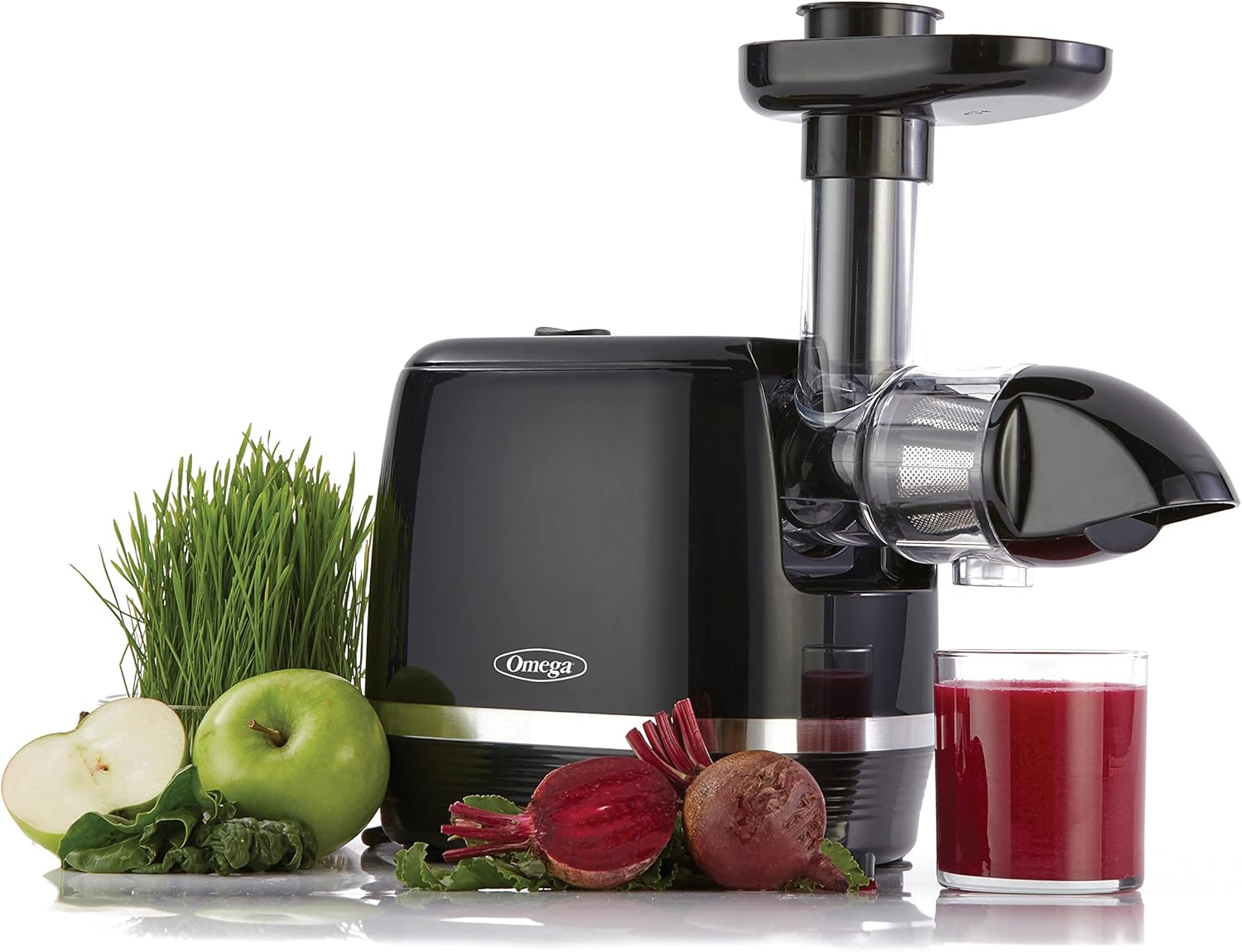
Omega Cold Press 365 H3000D
| Wattage | 150 watts |
|---|---|
| Power Source | Corded Electric |
| Voltage | 120 |
| Number of Speeds | 1 |
| Included Components | juicer housing, juice container, pulp container, auger, drum, end cap, fine juicing screen, coarse juicing screen, hopper, brush, plunger |
The Omega H3000D is a horizontal cold-press juicer that uses a slow 90–110 RPM motor and a three-stage auger to squeeze juice from fruits, vegetables, and leafy greens while minimizing heat and oxidation. In typical use you feed produce through the hopper, the auger crushes and presses it across fine and coarse screens, and juice separates into the container while pulp is ejected. The low speed and triple-stage extraction increase juice yield and reduce foam, producing smoother, nutrient-dense juice better suited to greens and wheatgrass than high-speed centrifugal machines. It runs quietly, has mostly dishwasher-safe removable parts (drum excluded), and includes multiple screens and a cleaning brush for easier maintenance. Limitations include a single speed with manual operation so it lacks automatic presets, and the plastic construction means buyers should handle parts carefully to avoid wear over time. Prep time for leafy greens can still require some chopping to fit the hopper.
Best for: Buyers who want a reliable cold-press juicer that maximizes yield and preserves nutrients from leafy greens and mixed produce while remaining quiet and relatively easy to clean.
Less Ideal for: If you need fast, heavy-duty commercial throughput, multiple speed controls, or a metal-heavy build for long-term heavy use, this model is not the best fit.
- Slow 90–110 RPM operation preserves enzymes and reduces oxidation for nutrient-rich juice
- Triple-stage auger yields more juice and smoother texture from greens and fibrous produce
- Quiet motor suitable for regular morning use without loud noise
- Most removable parts are top-rack dishwasher safe for easier cleanup
- Includes both fine and coarse juicing screens plus a cleaning brush and plunger
- Single manual speed offers no variable settings or automatic programs
- Mostly plastic construction may be less durable than heavier metal-bodied models
Verdict: Choose the H3000D when you want a quiet, nutrient-preserving cold-press juicer that squeezes high yields from leafy greens and fibrous produce.
NAMA J2 Cold Press Juicer

| Wattage | 200 watts |
|---|---|
| Power Source | Corded Electric |
| Voltage | 120 |
| Number of Speeds | 1 |
| Capacity | 30 fluid ounces |
The NAMA J2 is a hands-free masticating juicer built for steady cold-press extraction of fruits and vegetables, including leafy greens. Its self-feeding wide-mouth hopper and single auger let you load a full recipe and walk away while the 200 W motor turns at a low speed to minimize heat and oxidation. In practice the J2 produces high-yield, low-pulp juice from leafy greens and fibrous produce, and the included coarse and fine strainers and juice containers make it straightforward to separate pulp and collect juice. The 50 RPM operation runs quietly and the detachable parts plus the supplied spinning brush simplify rinsing and light scrubbing, though parts are hand-wash only. At about 30 fl oz capacity it handles multi-serving batches but is not the smallest unit for tight counters. Practical limitations include a single speed setting and a reliance on manual packing for very dense ingredients, so it is optimized for steady cold-press performance rather than rapid multi-speed control or dishwasher convenience.
Best for: Buyers focused on maximum juice yield and nutrient retention from leafy greens who want a hands-off, steady cold-press workflow for daily or bulk juicing.
Less Ideal for: People who need multiple speed settings, fully dishwasher-safe parts, or the smallest possible countertop footprint should consider other options.
- Self-feeding wide hopper enables hands-free loading for full recipes
- Low-speed masticating action (50 RPM) preserves nutrients and reduces foam
- Includes coarse and fine strainers plus juice and pulp containers for flexible yields
- Quiet 200 W motor suitable for regular use without loud noise
- Detachable parts and cleaning brush make rinsing and light scrubbing easier
- All removable parts require hand washing rather than dishwasher cleaning
- Single-speed operation limits control for very soft versus very hard produce
Verdict: Choose the NAMA J2 if you want a quiet, hands-free cold press juicer that extracts high yields from leafy greens and fibrous produce.
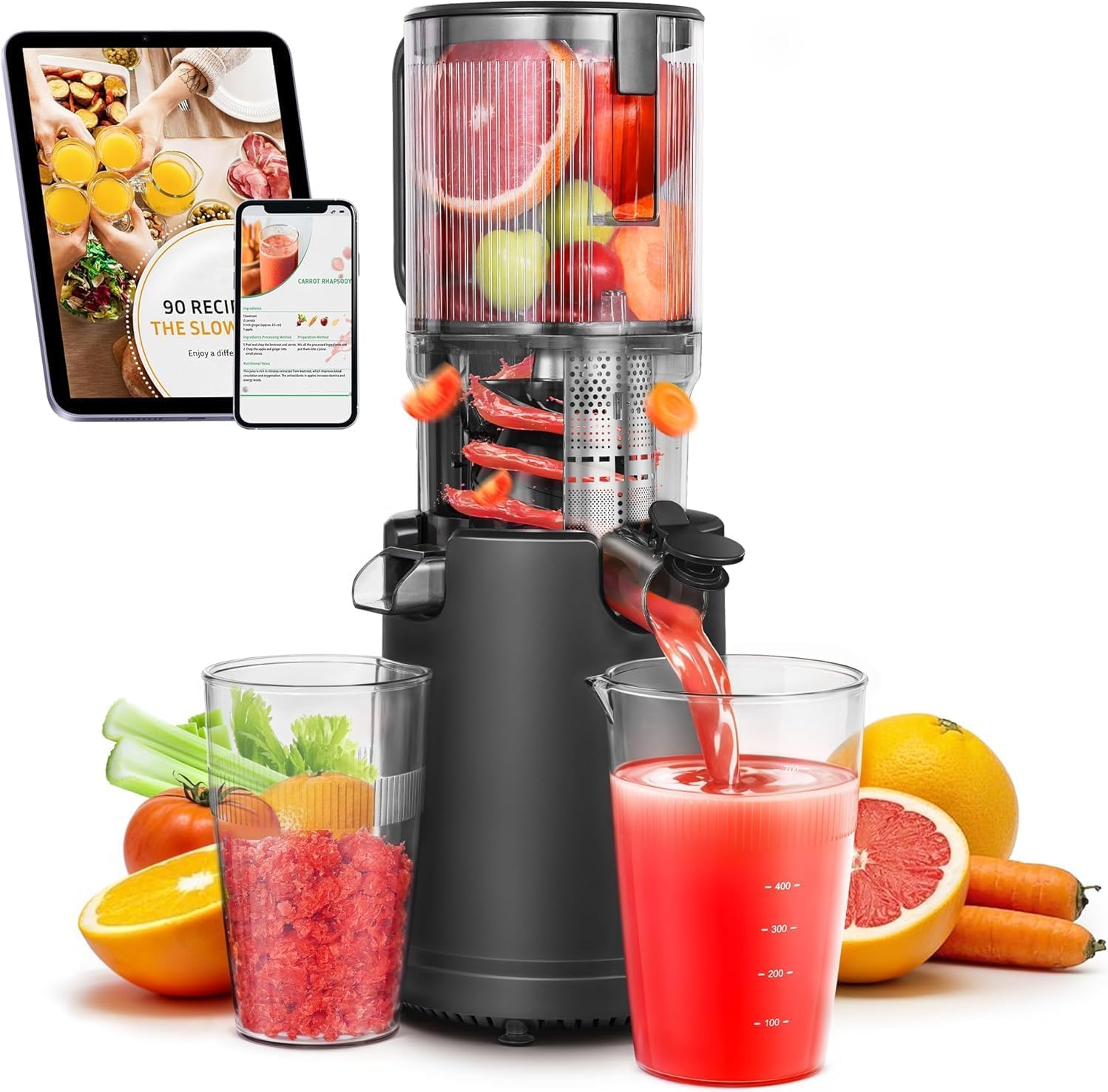
AAOBOSI Cold Press Juicer
| Special Features | Whole Fruit Processing |
|---|---|
| Maximum Power | 200 watts |
| Wattage | 200 watts |
| Blade Material | Stainless Steel |
This AAOBOSI cold press juicer is a slow masticating machine built to handle whole fruits and many leafy greens without extensive prep thanks to its 5.4-inch chute and single-auger design. It runs at about 60 RPM with a 180W continuous (200W peak) motor that aims to maximize yield while keeping noise low around 58 to 60 dB. The seven-stage extractor and double mesh filtration system claim to remove most pulp for smoother, foam-free juice, and the included brush makes basic cleanup easier. Practical benefits include higher juice yield from fibrous produce like celery and kale, quieter operation that does not dominate a kitchen, and stainless steel cutting components that resist overheating during heavier use. Limitations are typical for slow juicers: hand-wash parts and some disassembly are required for cleaning, and very fibrous or stringy greens sometimes need gradual feeding to avoid occasional jams. The unit is compact enough for countertop use but does not include advanced features like preset programs or dishwasher-safe components.
Best for: Buyers who want a practical, higher-yield cold press juicer for daily green and vegetable juices and who prioritize quiet operation and reduced food prep time.
Less Ideal for: Users who need dishwasher-safe parts, automated programs, or who want a centrifugal juicer for very fast, high-volume single-serve output.
- 5.4-inch wide chute accepts whole fruits and reduces prep time
- Low 60 RPM speed preserves nutrients and increases juice yield
- Seven-stage extractor and double mesh filters produce smooth, low-pulp juice
- Quiet operation around 58–60 dB suitable for morning use
- Stainless steel cutting parts resist overheating during continuous juicing
- Parts require hand washing and some disassembly for cleaning
- May need careful feeding for very stringy greens to avoid occasional jams
Verdict: Choose this juicer if you want a quiet, high-yield cold-press machine that handles whole fruits and leafy greens with minimal prep.
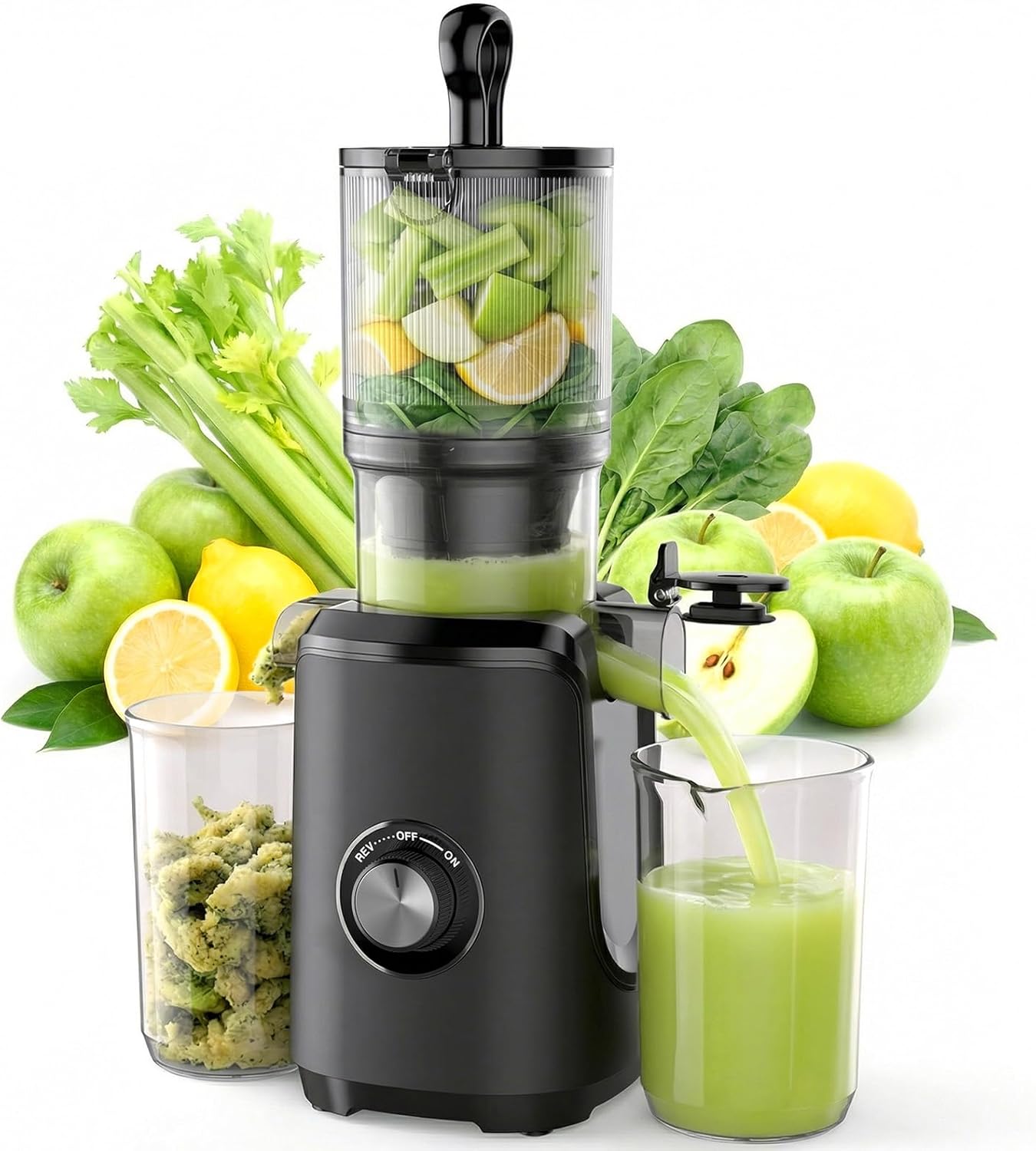
NEWBULIG Cold Press Juicer
| Wattage | 200 watts |
|---|---|
| Voltage | 120 volts |
| Feed chute | 4.25 inches |
| Material | ABS, PC, Silicone, Stainless Steel |
The NEWBULIG Cold Press Juicer is a budget-friendly single-auger masticating juicer designed to extract juice from fruits and vegetables while minimizing heat and oxidation. It uses a slow-speed motor to preserve nutrients and produces juice from leafy greens and dense produce with lower foam and separation than fast centrifugal machines. The 4.25-inch feed chute accepts whole carrots and many other items with minimal chopping, and the reverse function helps clear clogs without full disassembly. Detachable components and a supplied cleaning brush make cleanup straightforward, though parts are hand-wash only. The unit runs quietly and includes an automatic safety lock for added protection in busy kitchens. On the downside, it is powered by a modest 200-watt motor, so very tough roots or heavy continuous juicing sessions may be slower than higher-wattage models, and hand-wash care adds a bit of maintenance time. For casual daily juicing of leafy greens and mixed produce, it delivers good value for the price.
Best for: Buyers wanting an affordable, nutrient-focused juicer for regular home use who prioritize preserving vitamins from leafy greens and want minimal prep time.
Less Ideal for: Users who need high-throughput commercial performance or who want fully dishwasher-safe parts should consider higher-powered or premium models instead.
- Slow masticating motor preserves nutrients and reduces oxidation for better-tasting juice
- 4.25-inch wide feed chute reduces prep by fitting many whole fruits and vegetables
- Reverse function clears jams quickly without disassembly
- Detachable parts and included cleaning brush simplify cleaning and maintenance
- Quiet operation and safety lock make it suitable for home kitchens
- 200-watt motor can be slower on very hard or continuous juicing tasks
- Parts require hand washing rather than dishwasher-safe cleaning
Verdict: A cost-conscious masticating juicer that preserves nutrients and handles leafy greens well while keeping prep and noise low.
ECOSELF Cold Press Juicer

| Item material | Acrylonitrile Butadiene Styrene (ABS) |
|---|---|
| Special features | Easy to Clean; High Juice Yield; Reverse Function; Low Noise Motor; Self Feeding; Wide Feed Chute |
| ASIN | B0GF1YX1FN |
The ECOSELF cold press juicer is a slow masticating single-auger machine designed for everyday juicing of fruits, vegetables, and leafy greens. Its wide feed chute and self-feeding hopper let you drop in larger pieces or whole produce for a mostly hands-free process, which speeds morning routines and family use. The low-speed extraction and upgraded auger aim to reduce heat and oxidation, producing smoother, pulp-reduced juice while maximizing yield; the listing claims up to 99% extraction. A rotary one-touch control and a reverse function make operation straightforward and help clear occasional jams. Assembly is simple and cleaning is assisted by an included brush and an integrated filter design. Trade-offs are typical for masticating juicers: the machine runs slowly compared with centrifugal models, so longer run times are required for large batches, and its ABS construction means buyers looking for heavier-duty metal components may prefer other options. Support includes a two-year repair and replacement service after activation.
Best for: Buyers who prioritize reliable, nutrient-preserving cold-press extraction for regular leafy-green and vegetable juicing and want an easy, mostly hands-free workflow in their kitchen.
Less Ideal for: People who need very fast high-volume juicing for commercial use or who prefer all-metal, heavy-duty construction should consider different models.
- Wide feed chute with auto-feeding reduces prep time by fitting larger produce
- Slow masticating extraction preserves enzymes and reduces oxidation for smoother juice
- Reverse function and one-touch rotary control simplify use and help prevent clogs
- Designed for easy assembly and quick cleaning with included brush
- Slower processing speed compared with centrifugal juicers, so larger batches take more time
- Main exterior parts are ABS plastic rather than metal, which may feel less heavy-duty
Verdict: Choose this ECOSELF juicer if you want a reliable, nutrient-focused cold-press machine that makes leafy-green juicing easier with a wide chute and hands-free feeding.
EanOruus Cold Press Juicer E-18

| Capacity | 100 fluid ounces |
|---|---|
| Maximum Power | 250 watts |
| Power Source | ac |
| Voltage | 110 volts |
The EanOruus E-18 is a single-auger cold press juicer built for high-volume home use and versatile recipes. It accepts whole fruits and vegetables through a 6.5-inch chute into a 100 oz hopper, which reduces prep and lets you run several servings between refills. The brushless AC motor and 250 W power rating provide steady low-speed extraction that preserves nutrients and handles fibrous greens, while auto-reverse and overheat protection help clear clogs and protect the unit during heavier runs. Included juice and sorbet strainers plus a nut-milk option expand what you can make beyond plain juice. Detachable parts and a removable pulp outlet simplify cleaning, though many parts are hand-wash only so cleanup still needs effort. At about 12 pounds it is solid on the counter but not lightweight to move frequently. For leafy greens this juicer's single-auger design and strong motor deliver good yields, but expect slower throughput compared with centrifugal models and plan for routine cleaning after dense green batches.
Best for: Buyers who want a quiet, high-yield cold-press juicer for leafy greens and batch juicing and who value consistent nutrient extraction over speed.
Less Ideal for: People who need the fastest possible single-serve juices or who want a fully dishwasher-safe appliance.
- Extra-wide 6.5-inch chute reduces prep by fitting large whole fruits and vegetables
- Large 100 oz hopper lets you load multiple servings for batch juicing
- 250 W brushless AC motor provides steady low-speed extraction suitable for leafy greens
- Auto-reverse and overheat protection help prevent and clear clogs during heavy use
- Comes with multiple strainers to make juice, nut milk, and sorbet
- Detachable parts require hand washing, which adds time after juicing
- Slower throughput than centrifugal juicers for large-volume, quick jobs
Verdict: Choose this juicer if you want a quiet, high-capacity cold-press machine that extracts leafy greens efficiently and supports nut milk and sorbet making.
Ninja NeverClog Cold Press Juicer JC151

| Maximum Power | 150 watts |
|---|---|
| Number of Speeds | 2 |
| Capacity | 24 fluid ounces |
| Included Components | 24 oz juice jug, 36 oz pulp container, 2 pulp filters |
The Ninja NeverClog JC151 is a slow masticating juicer built to handle fibrous fruits and leafy greens without frequent clogging. Its 150-watt high-torque motor turns an auger at low speed to extract juice gently, which helps preserve nutrients and reduces foam compared with fast centrifugal machines. Two interchangeable pulp filters provide control over texture so you can make smoother green juices or thicker, fiber-rich blends, and the reverse function helps clear jams. The unit comes with a 24 oz juice jug and a 36 oz pulp container for larger batches and features an anti-drip lever for cleaner pours. Most juice-contact parts are dishwasher safe, and the design is compact enough for countertop use. Limitations include a relatively modest motor compared with heavy-duty commercial masticating models and a single-speed operation with only two program buttons, so extraction can be slower for large volumes. For everyday home use focused on leafy greens and fibrous vegetables, it balances yield, simplicity, and easier cleanup.
Best for: Buyers who want a reliable, easy-to-use cold press juicer for home use and prioritize consistent leafy-green extraction with minimal clogging and straightforward cleanup.
Less Ideal for: Users who need a commercial-capacity juicer for frequent high-volume juicing or who require variable speed controls for specialized recipes.
- High-torque 150W auger designed to process fibrous ingredients and leafy greens effectively
- Interchangeable pulp filters let you choose less or more pulp for texture control
- Large included juice jug and pulp container support batch juicing without frequent stops
- Reverse function helps clear jams and maximize extraction
- Most juice-contact parts are dishwasher safe for easier cleanup
- Motor power and single-speed design mean slower extraction for very large quantities
- Not a commercial-grade unit for heavy daily use
Verdict: Choose the Ninja NeverClog JC151 if you want a user-friendly cold press juicer that reliably handles leafy greens and fibrous produce with minimal clogging and easy cleanup.
Choosing the Right Cold Press Juicer for Leafy Greens: Key Factors to Consider
Leaf Extraction Efficiency
How much juice a machine can extract from leafy greens determines both yield and waste. Efficient extraction reduces the amount of raw produce you need and concentrates nutrients into the finished juice.
Leaves have a lot of trapped liquid in cellular structure, so machines that compress and shear gently at low speed usually perform best. Look for juicers that leave the pulp as dry as possible without overheating the product, which preserves enzymes and keeps flavor bright.
Auger and Screen Design
The geometry and material of the auger and the matching screen control how leaves are crushed and strained. A tightly fitting auger with gentle threads pulls leafy bundles into the screen and squeezes juice out slowly, while the screen separates fiber with minimal friction.
Metal or reinforced polymer components resist bending and clogging. Screens with accessible openings or removable sections make it easier to clear stringy bits of pulp that would otherwise trap moisture and slow extraction.
Motor Torque and Speed
Leafy greens are wet and springy, which can stall low-power motors or cause augers to bog down. Adequate torque at slow speeds is more important than raw RPMs for leafy juicing because it sustains steady pressure without heating the juice.
Consistent low-speed operation minimizes oxidation and keeps foam and heat to a minimum. Look for units rated for continuous operation if you plan on higher-volume juicing sessions.
Ease of Cleaning and Maintenance
Cleaning is the most frequent friction point for leafy juicing. Residual wet pulp can cling to screens, augers, and feed chutes, so designs that allow quick disassembly and rinsing save time and keep the machine hygienic.
Parts that are dishwasher-safe or that have wide access points reduce buildup. Also consider how easy it is to scrape or brush away stringy material and whether replacement parts are straightforward to source and install.
Feed-Chute and Hopper Usability
Feed-chute size and orientation affect how you prepare leafy bundles. A tall, narrow chute may require more packing but fits whole leaves; a wider chute reduces prep work but can compromise feeding control.
Ergonomic hoppers and tampers that allow steady, gentle pressure help feed leafy material without overworking the auger. Consider how often you will need to stop and clear jams versus continuous feeding capability.
Pulp Dryness and Pulp Management
The dryness of the expelled pulp indicates extraction quality and affects cleanup frequency. Drier pulp means more juice and less wasted produce, but overly dry pulp can signal overwringing or extractive imbalance.
Pulp collection design matters for emptying and composting. Removable, sealed pulp containers reduce mess, and visible pulp chambers let you monitor extraction without stopping the machine.
Why Low Speed Matters for Greens
Cold press juicers typically operate at low RPMs to reduce heat and oxidation during extraction. For leafy greens, slower speeds mean less foaming and gentler cell rupture, which preserves color and delicate flavors.
Low-speed operation also reduces foam and the amount of fines that can clog screens, but it relies on sufficient torque to keep processing wet bundles. When selecting a machine, prioritize consistent low-speed torque over top-end speed figures.
- Lower oxidation and heat retention
- Less foam and a clearer juice
- Requires good motor torque to avoid stalling
Preparing Leafy Ingredients for Best Results
How you prep greens affects yield. Trim thick stems when necessary and loosely bundle leaves rather than compacting them too tightly. For very fine grasses, a short pulse with a blender before feeding can loosen cell walls and improve extraction in some setups.
Wetting very dry greens can help prevent static and powdery residue. However, excess water will dilute the juice and should be avoided if your goal is a concentrated green shot.
- Remove large woody stems where appropriate
- Bundle leaves loosely for steady feeding
- Avoid adding excess water before juicing
Cleaning Tricks That Save Time
Tackle screening and auger residue immediately after juicing. Rinsing parts right away prevents fiber from drying into crevices and makes brushing or scraping faster. Use a narrow brush to clear screen holes and a soft scraper for auger flights.
Consider a quick cold-water run with the juicer partially assembled if the design allows it. This can flush stringy fibers from the feed path before full disassembly, cutting your cleaning time in half.
- Rinse parts immediately after use
- Use a dedicated screen brush
- Run a short cold-water flush if supported
Managing Small-Batch Versus Batch Juicing
If you juice daily for one or two servings, prioritize machines that are quick to assemble and clean. For larger batches, look for units with higher continuous-run capability and bigger pulp containers to avoid frequent stops.
Consider whether you want to process multiple greens in sequence. Some designs handle alternating ingredients with minimal flavor transfer, while others require cleaning between batches to avoid bitterness.
- Small-batch: fast assembly and minimal cleaning
- Large-batch: higher torque and larger pulp bins
- Plan for possible cleaning between different greens
Juice Texture and Straining Options
Leaf juices can be grassy or pulpy depending on screen fineness. If you prefer a very smooth juice, choose a finer screen or plan to strain through a secondary mesh. Coarser screens yield thicker, more textured green juices that retain more fiber.
Some users like to combine leafy juice with fruit for balance, which can alter viscosity and require different screen choices. Think about the mouthfeel you prefer when assessing screen options.
- Fine screens produce clearer, smoother juice
- Coarse screens keep more pulp and body
- Secondary strainers adjust texture without changing machine
How We Chose the Best Cold Press Juicer for Leafy Greens
We focused on criteria that directly affect how well a cold press juicer handles leafy greens and the day-to-day experience of using one. Primary factors included leaf extraction efficiency, which measures how much juice and nutrients a machine can coax from soft, fibrous greens; auger and screen design, which affects breakage and oxidation; and ease of cleaning, since leafy juicing often leaves wet, stringy residue. We also evaluated motor torque and slow-speed consistency to ensure the unit can process wet bundles without stalling, plus feed-chute design and hopper ergonomics for comfortable continuous juicing. We excluded centrifugal and high-speed machines because their extraction method is not optimized for delicate leaves. We also filtered out units with poor serviceability or inaccessible parts that make regular cleaning impractical. Where possible, we prioritized designs that balance extraction with low heat and low oxidation. The scoring emphasized measurable specs and user-facing features rather than marketing claims, and machines were selected based on their demonstrated suitability for frequent, leaf-heavy juicing routines.
Our full evaluation process is outlined in our review methodology.
FAQ
Can a cold press juicer handle wheatgrass and other very fine leaves?
Often yes. Many cold press juicers built for leafy greens include augers and screens designed to compress very fine fibers. Very fine grasses may still require tighter packing or a specific screen insertion to optimize extraction.
How often do I need to clean the screen when juicing greens?
Usually cleaning after each session is best. Leafy fibers are wet and can clog screen holes quickly, so rinsing and brushing the screen after every use prevents buildup and maintains extraction efficiency.
Will juicing leafy greens damage the motor over time?
That depends on motor torque and duty cycle. Machines with adequate low-speed torque and ratings for continuous use are less likely to suffer strain. Avoid forcing large overpacked bundles into the feed chute to reduce motor load.
Is pulp from leafy greens good for composting?
Yes. The wet, fibrous pulp from greens is generally suitable for composting. Because it is moist, mix it with drier brown materials to maintain airflow and avoid compacting the compost pile.
Do I need to pre-cut leaves before feeding them into the juicer?
It depends on feed-chute size. For narrow chutes, roughly chopping or loosely rolling leaves makes feeding smoother. Wider chutes often accept larger leaves without prep, but bulky stems may still need trimming.
Final Verdict
For leaf-heavy juicing, prioritize machines that combine steady low-speed torque, a well-designed auger and screen, and easy-to-service parts. Those three tradeoffs determine whether you get high yield, minimal oxidation, and a manageable cleanup routine. Decide first whether you value speed or extraction efficiency. If you juice small daily portions, pick a model that is quick to clean. If you process larger batches, favor torque and pulp capacity. Balance these priorities against the space and maintenance time you are willing to commit to choose confidently.