
Note: This article contains affiliate links. If you click on these links and make a purchase, we may earn a small commission at no extra cost to you. This helps support our research and content. Read our full affiliate disclosure here.
If you want fresher juice without wasting produce or spending a lot, choosing the right Cold Press Juicer under $100 makes a big difference. A good low-cost model keeps pulp dry, extracts more vitamins, and runs quietly enough for daily use. This guide shortlists seven top options that balance extraction efficiency, ease of cleaning, and durable parts so you get usable, nutrient-rich juice from fruits and vegetables. Below you will find the best budget cold press juicers we shortlisted, along with the criteria we used to evaluate them and practical tips for picking the right model for your routine. Use the evaluation notes to match capacity and upkeep demands to how often you plan to juice.
Top Picks at a Glance
| Best Overall The best all-around choice for most situations | AAOBOSI Cold Press Juicer |  |
| Best Quality Built to a higher standard if you want something more solid | Omega Cold Press 365 H3000D |  |
| Best Value The sweet spot between price and what you get | SUSTEAS Cold Press Juicer MP802K |  |
| Best Budget The cheapest option that still gets the job done reliably | NEWBULIG Cold Press Juicer |  |
| Top Rated A top-rated pick with lots of positive feedback | ECOSELF Cold Press Juicer |  |
| Most Popular A crowd favorite that many people choose with confidence | AMZCHEF Masticating Juicer 1902B |  |
| Best Seller A high-volume bestseller chosen again and again | TUUMIIST Cold Press Juicer TM-580SJ |  |
AAOBOSI Cold Press Juicer
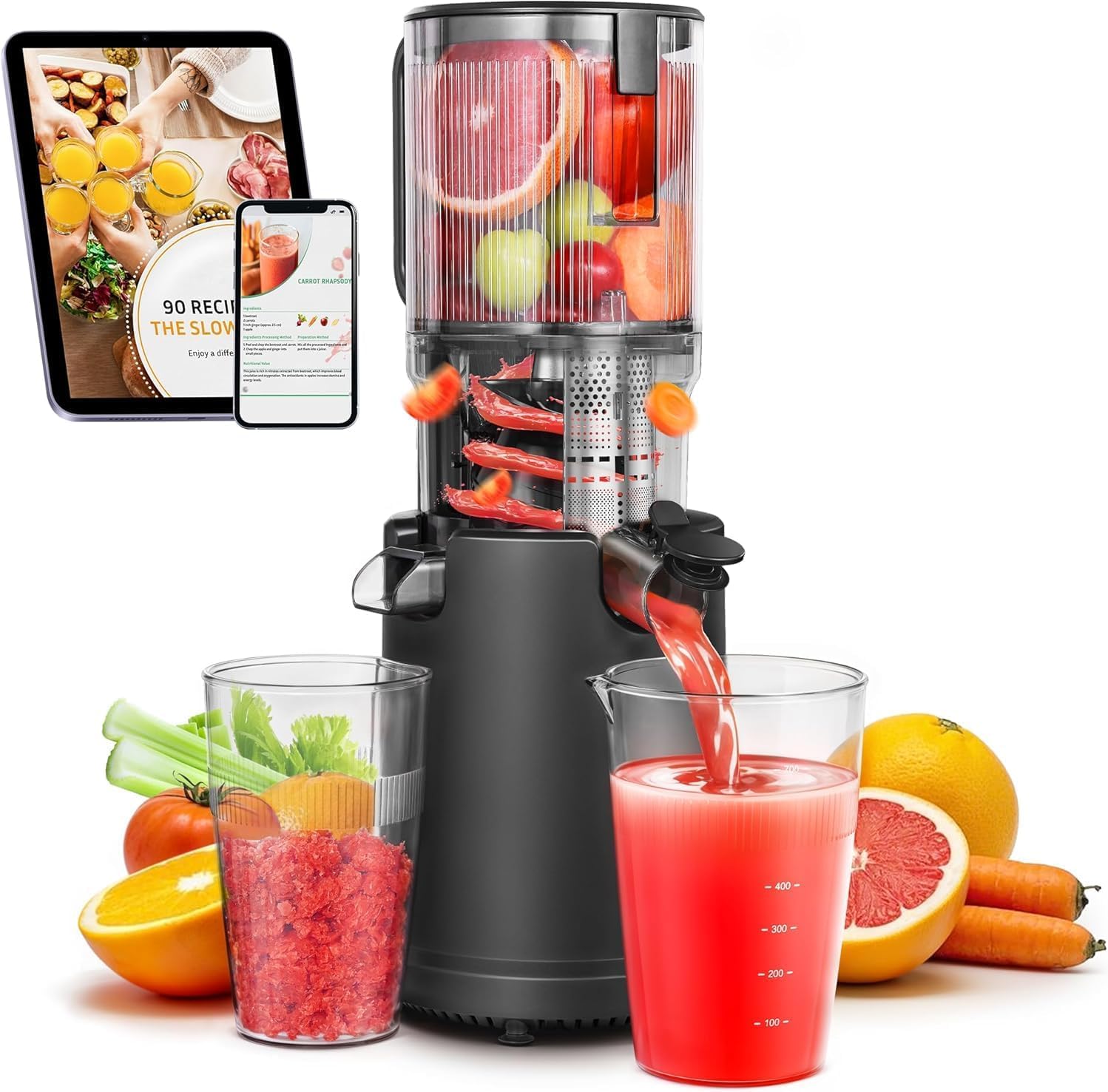
| Special Features | Whole Fruit Processing |
|---|---|
| Wattage | 200 watts |
| Maximum Power | 200 watts |
| Blade Material | Stainless Steel |
The AAOBOSI Cold Press Juicer is a slow masticating single-auger unit built to handle whole fruits and many vegetables without extensive prep thanks to its 5.4-inch wide chute. It runs at low speed (about 60 RPM) with a 180W continuous / 200W peak motor to extract juice gently, which helps preserve nutrients and reduces foam when paired with the dual mesh filtration. The stainless steel blades and included cleaning brush make maintenance straightforward, though parts are hand-wash only. Practical benefits include higher juice yield compared with centrifugal juicers, quieter operation (around 58–60 dB) suitable for morning routines, and the ability to process tougher items like ginger, beet, and wheatgrass. Limitations are that it is a basic single-speed design without preset programs or dishwasher-safe components, and the unit produces pulp that you will need to manage if you prefer zero-residue juicing. For the price range it offers solid extraction performance and quiet, energy-efficient operation for everyday home juicing.
Best for: Buyers who want an affordable, quiet cold-press juicer that maximizes yield from whole fruits and typical vegetables for daily family use and simple meal prep.
Less Ideal for: People who need dishwasher-safe parts, variable-speed control, or professional-level throughput for heavy commercial use should consider higher-end models.
- 5.4-inch wide chute accepts whole fruits and reduces prep time
- Low-speed 60 RPM motor preserves nutrients and reduces foam
- Dual/triple filtration yields smoother, pulp-reduced juice
- Relatively quiet operation suitable for early-morning use
- Stainless steel blade material for tougher produce and durability
- Components require hand washing; not dishwasher safe
- Single-speed unit lacks program customization or variable speed control
Verdict: A quiet, energy-efficient cold-press juicer that delivers high juice yield from whole fruits and vegetables at a budget-friendly price.
Omega Cold Press 365 H3000D
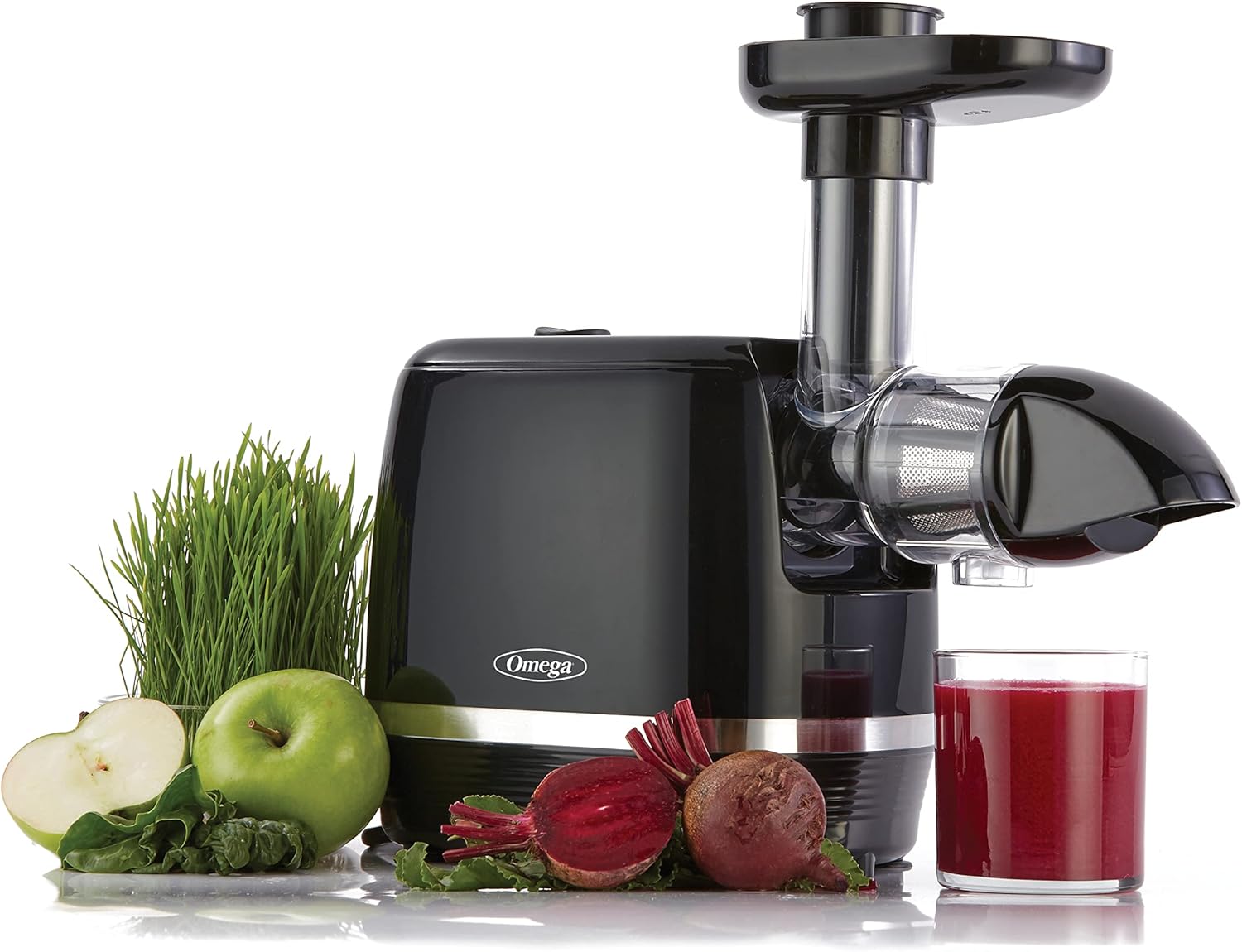
| Wattage | 150 watts |
|---|---|
| Power Source | Corded Electric |
| Number of Speeds | 1 |
| Maximum Power | 150 watts |
The Omega H3000D Cold Press 365 is a horizontal masticating juicer that runs at a low 90–110 RPM to minimize heat and oxidation while extracting juice from fruits, vegetables, greens, and wheatgrass. It uses a triple-stage auger and slow squeezing technology to increase yield and produce smoother, less foamy juice, and the motor provides enough torque to handle tougher produce with relatively low noise. Removable parts (except the drum) are top-rack dishwasher safe, and the included fine and coarse screens let you choose clearer or thicker juice textures. Because it is a single-speed, manual-style machine there is little to adjust during use, which keeps operation straightforward but limits control for specific ingredients. The unit is compact and built for daily home use, though its plastic construction means buyers should handle parts carefully and expect some wear over time. For shoppers focused on nutrient retention and consistent juice yield on a budget, this model offers strong cold-press performance for its class.
Best for: Buyers who prioritize extracting nutrient-dense juice and high yield on a budget and want a quiet, easy-to-use juicer for regular home use.
Less Ideal for: Those who need variable speeds, heavy commercial use, or a metal-bodied, long-term heavy-duty machine should consider higher-end alternatives.
- Low 90–110 RPM operation preserves enzymes and reduces oxidation
- Triple-stage auger increases juice yield and produces smoother juice
- Quiet motor suitable for everyday use
- Most removable parts are top-rack dishwasher safe for easier cleanup
- Single-speed design offers limited control for delicate or varied ingredients
- Plastic construction may feel less durable than higher-end metal models
Verdict: If you want a quiet, nutrient-preserving cold press juicer that delivers good juice yield for everyday home use under $100, the Omega H3000D is a practical pick.
SUSTEAS Cold Press Juicer MP802K

| Maximum Power | 300 watts |
|---|---|
| Wattage | 300 watts |
| Voltage | 110 volts |
| Capacity | 1.5 liters |
The SUSTEAS MP802K is a slow masticating cold press juicer built to handle whole produce with minimal prep thanks to its 5.3-inch feed chute and single-auger design. It runs on a 300-watt motor and uses a low-speed extraction process to separate juice from pulp into the included 550ml juice cup and 470ml pulp cup, which helps retain nutrients and yield more juice from carrots, apples, celery and similar produce. The unit includes an auto-reverse anti-clogging function, a safety lock that prevents the motor from running until assembled correctly, and a streamlined juicing bowl and strainer for easier rinsing plus a cleaning brush. Practical buyers will appreciate easy assembly, hand-wash care, and the ability to process larger items without cutting, but the ABS construction and hand-wash requirement mean it is not fully dishwasher-friendly and the manufacturer advises against juicing highly acidic fruits to avoid rotor corrosion. For budget-conscious users seeking a compact, no-frills cold press under $100, it delivers solid juice yield with straightforward maintenance.
Best for: Buyers who want a cost-effective, low-speed juicer that minimizes chopping and focuses on consistent juice yield and simple day-to-day maintenance.
Less Ideal for: People who need to juice citrus or very acidic fruits regularly or who prefer fully dishwasher-safe components and premium metal construction.
- Large 5.3-inch feed chute reduces prep by fitting whole fruits and vegetables
- Auto-reverse function helps clear jams and reduces downtime
- 300-watt motor designed for steady low-speed extraction and good juice yield
- Streamlined bowl and included brush make rinsing parts quicker after use
- Not suitable for highly acidic fruits which can corrode the rotor
- Main parts require hand washing rather than dishwasher cleaning
Verdict: If you want a practical, budget-friendly cold press that handles whole fruits and boosts yield without complex features, this SUSTEAS model is a solid under-$100 pick.
NEWBULIG Cold Press Juicer
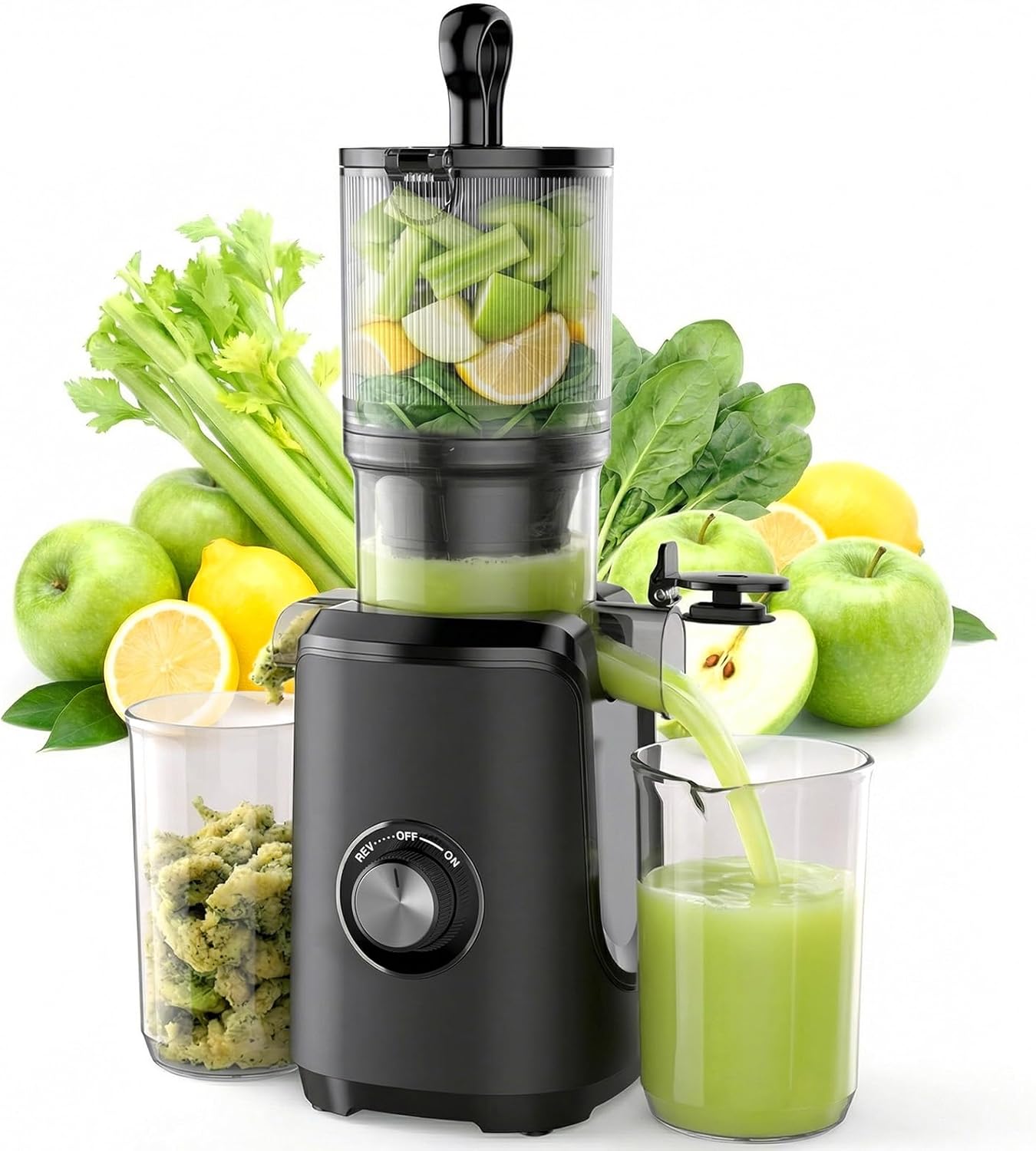
| Wattage | 200 watts |
|---|---|
| Voltage | 120 volts |
| Feed chute | 4.25 inches |
| Material | ABS, PC, Silicone, Stainless Steel |
This NEWBULIG cold press juicer is a budget-friendly masticating machine aimed at everyday home juicing. It uses a slow, low-speed auger to minimize heat and oxidation, producing juice that retains more nutrients and taste than typical centrifugal models. The 4.25-inch feed chute accepts many whole fruits and vegetables so you can skip some prep, and the reverse function clears clogs quickly without full disassembly. Parts detach easily and a cleaning brush is included, though the manufacturer recommends hand washing. Safety features include a blade-free design and an automatic safety lock that stops operation when opened, which is handy in busy kitchens. At 200 watts the motor is quiet for countertop use, but hand washing and occasional pulp clearing are required maintenance. For buyers needing heavy daily commercial use or fully dishwasher-safe parts, a higher-end model may be a better fit, but for home juicing on a tight budget this unit offers solid juice yield and simple operation.
Best for: Buyers looking for an affordable cold-press juicer that prioritizes juice quality and easy everyday use on a tight budget.
Less Ideal for: Users who need a commercial-grade juicer or prefer dishwasher-safe parts for minimal cleaning effort.
- Slow masticating auger preserves nutrients and reduces oxidation
- Wide 4.25-inch feed chute reduces prep time by fitting many whole fruits and vegetables
- Reverse function quickly clears clogs without full disassembly
- Quiet 200W motor suitable for countertop use
- Easy to disassemble and comes with a cleaning brush for maintenance
- Parts must be hand washed; not listed as dishwasher-safe
- Not intended for heavy commercial use
Verdict: A budget-friendly masticating juicer that delivers higher-quality, nutrient-preserving juice with a roomy feed chute and helpful clog-reverse feature.
ECOSELF Cold Press Juicer

| Material | Acrylonitrile Butadiene Styrene (ABS) |
|---|---|
| Special Features | Easy to Clean; High Juice Yield; Reverse Function; Low Noise Motor; Self Feeding |
| Item Dimensions D x W x H | 7.68"D x 13.66"W x 14.96"H |
The ECOSELF Cold Press Juicer is a slow masticating, single-auger juicer designed for daily home use. It accepts whole fruits and vegetables through a wide feed chute and uses a self-feeding, hands-free design so you can drop produce in without trimming or constant nudging. The low-speed extraction reduces heat and oxidation to preserve nutrients and produces a relatively smooth, low-pulp juice while the reverse function clears clogs. Assembly is straightforward and the included brush makes cleaning faster than many masticating models, which helps for regular use. The manufacturer highlights up to 99% juice yield and the unit advertises a high-power low-noise motor that runs quietly during operation. Limitations are typical for slow juicers: it is a bit slower than centrifugal models for large batches and fibrous leafy greens may require extra passes. The plastic ABS construction keeps weight and cost down but may feel less premium than metal-bodied machines. For buyers prioritizing reliable, nutrient-preserving extraction on a budget, this model is a practical choice.
Best for: Buyers who want a dependable, nutrient-focused juicer for regular home use and prioritise ease of use, minimal prep, and consistent cold-press extraction on a budget.
Less Ideal for: People who need very fast throughput for large batches, professional use, or who prefer a heavier metal-bodied machine for long-term durability.
- Wide feed chute accepts whole fruits and vegetables to reduce prep time
- Slow masticating extraction preserves nutrients and reduces oxidation
- Self-feeding, hands-free design for convenient operation
- Reverse function helps prevent and clear jams
- Included brush and simple assembly make cleaning quicker than comparable models
- Slower throughput than centrifugal juicers for large-volume juicing
- ABS plastic construction feels less durable than metal alternatives
Verdict: A budget-conscious cold-press juicer that reliably preserves nutrients and reduces prep time with a wide chute and hands-free feeding.
AMZCHEF Masticating Juicer 1902B

| Wattage | 300 watts |
|---|---|
| Maximum Power | 350 watts |
| Power Source | Electric |
| Voltage | 120 volts |
| Capacity | 5 pounds |
This AMZCHEF 1902B is a budget-friendly cold press masticating juicer built to handle whole fruits and vegetables with minimal prep thanks to its 5.4-inch wide feed chute. It uses a single auger and upgraded spiral to squeeze juice slowly, producing higher yield and relatively dry pulp separation for smoother juice. The unit emphasizes durability with stainless steel components and a stout motor reported to handle tough items like carrots without stalling, and an auto-reverse plus overheat protection helps prevent jams. Detachable parts and straightforward one-button operation make assembly and rinsing quick, although the manufacturer recommends hand washing removable pieces. Power is modest (300 watts nominal, 350 watts max) so expect slower processing than high-power centrifugal machines, and the unit size and 5-pound capacity suit small to medium household batches rather than continuous heavy commercial use. Given its features and safety protections, it provides solid performance for daily home juicing at an entry-level price point.
Best for: Buyers who want a reliable, low-cost cold press juicer that minimizes prep time and focuses on steady daily juice yield with safety features and proven user reviews.
Less Ideal for: Users who need very fast throughput, commercial-level continuous juicing, or prefer dishwasher-safe parts should consider higher-end or different models.
- 5.4-inch wide feed chute accepts whole fruits and reduces prep time
- Masticating single auger and enlarged spiral improve juice yield and dry pulp separation
- Stainless steel blade and body for greater durability
- Auto-reverse and overheat protection reduce jamming and protect the motor
- Detachable parts and simple one-button operation for easier cleaning and use
- Hand wash only for removable parts rather than dishwasher-safe
- 300–350 watt power is modest, so juicing is slower than high-speed centrifugal models
Verdict: A practical low-cost masticating juicer that handles whole produce with high juice yield and built-in protections, making it a strong value pick under $100.
TUUMIIST Cold Press Juicer TM-580SJ
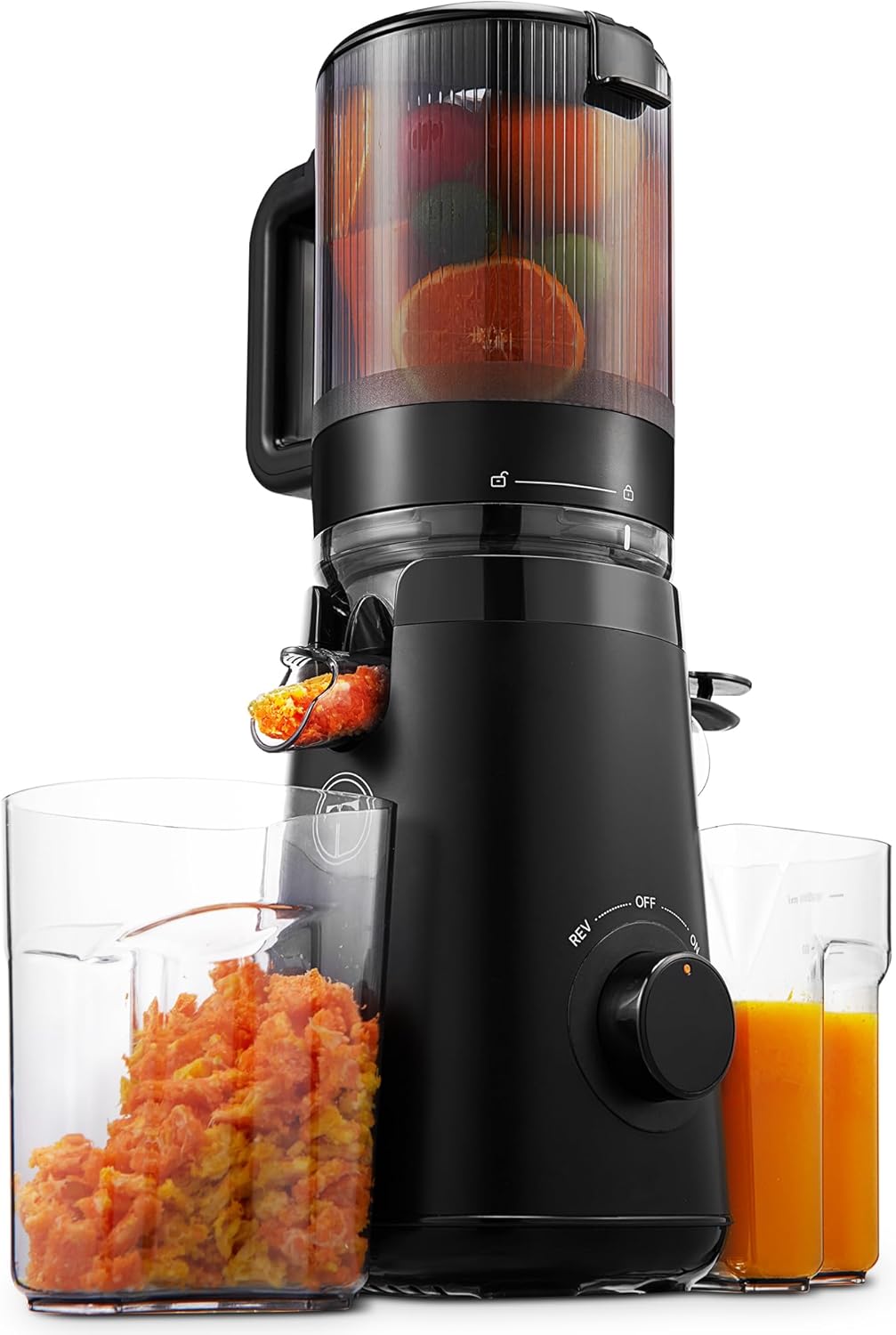
| Maximum Power | 300 watts |
|---|---|
| Wattage | 300 |
| Power Source | AC |
| Voltage | 120 volts_of_alternating_current |
| Number of Speeds | 55 |
This TUUMIIST masticating juicer uses slow 55 RPM cold-press extraction to maximize juice yield while preserving nutrients, and its 300 W motor handles whole fruits and vegetables via a 5.8-inch feed chute so you often skip pre-cutting. It is intended for steady home use: load produce into the hopper, let the auger crush and squeeze, then collect juice in the cup and pulp in the residue container. Notable features include a no-mesh design intended to simplify cleanup, a single-speed knob controller, and a compact one-piece assembly that comes with a cleaning brush. Practical benefits are strong: higher juice yield than centrifugal models, quieter operation, and less prep time thanks to the large chute. Limitations to consider are modest motor power compared with commercial models and a single slow speed so it is best for typical fruits and softer greens rather than heavy fibrous roots, and the plastic ABS construction is functional but not premium metal. For buyers focused on cost-efficient cold-press juicing under $100, this offers a lot of capability with straightforward maintenance.
Best for: Buyers who want an affordable, low-noise cold-press juicer that maximizes yield for everyday fruit and soft-vegetable juicing and prefer minimal prep and easy cleaning.
Less Ideal for: Users who need heavy-duty, commercial-grade extraction, frequent root-vegetable juicing, or a metal-bodied appliance for long-term heavy use should consider more robust models.
- Large 5.8-inch feed chute accepts whole fruits and reduces prep time
- Slow 55 RPM cold-press extraction for higher juice yield and nutrient retention
- Comes with cleaning brush and a simple one-piece design for faster cleaning
- Quiet operation and efficient 300 W motor for home use
- ABS plastic construction is less durable and premium-feeling than metal alternatives
- Single speed limits flexibility for very fibrous or hard produce
Verdict: A budget-friendly cold-press juicer that delivers high juice yield and easy cleanup for everyday home juicing under $100.
Choosing the Right Cold Press Juicer: Key Factors to Consider
Juice Yield and Extraction Efficiency
How much juice a machine extracts from the same amount of produce is the single most important performance factor for cold press juicers. Higher yield reduces waste, lowers per-serving cost, and means you can get more servings from the same groceries. Consider the dryness of the expelled pulp, which is a visible indicator of extraction efficiency.
For budget models, look for designs with a slow-turning auger and a tight filtration system. These features squeeze more liquid out of leafy greens and fibrous fruits than basic masticating designs with loose tolerances. Expect some variability across produce types; tougher greens and wheatgrass are usually harder to extract efficiently but a better-built budget press can still outperform a low-end centrifugal juicer.
Ease of Cleaning and Maintenance
Cleaning effort has a big effect on whether you will use the juicer daily. Machines that require lengthy disassembly or have many small parts are less likely to be used regularly. Prioritize units with a small number of removable parts that are dishwasher-safe or easy to rinse under running water.
Also consider the accessibility of screens and augers for scrubbing. Models that trap pulp in hard-to-reach channels will take longer to clean and can harbor residue over time. Check whether replacement filters and seals are common or proprietary; readily available parts reduce downtime and long-term maintenance hassles.
Motor Strength and Reliability
Motor torque and reliability determine whether the juicer can handle harder produce without stalling or overheating. Cold press juicers operate slowly and rely on torque more than RPM. Even at a budget price, units with consistent torque and thermal protection are preferable because they maintain pressure during long extractions and protect the motor from damage.
Look for simple overload protection and a steady, low-speed motor rather than a small high-RPM unit. Motors that strain when processing fibrous items will shorten the overall appliance life and increase the need for resets or repairs.
Build Materials and Part Quality
Materials affect both performance and longevity. Metal augers and stainless screens tend to last longer than cheaper plastic components, and thicker housings reduce vibration and noise. For budget juicers, a mix of reinforced plastic and a few metal parts often strikes the best balance between cost and durability.
Also evaluate the quality of seals and gaskets. Poor sealing leads to leaks and messy counters. Consider how parts mate together and whether the locking mechanisms feel secure; flimsy fittings can loosen over time and affect extraction efficiency.
Countertop Footprint and Capacity
Size matters if you have limited counter or storage space. A compact cold press juicer may fit smaller kitchens but could have smaller feeder chutes that require more prep work. Larger models can accept whole fruits more easily and process larger batches, which suits meal-prep habits or families.
Think about the juice container capacity and whether the pulp bin will fill quickly. If you plan to juice daily for multiple people, a larger pulp drawer reduces interruptions. Conversely, single-serve users often prefer compact units that are quicker to clean and store.
Noise Level and Operating Comfort
One advantage of slow cold press juicers is lower noise compared with centrifugal machines, but budget units can still vary. If you juice in the early morning or in open-plan living spaces, choose a quieter model to avoid disturbing others.
Also assess ergonomic details such as spout placement, drip control, and the ease of loading produce. Comfortable operation makes routine juicing less of a chore and increases the likelihood you will stick with healthy habits.
What Makes a Cold Press Juicer Different
Cold press juicers extract juice by crushing and pressing produce at low speeds rather than shredding at high RPMs. This slower action reduces heat and air exposure during extraction, which helps preserve delicate nutrients and colors. The design typically uses an auger and tight filter assembly to separate liquid from fiber.
For buyers on a budget, it is important to understand that lower-cost cold press units can still deliver the core benefits of slow extraction, but they will differ in materials, torque, and cleaning convenience. Knowing the mechanical tradeoffs helps set realistic expectations about throughput and maintenance.
- Slower extraction preserves nutrients and reduces oxidation
- Auger-driven design emphasizes torque over high RPM
- Tighter filters give drier pulp but require cleaning
Preparing Produce for Best Results
Proper preparation affects yield and machine strain. Cut hard roots and large fruits into smaller chunks that fit the feed opening. Removing pits and very tough skins where possible reduces wear on the auger and improves throughput.
Leafy greens benefit from rolling or compacting into small bundles before feeding. For citrus, removing thick rinds before processing on some cold press units improves flavor and prevents excess pith from entering the juice.
- Trim tough stems and cores before juicing
- Pre-chop large items to match chute size
- Bundle leafy greens to improve extraction
Daily Use Tips to Extend Lifespan
Rinse or disassemble immediately after each use to prevent dried-on residue. Leaving pulp to dry can make cleaning far more difficult and increase bacterial growth. Quick rinses also reduce the need for heavy scrubbing later.
Avoid overloading the chute; feed produce at a steady pace to prevent motor stalls. If the unit has an overload or reverse function, consult the manual for proper use to clear jams without damaging parts.
- Rinse components promptly after juicing
- Feed produce at an even pace to avoid stalls
- Use reverse or manual jam-clearing per instructions
Common Tradeoffs in Budget Cold Press Juicers
Budget models balance cost with materials and feature sets. You might trade slightly lower extraction efficiency for easier cleaning or accept more plastic parts in exchange for a smaller footprint. Consider which compromises you can live with based on how often you will use the machine.
Also expect variation in warranty terms and part availability. Simpler mechanical designs often have fewer failure points, but check how intuitively the unit disassembles and whether basic wear items like screens are replaceable.
- Lower price may mean more plastic components
- Smaller chutes require more prep work
- Simpler designs can be more reliable long-term
Maximizing Nutrient Retention
To get the most nutrient benefit, drink juice soon after extraction. Even with cold press technology, exposure to air begins oxidation. Storing juice in an airtight container and refrigerating immediately will slow nutrient loss but fresh is best.
Choosing produce at peak ripeness and minimizing heat during processing are additional simple steps. Cold press juicers already reduce heat generation, but short processing times and immediate consumption maximize vitamin and enzyme retention.
- Consume fresh or refrigerate immediately in sealed containers
- Process ripe produce for higher nutrient yields
- Minimize time between pressing and drinking
How We Chose the Best Cold Press Juicer
We focused on factors that matter most when buying an affordable cold press juicer. First, extraction efficiency was a priority because the whole point of a slow press is higher juice yield and drier pulp. We also evaluated build materials and components that influence longevity under regular home use, including auger and screen quality. Ease of cleaning was another core filter since complicated teardown deters daily juicing. Noise level and motor durability were assessed to ensure the machines are practical for morning routines. Finally, user ergonomics such as feeder size, pulp ejection, and drip control were considered because they affect speed and mess. We excluded countertop models that rely on high-speed centrifugal extraction and any units that lacked clear parts or replacement availability. We did not include high-end or commercial units because those fall well outside the budget scope. The shortlist therefore emphasizes efficient cold-press mechanics, straightforward disassembly, reasonable motor reliability, and parts quality that typically matter for long-term home use.
Our full evaluation process is outlined in our review methodology.
FAQ
Are cold press juicers worth it at this price?
Often yes. Even budget cold press juicers can deliver better juice yield and lower oxidation than centrifugal models. Expect some material and throughput compromises, but many provide meaningful nutrient and flavor advantages for everyday use.
How often should I clean a cold press juicer?
You should rinse or disassemble and clean after every use. Quick cleaning prevents dried pulp buildup and reduces the need for deep scrubbing. Some components may be dishwasher-safe, but hand rinsing is the fastest way to keep the unit ready.
Can I juice leafy greens and wheatgrass with a budget model?
It depends on the unit's torque and auger design. Many budget cold press juicers can handle leafy greens reasonably well, but results vary. You may need to compact greens and feed them slowly for the best extraction.
Will a cheaper cold press juicer last long?
Lifespan varies with build quality and maintenance. Proper care, avoiding overloads, and prompt cleaning increase longevity. Look for sturdier parts and replaceable wear items to extend service life.
How dry should the pulp be after juicing?
Drier pulp indicates better extraction. While budget units may not achieve bone-dry pulp like commercial machines, a noticeably damp but not dripping pulp is typical of a good cold press juicer in this price range.
Final Verdict
When shopping for a Cold Press Juicer under $100, prioritize extraction efficiency, ease of cleaning, and motor torque. Those factors most directly affect how much usable juice you get, how often you will use the machine, and how long it will last. Accepting modest material compromises can be sensible if the unit scores well on yield and maintenance convenience. Ultimately, choose a model that matches your daily habits: compact and quick-to-clean units suit single users, while slightly larger machines with better pulp capacity are better for batch juicing. Focus on the tradeoffs discussed earlier to pick a practical, durable option that keeps you juicing regularly.