
Note: This article contains affiliate links. If you click on these links and make a purchase, we may earn a small commission at no extra cost to you. This helps support our research and content. Read our full affiliate disclosure here.
Choosing the right Cold Press Juicer under $300 matters if you want better juice yield, more nutrients, and a machine you will actually use regularly. A slow-rotation juicer extracts more juice from greens and soft fruits while producing less heat and foam, which helps preserve flavor and vitamins. This guide highlights seven shortlisted Cold Press Juicers that fit the under-$300 constraint and are practical for daily home use. We evaluated each pick on extraction efficiency, ease of cleaning, build quality, and noise and footprint so you can quickly find the model that suits your kitchen habits. Read on to see what matters and which features to prioritize before you buy.
Top Picks at a Glance
| Best Overall The best all-around choice for most situations | Amzeth Cold Press Juicer |  |
| Best Quality Built to a higher standard if you want something more solid | Omega J8006HDC Cold Press Juicer |  |
| Best Value The sweet spot between price and what you get | AMZCHEF Cold Press Juicer 1902B |  |
| Best Budget The cheapest option that still gets the job done reliably | NEWBULIG Cold Press Juicer |  |
| Top Rated A top-rated pick with lots of positive feedback | anybear Cold Press Juicer SJ054C |  |
| Most Popular A crowd favorite that many people choose with confidence | EanOruus 3-in-1 Cold Press Juicer E-18 |  |
| Best Seller A high-volume bestseller chosen again and again | Ninja NeverClog Cold Press Juicer JC151 |  |
Amzeth Cold Press Juicer

| Wattage | 450 watts |
|---|---|
| Capacity | 100 fluid ounces |
| Feed chute | 6.5-inch wide chute |
| Special Features | Easy to Clean, Reverse Function, Smart Touch Control |
This Amzeth masticating juicer is built around a 450W AC motor and a single-auger slow-extraction design aimed at preserving nutrients and reducing foam. It accepts whole fruits and vegetables through a 6.5-inch wide chute so you can skip much of the prep work, and the 100-ounce hopper supports batch juicing for families or small gatherings. Controls are on a touch panel with one-key start, pause and reverse to clear jams, and the unit offers four modes including juice extraction, nut and soy milk, sorbets and pulp separation. Cleaning is eased by dishwasher-safe parts and a supplied brush, and the manufacturer highlights quiet operation and sturdy plastic components. Practical limitations include reliance on plastic parts rather than metal, which may affect long-term durability, and the unit is relatively large on the counter. It is a versatile, user-friendly cold press option for frequent home juicing that prioritizes convenience and gentle extraction over premium metal construction.
Best for: Buyers who want an easy-to-use, multifunction cold press for daily family juicing and batch runs, valuing convenience and quiet operation over premium metal finishes.
Less Ideal for: Those seeking a compact travel-friendly juicer or a heavy-duty, all-metal commercial-style machine should consider other options.
- 6.5-inch wide chute reduces prep by accepting whole fruits and vegetables
- Large 100 oz hopper supports batch juicing for families or parties
- Multi-function design handles juice, nut/soy milk, sorbets and grinding
- Smart touch controls with reverse function help prevent and clear clogs
- Dishwasher-safe parts and included brush make cleaning easier
- Plastic construction for major components rather than metal may reduce long-term durability
- Bulky footprint that requires significant counter space
Verdict: A roomy, quiet and versatile cold-press juicer that cuts prep time and handles family-sized batches while staying under $300.
Omega J8006HDC Cold Press Juicer

| Wattage | 200 watts |
|---|---|
| RPM | 80 RPM |
| Capacity | 32 fluid ounces |
| Number of Speeds | 1 |
| Power Source | Corded Electric |
The Omega J8006HDC is a low-speed, triple-stage masticating juicer designed to maximize juice yield and preserve enzymes by running at 80 RPM. It is used for cold-pressing fruits, vegetables, leafy greens and wheatgrass, and can also handle nut butters, baby food, soy milk, pasta extrusion and grinding spices via included attachments. The 200-watt motor with a gear-reduction design delivers strong torque for tough ingredients while producing less heat and oxidation than high-speed models, and the adjustable end cap with three pressure settings plus automatic pulp ejection helps improve extraction and enables continuous juicing. Most removable parts are top-rack dishwasher safe for easier cleanup, and the unit is built of stainless steel for durability. Expect some operational noise and a relatively heavy, countertop footprint, and note that batch juicing takes longer than centrifugal models. For buyers focused on nutrient retention and steady, high-yield performance, this unit offers versatile, reliable results in real-world kitchen use.
Best for: Buyers who prioritize maximum nutrient retention, high juice yield from leafy greens and versatile food-processing functions will appreciate this juicer for regular, performance-focused use.
Less Ideal for: Those seeking the fastest single-serving extraction or a lightweight, highly portable juicer for occasional use should consider faster centrifugal models instead.
- Low 80 RPM speed preserves enzymes and reduces oxidation for longer-lasting, nutrient-rich juice
- Triple-stage masticating system improves juice yield from vegetables, leafy greens and wheatgrass
- Versatile: can make nut butters, baby food, soy milk, extrude pasta and grind spices with included accessories
- Durable stainless steel construction and dishwasher-safe removable parts simplify maintenance
- Heavier, bulkier unit that requires countertop space and is not ideal for quick single-serving juices
- Slower processing time compared with high-speed centrifugal juicers
Verdict: Choose the Omega J8006HDC when you want a performance-focused cold-press juicer that maximizes nutrient retention and juice yield while offering broad food-prep versatility.
AMZCHEF Cold Press Juicer 1902B

| Wattage | 300 watts |
|---|---|
| Maximum Power | 350 watts |
| Power Source | Electric |
| Voltage | 120 volts |
| Capacity | 5 pounds |
The AMZCHEF 1902B is a single-aurger masticating juicer built for everyday household use where prep time and juice yield matter. Its 5.4-inch oversized feed chute accepts whole apples, carrots, and similar produce so you can skip extensive chopping, and the upgraded spiral auger plus stainless-steel blade aim to extract more liquid while producing relatively dry pulp. The unit supports straightforward operation with forward/reverse controls, and detachable parts make rinsing and hand-washing simple. Its quiet heavy-duty motor reduces noise during morning or evening use and includes overheat protection for safer continuous runs. Practical extras include an included shaker cup and auto-reverse to clear jams, but it is hand-wash only and the 300–350 watt motor means very hard or frozen items still need some prep. For buyers focused on everyday fresh juice and occasional purees or nut milks, this model balances higher yield, durability, and manageable cleanup within a budget-friendly envelope.
Best for: Home cooks who want efficient, low-prep cold-pressed juice most mornings and value a durable stainless-steel build and higher juice yield for the money.
Less Ideal for: Users who need dishwasher-safe parts, frequent commercial-level throughput, or expect to process lots of frozen or extremely hard ingredients without pre-prep.
- 5.4-inch feed chute reduces chopping and speeds prep
- Upgraded spiral auger and stainless steel blade for higher juice yield and drier pulp
- Quiet, heavy-duty motor with overheat protection for safer, low-noise operation
- Detachable parts and simple one-button operation make cleaning and assembly straightforward
- Hand wash only for removable parts rather than dishwasher-safe components
- 300–350W motor may struggle with very hard or frozen produce without pre-softening
Verdict: Choose the AMZCHEF 1902B if you want a budget-minded cold-press juicer that minimizes prep with a wide chute while maximizing juice yield and quiet, reliable daily performance.
NEWBULIG Cold Press Juicer
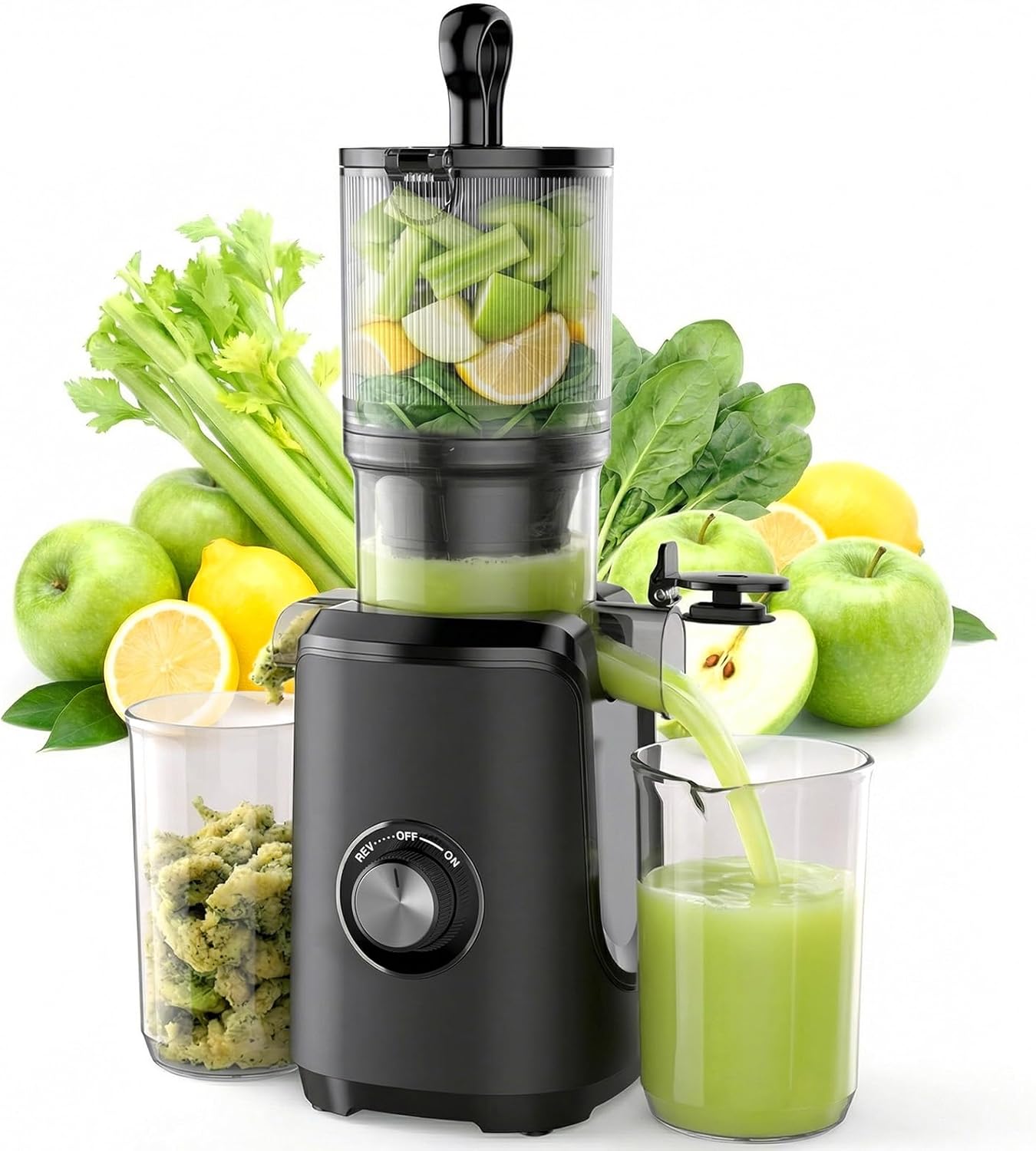
| Wattage | 200 watts |
|---|---|
| Voltage | 120 volts |
| Special Features | Easy to Clean, Masticating, Quiet Motor, Safety Lock |
| Included Components | Fruit residue cup, Juice cup, Power supply base |
The NEWBULIG cold press juicer is a single-auger masticating machine built for extracting juice from whole fruits and vegetables with minimal prep. It uses a slow-speed 200 W motor to reduce heat and oxidation, which helps preserve nutrients and delivers smoother juice, and a 4.25-inch feed chute accepts larger produce so you spend less time chopping. A reverse function clears clogs quickly without full disassembly, and the unit includes a juice cup, pulp cup, and cleaning brush; most removable parts hand wash easily. Safety features include a blade-free design and an automatic safety lock that stops operation when opened, making it more family-friendly. Expect quieter operation than centrifugal models but slower output per batch, and hand-wash-only care means more time cleaning than fully dishwasher-safe machines. The materials are typical appliance plastics and stainless steel components, so treat parts gently during cleaning to avoid wear.
Best for: Buyers seeking a budget-friendly cold press juicer that prioritizes nutrient retention and minimal produce prep will appreciate this model for everyday home use.
Less Ideal for: If you need very fast juice throughput for large families or want fully dishwasher-safe parts, this unit may feel slow and require more cleanup effort.
- Wide 4.25-inch feed chute reduces prep time for whole fruits and vegetables.
- Slow masticating motor preserves nutrients and produces less foam and oxidation.
- Reverse function quickly clears jams without disassembly.
- Safety lock and blade-free design improve safe use around kids.
- Includes basic accessories and a cleaning brush for easier maintenance.
- Hand wash only — parts are not dishwasher-safe.
- Slower juicing speed compared with high-speed centrifugal juicers.
Verdict: A wallet-friendly masticating juicer that preserves nutrients and handles whole produce with a wide feed chute, making it a strong pick for budget-conscious home juicing.
anybear Cold Press Juicer SJ054C
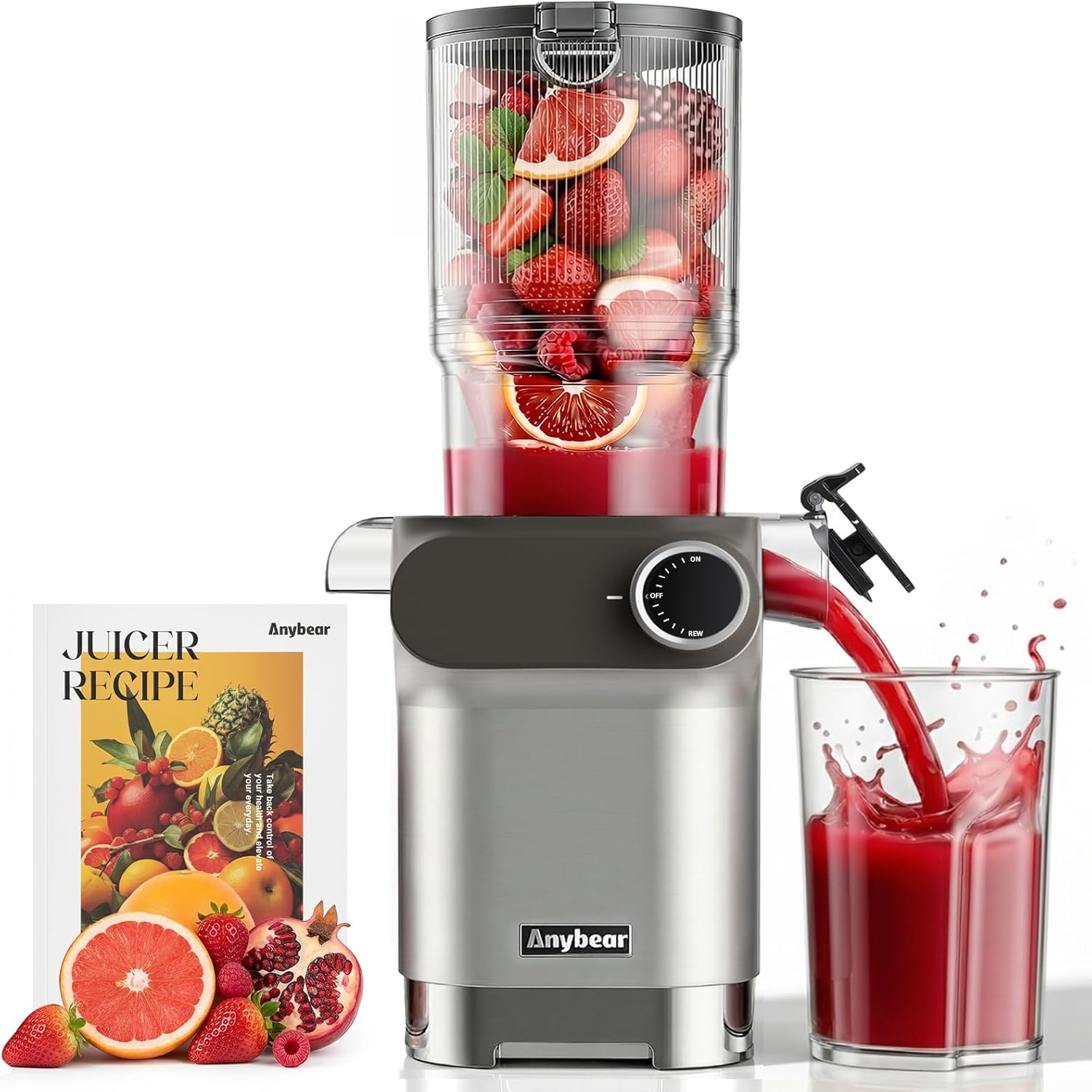
| Wattage | 200 watts |
|---|---|
| Voltage | 110 volts |
| Special Features | Easy to Clean |
| Blade Material | Stainless Steel |
The anybear Cold Press Juicer SJ054C is a masticating juicer built for steady, low-speed extraction using a 200W motor and a heavy-duty auger. It is typically used for making fresh fruit and vegetable juices and baby food by feeding produce through the large 4.3-inch chute, which reduces prep work. The low 65 RPM speed and high torque claim aim to maximize yield and reduce oxidation, so juice stays fresher and retains more nutrients. Practical features include a one-piece stainless steel filter and simple three-step disassembly that make rinsing and light hand-wash cleaning straightforward, plus a brush is included for maintenance. The unit uses Tritan and stainless materials in food-contact areas and is designed for daily home use where quiet, efficient extraction is preferred to high-speed blending. Limitations to note are hand-wash care rather than dishwasher-safe parts and that larger or tougher produce may need occasional chopping despite the big feed chute; the motor power is sized for home use rather than heavy commercial workloads.
Best for: Home users who prioritize consistent, fresh-tasting juice and want a reliable, easy-to-maintain masticating juicer for daily fruit and vegetable juicing.
Less Ideal for: People needing a commercial-grade machine or those who want dishwasher-safe parts for minimal cleanup.
- Low-speed masticating design reduces oxidation for fresher-tasting juice
- 4.3-inch feed chute accepts larger produce and cuts down prep time
- One-piece stainless steel filter and simple disassembly make cleaning quick
- Includes brush and uses Tritan and stainless materials for food-safe contact
- 200W motor with high torque for efficient juice extraction at low RPM
- Parts are hand-wash only, which may require more manual cleanup
- Not intended for commercial or heavy continuous use
Verdict: A reliable, low-speed cold press juicer that prioritizes juice quality and straightforward maintenance for daily home use under $300.
EanOruus 3-in-1 Cold Press Juicer E-18

| Capacity | 100 fluid ounces |
|---|---|
| Maximum Power | 250 watts |
| Power Source | ac |
| Voltage | 110 volts |
The EanOruus 3-in-1 Cold Press Juicer is a slow single-auger machine designed for steady, high-yield extraction and multiple uses beyond juice, including nut milk and frozen fruit sorbet. It accepts whole fruits and large produce through a 6.5-inch chute into a 100 oz hopper so you can batch multiple servings without constant refilling. The 250-watt AC brushless motor is specified for heavy-duty use and includes auto-reversing and overheat protection to handle fibrous ingredients and reduce jams. Detachable strainers for juice and sorbet plus a removable pulp outlet make switching modes and cleaning parts easier, though most components are hand-wash only. Practical benefits are quiet operation, large capacity for family or meal-prep use, and solid juice yield from whole produce. Important limits are the need to hand-wash parts and the relatively heavy, bulky footprint for tight kitchens, so plan counter space and cleaning time accordingly.
Best for: Buyers who want a versatile cold-press machine that can batch juice and make nut milk or sorbet while prioritizing proven features and reliable performance over compactness.
Less Ideal for: Anyone with very limited counter space or who prefers fully dishwasher-safe parts and minimal cleanup time should consider smaller or different models.
- Large 6.5-inch chute reduces prep time by allowing whole fruits and large pieces
- 100 oz hopper supports batch juicing for families or meal prep
- 250W AC brushless motor with auto-reversing and overheat protection handles fibrous ingredients
- Interchangeable strainers enable juice, nut milk, and sorbet from the same machine
- Most removable parts require hand washing rather than dishwasher-safe cleaning
- Relatively large and heavy, so it needs a dedicated countertop spot
Verdict: Choose this juicer if you want a quiet, high-capacity cold-press machine that reliably extracts juice, nut milk, and sorbet for family-sized batch prep.
Ninja NeverClog Cold Press Juicer JC151

| Maximum Power | 150 watts |
|---|---|
| Number of Speeds | 2 |
| Capacity | 24 fluid ounces |
| Included Components | 24 oz juice jug; 36 oz pulp container; 2 pulp filters |
The Ninja NeverClog JC151 is a slow masticating cold press juicer designed to extract juice from fibrous fruits and vegetables using a 150-watt high-torque auger. It runs two one-touch programs (Start/Stop and Reverse) to help clear jams and improve extraction, and offers two interchangeable pulp filters so you can choose less pulp for smoother juice or lots of pulp for thicker, fiber-rich blends. The unit ships with a 24 oz juice jug and 36 oz pulp container, which makes it practical for small batches or family servings, and an anti-drip lever helps reduce mess when pausing to pour. Parts that contact juice are dishwasher safe and the design emphasizes easy assembly and cleaning compared with many centrifugal models. Be aware it is a countertop appliance that operates at low speed, so producing larger volumes takes longer than fast centrifugal juicers and its 150W motor is tuned for slow, continuous extraction rather than high-speed output. For buyers seeking consistent cold-pressed results with simple controls and easy cleanup, this model balances performance and convenience.
Best for: Buyers who want reliable, nutrient-preserving cold-pressed juice at home and prioritize easy operation, low clogging, and simple cleanup over speed.
Less Ideal for: People who need very fast throughput or commercial-level continuous juicing should consider higher-speed or commercial machines instead.
- High-torque 150W auger handles fibrous produce for smoother cold-pressed juice
- Two interchangeable pulp filters to control juice texture
- Large included juice jug (24 oz) and pulp container (36 oz) for batch juicing
- Reverse function helps clear jams and improves yield
- Dishwasher-safe juice-contact parts simplify cleanup
- Lower-speed masticating design yields juice more slowly than centrifugal juicers
- Not intended for very large commercial volumes
Verdict: Choose the Ninja JC151 if you want a user-friendly, clog-resistant cold press juicer that delivers consistent, nutrient-focused results with easy cleanup.
Choosing the Right Cold Press Juicer: Key Factors to Consider
Juice Yield and Extraction Efficiency
How much juice you get from the same amount of produce matters because it directly affects running cost and convenience. Cold-press juicers use a slow auger or press mechanism to crush and squeeze produce rather than cutting at high speed, which reduces foam and extracts more liquid from leafy greens and fibrous vegetables.
When evaluating units under $300, look for specifications or tests that report typical yield for greens, citrus, and hard roots. Better extraction often correlates with auger design quality and gear ratios that apply steady pressure. Expect some variation across ingredient types; a juicer that excels with leafy greens may perform differently with carrots or apples.
Ease of Cleaning and Maintenance
Cleaning is the single biggest factor that determines whether a juicer gets used regularly. Machines with fewer pieces, straightforward snap-together parts, and smooth, nonporous surfaces take far less time to rinse and scrub. Some components are dishwasher-safe, but hand-cleanable parts that rinse clean quickly are usually the most practical.
Also consider how easy it is to remove pulp and whether filters or screens clog easily. Models that require fiddly brushes or have many small crevices increase daily maintenance time. Long-term upkeep includes checking seals and gaskets and whether replacement parts are readily available.
Build Quality and Materials
Durability matters when you run a juicer frequently. Under $300, you can still find machines with reinforced housings, metal-drive shafts, and BPA-free plastics for food-contact parts. The material used for the auger influences wear resistance and the consistency of extraction over time.
Inspect warranty coverage and perceived fit-and-finish. A sturdy base reduces vibration and wobble during operation, while quality fastenings and thicker plastic parts resist cracking. Corrosion-resistant components around the motor and juice spout extend usable life in a wet environment.
Motor Performance and Noise
Cold press juicers operate at low RPMs, so motor torque and thermal management are more important than raw horsepower numbers. A motor with sufficient torque prevents stalling on fibrous produce and maintains steady extraction. Overheating protection is a useful feature because prolonged juicing sessions can stress small motors.
Noise level affects when and where you can use the machine. Quieter units are better for early-morning routines. Look for reviews that mention both sound and any vibration; excessive vibration often indicates poor balance or inadequate base isolation.
Countertop Footprint and Storage
If your kitchen has limited counter or cabinet space, footprint and storage options are key. Some slow juicers are long but narrow, while others have a wider base that takes up more surface area. Consider whether the unit disassembles compactly for cabinet storage and whether parts nest together.
Also think about where you will place the juicer when in use. Models with a small footprint but heavier weight are stable during operation, whereas tall, narrow designs can tip or vibrate more. Weight and handle design affect how easy it is to move and stow the unit.
Pulp Management and Versatility
Different recipes require different pulp textures or the ability to use pulp for other purposes. Some cold press juicers produce drier pulp, indicating higher extraction, while others leave moister pulp that may be better for smoothies or baking. The ease of removing and disposing of pulp also affects cleanup time.
Consider whether the juicer accommodates whole fruits or requires pre-cut pieces. Versatility across leafy greens, citrus, and hard vegetables expands what you can make without needing multiple machines. Also check if the unit supports optional attachments or settings for varying pulp levels.
Why Cold Press Juicing Is Worth It
Cold press juicers operate at low speeds to minimize heat and oxidation. That gentle process helps preserve delicate nutrients and flavors that high-speed centrifugal machines can break down with heat and air exposure.
For home users who prioritize nutrient retention and smoother texture, slow juicers typically produce less foam and clearer juice that separates less quickly. They are especially effective for leafy greens, wheatgrass, and mixed-vegetable blends.
- Slower rotation reduces heat generation and oxidation
- Better for leafy greens and fibrous vegetables
- Produces denser, less frothy juice
Preparing Produce for Best Results
Preparation steps have a major impact on extraction efficiency and cleanup. Hard produce like carrots and beets should be washed and trimmed; soft fruits can be halved or quartered if the feed chute is small. Leafy greens are easiest when bundled or layered with firmer produce for better auger grip.
Remove large pits and tough stems. A short rinse immediately after juicing prevents pulp from drying into the filter, which makes cleaning harder. Cold produce straight from the refrigerator will juice faster than warm produce after long ambient exposure.
- Wash and trim hard produce; chop if necessary
- Bundle leafy greens or combine with firmer items
- Rinse parts promptly to avoid dried-on pulp
Common Maintenance Tips to Extend Lifespan
Regular maintenance keeps performance steady. After each use, disassemble and rinse the pulp container, auger, and screen. Avoid abrasive cleaners that can scratch filters and reduce performance. Periodically inspect seals and gaskets for wear and replace them if they become brittle.
If your model allows, dry parts completely before reassembly to prevent mold or odors. Run a short cycle with water and a little dish soap through the machine to remove trapped particles, then rinse thoroughly. Store the juicer with parts separated if humidity is an issue.
- Rinse parts right after juicing
- Use nonabrasive brushes for screens
- Check seals, gaskets, and fastenings periodically
Maximizing Value Within the Under-$300 Limit
With a budget cap, prioritize features that influence daily experience: good extraction, easy teardown, and solid materials where it matters. Avoid models that trade durability for bells and whistles you will rarely use.
Warranty length and available replacement parts matter more on lower-cost units. A slightly heavier or bulkier machine with a better warranty and simpler mechanics can be a smarter long-term pick than a lighter unit with many fragile components.
- Prioritize extraction and cleanup over extra attachments
- Check warranty and ease of getting replacement parts
- Consider long-term running cost based on yield efficiency
Juicing Safety and Best Practices
Follow basic safety rules to prevent injury and protect the motor. Always unplug before disassembly and avoid putting hands near moving parts. Ensure the machine is on a stable, level surface to reduce tipping risk.
Do not force oversized pieces into the feed chute; instead, cut produce to the recommended size. If the motor stalls, switch off, clear the obstruction, and let the motor cool before restarting to avoid overheating.
- Unplug before cleaning or disassembly
- Use recommended produce sizes to avoid stalls
- Allow motor to cool if overheating triggers a safety shutoff
How We Chose the Best Cold Press Juicer
We focused on factors that matter for everyday home juicing with a strict budget cap. Primary evaluation criteria included juice yield and extraction efficiency because higher yield directly lowers produce costs. We also prioritized ease of cleaning since cumbersome teardown or many small parts reduces real-world usage. Build quality and materials were weighed to assess durability under frequent use, with attention to BPA-free plastics and sturdy auger construction. Noise and motor thermal management were considered because quieter, cool-running motors are more comfortable for morning routines. Finally, countertop footprint and assembly complexity influenced suitability for small kitchens. Excluded items included high-end commercial slow juicers and centrifugal or masticating machines that exceed the price limit. We also excluded units with unclear safety features or incomplete parts lists. The remaining candidates were scored across the concrete dimensions above and shortlisted based on balanced performance across extraction, maintenance, durability, noise, and size.
Our full evaluation process is outlined in our review methodology.
FAQ
Are cold press juicers under $300 worth buying?
Often yes. Many budget cold press juicers deliver significantly better yield and nutrient retention than centrifugal models. The tradeoff is that some lower-cost units may use less premium materials or have shorter warranties, so check extraction efficiency and ease of cleaning.
How often should I clean the juicer parts?
You should rinse major parts immediately after each use and perform a thorough clean after daily sessions. Prompt cleaning prevents pulp from drying and clogging screens and reduces the risk of odors or mold.
Can I juice leafy greens and wheatgrass with budget models?
Many under-$300 cold press juicers handle leafy greens effectively, though performance varies. Look for models with a slow auger and good torque to pull juice from fibrous material without stalling.
Will a slow juicer take up a lot of counter space?
It depends on the design. Some slow juicers are compact and long, while others have a broader base. Consider how you plan to store the unit and whether its footprint fits your prep area.
How do I know if my juicer motor is overheating?
Signs include the motor getting unusually hot to the touch, reduced rotation speed, or an automatic thermal cutout triggering. If that happens, stop juicing, unplug the unit, and allow it to cool before resuming.
Final Verdict
When shopping for a Cold Press Juicer under $300, focus on extraction efficiency, ease of cleaning, and build materials first. Those dimensions determine daily convenience and long-term value more than extra accessories. Accept tradeoffs such as a slightly larger footprint or simpler cosmetics to get better juice yield and a quieter, more durable motor. Prioritize the features that match how often and what you plan to juice so you can choose confidently and get the most use from your purchase.