
Note: This article contains affiliate links. If you click on these links and make a purchase, we may earn a small commission at no extra cost to you. This helps support our research and content. Read our full affiliate disclosure here.
If you live in a small apartment, have limited laundry room space, or need a secondary dryer for a basement or RV, a compact dryer can make laundry day manageable. The right compact dryer saves time and protects fabrics without demanding a large footprint or complex installation. This guide highlights seven shortlisted compact dryers that balance drying capacity, cycle versatility, and energy use. We focus on real-world usability, such as installation flexibility, ease of use, and maintenance. Read on to compare the features that matter most and find the compact dryer that fits your space and routine.
Top Picks at a Glance
| Best Overall The best all-around choice for most situations | ROVSUN Portable Clothes Dryer |  |
| Best Quality Built to a higher standard if you want something more solid | BLACK+DECKER BCED37 Compact Dryer |  |
| Best Value The sweet spot between price and what you get | Euhomy Portable Clothes Dryer 1.5 Cu. Ft. |  |
| Best Budget The cheapest option that still gets the job done reliably | MOJOCO Portable Dryer MJC-T03 |  |
| Top Rated A top-rated pick with lots of positive feedback | BANGSON 1.5 Cu.Ft Portable Dryer |  |
| Most Popular A crowd favorite that many people choose with confidence | Panda Portable Compact Dryer PAN725SF | 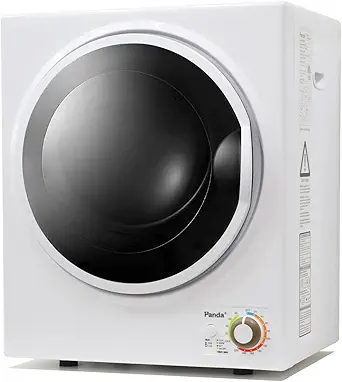 |
| Best Seller A high-volume bestseller chosen again and again | BLACK+DECKER BCED26 Compact Dryer | |
ROVSUN Portable Clothes Dryer

| Capacity | 5.5 pounds |
|---|---|
| Rated Input | 850W |
| Form Factor | Front Load |
| Material Type | Stainless Steel |
The ROVSUN portable clothes dryer is a small front-load unit meant for apartments, dorms, RVs, or countertop use where a full-size dryer is impractical. It uses an 850W heating element that can reach about 140°F to dry up to the recommended 5.5 lb load quickly for its class, and a stainless steel drum plus a multi-stage lint filter help protect fabrics and keep airflow clear. Controls are simple: a single knob with labeled modes makes operation straightforward and low‑effort. The unit is light enough to move where needed and can be wall-mounted with the included kit for tighter setups. Expect shorter cycles and good results on small loads, delicates, and items you need same-day; larger loads will need multiple batches. Noise and cycle time are typical for compact dryers and the lower wattage means it is not as fast as larger 1200–1400W models, so plan around its capacity and pace. Installation requires a flat surface and clear exhaust path for best performance.
Best for: Buyers who want a straightforward, space-saving dryer to handle frequent small loads, delicates, or same-day drying without a full-size appliance.
Less Ideal for: Households that need to dry large or heavy loads at once or want the fastest drying times should choose a larger, higher-wattage dryer.
- Compact footprint fits apartments, dorms, and RVs
- Stainless steel drum for durability and gentler tumbling
- Simple knob controls that are easy to use
- Included wall-mounting kit gives flexible placement options
- Small 5.5 lb recommended capacity requires multiple loads for larger households
- 850W power is lower than many full-size dryers so cycles can be longer
Verdict: A small, easy-to-use dryer that delivers practical same-day drying for small loads in tight spaces.
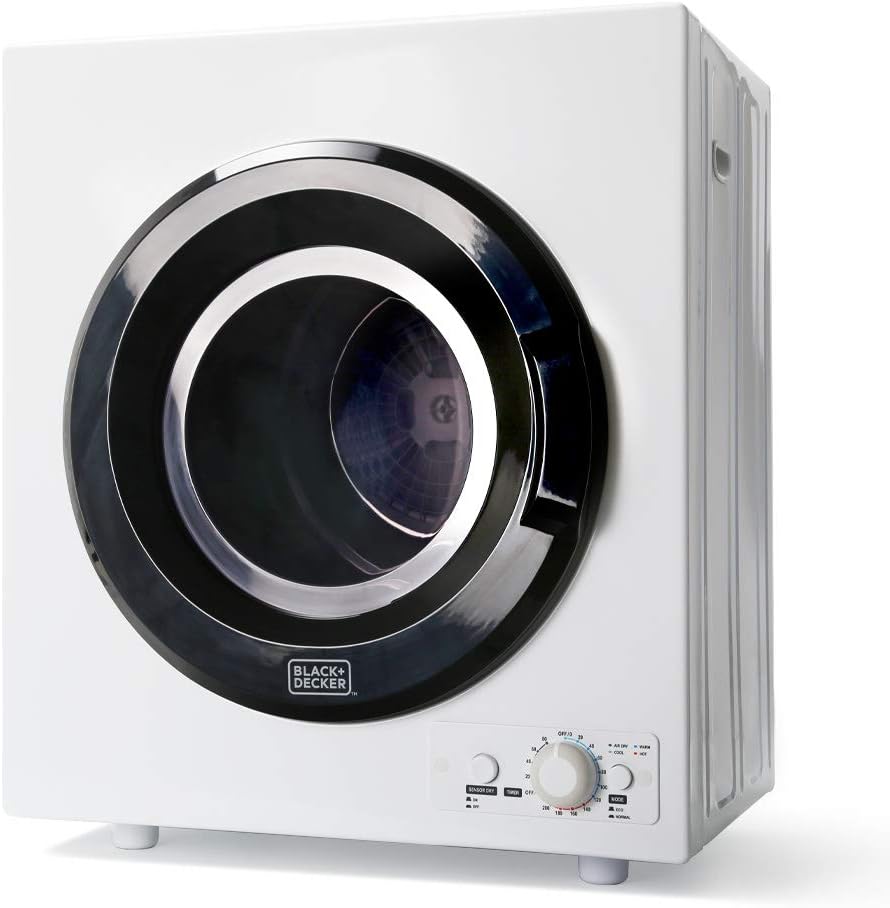
BLACK+DECKER BCED37 Compact Dryer
| Capacity | 3.5 cubic feet |
|---|---|
| Load weight | 13.2 lbs |
| Power | 1500W, 120V |
| Drum | Stainless steel |
The BLACK+DECKER BCED37 is a compact, vented electric dryer built for small spaces and apartments that need a near–full-size drying capacity without special wiring. It handles up to about 13.2 lb. loads in a 3.5 cu. ft. stainless steel drum and runs on a standard 120V outlet at 1500W, so drying times are longer than 240V residential dryers but you avoid hardwiring. Controls include multiple drying modes (Air Dry, Cool, ECO, Warm, Hot) plus a sensor dry function to cut run time when clothes reach the target moisture level. The unit ships with a 4
Best for: Buyers who need high drying capacity in a compact, plug-in machine and prioritize practical performance over the fastest cycle times.
Less Ideal for: Those who need rapid turnaround for heavy laundry loads or who cannot run an external vent should consider different solutions.
- Runs on a standard 120V outlet so no electrical hardwiring is required
- 3.5 cu. ft. stainless steel drum accommodates sizable loads for a compact dryer
- Multiple drying modes and sensor dry help tailor drying for different fabrics
- Includes exhaust connector and reusable lint and exhaust filters for vented installation
- 120V/1500W power means noticeably longer drying times than full-size 240V dryers
- Vented design requires a vent hose and placement near an exterior vent
Verdict: If you want near–full-size drying capacity from a plug-in unit that fits apartments and small spaces, this compact vented dryer delivers practical, reliable performance.
Euhomy Portable Clothes Dryer 1.5 Cu. Ft.

| Capacity | 1.5 cu. ft. |
|---|---|
| Power | 850W |
| Max temperature | 140°F |
| Max load | 10 lb wet laundry |
This Euhomy portable clothes dryer is a small, 1.5 cu. ft. electric dryer intended for apartments, dorms, RVs, or rooms where a full-size dryer is impractical. It uses an 850W heating element to reach a maximum internal temperature around 140°F and accepts up to about 10 lb of wet laundry, with separate high and low settings and selectable timed modes for cool, warm, hot, and air-dry cycles. Loading is straightforward via a wide-angle 105° door and a triple-layer lint filter helps keep fibers contained. The unit is relatively quiet in operation and includes mounting brackets and an exhaust fitting for flexible placement. Important limitations are its small capacity and lower power compared with full-size dryers, so expect longer run times on heavy or bulky items and better results when items are partially spin-dried first. The dryer is ETL and DOE certified and offers basic safety features like an auto-stop when the door opens, making it a practical secondary dryer for frequent small loads.
Best for: Buyers looking to maximize laundry convenience in small living spaces who value a compact, low-power dryer that handles frequent small loads efficiently.
Less Ideal for: Households that regularly need to dry large, bulky items or full washer loads should choose a full-size dryer instead.
- Compact footprint for tight spaces like apartments or dorm rooms
- Multiple timed modes including cool, warm, hot, and air-dry for fabric-specific care
- Wide 105° door and a lint filter that reduce fuss when loading and limit lint spread
- ETL and DOE certifications and door-auto-stop improve basic safety and compliance
- Includes mounting brackets and an exhaust fitting for flexible installation
- Small 1.5 cu. ft. capacity limits load size and requires pre-spin for best results
- 850W power leads to longer drying cycles versus full-size household dryers
Verdict: A space-saving, certified portable dryer that reliably handles frequent small loads when a full-size dryer is not an option.
MOJOCO Portable Dryer MJC-T03

| Form Factor | Top Load |
|---|---|
| Capacity | 22 pounds |
| Included Components | Dryer, Dryer Bag |
| Item Weight | 1 kg |
| Power | 600W |
The MOJOCO Portable Dryer is a lightweight, foldable top-load dryer intended for small-space living and travel. It uses a 600W heater with two drying modes to handle delicate or faster drying, and the manufacturer says light items can finish in roughly one to two hours while heavier pieces may take longer. The unit holds up to nine lightweight garments or a maximum listed load of 22 pounds, and it includes a timer, whisper-quiet operation, automatic overheat protection, and a built-in UV LED for added sanitizing. Setup and storage are simple because the dryer folds and comes with a carry bag, and its low power draw makes it cheaper to run than a full-size dryer for small batches. Expect slower times on bulky items, and because it vents warm air into the room you will want decent room ventilation during use. For routine small loads, travel, or dorm/apartment use this dryer offers a practical, space-saving drying option.
Best for: Buyers on a tight budget who need a space-saving, energy-light option for drying small loads, travel, or apartment and dorm use.
Less Ideal for: People who need to dry large, bulky items regularly or who prefer vented tumble-style drying that removes moisture from the room.
- Compact, foldable design with included carry bag for easy storage and travel
- Two heat modes and timer let you match drying to delicate or faster cycles
- Built-in UV LED and automatic overheat protection add sanitation and safety
- Low 600W power draw is more energy efficient for small loads than full-size dryers
- Drying times are longer for heavier or thick items compared with standard tumble dryers
- Produces warm exhaust into the room so it needs ventilation during operation
Verdict: A budget-friendly, foldable dryer that saves space and energy for small loads, travel, and apartment use.
BANGSON 1.5 Cu.Ft Portable Dryer

| Capacity | 1.5 cubic feet |
|---|---|
| Form Factor | Front Load |
| Door Orientation | Right |
This compact vented dryer is built for tight spaces like apartments, dorms, and RVs, offering a usable 1.5 cubic foot drum and two drying modes: heat dry for thorough drying and cool air for gentle freshening. Controls are simple knob dials, so cycles are easy to set without a learning curve, and the stainless steel drum plus a removable washable lint filter make upkeep straightforward. The unit accepts a standard 120V outlet and ships with an exhaust hose so it can be up and running quickly; its capacity handles roughly a single small load of shirts, underwear, and a few towels. Run times extend for heavier items, and the air-only mode helps protect delicates from shrinkage. Expect typical characteristics of a portable vented dryer: it will take longer than full-size machines to finish large or very wet loads and needs clearance for the exhaust. For buyers who value reliability and simple maintenance in a space-saving package, this dryer provides practical, no-frills performance.
Best for: Buyers who need a dependable, easy-to-use dryer that fits tight spaces and prioritizes straightforward maintenance and consistent drying performance.
Less Ideal for: Households that regularly dry large or bulky laundry loads or those who cannot accommodate venting should consider a larger or condenser-style dryer instead.
- Compact footprint designed to fit apartments, dorms, and RVs
- Stainless steel drum resists rust and helps prevent musty odors
- Removable washable lint filter for easy maintenance
- Two drying modes (heat and cool air) to handle delicates and heavier loads
- Plugs into standard 120V outlet and includes exhaust hose for quick setup
- Vented design requires clearance and an exhaust path
- Smaller 1.5 cu ft capacity means longer or multiple cycles for larger loads
Verdict: A reliable, low-maintenance portable vented dryer that delivers consistent, space-saving drying for small loads.
Panda Portable Compact Dryer PAN725SF

| Capacity | 1.5 cubic feet |
|---|---|
| Voltage | 120V/60Hz |
| Rated Input | 850W |
| Tumble Material | Stainless Steel |
The Panda PAN725SF is a compact front-load dryer built for apartments, dorms, and other tight laundry spaces where a full-size dryer is impractical. It holds about 1.5 cu.ft and runs on a standard 120V outlet at 850W, so it uses noticeably less electricity than larger machines while handling lightweight loads like T-shirts, baby clothes, towels, and gym wear. Controls are mechanical with multiple heat settings including cold, warm, hot, and an air-freshen option, and the see-through door and three-layer lint filter make loading and maintenance straightforward. Installation is flexible: freestanding, stacked, or wall-mounted using the included kit, and an exhaust vent pipe is supplied for venting outdoors. Expect longer dry times than full-size dryers, especially on bulkier items, and the lower wattage means very heavy or large loads may require multiple cycles. Overall it delivers convenient, energy-conscious drying for small households with limited space.
Best for: Buyers who prioritize space savings and proven user satisfaction and want a straightforward, energy-conscious dryer for small, frequent loads in apartments or dorms.
Less Ideal for: Households that need to dry large loads, heavy bedding, or want the fastest cycle times should choose a larger, higher-power dryer instead.
- Compact 1.5 cu.ft capacity fits tight spaces and can be wall-mounted or stacked
- Runs on standard 120V outlet with 850W motor for lower energy use
- Includes exhaust vent pipe and mounting kit for flexible installation
- Stainless steel drum and see-through door simplify loading and cleaning
- Three-layer lint filter helps trap lint and hair and is removable for cleaning
- Lower 850W power leads to longer drying times compared with full-size dryers
- Small capacity limits load size and is not suitable for large bedding or bulky items
Verdict: A space-saving, energy-conscious compact dryer that reliably handles small loads for apartments and dorms.
BLACK+DECKER BCED26 Compact Dryer
| Capacity | 2.65 cubic feet |
|---|---|
| Load Volume | 8.8 lbs. |
| Power | 1400W, 120V |
| Drying Modes | Air Dry, Cool, ECO, Warm, Hot |
| Exhaust Connector | 4" vent hose included |
The BLACK+DECKER BCED26 is a compact, vented electric dryer designed for apartments, small homes, and anywhere a standard 120V outlet is the only option. It uses a 1400W motor and a stainless steel 2.65 cu ft drum to dry up to about 8.8 pounds per load, and offers five modes (Air Dry, Cool, ECO, Warm, Hot) plus a Sensor Dry function that measures moisture and adjusts the cycle. The unit includes a 4-inch exhaust connector, lint and exhaust filters, adjustable leveling legs, and a transparent front lid for easy loading and monitoring. In practice it dries smaller loads reliably and is gentler on fabrics than many full-size dryers because of the smaller drum and selectable modes, but expect longer cycle times compared with 240V full-size machines. Setup is simple with a standard three-prong plug, and built-in safety features like overheat protection add peace of mind. If you need fast large-load drying or want a condenser/no-vent option, this vented compact model may not meet those needs.
Best for: Buyers who prioritize a safe, simple-to-install dryer for small spaces and want predictable, fabric-friendly drying without electrical modifications.
Less Ideal for: People who need to dry very large or frequent loads quickly or who cannot accommodate a vented exhaust should consider other options.
- Compact footprint fits small rooms and apartments
- Front-load stainless steel drum that is gentler on fabrics
- Multiple drying modes including ECO and Sensor Dry for automated moisture control
- Plugs into a standard 120V outlet so no hardwiring required
- Includes exhaust connector, lint and exhaust filters for straightforward installation and maintenance
- Vented design requires a nearby place to route the exhaust hose
- Longer drying times compared with full-size 240V dryers due to lower power
Verdict: A dependable, easy-to-install vented compact dryer that delivers fabric-friendly drying for small homes and renters who want minimal setup risk.
Choosing the Right Compact Dryer: Key Factors to Consider
Physical Footprint and Venting Options
Measure the available space where the dryer will live before you start shopping. Compact dryers are designed to save floor space, but external dimensions vary and include depth for door swing and connections. A unit that fits a closet or stacked laundry space but requires extra clearance for venting or a protruding control panel can quickly become impractical.
Venting matters for performance and installation cost. Some compact dryers use vented exhaust, while others offer ventless heat-pump or condenser designs. Ventless options eliminate ductwork but can run longer or require more frequent lint and moisture management. Confirm whether your laundry area can support a vented configuration or if a ventless unit is a better match.
Capacity Relative to Load Types
Capacity in compact dryers is a tradeoff between load size and drying speed. Smaller drums handle fewer garments per cycle, which means heavier items like towels or jeans may need separate loads. Think about the types of laundry you do most often and choose a capacity that avoids constant partial loads.
Also consider drum shape and baffle design. Even with similar nominal capacity, drum geometry affects how clothes tumble and dry. If you frequently dry mixed loads or bulky items, favor models with slightly larger internal volume or specific gentle/bulky cycles.
Cycle Options and Control Simplicity
A useful selection of cycles helps you protect fabrics and shorten run time when possible. Look for basic timed and sensor-dry programs plus specialty cycles for delicates, activewear, and bulky items. Sensor-driven cycles prevent overdrying by detecting moisture and adjusting time automatically, which is particularly valuable in compact machines where heat distribution can be uneven.
Controls should be intuitive. Complex menus add friction in daily use, especially in smaller units where space for a detailed control panel is limited. Consider whether you prefer simple mechanical dials or digital interfaces with clear status indicators and delay-start features.
Energy Use and Operating Cost
Because compact dryers run in small spaces, they can still consume significant energy if cycles are long or if the machine uses high heat inefficiently. Compare estimated energy use and look for features that reduce runtime, such as moisture sensors, heat-pump technology, or efficient air flow design.
Consider the tradeoff between upfront complexity and long-term savings. Ventless heat-pump designs tend to be more efficient than basic condenser models, but they can have longer cycle times. If energy cost and environmental impact are priorities, prioritize efficient technologies and effective moisture sensing.
Maintenance, Lint Management, and Reliability
Routine maintenance affects both safety and performance. Compact dryers often have smaller lint traps and tighter internal spaces where lint can accumulate. Check how easy it is to access and clean the lint screen, condenser (if present), and any reachable ductwork.
Reliability also ties to motor design and moisture-sensing accuracy. Units with simple, accessible components are usually easier and cheaper to service. If you plan to stack a compact dryer or place it in a closet, ensure maintenance access remains practical so routine cleaning does not become a chore.
Installation Scenarios and Space Planning
Compact dryers are chosen to fit constrained layouts, but installation details vary by scenario. For closet or alcove installations, measure not just the appliance but the door swing, clearance for vent or condensate lines, and space for maintenance access. If stacking with a compact washer, confirm stacking kit compatibility and whether controls remain reachable when stacked.
- Measure height, width, and depth including door clearances
- Account for vent length and elbow fittings if using a vented unit
- Verify electrical requirements and whether a dedicated circuit is needed
- Plan for front access to lint traps and filter components for routine cleaning
Vented Vs Ventless: Practical Tradeoffs
Vented compact dryers exhaust moist air outside, which can shorten dry times and reduce indoor humidity. However, they need a suitable duct path and regular duct cleaning. Ventless designs simplify installation and can be placed where ductwork is impractical, but they may run longer and require attention to indoor humidity management in small spaces.
- Vented units: faster drying, require external ducting
- Condenser units: collect moisture in a reservoir, no duct needed but may need emptying
- Heat-pump units: most efficient ventless option, often longer cycles
Stacking and Closet Installation Best Practices
Stacking a compact dryer on top of a compatible washer saves floor space but adds height and may complicate controls and maintenance. Use a certified stacking kit and ensure the combined unit does not block bedroom or hallway sight lines. For closet installations, add ventilation or an approved louvered door if the dryer is vented and check any local code requirements for enclosed dryer installations.
- Use manufacturer-approved stacking hardware
- Maintain safe clearances and accessible controls
- Provide ventilation or dedicated ducting when required
Noise Considerations for Open-Plan Homes
Noise and vibration are important in small homes where the dryer may sit close to living spaces. Look for units with balanced drums and vibration-dampening feet. Noise ratings or decibel figures can help compare models, but also consider how installation surface and mounting affect perceived sound. Isolating the unit on a solid floor and avoiding flimsy shelving nearby reduces rattle and transfer.
- Prefer models with low vibration design for apartments
- Use rubber feet or an anti-vibration mat to reduce transmitted noise
- Place the dryer on a stable surface away from bedroom walls
Care and Seasonal Use in Small Spaces
Compact dryers in small homes may be used regularly or as a supplemental appliance. For seasonal heavy use, such as drying winter outerwear, confirm the machine has a bulky or heavy-item cycle and that lint management remains effective under larger loads. If you only run the dryer occasionally, choose a model with straightforward controls so it remains simple to operate when brought back into service.
- Check for bulky-item and low-heat settings for outerwear
- Keep spare lint filters or cleaning brushes accessible
- Consider storage or protective covers if dryer is in a multi-use room
How We Chose the Best Compact Dryer
We prioritized compact dryers that deliver dependable drying in constrained spaces while minimizing installation complexity and operating cost. Selection began by filtering for models with a genuine small-footprint design and clear compatibility with typical household electrical and venting setups. We excluded full-size machines, units with unclear venting requirements, and specialty units intended only for commercial or exclusively outdoor use. Our evaluation emphasized measurable, buyer-relevant criteria: drum capacity relative to external dimensions, cycle variety and programmable options, energy consumption and efficiency features, noise levels during operation, and ease of installation and maintenance. We also considered build quality indicators such as lint-access design and control durability. Models that lacked clear specifications on these dimensions or that required nonstandard installation were removed from consideration. The final list reflects a balance between compact footprint, drying performance, and day-to-day convenience.
Our full evaluation process is outlined in our review methodology.
FAQ
Can a compact dryer be stacked on top of a compact washer?
Often yes, provided the washer and dryer are compatible and a manufacturer-approved stacking kit is used. Ensure the combined height fits your space and that controls remain accessible for daily use and maintenance.
Do ventless compact dryers dry clothes as well as vented ones?
Ventless dryers can dry effectively but usually have longer cycle times and may be less efficient than vented models. Heat-pump ventless units are more energy-efficient than condenser varieties but still may take longer than a vented dryer.
How often should I clean the lint trap in a compact dryer?
Clean the lint trap after every load to maintain airflow and reduce fire risk. Also check and clean any removable condenser or internal filters regularly, following the manufacturer's maintenance recommendations.
Will a compact dryer handle bulky items like towels or a small comforter?
Compact dryers can handle some bulky items, but capacity and drum geometry limit how much you can dry per cycle. For bulky loads, use a specific bulky or bedding cycle and avoid overfilling to ensure even drying and prevent strain on the motor.
Can I install a compact dryer in a closet or enclosed space?
You can install a compact dryer in a closet if the unit is designed for enclosed installation and you provide required clearances and ventilation. For vented units, plan ducting; for ventless models, ensure the room can tolerate added moisture and heat.
Final Verdict
Choosing a compact dryer comes down to balancing space savings with the drying performance you need. Prioritize a machine whose drum capacity and cycle selection match the types of loads you run most often, and choose the venting approach that fits your installation constraints. Tradeoffs are inevitable: vented units often dry faster but need ducting, while ventless models are simpler to place but can run longer. Focus on ease of maintenance, reliable moisture sensing, and installation flexibility to make a confident choice for small-space laundry needs.