
Note: This article contains affiliate links. If you click on these links and make a purchase, we may earn a small commission at no extra cost to you. This helps support our research and content. Read our full affiliate disclosure here.
Picking the right dryer under $500 matters because it is the appliance you use most often to finish laundry quickly and without damaging fabrics. With a constrained budget you still want reliable drying, reasonable capacity, and sensible energy use so that your monthly bills and laundry time do not balloon. This guide covers our shortlisted top choices for dryers under $500 and explains the product traits that matter most. We evaluated capacity, energy efficiency, drying cycles, and user convenience to surface practical options that work for small households, busy families, and apartment living. Read on to see which features to prioritize and why those choices matter for everyday use.
Top Picks at a Glance
| Best Overall The best all-around choice for most situations | BLACK+DECKER BCED26 Compact Dryer |  |
| Best Quality Built to a higher standard if you want something more solid | BLACK+DECKER BCED37 Portable Dryer | |
| Best Value The sweet spot between price and what you get | Feelfunn Portable Dryer 1.5 Cu.Ft |  |
| Best Budget The cheapest option that still gets the job done reliably | MOJOCO Portable Dryer MJC-T03 |  |
| Top Rated A top-rated pick with lots of positive feedback | BANGSON 1.5 Cu.Ft Portable Dryer |  |
| Most Popular A crowd favorite that many people choose with confidence | Panda Compact Dryer PAN760SF |  |
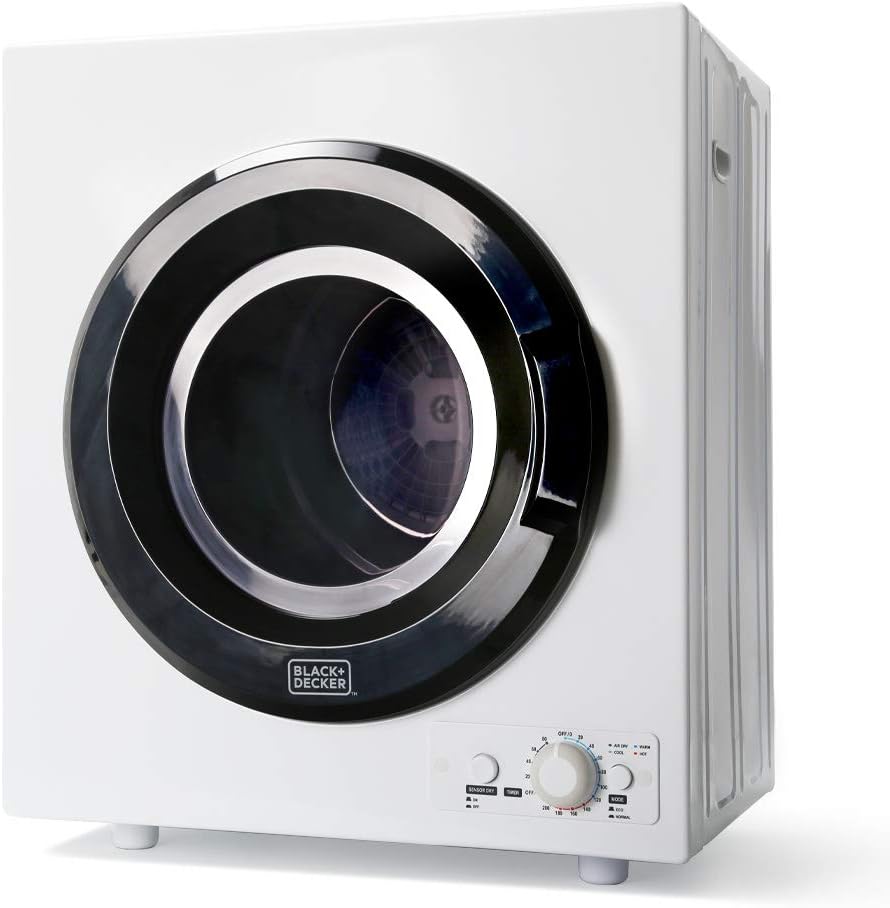
BLACK+DECKER BCED26 Compact Dryer
| Capacity | 2.65 cubic feet |
|---|---|
| Load weight | 8.8 lbs. |
| Power | 1400W, 120V |
| Drying modes | Air Dry, Cool, ECO, Warm, Hot |
The BLACK+DECKER BCED26 is a compact, vented electric dryer designed for small spaces and apartments where a full-size unit will not fit. It uses a 1400W, 120V motor to dry up to about 8.8 pounds per load in a 2.65 cu ft stainless steel drum and connects to a standard 3-prong outlet. Controls are simple and five drying modes plus Sensor Dry let you choose Air Dry, Cool, ECO, Warm, or Hot and the machine can adjust heating based on sensed moisture. Practical touches include a transparent front lid, adjustable leveling legs, included 4-inch vent hose and filters, and overheat protection. Expect longer cycle times than 240V full-size dryers—drying ranges from roughly 30 to 200 minutes—so it works best for smaller, partial loads rather than large bedding items. Installation and maintenance are straightforward, but because it is a vented unit you need an exhaust path and space for the hose. For renters or small households wanting a near full-featured dryer without special wiring, this is a capable compact option under $500.
Best for: Buyers who need a true electric dryer that fits small homes or rental units and prioritize straightforward setup and versatile drying modes over fast full-load cycles.
Less Ideal for: Large households or anyone who regularly dries heavy loads, large bedding, or needs the fastest cycle times should choose a full-size 240V dryer instead.
- Compact footprint fits apartments and tight laundry closets
- Stainless steel drum is gentler on fabrics and durable
- Five drying modes plus Sensor Dry for more tailored cycles
- Plugs into a standard 120V outlet, no special wiring required
- Includes vent hose, exhaust connector and filters for easier setup
- Vented design requires an exhaust path and space for the hose
- 120V power means noticeably longer drying times compared with 240V full-size dryers
Verdict: If you need a real electric dryer that fits tight spaces and runs on a standard outlet, the BLACK+DECKER BCED26 delivers practical drying features and easy installation under $500.
BLACK+DECKER BCED37 Portable Dryer
| Capacity | 3.5 cubic feet |
|---|---|
| Load volume | 13.2 lbs. |
| Power | 1500W, 120V |
| Drum material | Stainless steel |
| Exhaust connector | 4-inch diameter |
The BLACK+DECKER BCED37 is a compact, vented electric dryer aimed at smaller homes and apartments that need full-cabinet drying without a 240V circuit. It handles up to about 13.2 lb. loads in a 3.5 cu ft stainless steel drum and offers multiple modes including Air Dry, Cool, ECO, Warm and Hot plus a Sensor Dry setting that detects moisture to stop cycles. The unit runs on 1500W at 120V through a standard 3-prong plug and includes a 4" exhaust connector, reusable lint and exhaust filters, and adjustable leveling legs. For performance-focused buyers the main benefit is convenient, machine-like drying where a rooftop vent or laundry hookup is unavailable. Expect longer cycle times than a full-size 240V dryer — the manufacturer lists 30–200 minutes depending on load and mode — so planning around runtimes matters. It is relatively heavy for a portable at about 49.5 lb., but the stainless drum and sensor function give reliable results for towels, sheets and everyday garments when space or wiring limits rule out larger units.
Best for: Buyers who need a near–full-size drying experience without a 240V hookup and prioritize reliable, sensor-controlled drying in apartments or small homes.
Less Ideal for: People who need very fast turnaround for large weekly loads or who cannot install an external vent should consider alternatives like full-size or ventless dryers.
- Runs on a standard 120V outlet so no special wiring required
- Stainless steel 3.5 cu ft drum suitable for larger small-load items like towels and sheets
- Sensor Dry and multiple heat modes for tailored drying
- Includes 4" exhaust connector and reusable lint/exhaust filters for vented installation
- Longer drying times compared with full-size 240V dryers
- Requires a vented installation; not suitable for true condenser or ventless setups
Verdict: If you need machine-style drying on a standard 120V circuit, this compact vented dryer delivers dependable, sensor-controlled performance under $500.
Feelfunn Portable Dryer 1.5 Cu.Ft

| Capacity | 1.5 cubic feet |
|---|---|
| Rated Power | 850W |
| Access Location | Front Load |
| Maximum Temperature | 140°F |
The Feelfunn 1.5 cu ft portable dryer is a small, straightforward electric dryer designed for apartments, dorms, and RVs where space is limited. It uses an 850W heater that reaches up to 140°F and a forward/reverse tumbling action to speed drying while reducing tangles and wrinkles. Controls are a single knob with four drying modes, so setup is simple and intuitive for everyday loads like underwear, baby clothes, and t-shirts; the manufacturer recommends limiting wet load to about 10 pounds for best results. The stainless steel drum and multi-layer lint filter add durability and make maintenance easier, and the transparent door helps you monitor cycles. At this size and power the unit is quieter than full-size dryers but will take longer on heavier or bulkier items, and it is best for small loads rather than family-sized laundry sessions. Wall-mount brackets and an exhaust connector add installation flexibility for small living spaces.
Best for: Buyers who want a space-saving, easy-to-use dryer that handles small, frequent loads with minimal fuss and installation options for compact homes.
Less Ideal for: Households that need to dry large family loads, heavy bedding, or frequent bulky items should opt for a larger, higher-power dryer.
- Compact 1.5 cu ft footprint fits apartments, dorms, and RVs
- Stainless steel drum improves durability and resists wear
- Multi-layer lint filter captures lint and is easy to clean
- Simple knob control with four drying modes for easy operation
- Includes wall-mount brackets and exhaust connector for flexible placement
- 850W power and 1.5 cu ft capacity limit speed on heavy or bulky loads
Verdict: Choose this compact Feelfunn dryer if you need a reliable, wall-mountable small-capacity unit that simplifies drying for apartments and other tight spaces.
MOJOCO Portable Dryer MJC-T03

| Form Factor | Top Load |
|---|---|
| Capacity | 22 pounds |
| Power | 600W |
| Included Components | Dryer, Dryer Bag |
The MOJOCO Portable Dryer is a lightweight, top-load unit built for small loads and tight spaces. It uses a 600W heating system with two temperature modes and a timer to dry lightweight garments; the brand claims light items can finish in about 1–2 hours and heavier pieces in 3–4 hours. The unit folds for storage and includes a carry bag, making it convenient for apartments, travel, RVs, or laundry backups. Practical features include built-in LED UV sanitizing and automatic overheat protection for safety, plus whisper-quiet operation so it can run in bedrooms or bathrooms without much disruption. Limitations are its capacity and drying speed compared with full-size dryers: it holds up to nine lightweight items or a stated 22 lb max but works best on delicates and small loads rather than bulky towels or bedding. Expect longer cycles for heavy fabrics and the need to avoid overstuffing to ensure even airflow. For buyers wanting an inexpensive, portable drying option, this delivers a compact, low-energy way to handle frequent small loads.
Best for: Buyers who need an affordable, space-saving dryer for apartments, travel, or occasional small loads and prioritize portability and low energy use.
Less Ideal for: People who regularly dry large loads, bulky towels, or bedding should choose a full-size dryer or a higher-capacity solution instead.
- Compact, foldable design with included carry bag for easy storage and travel
- Two temperature modes and timer allow tailoring drying to fabric types
- Built-in LED UV sanitizing for added garment freshness
- Automatic overheat protection and quiet operation enhance safety and indoor use
- Not suitable for large or heavy items — best for lightweight garments and small loads
- Drying times can be several hours for thicker fabrics compared with full-size dryers
Verdict: A budget-friendly, portable dryer that saves space and energy while reliably handling small, lightweight laundry loads.
BANGSON 1.5 Cu.Ft Portable Dryer

| Form Factor | Front Load |
|---|---|
| Capacity | 1.5 cubic feet |
| Door Orientation | Right |
| Power | 120V |
This BANGSON portable dryer is built for tight spaces where a full-size machine will not fit. It plugs into a standard 120V outlet and offers two main drying modes: heat dry for thorough drying of towels and denim and cool air dry for gentle freshening of delicates. The 1.5 cu ft drum claims capacity for up to about 9 lb wet loads, which makes it practical for single-person households, apartments, dorms, or RVs. Controls are simple knob settings and the unit includes an exhaust hose, a removable washable lint filter, and a stainless steel drum that resists rust and odor buildup. Expect slower cycles versus full-size dryers and limited load size, so larger families or heavy items will require multiple cycles. Installation is straightforward but requires venting when used in heat-dry mode. For buyers prioritizing straightforward, dependable operation in a small footprint, this model delivers reliable basic drying without complicated features.
Best for: Buyers who need a simple, dependable dryer that fits very small spaces and prefer straightforward controls and easy maintenance.
Less Ideal for: Large households or anyone who regularly dries bulky or heavy loads should choose a larger-capacity dryer for fewer cycles and faster drying.
- Compact footprint fits apartments, dorms, and RVs
- Standard 120V plug requires no special wiring
- Stainless steel drum resists rust and odors
- Removable washable lint filter for easy maintenance
- Two drying modes (heat and cool air) for delicates and heavy drying
- Small 1.5 cu ft capacity limits load size and cycle efficiency
- Requires venting for heat-dry mode which can limit placement options
Verdict: If you need a reliable, no-frills vented dryer that fits tight spaces and runs on a standard outlet, this compact BANGSON model is a solid choice.
Panda Compact Dryer PAN760SF

| Capacity | 3.52 cubic feet |
|---|---|
| Rated Input | 1500W |
| Voltage | 120V/60Hz |
| Drum Material | Stainless Steel |
| Included Components | Plastic Venting Hose, mounting kits |
The Panda Compact Dryer PAN760SF is a vented front-load dryer designed for small living spaces and occasional use as a secondary household dryer. It offers a 3.5 cu ft stainless steel drum and a 1500W motor that plugs into a standard 120V outlet, so setup requires no special wiring and you can place it freestanding, stacked, or wall-mounted using the included kit. Controls let you pick timed Cold, Hot, and Air Dry cycles plus ECO and Sensor Dry options, and run times extend up to 200 minutes for bulky loads. Practical touches include a see-through door that opens to 105 degrees, three-layer lint filters, automatic shutoff when the door opens, and overheat protection. Because it is a vented unit, it needs an exhaust path to the outside or an indoor venting kit to manage humidity. At its size and power this dryer is not as fast as full-size machines on heavy loads, so expect longer cycles for very wet items. For buyers prioritizing compact footprint, flexible installation, and standard-plug convenience, it delivers useful performance within a tight space.
Best for: Buyers who want a reliable, space-conscious dryer for apartment or secondary use and who value easy installation and positive user feedback when choosing a budget appliance.
Less Ideal for: Large households that need fast turnaround on heavy laundry volumes or users who cannot provide a proper venting solution should consider full-size or condenser alternatives.
- Space-saving 3.5 cu ft capacity suitable for apartments, dorms, and RVs.
- Runs on standard 120V/1500W household outlet so no special wiring needed.
- Multiple installation modes: freestanding, stacking, or wall mount with included hardware.
- See-through door, three-layer lint filters, and automatic shutoff improve day-to-day usability and safety.
- Offers ECO and Sensor Dry modes to reduce energy use and prevent overdrying.
- Vented design requires an exhaust to the outside or an additional indoor venting kit to control humidity.
- 1500W motor and compact drum mean longer dry times compared with full-size dryers on heavy or very wet loads.
Verdict: A compact, standard-plug vented dryer that delivers practical, user-approved drying for apartments and secondary laundry needs under $500.
Choosing the Right Dryer: Key Factors to Consider
Drum Capacity and Load Size
Capacity determines how many items you can dry in a single cycle and directly affects how often you need to run the dryer. Larger drums reduce cycle frequency for families and bulky items like towels and bedding, while smaller drums can be fine for singles or couples.
When shopping on a budget, balance drum size with motor strength and airflow. Oversized drums on weak machines can lead to longer dry times and higher energy use. Think about the typical loads you run and choose a capacity that minimizes overfilling or underutilizing the dryer.
Energy Efficiency and Operating Cost
Initial price is only part of the cost of ownership; energy efficiency drives ongoing expense. Look for models with sensor-controlled cycles that stop when clothes are dry to avoid wasted runtime. Estimated kWh per cycle or energy ratings provide a comparative baseline.
Efficient dryers may cost slightly more upfront, but for frequent use the savings on electricity can justify the difference. Also consider cycle length and heat settings, since longer, hotter cycles increase energy consumption and can accelerate fabric wear.
Drying Performance and Cycle Options
Consistent drying performance means even heat distribution, good airflow, and appropriately timed cycles. Useful cycle options include sensor dry, timed dry, delicate or low-heat cycles, and a quick-dry setting for small loads.
Cycle versatility matters because different fabrics and mixed loads need tailored treatment to avoid shrinkage or over-drying. For budget machines, prioritize effective sensor drying and a reliable quick-dry to handle everyday needs without excessive complexity.
Venting Type and Installation Flexibility
Dryers come in vented and ventless configurations. Vented units require ducting to the exterior, which generally provides faster drying and lower cost but needs compatible installation space. Ventless units avoid ducting and work in tighter spaces but can run longer and may cost more in energy.
When buying a dryer under $500, verify your laundry area's venting options and measure for clearance. Installation flexibility reduces unexpected setup costs and ensures the new dryer will fit both physically and with local venting requirements.
Ease of Use and Controls
Simple, intuitive controls reduce the learning curve and help prevent costly mistakes like running high heat on delicate items. Look for clear cycle indicators, a sensible selection of temperatures and times, and convenient features like a reversible door or an interior light.
User-friendly design also includes accessible lint filters and clear error indicators. These small details improve everyday satisfaction and reduce the chance of missed maintenance that can hurt performance.
Maintenance, Durability, and Safety
Routine upkeep such as cleaning the lint trap, checking vents, and inspecting seals affects performance and longevity. Choose machines with accessible lint traps and serviceable parts to keep maintenance straightforward.
Durability features and basic safety protections such as overheating cutoffs and drum balance systems help avoid premature failures. Since repair budgets are often limited for lower-priced appliances, prioritize models with simpler serviceability and clear warranty terms.
Vented Vs Ventless Dryers: Which Fits Your Space
Vented dryers exhaust warm, moist air through ducting to the outside, which typically results in faster cycles and lower energy use. These are a good fit if you have a nearby external wall and room for duct run.
Ventless dryers consolidate moisture internally and either condense it into a reservoir or reroute it to plumbing. They are useful in apartments and closets where ducting is impractical, but expect slightly longer cycles and potentially higher energy use.
Decide based on your installation constraints, laundry frequency, and tolerance for slightly longer drying times. For the under-$500 budget, vented units often deliver better runtime efficiency, while ventless options offer location flexibility.
- Vented: faster drying, requires exterior ducting
- Ventless: installation flexibility, may use more energy
- Check local building codes and room ventilation before choosing
Sensor Drying and Cycle Selection
Sensor drying detects residual moisture and stops the cycle when garments are dry, preventing over-drying and saving energy. On budget machines, sensor systems vary in sophistication, so prefer units with reliable, simple sensor settings rather than many decorative modes.
Complementary cycle selections such as low-heat, wrinkle-prevent, and quick-dry enhance daily utility. You do not need an exhaustive list of specialty cycles, but the presence of core, clearly labeled options improves versatility.
- Sensor dry reduces energy waste and fabric damage
- Quick-dry is useful for small, urgent loads
- Low-heat and delicate cycles protect sensitive fabrics
Noise, Placement, and Vibration Considerations
Noise and vibration are important if the dryer will sit near living spaces or bedrooms. Look for models with balanced drums and stable feet to minimize movement at spin speed.
Placement also affects performance. Allow recommended clearances for proper airflow and service access. Placing the dryer on a platform or in a closet may amplify noise and restrict ventilation, potentially increasing dry times.
- Measure clearance and floor stability before purchase
- Consider anti-vibration pads for hard floors
- Check exhaust routing to avoid long duct runs that hamper airflow
Common Installation Pitfalls to Avoid
Measure the doorway and laundry space carefully, accounting for the door swing and any stacked configurations. A dryer that fits on paper can still be impossible to maneuver into place if you overlook tight corridors or stair access.
Confirm the existing electrical and venting setup. Many budget dryers require a standard 120V outlet, but some larger-capacity models may need different power sources or specific venting hardware. Planning prevents costly returns and delays.
- Verify door swing and stacking clearances
- Confirm electrical outlet type and circuit capacity
- Plan duct routing to minimize bends and length for best airflow
Maintaining Peak Performance
Routine maintenance keeps a dryer running efficiently. Clean the lint filter after each load, inspect the vent path for blockages, and clear external exhaust points seasonally to maintain airflow.
Occasional checks of seals, drum alignment, and the exhaust hose condition prevent leaks and reduce energy waste. Simple upkeep extends life and reduces the chance of safety hazards caused by lint buildup.
- Empty lint screen after every cycle
- Inspect and clean vent ducts annually
- Replace crushed or damaged hoses to preserve airflow
How We Chose the Best Dryer
We prioritized real-world utility and long-term running costs when narrowing candidate dryers under $500. Key evaluation criteria included drum capacity and cycle variety to match different load sizes and fabric types; energy efficiency and estimated operating cost to reflect ongoing utility impact; build reliability and warranty coverage to reduce the chance of early failure; and ease of use features such as sensor drying, simple controls, and lint access for straightforward maintenance. We also assessed venting options and installation flexibility so the dryer fits common laundry setups. Excluded from the shortlist were units with consistently poor user-maintenance characteristics, dryers lacking basic safety features, or models with insufficient capacity for two-person households. We favored machines whose specification sheets and user-focused features aligned with budget constraints while still delivering dependable performance for regular home use.
Our full evaluation process is outlined in our review methodology.
FAQ
Can a dryer under $500 handle large loads like bedding?
It depends on the model's drum capacity. Some budget dryers offer generous drums that can handle smaller bedding items, but very large comforters may still require multiple cycles or a larger-capacity machine.
Are ventless dryers less effective than vented models?
Ventless dryers can be slightly less efficient and run longer because they must remove moisture without outside venting. However, they are effective in spaces where ducting is not possible and can be a practical choice depending on installation constraints.
How much energy does sensor drying save compared with timed cycles?
Sensor drying usually saves energy by stopping the cycle once clothes reach the target dryness, avoiding unnecessary runtime. The actual savings depend on load mix and how often you would otherwise run extra time on timed cycles.
What maintenance will keep a budget dryer reliable?
Regularly cleaning the lint filter, keeping the exhaust duct clear, and inspecting hoses and seals are the most important steps. Prompt attention to strange noises or vibration also prevents minor issues from becoming major repairs.
Will a dryer under $500 be noisy?
Noise levels vary by design and installation. Many budget models are acceptably quiet for typical laundry rooms, but placement near living areas can make sound more noticeable. Proper leveling and anti-vibration measures help reduce noise.
Final Verdict
When choosing a dryer under $500, prioritize the features that match how you do laundry: adequate drum capacity for your usual loads, sensor drying to limit energy waste, and accessible maintenance points to preserve performance. Installation constraints like venting and available space should shape your decision early in the process. Accept tradeoffs such as fewer specialty cycles or slightly higher run times for compact or ventless options, but do not compromise on basic safety and ease of maintenance. Focus on capacity, drying control, and serviceability to pick a reliable, budget-friendly dryer that fits your home and usage patterns.