
Note: This article contains affiliate links. If you click on these links and make a purchase, we may earn a small commission at no extra cost to you. This helps support our research and content. Read our full affiliate disclosure here.
If you sew quilts, having a machine designed to handle multiple fabric layers, precise stitch control, and consistent feed makes a big difference in finished results and frustration levels. A computerized sewing machine for quilting gives you programmable stitch options, adjustable feeding, and repeatable settings that help with piecing, appliqué, and final quilting. This guide shortlists seven top options that are suited to home quilters at various skill levels and walks through the features that matter most. Below we explain the evaluation criteria and what each machine must deliver for piecing and quilting, then present the top picks and why they earned a spot.
Top Picks at a Glance
| Best Overall The best all-around choice for most situations | Janome Memory Craft 8200QCP SE |  |
| Best Quality Built to a higher standard if you want something more solid | Juki HZL-F600 Sewing Machine |  |
| Best Value The sweet spot between price and what you get | Janome JW8100 Computerized Sewing Machine |  |
| Best Budget The cheapest option that still gets the job done reliably | EverSewn Charlotte Sewing Machine |  |
| Top Rated A top-rated pick with lots of positive feedback | Brother HC1850 Sewing & Quilting Machine |  |
| Most Popular A crowd favorite that many people choose with confidence | SINGER Quantum Stylist 9960 |  |
| Best Seller A high-volume bestseller chosen again and again | Brother SE700 Sewing & Embroidery |  |
Janome Memory Craft 8200QCP SE

| Power Source | electric |
|---|
The Janome Memory Craft 8200QCP SE is a computerized sewing and quilting machine designed for makers who want pro-level stitch control and space to tackle big quilts. It delivers up to 1,000 stitches per minute, an 11-inch throat workspace, and a bright multi‑LED light that makes long seams and bulky layers easier to handle. The AcuFeed Flex integrated dual-feed system plus adjustable presser foot pressure and high presser lift keep multiple fabric layers feeding evenly, which is especially useful for piecing and quilting. Convenience features such as one‑hand needle threading, automatic thread cutter, knee lifter, start/stop button, speed slider, and a touchscreen for stitch editing streamline workflow and reduce setup interruptions. The machine includes a straight stitch plate, multiple presser feet, and an extensive accessory kit so you can switch between garment sewing and quilting tasks quickly. It is a heavy, full‑feature unit intended for dedicated hobbyists and small‑batch professionals, so it requires a committed workspace and occasional maintenance to keep it running at peak performance.
Best for: Buyers who want a capable, full‑featured quilting machine that handles large projects, layered fabrics, and frequent use while streamlining repetitive tasks.
Less Ideal for: If you need a compact, lightweight machine for occasional mending or travel, this heavy, workshop-oriented model is not a good fit.
- Large 11-inch throat provides generous workspace for quilts and bulky projects
- AcuFeed Flex integrated feeding system and adjustable presser settings improve layered fabric handling
- High stitching speed and precise needle positioning support detailed decorative and utility stitches
- Convenience controls (one-hand threader, auto thread cutter, knee lifter, touchscreen) speed workflow
- Comes with straight stitch plate, multiple feet, and a comprehensive accessory set out of the box
- Substantial weight and size make it less portable and require a dedicated sewing area
- Designed for serious users so casual or occasional sewists may not use all features
Verdict: Choose the Janome 8200QCP SE when you need a roomy, professional‑grade computerized machine that reliably handles quilts and multi‑layered sewing projects.
Juki HZL-F600 Sewing Machine

| Power Source | AC |
|---|
The Juki HZL-F600 is a performance-focused computerized sewing and quilting machine aimed at serious hobbyists and small-batch sewists. It offers 255 built-in stitches including basic, stretch, decorative, lettering and buttonhole options, making it versatile for piecing, quilting, and decorative work. The intuitive LCD and stitch selector switch let you pick stitches and see settings at a glance, while the automatic needle threader reduces setup time and eye strain. A roomy accessory tray stores presser feet and tools, and the machine ships with a soft dust cover. Practical benefits include the broad stitch library that covers most quilting needs and user-friendly controls that speed workflow on multi-piece projects. Limitations include its relatively heavy build which reduces portability and that some advanced quilters may prefer dedicated features like extended throat space or a built-in walking foot that are not specified here. For quilting-focused users it performs well as a reliable, feature-rich factory-quality machine suited to frequent use.
Best for: Quilters and serious hobbyists who prioritize stitch variety and dependable computerized controls to speed piecing and decorative work.
Less Ideal for: Users who need a lightweight travel machine or who require specialized long-arm features and large throat space for very large quilts.
- Large stitch selection (255 stitches) covering basic, stretch, decorative and lettering needs
- Clear LCD display and stitch selector for quick, visible settings
- Automatic needle threader saves time and reduces eye strain
- Accessory tray and included dust cover keep tools organized and protected
- Heavy metal construction makes the machine less portable
- No explicit mention of extended throat space or a built-in walking foot for large quilt assemblies
Verdict: A robust, feature-rich computerized sewing machine that gives quilters a huge stitch library and reliable, user-friendly controls for performance-focused sewing.
Janome JW8100 Computerized Sewing Machine

| Power Source | Corded Electric |
|---|---|
| Number of Items | 1 |
| Unit Count | 1 Count |
| Included Components | Extension table, Even Feed Foot, Quarter Inch Foot, Hard cover, assorted accessories |
| Maximum Stitch Length | 5mm |
The Janome JW8100 is a computerized home sewing machine aimed at quilters and hobby sewists who want a balance of features and ease of use. It offers 100 built-in stitches and seven one-step buttonholes selectable from a backlit LCD, plus a start/stop button and speed control for sewing without the foot pedal. Quilting-ready extras include an extra-wide extension table, an even-feed foot, and a quarter-inch quilting foot that make handling large projects and precise patchwork easier. Practical conveniences such as a built-in needle threader, jam-proof drop-in bobbin, auto-declutch bobbin winder, and adjustable presser foot lift reduce setup time and help keep projects moving. The seven-piece feed dog system promotes consistent fabric feeding across layers and knits. Limitations to note are its home-machine duty scope and lack of industrial power for very heavy fabrics; heavy-duty commercial sewing needs will require a different machine. For home quilters seeking reliable features that speed setup and improve stitch consistency, the JW8100 is a solid, practical choice.
Best for: Quilters and hobby sewists who want a practical, feature-rich home machine that shortens setup time and supports medium-scale quilting projects with reliable stitch quality.
Less Ideal for: Professionals or users who need a heavy-duty industrial machine for nonstop high-volume or very thick material sewing should look at stronger commercial models.
- 100 built-in stitches and 7 one-step buttonholes for wide stitch variety
- Included extension table and quilting feet make managing large projects easier
- Backlit LCD, start/stop button, and speed control simplify stitch selection and operation
- Built-in needle threader and jam-proof top drop-in bobbin speed up setup and reduce frustration
- Designed for home use and may struggle with sustained heavy-duty industrial sewing
Verdict: A practical, quilting-ready computerized machine that combines useful convenience features and quilting accessories for reliable home sewing performance.
EverSewn Charlotte Sewing Machine
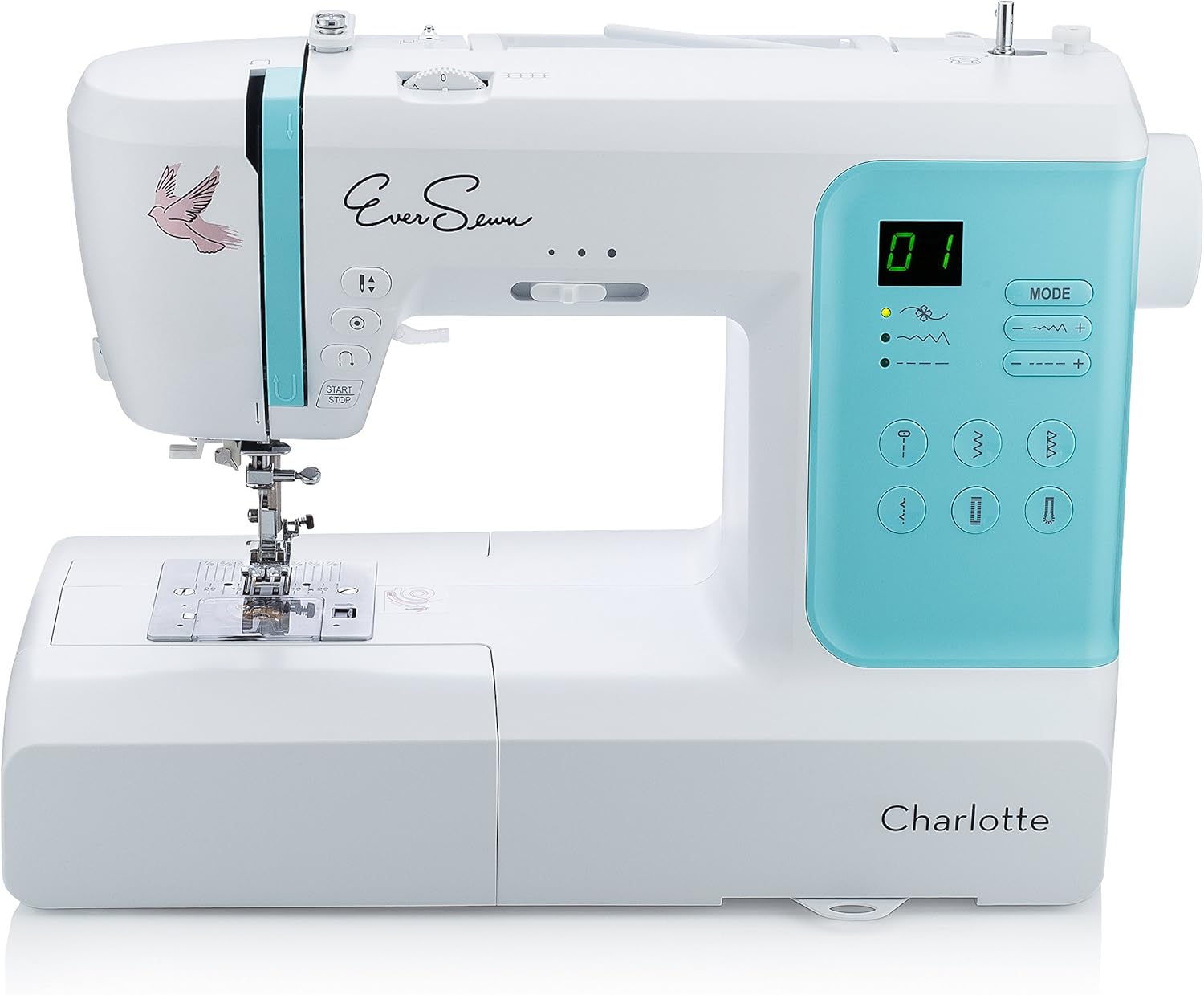
| Stitch count | 70–80 stitches |
|---|---|
| Max stitch width | 7 mm |
| Sewing space | 6.5 inch wide |
| Power source | 110–120 V US electrical outlet |
The EverSewn Charlotte is a midrange computerized sewing machine that packs 70–80 stitch options, a 7mm maximum stitch width, and a 6.5-inch-wide sewing space with a drop-feed dog for quilting and free-motion work. It includes an automatic needle threader, a top drop-in bobbin with a clear cover plate, fingertip speed control and an adjustable sewing-speed slider which make stitching simpler for beginners while giving more control to experienced users. The machine ships with seven presser feet and basic accessories useful for garment sewing and quilting, and the clear bobbin plate helps monitor thread usage during long quilt sessions. Practical limits are its home-grade construction and feature set: it is designed for hobbyists rather than heavy industrial use, and some advanced quilters may miss more specialized quilting feet or a larger throat for bulky quilts. For the price it delivers strong value: easy threading, decent stitch selection, and quilting-capable functionality that will handle most home quilting and garment projects.
Best for: Buyers looking for an affordable computerized machine that can handle garment sewing and home quilting with helpful automation and beginner-friendly controls.
Less Ideal for: People who need an industrial-grade machine for continuous heavy-duty sewing or quilters who require an extra-large throat and specialized longarm features.
- Wide stitch selection suitable for decorative and utility sewing
- 6.5-inch sewing space with drop-feed dog for free-motion quilting
- Automatic needle threader and drop-in bobbin for faster setup
- Includes seven presser feet and useful accessories out of the box
- Adjustable fingertip speed control for steady stitching and beginners
- Not intended for continuous professional or heavy-duty industrial sewing
- Throat space and accessory set may be limiting for very large or highly specialized quilting projects
Verdict: A budget-friendly computerized sewing machine that gives home quilters useful quilting features and easy-to-use automation for strong value.
Brother HC1850 Sewing & Quilting Machine

| Built-in stitches | 185 |
|---|---|
| Included feet | 8 |
| Power source | Corded Electric |
| Input voltage | 120 volts AC |
The Brother HC1850 is a computerized sewing and quilting machine designed for hobbyists and quilters who want a reliable, versatile tool. It offers 185 built-in stitches including alphanumeric options and eight one-step auto-size buttonholes, selectable via a backlit LCD and push-button controls. Practical quilting features include a spring-action quilting foot, drop-feed capability for free-motion work, and an extended table for handling larger projects. The machine also has an advanced automatic needle threader and a jam-resistant top-drop bobbin that simplify setup and reduce interruptions. Included accessories such as multiple presser feet, needles, and bobbins mean you can start quilting and sewing right away. At about 10 pounds it is portable enough to take to classes while still providing stable stitch quality thanks to Brother's feed system. Limitations include its 120V US-only design and a consumer-grade build that is not intended for heavy industrial throughput, so users doing continuous high-volume production may prefer a more heavy-duty model.
Best for: Buyers who prioritize a dependable, feature-packed machine for home quilting and sewing projects and who want easy setup and consistent stitch quality over time.
Less Ideal for: People who need a heavy industrial machine for continuous, high-volume production or who require international voltage compatibility without a dedicated model for their region.
- Large selection of 185 built-in stitches including alphanumeric options for decorative and utility sewing
- Spring-action quilting foot plus drop-feed and extended table for free-motion quilting and large projects
- Automatic needle threader and top-drop bobbin that reduce setup time and thread jams
- Includes multiple presser feet and starter accessories so you can begin sewing and quilting immediately
- Designed for 120V US use only, so not suitable without proper regional support elsewhere
- Consumer-grade machine not optimized for sustained industrial or high-volume commercial use
Verdict: A dependable, feature-rich computerized machine that gives home quilters an easy-to-use setup and strong quilting features for consistent results.
SINGER Quantum Stylist 9960

| Model Number | 9960 |
|---|---|
| Power Source | Corded Electric |
| Included Components | Extension Table, 13 Presser Feet, Bobbins, Needles |
| Item Weight | 7 kg |
| Stitch Count | 600 built-in stitches |
The SINGER Quantum Stylist 9960 is a feature-rich computerized sewing and quilting machine aimed at serious hobbyists and small-scale makers. It offers 600 built-in stitches and 1,172 stitch applications with mirror imaging, elongation, and a built-in font for lettering, which makes it well suited for decorative quilting, garment sewing, and personalized projects. Practical touches like an automatic needle threader, top drop-in bobbin with transparent cover, adjustable sewing speed, and a start/stop button for foot-pedal-free operation speed up setup and make long quilting sessions easier. The machine ships with a large extension table, a hard cover, 13 presser feet covering tasks from zipper insertion to walking foot duties, and multiple accessories that reduce the need to buy extras. The heavy-duty metal frame and multiple one-step buttonhole styles give consistent, professional results, but the machine is relatively large and geared toward users who will take advantage of its many stitches and accessories rather than those wanting a minimal, travel-friendly unit. Expect a learning curve to master advanced stitch features and settings, but the 9960 delivers precision and versatility for quilting and detailed sewing work.
Best for: Quilters and experienced hobby sewists who want a single, versatile machine for decorative stitching, lettering, and large projects and who value built-in accessories and advanced stitch control.
Less Ideal for: Casual or beginner sewers who need a compact, lightweight machine for occasional repairs or those who prefer a simpler, more portable model.
- Extensive stitch library with 600 built-in stitches and 1,172 stitch applications for decorative quilting
- Included large extension table and 13 presser feet expand capability for quilting and bulky projects
- Automatic needle threader and top drop-in transparent bobbin speed setup and monitoring
- Metal frame and robust construction improve stability and stitch consistency during high-speed sewing
- Bulkier and heavier than basic machines, so not ideal for frequent transport
- Wide feature set creates a learning curve for new users
Verdict: If you quilt frequently and want a single, factory-quality computerized machine with extensive stitches, accessories, and a sturdy metal frame, the SINGER 9960 is an excellent choice.
Brother SE700 Sewing & Embroidery

| Built-in embroidery designs | 135 |
|---|---|
| Built-in sewing stitches | 103 |
| Embroidery field | 4" x 4" |
| Screen | 3.7" touchscreen |
| Power | 120 volts |
The Brother SE700 combines a full-featured sewing machine with a 4" x 4" embroidery unit, aimed at hobbyists who want both capabilities in one machine. It ships with 135 built-in embroidery designs, 10 embroidery fonts, and 103 sewing stitches including one-step auto-size buttonholes, and the included 4"x4" hoop and eight presser feet make it ready for a range of small projects. The 3.7" color touchscreen eases on-screen editing and previews, while wireless LAN and USB let you send designs from the Artspira app or Design Database Transfer without fiddling with USB drives. Practical conveniences like an auto needle threader, automatic thread cutter, drop-in bobbin, and sewing speeds up to 710 spm speed up routine work. For quilting, the SE700 handles piecing and decorative stitching well, though its 4" x 4" embroidery field and mid-size work area mean larger quilt blocks or large-scale embroidery requires repositioning or a larger machine. It is a solid, dependable pick for quilters who value straightforward connectivity and reliable, factory-quality sewing and embroidery features in one unit.
Best for: Quilters who want a dependable, user-friendly combo machine that handles piecing, decorative stitches, and small-to-medium embroidery projects while minimizing setup friction.
Less Ideal for: Quilters who routinely work with very large quilt blocks or need a large embroidery field for single-pass large designs should consider a machine with a bigger hoop and workspace.
- Combined sewing and embroidery capabilities in one machine for versatile projects
- Wireless LAN and Artspira app support for easy design transfer and mobile customization
- 3.7" touchscreen with on-screen editing and previewing of designs
- Auto needle threader, automatic thread cutter, and drop-in bobbin for faster setup and fewer jams
- Includes 8 presser feet and a 4" x 4" hoop so you can start sewing and embroidering immediately
- Maximum embroidery area limited to 4" x 4", requiring hoop re-positioning for larger designs
- Work area is mid-size which may feel cramped when handling large quilt sections
Verdict: The SE700 is a reliable, easy-to-use sewing and embroidery combo that lets quilters quickly move from piecing to personalized embroidery with wireless design transfer and practical automation.
Choosing the Right Computerized Sewing Machine for Quilting: Key Factors to Consider
Workspace Size and Throat Depth
The width of the throat and the available flatbed space determine how comfortably you can maneuver a quilt while stitching. Larger throat depths reduce the need to constantly shift the quilt and minimize bunching when working on the center of a large project.
For quilting you should prioritize machines with an extended free arm or an accessory table that increases surface area. A small work area makes basting and free-motion quilting harder because fabric edges catch and tension points form. Consider the size of projects you usually make and choose a machine whose workspace lets you control and support the quilt without excessive tugging.
Stitch Quality and Adjustable Stitch Control
Even, balanced stitches are essential for durable quilt seams and a professional look. Computerized models that allow precise adjustments to stitch length, width, and needle position make it easier to fine-tune for different fabric layers and batting thicknesses.
Look for machines that report stitch settings clearly and retain saved stitch combinations. The ability to precisely set tension, or to access automatic tension adjustments that perform well across cotton and blended quilting fabrics, reduces rework and skipped stitches.
Feed System and Presser Foot Options
How a machine moves fabric is critical when several layers and batting are involved. A strong, consistent feed system or the option of a walking foot helps feed all layers evenly, avoiding puckers and misaligned seams.
Also consider whether the machine offers adjustable presser foot pressure and whether it accepts a range of quilting feet such as walking feet, darning/free-motion feet, and even specialized feet for binding. These options change how the machine handles bulk and textured quilt tops.
Motor Strength and Needle Penetration
Quilting often means repeatedly piercing multiple fabric layers and battings. A motor with sufficient torque reduces the chance of missed stitches and needle deflection when stitching through thick seams or through several layers at once.
Pay attention to reported motor performance and any features that aid penetration such as a presser-bar lifter or adjustable foot clearance. Machines that stall or hesitate under heavy sections will slow workflow and can damage fabric or needles.
User Interface, Memory, and Automation
A clear, intuitive interface reduces setup time and frustration. Quilters benefit from machines that store stitch settings, allow pattern combos, or provide speed control for free-motion quilting. Touchscreen or well-labeled button layouts help you swap stitches and make micro-adjustments on the fly.
Automation features such as thread cutters, needle up/down memory, and programmable start/stop settings speed repetitive tasks. Consider how the interface supports your typical quilting steps, from piecing to longarm-style free-motion work on a domestic machine.
Accessory Support and Expandability
Accessories tailored to quilting extend the machine's usefulness. Look for compatibility with extension tables, walking feet, free-motion darning feet, wide quilting foot options, and spool or bobbin solutions that handle longer sessions without frequent changes.
An available ecosystem of attachments simplifies binding, stippling, and other finishing techniques. Also consider whether maintenance parts and common extras like needles and bobbins are easy to source.
Making Piecing Easier: Features That Speed Accurate Seams
Accurate piecing depends on predictable fabric movement, consistent stitch length, and a reliable presser foot. Look for features that help you maintain a 1 4 seam allowance such as clear seam guides, needle position presets, and stitch-length memory. These tangible controls reduce rework and make matching points and corners faster.
Other useful niceties include a built-in presser foot pressure adjustment, a strong automatic thread cutter, and a flatbed extension to support patchwork blocks as you sew. Together these features shorten the time from cutting to accurate piecing, which is especially helpful when producing many repeating blocks.
- Needle position presets for accurate seam placement
- Seam guides and clear markings on the throat plate
- Presser foot pressure adjustment for consistent feeding
Free-Motion Quilting Setup and Tips
Free-motion quilting requires control over speed, needle position, and a stable flat surface. A machine that allows speed limiting helps you achieve smoother stitch patterns without hurried movements. Many quilters prefer a dedicated free-motion foot and a lowered feed dog option to get the surface behavior they need.
Practice on samples with your chosen batting and backing to adjust tension and stitch length before tackling a large quilt. Using an extension table and a hoop or frame that supports the quilt edge reduces drag and improves stitch consistency.
- Use speed limiting when learning free-motion patterns
- Lower feed dogs for free-motion and use a darning foot
- Test tension on a layered sample before starting the quilt
Managing Thick Seams and Multiple Layers
Thick seams at intersections and multiple fabric layers are common in quilting. Machines that let you increase presser foot clearance or lift the presser bar and that accept a walking foot make these transitions smoother. Also choose needles rated for quilting and consider microtex or topstitch needles when sewing binding or through dense seams.
If you frequently encounter bulky areas, check whether the machine's throat area allows easy maneuvering and whether the feed system maintains consistent stitch formation over uneven surfaces.
- Raise presser foot height for thick seam clearance
- Use a walking foot to feed multiple layers evenly
- Select appropriate needles for batting and multiple fabric layers
Maintenance and Longevity for Quilting Use
Regular maintenance keeps stitch quality consistent and prevents downtime. Quilting projects mean long sewing sessions, so follow routine care steps such as cleaning lint from bobbin areas, oiling per the manual when required, and changing needles frequently to avoid skipped stitches.
Also consider ease of routine maintenance when choosing a machine. Accessible bobbin cases, straightforward timing checks, and clear maintenance instructions reduce the chance of service interruptions during a large project.
- Clear access to bobbin and feed areas for lint removal
- Follow manufacturer maintenance intervals for oiling
- Change needles often during large quilting sessions
Workspace Ergonomics and Sewing Comfort
Comfortable posture and ergonomic access to controls improve stamina during long quilting sessions. A well-lit workspace built into the machine, reachable controls, and a comfortable working height reduce fatigue and mistakes.
Consider whether the machine allows adjusting presser foot height and whether accessories like an extension table raise the work surface to a comfortable level. Small conveniences like a clearly placed speed control and an easily reachable thread cutter add up over hours of sewing.
- Integrated lighting over the needle area
- Accessible speed control and needle up/down buttons
- Extension table compatibility for comfortable working posture
How We Chose the Best Computerized Sewing Machine for Quilting
To compile this list we focused on features and design elements that materially affect quilting workflow and finished results. Our primary evaluation criteria included stitch consistency and control, the size of the throat/arm and work area, presser foot and feed system versatility for handling multiple layers, user interface and ease of selecting programmable stitches, and accessory support for quilting tasks such as walking feet, free-motion feet, and extensions. We prioritized machines with reliable needle penetration and adjustable presser pressure or feed dog options so thick seams and batting sandwiching are manageable. We excluded models that lack basic quilting-capable features such as a minimum work area or any means to adjust feed for bulk. We also filtered out purely mechanical machines without computerized stitch memory or programmable stitch lengths when those functions were essential to the quilting use case. Final selection emphasized reproducible stitch settings, clear setup flows for quilting techniques, and accessory ecosystems that support piecing and free-motion quilting.
Our full evaluation process is outlined in our review methodology.
FAQ
Do I need a computerized machine to quilt effectively?
Not strictly. Many quilters use mechanical machines successfully, but a computerized sewing machine for quilting offers programmable stitch settings, memory, and finer micro-adjustments that speed repetitive tasks and improve consistency.
What stitch length should I use for piecing and quilting?
For piecing, a standard short stitch length around 2.0 to 2.5 mm is common for durable seams. For basting and free-motion quilting, slightly longer stitches may be used depending on batting and fabric; test on a sample sandwich to set the ideal length.
Is a walking foot necessary for quilting?
A walking foot is very useful when feeding multiple layers because it advances the top fabric evenly with the lower layers. It is not always required, but it reduces puckering and is helpful for consistent seams across bulky or textured quilt tops.
How often should I change needles when quilting?
Needles should be changed regularly, often after a full day's heavy quilting or sooner if you notice skipped stitches or rough fabric feeding. Fresh needles reduce skipped stitches and fabric damage, especially with dense seams and battings.
Can I use specialty quilting needles in a computerized machine?
Yes. Computerized home quilting machines typically accept a range of needle types including quilting, topstitch, and microtex needles. Ensure the needle size and type are compatible with the machine's recommended specifications.
Final Verdict
When choosing a computerized sewing machine for quilting, prioritize the features that match how you work: a roomy throat and extension table if you handle large quilts, a strong feed system and walking foot for thick seams, and fine-grain stitch control for accurate piecing and decorative quilting. Expect tradeoffs between compact convenience and workspace size; choose the machine whose accessory ecosystem and controls align with the techniques you use most. Focus on stitch consistency, feeding behavior, and comfort to select a machine that keeps projects moving smoothly from piecing to finished quilt.