
Note: This article contains affiliate links. If you click on these links and make a purchase, we may earn a small commission at no extra cost to you. This helps support our research and content. Read our full affiliate disclosure here.
Choosing the right countertop mixer for bread dough makes a big difference in how reliably your loaves turn out. The wrong machine can under-knead dense, sticky dough or overheat during long mixing cycles. In this guide we shortlist the top countertop mixers designed to handle bread dough specifically, focusing on motor strength, paddle and bowl design, and overall durability. You will find options that balance heavy kneading capability with easy cleanup and sensible controls. Below are our top picks and the practical evaluation criteria used to compare them.
Top Picks at a Glance
| Best Overall The best all-around choice for most situations | Cuisinart Stand Mixer SM-50BC |  |
| Best Quality Built to a higher standard if you want something more solid | Bosch Universal Plus Stand Mixer |  |
| Best Value The sweet spot between price and what you get | Hamilton Beach 4-Quart Stand Mixer |  |
| Best Budget The cheapest option that still gets the job done reliably | OLIXIS 4.2 Qt Stand Mixer |  |
| Top Rated A top-rated pick with lots of positive feedback | KitchenAid Classic Series K45SS |  |
| Most Popular A crowd favorite that many people choose with confidence | Kitchen in the box 3.2QT Stand Mixer | 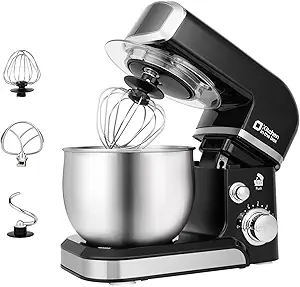 |
| Best Seller A high-volume bestseller chosen again and again | KitchenAid Artisan 5-Qt Mixer |  |
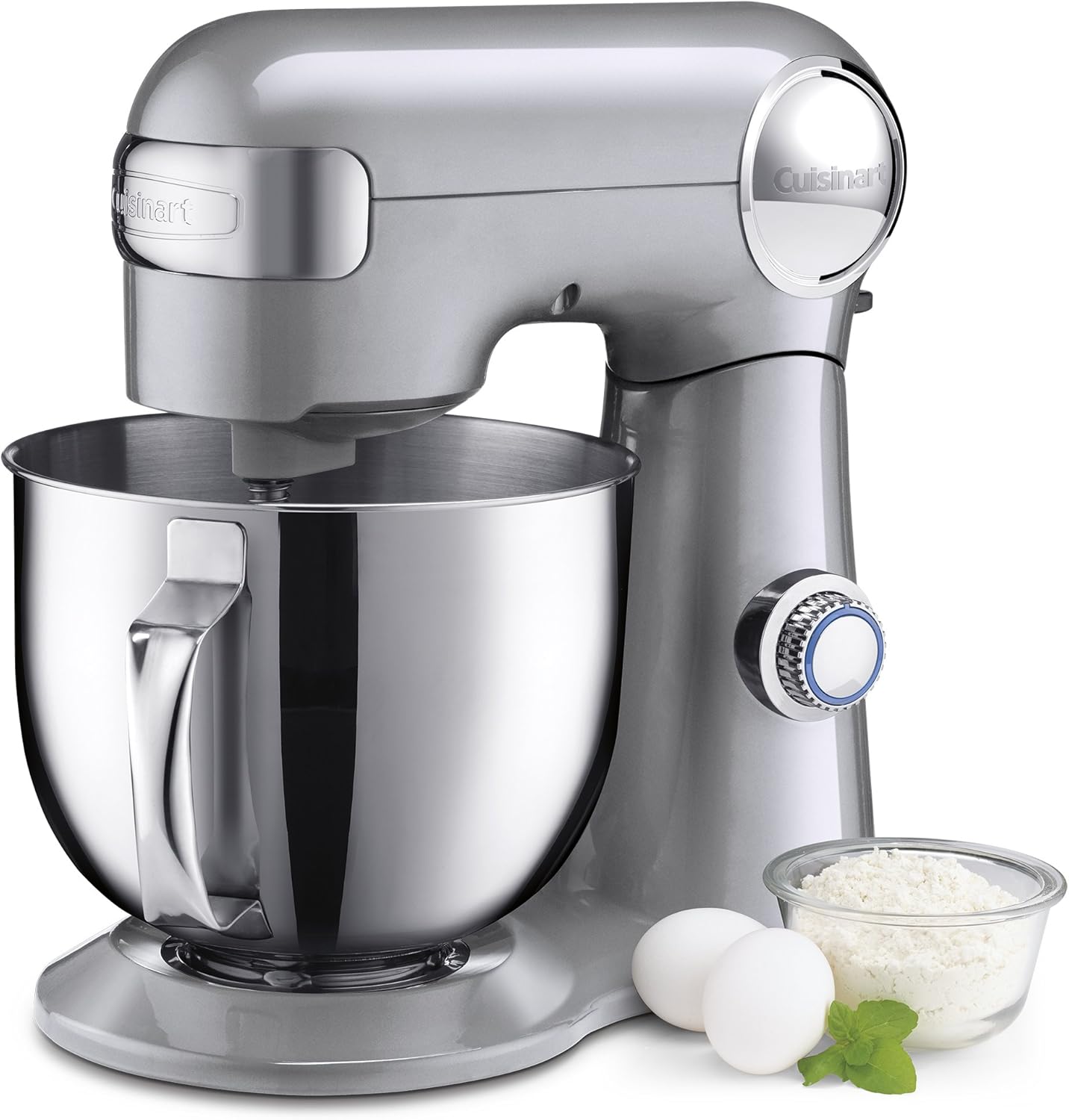
Cuisinart Stand Mixer SM-50BC
| Wattage | 500 watts |
|---|---|
| Number of Speeds | 12 |
| Capacity | 5.5 quarts |
| Controls Type | Knob |
| Voltage | 110 volts |
The Cuisinart SM-50BC is a compact, metal-built stand mixer designed for everyday mixing tasks including bread dough, batters, and whipping. Its 500-watt motor and 12-speed knob let you start slow for sticky dough and ramp up for thorough mixing, while the tilt-back head gives easy access to the 5.5-quart stainless steel bowl. Included accessories—the chef's whisk, flat paddle, and dough hook—cover the basics for most home bakers, and the splash guard with pour spout helps keep counters cleaner during high-speed use. The mixer is solidly constructed with die-cast metal and dishwasher-safe bowl and attachments, so cleanup and durability are practical benefits. It is not a commercial-grade dough machine, so very large batches or extremely heavy, high-hydration doughs may push the motor and benefit from slower, shorter mixing cycles. Optional attachments are available to expand capabilities, but they require the single power outlet arrangement described by the manufacturer. For home bakers who want a reliable, midweight mixer for regular bread and pastry work, this model hits the right balance of power, capacity, and everyday usability.
Best for: Home bakers who want a sturdy, mid-capacity mixer that handles regular bread dough and general baking tasks without the bulk of a commercial machine.
Less Ideal for: People who bake very large volumes or need a commercial-grade mixer for continuous heavy dough mixing should look at higher-capacity, professional models.
- 500-watt motor with 12 speeds for controlled mixing
- 5.5-quart stainless steel bowl suitable for typical home bread batches
- Die-cast metal construction for sturdiness and durability
- Includes whisk, dough hook, flat paddle and splash guard with pour spout
- Accessories and bowl are dishwasher safe for easier cleanup
- Not intended for commercial-scale or very large/high-hydration dough batches
- Single power outlet for attachments limits simultaneous accessory use
Verdict: A well-built mid-capacity stand mixer that gives home bakers the power and control needed for everyday bread dough and general baking.
Bosch Universal Plus Stand Mixer

| Wattage | 500 watts |
|---|---|
| Number of Speeds | 4 |
| Capacity | 6.5 quarts |
| Voltage | 230 volts |
The Bosch Universal Plus is built around a powerful 500 W bottom-drive motor and a roomy 6.5-quart bowl that make it well suited for serious dough work. Its belt-driven transmission delivers strong torque directly into the bowl so you can knead dense whole-grain and large-volume doughs without bogging down the motor, and the suction-cup feet keep the unit steady during heavy mixing. Dual wire whips provide a triple-whip action for fast aeration, while the heavy-duty dough hook and included extender handle both full loaves and small batches. Controls are simple with four speeds plus pulse, and many parts are dishwasher-safe for cleanup. Because the mixer uses a bottom-drive design and plastic bowl, it is lighter and more compact than some tilt-head metal-bodied machines but lacks the all-metal heft of professional floor mixers. It also runs on 230 volts, so check compatibility with your kitchen supply. For bakers who need a reliable, high-torque countertop machine for frequent bread baking, this model focuses on power and capacity over flashy electronics or many built-in automation features.
Best for: Home bakers who prioritize kneading power and capacity and regularly make large or whole-grain loaves will appreciate this mixer's torque-first design.
Less Ideal for: Casual bakers who only make small batches or who prefer a full-metal, professional-weight machine or lower-voltage models should consider other options.
- Powerful 500 W bottom-drive motor delivers high torque for kneading dense doughs
- Large 6.5-quart bowl handles big batches and multiple loaves
- Included heavy-duty dough hook and extender accommodate full and small batches
- Suction-cup feet provide stable operation during heavy mixing
- Dishwasher-safe removable parts for easier cleanup
- Requires 230-volt supply which may not match all kitchen outlets
- Plastic bowl and some plastic components feel less rugged than full metal alternatives
Verdict: Choose this Bosch Universal Plus when you need a compact countertop mixer with serious torque and large-batch kneading capability.
Hamilton Beach 4-Quart Stand Mixer

| Wattage | 300 watts |
|---|---|
| Number of Speeds | 7 |
| Capacity | 4 quarts |
| Material | Stainless Steel |
This Hamilton Beach stand mixer is a straightforward, no-frills machine that handles everyday baking tasks and bread doughs without fuss. Its 300-watt motor and planetary mixing action provide consistent coverage of the 4-quart stainless steel bowl, and the slower first speed helps reduce splatter when incorporating dry ingredients or starting kneading. The mixer includes a dough hook, flat beater, and whisk plus a splash guard, and the attachments and bowl are dishwasher safe for easy cleanup. A seven-speed knob and a mixing guide on the unit make it simple to pick the right setting for kneading, mixing, or whipping. Because it is compact and has a built-in carry handle, it is easy to move and store when not in use. The motor and capacity are well suited for small to medium loaves and typical home-bakery batches, but very large or heavy professional doughs may push the motor harder than higher-powered models.
Best for: Home bakers who prioritize a practical, space-conscious mixer that reliably handles small to medium bread and baking batches without unnecessary extras.
Less Ideal for: Commercial bakers or home users who regularly make very large loaves or dense multi-loaf batches should look for a higher-capacity, higher-power machine.
- Planetary mixing action for even bowl coverage
- Includes dough hook, flat beater, whisk, and splash guard
- Dishwasher-safe stainless steel bowl and attachments for easy cleanup
- Seven speeds with a slow first speed and mixing guide for controlled starts
- Compact design with built-in handle for easy moving and storage
- 300-watt motor may strain on very large or heavy bread doughs
- 4-quart capacity limits batch size for avid bakers
Verdict: A compact, dependable stand mixer that gives even mixing and practical features for home bread bakers who want reliable results without excess bells and whistles.
OLIXIS 4.2 Qt Stand Mixer

| Capacity | 4.2 quarts |
|---|---|
| Wattage | 300 watts |
| Number of Speeds | 10 |
| Noise Level | 60 db |
The OLIXIS 4.2 Qt Stand Mixer is a compact countertop machine aimed at home bakers who need a versatile, budget-friendly tool for mixing, whipping, and kneading. It uses a 300W motor and ten speed settings to handle tasks from light batters to stiffer doughs, and the tilt-head design makes attachment changes and bowl access straightforward. The package includes a stainless steel bowl plus dough hook, whisk, and flat beater so you can start making bread, cakes, and cookies immediately, and the included splash lid with extra utility features helps reduce mess and saves drawer space. At about 60 dB it runs at a moderate noise level, and the ABS and aluminum build keeps weight down while offering everyday durability. The main compromises are the 4.2-quart capacity, which limits very large batches, and the 300W motor that may slow on very heavy or high-volume doughs compared with higher-power, professional models. For home bakers who want a capable, affordable machine that fits small kitchens, it covers the essentials well.
Best for: Home bakers buying on a budget who need a compact, ready-to-use mixer for occasional to moderate bread and pastry projects and who value included tools and small-kitchen convenience.
Less Ideal for: Serious home bakers who routinely make large loaves, multiple batches, or very heavy doughs should choose a higher-capacity, higher-power machine instead.
- Includes dough hook, whisk, flat beater, and stainless steel bowl for immediate use
- Ten speed settings give fine control from gentle whipping to dough kneading
- Tilt-head design and splash lid make attachment changes and cleanup easier
- Compact footprint suits small countertops and kitchens
- 300W motor and 4.2-quart bowl limit capacity for very large or frequent bread batches
- Build materials prioritize lightness over the heavier feel of premium metal-bodied mixers
Verdict: A budget-friendly, compact stand mixer that provides the essential power and attachments most home bakers need for small to moderate bread doughs.
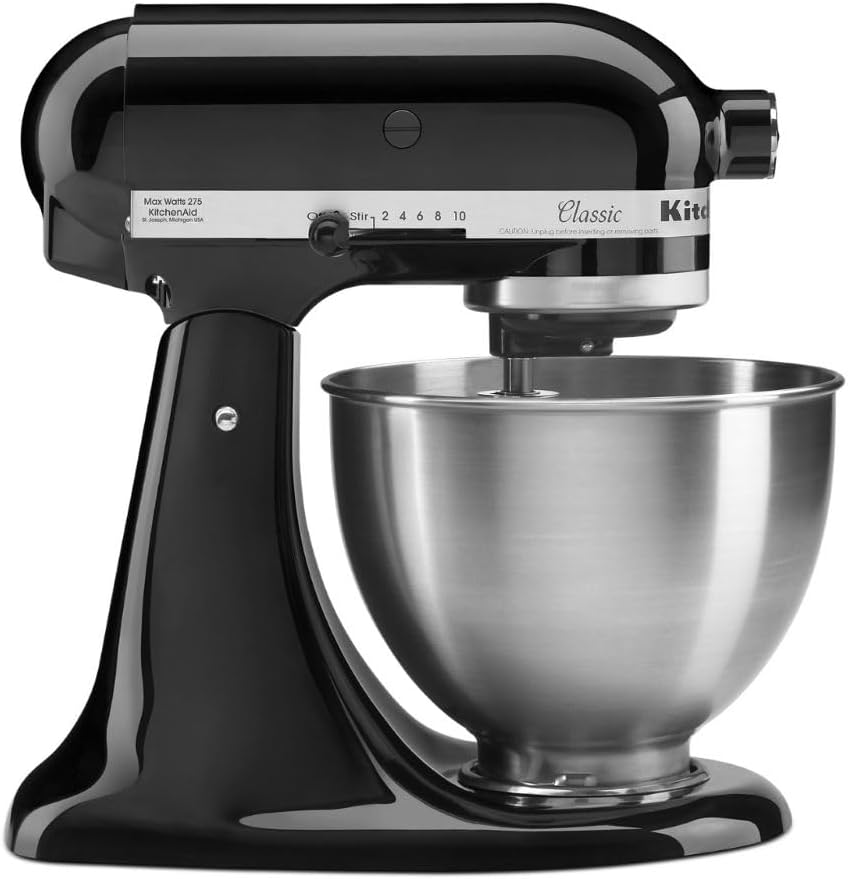
KitchenAid Classic Series K45SS
| Capacity | 4.5 quarts |
|---|---|
| Wattage | 275 watts |
| Number of Speeds | 10 |
| Included Components | Flat beater, dough hook, 6-wire whip, stainless steel bowl |
| Voltage | 120 volts |
The KitchenAid Classic Series K45SS is a straightforward tilt-head stand mixer built for regular home baking and dough work. Its 4.5-quart stainless steel bowl and 275-watt metal-drive motor handle mixing, whipping, and kneading for small to medium batches, and the tilt-head makes adding ingredients or swapping attachments quick. The package includes a coated flat beater, coated dough hook, and 6-wire whip so you can mix cookie batters, knead bread dough, and whip creams without buying extras. The mixer offers 10 speed settings for gentle folding up through high-speed whipping, and the metal construction with multiple touchpoints around the bowl helps produce even mixing. Because it is a classic, no-frills design, it lacks the higher wattage and bowl-lift mechanism found on larger models, so very large or heavy bread doughs will be slower to mix and may require smaller batches. For most home bakers who value a durable, proven machine that accepts KitchenAid power-hub attachments, this model reliably covers everyday bread and baking needs.
Best for: Home bakers who prioritize a reliable, built-to-last mixer for everyday bread doughs and routine baking tasks and who prefer a proven, simple design over pro-level capacity.
Less Ideal for: People who routinely make very large or very heavy bread batches and need a higher-wattage, bowl-lift mixer designed for commercial-level dough handling.
- Durable metal construction designed for long-term home use
- 4.5-quart stainless steel bowl suitable for small to medium batches
- Includes flat beater, dough hook, and wire whip for common baking tasks
- 10 speed settings give control from slow kneading to high-speed whipping
- Power hub allows optional attachments for added versatility
- 275-watt motor is less powerful than bowl-lift commercial-style mixers for very heavy doughs
- Tilt-head design limits capacity compared with bowl-lift models for large batches
Verdict: Choose this mixer if you want a durable, no-frills machine that reliably handles everyday bread doughs and routine baking tasks.
Kitchen in the box 3.2QT Stand Mixer

| Capacity | 3.2QT |
|---|---|
| Wattage | 300 watts |
| Number of Speeds | 6 |
| Included Components | Whisk, Beater, Dough Hook |
This Kitchen in the box 3.2QT stand mixer is designed for everyday small-batch baking, offering a lightweight, space-saving option for kitchens with limited counter space. It uses a tilt-head design and a 3.2QT stainless steel bowl to handle tasks like whipping cream, beating batters, and mixing dough for one to two people. The mixer includes an aluminum dough hook, flat beater, and stainless steel whisk, and its planetary rotation aims to deliver even mixing. Practical touches include a transparent splash guard, four suction feet to reduce movement during use, and six speed settings for a range of recipes. At 300 watts this unit is suitable for occasional bread dough and thicker batters but the manufacturer notes the small bowl capacity means it is not intended for large batches or professional use. Users should also be mindful of a mechanical speed control that may deliver higher initial torque at low settings, so start slowly with heavy doughs. Overall, it is a capable compact mixer for home bakers who make small loaves, pastries, and everyday mixes.
Best for: Home bakers who need a compact, reliable mixer for daily small-batch baking and prefer products with proven customer feedback and practical stability features.
Less Ideal for: People who regularly mix large quantities of dough, bake professionally, or need a high-power, heavy-duty mixer for frequent large-batch bread making.
- Compact, lightweight design saves counter and storage space
- Includes three common attachments: dough hook, flat beater, and whisk
- Transparent anti-splash lid helps keep ingredients contained
- Six speed settings provide versatility from stirring to whipping
- Suction feet help stabilize the machine during mixing
- 3.2QT bowl is small and limits batch size for bread or large recipes
- 300W motor may struggle with very heavy or frequent dough mixing
Verdict: A space-saving 3.2QT stand mixer that reliably handles everyday small-batch bread dough and baking tasks for home users.
KitchenAid Artisan 5-Qt Mixer

| Capacity | 5 quarts |
|---|---|
| Wattage | 325 watts |
| Number of Speeds | 10 |
| Included Components | 5-Qt bowl, 6-wire whip, coated dough hook, coated flat beater, pouring shield |
| Voltage | 120 volts |
The KitchenAid Artisan 5-Quart Tilt-Head Stand Mixer is a full-featured countertop mixer built for everyday and heavy-duty baking tasks. It uses a durable metal body and a 325-watt motor to drive a coated dough hook, flat beater, and 6-wire whip, and the 5-quart stainless steel bowl handles batch sizes up to nine dozen cookies or large bread doughs. The tilt-head design makes attaching tools and adding ingredients straightforward, while the 10-speed knob gives precise control from slow stirring to high-speed whipping. Practical touches include a comfortable bowl handle and a pouring shield to reduce mess when adding liquids. For kneading bread, the coated dough hook and bowl capacity provide reliable performance for typical home loaves, though commercial-scale doughs will push the motor. The mixer accepts optional hub-powered attachments to expand capability, and its metal build signals long-term durability, but it is a heavier machine that takes counter space and requires care when lifting or moving.
Best for: Buyers who want a reliable, long-lasting stand mixer that can handle frequent home bread baking and prefers a familiar, easy-to-use tilt-head design.
Less Ideal for: Those who need a commercial-capacity dough machine for very large or high-volume baking operations or who require a lighter, ultra-compact mixer for limited counter space.
- Sturdy metal construction built for long-term use
- 5-quart stainless steel bowl handles large homemade batches
- Included coated dough hook and 10 speeds suitable for kneading most home bread recipes
- Tilt-head design and pouring shield make ingredient addition and accessory changes easy
- Wide accessory ecosystem via the power hub for added functionality
- 325-watt motor can be strained by very heavy or very large dough batches
- Relatively heavy and sizeable, so it occupies significant counter space
Verdict: A durable, user-friendly 5-quart mixer that is a dependable choice for home bakers who regularly knead bread dough.
Choosing the Right Countertop Mixer for Bread Dough: Key Factors to Consider
Motor Power And Torque
Bread dough requires sustained low-speed torque to develop gluten and knead dense mixtures. A higher-rated motor does not always equal better performance, but machines with strong torque ratings and robust gearing maintain speed under load rather than stalling. For home bakers who frequently make large loaves or enriched doughs, look for mixers with proven heavy-duty motors and manufacturer guidance about maximum dough weight.
Motor cooling and ventilation matter because long kneading cycles generate heat. Mixers with better heat dissipation or conservative duty-cycle recommendations let you run longer sessions without tripping thermal protection.
Mixing Head Type And Bowl Geometry
The shape of the bowl and the design of the mixing head determine how well the dough is folded and developed. A deeper, rounded bowl with a spiral or dough hook that reaches the sides and bottom will knead more evenly and reduce the need to stop and scrape. Some attachments offer enhanced reach or specialized shapes that replicate hand-kneading motions.
Attachment fit and security are also important. A wobbling head or loose hook reduces efficiency and can trap dough. Consider how attachments lock in place and whether the mixer supports a range of dough hooks sized for different batch sizes.
Capacity And Batch Size
Capacity affects how much dough you can mix in a single batch without overworking the motor. Manufacturers often list maximum loaf or dough weight, which helps match the mixer to your baking habits. Overfilling a bowl reduces kneading quality and strains the motor, shortening appliance life.
If you bake frequently for a family or like to make multiple loaves, prioritize larger bowls and higher duty ratings. For occasional small loaves, a more compact mixer can deliver excellent results without the footprint of a heavy-duty machine.
Duty Cycle And Thermal Management
Long kneading sessions produce heat in the motor and gearbox. Duty cycle describes how long a mixer can run before it needs a rest period. Mixers intended for heavy dough work will specify longer runtime or incorporate cooling features to protect internal components.
Understanding duty cycle prevents interruptions during a recipe and avoids premature shutdowns. If you plan to use the mixer for frequent or commercial-style batches, choose a model with better heat management and conservative duty recommendations.
Ease Of Cleaning And Maintenance
Bread dough can be sticky and messy. Removable bowls, dishwasher-safe attachments, and smooth exterior finishes make cleanup quicker and reduce the time needed between bakes. Look for accessible joints and sealed controls that resist flour dust and moisture, which otherwise accumulate and affect long-term performance.
Routine maintenance includes checking attachment mounts and occasional lubrication of moving parts where recommended. Models with user-serviceable components or clear maintenance guidance tend to remain reliable longer.
Durability And Warranty Support
A durable mixer uses metal gears, reinforced shafts, and sturdy housings that tolerate repeated high-torque cycles. Plastic parts are fine in low-stress areas but can wear out faster where torque concentrates. Longer or more comprehensive warranties can indicate manufacturer confidence and reduce ownership risk.
Also consider the availability of replacement parts and how easy it is to service the unit. A mixer that can be repaired economically will often outlast one that must be replaced after a single major failure.
How Mixer Torque Affects Dough Development
Torque determines how well a mixer can stretch and fold gluten networks in bread dough. Higher torque at low speeds replicates the physical resistance of hand kneading and helps achieve the elastic, smooth texture professional bakers look for. Torque also influences how quickly a batch reaches full gluten development, which can save time when making multiple loaves.
If a mixer stalls or slows dramatically under load, the dough will be under-kneaded and may produce dense, irregular crumb. Look for specifications or manufacturer guidance that mention recommended dough capacities and test conditions to get a realistic sense of real-world torque performance.
- Low-speed torque is more important than high RPMs for bread dough.
- Gearing and motor cooling influence sustained torque during long cycles.
- Kneading attachments designed for dough maximize the torque that reaches the dough.
Attachment Types And When To Use Them
Dough hooks come in spiral and C-shaped variants. Spiral hooks tend to work dough more efficiently for heavy, high-hydration mixes, while C-shaped hooks can be better for stiffer doughs and smaller batches. Paddle or flat-beater attachments are useful for mixing ingredients before kneading but are not a substitute for a dough hook during gluten development.
Choose attachments sized to the bowl and the batch. Using a hook that is too small will cause the mixer to work harder and produce uneven kneading. Check whether the manufacturer sells alternative or heavy-duty hooks if you plan to increase batch size later.
- Use a spiral hook for high-hydration or larger loaves.
- Start with a paddle to combine ingredients, then switch to a hook for kneading.
- Secure attachment locks reduce wobble and improve kneading efficiency.
Practical Tips For Long Kneading Sessions
To avoid overheating, follow duty-cycle guidance and allow short rest periods between long mixes. If the mixer has a timer or programmable settings, use them to cycle short rest intervals into your kneading routine. Monitor the motor housing for excessive heat and avoid forcing larger batches than recommended.
Scraping the bowl mid-cycle can improve hydration and uniformity, but it interrupts the kneading motion. If you need to scrape, pause the mixer before doing so. Regularly inspect attachment mounts and seals for dough buildup, which can accelerate wear or cause imbalance during operation.
- Follow duty-cycle guidelines and let the motor cool between long runs.
- Pause before scraping to avoid stressing the motor.
- Clean attachment mounts after each use to prevent buildup.
Noise, Vibration, And Placement Considerations
High-torque kneading can produce noticeable vibration and noise. Choose a stable countertop location and consider placing a silicone mat or anti-vibration pads under the mixer to reduce movement. Proper placement also prevents the appliance from walking on the counter during vigorous mixes.
Models with better internal damping and balanced attachments typically run quieter. If noise is a concern in your kitchen environment, look for units with user feedback noting low vibration or with design features that isolate the motor from the housing.
- Use a stable, level surface to minimize vibration.
- Anti-vibration pads can significantly reduce perceived noise.
- Balance attachments before starting a heavy knead to prevent wobble.
Storage And Countertop Footprint
Countertop mixers range from compact machines designed for small kitchens to larger units that occupy significant counter space. Consider how often you will use the mixer and whether you need it accessible or stored. Heavier, full-size machines are harder to move but often offer better durability for frequent bread making.
If storage space is limited, look for mixers with removable bowls that nest or for models with quick-detach attachments that store neatly. Also check the depth and height to ensure the mixer fits under cabinetry if you plan to keep it on the counter.
- Measure storage space and counter clearance before choosing a model.
- Removable parts shorten cleanup and make storage simpler.
- Lighter models are easier to stow but may sacrifice heavy-duty features.
How We Chose the Best Countertop Mixer for Bread Dough
We focused on attributes that directly affect how well a countertop mixer handles bread dough rather than general baking tasks. Primary filters included motor power and thermal management to ensure the mixer can run long kneading cycles without overheating; drivetrain and gearing quality to translate motor output into consistent low-speed torque; and mixing head and bowl geometry to promote gluten development and even hydration. We also weighed practical user concerns such as ease of cleaning, durability of attachments and finish, and control precision including speed steps and timers. Noise and vibration were considered because excessive vibration can reduce contact with the dough and shorten appliance life. We excluded units designed only for light batter work or handheld-only mixers since they do not deliver sustained torque for bread dough. Final selection favored mixers with documented capacity for heavy doughs, serviceable attachments, and cooling or duty-cycle specifications suitable for frequent kneading. The list balances raw kneading capability with everyday usability and maintenance needs.
Our full evaluation process is outlined in our review methodology.
FAQ
Can a standard home countertop mixer handle high-hydration doughs?
Often yes, but it depends on motor torque and bowl design. Some countertop mixers can manage high-hydration dough if they have robust low-speed torque and an appropriate hook. Check manufacturer guidance on maximum dough weight and duty cycle.
How large a batch can I knead in a typical countertop mixer?
That depends on the mixer's bowl capacity and recommended dough weight. Many consumer models handle one to two large loaves comfortably, while heavy-duty home units can manage larger batches. Avoid overfilling to prevent poor kneading and motor strain.
Is it better to knead by hand or use a countertop mixer for bread dough?
Both methods can produce excellent bread. A countertop mixer offers consistent kneading and saves time for frequent bakers or larger batches. Hand kneading gives tactile feedback and control, which some bakers prefer for certain dough textures.
How often should I clean and maintain dough hooks and the bowl?
Clean attachments and the bowl after every use to prevent dried dough buildup. Periodically inspect attachment mounts and seals for wear, and follow manufacturer maintenance guidance to keep gears and drives functioning smoothly.
Will frequent kneading shorten a mixer's lifespan?
Frequent heavy kneading subjects a mixer to more wear, especially if used beyond its recommended duty cycle or capacity. Choosing a model rated for heavy dough and following rest intervals and maintenance advice helps preserve lifespan.
Final Verdict
When choosing a countertop mixer for bread dough, prioritize sustained low-speed torque, robust attachment and bowl geometry, and a duty cycle that fits your baking frequency. These factors determine whether the machine can handle long kneading sessions without overheating or underperforming. Balance capacity and footprint with durability and maintenance needs to match how often and how much you bake. Selecting a mixer with the right torque and cooling characteristics will give you more consistent results and fewer interruptions during bread making.