
Note: This article contains affiliate links. If you click on these links and make a purchase, we may earn a small commission at no extra cost to you. This helps support our research and content. Read our full affiliate disclosure here.
Picking the right dough mixer for bread makes a measurable difference in your baking routine. The right machine reduces kneading time, handles larger batches without strain, and delivers consistent gluten development so your loaves rise and bake more evenly. This guide focuses on the top shortlisted models built for home bakers who want reliable results and fewer manual steps. We evaluated machines based on power delivery, dough capacity and handling, build quality, and ease of use. Below are our top picks for home bread baking, followed by practical buying guidance and answers to common user questions.
Top Picks at a Glance
| Best Overall The best all-around choice for most situations | Cuisinart Stand Mixer SM-50BC |  |
| Best Quality Built to a higher standard if you want something more solid | Ooni Halo Pro Spiral Mixer |  |
| Best Value The sweet spot between price and what you get | Kitchen in the box 3.2QT Stand Mixer | 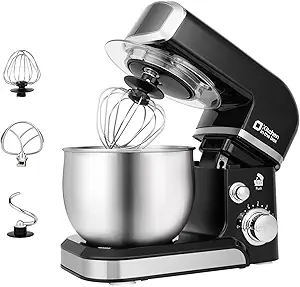 |
| Best Budget The cheapest option that still gets the job done reliably | Vikaluz Stand Mixer 3.2QT |  |
| Top Rated A top-rated pick with lots of positive feedback | KitchenAid Classic Series K45SS 4.5-Quart |  |
| Most Popular A crowd favorite that many people choose with confidence | Hamilton Beach Stand Mixer 63391 |  |
| Best Seller A high-volume bestseller chosen again and again | KitchenAid Artisan 5-Quart Mixer |  |
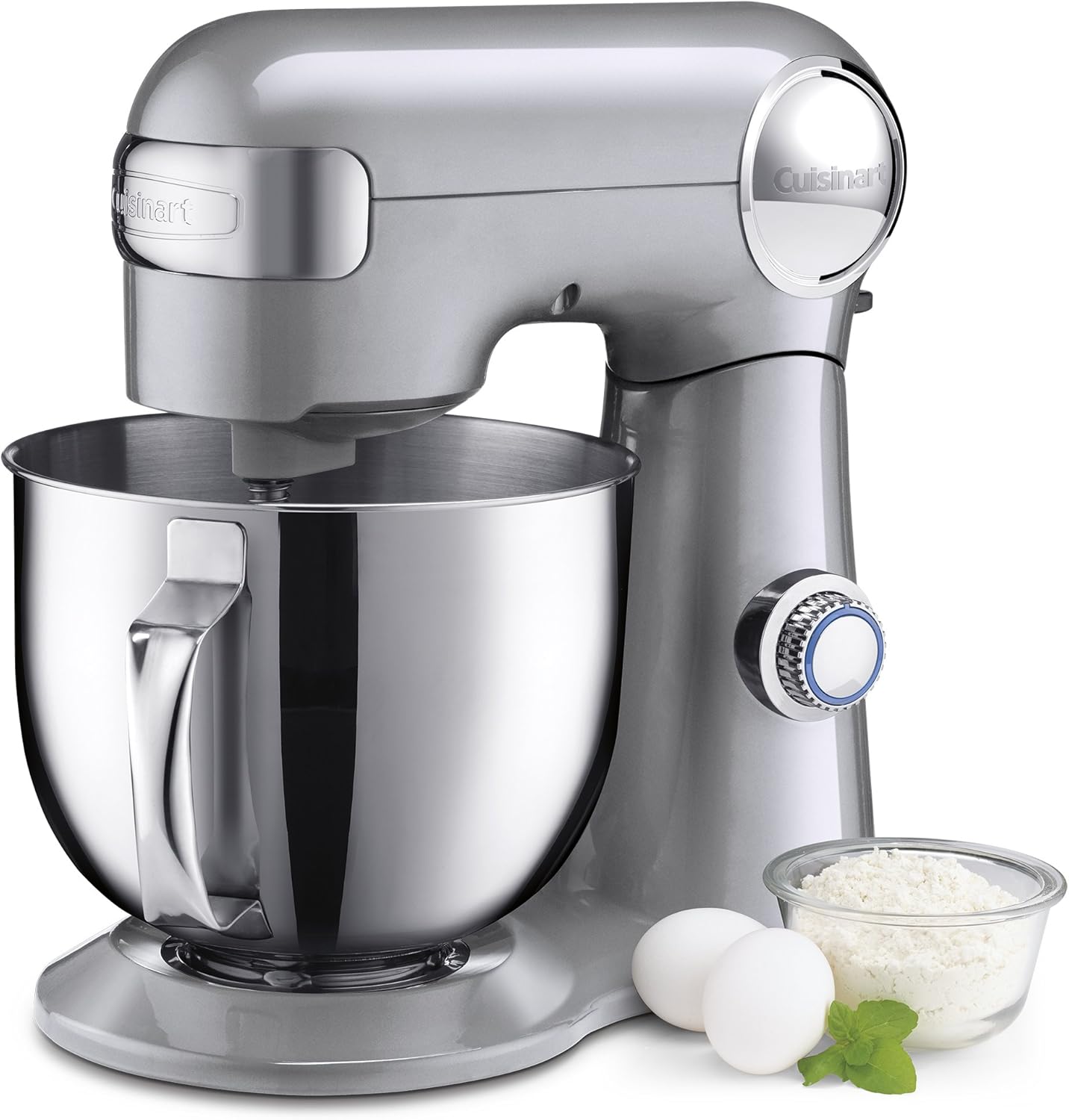
Cuisinart Stand Mixer SM-50BC
| Wattage | 500 watts |
|---|---|
| Number of Speeds | 12 |
| Capacity | 5.5 quarts |
| Voltage | 110 volts |
| Material | Metal |
This Cuisinart stand mixer is a solid all-purpose machine for home bakers who make bread, cakes, and other batters. Its 500-watt motor and 12-speed knob let you slow-start doughs and ramp up for whipping or mixing, while the tilt-back head gives easy access to the 5.5-quart stainless steel bowl. Included tools are a dough hook, flat paddle, and whisk, and the splash guard with pour spout keeps countertops cleaner when adding ingredients. The metal die-cast construction feels sturdy and the accessories and bowl are dishwasher safe for easy cleanup. For bread making the mixer handles typical home dough batches comfortably, though it is not marketed as a heavy-duty commercial unit and very large or high-hydration doughs may require longer mixing or smaller batches. Optional attachments expand its utility if you want pasta, meat grinding, or ice cream capabilities later on.
Best for: Home bakers who want a reliable, versatile mixer that handles everyday bread, doughs, and baking projects without upgrading to commercial equipment.
Less Ideal for: Users who routinely mix very large batches, commercial bakery workloads, or need a purpose-built industrial machine should consider heavier-duty alternatives.
- 500-watt motor with 12 speeds for controlled mixing
- 5.5-quart stainless steel bowl suitable for typical home bread batches
- Includes dough hook, flat paddle, and whisk for common tasks
- Tilt-back head and splash guard make loading and messy additions easier
- Die-cast metal construction and dishwasher-safe accessories for durability and cleanup
- Not designed for commercial or very large heavy doughs
- Relatively heavy unit that takes counter space
Verdict: A sturdy, mid-capacity stand mixer that gives home bakers the power and accessory set to make bread and everyday baking tasks with confidence.
Ooni Halo Pro Spiral Mixer

| Capacity | 7.3 quarts |
|---|---|
| Wattage | 650 watts |
| Number of Speeds | 58 |
| Controls Type | Touch |
| Noise Level | 65 db |
The Ooni Halo Pro is built primarily for serious home bakers and pizza makers who want professional-style dough results at home. It uses spiral mixing with a rotating bowl and spiral hook to develop gluten quickly, and the removable breaker bar plus four included attachments (spiral hook, flexible beater, geared whisk, breaker bar) let it switch between kneading, whisking, and beating. Precision is a standout: 58 speed settings and a 60–1000+ RPM range let you dial in gentle mixing or vigorous kneading, and touch controls and a time setting function make repetitive batches straightforward. At 650 watts and a reported 65 dB noise level, it packs usable power without being excessively loud. The large 7.3 quart stainless steel bowl handles big dough batches for loaves and pizzas, but the unit is fairly heavy and larger than compact hobby mixers. Expect professional-style dough development and quicker mix times compared with typical planetary mixers, with the trade-off of a footprint and weight that suit a counter with space and a user who prioritizes dough performance.
Best for: Bakers and pizza enthusiasts seeking bakery-level dough development who prioritize precise control and professional-style kneading over a compact footprint.
Less Ideal for: Casual home bakers who make occasional small batches or shoppers constrained by counter space should consider smaller, lighter mixers instead.
- Spiral dual-kneading design develops stronger gluten for superior bread and pizza dough.
- 58 speed settings and time control provide fine-tuned mixing from slow fold to rapid knead.
- Includes four multi-function attachments for kneading, whisking, and beating without extra purchases.
- Removable bowl and detachable spindle improve cleaning and swapping tasks.
- Relatively heavy and large compared with small countertop mixers, so needs dedicated counter space.
- Higher wattage and professional features may be unnecessary for casual bakers who make small, infrequent batches.
Verdict: Choose the Halo Pro if you want a real spiral mixer that delivers professional dough development and precise speed control for bakery-quality bread and pizza at home.
Kitchen in the box 3.2QT Stand Mixer

| Capacity | 3 liters |
|---|---|
| Wattage | 300 watts |
| Number of Speeds | 6 |
| Included Components | Whisk, Beater, Dough Hook, Mixing Bowl |
This small stand mixer is built for everyday small-batch baking and fits neatly on a crowded countertop or in a cabinet. The 3.2 quart stainless steel bowl and tilt-head design make it easy to load dough or batter and swap the included aluminum dough hook, flat beater, and stainless steel whisk. Six speed settings cover slow stirring through higher-speed whipping, and four suction feet help keep the unit steady while kneading or mixing. At 300 watts the motor handles typical home doughs and batters but is intended for 1 to 2 person households rather than large batches. The anti-splash lid and gasket at the head joint reduce mess, and the detachable accessories are listed as dishwasher safe for easier cleanup. Lightweight construction keeps it easy to move and store, but the smaller capacity and lower power compared with full-size bakery mixers mean you will need a larger machine for frequent big loaves or heavy commercial use.
Best for: Home bakers focused on small, frequent batches who prioritize compact, space-saving gear and straightforward, easy-to-clean operation.
Less Ideal for: Users who bake large loaves, multiple loaves at once, or regularly mix very stiff doughs should choose a higher-capacity, more powerful mixer.
- Compact 3.2 QT stainless steel bowl saves counter and storage space
- Includes dough hook, flat beater, and stainless steel whisk for common baking tasks
- Six speeds provide control from gentle stirring to whipping
- Anti-splash lid and gasket help contain mess during mixing
- Four suction feet improve stability during kneading
- 300W motor and small bowl limit capacity for large or frequent bread batches
- Lightweight, mostly plastic body may not feel as durable as heavier, professional mixers
Verdict: A practical, space-saving stand mixer that handles everyday small-batch bread and baking tasks for two people or less.
Vikaluz Stand Mixer 3.2QT

| Capacity | 3.2 quarts |
|---|---|
| Wattage | 250 watts |
| Number of Speeds | 5 (plus Turbo) |
| Material | 304 Stainless Steel |
| Voltage | 120 volts |
The Vikaluz 3.2QT stand mixer is a compact 2-in-1 appliance that works as a hands-free stand mixer for heavier doughs and detaches into a hand mixer for quick jobs. It uses an auto-rotating 304 stainless steel bowl combined with a side-to-side rotating beater head and integrated scraper to reach the bowl sides and bottom, which helps cut down on unmixed flour and manual scraping. The tilt-head design and included beater, dough hook, and whisk make switching tasks and cleaning straightforward, and several attachments are dishwasher-safe. Five speed settings plus a Turbo boost let you handle everything from folding batters to whipping cream, though the 250W motor and 3.2QT capacity are best suited to small batches rather than very large or commercial loaves. Practical, space-saving, and aimed at home bakers, it delivers more even mixing than a simple hand mixer but will be slower on very dense doughs than higher-wattage, larger-capacity mixers.
Best for: Home bakers who want an affordable, space-saving mixer that can handle frequent small-to-medium batches and replace both a hand mixer and a compact stand mixer.
Less Ideal for: Bakers who regularly make large batches, commercial volumes, or very heavy high-hydration doughs should choose a higher-capacity, higher-power mixer instead.
- 2-in-1 design converts between stand and hand mixer for versatility and counter savings
- Auto-rotating 304 stainless steel bowl with dual-direction beater improves mixing coverage and consistency
- Includes dough hook, flat beater, and whisk so you can handle doughs, batters, and whipping tasks out of the box
- Tilt-head and removable bowl make loading and cleaning easier
- Five speeds plus Turbo provide a range of control for common home recipes
- 250W motor and 3.2QT capacity limit performance on very large or very dense bread doughs
Verdict: A budget-friendly, space-conscious 2-in-1 mixer that delivers more even mixing for home bread and small-batch baking needs.
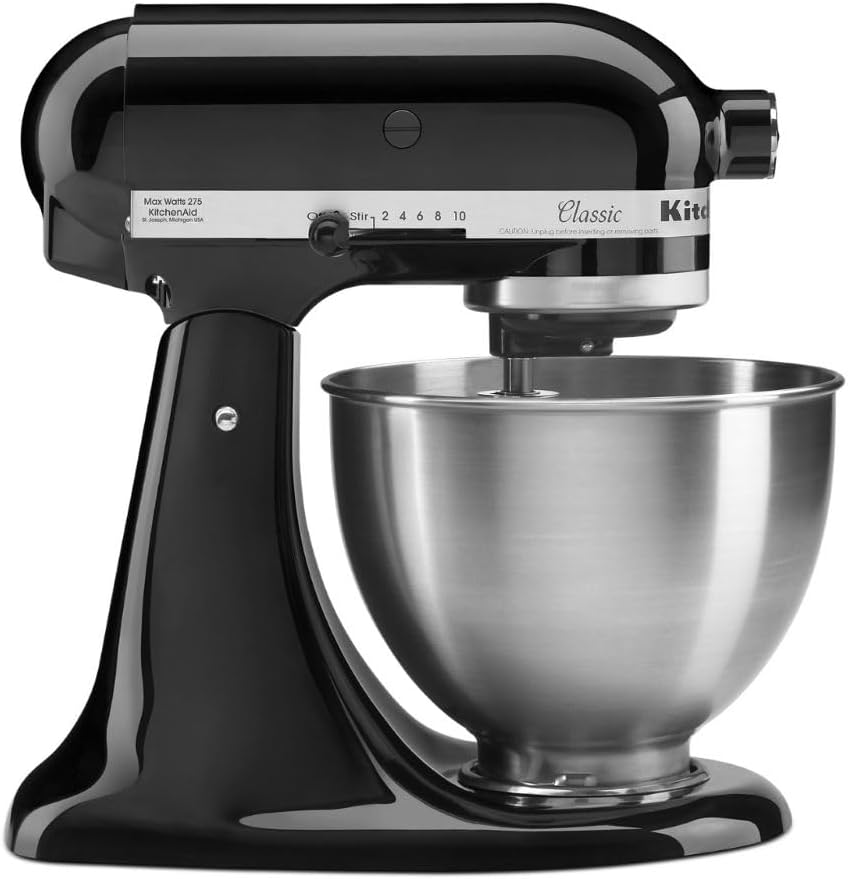
KitchenAid Classic Series K45SS 4.5-Quart
| Capacity | 4.5 quarts |
|---|---|
| Wattage | 275 watts |
| Number of Speeds | 10 |
| Voltage | 120 volts |
| Included Components | Stainless steel bowl, flat beater, dough hook, 6-wire whip |
The KitchenAid Classic Series K45SS is a straightforward, durable stand mixer designed for routine home baking and dough work. Its 4.5-quart stainless steel bowl and 10-speed control cover mixing, whipping, and light to medium dough kneading; the tilt-head makes adding ingredients and swapping included tools easy. The metal construction and 59 touchpoints around the bowl promote consistent mixing and long-term reliability, and the power hub accepts optional attachments for grinders, pasta makers, and more when you want to expand beyond basic doughs. Included are a flat beater, dough hook, and 6-wire whip so you can mix cookies, knead bread dough, and whip creams without extra purchases. Limitations are its 275-watt motor and mid-size 4.5-quart capacity, which mean very heavy, large batches or commercial use may be slower than higher-powered models. For home bakers focused on everyday bread and dough recipes, it delivers dependable, easy-to-use performance with a familiar, serviceable design.
Best for: Home bakers who prioritize a reliable, long-lasting mixer for everyday bread, cookie, and whipped recipes and who value a proven, serviceable design.
Less Ideal for: Professional bakers or users who regularly make very large or extremely heavy dough batches should consider higher-capacity, higher-power machines.
- Durable metal construction built for long-term use
- 4.5-quart stainless steel bowl suitable for typical home batches
- 10-speed control offers versatility from stirring to whipping
- Includes flat beater, dough hook, and wire whip for common baking tasks
- Accessory power hub enables optional attachments for added functionality
- 275-watt motor is modest for very heavy or commercial doughs
- 4.5-quart capacity may be small for very large batches
Verdict: A dependable, mid-size stand mixer that reliably handles everyday bread and baking tasks for home bakers who want long-term durability.
Hamilton Beach Stand Mixer 63391

| Capacity | 4 quarts |
|---|---|
| Wattage | 300 watts |
| Number of Speeds | 7 |
| Material | Stainless Steel |
This Hamilton Beach stand mixer is a no-frills countertop machine aimed at home bakers who need a reliable tool for bread doughs, batters, and everyday mixing. The 300-watt motor and planetary mixing action provide consistent bowl coverage of the 4-quart stainless steel bowl so you can knead dough, whip cream, or mix cookie batter without manual effort. The mixer includes a dough hook, flat beater, and whisk plus a splash guard, and the seven-speed knob with a deliberately slow first speed makes it easier to add dry ingredients without splatter and to start kneading gently. The unit is compact enough to store or move using the built-in handle, and the stainless bowl and attachments are dishwasher-safe for easier cleanup. It is not a professional-grade commercial machine, so very large batches or extremely heavy doughs may stress the motor, but for typical home bread recipes and frequent household baking it balances capability and simplicity well.
Best for: Home bakers who want a dependable, easy-to-use mixer for everyday bread, cookie, and cake recipes and who value straightforward controls and included accessories.
Less Ideal for: Commercial bakers or anyone who regularly mixes very large batches or heavy, high-hydration doughs that demand a higher-powered, commercial-style mixer.
- Planetary mixing action gives even, full-bowl coverage for consistent results
- Includes dough hook, flat beater, whisk, and splash guard for common baking tasks
- Seven speeds with a slow first speed reduce splatter and help with gentle kneading
- Stainless steel 4-quart bowl and attachments are dishwasher-safe for easy cleanup
- 300-watt motor is adequate for home batches but may struggle with very large or extremely stiff doughs
Verdict: A practical, user-friendly stand mixer that handles typical home bread and baking tasks with even mixing and useful included tools.
KitchenAid Artisan 5-Quart Mixer

| Capacity | 5 quarts |
|---|---|
| Wattage | 325 watts |
| Number of Speeds | 10 |
| Voltage | 120 |
The KitchenAid Artisan 5-Quart Tilt-Head Stand Mixer is a heavy-duty household stand mixer built for frequent home baking and dough work. It uses a durable metal body and a 325-watt motor to drive the classic planetary mixing action across 10 speeds, and the tilt-head design makes attaching the flat beater, dough hook, or wire whip straightforward. The 5-quart stainless steel bowl handles large batches — KitchenAid quotes enough capacity for up to nine dozen cookies — and the bowl handle plus removable design simplifies lifting and cleaning. Practical benefits include consistent mixing for bread dough, reliable speed range for kneading through whipping, and access to many optional hub-powered attachments for grinders or pasta makers. Trade-offs are that the tilt-head format can limit very large dough volumes compared with bowl-lift commercial machines, and the unit is a substantial countertop appliance requiring a stable surface and storage space. For risk-averse buyers it offers proven durability and an established service ecosystem.
Best for: Home bakers who want a reliable, long-lasting mixer that can handle regular bread dough and large home batches with minimal fuss and proven performance.
Less Ideal for: Commercial bakers or kitchens that need bowl-lift machines for consistently mixing very large or industrial-scale dough volumes.
- Durable metal construction designed for long-term home use
- 5-quart stainless steel bowl that supports large batches for bread and cookies
- 10-speed control for precise kneading, mixing, and whipping
- Tilt-head design for easy access to bowl and attachments
- Compatible with many optional hub-powered attachments for expanded functionality
- Tilt-head design is less suited for very large or heavy commercial dough batches
Verdict: A dependable, full-size home mixer that delivers consistent dough-kneading performance and long-term durability for home bread bakers.
Choosing the Right Dough Mixer for Bread: Key Factors to Consider
Motor Power and Torque
Bread dough is dense and requires sustained low-speed kneading. A stronger motor with consistent torque prevents stalling during long cycles and reduces the chance of overheating. Look for mixers that specify power under load or mention continuous-duty operation.
Higher torque helps when you increase hydration, add whole grains, or scale batch sizes. If you regularly make large or heavy doughs, prioritize a motor designed to maintain speed and torque rather than one with high peak wattage but poor low-end strength.
Dough Capacity and Bowl Size
Capacity determines how much dough you can mix in one batch and affects dough development. A larger bowl lets you mix multiple loaves or higher-hydration doughs without overflow. Manufacturers often list capacity in pounds or liters; match that to the typical loaf size you bake.
Also consider usable capacity. Some large bowls leave insufficient headspace for vigorous mixing, which can cause spillage. For frequent family-size batches, choose a mixer with extra headroom and a stable base to handle the increased mass.
Durable Drive System and Materials
The drive train and construction materials influence how long a mixer will last under the strain of bread dough. Metal gears, reinforced housings, and secure attachment interfaces withstand repeated heavy cycles better than plastic-only mechanisms.
Pay attention to the attachment coupling and hook design as well; a robust hook and solid connection reduce wobble and wear. Machines intended for regular bread baking should prioritize serviceable parts and a sturdy mechanical design.
Ease of Use and Controls
Simple, reliable controls matter during multi-stage bread recipes. Variable speeds with a slow-start option prevent flour clouds and allow gradual hydration. Clear speed markings, a secure bowl lock, and an accessible tilt or lift mechanism reduce frustration.
Consider how attachments are installed and removed, and whether the mixer offers preset timers or slow-knead modes. Ergonomics, such as how heavy the head is to tilt and whether the bowl is easy to lift in and out, affect daily usability.
Cleaning and Maintenance
Bread baking can be messy, so parts that are easy to clean save time. Removable bowls, dishwasher-safe attachments, and accessible crevices reduce buildup of flour and dough. A design that minimizes tight seams and exposed gears will be easier to wipe down.
Maintenance also includes checking for belt wear, gear lubrication needs, and replacement part availability. Choose mixers with straightforward maintenance procedures and clear user-serviceable areas.
Heat and Noise Management
Long kneading cycles can heat motors and transfer warmth to the dough, which affects fermentation and final loaf quality. Machines that dissipate heat well and maintain stable operating temperatures help avoid unintended dough warming.
Noise levels matter if you bake early in the morning or in shared living spaces. Look for mixers designed with quieter gearing and sound-damping housings if noise is a concern.
Matching Mixer Capacity to Your Baking Volume
Estimate how many loaves you bake per week and the typical recipe sizes you use. A household that bakes once or twice weekly can usually manage with a mid-size bowl, whereas frequent bakers or those who make multiple loaves at once should choose a larger-capacity machine.
Think about future needs. If you plan to bake for gatherings or start a small baking side project, a unit with extra capacity and stronger torque will be more versatile.
- Small batches: look for compact bowls and easy storage
- Weekly family baking: mid-size bowl with solid motor
- High-volume: large bowl and continuous-duty motor
Attachment Types and Practical Uses
Standard dough hooks are the primary attachment for bread, but some mixers include spiral hooks, paddle attachments for enriched dough, and optional specialty tools. Spiral or C-shaped hooks mimic hand-kneading action differently, so understanding how your recipes respond can guide your choice.
Check whether the mixer supports common accessory standards if you want options like pasta rollers or meat grinders in the future. Even when focusing on bread, compatible accessories can increase the machine's utility.
- Spiral hook: efficient for dense doughs
- C-hook: traditional kneading motion
- Paddle: useful for mixing enriched or softer doughs
Where to Place and How to Secure Your Mixer
A mixer handling bread dough should sit on a solid, level countertop. Heavy or floored cabinets can transmit vibration, so a rubber mat or non-slip feet help reduce movement during vigorous kneading. Ensure there is enough overhead clearance if the unit has a tilt head.
Positioning near a water source and storage for bowls and attachments simplifies cleanup. If you plan frequent use, dedicate a stable spot so the mixer stays assembled and ready.
- Use a non-slip mat to limit travel
- Allow clearance for tilt-head operation
- Store attachments nearby for quick access
Managing Dough Temperature and Hydration
Mixer action generates heat that can raise dough temperature, which affects yeast activity. To control this, use cooler water or shorter kneading intervals and allow for brief rests during long cycles. Monitoring dough temperature can help you achieve consistent results.
Hydration affects how the dough behaves in a mixer. Very wet doughs require careful mixing at low speed to incorporate ingredients without splashing, while stiff doughs need more torque. Choose a mixer that offers reliable low-speed control and enough torque for the hydration range you typically use.
- Cool liquids offset motor-generated heat
- Short rests during mixing help gluten develop without overheating
- Adjust hydration gradually when scaling recipes
Simple Troubleshooting and Long-Term Care
If the mixer slows under load or exhibits unusual vibration, stop and check the bowl lock, hook seating, and ingredient distribution. Uneven ingredient distribution can overwork parts. Regularly inspect visible gears, belts, or couplings for wear and follow the manufacturer's maintenance guidance.
Store attachments dry and clean to prevent corrosion and keep seals and gaskets in good condition. Address strange noises early to avoid larger failures.
- Check bowl lock and hook seating before each use
- Clean and dry attachments after mixing
- Inspect moving parts periodically for wear
How We Chose the Best Dough Mixer for Bread
We prioritized machines designed specifically to handle bread dough rather than general-purpose mixers. Key criteria included motor power and torque under load, the machine's rated dough capacity and recommended batch sizes, and the gearing or drive type that affects steady low-speed kneading. We also weighed build and materials, including metal gears and robust bowl attachments, for durability during heavy use. Usability factors such as control simplicity, secure bowl-lift or tilt mechanisms, and accessory compatibility for standard dough hooks were important for everyday convenience. Noise and heat management under long kneading cycles were considered because excessive heat can affect dough temperature and yeast activity. We excluded small handheld or lightweight hobby mixers that are not rated for dense doughs and units with unverified load ratings. Our selections favor mixers that balance real-world dough performance with reliable construction and straightforward controls. The scoring and shortlists reflect how well a mixer handles typical bread recipes from lean artisan loaves to enriched doughs.
Our full evaluation process is outlined in our review methodology.
FAQ
How much dough can a typical home dough mixer for bread handle?
It depends on the bowl capacity and the manufacturer's recommended dough weight. Many home mixers list a maximum dough weight in pounds or kilograms. For consistent performance, use about 75 to 80 percent of the stated maximum rather than filling to the brim.
Can I mix high-hydration artisan doughs in a standard home mixer?
Often yes, but very wet doughs require a mixer with stable low-speed control and enough torque to avoid splashing. If you frequently make high-hydration loaves, choose a mixer noted for steady low-speed kneading and ample bowl headroom.
Will long kneading cycles overheat the motor or the dough?
Extended cycles can raise both motor and dough temperatures. Good mixers manage heat through ventilation and cooling design. To limit warming, use cooler liquids, take short pauses during long cycles, and monitor dough temperature if precise fermentation control is important.
Are metal gears and all-metal construction necessary for home bread baking?
Metal gears and robust construction improve longevity under heavy use, but they are not strictly required for occasional bakers. Regular bakers or those who mix large batches benefit from metal drive components and serviceable parts to reduce the risk of premature wear.
How do I know if my mixer is undersized for a recipe?
Signs include motor strain, slowing under load, excessive vibration, or ingredient spilling from the bowl. If these occur, stop and reduce the batch size or divide the recipe into multiple mixes to avoid stressing the machine.
Final Verdict
Choose a dough mixer for bread by prioritizing motor torque and a bowl capacity matched to the batches you plan to mix. Durable drive components and simple, secure controls improve reliability and daily usability. Expect tradeoffs between size, power, and countertop footprint; heavier, more robust units handle larger, wetter doughs more easily but require more space. Focus on the factors that matter most to your baking routine. If you bake occasionally, a mid-range unit with solid usability features will suffice. If you bake frequently or at larger volumes, prioritize torque, build durability, and heat management for consistent results and long-term value.