
Note: This article contains affiliate links. If you click on these links and make a purchase, we may earn a small commission at no extra cost to you. This helps support our research and content. Read our full affiliate disclosure here.
If you are worried about lead in your tap water, a countertop water filter can be a fast, low-effort solution that improves safety and taste. These units sit beside your sink or attach to a faucet and use targeted media to reduce lead and related heavy metals without a full plumbing overhaul. This guide shortlists the top countertop water filters for lead removal and explains how they perform on real-world criteria like certified lead reduction, filter life, and household flow rate. Read on for concise guidance to help you pick a unit that matches your water quality concerns and daily usage patterns.
Top Picks at a Glance
| Best Overall The best all-around choice for most situations | Brita UltraMax 27-Cup Dispenser |  |
| Best Quality Built to a higher standard if you want something more solid | AquaTru Carafe |  |
| Best Value The sweet spot between price and what you get | ZeroWater 20-Cup Ready-Pour Dispenser |  |
| Best Budget The cheapest option that still gets the job done reliably | Culligan ZeroWater 32-Cup Dispenser |  |
| Top Rated A top-rated pick with lots of positive feedback | Purcooflow P3 Countertop RO |  |
| Most Popular A crowd favorite that many people choose with confidence | ZeroWater 23-Cup Dispenser ZD018 |  |
| Best Seller A high-volume bestseller chosen again and again | DREO RO Countertop WF112 | 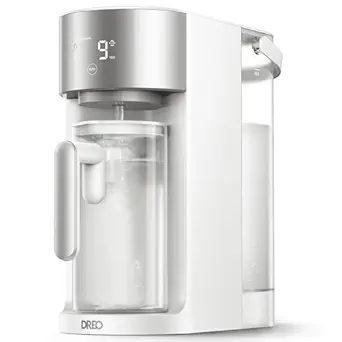 |
Brita UltraMax 27-Cup Dispenser
| Capacity | 27 cups |
|---|---|
| Filter life cycle | 120 gallons / ~6 months |
| Purification method | Activated Carbon / Advanced Carbon Core |
| Supported water TDS level maximum (PPM) | 600 |
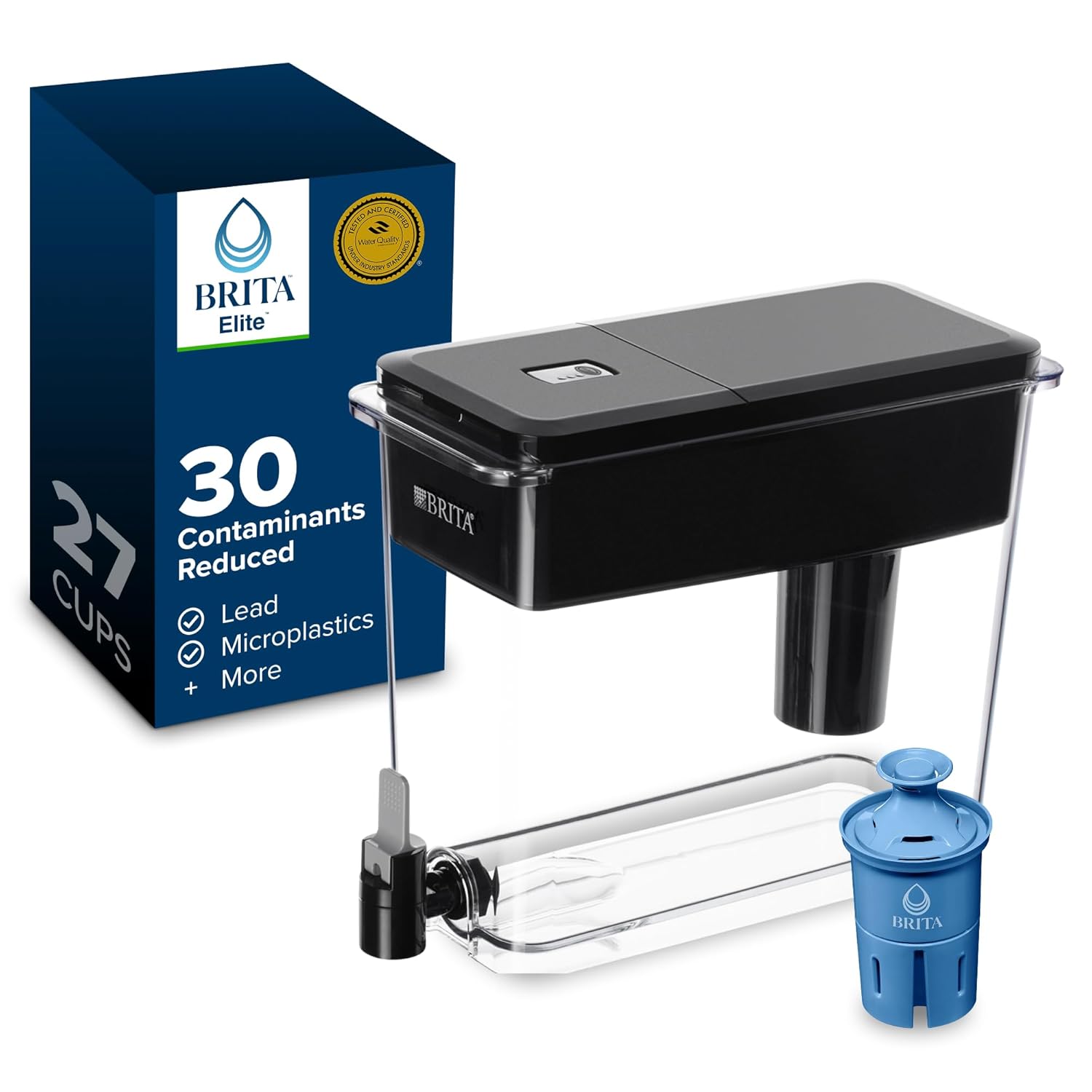
The Brita UltraMax is a 27-cup countertop dispenser designed to make filtered water easy for families and shared kitchens. It uses the Brita Elite filter with Advanced Carbon Core Technology to cut 99% of lead and more than 30 other contaminants, and the unit dispenses water through a convenient spigot so you do not need to lift a pitcher. The Elite filter is rated for about 120 gallons, roughly six months of typical use, which reduces replacement frequency compared with many pitcher filters. The plastic, freestanding design is BPA-free and fits on most counters or in refrigerators, and a change-filter indicator helps you know when to replace the cartridge. On the flip side the dispenser is a simple pour-through system with no active pressure filtration, so it relies on gravity flow and the specified filter performance for contaminant reduction and will not match whole-house or under-sink reverse osmosis systems for total dissolved solids removal.
Best for: Buyers who want an easy, low-maintenance countertop solution that prioritizes certified lead reduction and long filter life for family or shared use.
Less Ideal for: People who need the highest possible TDS reduction or a whole-house solution should consider under-sink reverse osmosis or point-of-entry systems instead.
- Large 27-cup capacity for family or office use
- WQA NSF/ANSI certified Elite filter that reduces 99% of lead and 30+ contaminants
- Long filter life rated at approximately 120 gallons or six months
- BPA-free freestanding design with a spigot for easy dispensing
- Change-filter indicator simplifies maintenance timing
- Gravity-fed pour-through design may be slower than pressurized or active systems
- Polystyrene construction is less durable than metal-bodied alternatives
Verdict: Choose the Brita UltraMax if you want a family-sized countertop dispenser with certified lead reduction and an extended filter life for lower maintenance.
AquaTru Carafe

| Purification Method | Reverse Osmosis |
|---|---|
| Power Source | Corded Electric |
| Maximum Flow Rate | 0.5 gpm |
| Supported Water TDS Level Maximum (PPM) | 300 |
| Filter Life Cycle | 6 months |
The AquaTru Carafe is a compact countertop reverse osmosis purifier designed to remove contaminants most pitcher filters miss, including lead, PFAS, microplastics, and other regulated substances. You fill the inlet tank, plug the unit into a standard outlet, and purified water dispenses into the included glass carafe via a simple control panel — no plumbing or installation required. It uses a four-stage filtration train (pre-filter, RO membrane, VOC carbon, and finishing carbon) with built-in indicators to show when filters need replacement. The unit is aimed at daily drinking and cooking use where high contaminant reduction is the priority; filters are rated for months to years depending on the stage, which keeps ongoing maintenance relatively infrequent for a countertop unit. Limitations include the 0.5 gpm maximum flow and modest clean-water capacity typical of tabletop RO systems, so it is not suited for high-volume filling tasks, and it requires an electrical outlet. For buyers focused on contaminant removal and testable lead reduction without plumbing, this is a strong, easy-to-use option.
Best for: Buyers who prioritize verified contaminant and lead reduction from tap water and want a no-plumbing countertop solution for daily drinking and cooking.
Less Ideal for: People who need large-volume or fast-fill water delivery for entertaining or whole-kitchen use should consider under-sink or plumbed RO systems instead.
- Certified reverse osmosis filtration that reduces lead, PFAS, microplastics and other contaminants
- Includes borosilicate glass carafe for storage and serving
- Four-stage filter system with long-life stages and built-in replacement indicators
- Countertop plug-in design requires no plumbing or drilling
- Limited flow rate and small clean-water capacity compared with under-sink systems
- Requires an electrical outlet to operate
Verdict: Choose the AquaTru Carafe when verified lead and PFAS removal is your top priority and you need a compact, no-plumbing countertop RO solution.
ZeroWater 20-Cup Ready-Pour Dispenser

| Capacity | 4.7 liters |
|---|---|
| Purification Method | Ion Exchange |
| Included Components | 20-Cup Dispenser, 5-Stage Water Filter, TDS Meter |
| Supported Water TDS Level Maximum (PPM) | 1000 |
| Material Type | Plastic |
The ZeroWater 20-Cup Ready-Pour Dispenser is a countertop filtration system designed for continuous household use. It holds about 4.7 liters and uses a 5-stage ion exchange filter to remove total dissolved solids and certified contaminants such as lead, PFOA/PFOS, chromium, and mercury. A built-in TDS meter and change-filter indicator let you monitor water quality and know when the cartridge needs replacing, and the Ready-Pour design lets you dispense water from the reservoir while the top is still filling. Typical use is straightforward: fill the top reservoir, wait for the filter to process water into the lower chamber, and read the TDS meter before drinking. Practical benefits include strong contaminant reduction backed by IAPMO certification, a large capacity useful for families or small offices, and ergonomic handling for frequent pouring. Limitations are the need to replace cartridges regularly and the manual refill process, which is slower than plumbed or electric filters, and replacement filters add ongoing cost. The unit is plastic but BPA-free, making it lightweight but less premium-feeling than glass or stainless options.
Best for: Buyers who prioritize demonstrable contaminant removal and measurable water quality for household use and want a large, easy-to-monitor countertop filter.
Less Ideal for: People who need a plumbed-in or instant-filtering solution, or buyers seeking a premium metal or glass dispenser finish.
- Certified reduction of lead, PFOA/PFOS, chromium, and mercury
- Built-in TDS meter and change-filter indicator for easy water quality monitoring
- Large 20-cup capacity suits families or small offices
- Ready-Pour design lets you dispense while the reservoir is refilling
- Requires periodic replacement filters which add ongoing cost
- Manual refill and gravity filtration are slower than plumbed or powered systems
Verdict: Choose this dispenser if you want a high-capacity countertop filter with certified lead reduction and an on-unit TDS meter for practical, trackable water quality control.
Culligan ZeroWater 32-Cup Dispenser

| Capacity | 256 fluid ounces |
|---|---|
| Purification Method | Ion Exchange |
| Other Special Features of the Product | Built In TDS Meter |
| Installation Type | Countertop |
The Culligan ZeroWater 32-Cup Dispenser is a countertop water filter that combines a large-capacity dispenser with a five-stage filtration cartridge and an integrated TDS meter. You fill the top reservoir and water passes through the drop-in filter to a lower dispensing chamber for easy pouring, making it useful for kitchens, offices, or small households that want ready access to filtered water. The five-stage ion-exchange system is certified to reduce lead, total PFAS, chlorine, mercury and many dissolved solids, and the TDS meter gives an immediate readout so you know when to replace the cartridge. Its acrylic, space-saving design fits on counters or in refrigerators and the easy-slide lid plus pour spout simplify refilling and serving. Expect regular filter replacements based on usage and TDS readings, and note that it is only compatible with the newer Culligan ZeroWater filters, not legacy cartridges. For buyers prioritizing certified contaminant reduction in a simple, high-capacity countertop format, this dispenser delivers clear, measurable performance.
Best for: Buyers who want proven contaminant removal, a simple countertop dispenser, and an easy way to monitor filter life using TDS readings.
Less Ideal for: People who need a permanently plumbed or under-sink system, or those who prefer filters compatible with legacy ZeroWater cartridges.
- Certified to reduce lead and Total PFAS along with chlorine and mercury
- Five-stage ion-exchange filtration for high dissolved solids reduction
- Built-in TDS meter provides immediate feedback on filter performance
- Large 32-cup capacity reduces refill frequency and fits on counters or in fridges
- Requires regular replacement filters and only accepts the new Culligan ZeroWater cartridges
Verdict: Choose this dispenser if you want a high-capacity, certified countertop filter that removes lead and PFAS and includes a built-in TDS meter for easy filter monitoring.
Purcooflow P3 Countertop RO

| Purification Method | Reverse Osmosis |
|---|---|
| Filter Life Cycle | 6 months |
| Supported Water TDS Level Maximum (PPM) | 500 |
| Pure to Drain Ratio | 3.5:1 |
| Power Source | Corded Electric |
The Purcooflow P3 is a plug-and-play countertop reverse osmosis purifier that produces bottled-quality water without under-sink plumbing. You fill the 3.6 L feed tank, plug the unit in, and it automatically runs its 4-in-2/5-stage RO+CTO filtration to produce pure water into a detachable 1.4 L pitcher. Notable features include an SGS-verified filtration claim meeting NSF/ANSI 58-related removal targets, a high-efficiency 3.5:1 pure-to-drain ratio that reduces wastewater, and a smart auto-fill/auto-stop function that prevents overflows. Practical benefits are easy installation for renters or small kitchens, straightforward twist-and-pull filter replacement, and a small footprint that fits most counters. Important limitations are its recommendation for municipal water only (TDS under 500 ppm) and modest pitcher capacity that means frequent refills for larger households; also the system requires an outlet and consumes some electricity. For buyers prioritizing reliable, lab-backed contaminant removal in a countertop package, the P3 offers strong performance and low maintenance compared with basic pitcher filters.
Best for: Buyers who want a reliable, lab-verified countertop RO that removes a wide range of contaminants without under-sink installation and who value low-maintenance operation.
Less Ideal for: People who need very large daily volumes of purified water, those using untreated well water without pre-filtration, or households that cannot provide a nearby electrical outlet.
- SGS-verified filtration efficacy that aligns with NSF/ANSI 58-style RO removal targets
- Plug-and-play countertop design requires no plumbing or tools
- Efficient 3.5:1 pure-to-drain ratio reduces wastewater compared with traditional RO units
- Auto-fill and auto-stop features simplify daily use and prevent overflow
- Tool-free twist-and-pull filter replacement for fast maintenance
- Relatively small pitcher capacity requires more frequent refills for larger families
- Intended for municipal tap water under 500 ppm TDS, not recommended for untreated well water without pre-filtration
- Needs an electrical outlet to operate
Verdict: Choose the Purcooflow P3 if you want a compact, easy-to-use countertop RO with SGS-backed contaminant removal and efficient water use.
ZeroWater 23-Cup Dispenser ZD018

| Capacity | 5.4 liters |
|---|---|
| Purification Method | Ion Exchange |
| Power Source | Manual/Gravity-fed |
| Included Components | 23-Cup Dispenser, 5-Stage Filter, TDS Meter |
The ZeroWater 23-Cup Dispenser ZD018 is a countertop gravity-fed filtration system that uses a 5-stage ion exchange filter to remove dissolved solids and a range of heavy metals, including lead, PFOA/PFOS, chromium, and mercury. It is used by filling the top reservoir and either pouring from the pitcher or using the spigot to dispense water while the rest continues filtering via Ready-Pour technology. The included TDS meter and change-filter indicator make it easy to monitor filter performance in real time, which helps risk-conscious buyers verify water quality. The large 23-cup capacity suits families or small offices and reduces single-use plastic bottle waste. Limitations are that it is manual and countertop-only, requires replacement ZeroWater filters, and filtration speed depends on gravity so filling and dispensing are slower than plumbed systems or electric units.
Best for: Buyers who prioritize documented contaminant reduction and want an easy-to-check home solution for lead and other heavy metals, especially for family or small-office use.
Less Ideal for: Those who need a hard-plumbed, fast-flowing, or hands-off electric filtration system for whole-house or under-sink use should consider other options.
- IAPMO certified 5-stage filter claims to reduce lead, PFOA/PFOS, chromium, and mercury
- Included TDS meter and change-filter indicator allow on-the-spot verification of water quality
- Large 23-cup capacity suitable for families or small office use
- Ready-Pour spigot lets you dispense water while the reservoir continues to filter
- Requires proprietary ZeroWater replacement filters
- Gravity-fed filtering is slower than plumbed or electric filtration systems
Verdict: Choose this ZeroWater dispenser if you want a countertop filter with certified multi-stage filtration and an included TDS meter for verifiable lead and contaminant reduction.
DREO RO Countertop WF112

| Purification Method | Reverse Osmosis |
|---|---|
| Capacity | 3 liters |
| Pure to Drain Rate | 3:1 |
| Included Components | WF112 body, RO filter, autofill pitcher |
| Filter Runtime | 265 gallons (1000L) |
The DREO WF112 is a countertop reverse osmosis purifier designed to deliver low‑TDS drinking water without permanent installation. It uses a multi-stage RO cartridge and reports a 3:1 pure-to-drain efficiency while showing raw and filtered TDS on a built-in meter, which helps you verify water quality in real time. The unit ships with an autofill 1.1L pitcher and a touch control panel; an auto-fill sensor refills the pitcher hands-free and the system can auto-flush internal tubing for periodic cleaning. Filters twist in for fast replacement and the listed filter life is about 265 gallons (1000 L), making it practical for one to two people. On the downside, countertop RO systems still produce wastewater and the compact 3L reservoir limits stored water between fills, so it requires occasional refilling for heavier households. For buyers who want a tested RO filter with visible TDS monitoring and easy maintenance, this model makes RO water accessible without plumbing changes.
Best for: Buyers who prioritize verifiable contaminant reduction and low-risk, tested RO performance without altering plumbing and who prefer simple, hands-off daily operation.
Less Ideal for: Large households or users who need high daily filtered output without frequent refills should consider higher-capacity or plumbed systems.
- Built-in TDS meter for real-time quality checks
- Auto-fill pitcher and touch controls for hands-free daily use
- Self-cleaning auto-flush reduces manual maintenance
- Twist-to-install filters simplify replacement
- Compact countertop design requires no plumbing modifications
- Produces wastewater inherent to RO with a 3:1 pure-to-drain ratio
- 3‑liter tank limits stored filtered water between refills
Verdict: A compact, installation-free RO countertop system that gives risk-averse buyers visible TDS monitoring and easy maintenance for reliable lead and contaminant reduction.
Choosing the Right Countertop Water Filter for Lead Removal: Key Factors to Consider
Certification and Test Results
Look for third-party certification or lab test reports that specifically document lead reduction performance. Certifications and test data provide objective evidence that a filter removes lead to a measurable degree rather than relying on manufacturer claims.
Certification also tells you what test conditions were used. Some filters demonstrate very high lead removal under laboratory conditions but perform less effectively with older or highly contaminated water. Understanding the test basis helps set realistic expectations for home use.
Filter Media and Contaminant Scope
Different filter media target different contaminants. Materials like activated carbon block, ion exchange resins, and specialty adsorbents are commonly used to capture lead. A filter that lists lead removal should also state whether it reduces other related concerns like copper or cadmium, which can co-occur.
Considering the contaminant scope matters because a unit that only addresses lead may miss other common tap-water issues. If your water report shows multiple contaminants, choose media that addresses the broader profile to avoid needing additional treatments.
Flow Rate and Everyday Usability
Flow rate affects how practical a filter is for routine tasks such as filling pots or getting a glass of water. Some high-efficiency media slow flow significantly, creating frustration in a kitchen environment. Assess the liters or gallons per minute the unit delivers and whether it supplies chilled or room-temperature water fast enough for your habits.
Usability also includes how the filter dispenses water. Units with a separate spout, built-in storage tank, or direct faucet connection each have different conveniences and space requirements. Match the dispensing style to how you use your sink most often.
Filter Life, Capacity, and Replacement Ease
Know how many gallons or months a filter is rated for before replacement. Short-lived filters can be inexpensive up front but costly or inconvenient over time. Capacity ratings give a realistic sense of ongoing maintenance frequency.
Also check how easy replacement cartridges are to install and whether they are commonly available. A long-lasting filter that is difficult to replace or uses uncommon proprietary cartridges can add unforeseen costs and downtime.
Installation Requirements and Compatibility
Countertop options vary from simple non-permanent faucet attachments to freestanding pitchers with dedicated spouts. Confirm that the unit will fit your sink area and that any faucet adapters match your fixture type. Some units require a specific adaptor or more clearance for the housing and spout.
Ease of installation is especially important if you rent or prefer not to modify plumbing. Choose a design that matches your tolerance for installation complexity, from tool-free setups to short-term adaptors.
Maintenance and Long-Term Performance
Regular maintenance affects both performance and safety. Understand whether routine flushing, backwashing, or periodic sanitizing is required to keep lead reduction effective. Some materials can become exhausted or fouled more quickly in high-sediment water, reducing their ability to capture lead.
Maintenance requirements also influence where you place the unit and how often you inspect it. Select a filter whose upkeep matches the time and effort you are willing to spend to preserve long-term performance.
How Lead Gets Into Tap Water
Lead typically enters household water through corrosion of plumbing, solder, or older service lines. It is rarely present at the source at hazardous levels but can leach into water as it sits in contact with metal pipes. Understanding this helps explain why point-of-use countertop filters can be an effective short-term mitigation measure.
Testing your water or reviewing a local water-quality report gives context for exposure risk. If lead is intermittent or linked to specific fixtures, a countertop solution that treats water at the point of use is often the fastest way to reduce ingestion.
- Source of lead is often in household plumbing rather than the municipal system
- Exposure risk increases when water sits in contact with leaded materials
- Point-of-use filtration treats water immediately before consumption
Types of Countertop Filters and How They Work
Countertop systems use a few common technologies to remove lead. Activated carbon block adsorbs contaminants onto a porous surface, while ion exchange resins swap harmless ions for lead ions. Some multi-stage designs combine media to broaden the contaminant reduction spectrum.
Knowing the underlying technology helps you interpret test claims and expected maintenance. For example, carbon block tends to be effective for particulate and organic contaminants as well as some heavy metals when combined with other media, whereas ion exchange excels at removing dissolved metal ions.
- Activated carbon block: adsorption of lead and organic compounds
- Ion exchange: swaps ions to reduce dissolved metals
- Multi-stage: combines media to address a broader contaminant range
Interpreting Certifications and Test Data
Certification programs test filters under standardized conditions and report percent reduction for specific contaminants. Look for documentation that shows lead reduction at realistic flow rates and contact times. Pay attention to whether the test used particulate lead or dissolved lead because results can differ.
Also check the conditions under which cartridge lifespan was measured. A high percent reduction is only meaningful if the filter maintains that performance for a usable volume of water. Clear labeling of test parameters allows you to compare options more reliably.
- Check for third-party test reports showing lead reduction
- Compare test conditions such as flow rate and contact time
- Verify the reported service life corresponds to real usage
Practical Installation Tips
Measure available counter and sink space before purchasing so the unit and its spout will fit comfortably. If the unit connects to a faucet, confirm the adapter matches your faucet threads or that an adapter kit is included. Allow clearance for replacing cartridges without disassembling the entire housing.
If you have limited space, consider models with compact footprints or those that use a separate dispensing spout. Keep in mind that units with built-in reservoirs take more counter space but can provide faster access to filtered water.
- Confirm faucet adapter compatibility ahead of purchase
- Allow cartridge-replacement clearance when siting the unit
- Consider footprint vs reservoir capacity for kitchen layout
Maintaining Performance Over Time
Follow manufacturer guidance for replacing filters and performing any required sanitizing steps. If your water has high sediment or iron, pre-filtering or more frequent cartridge changes may be necessary to preserve lead removal efficiency. Keep a replacement schedule and note the gallons or months recommended for the cartridge.
Store replacement cartridges in a clean, dry place and avoid long gaps between changes. Regular maintenance prevents breakthrough where exhausted media no longer captures lead effectively.
- Replace cartridges according to rated capacity or schedule
- Inspect for fouling in high-sediment conditions
- Sanitize housing if recommended during cartridge changes
How We Chose the Best Countertop Water Filter for Lead Removal
Our shortlist focuses on countertop water filters that specifically target lead reduction while remaining practical for daily kitchen use. We prioritized systems with third-party certification or independently tested reduction claims for lead and other common heavy metals. Performance criteria included certified lead removal percentage, contaminant range, and capacity between filter changes to reflect ongoing effectiveness. Usability factors such as installation simplicity, required faucet adaptors, and routine maintenance were included so buyers know what to expect day to day. Flow rate and dispensing convenience were evaluated because excessively slow output or awkward setups make a technically effective filter impractical for regular use. We also considered filter life and replacement cost in assessing long-term suitability for typical households. Units lacking clear testing or certification data for lead reduction, or those that require major plumbing modifications, were excluded from consideration to keep recommendations accessible to most users.
Our full evaluation process is outlined in our review methodology.
FAQ
Will a countertop filter remove all lead from my water?
Most certified countertop filters can substantially reduce lead but rarely remove every trace. Effectiveness depends on the filter media, contact time, and the initial lead concentration. Look for third-party test data that shows the expected percent reduction.
How often do I need to replace the filter cartridge?
Replacement frequency varies by model and household use but is typically expressed in gallons or months. Heavy usage or high-sediment water shortens cartridge life, so follow the manufacturer guidelines and monitor flow rate and taste as signs it is time to change.
Can I install a countertop filter without changing plumbing?
Yes. Many countertop units are designed for tool-free installation and attach directly to the faucet or sit beside the sink with their own spout. Confirm adapter compatibility with your faucet and ensure you have enough counter space for the housing.
Do countertop filters affect water pressure at other fixtures?
Countertop point-of-use filters treat water only at the sink where they are installed and do not change pressure to other household fixtures. However, the filter's own flow rate may be lower than unfiltered tap flow at that sink.
Are replacement cartridges easy to find?
Availability varies by design. Many popular cartridge types are widely stocked, but some proprietary cartridges can be harder to source. Check supply options before choosing a system to ensure you can obtain replacements promptly.
Final Verdict
Countertop water filters for lead removal offer a practical, relatively quick way to reduce lead exposure at the point of use without major plumbing changes. Prioritize systems with documented lead reduction, suitable filter life, and a flow rate that matches your kitchen habits. Balance the contaminant scope and maintenance needs against ease of installation to find a unit that you will use consistently. With the right combination of certification, media, and upkeep, a countertop filter can significantly lower lead levels and improve confidence in your drinking water.