
Note: This article contains affiliate links. If you click on these links and make a purchase, we may earn a small commission at no extra cost to you. This helps support our research and content. Read our full affiliate disclosure here.
If you grow plants indoors, controlling humidity is one of the most important environmental tasks. A dehumidifier for grow rooms keeps moisture in check to reduce mold, bud rot, and pest outbreaks while helping you dial in nutrient and transpiration responses. Choosing the right unit matters because underpowered models struggle in high-humidity tents or rooms and oversized machines can cycle inefficiently. This guide lists seven shortlisted dehumidifiers chosen for their capacity, control features, and reliability in dedicated grow environments. We explain the evaluation criteria and key factors to help you pick the right size and feature set for your space, then walk through what matters for installation and ongoing use.
Top Picks at a Glance
| Best Overall The best all-around choice for most situations | hOmeLabs 50 Pint Dehumidifier | 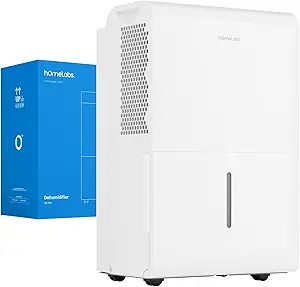 |
| Best Quality Built to a higher standard if you want something more solid | Gasbye DryPrime-50 Dehumidifier |  |
| Best Value The sweet spot between price and what you get | Aiusevo AS280 21‑Pint Dehumidifier |  |
| Best Budget The cheapest option that still gets the job done reliably | TABYIK 35oz Dehumidifier DH-CS01 |  |
| Top Rated A top-rated pick with lots of positive feedback | KNKA 80-Pint Dehumidifier PD30MA-20 |  |
| Most Popular A crowd favorite that many people choose with confidence | Pro Breeze PB-02 Mini Dehumidifier |  |
| Best Seller A high-volume bestseller chosen again and again | ToLife Dehumidifier TZ-C2 |  |
hOmeLabs 50 Pint Dehumidifier
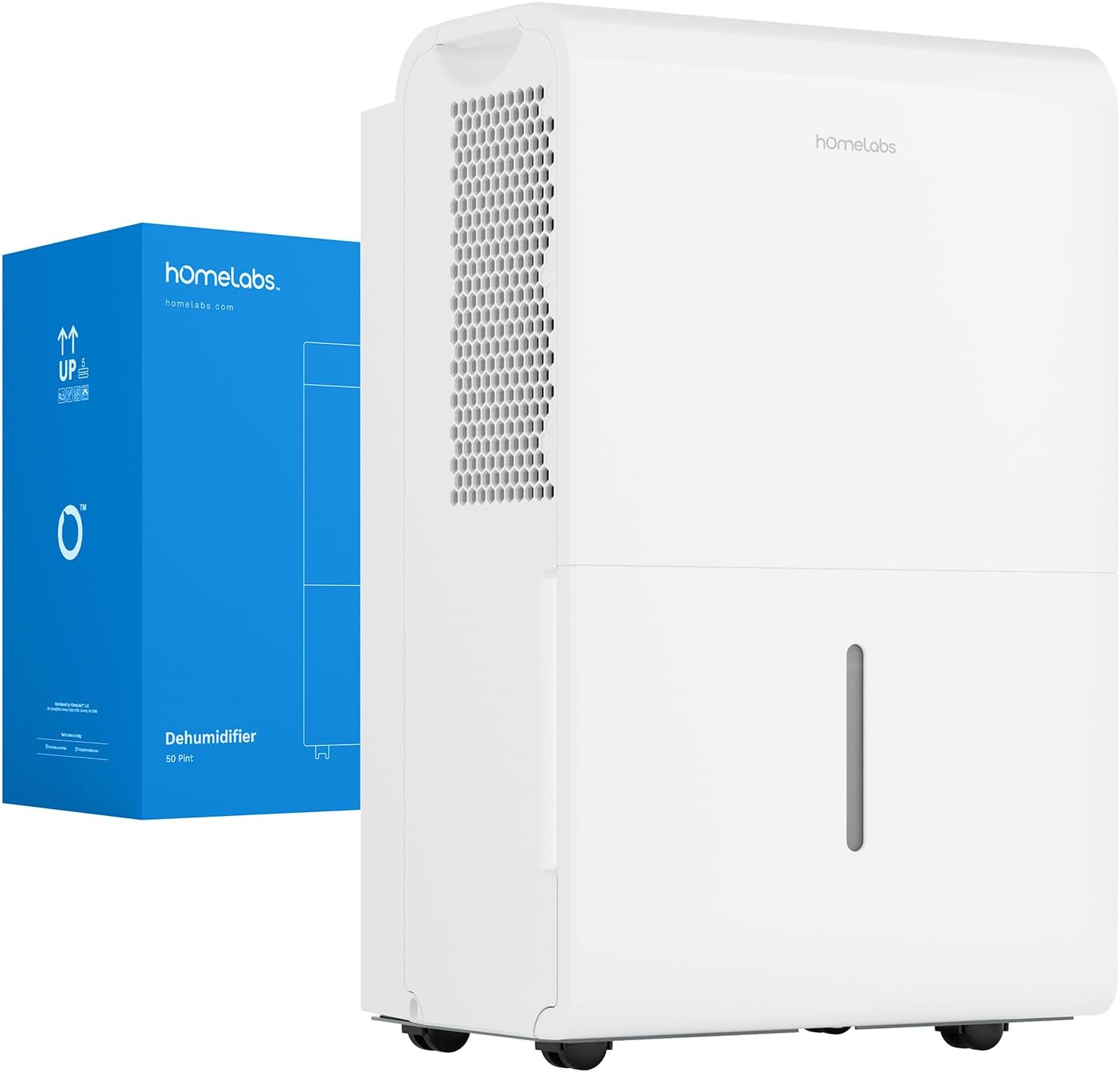
| Dehumidification Capacity | 50 pints/day |
|---|---|
| Floor Area | 7000 square_feet |
| Tank Volume | 1.6 gallons |
| Wattage | 322 watts |
| Air Flow Capacity | 165 cfm |
The hOmeLabs 50 Pint Dehumidifier is a portable unit built to pull significant moisture from large areas and give remote control via Wi‑Fi. It is intended for continuous operation or periodic tank drainage, and includes an auto shutoff when the 1.6 gallon tank fills plus a hose outlet for continuous draining. The unit offers two fan speeds and a Turbo mode that raises airflow for faster drying, and it supports automatic defrost and restart for reliability in varying temperatures. For grow-room use the large claimed coverage and 50 pint per day rating at standard conditions mean it can moderate humidity in sizeable spaces, while the washable filter and removable tank simplify maintenance. Limitations to note are the single temperature-rated operating ceiling and that the 50‑pint rating is conditional (higher outputs require hotter, more humid test conditions) so actual removal will vary with room size and environment; the unit is also moderately heavy for frequent repositioning.
Best for: Buyers who need a robust, remotely controllable dehumidifier to manage humidity in a large indoor grow space and prioritize steady moisture removal and easy maintenance.
Less Ideal for: Small-scale or mobile growers who need a lightweight, ultra-compact unit or growers who require precise commercial dehumidification specs and integrated drainage hardware.
- Large dehumidification capacity rated at 50 pints per day under standard conditions
- Wi‑Fi remote control for monitoring and adjusting humidity settings from anywhere
- Continuous drain option via hose outlet plus automatic shutoff when the 1.6 gallon tank is full
- Turbo mode and two fan speeds let you boost airflow for faster moisture removal
- Washable filter and removable tank make routine maintenance straightforward
- 50‑pint rating depends on specific temperature and humidity test conditions and will be lower in cooler rooms
- Unit weight makes frequent moving or repositioning more difficult
- Hose not included for continuous drainage so additional parts may be needed
Verdict: If you want a high-capacity, Wi‑Fi controllable dehumidifier for a large grow room that balances strong moisture removal with easy maintenance, this unit is a practical choice.
Gasbye DryPrime-50 Dehumidifier
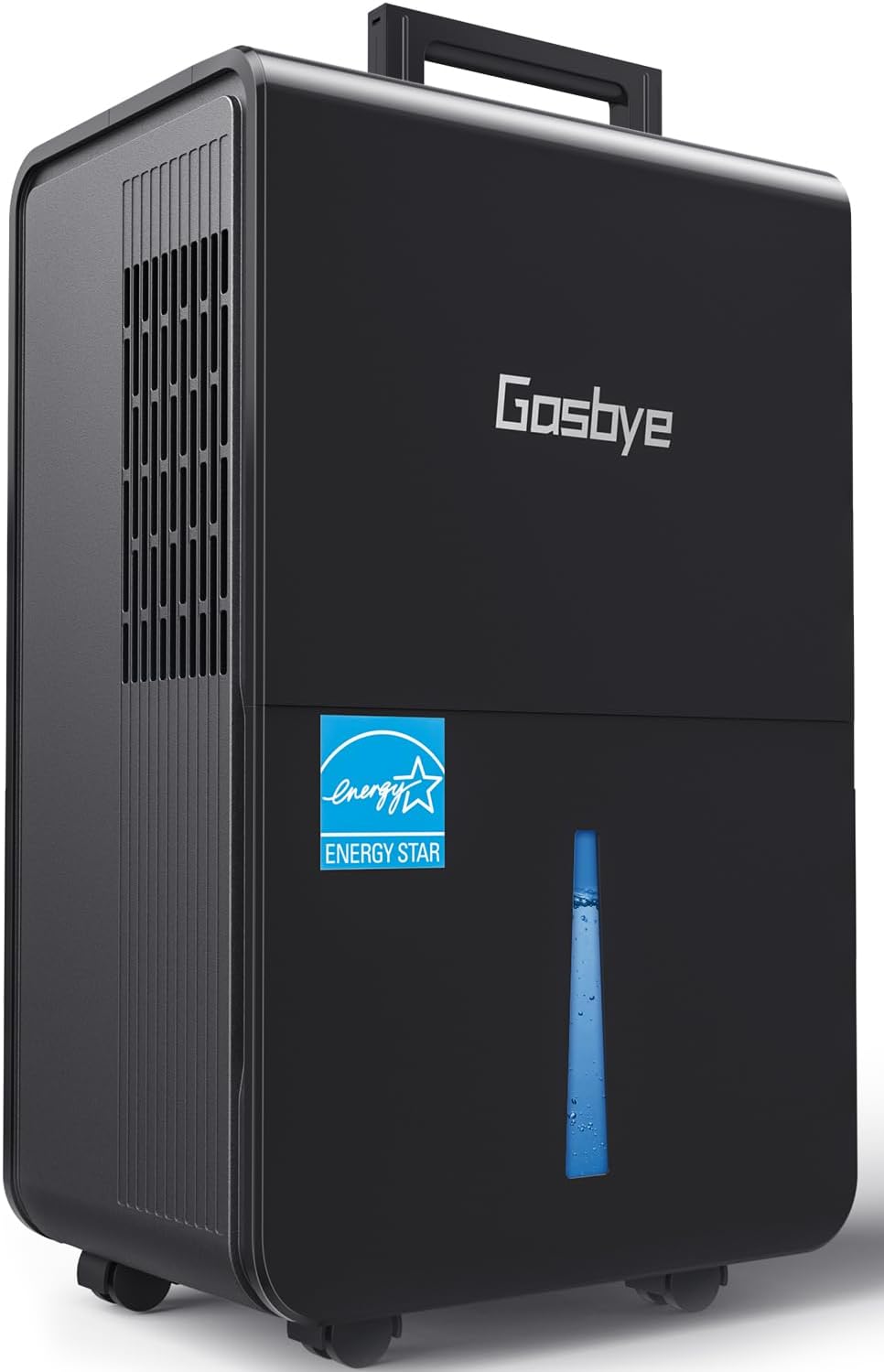
| Capacity | 115 pints |
|---|---|
| Tank Volume | 1.72 gallons |
| Wattage | 500 watts |
| Air Flow Capacity | 12600 cubic_feet_per_hour |
| Operation Mode | Normal, Turbo, Comfort, Continuous |
The Gasbye DryPrime-50 is a compressor dehumidifier built for high-capacity, continuous moisture removal in large spaces. It delivers up to 115 pints/day at high temperature and humidity and provides lab-tested capacity at multiple conditions so you can set realistic expectations for grow-room use. The unit includes a 1.7 gallon internal tank, an included 5-foot drain hose, and a threaded 3/4-inch outlet for permanent gravity drainage, which simplifies continuous operation. Energy Star certification and a 500-watt compressor mean decent efficiency for sustained runs, and the reinforced five-tier copper coil is intended to improve long-term durability in heavy-use environments. At roughly 45 dB the compressor is relatively quiet for its class, but the unit is heavy and designed for medium to large spaces rather than small tents. Controls include auto shut-off and auto-restart after power loss and four operation modes so you can tune performance for steady RH control. Expect solid extraction and reliable plumbing options for a dedicated grow room, but plan for the unit's physical footprint and continuous power draw when integrating it into a climate control setup.
Best for: Growers who prioritize reliable, high-volume moisture removal and durable components for medium to large grow rooms and want straightforward plumbing options for continuous drainage.
Less Ideal for: Those running very small tents, low-power off-grid setups, or who need ultra-quiet, compact units for cramped spaces should consider smaller or lower-power alternatives.
- High tested extraction rates with three published capacity figures for realistic expectations
- Energy Star certified for better efficiency during continuous operation
- Three drainage methods including threaded garden-hose outlet for permanent drain setup
- Reinforced copper coil construction aimed at longer service life in heavy-use settings
- Auto shut-off and auto-restart to maintain set humidity and recover after power loss
- Single fan speed may limit fine-grained airflow control within a sealed grow tent
- Relatively large and heavy so it requires planning for placement and mounting
- 500-watt compressor means significant continuous power draw compared with small portable units
Verdict: Choose the DryPrime-50 when you need proven, high-capacity dehumidification with durable copper internals and permanent drainage options for a reliable grow-room climate control solution.
Aiusevo AS280 21‑Pint Dehumidifier

| Dehumidification Capacity | 21 pints/day |
|---|---|
| Recommended Floor Area | 1500 square_feet |
| Tank Volume | 0.52 gallons |
| Wattage | 120 watts |
| Voltage | 115 volts |
The Aiusevo AS280 is a small, portable dehumidifier that removes up to 21 pints of moisture per day and is built for everyday home use. It offers three operating modes — dehumidify, dry, and continuous — plus two fan speeds and an adjustable humidity setpoint so you can target a precise humidity range. For continuous operation you can attach the included 3.28 ft drain hose or use the 2L tank with auto shutoff when full, and the unit adds convenient features like a timer, child lock, auto defrost, and a digital humidity readout. The unit is lightweight and on casters for easy repositioning and includes handles for moving between rooms or zones. Limitations to note are the modest tank capacity compared with the daily removal rate and the fact that the 21‑pint rating is measured at industry test conditions, so performance will be lower at cooler temperatures common in some grow rooms; high‑capacity or compressor models designed specifically for larger, colder grow environments may be a better fit where heavy continuous extraction is required.
Best for: Growers who prioritize reliable, portable humidity control in small to mid-size grow rooms and want a simple, automated unit they can move between spaces.
Less Ideal for: Large commercial grow rooms, cold rooms, or setups with very high continuous moisture loads that need heavy-duty, high-capacity dehumidifiers or dedicated refrigeration dehumidifiers.
- Three operating modes (Dehu, Dry, Continuous) for targeted moisture control
- Continuous drainage option with included hose for unattended runs
- Adjustable humidity control and timer for automated set-and-forget use
- Compact, portable design with wheels and handles for easy repositioning
- 21‑pint removal rating is at optimal test conditions and will drop in cooler or lower-humidity environments
- 2L tank is small relative to daily extraction so continuous drain is recommended for long unattended runs
Verdict: A portable, easy-to-use 21‑pint dehumidifier that offers automated humidity control and continuous drainage, making it a practical choice for small to mid‑size grow rooms.
TABYIK 35oz Dehumidifier DH-CS01

| Tank Volume | 1000 ml |
|---|---|
| Dehumidification Capacity | 0.45 liters_per_day |
| Wattage | 40 watts |
| Operation Mode | Continuous |
The TABYIK 35oz DH-CS01 is a small Peltier dehumidifier built for tight, humid spaces where low noise and low energy use matter. It runs continuously and can collect up to about 16 oz (450 ml) per day under warm, very humid conditions, storing water in a clear 1000 ml tank that auto shuts off when nearing capacity. Operation is simple—one button to start and a separate button controls the seven-color night light—which makes it easy to place and forget in closets, bathrooms, or small rooms. The unit is ultra-quiet at about 28 dB and draws roughly 40 watts, so it will not add much electrical load or disturbance near sensitive plants. Limits are the low daily dehumidification capacity and single fan speed; it is not intended to handle large grow tents, whole rooms with heavy transpiration, or temperatures below the recommended operating range. For small enclosures or as a supplemental device where budget and silence are priorities, it provides straightforward moisture removal and easy maintenance via the removable tank.
Best for: Growers on a tight budget needing a quiet, low-power supplemental dehumidifier for small tents, propagation boxes, or single-plant enclosures.
Less Ideal for: Do not use this as the primary dehumidifier for medium or large grow rooms, high-transpiration setups, or spaces that need precise humidity control and higher extraction rates.
- Compact, portable design with built-in handle for easy placement in small enclosures
- Very quiet operation (~28 dB), suitable near sensitive plants or work areas
- Low power consumption (~40 W), keeps electric load minimal
- Clear 1000 ml tank with auto shutoff prevents overfill and notifies when full
- Maximum dehumidification rate (~450 ml/day) is low for active grow rooms with heavy transpiration
- Single speed operation limits control over dehumidification intensity
Verdict: A cheap, quiet, and low-energy supplemental dehumidifier for very small grow enclosures where budgets and noise matter most.
KNKA 80-Pint Dehumidifier PD30MA-20

| Capacity | 80 pints per day |
|---|---|
| Tank Volume | 1.45 gallons |
| Wattage | 360 watts |
| Floor Area | 4500 square_feet |
| Operation Mode | AUTO, DRY, SETTING |
The KNKA PD30MA-20 is a performance-focused dehumidifier built for large, damp spaces such as basements. Its high-efficiency compressor can remove up to 80 pints per day under extreme conditions and about 56 pints in typical basement conditions, while an internal 1.45 gallon tank plus a supplied 6.56 ft drain hose enable continuous drainage to avoid frequent emptying. Controls include AUTO, DRY, and a SETTING mode for 30%–80% RH, and the digital display with a color-changing humidity indicator makes it easy to monitor conditions at a glance. The unit is designed to run quietly (40–45 dB), has a washable filter, casters for moving between rooms, cord storage, a 12-hour timer, and a child lock for steady, unattended operation. Expect good energy efficiency thanks to ENERGY STAR certification and a 360 watt power draw, but note that humidity readings come from the air inlet and may differ slightly from a separate hygrometer; the unit also needs upright siting for 24 hours before first use. For heavy-duty basement dehumidification this model balances strong capacity with thoughtful usability features.
Best for: Buyers who need powerful, reliable moisture removal in large basements or very damp rooms and prioritize steady performance and easy continuous drainage.
Less Ideal for: People seeking a compact or ultra-light unit for small rooms or occasional use should consider lower-capacity, more portable models instead.
- High maximum dehumidification capacity up to 80 pints per day for large, very humid spaces
- Includes 6.56 ft drain hose and built-in tank for continuous drainage to reduce manual emptying
- ENERGY STAR certified and uses a high-efficiency compressor for lower operating costs relative to output
- Quiet operation (40–45 dB) and caster wheels make it suitable for basements and living spaces
- Digital display with real-time humidity readout and color indicator simplifies monitoring and control
- Humidity reading is measured at the air inlet and may not match a separate room hygrometer
- Requires upright placement for 24 hours before first use to avoid operational issues
Verdict: Choose this KNKA if you need a strong, ENERGY STAR certified dehumidifier that can handle large basements with continuous-drain capability and quiet operation.
Pro Breeze PB-02 Mini Dehumidifier

| Floor Area | 215 square_feet |
|---|---|
| Capacity | 16 fluid ounces |
| Tank Volume | 17 fluid ounces |
| Wattage | 21 watts |
| Dehumidification Capacity | 0.25 liters_per_day |
The Pro Breeze PB-02 is a small thermoelectric (Peltier) dehumidifier built for spot use in compact spaces. It extracts roughly 0.25 liters (about 9 ounces) per day into a 16–17 ounce tank and runs continuously while powered, shutting off automatically when the tank is full. Quiet, low-wattage operation and a lightweight, portable body make it easy to move between a bedroom, bathroom, closet, RV or similar small area where mild humidity control is needed. Controls are simple and there is an LED full-tank indicator. The Peltier design keeps noise and energy use low but also limits daily extraction and performance at lower temperatures, so it is not suitable where fast moisture removal or large coverage is required. For a grow-room context this unit can provide localized condensation control in tiny tents or a seedling area, but it will not replace a larger compressor or desiccant dehumidifier for active, multi-light grow setups or larger rooms.
Best for: Buyers who want a whisper-quiet, energy-frugal unit for small, low-humidity spaces or for spot control in a very small grow tent and prioritize low noise and proven user feedback.
Less Ideal for: People running larger grow rooms, multiple lights, or spaces with heavy humidity loads who need high-capacity or rapid dehumidification should choose a larger compressor or desiccant model instead.
- Very quiet Peltier operation suitable for noise-sensitive areas
- Low power draw makes it cheap to run continuously
- Auto shut-off with LED indicator prevents overflow
- Compact and lightweight for portable, point-source humidity control
- Very low daily extraction rate not suitable for medium or large grow rooms
- Performance drops at temperatures below recommended operating range
Verdict: A very quiet, low-energy mini dehumidifier for tiny grow tents or spot moisture control when modest extraction and proven user acceptance matter.
ToLife Dehumidifier TZ-C2

| Floor Area | 1000 square_feet |
|---|---|
| Tank Volume | 95 fluid ounces |
| Number of Speeds | 2 |
| Wattage | 93 watts |
The ToLife TZ-C2 is a compact dehumidifier that uses semiconductor condensation technology to remove moisture from small rooms while running quietly. It offers two modes: a higher-power setting for faster humidity reduction and a low-speed sleep mode that claims under 30 dB for nighttime use. The unit includes a removable 95 ounce tank with automatic shutoff to prevent overflow and a carry handle for moving between bedrooms, bathrooms, basements, or closets. A seven-color ambient LED can be locked to serve as a night light, and the control layout is simple to operate. Practical benefits include low noise, easy emptying and automatic protection when the tank is full or not seated correctly, which reduces maintenance risk. Important limitations are modest stated dehumidification capacity and a listed coverage of up to 1000 sq ft that may be optimistic for very damp or larger grow-room environments, and the unit runs on 220 volts which requires appropriate power compatibility; it is best suited for small, controlled spaces rather than continuous heavy-duty use.
Best for: Buyers who prioritize quiet, low-maintenance humidity control for small, enclosed grow spaces and want simple automatic protection against overflow.
Less Ideal for: Those running larger or very humid grow rooms that need high continuous extraction or commercial-grade compressor dehumidifiers.
- Quiet operation suitable for bedrooms and night use
- Large removable 95 oz tank with automatic shutoff to prevent overflow
- Two operating modes for faster dehumidification or quiet sleep operation
- Portable design with handle for easy relocation
- Seven-color LED can double as a night light or status indicator
- Stated dehumidification capacity is low compared with larger compressor units
- Coverage claim of 1000 sq ft may not hold in very humid or continuously damp spaces
Verdict: Pick this unit if you need a quiet, portable dehumidifier with a large removable tank and automatic shutoff for small controlled grow rooms.
Choosing the Right Dehumidifier for Grow Rooms: Key Factors to Consider
Capacity Vs. Room Size
Matching a dehumidifier's rated moisture removal capacity to your grow-room volume and environmental load is essential. Rated pints per day are usually measured at specific temperature and humidity levels; in warm, humid grow rooms the effective removal can differ. Calculate the cubic feet of your tent or room and account for moisture-generating sources like transpiration, open reservoirs, or frequent door openings.
If the unit is undersized it will run continuously and fail to reach target humidity. Oversized units can short-cycle and reduce component lifespan while wasting power. Aim for a unit whose capacity is appropriate for typical peak humidity conditions in your grow space rather than just average conditions.
Control Precision and Setpoints
Grow rooms require stable relative humidity across growth stages, often with narrow setpoints during flowering. Digital humidistats with 1 percent or small-step control and programmable set-and-forget modes are valuable. Some units offer integrated timers or staging features so you can pair the dehumidifier with ventilation or fans to stabilize cycles.
Consider whether the unit allows remote monitoring or external humidistat input. Higher precision control reduces humidity swings that stress plants and promote fungal growth, and it helps you maintain the slightly lower humidity targets often used during bloom.
Drainage Options and Continuous Operation
For continuous grow-room operation, flexible drainage is a must. Look for options such as internal tanks with easy-access drains, gravity-fed outlets, or built-in pumps for elevated drain lines. The convenience of continuous drain capability reduces the need for manual emptying during multiweek grows.
Also evaluate how the unit handles defrost cycles, since dehumidifiers in cooler rooms will intermittently heat and defrost. Reliable drainage and a robust defrost strategy reduce downtime and help maintain consistent humidity control.
Energy Use and Run Cost
Dehumidifiers can be one of the largest power draws in a grow setup. Energy efficiency affects both operational cost and heat load inside the room. Check power consumption in relation to moisture removal capacity rather than raw wattage alone. More efficient machines remove more moisture per kilowatt-hour and therefore add less unwanted heat per pint extracted.
Consider duty cycle expectations: continuous heavy-duty operation needs better efficiency to avoid excessive electrical load. Energy-efficient units also reduce the burden on cooling systems and help maintain stable grow temperatures.
Noise and Vibration
Noise matters if you access the room frequently or if the grow is located near living spaces. Look for models with lower decibel ratings and vibration-damping feet or mounting options. Vibration can cause rattles that stress fragile fixtures and can transfer into grow benches or racks.
Quieter operation also improves monitoring and makes it easier to hear other equipment faults. If noise is a concern, plan unit placement or enclosures that isolate sound while preserving airflow and access for maintenance.
Build Quality and Maintainability
A dehumidifier that is easy to maintain reduces downtime and long-term cost. Removable, washable filters, clear access to coils, and simple tank or drain connections speed routine upkeep. Look for corrosion-resistant components and clear serviceability guidelines because grow-room humidity can be harsh on metal parts.
Consider warranty coverage and availability of replacement parts. Well-built units are less likely to require frequent repairs and are better suited to continuous or repeated seasonal use.
Sizing for Tents Vs. Dedicated Rooms
Tents and small grow rooms behave differently. Tents typically have higher moisture concentrations because of limited air volume and frequent door access. Dedicated rooms may have more stable airflow but larger total volume. For tents, prioritize units with strong removal capacity relative to cubic feet and that can handle short bursts of high humidity.
Measure both cubic feet and peak transpiration load when sizing a unit. If you plan to scale or run multiple tents, consider a slightly larger central unit with distribution piping or multiple smaller units positioned for even coverage.
- For small tents, prioritize capacity and portability.
- For larger rooms, consider centralized units with flexible drainage.
- Account for heat from lights when estimating humidity production.
Placement, Airflow, and Ducting
Placement affects how quickly a dehumidifier can stabilize conditions. Locate the unit where it can access the room's air circulation path and avoid cornering it where airflow is restricted. Some setups benefit from ducting intake or exhaust to balance humidity control with odor or heat management.
If you use ducting, verify whether the unit supports lined connections and how exhaust heat will interact with the grow environment. Maintain unobstructed intake and exhaust paths and keep at least the minimum clearance specified by the manufacturer for service access and airflow.
- Place near common airflow but away from direct plant spray.
- Use short, straight ducts where possible to reduce resistance.
- Ensure condensate lines slope downward for reliable drainage.
Integrating with Environmental Controls
For precise climate control, integrate the dehumidifier with your humidistat, controller, or environmental automation. Many growers pair dehumidifiers with controllers that manage lights, exhaust fans, and CO2 systems to coordinate timing and avoid fighting one another.
When integrating, set priorities so that dehumidification does not conflict with temperature control. For example, running a high-power dehumidifier during peak lights-on may raise room temperature; coordinated control reduces energy waste and stabilizes conditions more effectively.
- Use external humidistats for centralized control if supported.
- Program staging to avoid short cycles and excessive on-off switching.
- Monitor combined heat and humidity loads to balance systems.
Maintenance Schedule and Seasonal Considerations
Regular maintenance keeps a dehumidifier reliable in a grow room. Clean or replace filters on schedule, check drain lines for clogs, and inspect coils for dust or residue. In high-humidity environments, bacterial buildup in tanks or lines can occur, so occasional sanitizing is prudent.
Seasonal changes affect both humidity and temperature, which alters dehumidifier performance. During cooler months, expect reduced removal rates and more frequent defrost cycles. Plan capacity and maintenance accordingly so the unit remains effective year-round.
- Clean filters monthly or per manufacturer guidance.
- Inspect condensate lines and fittings before each grow cycle.
- Sanitize internal tanks periodically to prevent microbial growth.
Common Installation Pitfalls to Avoid
Typical mistakes include undersizing the unit, placing it in a stagnant corner, and neglecting continuous drain needs. Avoid blocking intakes with shelving or curtains and do not locate the unit where it will be exposed to direct water splashes or continuous condensation.
Another common error is failing to account for exhaust heat. If the exhaust raises room temperature during lights-on, it can shift humidity dynamics and force the unit to run more often. Plan for balanced ventilation and consider routing exhaust away from plants where practical.
- Do not block airflow with equipment or stored materials.
- Provide a safe, accessible drain path for continuous operation.
- Consider vibration isolation to prevent noise transfer to benches.
How We Chose the Best Dehumidifier for Grow Rooms
We selected entries that match the specific demands of grow-room environments rather than general home dehumidification. Primary filters included rated moisture removal capacity at warmer and cooler conditions, humidity control precision, and airflow design suited to enclosed grow spaces. We prioritized units with adjustable setpoints and reliable humidistats to maintain target relative humidity for flowering and vegetative stages. Durability and maintainability were next: accessible filters, drain options, and serviceability were required. Energy efficiency and noise level were considered because many growers operate lights and fans on a tight power budget and noise can affect workspaces. We excluded units intended only for light residential use or for basements that lack precise control features required by growers. Final selection balanced technical capability with practical upkeep, choosing models that perform across a range of tent and room sizes and that include flexible drainage and control options. The scoring emphasized capacity, control, efficiency, build and maintenance, and noise for real-world grow-room use.
Our full evaluation process is outlined in our review methodology.
FAQ
How large a dehumidifier do I need for a 4×4 grow tent?
It depends on ceiling height and plant load, but start by calculating cubic feet and estimate moisture production from the number of plants and watering routine. Choose a unit rated to handle peak transpiration loads rather than average conditions to avoid constant run time.
Can dehumidifiers run continuously in a grow room?
Many units are designed for continuous operation if they have continuous drainage options and appropriate duty ratings. Ensure reliable drain routing and follow maintenance schedules to avoid tank overflows or reduced efficiency from dirty coils.
Should I use the dehumidifier's built-in humidistat or an external controller?
Built-in humidistats are convenient for single-unit setups, but external controllers or environmental systems provide centralized control and finer coordination with lights and ventilation. Use an external controller when managing multiple devices or multiple grow spaces.
How does a dehumidifier affect grow-room temperature?
Dehumidifiers remove latent heat along with moisture but also generate some sensible heat from their compressors and fans. Net temperature impact varies by unit efficiency and room ventilation. Account for the added heat when balancing cooling and dehumidification.
What drainage option is best for long grows?
Continuous drain with a reliable gravity line or a built-in condensate pump is ideal for extended grows. Gravity drains are simple and low-maintenance if the outlet is below the unit. Built-in pumps add flexibility for routing to higher drains but require additional maintenance considerations.
Final Verdict
Choose a dehumidifier by matching capacity to peak moisture loads, prioritizing precise humidity control and reliable drainage for continuous operation. Balance energy efficiency and noise against removal performance to fit your electrical budget and workspace needs. Focus on units that are easy to service, integrate cleanly with your environmental controls, and offer the drainage options you require. Prioritizing these tradeoffs will help you maintain stable humidity, protect plants from mold, and run a more predictable grow cycle.