
Note: This article contains affiliate links. If you click on these links and make a purchase, we may earn a small commission at no extra cost to you. This helps support our research and content. Read our full affiliate disclosure here.
A damp, musty basement can damage stored items, encourage mold, and make your home feel uncomfortable. Choosing the right dehumidifier for a large basement matters because undersized units run constantly and fail to control humidity, while oversized or inefficient models waste energy. This guide focuses on high-capacity, efficient dehumidifiers suited to large basement spaces and heavy moisture loads. Below are the top shortlisted options for large basements, selected for extraction capacity, energy performance, durability, and ease of maintenance. Read on to understand the key tradeoffs and which features matter most for basements that require serious moisture control.
Top Picks at a Glance
| Best Overall The best all-around choice for most situations | Gasbye DryPrime-50 Dehumidifier |  |
| Best Quality Built to a higher standard if you want something more solid | AprilAire E130 Dehumidifier |  |
| Best Value The sweet spot between price and what you get | AEOCKY LEO-Lite 74 Pint Dehumidifier |  |
| Best Budget The cheapest option that still gets the job done reliably | AIRPLUS 70-Pint Dehumidifier |  |
| Top Rated A top-rated pick with lots of positive feedback | hOmeLabs 50 Pint Dehumidifier | 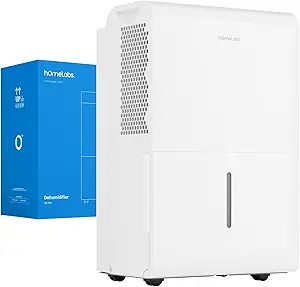 |
| Most Popular A crowd favorite that many people choose with confidence | Waykar 80-Pint Dehumidifier JD025CE-80 |  |
| Best Seller A high-volume bestseller chosen again and again | yaufey 120-Pint Dehumidifier |  |
Gasbye DryPrime-50 Dehumidifier
| Capacity | 115 pints |
|---|---|
| Tank Volume | 1.72 gallons |
| Wattage | 500 watts |
| Operation Mode | Normal, Turbo, Comfort, Continuous |
| Air Flow Capacity | 12600 cubic_feet_per_hour |
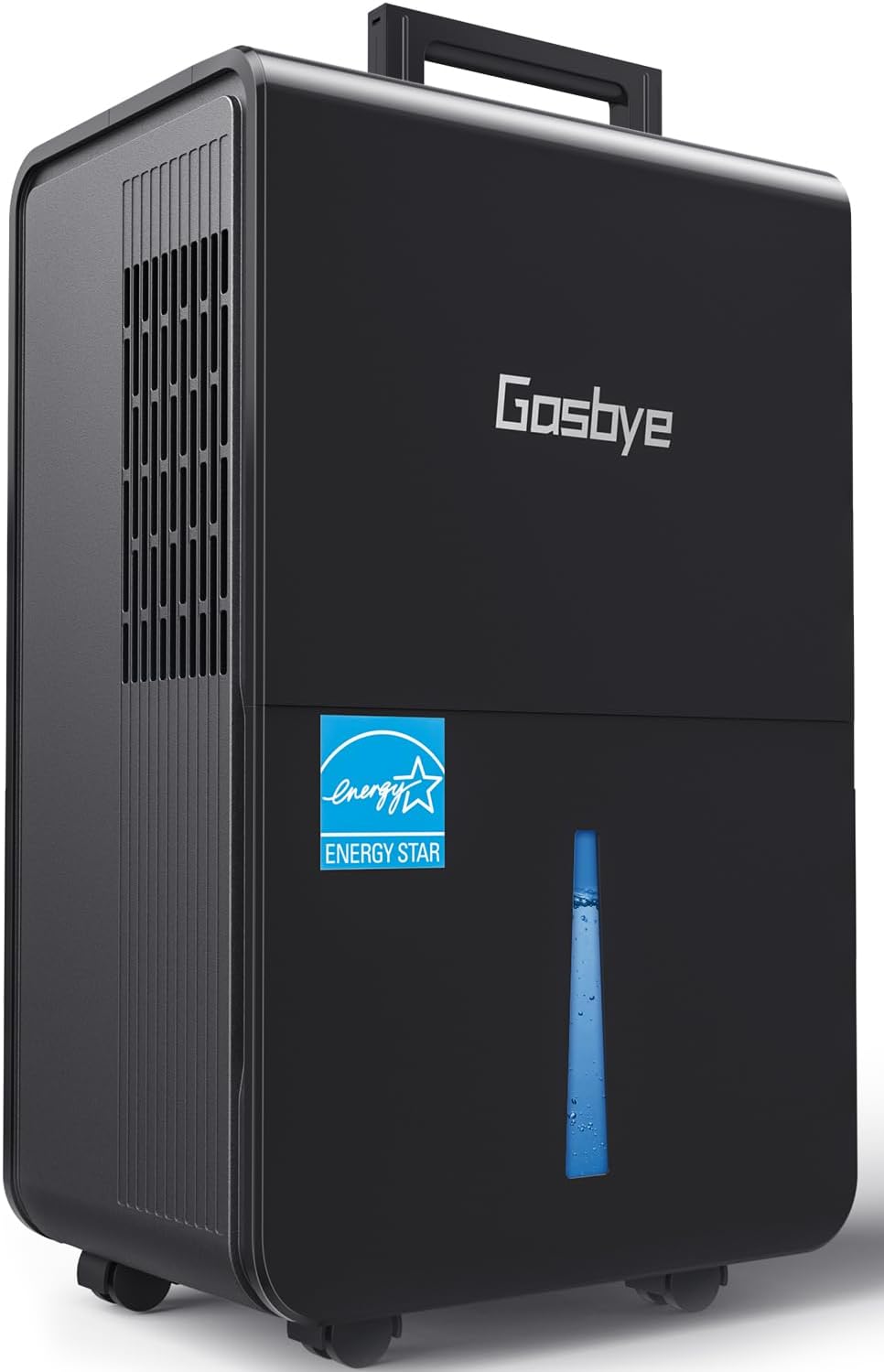
The Gasbye DryPrime-50 is a heavy-duty compressor dehumidifier built for large spaces like basements, garages, and spacious living areas. It delivers lab-tested capacities across realistic conditions—up to 115 pints/day at 86°F and 80% RH and lower capacities at cooler, less humid conditions—so performance expectations are grounded in real-world use. The unit uses reinforced copper tubing and a 5-tier copper coil intended to improve durability, and it includes three drainage options: a 1.7 gallon tank, an included 5-foot hose for direct drain, or a threaded outlet for a garden hose hookup. Energy Star certification and a 500-watt compressor promise better energy efficiency than noncertified models, and an auto shut-off/restart with smart humidity control simplifies hands-off operation. At roughly 45 dB during operation it runs quietly for a compressor unit, but its weight and size reflect its more robust construction and make it less convenient to move frequently. For a basement where sustained, reliable moisture removal matters, this model emphasizes durability, straightforward controls, and flexible drainage over ultra-compact portability.
Best for: Buyers who need a dependable, higher-capacity dehumidifier for large basements or open living spaces and prioritize real-world performance and durability over compact size.
Less Ideal for: People seeking a lightweight, ultra-portable bedroom dehumidifier or a near-silent unit for small rooms should consider quieter, lower-capacity options instead.
- High tested dehumidification capacity with clear performance at multiple temperature/humidity points
- Energy Star certified for improved energy efficiency compared with noncertified units
- Three drainage methods including large 1.7 gal tank and threaded garden-hose outlet for continuous drain
- Reinforced copper tubing and 5-tier copper coil aimed at long-term durability
- Relatively heavy and larger than compact models, making it less convenient to relocate frequently
- Operates with a compressor so it produces warm exhaust and moderate noise compared with small thermoelectric units
Verdict: A durable, Energy Star certified compressor dehumidifier that reliably handles high moisture loads in large basements while offering flexible continuous-drain options.
AprilAire E130 Dehumidifier

| Capacity | 130 pints/day |
|---|---|
| Dehumidification Capacity | 16.25 gallons/day |
| Air Flow Capacity | 310 cfm |
| Wattage | 996 watts |
| Voltage | 120 volts |
The AprilAire E130 is a high-capacity whole‑house dehumidifier built for large basements and sealed crawl spaces where steady moisture removal is required. It removes up to 130 pints per day (16.25 gallons) and delivers 310 cfm of airflow while running on standard 120 V power, and it can be ducted into an HVAC system or placed near a floor drain for continuous draining. Controls include an interactive digital display and adjustable humidity control with automatic on/off based on a set %RH, and maintenance is straightforward thanks to a washable MERV 8 filter and no water tray to empty. The unit uses corrosion-resistant aluminum coils and has features for frost control, overheat protection, and automatic restart after power loss. Trade-offs are its single fan speed which limits fine control of airflow and its large footprint and weight that make installation a two-person job and more suitable for permanent basement installations than portable spot use.
Best for: Homeowners who prioritize high continuous moisture removal in large basements or whole‑house setups and want a durable, low‑maintenance dehumidifier that can be integrated with ducting.
Less Ideal for: People needing a portable or lightweight unit for occasional spot dehumidification or renters who cannot install a permanently plumbed appliance.
- Very high dehumidification capacity (130 pints/day) for large basements or whole‑house use
- Ductable design and included inlet/outlet collars for integration with HVAC or dedicated duct runs
- Automatic humidity control with digital display simplifies set up and hands‑off operation
- Washable MERV 8 filter and continuous drain option reduce maintenance and eliminate daily emptying
- Corrosion‑resistant aluminum coils and robust construction intended for long service life
- Single fan speed limits precise airflow control and noise/energy tuning
- Large, heavy cabinet requires careful placement and professional or two‑person installation
Verdict: If you need continuous, high‑volume moisture removal for a large basement or whole‑home application, the AprilAire E130 delivers robust, low‑maintenance performance and ducting options to handle it.
AEOCKY LEO-Lite 74 Pint Dehumidifier

| Capacity | 74 pints per day |
|---|---|
| Tank Volume | 1.45 gallons |
| Floor Area | 4500 square_feet |
| Operation Mode | Auto |
| Other Special Features of the Product | Timer |
The AEOCKY LEO-Lite is a high-capacity compressor dehumidifier built for large, damp spaces like basements. It removes up to 74 pints per day under peak conditions and uses a rotary compressor and a 3+2 evaporator/condenser layout to prioritize efficiency while keeping noise low. Controls include an intelligent humidistat with fast humidity sensing, an auto mode and timer, plus power-off memory for automatic recovery after outages. A 1.45 gallon tank and included drain hose let you choose between emptying the tank or continuous drainage. The unit meets ENERGY STAR Version 6.0 efficiency standards, so it runs more economically than many older basement models and includes an auto-defrost system to keep working in cooler basement temperatures. It is fairly quiet at low speed and is aimed at continuous or near-continuous operation for moisture control. Trade-offs are its single-speed fan control and relatively large footprint compared with tiny portable units, so it is best where sustained extraction and energy savings outweigh simple portability.
Best for: Buyers who want an efficient, high-capacity dehumidifier to control persistent basement humidity and reduce energy use over long runtimes.
Less Ideal for: If you need a lightweight, highly portable unit for small rooms or infrequent use, a compact low-capacity dehumidifier is a better fit.
- High dehumidification capacity rated at 74 pints per day for heavy basement humidity
- ENERGY STAR Version 6.0 rating for improved seasonal energy efficiency
- Auto-defrost keeps the unit operating in cool basement temperatures
- Included drain hose plus 1.45 gallon tank enables continuous drain or manual emptying
- Quiet operation for its class thanks to rotary compressor and low fan noise
- Single speed setting limits fine-grained control of airflow and sound
- Relatively large and heavier than compact room dehumidifiers
Verdict: Choose the LEO-Lite when you need a quiet, energy-efficient, high-capacity dehumidifier built to run continuously in a basement.
AIRPLUS 70-Pint Dehumidifier

| Capacity | 70 pints per day |
|---|---|
| Coverage | Up to 4,500 square feet |
| Wattage | 300 watts |
| Tank Volume | 0.7 gallons |
| Air Flow Capacity | 11,532 cubic feet per hour |
This AIRPLUS 70-pint dehumidifier is built for large basements and other sizeable rooms where persistent moisture and mildew are a problem. It uses a compressor-based system to remove up to 70 pints of water per day and can either collect condensate in a 0.7 gallon tank or run continuously through the included drain hose for unattended operation. The unit offers four fan speeds and four operating modes including a dry/clothes mode and a sleep/low-noise setting, plus a digital control panel with humidity display and a 24-hour timer for scheduled runs. Practical safety and convenience features include automatic shutoff when the tank is full, auto-restart after power loss, and an automatic defrost cycle for colder spaces. It is relatively energy efficient at 300 watts for its capacity, but it is a sizable, single-room appliance and will emit warm exhaust air during normal operation, which may affect basement temperatures. The washable filter and caster wheels make maintenance and placement straightforward, while the negative ion feature and LED indicators add simple usability.
Best for: Buyers who need a high-capacity, practical dehumidifier for a large basement or similar space and prioritize steady moisture removal and easy continuous drainage on a budget.
Less Ideal for: People looking for a compact, whisper-quiet dehumidifier for small rooms or those who cannot provide a nearby drain for continuous operation should look elsewhere.
- High dehumidification capacity up to 70 pints per day suitable for large basements
- Includes both 0.7 gallon collection tank and 3.9 ft drain hose for continuous drainage
- Multiple modes and four fan speeds let you balance noise, drying speed, and energy use
- Automatic defrost, auto-restart, and full-tank shutoff improve reliability and safety
- Washable filter and casters simplify upkeep and repositioning
- Tank capacity is small relative to daily output, so continuous drain is necessary for heavy use
- Unit exhausts warm air which can raise temperature in small or poorly ventilated basements
- Relatively heavy and large compared with small-room portable dehumidifiers
Verdict: A cost-conscious choice for large basements that delivers strong, continuous moisture removal with both tank and hose drain options.
hOmeLabs 50 Pint Dehumidifier
| Dehumidification Capacity | 50 pints per day |
|---|---|
| Floor Area | 7000 square_feet |
| Wattage | 322 watts |
| Air Flow Capacity | 165 cfm |
| Tank Volume | 1.6 gallons |
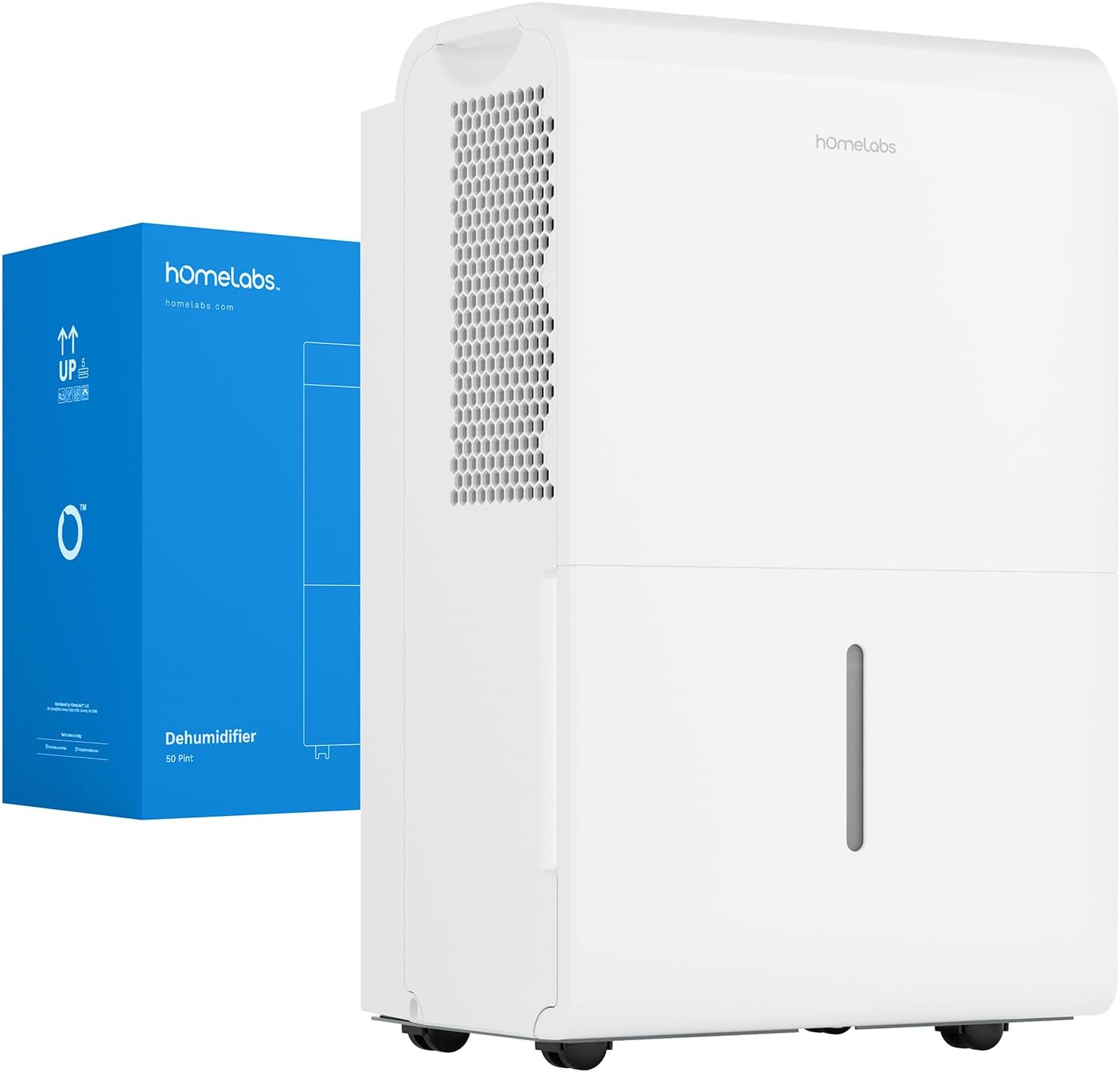
This hOmeLabs unit is a large-capacity dehumidifier built for continuous moisture control in big areas like basements and open living spaces. It removes up to 50 pints per day under standard conditions (with higher rated capacity at very hot, humid extremes), offers two fan speeds plus a Turbo mode, and has a washable filter and removable tank for routine upkeep. The Wi‑Fi control makes it easy to monitor and change settings remotely, and a continuous-drain outlet lets you run it unattended when you attach a hose. Practical touches include caster wheels, handles, automatic shutoff when the tank is full, and automatic defrost for cooler environments. Expect reliable day-to-day performance, but note it is a fairly powerful appliance at 322 watts and may run frequently in very damp basements; also a drain hose is not included so plan for that accessory if you need nonstop operation. For users who prioritize steady humidity reduction and remote control, this model covers the basics effectively.
Best for: Buyers who want a dependable, no-nonsense dehumidifier that can run continuously to protect large basements and finished lower levels while offering remote monitoring and simple maintenance.
Less Ideal for: People needing a very compact, ultra-quiet or low-power solution for small rooms should consider smaller or quieter models instead.
- Handles large spaces up to 7,000 sq ft and removes up to 50 pints/day at standard test conditions.
- Wi‑Fi remote control for monitoring and adjusting settings from anywhere.
- Continuous-drain port allows unattended operation with a hose.
- Automatic defrost and auto shutoff simplify use in variable conditions.
- Washable filter and removable tank make maintenance straightforward.
- Drain hose not included for continuous drainage.
- Higher power draw when running at peak or Turbo settings (322 watts).
- May run frequently in very damp basements to maintain set humidity.
Verdict: A robust, Wi‑Fi–enabled 50‑pint dehumidifier built to reliably control moisture in large basements and open areas.
Waykar 80-Pint Dehumidifier JD025CE-80

| Dehumidification Capacity | 80 pints_per_day |
|---|---|
| Tank Volume | 2.5 gallons |
| Wattage | 270 watts |
| Air Flow Capacity | 165 cfm |
| Operation Mode | Continuous |
The Waykar 80-Pint Dehumidifier is built to handle large, damp areas such as basements by extracting up to 80 pints per day and offering both tank and continuous drain options. It is commonly used running continuously or on a timed schedule to bring basement humidity down to a selected setpoint between 30% and 80% relative humidity, and the 90° auto-swing helps spread airflow for more even drying. Practical features include an included drain hose and connector for gravity drainage, a washable removable filter, automatic defrost and overload protection for low-temperature reliability, and an Energy Star rating to keep running costs lower than noncertified units. At roughly 42 dB it is quieter than many similarly sized machines, making it reasonable for finished basements or nearby living areas. The unit is relatively heavy and targeted at larger spaces, so it is less convenient to move frequently, and the 1.14 gallon tank means emptying is still needed if you do not use continuous drainage. For buyers focused on dependable basement performance and energy efficiency, this model delivers strong moisture removal with sensible protections for extended operation.
Best for: Homeowners who need a reliable, high-capacity dehumidifier to control moisture in large basements and prefer proven features and energy efficiency over portability.
Less Ideal for: People looking for a lightweight, highly portable unit for small rooms or occasional use should consider smaller, easier-to-move models instead.
- High dehumidification capacity rated at 80 pints per day for large basements
- ENERGY STAR certification for better energy efficiency during extended use
- Multiple drainage options with included drain hose for continuous gravity drain
- Auto-defrost and overload protection improve reliability in cool basement conditions
- 90° auto-swing airflow and washable filter help distribute air and simplify maintenance
- Relatively heavy and sized for large spaces, so not ideal for frequent transport
- Water tank is modest at 1.14 gallons if continuous drainage is not used
Verdict: A powerful, Energy Star certified 80‑pint unit that reliably handles large basement humidity with continuous drain and protective auto-defrost features.
yaufey 120-Pint Dehumidifier

| Capacity | 120 pints |
|---|---|
| Tank Volume | 1.06 gallons |
| Wattage | 355 watts |
| Air Flow Capacity | 106 cfm |
| Dehumidification Capacity | 15 gallons_per_day |
This yaufey dehumidifier is built to remove large volumes of moisture from basements and other big spaces, rated at 120 pints/day under extreme conditions and sized for areas up to 6,000 sq. ft. It offers both a visible 1.06-gallon collection tank and a continuous-drain hose connection for hands-free operation in basements or laundry rooms. Controls are simple: an LED touch panel with four preset modes (Sleep, Living, Basement, Continuous), three fan speeds, a 24-hour timer and precise temperature and humidity sensing for tight control. Energy Star certification and a 355-watt rating mean it runs more efficiently than many noncertified units, which helps if you need it running long stretches. Practical touches include caster wheels, ergonomic handles, a washable filter and auto shutoff when the tank is full. Trade-offs are its relatively small onboard tank for the unit size and the audible noise on higher fan speeds, so expect to use the drain hose for true hands-off long-term operation and choose lower speeds near sleeping areas.
Best for: Buyers who prioritize reliable, steady moisture control in large basements and prefer simple preset controls, Energy Star efficiency, and the option for continuous unattended drainage.
Less Ideal for: People needing an ultra-quiet unit for a bedroom or those who want a large integrated tank to avoid any drain plumbing should consider alternatives.
- High dehumidification capacity suitable for very large basements and commercial spaces
- ENERGY STAR certified for lower long‑term energy use compared with noncertified models
- Dual drainage: visible 1.06-gallon tank plus included drain hose for continuous emptying
- Simple presets and precise humidity sensing make it easy to maintain target humidity levels
- Mobility and maintenance features such as universal castors, ergonomic handles, and a washable filter
- Onboard water tank is modest relative to the unit's capacity, so continuous drain is recommended for heavy use
- Higher fan speeds are noticeably louder than low‑speed operation
Verdict: A robust, Energy Star 120‑pint dehumidifier that delivers dependable, large‑space moisture control with convenient continuous drain for hands‑off basement use.
Choosing the Right Dehumidifier for Large Basement: Key Factors to Consider
Extraction Capacity (Pints or Liters Per Day)
Extraction capacity determines how quickly a dehumidifier can remove moisture from a large basement. Larger spaces and higher humidity loads require higher-rated units to reach and maintain your target relative humidity. Units rated for smaller rooms will run continuously in a basement and may never lower humidity effectively, increasing wear and electricity use.
When evaluating capacity, look for manufacturer ratings measured at or near typical basement temperatures rather than at warm-room conditions. Consider both continuous-run performance and how rapidly the unit can lower humidity after heavy moisture events such as a wet spring or a basement leak. A practical buffer above calculated need reduces runtime and improves longevity.
Energy Efficiency and Operating Cost
A dehumidifier that removes a lot of moisture but consumes excessive power will inflate ongoing costs. Energy-efficient designs and variable-speed compressors or smart humidity control reduce runtime and cost while keeping the basement dry. Check energy consumption at realistic operating conditions and consider units with energy-saving modes or auto-humidistats.
Over the long term, modestly higher upfront efficiency can pay back through lower electricity bills, especially for basements that need year-round humidity control. Factor in estimated daily runtime and your local electricity rates to compare operating cost between similarly rated units.
Performance at Lower Temperatures
Basements are often cooler than living spaces, and dehumidifier performance can decline as temperatures drop. Units with low-temperature or auto-defrost capability maintain extraction when ambient air is cool and prevent coil icing. A dehumidifier that loses effectiveness below typical basement temperatures will fail to control humidity during cooler months.
If your basement stays cool, prioritize models that specify extraction rates at lower temperatures or include features to support low-temp operation. This reduces the chance of recurring cycles of freezing and defrosting that hurt performance and increase wear.
Drainage Options and Continuous Operation
Large basements may require extended unattended operation, so drainage options are critical. Models with continuous drain ports let you attach a hose to drain to a floor drain or sump pump, avoiding the need to manually empty a reservoir. Gravity-fed drains require the unit to be higher than the drain point, while units with built-in pumps can move water upward to a remote drain.
Consider the layout of your basement and how practical continuous drainage is. For variable layouts or where no convenient floor drain exists, a pump-enabled model can save significant maintenance time and allow reliable continuous operation.
Noise, Vibration, and Placement
Dehumidifiers in basements can run frequently and sometimes continuously, so low noise and minimal vibration matter—especially if the basement is finished or used as living space. Look for units with vibration-isolating feet, variable fan speeds, and quieter operation in typical modes. Noise is measured in decibels, but perceived disturbance depends on frequency and where the unit is placed.
Plan placement to minimize sound transmission: put the unit on vibration-absorbing pads, away from shared walls or occupied rooms, and consider ducting or relocating sensitive activities away from the running dehumidifier.
Maintenance, Filter Access, and Durability
Regular maintenance preserves performance and prevents premature failure. Washable prefilters, easy access to the air intake and coils, and clear indicators for filter cleaning reduce friction for owners. Durable components such as rust-resistant coils and housings extend service life in basement environments that can be humid for long periods.
Evaluate how simple routine tasks are, such as removing and cleaning the filter, accessing the pump or drain fittings, and diagnosing common issues. Less time spent on maintenance means more reliable humidity control.
Sizing Your Dehumidifier for a Large Basement
Calculate the square footage and estimate the typical humidity load before choosing capacity. For large basements, also factor in ceiling height, wet areas such as exposed soil, and how often doors to the outside are opened. A rule-of-thumb approach can give a starting point, but basements with water intrusion or very high humidity require larger margins.
If you are unsure of the actual humidity load, select a unit with higher extraction capacity and flexible drainage to avoid chronic underperformance. You can also measure baseline relative humidity in several locations to identify the wettest zones and size accordingly.
- Account for ceiling height and unfinished areas when estimating volume.
- Add capacity margin for basements with occasional leaks or high moisture sources.
- Measure relative humidity in multiple spots to find the worst-case areas.
Placement and Airflow Considerations
Position the dehumidifier where it can draw air from the wettest part of the basement while maintaining clearance on all sides for airflow. Avoid placing the unit directly against walls or behind stored items that block the intake or exhaust. Elevated placement on a platform can help if you need a gravity drain to a nearby floor drain.
Think about airflow paths. Using the dehumidifier near a stairwell or central corridor can help circulate drier air throughout the space. In finished basements, consider acoustic isolation and routing the exhaust away from living areas.
- Maintain manufacturer-recommended clearance around intake and exhaust.
- Use a short duct or fan to promote circulation for very large or compartmentalized basements.
- Place on a stable, level surface and consider vibration pads to reduce noise transfer.
Dehumidifier Controls and Smart Features
Modern units offer humidity setpoints, timers, and eco modes that reduce power use by cycling the compressor. Humidistats let you set a target relative humidity, while timers and scheduling reduce runtime during low-risk periods. Smart Wi-Fi features can provide remote monitoring, but they are not necessary for effective moisture control.
Prioritize basic, reliable control features such as accurate humidistats, adjustable fan speeds, and clear status indicators. For unattended basements, automatic restart after power loss and alerts for full-bucket or fault conditions are valuable.
- Look for accurate humidistats with tight control around your target RH.
- Automatic restart and fault alerts help maintain operation after outages.
- Variable fan speeds and eco modes balance performance and energy use.
Managing Condensate: Pumps, Hoses, and Drain Access
Condensate management is a practical concern for basements that require continuous dehumidification. Hard-plumbed drains or gravity-fed hoses are simple and reliable when a floor drain is nearby. Where the drain is higher than the unit, an internal or external condensate pump becomes necessary.
When using a hose and gravity drain, secure and slope the hose properly to prevent backups. If you opt for a pump, check rated head height and service access for the pump if it requires maintenance. A reliable drainage setup greatly reduces maintenance time and prevents accidental overflows.
- Verify floor drain location before choosing between gravity or pump drain options.
- Check pump head height if discharging to a remote or elevated drain point.
- Use a hose with secure fittings and periodically inspect for blockages.
Winter Use and Freeze Protection
Basements can get cool enough in winter to affect dehumidifier operation. Look for models with auto-defrost cycles or low-temperature performance specs to avoid coil icing and interrupted operation. In unheated basements, regular monitoring during cold spells helps ensure continuous moisture control.
If your basement is subject to temperatures near or below freezing, plan for supplemental heat in the driest months or choose a unit explicitly rated for low-temperature performance. Proper freeze protection prevents damage and preserves extraction efficiency.
- Auto-defrost features are essential for unheated, cool basements.
- Monitor for frost buildup in prolonged low-temperature conditions.
- Consider an integrated thermostat or external heater if temperatures fall below the recommended range.
How We Chose the Best Dehumidifier for Large Basement
We shortlisted products that meet the needs of large basement environments by applying filters that emphasize moisture removal, runtime economics, and practicality for long-term basement use. Primary evaluation criteria included extraction capacity at typical basement temperatures, energy efficiency to limit operating cost, and reservoir or drain options for unattended operation. We also weighed durability factors such as compressor design and corrosion-resistant finishes, plus user-facing considerations like noise levels, filter access, and mobility for moving between spaces. Units that lacked minimum extraction capability for large spaces or that had limited drainage options were excluded. We prioritized products offering clear performance specifications for pints or liters removed per day at lower temperatures, explicit energy-efficiency ratings or low power draw, and practical features for basements such as continuous drain ports and washable filters. Final selections balance raw capacity with real-world usability and long-term operating cost concerns.
Our full evaluation process is outlined in our review methodology.
FAQ
What relative humidity should I aim for in a large basement?
Aim for 45 percent relative humidity or lower to discourage mold and mildew growth; 40 to 50 percent is a practical target for most basements. The exact setpoint depends on your comfort, stored items, and whether the basement connects to finished spaces.
Can a single dehumidifier handle a multi-room or compartmentalized basement?
It depends on layout and airflow. One high-capacity unit can work if placed centrally with good circulation, but separate zones with closed doors may require multiple units or additional fans to distribute dry air effectively.
How often should I run a dehumidifier in a large basement?
Many basements need near-continuous operation until the target humidity is reached, then the unit cycles to maintain setpoint. Runtime depends on extraction capacity, leaks, and external humidity. Efficient units and proper drainage make long runtimes manageable.
Is it better to use continuous drain or empty the reservoir manually?
For large basements, continuous drain is generally preferable because it enables unattended, long-term operation without frequent emptying. Manual reservoirs can be acceptable for occasional use but are impractical for heavy humidity loads.
Will a dehumidifier solve a serious water leak or standing water?
No. A dehumidifier helps reduce airborne moisture and dry damp surfaces, but it cannot replace water removal or structural repairs. Address leaks and standing water directly, then use a dehumidifier to control residual moisture and prevent mold.
How loud are basement dehumidifiers and how can I reduce noise?
Noise varies by model and fan speed, with most larger units producing noticeable sound when running at full power. Reduce perceived noise by placing the unit on vibration pads, selecting lower fan speeds for night use, and locating it away from living areas or shared walls.
Final Verdict
For large basements, prioritize dehumidifiers with proven extraction capacity at cooler temperatures, flexible drainage options, and efficient operation. Balancing raw removal rate with energy use and low-temperature performance avoids chronic under-sizing or excessive operating costs. Decide based on the measured humidity load and layout of your basement: choose higher-capacity units for heavy or recurring moisture, and prefer continuous drainage or pump-equipped models for unattended operation. Focus on durability and maintenance ease to keep your basement dry over the long term.